
Bakhraur murder case: BSP enraged over Dalit girl’s murder, warns of agitation if justice is not given
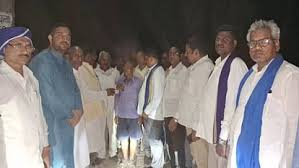
Bihar BSP: Bahujan Samaj Party’s central state in-charge Anil Kumar said, Gopalganj has become a stronghold of crime. Serious questions are being raised on the administration and the government. If justice is not given, the Bahujan Samaj Party will launch a big agitation. After the brutal murder of a Dalit girl in Bakhraur village under Barauli block of Gopalganj district, Bahujan Samaj Party’s central state in-charge Anil Kumar met the victim’s family late on Tuesday night. Party’s central in-charge Umashankar Gautam, central state in-charge Advocate Suresh Rao, state president Shankar Mahato were also present with him. Anil Kumar expressed deep concern over this inhuman incident and called it an administrative failure and a deliberate conspiracy. Addressing a press conference organized at the Circuit House, Anil Kumar said that in the last few days, dozens of such incidents have happened with the Dalit, exploited and deprived class which show that Gopalganj is now becoming a district of murder and rape. Anil Kumar said that questions arise on the working style of the police captain here. The FIR not being registered for five days shows that the administration in Bihar has become inactive and anti-Dalit. He asked in a sharp tone, “Is dictatorship or Talibani rule prevailing in Bihar?” He also accused Chief Minister Nitish Kumar of mental instability and said that now his remaining in the post is a betrayal to the people of the state. The BSP leader said that atrocities on Dalits in Uttar Pradesh had completely stopped during the rule of sister Mayawati. He clarified that if law and order can improve with leadership like Behenji, then it is possible in Bihar too. Provided the government’s intention is right. Anil Kumar also took a dig at three ministers of the Bihar government that they did not even come to meet the victim’s family. He warned that if the victim’s family does not get immediate justice and action is not taken against the culprits, then the Bahujan Samaj Party will launch a massive movement within the ambit of the Constitution and will work to oust the double engine government from power. He also demanded the suspension of the guilty officers on the inaction of the police administration. On this occasion, State Vice President Kishore Kunal Vivek, State General Secretary Abhimanyu Kushwaha, Sachin Singh, Sajid Hussain, Buxar District President Subhash Gautam, Janardan Ram, Mithlesh Kumar, Shiv Bahadur Patel, Anil Kumar etc. were present. Courtesy : Arvind Kumar, Hindi News
Caste census will uplift Dalit, backward and Pasmanda classes: Danish Azad Ansari

Lucknow, 30 April. A meeting of the Union Cabinet was held in Delhi on Wednesday under the chairmanship of Prime Minister Narendra Modi. Many important decisions were taken in the meeting. The Modi government at the Center has also decided to conduct caste census in this meeting. Yogi government minister Danish Azad Ansari expressed happiness over this decision of the government. Danish Azad Ansari, while talking to the news agency, said that Prime Minister Narendra Modi’s decision to conduct caste census is historic. This decision will prove to be very meaningful in the reconstruction of the nation. This census will open new paths for the upliftment of backward society, Dalit society and Pasmanda class and new schemes will be made. Prime Minister Modi has always kept the development and upliftment of the country paramount. This historic decision has been taken with the spirit of serving the country, which the whole country welcomes. He further said that we have full faith that after this census, our resolve for a developed India 2047 will not only get further strengthened, but our country will move forward rapidly on the path of this resolve. Let us tell you that the Modi cabinet approved the caste census on Wednesday. Giving information about the government’s decision, Ashwini Vaishnav said that the Congress governments opposed the caste census. There has been no caste census since 1947. Instead of caste census, Congress conducted caste survey, many states in the UPA government have conducted caste survey from political point of view. He further said that in 2010, the then Prime Minister Dr. Manmohan Singh had assured in the Lok Sabha that the caste census would be considered in the cabinet. Thereafter, a cabinet group was also formed, in which most of the political parties recommended caste based census. Despite this, the Congress government considered it appropriate to conduct a survey instead of caste census, which is known as CECC. Despite all this, the parties of the Congress and Indy alliance used the subject of caste census only for their political benefit. Vaishnav further said that this type of survey has spread confusion in the society. Keeping all these situations in mind and ensuring that our social fabric does not come under the pressure of politics, the caste census should be included in the original census instead of a survey. This will strengthen the society economically and socially and the country will also progress uninterrupted. The Cabinet Committee on Political Affairs led by PM Modi has decided that caste census will be included in the upcoming census. Courtesy: Hindi News
MP: 17-year-old Dalit girl in Bhopal alleges that Zoya Bhabhi got me raped by Shahrukh

Bhopal. After the disclosure of the ‘Farhan Gang’ in Bhopal, the capital of Madhya Pradesh, which traps Hindu girls and makes them victims of lust, now another similar case has come to light. A 17-year-old Dalit girl has filed a complaint against some people including a woman and alleged that all of them together got her raped repeatedly by a boy named Shahrukh. Police have registered a case under various sections of BNS, SC-ST Act and POCSO Act at Kolar Road Police Station. The victim told the police that she is 17 years old. She lives near Bhopal. Being from a poor family, she could study only till 8th class. She has four siblings. The victim is the youngest in the house. She has three elder brothers elder to her. A young man named Javed had been living in the neighbourhood of the victim’s house for many years. They used to talk as neighbours. She used to call him Bhaiya and trusted him. The victim told that a day before Valentine’s Day this year, Javed took her to his house to meet a woman named Zoya. The victim reached Zoya’s house where her husband Faizan was also present. Zoya and her husband asked the victim about her name, address etc. and after some time a boy named Shahrukh reached there. Zoya told the victim that he is her brother and lives in Jahangirabad. Shahrukh took the mobile number from the victim here. The conversation continued for a few days. Shahrukh started wooing her. The victim objected to this and told this to Javed. Javed took Shahrukh’s side and encouraged the victim to maintain the friendship. Shahrukh started pressuring the victim for a meeting. On 16 February 2025, at around 4 pm, Javed took the victim to Zoya’s house. Shahrukh was already present there. Leaving the victim there, everyone went out of the house. Shahrukh said that he loves her and wants to marry her. For this, first a relationship has to be made. The victim said that despite her repeated refusals, Shahrukh raped her. When Zoya, her husband Faiza and Javed returned after about an hour, the victim told them the whole thing. But they said that marrying Shahrukh would lead to a good life for her. So she should not tell this to anyone. After this, Shahrukh started making her a victim of lust again and again by threatening to defame her. He used to call her to Zoya’s house. As soon as he left, Zoya and her husband would leave the house and Shahrukh would rape her. He did bad things to her 4-5 times. Fed up, the victim told the whole thing to her family members. After which they reached the police station. Courtesy : Hindi News
One decision of Modi government and Rahul Gandhi’s ‘Brahmastra’ failed, now what will Tejaswi do in Bihar elections?
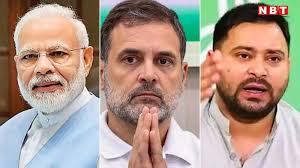
Caste Census In India: After the approval of the Union Cabinet to conduct caste census, the opposition has suffered a major setback. A big issue has slipped out of its hands. The entire opposition, including Congress leader Rahul Gandhi, RJD leader Tejaswi Yadav and Samajwadi Party chief Akhilesh Yadav, had this strong issue to corner the BJP. Its effect was also seen in the Lok Sabha elections. BJP’s seats came down to 240 while the opposition’s seats reached 232. The opposition was also preparing to capitalize on this in the Bihar assembly elections. Central government bows down to the opposition Caste census got approval May get benefit in Bihar elections Patna: The central government finally had to come on the back foot on the question of caste census. Earlier the central government had refused to conduct caste census. During the hearing on this issue in the Supreme Court, the Center had cited technical difficulties. The opposition was making it an issue since the time of the Lok Sabha elections. Rahul Gandhi, who has been the PM face of India Block, has been saying till now that if his government is formed, the first thing he will do is caste census. The law of reservation will be made in proportion to the share of the people in the census. Rahul has even been saying that along with caste census, he will also end the limit of reservation. Caste census was an issue in Lok Sabha elections During the Lok Sabha elections, the opposition had included caste census among the major issues. In Bihar, RJD leader Tejashwi Yadav was the first to take the initiative of caste census. He had first met Nitish Kumar on this issue. Nitish was the head of the NDA government then. Nitish sent a government delegation to Delhi in this regard. Since the central government had already refused to conduct caste census citing technical problems, Nitish Kumar later conducted caste survey at his own expense while running the government with RJD. The state government also bore the huge expenditure of Rs 500 crore on this. On the basis of the survey, the Nitish government increased the limit of reservation to 75 percent. However, the Patna High Court put a stay on the increase in reservation. The opposition in Bihar wanted to make it an issue in the assembly elections. But, BJP has foiled the opposition’s plan. The caste issue slipped out of Congress’ hands In the first Lok Sabha elections, Rahul Gandhi tried to cash in on the caste census. He said that he will get the caste census done if the government is formed. On that basis, reservation will be determined afresh. In the states where assembly elections were held after the Lok Sabha elections, all the opposition parties including Congress made caste census an election issue. In Jharkhand, it has been announced that a caste survey will be conducted by next year if the opposition alliance forms the government. To ensure that the opposition does not take advantage of this issue further, the Union Cabinet on Wednesday approved the proposal to conduct caste census. It may have an impact on Bihar elections Assembly elections are to be held in Bihar this year. All the parties are trying to beat each other with their own moves. Rahul Gandhi has termed the caste survey conducted in Bihar as fake. He has talked about getting the caste census done again. However, now the Center has taken its decision, so the opposition will hardly get any benefit from it now. The opposition can now only boast that the central government, which had earlier refused under its pressure, has now agreed to conduct the caste census. The BJP will definitely try to tell that the caste census is its contribution. Earlier, Karnataka, Bihar and Telangana had conducted the caste census. So far, no benefit of this is visible on the ground in Bihar. Its report has not been implemented in Karnataka. Rahul Gandhi considers the caste census of Telangana to be perfect. He has been in favor of conducting similar caste census in every state. Now this issue of his, which the Congress leaders wanted to use as a ‘Brahmastra’ in the Bihar elections, is over. About the author Sudhendra Pratap Singh Senior Digital Content Producer at Navbharat Times Digital. Started the journey in journalism with the local newspaper Agrabharat. From here the caravan grew and reached NBT.com via Kalpataru Express, Hindustan News Paper, News18. Courtesy: Edited by Sudhendra Pratap Singh | Written by Omprakash Ashk, NBT, Hindi News
PM must not dilly-dally: Rahul Gandhi
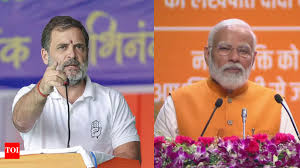
Stating that PM Modi must not “dilly-dally” and should take immediate action on the Pahalgam attack, Congress’ Rahul Gandhi Wednesday said the response against those responsible for the Kashmir outrage has to be exemplary so that it acts as a deterrent against future misadventure. Hours after he met the family of a Kashmir terror victim in Kanpur, Rahul told reporters, “Those responsible for this act, wherever they are, have to pay for it. And they have to pay for it properly. Not in some half-hearted way, but properly, so that they remember that it cannot be done with India.” “It is pretty clear who are responsible (for the attack) and they must pay the price. The PM has to take action. It has to be clear and it has to be strong. Without any confusion. The PM must not dilly dally, he must not waste time and must make it clear that India will not tolerate this kind of nonsense. He can act in whatever time frame he thinks necessary, but he has to act soon,” Rahul said. Courtesy : TOI Note: This news is originally published on https://timesofindia.com and is for use by the non-military/non-commercial community, especially those in the human rights sector.
Government must give a timeline for caste census, says Rahul Gandhi
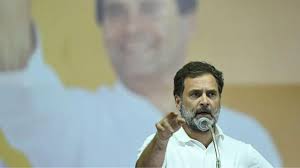
NEW DELHI: Rahul Gandhi demanded that the Centre provide the timeline by when caste census would be done, even as he warned that the exercise will only bear fruits if it is designed to ask the right questions as done by the survey conducted by Congress-led govt in Telangana. The Congress MP said caste census is required to know participation of weaker sections in institutions and power structure, so that they can be given “access to power”. As he dubbed caste census “a first step…a big step” in changing the development paradigm, Rahul demanded the govt abolish the 50% limit on reservations and immediately implement caste quotas in private educational institutions, in line with the Constitutional amendment of Article 15(5). But the leader of opposition in Lok Sabha expressed “immediate suspicion” that the govt on the census will adopt a “strategy on timeline” as in the women’s reservation bill, suggesting that its execution will be kept open-ended. Claiming BJP was forced to change its stance under Congress pressure, Rahul mocked, “PM Modi used to say there are only four castes but now suddenly announced caste census”. He was referring to Modi’s election speeches, in which the PM, rubbishing the demand for caste census, said the only four castes that exist for him are “women, youth, poor, farmers”. Rahul, who has turned caste census into a sort of mascot of Congress’s growing social justice platform over the past two years, held a presser to react to the govt announcement – indicating that he views it as a victory with evidence that “BJP can be pressured”. He asserted that Congress pushed the demand with a massive grassroots campaign, which had its effect on the govt. “We welcome the decision. It is our vision, they have adopted it,” Rahul said. Rahul said unlike Bihar, Telangana’s caste census is the model for doing the exercise, as the questions were crystallised through public consultation and not decided by bureaucrats. He offered to Modi govt Congress’s help in finalising the design of the census. Courtesy : TOI Note: This news is originally published on https://timesofindia.com and is for use by the non-military/non-commercial community, especially those in the human rights sector.
UP govt extends old-age home facilities to transgenders above 60
Lucknow, Apr 30 (PTI) Uttar Pradesh government Wednesday said it has decided to extend old-age home facilities to transgender individuals above the age of 60, a statement said. These elderly members of the transgender community will not only receive shelter but will also be ensured a dignified and secure life. They will be provided with pension, Ayushman Bharat health cards, routine health check-ups, nutritious food and mental health counselling, the government said in the statement. “The initiative is a reflection of a sensitive and forward-looking vision, aimed at supporting a community that has faced neglect and discrimination for decades,” the statement said. “The Yogi Adityanath government has ensured that the transgender community is provided with equal rights, dignity and opportunities. Registration of transgender individuals is also being carried out to connect them with various government schemes,” it said. To ensure safety and quick resolution of issues faced by the transgender community, the state government has established Transgender Protection Cells in every district. These cells operate under the supervision of the respective District Magistrate, ensuring transparency and accountability, it added. The government said a State-level Transgender Protection Cell has also been formed for policy formulation and overall monitoring. “These cells offer police protection, legal aid, swift action in cases of harassment and support for social rehabilitation. As a result, transgender individuals are now experiencing a safer and more supportive environment,” it said. The statement noted that the old-age homes run by the government have made special arrangements for the care of elderly transgender citizens. Community activities, libraries, yoga and meditation sessions will be organised to promote a positive and active lifestyle. Alongside, transgender residents also receive monthly pensions and benefits under the Ayushman Bharat Scheme, it added. The facility of old-age homes is part of a broader set of initiatives launched by the Yogi government for the welfare of the transgender community. In 2021, a dedicated welfare policy for transgenders was implemented. The same year, the Uttar Pradesh Transgender Welfare Board was constituted, tasked with overseeing and implementing various schemes. The first “Garima Grih” (Dignity Home) has been set up in Gorakhpur, serving as a safe shelter for transgenders, providing education, healthcare, and skill development facilities. So far, identity cards have been issued to 1,067 transgender individuals, enabling them to avail of benefits under various government schemes with ease, according to the statement. Additionally, scholarships have been awarded to 248 transgender students, helping them join mainstream education and become self-reliant, it said. Courtesy: The Print Note: This news is originally published on https://theprint.in/ and is for use by the non-military/non-commercial community, especially those in the human rights sector.
Centre’s caste census nod sparks credit war between BJP, Congress
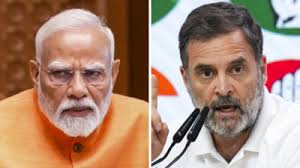
NEW DELHI: Centre’s announcement to include caste enumeration in the upcoming general census has triggered a war of words, with both the ruling BJP and opposition parties scrambling to claim credit for the decision. Union minister Ashwini Vaishnaw announced on Wednesday that the Cabinet Committee on Political Affairs has approved the inclusion of caste enumeration in the forthcoming census, marking a significant shift in policy. The Congress party was quick to attribute the decision to Rahul Gandhi’s advocacy, claiming it as a victory for their leader’s vision. “Rahul Gandhi Ji said, “Start counting.” Now the Modi government is making arrangements for counting. When our leader Shri Rahul Gandhi Ji had said, “A caste census is the X-ray of society,” people from the ruling party mocked him, ignored him, and procrastinated,” Congress leader Jairam Ramesh wrote on X. — Jairam_Ramesh (@Jairam_Ramesh) “He had been demanding this for a long time – raising the issue repeatedly in Parliament, public gatherings, and during his travels. But how long can the voice of millions demanding their rights be suppressed? Now the Modi government has agreed to conduct a caste census. Well, better late than never! This is a decisive step towards ensuring social justice. This is a victory for millions of people in India. It is a victory for all those who have been fighting for years for equality, fairness, and representation,” he added. However, BJP’s IT cell head Amit Malviya countered this narrative, pointing out the Congress party’s historical resistance to caste-based census. “Congress governments have consistently opposed caste-based census until now. In every census conducted since independence, caste has not been counted. In 2010, then Prime Minister Dr. Manmohan Singh assured in the Lok Sabha that the Cabinet would consider the caste census. After this, a Cabinet Committee was formed, in which most political parties recommended a caste-based census. Despite this, the Congress government deemed it appropriate to conduct only a survey (SECC) instead of a caste census,” BJP leader Amit Malviya said. “Even after this, Congress and its allied parties used the issue of caste census merely for their political benefit,” he added. Union minister Kiren Rijiju also attacked Congress for taking credit and said that grand-old-party can “only talk. — KirenRijiju (@KirenRijiju) “I fail to understand why is Congress party taking credit??” Rijiju said. “Congress Party had opposed Caste Census & Reservations on records. PM Narendra Modi ji has taken right decision at right time. Congress can only talk nothing else,” he added. Taking to X, the Andhra Pradesh chief minister Revanth Reddy said, “We are proud that the actions of the Telangana govt for OBC empowerment have inspired the country, and India has agreed to follow our state’s lead.” — revanth_anumula (@revanth_anumula) “We congratulate the central govt on deciding to conduct a caste census as part of the next national census. Thank you, Prime Minister Narendra Modi and the cabinet,” he added. A caste census involves systematically recording individuals’ caste identities during a national census. In India, where caste influences social, economic, and political life, such data can offer valuable insights into the distribution and socio-economic status of various caste groups. This information can help shape policies related to affirmative action and social justice. Caste enumeration was a regular feature of census exercises during British rule from 1881 to 1931. However, with the first census of independent India in 1951, the government chose to discontinue the practice, except for Scheduled Castes (SCs) and Scheduled Tribes (STs). Courtesy : TOI Note: This news is originally published on https://timesofindia.com and is for use by the non-military/non-commercial community, especially those in the human rights sector.
Dalit History Month | From Philosophy to Praxis—Tracing Kanshi Ram’s Journey
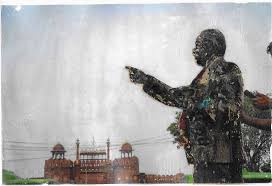
Kanshi Ram played a key role in institutionalising the Phule-Ambedkarite epistemic movement Baba saheb ka dusra naam, Kanshi Ram-Kanshi Ram—this slogan is widely recognised in the Dalit-Bahujan movement. Kanshi Ram’s followers affectionately refer to him as Bahujan Nayak, Manyavar and Saheb. In the post-Ambedkar era, he created political consciousness among the Dalit-Bahujans. His movement was not only socio-political but also epistemic in nature, focusing on epistemic justice to promote social justice in India. According to him, social justice cannot be realised without epistemic justice. Miranda Fricker, a famous British philosopher, coined the term epistemic injustice to get epistemic justice knowledge resources distributed and fairly. Kanshi Ram institutionalised the epistemic movement of Ambedkar through various institutions and organisations. His Bahujan movement, based on the ideas of social equality of Phule and Ambedkar, is not only a socio-political movement but also represents a new and profound epistemological intervention in Indian politics, through challenging the caste system and by establishing counter-knowledge systems from the Dalit-Bahujan perspective. It also restores the value, validity, and dignity of Dalit-Bahujan epistemology. Kanshi Ram critically analyses that the caste system is not only maintained through socio-political and economic domination, but also epistemological injustice, and can only be dismantled by establishing a counter-epistemology. By founding various organisations, he built democratic and inclusive knowledge systems, representing a unique attempt in Indian politics to institutionalise direct knowledge justice. His movement established the voices of Dalit-Bahujans in Indian politics by creating alternative ways of knowing through various institutions and challenging the systems that suppress the voices of these communities, thereby establishing a Dalit-Bahujan epistemology that has proven to be very important in Indian politics today. An Epistemic Movement that led to Social Transformation Following the Bahujan epistemic revolution of Kanshi Ram, Dalit-Bahujans gained the tools, mechanisms, language, organisations and institutions to represent and govern themselves. They have historically been victims of epistemic injustice due to the entrenched caste system for hundreds of years, which is the reason their voices, experiences, and knowledge are still excluded from the mainstream of society due to systematic exclusion. Kanshi Ram wanted political power through epistemic justice, which is why he established different organisations to create awareness among the Dalit-Bahujans, and that laid the foundation stone for alternative knowledge systems to combat caste-based discrimination and hierarchy, aiming to create a just and equitable society through political power. He often stated that political power is ‘Guru Killi’—a Punjabi term, reflecting his roots in Punjab. Through this Guru Killi, he believed, all social and economic liberation could be achieved. Kanshi Ram emphasised that the politics of a society with weak social roots could never succeed. He urged Dalit-Bahujans to focus on strengthening their social roots for successful political endeavours. Epistemic Justice through Organisations and Institutions Kanshi Ram founded several institutions and organisations to create alternative knowledge systems for knowledge justice. He established the Backwards and Minority Communities Employees Federation (BAMCEF) in 1978 and Dalit Shoshit Samaj Sangharsh Samiti (DS4) in 1981 to raise awareness among the Bahujan community and prepare them for politics. He also founded the Buddhist Research Centre (BRC) to explore the cultural heritage and history of the Bahujan communities. These organisations worked to decolonise knowledge and ensure that Dalit-Bahujan history and culture were recognised and institutionalised by mainstreaming them. These institutions published several books, pamphlets, and journals that critiqued caste oppression and educated Dalit-Bahujans about their historical, social, and political rights. BAMCEF was a non-religious and non-political organisation comprising of government employees. He regularly reminded them that government officials should work for the betterment of society through T3—time, talent, and treasure. His core belief was that, for epistemic justice, Bahujan officials should not only live for themselves but also work collectively as knowledge producers for marginalised communities. He advocated that educated Bahujans should serve their society alongside their work through the ‘Pay Back to Society’ concept. He encouraged government employees to act as epistemic agents, and for them, he created a platform like BAMCEF that became a focal stage for the epistemic movement. By establishing DS4, he aimed to politically and ideologically awaken the general masses of Dalit-Bahujan and also organise them to ensure they became active agents in knowledge production and political representation rather than passive subjects of history. It served as a bridge between BAMCEF and the later formation of the Bahujan Samaj Party (BSP). After BAMCEF and DS4, he established the BSP not only for political change but also for ideological reform in Indian politics, aiming to implement these changes through law when the government gained power. The BSP was founded with the intent to express Bahujan subjectivity through the government. Kanshi Ram founded the BSP on April 14, 1984, coinciding with Ambedkar Jayanti, and sought to transform knowledge justice into social justice through electoral politics. Through these organisations, Kanshi Ram rewrote and revived the erased history of Dalit-Bahujans and expanded and established narratives within the Bahujan community that were suppressed by the caste system. He redefined Dalit-Bahujan ideology, identity, and culture, establishing it as an agency of resistance instead of victimhood. He mobilised Dalit-Bahujan through the literature, media, and anti-caste cinema further to redefine their ideology, identity, and culture. These tools emerged as alternatives for Dalit-Bahujan knowledge production. Through this platform, Dalit-Bahujans began to lead themselves rather than being directed by upper-caste privileged individuals. His movement also started Bahujan festivals, programs and cultural traditions to counter-hegemonic discourse. As a result, Bahujans began to express their issues and counter the upper-caste narrative in the political system. He launched magazines and newspapers in several languages, such as Oppressed India and Bahujan Sangathak. Through these magazines, he totally transformed the political grammar of Dalit-Bahujan. By creating a new political vocabulary (e.g., “Bahujan,” “Chamcha Yug”) he empowered and made enable Dalit-Bahujan to create bahuajn discourse. their experiences and political demands. The most significant aspect of Kanshi Ram’s movement was his epistemic contributions, which led to the emergence of Dalit-Bahujan literature in the post-Ambedkar era. This literature helped as a counter-narrative discourse by establishing the Dalit-Bahujan perspective and
Meet Justice Bhushan R Gavai: India’s next chief justice and 2nd Dalit to hold the post.
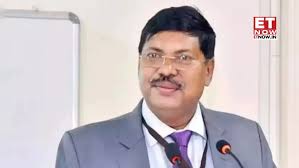
Meet Justice Bhushan R. Gavai: President Droupadi Murmu has officially appointed Justice Bhushan Ramkrishna Gavai as the 52nd Chief Justice of India (CJI). He will assume office on May 14, 2025, following the retirement of the current CJI, Justice Sanjiv Khanna, whose tenure ends on May 13. Justice Gavai, the most senior judge in the Supreme Court after Justice Khanna, will have a six-month tenure, retiring on November 23, 2025, upon reaching the mandatory retirement age of 65. Justice Khanna had recommended Justice Gavai’s name to the Union Law Ministry, in keeping with the convention of seniority in the appointment of CJIs. A legal journey rooted in Maharashtra Born on November 24, 1960, in Amravati, Maharashtra, Justice Gavai began his legal career in 1985. He trained under Bar. Raja S. Bhonsale, a respected former Advocate General and High Court judge, before starting independent practice in 1987. Initially practicing at the Bombay High Court, he later shifted focus to the Nagpur Bench, specializing in Constitutional and Administrative Law. He also served as standing counsel for major public institutions like the Nagpur and Amravati Municipal Corporations and Amravati University. Climbing the judicial ladder Justice Gavai’s judicial career began in 2003 when he was appointed as an Additional Judge of the Bombay High Court, and he was confirmed as a Permanent Judge in 2005. In May 2019, he was elevated to the Supreme Court of India. Over the years, he has been part of several Constitution Benches that have delivered significant judgments. Key judgments and constitutional bench involvement Justice Gavai was a member of the five-judge bench that unanimously upheld the abrogation of Article 370, which revoked the special status of Jammu and Kashmir. This ruling was one of the most critical constitutional decisions in recent Indian legal history. He also played a pivotal role in the bench that struck down the Electoral Bonds Scheme, a controversial method of political funding. Additionally, he was part of the bench that, by a 4:1 majority, upheld the 2016 demonetization move by the central government involving the withdrawal of Rs 500 and Rs 1,000 currency notes. A historic appointment Justice Gavai’s appointment is also historically significant. He will be only the second Dalit to hold the position of Chief Justice of India after Justice K.G. Balakrishnan. His elevation is seen as a moment of representation in the higher judiciary, reaffirming India’s commitment to diversity and inclusion. Courtesy: MSN Note: This news is originally published on https://www.msn.com/ and is for use by the non-military/non-commercial community, especially those in the human rights sector.