
Four held for attacking Dalit minor in Dharmapuri
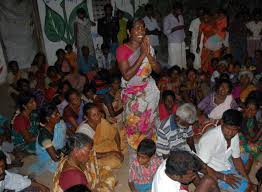
Ramakrishnan allegedly used casteist slurs and attacked the two youths. He also directed four others to apprehend the boy, tied him to a post, and beat him up with iron rods. DHARMAPURI: The A Pallipatti police have arrested four people and are on the lookout for one more person involved in the attack of a 16-year-old SC youth near Thenaraikottai village in Dharmapuri. Police said, “On Wednesday night, a 16-year-old boy along with his 20-year old relative both belonging to the SC community had gone to a petrol station near Thenkaraikottai village to refuel their two-wheeler. The 16-year-old had worked for the owner of the petrol bunk V Ramakrishnan (66) for a few days in the past and when they met, an argument broke out between them. Enraged, Ramakrishnan allegedly used casteist slurs and attacked the two youths. Ramakrishnan also directed four others to apprehend the 16-year-old boy, tied him to a post, and beat him up with iron rods. The other youth escaped and notified the minor’s family, who rescued and admitted him to Harur GH.” On Thursday, the boy filed a complaint with A Pallipatti police and a case has been registered under seven sections of BNS and under SC/ST POA Act against five people, of which R Selvam (38), R Senthil (43), V Selvaraj (32) T Senthil (45) have been arrested. Meanwhile, the prime accused, V Ramakrishnan has been hospitalised. “Ramakrishnan has also filed a complaint with A Pallipatti police stating that the two youths had attacked him which had resulted in the brawl. We have also booked a case against the two youths and further investigation is on,” police said. Courtesy: New Indian Express Note: This news is originally published on https://www.newindianexpress.com/ and is for use by the non-military/non-commercial community, especially those in the human rights sector.
Minor Dalit Girl Brutally Thrashed On Moving Bus For Opposing Molestation In UP’s Lakhimpur Kheri, Accused Arrested After Assault Video Goes Viral

An incident of violence against a 16-year-old Dalit girl has come to light from Uttar Pradesh’s Lakhimpur Kheri. The minor was brutally beaten on a moving bus by miscreants after she protested against their harassment. When the bus driver and conductor tried to intervene, they too were assaulted by the perpetrators. A video of the incident has gone viral on social media, showing the perpetrators slapping the victim and pulling her by her hair. According to reports, the incident occurred in the Padhua police station area of Nighaasan. What’s particularly shocking is that approximately 50 passengers on the bus reportedly watched the assault without intervening to help the victim. One passenger recorded the entire incident, and the video has since gone viral on social media. Bus driver Saleem told Hindi newspaper Dainik Bhaskar that he was driving from Dehradun to Lakhimpur when the incident occurred. “There was a girl sitting on the bus who was traveling to Lakhimpur. Some boys on the bus were harassing her. When she informed me about this, I tried to reason with the boys, but they started arguing and physically assaulting me,” Saleem said. Saleem stated that he stopped the bus at Padhua police station and filed a complaint against the youths. However, he claims that instead of taking action, the police merely counseled them and sent them away. The driver has also accused the miscreants of robbing him of Rs. 25,500. The Uttar Pradesh Congress shared the video of the incident on social media and criticised the government. In an X post, UP Congress said, “In Lakhimpur Kheri, miscreants harassed a Dalit minor girl on a moving bus, and when she protested, they beat her mercilessly. The miscreants were so emboldened that they didn’t spare the driver and conductor who came to intervene and beat them badly too.” Attacking UP Chief Minister Yogi Adityanath, the post further said, “Under Baba ji’s rule, criminals protected by power tarnish the honor of our sisters and daughters every day, but how dare Baba ji acknowledge his failure. Such a government deserves only condemnation!” The Lakhimpur Kheri Police have since issued a statement saying that a case has been registered at Padhua police station under appropriate sections. They further stated that the named accused have been arrested and charged, and legal proceedings are underway. Courtesy: Free Press Journal Note: This news is originally published on https://www.freepressjournal.in/ and is for use by the non-military/non-commercial community, especially those in the human rights sector.
Supreme Court Grants Relief To TISS Dalit Scholar Suspended Over Protest March, Allows Him To Continue PhD
The Supreme Court on Friday (May 2) directed the Tata Institute of Social Sciences to reinstate Dalit Ph.D. scholar and Left student leader Ramadas K.S, who was earlier suspended for alleged “misconduct” and “anti-national activities.” A bench comprising Justice Dipankar Datta and Justice Manmohan did not invalidate the suspension. However, it directed that the suspension be reduced to the period already undergone until yesterday. The bench expressed the view that Ramadas should be allowed to conclude his PhD. It was in April 2024 that the TISS suspended Ramadas from the institute for two years and debarred his entry across all its campuses. The action came after Ramadas participated in a protest against the Central Government and the BJP, and opposing the implementation of the National Education Policy (NEP) in a demonstration called the ‘Parliament march’ in January 2024 under the banner of TISS- PSF (Progressive Students’ Forum). Ramadas approached the Supreme Court challenging the Bombay High Court’s verdict, which upheld his suspension. The High Court observed that the said protest/march was politically motivated and noted that TISS was correct in finding that Ramadas created an impression that the views expressed in the march represented the views of the institute and that this brought disrepute to the institute. It was in 2015 that Ramadas first enrolled with the TISS for a Master’s degree in the course Media and Cultural Studies. He was awarded a scholarship from the institute. In 2018, he enrolled in the integrated M.Phil. and Ph.D. course in Development Studies. In 2023, he was awarded a National Fellowship in Scheduled Caste by the Union Ministry of Social Justice in view of his performance in the UGC-NET examination. Courtesy: Live Law Note: This news is originally published on https://www.livelaw.in and is for use by the non-military/non-commercial community, especially those in the human rights sector.
Supreme Court orders return of Ph.D. scholar Ramadas to TISS
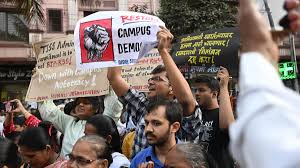
A Bench headed by Justice Dipankar Datta gave relief to Mr. Ramadas, who had challenged his suspension and ban from entering any TISS campus. A protest outside Tata Institute of Social Sciences against the suspension of Ph.D. scholar Ramadas K.S. on March 26, 2025. The Supreme Court on Friday (May 2, 2025) allowed Dalit Ph.D. scholar and Left student leader Ramadas K.S. to be reinstated in the Tata Institute of Social Sciences (TISS) while reducing his two-year suspension for alleged misconduct to the period already undergone. A Bench headed by Justice Dipankar Datta gave relief to Mr. Ramadas, who had challenged his suspension and ban from entering any TISS campus. A TISS empowered committee on April 17 2024 suspended Ramadas from the institute for two years and debarred his entry across all its campuses. Bombay HC dismisses TISS Ph.D student’s plea against his suspension for ‘anti-national activities’ The Bench noted the submissions of advocate Rajeev Kumar Panday, appearing for TISS, and perused the documents which prompted the committee to suspend the scholar for two years. Mr. Panday argued that the Bombay High Court was correct in not interfering with the suspension. However, the court took note of the fact that Mr. Ramadas was doing his Ph.D. from the institution and should be allowed to conclude it. “Today, the Honourable Supreme Court has ordered TISS to reinstate me as a student with immediate effect, hearing my petition against the two-year suspension and debarring entry to any TISS campuses in three different States… On the 366th day of legal proceedings since approaching the High Court, I am officially a student again –from Today – at the very institution that denied me education 380 days ago,” Mr. Ramadas was reported to have posted on social media. “I am happy. It is a relief for me. My first prayer was to go back to TISS and to study. That has been granted. I have not yet decided when I will rejoin. After the judgment comes in, I will study it and will go back thereafter. The court said, ‘Let him study.’ I respect the SC verdict,” Mr. Ramadas told The Hindu. Courtesy: The Hindu Note: This news is originally published on https://www.thehindu.com and is for use by the non-military/non-commercial community, especially those in the human rights sector.
Centre’s caste census move may alter UP’s political dynamics
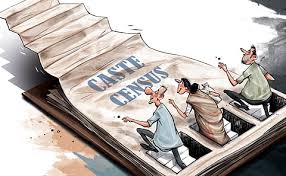
The move is likely to give momentum to long-pending demands from BJP allies in the state for a sub-quota within the OBC and SC/ST categories. The Centre’s decision to include caste enumeration in the upcoming census is set to create political ripples in Uttar Pradesh, the country’s most politically significant state. LUCKNOW: The Centre’s decision to include caste enumeration in the upcoming census is set to create political ripples in Uttar Pradesh, the country’s most politically significant state, by reshaping caste-based alignments that dominate its political landscape. The move is likely to accelerate long-pending demands from BJP allies in the state for a sub-quota within the OBC and SC/ST categories. Parties such as Om Prakash Rajbhar’s Suheldev Bhartiya Samaj Party (SBSP), Dr Sanjay Nishad’s NISHAD Party and Anupriya Patel’s Apna Dal (S) have consistently advocated the division of broader caste groups into sub-categories to ensure equitable distribution of reservation benefits. The demand for “quota within quota” stems from the findings of the Rohini Commission, constituted in 2017 to examine sub-categorisation of OBCs. Headed by Justice G Rohini, retired Chief Justice of the Delhi High Court, the four-member panel submitted its report in 2023, recommending a fairer allocation of reservation based on internal disparities among OBC communities. This argument for equitable distribution was previously echoed in Uttar Pradesh when the state government set up a social justice committee under retired judge Justice Raghvendra Kumar. The committee, in its 2018 report, recommended dividing OBCs into three groups: backward (12 sub-castes), more backward (59 sub-castes) and most backward (79 sub-castes). Similarly, the Dalits were also split into three groups: Dalit (4 sub-castes), Ati Dalit (31) and Maha Dalit (46). While Apna Dal (S), largely representing the backward Kurmi community, supported the caste census, it remained lukewarm to the committee’s recommendations, possibly fearing a backlash from socially dominant Kurmis. To push the agenda further, SBSP chief and Uttar Pradesh minister Om Prakash Rajbhar met Union Home Minister Amit Shah on Thursday. According to SBSP national general secretary Arun Rajbhar, the issue remains high on the party’s agenda. It is worth noting that SBSP had allied with the BJP during the 2017 assembly elections, and OP Rajbhar was inducted into the Yogi Adityanath cabinet. However, the party later parted ways in 2019 over the non-implementation of the social justice committee’s recommendations. “The party is thankful to PM Modi and the BJP’s central leadership for deciding in favour of caste census to help determine the social, economic, and political position of various OBCs and the SC population, ensuring a better distribution of resources leading to social justice in the true sense,” said Rajbhar. Political experts believe that while the Centre’s move could strengthen the BJP’s grip over its smaller allies, who frequently invoke the sub-quota demand to stay relevant, it may also intensify caste-based mobilisation. The sub-categorisation could potentially alter electoral calculations by directing more quota benefits towards marginalised sub-castes. Rajbhar added that the social justice committee’s report was a “clear reflection of the socio-economic conditions of the oppressed classes.” Sources indicated that the SBSP continues to press for factoring in the committee’s recommendations to carve out quotas within the broader OBC and SC/ST categories. Courtesy: New Indian Express Note: This news is originally published on https://www.newindianexpress.com and is for use by the non-military/non-commercial community, especially those in the human rights sector.
‘Dignity of labour applies only to societies where equality is the norm’

Even if you are a Dalit and you think some other subcaste is lower to you and feel happy about it, you are just practising a 3,000-year-old system, says Bezwada Wilson Only if we can come out of the mindset of finding joy in being superior to another person can we overcome the caste system, says Bezwada Wilson, co-founder and National Convenor of the Safai Karmachari Andolan (SKA.) “Even if you are a Dalit and you think some other subcaste is lower to you and feel happy about it, you are just practising a 3000-year-old system,” he said, speaking at Ashoka Trust for Research in Ecology and the Environment (ATREE) as part of the intersectionality series. He argued that similar is the case with patriarchy too and that men of most communities consider women lower to them. The Magsaysay award winner further noted that considering oneself as inferior to someone else was equally dangerous. “The scavengers feel that they are inferior to everybody else in this country because they have to clean, carry and dispose of human excreta and garbage. But in other countries who are doing similar work, people don’t feel the same way because of dignity of labour.” However, he noted that the concept of dignity of labour shouldn’t be applied in the Indian context to ask someone to clean another person’s toilet. “Only when you are able to understand and attain an equal society can you bring up the dignity of labour. We are unfortunately far away from it,” he said. Fighting caste-based occupation In 1993, the Employment of Manual Scavengers and Construction of Dry Latrines (Prohibition) Act,1993 prohibited the construction of dry toilets and employment of manual scavengers to clean them. Wilson noted that despite the prohibition the practice continued in several parts of the country in the years that followed unhindered. In 1994, Wilson founded the SKA along with activist Paul Diwakar and former chief secretary of Tripura S.R. Sankaran to document continuing scavenging practices and fight against it. “S.R. Sankaran was with Safai Karmachari Andolan for 18 years. We were determined to destroy caste-based occupation. S.R. Sankaran, who was born as a Brahmin, was the chairperson. We shouldn’t be adamant that only a Dalit should lead, and others should be kept away. We cannot again practise the caste system in our organisations and discriminate people by caste names,” he said. Pursuing justice In 2003, SKA, 18 other civil society organisations, and a few individuals and manual scavengers filed Public Interest Litigation in the Supreme Court naming all states and government departments of Education, Judiciary, Defence and Railways as violators of the Manual Scavenging (Prohibition) Act. “You can’t always expect justice to come to you. Try to take a step to go and stand by the side of justice,” he said. Wilson noted that the case helped to create awareness around the issue and made officials answerable to manual scavengers for the first time. However, he pointed out that in states such as Uttar Pradesh, Madhya Pradesh, Bihar and Jammu & Kashmir, dry latrines still existed and women continued cleaning them. “After so many years of independence and despite being a democratic country how can this continue?” he questioned. To address this issue, SKA would launch a campaign in the said states, he said. Courtesy: Note: This news is originally published on https://www.thehindu.com and is for use by the non-military/non-commercial community, especially those in the human rights sector.
Caste Census: This caste has largest population in India, not Brahmins, Dalits, SCs, the name is…; know key facts about caste-based census

As the name suggests, caste census is a caste-based survey of the country’s population aimed to determine the exact number of people of each caste living in India as accurately as humanly possible. Caste Census: Prime Minister Narendra Modi-led Central government has announced to carry out a caste-based census across the country, meeting a long-standing demand of the opposition INDIA bloc led by the Congress, which is hailing the announcement as a major victory. Opposition parties, especially the Congress and its INDIA bloc ally, the Samajwadi Party (SP), have been rallying for a caste census for a very long time, and now Centre has announced that the same will be conducted countrywide. According to reports, caste census is likely begin in the coming months, and is likely to be completed by mid 2026. Interestingly, there is already some data about the population of different castes in India. Let us find out which caste has the largest population in the country: Caste with largest population Based on the 2011 general census, there are as many as 46 lakh different castes in India, and contrary to popular belief, the Dalits or Scheduled Castes (SCs) are not the largest caste in India. According to the 1931 census, the Other Backward Classes (OBCs) are have a 52 percent share in the country’s population, making them the largest caste-based group in India. This was also taken as the baseline when the Mandal Commission recommendations were implemented by the V.P. Singh government in 1990. However, it must be noted that the figures are based on data which is nearly a century old, and the current census could reveal a vastly different set of figures. What is caste census and who benefits? As the name suggests, caste census is a caste-based survey of the country’s population aimed to determine the exact number of people of each caste living in India as accurately as humanly possible. Although caste census has been conducted in India earlier, but the OBCs were not included in the survey at the time, which will not be the case in coming caste-based census. Caste census proponents assert that it will clarify the social, educational, political and economic standing and participation of various castes, and help build an equitable society based on the principle of ‘jitni aabadi utna haq (larger the population, greater the right)’. On the other hand, critics of caste-based survey claim it is a ploy to divide the Indian society, particularly the Hindu majority, into caste-based sub-groups for vote-bank politics. Courtesy: India.com Note: This news is originally published on https://www.india.com and is for use by the non-military/non-commercial community, especially those in the human rights sector.
Dalit boy thrashed by fuel station owner, three others in Dharmapuri district.

DHARMAPURI: The A Pallipatty police in Dharmapuri district on Thursday registered a case against four men, including a fuel station owner, on charges of assaulting a dalit boy. The police began searches for the men who attacked the 17-year-old boy. The boy had worked at the fuel station run by Ramakrishnan, 48. He left the job to assist his uncle. This angered Ramakrishnan. On Tuesday night, Ramakrishnan and others allegedly tied the boy to a tree and beat him up, said a police officer at the A Pallipatty station. The boy was freed when his parents arrived there on Wednesday morning. They took the boy to Dharmapuri Government Medical College and Hospital and filed a complaint at the A Pallipatty police station. The police registered a case against the four men, including Ramakrishnan, under the Prevention of Atrocities against SC/ST Act on Thursday. Courtesy: times of india Note: This news is originally published on https://timesofindia.indiatimes.com/ and is for use by the non-military/non-commercial community, especially those in the human rights sector.
‘Won’t let you live here’: Dalit man thrashed, abused in Gurgaon

Gurgaon: A 30-year-old Dalit man was allegedly assaulted and abused with casteist slurs by a neighbour and his associates who suspected that he had broken a car window last week in Faridabad’s Ballabgarh. Police said on Thursday that they registered a case under sections 351(2) (criminal intimidation), 3(5) (common intention) and 115 (voluntarily causing hurt) of BNS along with provisions of the Scheduled Castes and Scheduled Tribes (Prevention of Atrocities) Act. Shravan Kumar told police he was returning home in Tirkha Colony from a market when his neighbour, Prakash alias Monu, called out to him around 7pm on April 27. Prakash (30) asked Shravan if he was responsible for breaking a car’s window. Shravan denied any role, after which Prakash and another man, Rajesh Pandit, allegedly started hurling casteist slurs and beat him up. The 30-year-old said in his complaint that he went back home without retaliating, but Prakash, his father and 8-10 men, some of them armed with guns, came to his house and threatened him and his mother. Hurling slurs again, Prakash allegedly said, “We won’t let a Dalit live here.” Shravan said he lives in the colony with his mother, and the incident alarmed the two of them. He said he had several injuries and went to a govt hospital for treatment. According to his complaint, Shravan had blunt injuries to his face, shoulder and head. Doctors recommended further evaluations. The 30-year-old said he was hesitant about filing a police complaint because of attempts to resolve the issue by the colony’s residents. But he approached Ballabgarh City police station after the two sides could not reach a compromise. “We have registered a case and further investigation will be carried out accordingly,” a senior police official said. Courtesy: Times of India Note: This news is originally published on https://timesofindia.indiatimes.com and is for use by the non-military/non-commercial community, especially those in the human rights sector.
Revanth to Centre: Form GoM, expert panel for caste census
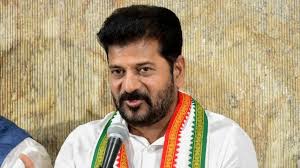
Hyderabad: Chief minister A Revanth Reddy has urged the Centre to constitute a Group of Ministers (GoM) and an experts committee for caste census across the country. He also appealed to Prime Minister Narendra Modi to set a clear timeframe to complete the exercise, preferably within a year. Welcoming the Centre’s decision to include caste data in the next census, Revanth thanked the PM and emphasised that the Telangana govt was ready to cooperate, offering insights from its own caste survey without seeking political mileage. He said Telangana has become a role model in conducting such surveys. “The GoM and experts committee should be constituted separately to visit various states and hold consultations with political parties, stakeholders, and civil society on the caste census,” Revanth said at a press conference at his Jubilee Hills residence on Thursday. He explained that Telangana’s GoM and experts committee had visited every district, interacted with stakeholders, and collected representations from the public during its caste survey. Highlighting regional variations in caste classification, the CM said the experts committee must consider state-wise differences. “For instance, the Boya community is classified as OBC in Telangana but as ST in Karnataka. Similarly, Lambadas are tribals in Telangana but considered OBC in Maharashtra. There needs to be a consensus on these differences,” he said. When asked if the Centre’s move was politically motivated, particularly in light of the Bihar elections, Revanth refrained from making direct allegations. “I do not want to get into political accusations, especially when the move benefits people. But it’s clear that the BJP govt was compelled to act,” he said. He credited Rahul Gandhi for initiating the talk around caste census, asserting that the Congress leader promised a caste survey in Telangana and fulfilled the promise. “The credit goes to Rahul Gandhi,” he added. The CM said the state govt has already submitted its report to the Centre. “If needed, an official delegation is ready to go to Delhi to make a Power-Point presentation,” he said. On whether the Centre’s caste census data would override Telangana’s findings, Revanth clarified, “Central data prevails. However, Telangana’s survey was carried out systematically and scientifically, with a GoM and experts committee guiding the process.” He detailed the scale of the Telangana survey stating that 57 questions, spanning eight pages, were asked, with 95,000 enumerators covering every household in the state within 90 days. The process was supervised by top govt officials and the state-level GoM. “Telangana has shown the way. This is a historic exercise pending for nearly 100 years,” the CM claimed. Commenting on the 2024 Lok Sabha elections, Revanth claimed that the Congress had warned the public about the BJP’s alleged intent to remove reservations and alter the Constitution. “The people didn’t give the BJP a clear majority. With only 240 seats, their plans have been stalled,” he said. He also questioned why BJP-ruled states undertook caste surveys if the BJP opposed them. “The BJP has been in power for 11 years and governs 16–17 states. Why were caste surveys conducted only recently,” he wondered. Revanth said the BJP, despite its initial opposition, had been forced to support caste census due to Congress’s pressure. He recalled the Congress-led protest at Jantar Mantar, where leaders from most parties participated, except the NDA allies. Regarding the stalling of ‘Operation Kagar’ in Chhattisgarh, the CM said: “There is no place for violence in a civilised society. The party believes in dialogue with Maoists, and a policy decision will be taken soon.” Courtesy : TOI Note: This news is originally published on https://timesofindia.com and is for use by the non-military/non-commercial community, especially those in the human rights sector.