
Political strife erupts between the BJP and Congress over Dalit Christian reservations in Kerala. Why is the BJP angered by CM Satheesan’s statement?
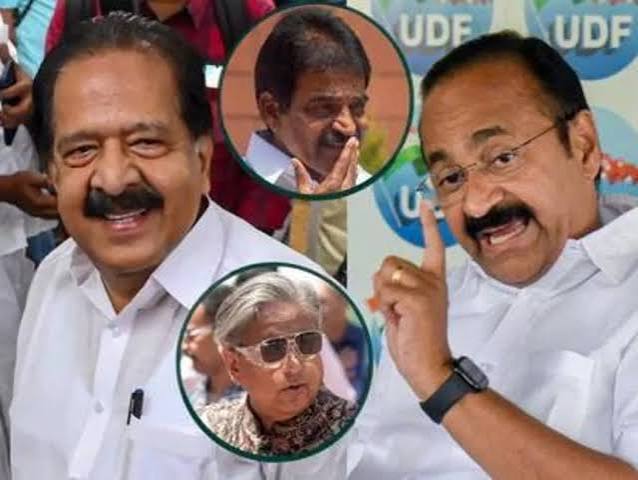
The political conflict between the BJP and Congress over the demand for reservation for Dalit Christians in Kerala has intensified. A statement by Chief Minister V.D. Satheesan has reignited the issue, raising questions about the BJP’s carefully crafted Christian vote bank strategy. Thiruvananthapuram – At an event commemorating the 163rd birth anniversary of social reformer Ayyankali, Chief Minister V.D. Satheesan stated that the Dalit Christian community is not receiving the facilities available to Christians or the benefits afforded to Scheduled Castes (SCs). He assured that his government would study the issue and find ways to address the community’s backwardness. The Chief Minister’s statement drew a sharp reaction from the BJP’s Scheduled Caste (SC) Morcha. State president Shajumon Vattekkad demanded Satheesan retract his statement, alleging that the Chief Minister was engaging in appeasement politics. He warned that extending the reservation for the Scheduled Caste community to Dalit Christians would be like playing with fire. Vattekkad stressed that the quota granted to the Scheduled Caste community by the Constitution is not a charity but their right, and that the BJP’s SC Morcha will mobilize the community and launch a movement against the government. BJP State Vice President K.S. Radhakrishnan also questioned the validity of the demand. In a Facebook post on Tuesday, he argued that if conversion eliminates caste identity and caste-based oppression, then the demand for SC status has no basis. He said that if caste discrimination still persists within the Christian community, they should first acknowledge it and address it. What is the demand of Dalit Christians and how long has it been ongoing? The demand for SC status for Dalit Christians is not new. This demand has long been raised, especially by a section of the Christian community in Kerala and the Catholic Church. Dalit Christians are primarily descendants of Hindu communities who were historically marginalized and later converted to Christianity. Under the Constitution (Scheduled Castes) Order, 1950, SC status is limited to members of the Hindu, Sikh, and Buddhist communities. Various governments have considered proposals to extend this status to Dalits who converted to Christianity or Islam from time to time. Kerala has a large Dalit Christian population, whose ancestors converted generations ago. The community argues that despite conversion, they continue to face social and economic discrimination based on caste and should be granted the same constitutional protections as Dalits of other religions. Dalit Christians affiliated with the Syro-Malabar Catholic Church are primarily concentrated in Kottayam, while non-Catholic communities such as Pentecostals reside in large numbers in Pathanamthitta and Idukki districts. Why is this issue a political dilemma for the BJP? This issue poses a major political dilemma for the BJP. The party has been striving to expand its reach beyond its traditional Hindu base to Kerala’s Christian community over the past few years. The issue of conversion has been a major obstacle to this outreach, although a section of the BJP’s state leadership has tried to downplay it, arguing that the Christian population in Kerala is declining, so conversion should not become a barrier between the party and the Christian community. The party has also tried to portray Hindus and Christians as communities with shared interests, especially on what BJP leaders call “Muslim appeasement.” Despite this, the issue of conversion remains a thorn within the BJP and the broader Sangh Parivar. Last year, the arrest of two Kerala Catholic nuns in Chhattisgarh on charges of forced conversion and human trafficking brought this tension to the fore. Several leaders, including Kerala BJP President Rajeev, rejected allegations of forced conversion and expressed solidarity with the nuns. This stance was criticized by some sections of the Sangh Parivar in Kerala, who cited it as an example of the conversion of members of marginalized Hindu communities. This debate again came to the fore this year regarding the Foreign Contribution (Regulation) Amendment Bill, 2026. The bill, introduced by the central government, was later referred to a joint parliamentary committee. While BJP leaders attempted to allay Christian organizations’ concerns about the proposed changes, some sections of Hindutva organizations in Kerala alleged that this funding could encourage religious conversions and demanded strict scrutiny of foreign donations to churches. R.V. Babu, state president of the Hindu Aikya Vedi, also opposed any move to extend Scheduled Caste reservations to converted Christians, alleging that the government was “promoting religious conversions.” The Vedi is an umbrella organization of several Sangh Parivar-affiliated organizations in Kerala. The BJP inducted Christian leaders into the party to woo the Christian vote and fielded Christian candidates in areas with large Christian populations. However, the party failed to achieve significant success among Christian voters in the 2026 assembly elections. The BJP won three assembly seats—Nemom, Kazhakootam, and Chathannoor—but its victories in these seats were attributed to its traditional Hindu base rather than any major shift in Christian voter sentiment. These limited electoral results have further fueled debate within the BJP about the direction and political benefits of its Christian-centric strategy. In such a situation, Satheesan’s statement is being seen as part of the Congress’s strategy to dent the BJP’s Christian outreach, while some sections within the BJP have become more vocal than ever on the issue of conversion. The issue is also under consideration at the central level. The question of granting SC status to Dalits who convert to Christianity or Islam is also under consideration at the national level. In 2022, the central government constituted a commission headed by former Chief Justice of India K.G. Balakrishnan to investigate this issue. The commission’s work included investigating the demand for SC status for Dalit converts and the discrimination they face. The case for granting SC status to Dalit Muslims and Christians has been pending in the Supreme Court for 20 years. The commission’s tenure was extended several times. After several extensions, the commission finalized its report by the scheduled deadline of June 10. A community grappling with caste discrimination The situation of Dalit Christians in Kerala is socially and economically challenging, where they continue
Meerut: Dalit lawyer on hunger strike lifted overnight, demanding action against former SSP
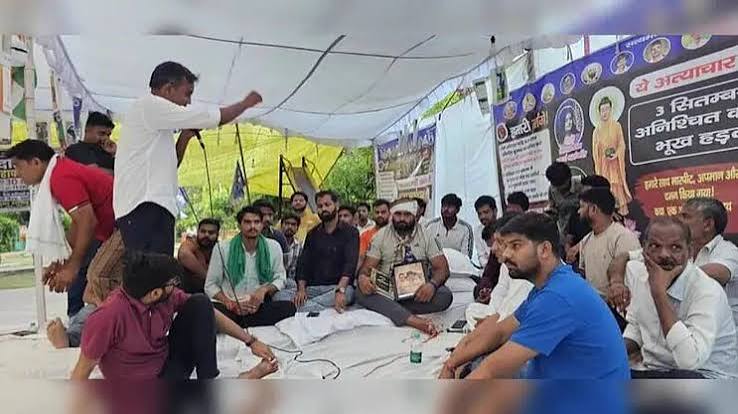
In Meerut, Dalit lawyer Ravi Gautam, who was on hunger strike demanding action against the former SSP, was removed from the protest site overnight by police. Police cited ill health, while the lawyer denied it. Uttar Pradesh: Dalit lawyer Ravi Gautam, who was on hunger strike at Commissioner’s Park in Meerut, was removed from the protest site early Friday morning by police. Ravi had begun his hunger strike on Thursday and was demanding the dismissal of former SSP Avinash Pandey and the registration of an FIR against him in connection with the violence that occurred on July 8th. Police cited the lawyer’s deteriorating health as the reason for this action. Ravi Gautam had been on strike in the same park since August 20th. He alleges that former SSP Pandey severely assaulted him inside a police van. However, a video of Gautam has surfaced after he was removed from the protest site by police. In the video, he is seen claiming that he was in perfect health. His statement directly questions the police’s claim of poor health. Regarding the entire incident, Civil Lines Superintendent of Police (CO) Vishwa Jyoti Rai stated that Ravi Gautam was thoroughly medically examined. The report revealed a significant deterioration in his health. Following the established protocols (SOPs), he was transferred to a higher-level medical center in Ghaziabad for better care. Meanwhile, by Friday morning, the police administration had completely removed the tents at the protest site. Earlier, on Thursday afternoon, when Gautam announced his hunger strike, several Bharatiya Kisan Union (Ambedkar faction) activists had reached Commissioner’s Park in solidarity. During his fast, Gautam made serious allegations against the government and administration of ignoring his legitimate demands. He also appealed to Dalit leaders associated with the BJP to speak out openly on these important issues affecting the community. This entire controversy stems from the death of a student in May. The protesters alleged that the police conducted a highly flawed investigation into the student’s death. On July 8th, a protest by the Dalit community erupted, which later turned violent. Several videos went viral on social media, allegedly showing SSP Pandey beating Gautam inside a police van. Following this incident, an SP official and his Dalit associate also leveled serious allegations of police brutality. As the matter escalated, the then-SSP, Avinash Pandey, was attached to Lucknow headquarters. Rajan Chaudhary Courtesy: Hindi News
‘If this can happen to Cong president, imagine what must be happening to Dalits’: Ashok Gehlot on Haldwani row
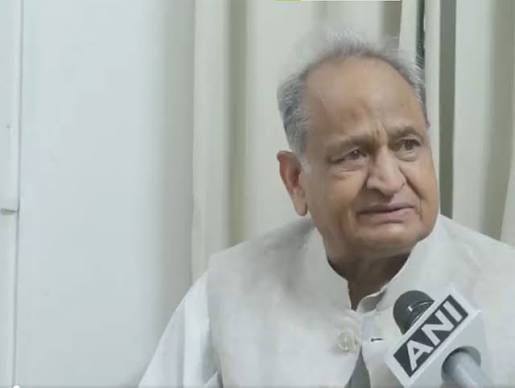
Gehlot said continued injustice and oppression, including the Kharge episode, had hurt Dalits, backward classes, tribals and the poor. Senior Congress leader and former Rajasthan Chief Minister Ashok Gehlot on Saturday described the alleged ‘purification’ ritual conducted after Congress president Mallikarjun Kharge’s rally in Haldwani as a serious incident, saying it had caused pain to the Dalit community. “This is a serious incident. If this can happen to the Congress president, just imagine what must be happening to the Dalit community across the entire nation. Under their rule, this negligence has only increased,” Gehlot told ANI. He said incidents of injustice, oppression and persecution had continued, adding that the episode involving Kharge had hurt Dalits, backward classes, tribals and the poor. “Such incidents of injustice, oppression and persecution have been ongoing, but the incident that happened with Mallikarjun Kharge has caused immense pain to the entire Dalit community of the country, the backward classes, tribals, or any poor person—anyone who has sympathy for Dalits,” he said. Gehlot also referred to Leader of the House JP Nadda’s assurance in the Rajya Sabha on the matter, saying people had expected action following his statement. Nadda had said in the Rajya Sabha that the matter was being taken seriously and that action would be taken. Gehlot said the assurance from the Leader of the House had raised expectations, but no action had followed. “This pain is felt by all of us, by all citizens of the country; there is intense outrage among all people, which the BJP government or the NDA government is failing to understand, but when the time comes, the people will make them understand,” he said. Meanwhile, the Uttarakhand Pradesh Congress Committee will hold a demonstration and march from Dehradun’s Parade Ground to the Chief Minister’s residence on September 7 over the Haldwani ‘purification’ row. The controversy began after a Congress rally at Ramlila Ground in Haldwani on August 8, ahead of the 2027 Uttarakhand Assembly elections. Members of a right-wing group later conducted a shuddhikaran ritual at the venue, drawing criticism from Congress leaders. Gehlot also commented on the controversy surrounding a book on Sonia Gandhi, alleging that publisher Penguin was “hesitating” to publish it due to pressure. “The publisher Penguin is hesitating, making excuses. We had already said that there might be pressure from the government on them because Penguin’s parent company is ready to publish the book,” he said. Gehlot said several major publishers had since approached the authors to publish the book and expressed confidence that it would be launched on November 10. The memoir chronicles Sonia Gandhi’s journey from her childhood in post-war Italy and her relationship with Rajiv Gandhi to the personal losses that shaped her life and relationship with India. In the memoir, the 79-year-old Congress veteran, who was the party’s longest-serving president, revisits her childhood in Italy, her relationship with former Prime Minister Rajiv Gandhi during their time at Cambridge, and the assassinations of her mother-in-law, Indira Gandhi, and her husband, Rajiv Gandhi. Courtesy : TNIE Note: This news is originally published on https:/thenewindianexpress.com/bha and is used purely for non-profit/non-commercial purposes, especially human rights
Ahead of Rahul Gandhi’s visit, Bhupesh Baghel to tour Punjab
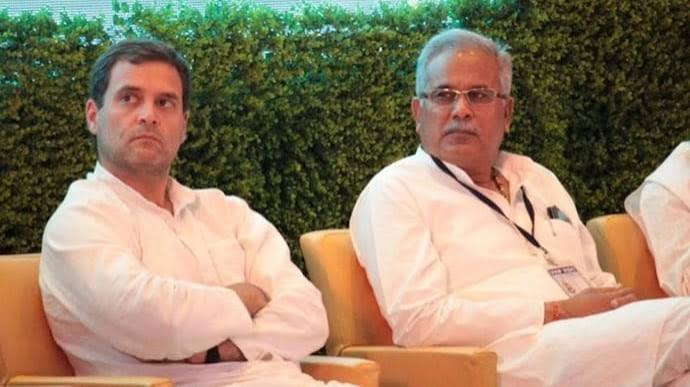
Chandigarh: Ahead of the proposed visit of Congress leader Rahul Gandhi to Punjab, Punjab Congress in charge Bhupesh Baghel is scheduled to visit the state next week as the party works on preparations for the proposed tour. Baghel will address a news conference in Chandigarh on Sept 7 on the issue of the Mallikarjun Kharge “purification” controversy and the FIR registered against Rahul Gandhi. He will also participate in the Congress’s statewide protest against Punjab govt on Sept 8. Amid factionalism within the party, it remains to be seen whether former chief minister Charanjit Singh Channi and other leaders supporting him will participate in the Sept 8 statewide protest. The Channi group has been pressing for the removal of Amrinder Singh Raja Warring as Punjab Pradesh Congress Committee president. A meeting on Rahul Gandhi’s proposed Punjab visit was held in Delhi on Thursday and was attended by Baghel, Warring, Leader of Opposition Partap Singh Bajwa and Punjab Congress co-in charge Suraj Singh Thakur. The proposed route of the bus yatra of Rahul Gandhi was discussed at the meeting. The Punjab Congress has also sent the central leadership a detailed proposal for the visit. On the timing of Rahul Gandhi’s visit, Warring said that if it is a long, multi-day tour, it is likely to take place after Sept 19. If it is a shorter visit, the programme could be announced within the next one or two days. As per the proposed plan, Rahul Gandhi’s visit is likely to begin from Amritsar. According to information, the first phase of the proposed bus yatra is expected to cover 15 to 18 Assembly constituencies. Ahead of Rahul Gandhi’s visit, the Congress high command may also hold a separate interaction with Channi and other leaders supporting him as part of efforts to address differences within the state unit. Channi and Sukhjinder Singh Randhawa were not part of Thursday’s Delhi meeting. A separate meeting with the Channi group is now being considered, and Channi and some other senior leaders who have expressed their differences may be called to Delhi. Courtesy : TOI Note: This news is originally published on https:/timesofindia.com/bha and is used purely for non-profit/non-commercial purposes, especially human rights
Shabbir Ali demands withdrawal of cases against Rahul Gandhi
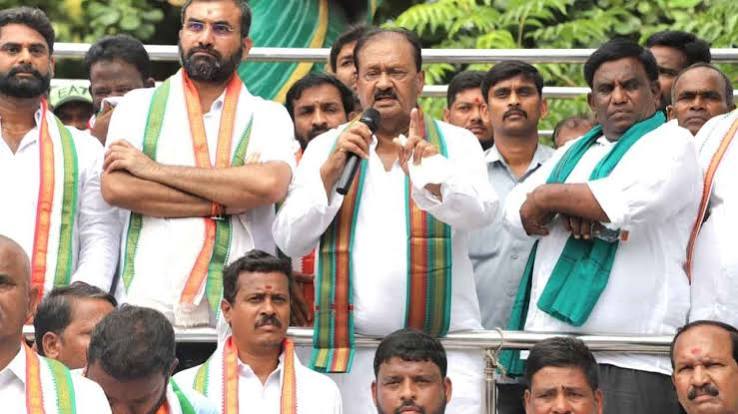
Hyderabad: Govt adviser Mohammed Ali Shabbir on Friday demanded the immediate withdrawal of what he termed the “illegal cases” registered against Congress leader and Leader of Opposition in the Lok Sabha Rahul Gandhi, while seeking stringent action against those responsible for allegedly insulting Congress president Mallikarjun Kharge. The Congress staged a protest at the Kamareddy district headquarters on Friday, alleging that cases had been registered against Rahul Gandhi after he questioned an incident of caste discrimination involving Kharge. Party workers took out a rally from Nizamsagar Chowrasta to the municipal office and later staged a dharna. Addressing the gathering, Shabbir Ali said there was no place in the country for caste discrimination, untouchability or any practice that treated people as inferior. He condemned reports that a venue attended by Kharge was “purified” with Gangajal, allegedly because he is a Dalit leader. “This is not merely an insult to Kharge. It is an insult to the Constitution and the ideals of BR Ambedkar,” he said. Courtesy : TOI Note: This news is originally published on https:/timesofindia.com/bha and is used purely for non-profit/non-commercial purposes, especially human rights
Rahul Gandhi vs C Joseph Vijay: Can TVK chief do what Arvind Kejriwal could not?
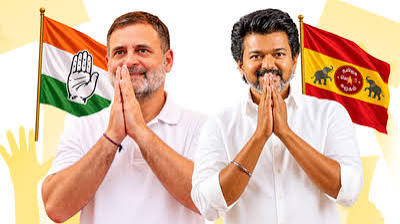
The honeymoon period between Tamil Nadu chief minister C Joseph Vijay’s Tamilaga Vettri Kazhagam (TVK) and its coalition partner, the Congress, appears to be over. Barely months after the two parties came together to form the government, they are already sparring over a question that is ostensibly about the 2029 Lok Sabha election: Who should be the opposition’s prime ministerial face – Rahul Gandhi or Vijay? What began as statements and counter-statements between the two party leaders has quickly acquired a sharper political edge. TVK PWD minister Aadhav Arjuna pitched Vijay as a potential national leader, arguing that the country’s highest political office should go to a leader from Tamil Nadu. On the other hand, state minister S Rajesh Kumar said Congress ministers in the Tamil Nadu cabinet would resign if TVK did not support Rahul Gandhi as the PM candidate in 2029. The confrontation spilled into the assembly as well. Congress Legislature Party leader and MLA Tharahai Cuthbert was shifted on August 31 from the section allotted to TVK legislators to the front row of the opposition benches. But beneath the immediate fight over Rahul versus Vijay lies a much bigger question: Does Vijay intend to remain a powerful Tamil Nadu leader, or does he see the state’s 2026 mandate as the launchpad for a national political project? And if the latter is the plan, can he succeed where Arvind Kejriwal could not? Vijay’s extraordinary first step The scale of Vijay’s rise explains why the 2029 debate has surfaced so early. The April 2026 Tamil Nadu assembly election ended nearly six decades of dominance by the DMK and AIADMK. TVK, only two years old, emerged as the largest party with 108 seats in the 234-member assembly. The DMK won 59 and AIADMK 47, while Congress secured five seats, with the remaining seats going to smaller allies. TVK was therefore not merely a new party that performed better than expected. It emerged as the central political force in an election that disrupted the state’s traditional two-party equilibrium. There was, however, one problem: 108 seats were still short of the 118 required for a simple majority. That made Congress indispensable. Vijay eventually formed the government with the support of MLAs from Congress [5], VCK [2] and IUML [2], along with outside support from the Left parties [4]. The MDMK, which has two MLAs, later extended its support. Congress moved away from its long-standing association with the DMK and backed a TVK-led government along with smaller allies, taking the coalition’s strength to 121. Vijay was sworn in as CM on May 10. Congress had submitted its letter of support after the election, making it clear that its support would be conditional on TVK keeping “communal forces” out of the alliance. C Joseph Vijay-Gfx The 234-member assembly currently has seven vacancies following the resignation of six AIADMK MLAs and Vijay vacating his second seat, Trichy East. The effective strength of the House is therefore 227, bringing the majority mark down to 114. The political equation is unusual. Congress is the junior partner, with only five seats, but its support helped Vijay cross the majority mark. At the same time, TVK’s 108 seats give Vijay overwhelming dominance within the coalition. That inversion may be at the heart of the present tension. Congress had been with the DMK in the pre-poll alliance and had never secured a place in MK Stalin’s cabinet. After the results, however, it quickly moved to TVK’s side and helped Vijay form the government. The alliance therefore contains a built-in contradiction: the party that needs Vijay’s government to survive does not want Vijay to emerge as the leader of the national opposition. C Joseph Vijay-Gfx3 The ‘agnipath’ of Vijay’s path Vijay’s route to Delhi runs into a problem that no amount of success in Tamil Nadu can entirely solve: numbers. Tamil Nadu sends 39 MPs to the Lok Sabha. Even a TVK sweep in 2029 would leave Vijay nowhere close to the 272 seats needed for a majority in the 543-member House. History, however, offers a little hope. In the past, India has had PMs whose parties did not come close to a Lok Sabha majority. HD Deve Gowda became PM in 1996 after the Janata Dal won just 46 seats, emerging as the consensus choice of the United Front with Congress support. IK Gujral followed a year later under much the same arrangement, with the Janata Dal holding only around 45 seats. Chandra Shekhar became prime minister in 1990 after breaking away from the Janata Dal with just 64 MPs, relying on outside support from Congress. This may give Vijay some hope. But it is also where the historical comparison begins to fray. The coalition politics that made these leaders PMs belonged to a different national landscape where coalition governments were a norm. The BJP, however, has changed that equation, building the NDA into a durable national coalition rather than the loose, post-election arrangements that defined much of the 1990s. The opposition, meanwhile, has come together in the form of the INDIA bloc which Vijay’s TVK is not part of yet. And yet, paradoxically, being outside the INDIA bloc may give Vijay an advantage over Rahul Gandhi. Rahul comes with the weight of the Congress’s history: its national footprint, its alliances and rivalries, the Nehru-Gandhi legacy and the political resistance that the party can provoke among regional leaders. Vijay comes with much less baggage. He would enter a coalition conversation not as the leader of a decades-old national party, but as a new political force with a mass following built before he entered politics. C Joseph Vijay-Gfx2 That distinction could matter if the next Lok Sabha produces another fractured mandate. But that is a big if, and one that looks unlikely in the present circumstances. Congress MP Karti Chidambaram has already put the arithmetic bluntly: “Every party has dreams, ambitions, and desires … but we know what the political reality is. There are 543 constituencies.” Thus, for Vijay, even
HC seeks reply on SOP for arrest, detention of transgenders
New Delhi: Delhi High Court on Wednesday asked the Centre and Delhi Police to inform it about the steps being taken to lay down an SOP for probe agencies when interrogating, arresting or detaining a transgender person. A bench of Chief Justice DK Upadhyaya and Justice Tejas Karia issued notices to central govt, police as well as Delhi govt on a PIL by law student Taaran Chandna, who said that while Delhi Police has a standing order for the arrest of women and senior citizens, it is “wholly silent” on transgender persons. The petitioner submitted that in May, NHRC issued the Advisory for Ensuring the Welfare of Transgender Persons, 2.0 for the formulation of an SOP to govern the arrest, detention, search, interrogation and imprisonment of transgender persons. However, no such SOP or guideline has been formed for Delhi, he said. The bench, while asking “the Union of India, Delhi Police and state govt to file their reply,” said that “in the meantime, we direct that the advisory issued in May 2026 shall be considered and appropriate steps as permissible in law shall be taken.” The court listed the matter for Nov 18. In the PIL, Chandna said the SOP governing the arrest and personal search of transgender persons by Delhi Police was needed to protect their fundamental rights to bodily integrity, dignity, equality and non-discrimination guaranteed under the Constitution. The “concrete and continuing harm” due to the SOP “vacuum” can be seen when the police in May 2025 arrested three transgender persons, the plea said. It alleged that despite one of them possessing female genital anatomy and another holding a valid certificate of identity, all three were physically searched by a male police officer “without any enquiry into their gender identity, without seeking self-declaration, and without consent”. Courtesy : TOI Note: This news is originally published on https:/timesofindia.com/bha and is used purely for non-profit/non-commercial purposes, especially human rights
Court Allows Electronic Evidence in Dalit Youth Murder Case

. The court dismissed the counter-affidavits and technical objections filed by the MLC’s defence counsel, who opposed the petition Kakinada:Principal District and Sessions Judge (SC, ST Special Court), Rajamahendravaram, on Thursday allowed the petition of prosecution seeking permission to record electronic evidence, including CCTV footage, while questioning YSRC MLC Anantha Satya Udaya Bhaskar Rao (Anantha Babu) and his wife Roja in the murder case of Dalit youth Veedhi Subrahmanyam. The court dismissed the counter-affidavits and technical objections filed by the MLC’s defence counsel, who opposed the petition. Special public prosecutor Muppalla Subba Rao appeared for the prosecution. Principal District Judge Junaid Ahmed Maulana issued the orders after hearing the arguments of both sides The prosecution sought to correct the number of Section 65-B certificates taken on record. The prosecution informed the court that the number had been erroneously recorded as “32”, whereas the actual number submitted is “54”. Advocates for the accused opposed the plea and sought dismissal of the petition at the preliminary stage itself, contending that it is not legally maintainable. After hearing both sides, the judge allowed the corrections sought by the prosecution. Courtesy : Deccan Chronicle Note: This news is originally published on https:/deccanchronicle.com/bha and is used purely for non-profit/non-commercial purposes, especially human rights
‘Preventing Dalits From Temple Entry Amounts to Untouchability’: Madras HC
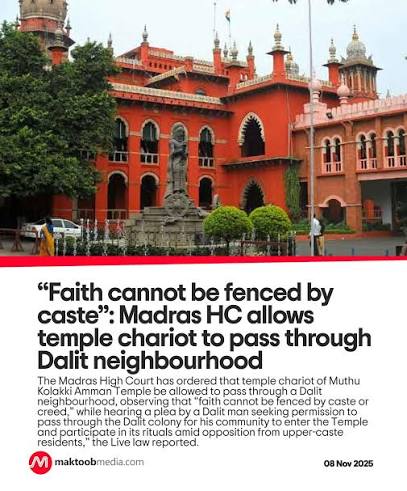
The Madras High Court has held that preventing a person belonging to a Scheduled Caste from entering a temple or participating in a temple festival on caste grounds amounts to the practice of untouchability and violates the fundamental right guaranteed under Article 17 of the Constitution. Justice D Bharatha Chakravarthy made the observation while hearing a petition filed by V Sundaram in connection with the Arulmigu Muthu Mariamman Temple chariot festival at Ramanayakkanpalayam in Salem district. ‘Nobody Can Be Prevented on Caste Grounds’ The petitioner had sought equal participation for members of the Milagu Kattan Adidravidar Community in the temple festival and directions to prevent certain individuals from excluding them. The Tamil Nadu government told the court that a peace committee meeting had been held and that everyone had been allowed to participate in the festival irrespective of caste or creed. It also said that disputes over “Karaikarargal rights” could be taken before a civil court. Sundaram’s counsel, however, urged the court to ensure that members of the community would not face similar exclusion during future festivals. The High Court referred to the Tamil Nadu Temple Entry Authorisation Act, 1947, and said that a person cannot be stopped from entering a temple because of caste. “This Court has also repeatedly passed orders that on the basis of a non existing thing called ‘caste’ nobody can be prevented entry or participation in the temple festival,” the court observed. The court further said that preventing a Scheduled Caste person from entering a temple on casteist grounds would amount to the practice of untouchability. “If any person prevents another person from entering the temple on casteist grounds, particularly if a person belonging to a Scheduled Caste is prevented from entering the temple, such an act would amount to the practice of untouchability and would constitute a violation of the fundamental right guaranteed under Article 17 of the Constitution of India,” Justice Chakravarthy said. The court added that those responsible for such acts could be prosecuted in accordance with law. State Assures No Discrimination The Tamil Nadu government assured the court that there would be no discrimination in participation in the temple festival in future years. The court clarified that disputes concerning the right to conduct or administer the festival could be pursued before the competent authority under the Hindu Religious and Charitable Endowments framework or before the appropriate civil court. Since the festival was already underway and people from all communities had been allowed to participate, the court closed the petition. Courtesy : TOP Note: This news is originally published on https:/theobserverpost.com/bha and is used purely for non-profit/non-commercial purposes, especially human rights
FIR prod to Nadda over ‘purification’ incident; ‘essential to teach lesson,’ says Kharge
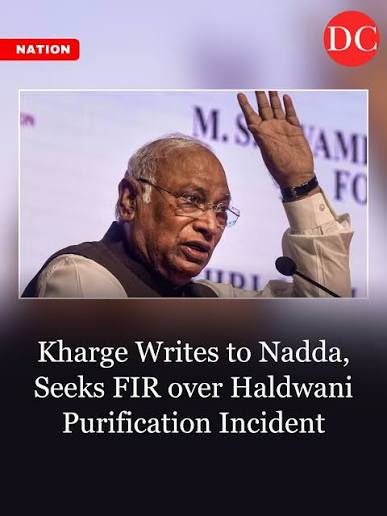
Hindutva activists had carried out the “shuddhikaran” at the venue of a Congress rally at Haldwani in Uttarakhand on August 8, Kharge, a Dalit, had told the Rajya Sabha on August 14 Rajya Sabha Opposition leader Mallikarjun Kharge has written to House leader J.P. Nadda reminding him of his assurance of investigation and action on the “purification” ritual conducted at the spot where the Congress MP had delivered a speech last month. Hindutva activists had carried out the “shuddhikaran” at the venue of a Congress rally at Haldwani in Uttarakhand on August 8, Kharge, a Dalit, had told the Rajya Sabha on August 14. “In response to my intervention, you stood up in the House and said, ‘Sir, what Honorable Kharge ji has said is indeed a very sad matter. It is not only sad for the Congress Party, but it is sad for all of us…. Whatever has happened will definitely be investigated. I want to say that the Bharatiya Janata Party never supports such activity. I condemn it, and the National President will also look into it deeply. The hurt caused to your sentiments is a matter of regret for all of us’,” Kharge wrote to Nadda on Wednesday. “But I am surprised that even after 24 days of this incident, not even a First Information Report (FIR) has been filed against the organisations and individuals involved in this heinous act in Haldwani. “The most objectionable aspect of this incident was that at the Ramlila Maidan site where I addressed the rally, purification was carried out in violation of the spirit of the Indian Constitution and human values.” Kharge, the Congress president, underlined how things had remained unchanged nearly a century after B.R. Ambedkar’s 1927 satyagraha for granting Dalits access to a water tank in Mahad in present-day Maharashtra. “Even when Babasaheb Dr. Bhimrao Ambedkarji drank the water from the tank during the Mahad agitation, people filled with casteist arrogance purified it by pouring 108 pots of cow urine and cow dung into it and chanting mantras,” he wrote. “I want to be clear that this issue transcends my personal responsibility or that of the president of the Indian National Congress, and it concerns the broader sentiments of millions of people who face this brutal reality daily. “It is essential to teach these wrongdoers a lesson. Therefore, this anger is not mine, but the expression of millions of such people; it is an issue of a mindset that directly affects a segment of society.” Kharge concluded: “Therefore, I once again request you that in the light of these facts and the assurance given in the Rajya Sabha, you should direct the Chief Minister of Uttarakhand to ensure that a First Information Report is registered against the persons and organisations involved in this incident….” His letter came days after Lok Sabha Opposition leader Rahul Gandhi vowed to get Kharge justice and demanded an FIR be registered under the SC-ST (Prevention of Atrocities) Act, 1989. Instead, an FIR has been filed against Rahul — ironically, under the SC-ST Act — on the ground that he had insulted Dalits by falsely projecting the venue clean-up as a shuddhikaran against a member of the community. Congress supporters on Tuesday burnt copies of the ancient Hindu code Manusmriti, which lays down caste norms, in front of the RSS office here. The Congress has protested in several cities and submitted complaints to multiple authorities in Uttarakhand. Senior BJP leaders, including Uttarakhand chief minister Pushkar Singh Dhami, have defended the shuddhikaran while giving it a communal angle, claiming it was a response to divisive slogans chanted at Kharge’s meeting by people from a particular community. The controversy comes at a time when the BJP is trying to persuade anti-reservation activists to shun aggressive protests against caste-based affirmative action. Courtesy : The Telegraph Note: This news is originally published on https:/thetelegraph.com/bha and is used purely for non-profit/non-commercial purposes, especially human rights