
Revanth questions ceasefire decision, slams Centre’s handling of Op Sindoor
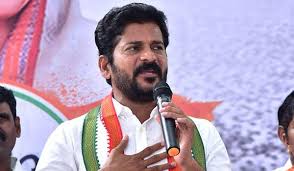
Hyderabad: Chief minister A Revanth Reddy on Thursday launched a sharp attack on the BJP-led NDA govt for failing to convene an all-party meeting before announcing a ceasefire with Pakistan in the aftermath of Operation Sindoor. He questioned the Centre’s unilateral approach and accused it of lack of strategy, courage, and transparency in managing the recent military engagement. Addressing the Jai Hind rally, organised to honour the Indian armed forces’ participation in Operation Sindoor, Revanth said: “When Rahul Gandhi and Mallikarjun Kharge attended the all-party meeting, they extended full support to the Centre and clearly stated that India must reclaim Pakistan-Occupied Kashmir (PoK). Yet, within four days of the strike, the govt abruptly announced a ceasefire. Why the haste? The country was left in the dark until US President Donald Trump revealed it on social media.” Lack of clarity Revanth questioned the lack of clarity surrounding the military operation and asked the Centre to disclose the impact of Pakistan’s response. “How many Rafale jets did we lose? What exactly happened in those four days?” he asked, criticising the Modi govt for not being forthcoming. Taking a swipe at the Prime Minister, he remarked: “Modi is like a demonetised ₹1,000 note. If Rahul Gandhi were Prime Minister, we would have reclaimed PoK by now.” He drew parallels between Rahul Gandhi and former Prime Minister Indira Gandhi, citing her bold leadership during the 1971 India-Pakistan war, when India’s military campaign led to the creation of Bangladesh. “Indira Gandhi declared war on China and issued a stern warning to the US during the 1971 conflict. That’s the kind of leadership India needs today,” he said. ‘Modi silent on China’ The chief minister also criticised the Modi govt for its inaction against China, following the death of Indian Army Colonel B Santosh Babu during a confrontation with Chinese forces in 2020. “Why didn’t the Prime Minister take any decisive action against China? Why no bold response, even after the sacrifice of our soldiers?” Revanth asked, suggesting that the current leadership lacked the resolve shown by Congress leaders in the past. ‘Don’t politicise patriotism’ Turning his attention to the BJP’s nationwide Tiranga rallies, Revanth questioned their intent. “Are these rallies really to honour the victims of the Pahalgam terror attack and our martyred soldiers—or just another political stunt? Patriotism is not your party’s private property. It belongs to the entire nation,” he said. He reiterated the Congress party’s legacy of sacrifice, pointing out that the Gandhi family has paid with their lives in service to the nation. “The Congress has always stood for the country. We will work tirelessly until Rahul Gandhi becomes Prime Minister. In these difficult times, India needs a courageous, decisive leader like him.” Courtesy : TOI Note: This news is originally published on https://timesofindia.com/ and is for use by the non-military/non-commercial community, especially those in the human rights sector.
Legislative committee visits Katteraghatta after Dalit farmer dies in suspicious fire
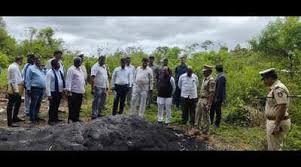
Mandya: The Karnataka Legislative Committee for the welfare of SCs/STs led by Malavalli MLA PM Narendra Swamy, visited Katteraghatta village in KR Pet taluk on Thursday, where a Dalit farmer died in a fire incident. The panel members visited the house of the deceased, Jayakumar, who died under suspicious circumstances, and the site where the incident took place. Narendra Swamy consoled Jayakumar’s wife, Lakshmi. About 10 days ago, the charred body of Jayakumar was found in a haystack in Katteraghatta village. Following reports raising suspicion about the cause of his death, progressive organisations sought a probe. They alleged that a rowdy-sheeter murdered Jayakumar and burned his body in the haystack. The organisation demanded an impartial investigation and punishment for the accused, as well as justice for Jayakumar’s family. Committee members Prasad Abbayya, Dr Thimmayya, Abhay Patil, along with KR Pet MLA HT Manju of JD(S), visited the spot. DGP Arun Chakravarthy, DIGP of Southern Range B Boralingaiah, Mandya DC Kumara, and district SP Mallikarjun Baladandi were present. Meanwhile, the committee appointed IPS officer Dharanidevi Malagatti to investigate the case. As the investigation including the FSL report is still ongoing no public statement can be made. “We are here to ensure justice for an innocent Dalit family,” said Narendra Swamy. He also clarified that Manju was excluded from the committee meeting because he is not a member of the committee. “Don’t read too much into it. Even though the incident took place in his constituency the committee has full authority,” he said. Courtesy : TOI Note: This news is originally published on https://timesofindia.com/ and is for use by the non-military/non-commercial community, especially those in the human rights sector.
Decision Paralysis Caused By Fund Freeze: How Suspension Of USAID Affects Transgender Healthcare In India
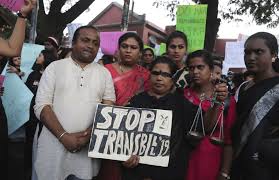
USAID has granted a waiver for certain life-saving treatments like administering the antiretroviral treatment for HIV but this pulling of funds may prevent several from seeking preventive care for HIV-AIDS. The suspension of funds from the US Agency for International Development (USAID) has resulted in a series of significant consequences. USAID, since its inception in the 1960s, has provided humanitarian foreign aid across countries, funding myriad development programmes. USAID funds were suspended for 90 days for review, followed by a stop-work directive that paused several of its aided programmes. One of these programmes was the Mitr Clinic Project for transgender people (established in 2003), run by health workers, doctors and mental health professionals. It was possible through a collaborative effort by Johns Hopkins University, the Indian government and USAID, especially seeing that other state-established legislations did not reach transgender individuals as much. The first Mitr Clinic was established in Hyderabad and later set up in Pune and Thane as well, reporting over 6000 transgender individuals accessing their facilities (of the nearly 4.87 lakh transgender individuals in India as per the Census 2011). These clinics served as more than just medical centres, as they became a comfortable and inclusive space for transgender individuals seeking legal aid, hormone therapy guidance and mental health support. USAID has granted a waiver for certain life-saving treatments like administering the antiretroviral treatment for HIV (reports of over 6-10 percent of Mitr Clinic patients were HIV positive), but this pulling of funds may prevent several from seeking preventive care for HIV-AIDS. Although it is true that public hospitals and private healthcare sectors can provide the same services, transgender individuals have reported to feel socially safer in Mitr clinics due to prevalent stigma, harsh treatment and discriminatory behaviour from healthcare professionals in other spaces. With the potential closure of these clinics due to fewer funds, transgender individuals face the threat of losing a socially accessible space for basic healthcare needs. US’s gender-deaf policies: What freezing USAID means for the future Perhaps the most controversial executive order by US President Donald Trump has been his mandate about recognising only two sexes (male and female). This completely erases the legal recognition of transgender, intersex and non-binary individuals in the USA. The suspension of USAID funds has come about due to President Trump’s bout of ‘America-First,’ policies, including the termination of diversity, equity and inclusion programmes across the federal government. His announcement of eliminating more than 90 percent of USAID foreign aid contracts implies that the funding from several projects is going to be cut. Source: BBC Long-time supporter of the USA’s executive Elon Musk commented on USAID’s funding of Mitr Clinics, “That’s what American tax dollars were funding.” It has sparked debate and demands about why foreign aid is supporting inclusivity policies in other countries when it should be the state’s own mechanism doing the same. The USA has been pivotal in influencing development projects across the world in terms of its funding, trade contracts and diplomatic relations. These collaborative efforts are important in ensuring the best qualitative service reaches those who are most in need of them, i.e., the marginalised. The gendered manner in which policies are being revised, funding is being cut and inclusivity is being compromised spells danger for how the future of the marginalised is being imagined. Bureaucratic paralysis: India’s responses to transgender voices Contrary to the USA’s turn in recognition, India legally recognises transgender individuals under the third gender category (due to the landmark judgement by the Supreme Court in 2014). The Indian state has since followed with other acts, such as the Transgender Persons (Protection of Rights) Act in 2019 (which encouraged them to apply for an identity certificate as a legal document) and financial relief packages during the COVID pandemic. Source: The Wire However, these initiatives were not without difficulties, since around 23 percent of Identity Certificate applications were pending, and several individuals did not have the financial means to access the relief packages. The Mitr Clinic establishment was one among the most successful initiatives in this regard, which shockingly faces an uncertain future in the wake of recent international events. The Indian State’s navigation of such hurdles and revision of policies faces a paralytic difficulty. Its implementation of inclusive and recognition acts seems to function in a staccato manner, the act being passed but not really addressing the lived needs and experiences of transgender individuals. For instance, while the state takes pride in announcing its inclusive nature in recognising transgender individuals and improving accessibility into political, economic and healthcare spaces, on the ground level they do not implement policies to improve how these individuals are viewed socially. Transgender individuals still face social barriers in accessing these spaces due to how they are viewed by the general public with difference, prejudice and insensitivity. Although legally recognised on paper, they are socially mocked while navigating bureaucratic hurdles, the emotional tax and fear due to which they avoid availing beneficial schemes. The Indian state thus needs to implement a better framework to address these policies on a large scale and all-round manner. A call for action to improve status quo Several NGOs, members of the LGBTQIA+ community and Mitr Clinic healthcare professionals have called upon the Union government and their respective state governments to provide funds for its functioning. The clinics in Pune and Thane have been forced to shut down, resulting in displaced health care professionals, large-scale unemployment and a barrier for transgender individuals in accessing a socially inclusive space for health care facilities. They call upon both state and non-state actors for a collaborative effort in instituting funds for Mitr Clinics again, due to its key role in improving social accessibility. Source: Maktoob Media The potential closure of Mitr Clinics reveals the precariousness of trans-specific services in the absence of consistent state-backed support. The situation shows how marginalised groups, especially those in the Global South, often become collateral damage in the ideological and financial reorientations of powerful nations. Current policies under the
California sports body widens entry for ‘biological female’ athletes amid trans athlete controversy

The California interscholastic federation (CIF) announced a rule change this week to allow more girls to participate in the upcoming state track-and-field championships following public backlash over the inclusion of a transgender athlete, reported AP. In a statement issued Tuesday, the CIF said it would implement a “pilot entry process” to extend entry to more “biological female” athletes. The new rule allows any athlete who missed the automatic qualifying mark but had the next-best result in their section final to compete at the state level. “The CIF believes this pilot entry process achieves the participation opportunities we seek to afford our student-athletes,” the organisation said. The change only applies to this weekend’s competition. The CIF did not say how many athletes would be affected or whether the rule applies to all events or only those where a transgender athlete has qualified for the final. This could be the first time a high school sports governing body in the US has expanded competition in response to the participation of a transgender athlete. The change was introduced after US President Trump criticised the participation of trans athlete AB Hernandez, a transgender athlete competing in girls track and field. Trump threatened Tuesday to pull federal funding from California if the state did not bar transgender students from competing in girls’ sports. “THIS IS NOT FAIR, AND TOTALLY DEMEANING TO WOMEN AND GIRLS,” Trump wrote on Truth Social. Hernandez is set to compete in the girls varsity triple jump, high jump, and long jump at the state finals. She won the Division 3 girls long jump and triple jump and placed seventh in the high jump at the Southern Section Division Finals on May 19. Parents and conservative advocates opposed to transgender girls competing in girls sports have criticized Hernandez and heckled her during postseason meets. After losing to Hernandez in the long jump at the sectional final, La Canada High School’s Katie McGuinness called on the CIF to revise its policy. California governor Gavin Newsom recently said on his podcast that it is “deeply unfair” for transgender girls to participate in girls sports. Last month, Democratic state lawmakers in California blocked bills that would have barred transgender girls from participating in girls sports. Courtesy : TOI Note: This news is originally published on https://timesofindia.com/ and is for use by the non-military/non-commercial community, especially those in the human rights sector.
35 convicted in Agra for attack on Dalit wedding procession in 1990

AGRA: An Agra court on Wednesday convicted 35 men in a 35-year-old case related to caste violence that erupted during a Dalit wedding procession in Panwari village in 1990. The special SC/ST court of judge Pushkar Upadhyay also acquitted 15 accused due to lack of evidence. The quantum of punishment in the case will be delivered on Friday. Additional district govt counsel Hemant Dixit said 22 of the original 72 accused died during the prolonged trial. On June 21, 1990, a group of Jat men confronted a Dalit wedding procession, objecting to the groom riding a horse, in Panwari village in Agra. Courtesy : TOI Note: This news is originally published on https://timesofindia.com/ and is for use by the non-military/non-commercial community, especially those in the human rights sector.
Dalit scholar denied passport for being daughter of Devadasi finally gets passport
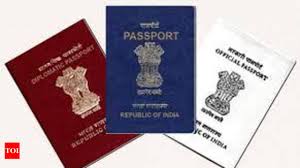
Until Monday (May 26), Nari Kamakshi, an accomplished researcher had been denied both a passport and official recognition of her identity for over two years by the authorities, despite submitting all required legal documents, including a certificate from the Child Welfare Department confirming her mother’s status as a Devadasi, solely on the absence of her father’s name in the application. The researcher and practitioner committed to education, youth empowerment, and social justice, in an article published on The News Minute, titled “Waiting for Passport: How a broken system denies identity and justice to a Devadasi’s daughter,” asks,” How many times must I prove I exist? How many forms must I fill out to explain why I don’t have a father’s name? Why does the system punish those of us born outside patriarchy’s rules, even as it pretends to offer us a future?” Since 2023, she has been repeatedly denied a passport, a process she describes as “humiliating,” during which, she says, “I found myself spiraling into a question that tormented me daily: Who am I if the state refuses to acknowledge that I belong?” In April 2023, Nari Kamakshi applied for a passport in Delhi, believing that all her documents were in order. She carried everything she understood the system required, including Aadhaar, voter ID, education certificates, and a government-issued certificate verifying her mother’s status as a Devadasi. At the time, she had been working in Delhi for over a year, supporting youth programmes and leading research in public education. What should have been a routine application process quickly turned into what she describes as “a nightmare.” The Devadasi system, deeply rooted in caste-based oppression, has devastated thousands of women in Karnataka. Under this practice, young girls like her mother were dedicated to temples as children act which deprived them of agency and autonomy. These women were forced into a life of servitude, denied the opportunity to marry, and compelled to serve deities through religious rituals, trapping them in a cycle of social and economic marginalisation. Kamakshi, who worked as a Research Assistant on the Karnataka Devadasi (Prohibition of Dedication) Act 1982/2018 Rehabilitation Bill, also presented her mother’s certificate from the Department of Women and Child Development, providing clear legal proof of her mother’s status as a Devadasi. Even though she referenced the Maharashtra High Court’s decision that allows a mother’s name alone to be used in official documents, it made no difference. The officer rejected her application outright and, she recalls, remarked dismissively, “You can try, but it’ll likely be rejected at police verification.” Hours of waiting, pleading, and explaining resulted only in humiliation. The weight of caste and patriarchy reduced her to an administrative inconvenience. Although the officer eventually forwarded her application, he warned her, “At your own risk.” His warning proved accurate, as the application was ultimately rejected during police verification. She recalls one particularly painful moment when being mocked and ridiculed for not having a father’s name, which, she says, “shattered something deep inside me.” For the next two years, she was in constant motion, both physically and emotionally. “To the system, I wasn’t a person, I was a problem,” she said. She returned repeatedly to the Delhi Passport Seva Kendra, hoping that someone would look beyond the blank space in the father’s name column and recognise her as a human being with proof, purpose, and dreams. She filed appeals, sent emails, and made numerous visits, only to be met with silence. After nearly a year, she withdrew her application in resignation. In March 2025, she reapplied for a passport in Bengaluru under the Tatkal category, urgently needing it to meet the approaching deadline for her scholarship documents, but was denied entry at the token counter itself. “I felt a deep, burning shame—not for who I am, but for daring to expect fairness from a system designed to erase people like me. I clutched my mother’s certificate—her truth, my truth—as I watched my dreams dissolve into paperwork tossed between indifferent hands. Powerless and invisible, I cried,” she wrote. Officials insisted that she switch from the Tatkal to the regular passport application process, citing vague and arbitrary rules lacking any legal basis. She waited for hours, pleaded her case, and explained her situation, but the Assistant Passport Officer refused to consider her application. She changed her appointment from Tatkal to the regular process and shifted her Passport Seva Kendra from Bengaluru to Bellary, becoming more aware of the system’s workings. On May 1, 2025, she completed her document verification and submitted a written letter explaining her mother’s Devadasi status while formally requesting a passport. Her identity wasn’t seen, it was “sorted, stamped, and sidelined.” She was treated as just another bureaucratic anomaly: not a person, not a citizen, and “not worthy.” Officials repeatedly told her, “Switch to the regular process!” “This certificate is not enough!” and “Come back later!” Emphasising that her experience is not an isolated one, she asserts, “I am not alone. This isn’t just a personal struggle-it’s a reflection of the larger systemic failures that continue to oppress marginalised communities.” “This is a system that continues to erase people like me, Dalit women and their children, whose existence is inconvenient to the established social order,” she added. She says she wasn’t rejected for lack of qualifications or merit, but because her mother, once a Devadasi, raised her alone. Despite her years of education, acceptance into a PhD program, and the extensive official documentation she provided, “none of it mattered.” She was treated as if her very existence was “an error,” an “anomaly unworthy of recognition.” Yet, this is no longer just her fight. Thousands of children born to Devadasis face the same barriers, and most lose. They are denied “passports, education, and dignity.” She says her lived experience fuels her activism, “Education gave me the language to dream and resist,” as a first-generation Dalit learner. However, she acknowledges that education alone has not been enough, as discrimination persists through “red tape, silent rooms,
California changed rules for a track-and-field meet after a trans athlete’s success. What to know

California is opening up its track-and-field championship to more girls after a transgender athlete drew controversy for qualifying for the meet SACRAMENTO, Calif. — California is opening up its track-and-field championship to more girls after a transgender athlete drew controversy for qualifying for the meet. The California Interscholastic Federation announced the temporary rule change Tuesday after high school junior AB Hernandez’s success drew backlash, including from President Donald Trump. He criticized the athlete’s participation in a social media post Tuesday, though the group said it decided on the rule change before that. Here’s what to know: Former California Gov. Jerry Brown signed a law in 2013 allowing students to participate in sex-segregated school programs, including on sports teams, and use bathrooms and other facilities that align with their gender identity. A Republican-led effort to block that law failed recently in the Democratic-dominated Legislature. Another proposal that also failed would have required the federation to ban students whose sex was assigned male at birth from participating on a girls school sports team. The federation said it was launching a “pilot entry process” to allow more girls participate in the championship track-and-field meet. Under the change, “any biological female student-athlete who would have earned the next qualifying mark for one of their Section’s automatic qualifying entries in the CIF State meet, and did not achieve the CIF State at-large mark in the finals at their Section meet” could compete, the group said. If a transgender athlete medals, their ranking would not displace a “biological female” student from medaling, the federation confirmed. In high jump, triple jump and long jump — all of the state championship events Hernandez qualified to compete in — a “biological female” who would have earned podium placement will get the medal for that place and will be reflected in the records, the federal said. The federation did not specify how they define “biological female” or how they would verify whether a competitor meets that definition. Experts from organizations including the American Medical Association, American Psychiatric Association and American Psychological Association say gender is a spectrum, not a binary structure consisting of only males and females. Hernandez, a trans athlete in Southern California, is at the center of the debate. She won the long jump and triple jump during the division finals and is expected to perform well this weekend. She also set a triple jump meet record at the Ontario Relays earlier this year. Critics have accused her of having an unfair advantage over other athletes. Hernandez told the publication Capital & Main earlier this month that she couldn’t worry about the actions of critics, who have called out her participation and heckled her at postseason meets. “I’m still a child, you’re an adult, and for you to act like a child shows how you are as a person,” she said. She noted that she has lost some of her events, saying that disproved arguments that she can’t be beat. The rule change may discriminate against transgender athletes, said Elana Redfield, a policy director at the UCLA School of Law Williams Institute, which researches sexual orientation and gender identity policies. “The CIF policy creates two sets of rules — one for transgender girls, who must earn a place through traditional measures of competition, and another for ‘biological females,’ some of whom are allowed an extra chance to earn a spot,” Redfield said in an email. The change seems to “thread a fine needle” by trying to ensure cisgender girls aren’t denied a competition slot while still allowing trans athletes to participate, Redfield said. Doriane Lambelet Coleman, a professor at Duke Law School, said the change would help ensure that “no female athlete loses a place on a team or in a competition when a trans girl is included.” “Unlike inclusion policies that ignore sex differences, doing it this way doesn’t gaslight the other girls about their biology,” said Coleman, who has researches subjects including children, sports and law and wrote recently on the evolving definition of sex. Izzy Gardon, a spokesperson for California Gov. Gavin Newsom, called the rule change “a reasonable, respectful way to navigate a complex issue without compromising competitive fairness” and said the governor thought it was a thoughtful approach. Newsom angered some liberal allies earlier this year when he questioned the fairness of transgender girls participation in girls sports. Courtesy : SOPHIE AUSTIN, ABC News Note: This news is originally published on https://abcnews.com/ and is for use by the non-military/non-commercial community, especially those in the human rights sector.
AIISCA’s warning on Amreli Dalit youth murder case: ‘Caste’ cannot be the norm in a democratic society, supporters held accountable
The organisation called it shameful that the country’s Prime Minister hails from Gujarat, yet he and his party have not taken any concrete steps to abolish the caste system in his home state. His silence on this atrocity is not neutrality, but complicity. New Delhi- The All India Independent Scheduled Castes Association (AIISCA) has strongly condemned the brutal murder of Dalit youth Nilesh Rathod in Jarakhia village of Amreli district of Gujarat. AIISCA said that Nilesh’s only “crime” was to call a minor boy, who belonged to a so-called “upper” caste, “son”. Caste mentality took a violent turn in response to this simple human affection. The incident reflects everyday caste violence against Dalits in Gujarat, which violently enforces caste supremacy despite claims of a development model. The organisation criticised the silence and normalising role of the ruling caste-class nexus, which includes business elites, upper caste landlords and the political class, in the violence. AIISCA President Dr Rahul Sompimpale issued a statement. The organisation termed the silence of Dalit MPs and MLAs of the ruling party as complicity in standing with upper caste bosses rather than their own community. The failure of Gujarat’s state machinery—police, administration and politicians—to protect Dalits was also questioned. The police’s lethargic response exposes institutional casteism. The organisation called it shameful that the country’s Prime Minister hails from Gujarat, yet he and his party have not taken any concrete steps to end the caste system in his home state. His silence on this atrocity is not neutrality but complicity. AIISCA expressed solidarity with the grieving family of Nilesh Rathod, who have announced that they will not accept his body until their demands are met. Their demand is not just compensation, but respect, recognition and an end to the violent caste system. Demands: Immediate and full compensation to all victim families, including: o Five acres of agricultural land or government jobs for all affected families. The investigation be handed over to an independent, high-ranking officer with a clean record, and a time-bound trial in a special fast-track court under the SC/ST Atrocities Act. FIR and arrest of all remaining accused, who incited and aided the mob. Statewide public inquiry into caste-based violence in Gujarat, with particular focus on rural areas. Public apology and assurance of reform from the Chief Minister of Gujarat, as well as a statement from the Prime Minister acknowledging structural caste violence in Gujarat. Initiation of a comprehensive anti-caste violence policy in Gujarat, including: o Dedicated SC/ST protection task force. o Educational and cultural programs to eradicate caste bias. o Accountability mechanism for caste-based negligence by police and civil servants. AIISCA warned that if the Rathore family did not get justice, the organisation would launch nationwide protests. The organisation said they would not allow this violence to be buried under bureaucratic silence and electoral games. Dalit lives matter, and the right to dignity is inviolable. Sompimple said the statement is not a petition but a warning: caste cannot be normalised in any democratic society. And those who support it directly or indirectly will be held accountable. Courtey; Geetha Sunil Pillai, Hindi News
Dalit Elderly Man Allegedly Burned Alive in Gujarat’s Patan Village; MLA Mevani Says—Gujarat Becoming Hell for Dalits!
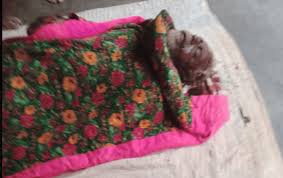
According to the Patan police, a preliminary investigation has been initiated. Patan- A heart-wrenching incident has come to light in Pipala village, Santalpur taluka of Patan district, Gujarat, where 70-year-old Dalit elderly man Harji Bhai Deva Bhai Solanki was allegedly burned alive in the neighboring Jakhota village. Dalit leader and Vadgam MLA Jignesh Mevani stated that he spoke with the Patan District Superintendent of Police, who confirmed the incident. However, the police have not yet disclosed the reasons behind the killing, and the investigation is ongoing. The victim’s body was found wearing women’s clothing and anklets, making the incident even more suspicious. This incident is being seen as another link in the chain of increasing violence against the Dalit community in Gujarat. MLA Jignesh Mevani expressed deep sorrow over the incident and tweeted, “Despite all its claims of development, Gujarat is becoming a hell for Dalits.” He has appealed to all activists and citizens to gather at the Civil Hospital in Dharpur, Patan, to demand justice for the victim’s family. Mevani has demanded that the government provide adequate compensation to the victim’s family and allocate 2 acres of agricultural land to them. He described the incident as yet another example of atrocities against the Dalit community and called for immediate action. According to the Patan police, a preliminary investigation has been initiated. The police stated that Harji Bhai’s murder took place in Jakhota village, and his body was sent to the Civil Hospital in Dharpur for a postmortem. The motive behind the killing is still unclear. The police have started questioning local residents and have increased security arrangements in the area due to the prevailing tension. This incident has sparked significant outrage within the local Dalit community. Several social organizations and activists have come forward in support of the victim’s family. Tension is prevailing in Jakhota and Pipala villages, and locals are demanding strict action against those responsible for this brutal incident. MLA Jignesh Mevani said, “I just spoke with the District Superintendent of Police, who confirmed the incident, but the reasons behind it are still unknown! It is with great sorrow that I must say, despite all its claims of development, Gujarat is becoming a hell for Dalits! The government must provide adequate compensation to the victim’s family and 2 acres of agricultural land!” Mevani appealed to the Dalit community, stating that they must strongly protest against the atrocities, assaults, murders, and horrific incidents like being burned alive that are happening to Dalits under the BJP regime. Courtesy : Geetha Sunil Pillai, The Mooknayak Note: This news is originally published on https://themooknayak.com/ and is for use by the non-military/non-commercial community, especially those in the human rights sector.
AIISCA’s Warning on Amreli Dalit Youth Murder: “Caste Cannot Be the Norm in a Democratic Society, Supporters Will Be Held Accountable”
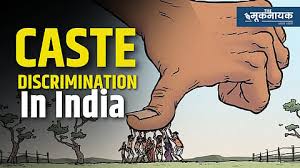
AIISCA expressed solidarity with Nilesh Rathod’s grieving family, who have refused to accept his body until their demands are met. Their demand is not just for compensation but for dignity, recognition, and an end to the violent caste order. New Delhi- The All India Independent Scheduled Castes Association (AIISCA) has strongly condemned the brutal murder of Nilesh Rathod, a Dalit youth from Jarakhiya village in Gujarat’s Amreli district. In a statement issued by Dr Rahul Sonpimple, President AIISCA said, “His only “crime” was addressing a minor boy from a so-called “upper” caste as “beta” — a simple act of human affection that provoked violent retaliation rooted in casteist mentality.” This incident reflects the daily caste-based violence faced by Dalits in Gujarat, a state that claims to be a model of development but enforces caste supremacy through violence in its towns, villages, and streets. The organization criticized the ruling caste-class nexus, comprising business elites, upper-caste landlords, and the political class, for their silence or active role in normalizing this violence. The organization called out the silence of Dalit MPs and MLAs from the ruling party, labeling it as complicity. Instead of standing with their oppressed communities, they have aligned with upper-caste leaders, betraying those they claim to represent. AIISCA also highlighted the failure of Gujarat’s state machinery—police, administration, and political leaders—in protecting Dalit lives. The police’s sluggish and selective response reveals deep-rooted institutional casteism. The organization termed it shameful that the Prime Minister, hailing from Gujarat, and his party have taken no concrete steps to dismantle the caste system in the state. Their silence on this atrocity was described as complicity. AIISCA expressed solidarity with Nilesh Rathod’s grieving family, who have refused to accept his body until their demands are met. Their demand is not just for compensation but for dignity, recognition, and an end to the violent caste order. Immediate and full compensation to all affected families, including five acres of agricultural land or government jobs. Investigation by an independent, high-ranking officer with a clean record and time-bound trial in a special fast-track court under the SC/ST Atrocities Act. FIRs and arrests of all remaining accused, including those who incited or abetted the mob. A state-wide public inquiry into caste-based violence in Gujarat, focusing on rural areas. A public apology and assurance of reform from the Gujarat Chief Minister, and a statement from the Prime Minister acknowledging structural caste violence in Gujarat. A comprehensive anti-caste violence policy in Gujarat, including an SC/ST Protection Task Force, educational and cultural programs to eradicate caste bias, and accountability mechanisms for caste-based negligence by police and civil servants. AIISCA warns that if justice is denied to the Rathod family, it will mobilize nationwide protests. The organization stated, “Caste cannot be the norm in any democratic society. Those who uphold it, through action or silence, will be held accountable.” Courtesy : Geetha Sunil Pillai, The Mooknayak Note: This news is originally published on https://themooknayak.com/ and is for use by the non-military/non-commercial community, especially those in the human rights sector.