
‘How Dare You Join a Brahmin Wedding?’ — The Incident That Awakened Jyotiba Phule’s Revolt Against Caste
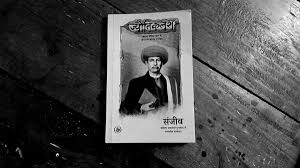
A heartbreaking childhood incident of exclusion and caste-based humiliation laid the foundation for Mahatma Jyotiba Phule’s lifelong fight against Brahminical dominance and social inequality. In the history of India, few figures stand out as courageously and selflessly committed to the cause of the oppressed as Mahatma Jyotiba Phule. One early incident from his childhood left such a deep scar on his conscience that it sparked a lifelong struggle against casteism, Brahminism, superstition, and social hypocrisy. This formative event is powerfully depicted in the book ‘Jyoti Kalash’, written by renowned Hindi author Sanjeev — editor of the iconic magazine Hans, a columnist, and recipient of the Sahitya Akademi Award. Published by Rajkamal Prakashan, the book serves as a chronological documentation of real-life events from Phule’s life. In its very first chapter, Sanjeev recounts the incident that led young Jyotiba to become fiercely committed to the cause of Dalits and backward communities. According to the book, Jyotiba receives a wedding invitation from his classmate, Paranjpe. The note ends with an affectionate threat: “If you don’t come, our friendship is over.” Excited, young Jyotiba begins to prepare himself for the grand wedding procession. Seeing his son dressed up, his father Govindrao asks, “Where are you going?” “To Paranjpe’s wedding procession,” Jyotiba replies cheerfully. Govindrao is reminded of bitter experiences of humiliation in Brahmin weddings in the past. The memories sting like thorns. Still, not wanting to dampen his son’s spirit, he says nothing. The wedding procession is in full swing, with drums, music, and fireworks. Paranjpe, the groom, is dressed regally and seated in a decorated chariot alongside his younger brother. Amidst the festive chaos, there’s a problem — the man in charge of setting off the ceremonial fireworks, Patil, is missing. People murmur anxiously, wondering who will light the fireworks now. When the boys are asked if anyone can do it, most express fear. But Jyotiba steps forward and says, “I’m not afraid.” He picks up the firework launcher and begins firing celebratory shots into the sky, leading the procession. Just then, a heavily adorned Brahmin man — wearing a tripund (sacred ash mark) on his forehead and a traditional turban — steps forward and stops Jyotiba. “You…?” the man sneers. “Aren’t you the son of Govindrao Ghonhe?” “Yes,” Jyotiba replies. With visible disdain, the Brahmin thunders, “How dare you join a Brahmin wedding procession?” “I was invited,” Jyotiba responds. “Invited, huh? What Paranjpe did was wrong, but you — how could you forget that you’re a Shudra? And this is a Brahmin wedding. Have you lost your mind? Since when did you become equal to Brahmins?” A more compassionate Brahmin steps in and tries to pacify the situation. “Let it go — he’s just a boy. He was invited by his friend. He even handled the fireworks.” “Let him stay — but only at the back,” the turbaned man declares. “With the Ramoshis and the baggage carriers.” Humiliated, Jyotiba moves to the back of the procession. A Ramoshi — a man from a lower caste — standing nearby approaches him and says, “Thrown out by the Brahmins, huh? What were you thinking? Did you forget how Brahmins treat Shudras and untouchables? Go home, child! The garlands aren’t for you. The music isn’t for you. The lights, the celebration — none of it is for you. You’re a Shudra. Thrown out, just like always.” Heartbroken, Jyotiba returns home. His father notices his downcast face. “What happened? Didn’t you go?” Jyotiba narrates the whole humiliating incident. His father listens in silence, watching his son’s darkened face. Memories of his own past humiliation come flooding back. “I wanted to stop you,” he finally says. “But I stayed quiet, fearing it would break your spirit.” After a pause, he adds, “They didn’t beat you, didn’t punish you — isn’t that mercy enough? You were wrong to go.” Tears well up in Jyotiba’s eyes. Govindrao consoles him: “No, son. We can never be equal to them. They are Brahmins, and we — we are Shudras.” A broken Jyotiba is still reeling from the incident when the Ramoshi appears again and says bitterly, “Why did you even go? I never go. It’s our fate — they were born Brahmins, you a Shudra, I a Ramoshi. What can we do?” That night passed slowly and painfully. For Jyotiba Phule, it was perhaps the first personal brush with caste-based humiliation — one that deeply shook his soul and awakened in him a resolve to challenge the unjust social order. In ‘Jyoti Kalash’, Sanjeev documents many such untold and poignant moments from Mahatma Jyotiba Phule’s life — stories he lived, witnessed, and bravely fought against. The book brings to life the emotional, social, and ideological evolution of one of India’s greatest social reformers. Courtesy Rajan Chaudhary, The Mooknayak Note: This news is originally published on https://themooknayak.com/ and is for use by the non-military/non-commercial community, especially those in the human rights sector.
Bhootgaon by Naveen Joshi: The Heartbreaking Tale of Love, Caste, and a Vanishing Village That Will Haunt You Forever
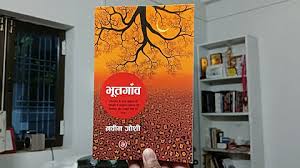
Naveen Joshi’s novel “Bhootgaon” uncovers the harsh realities of caste discrimination, emotional abandonment, and the heartbreaking fate of depopulated villages in the hills of Uttarakhand. Set against the complex backdrop of modern Uttarakhand’s history, Bhootgaon, a novel by acclaimed writer Naveen Joshi, is a deeply poignant narrative that captures the disturbing consequences of development gone wrong and the gradual desertion of hill villages. Published by Rajkamal Prakashan, this novel stands out for its heartfelt portrayal of caste-based oppression, social exclusion, and generational trauma that continues to shape the lives of rural communities. The story begins with retired army soldier Anand Singh and his loyal dog Sheru, who roam through an almost abandoned village nestled in the scenic hills of Uttarakhand. But beneath the picturesque setting lies the bitter truth of families forced to migrate to cities in search of livelihood, leaving behind hollow homes and haunted memories. The novel’s main protagonists, Virendra Singh Negi (aka V.S. Negi) and Heera (formerly Hiruli), are introduced gradually as the narrative alternates between Anand Singh’s quiet reflections and Virendra’s tumultuous life. As the chapters progress, it is revealed that Anand Singh is actually the younger brother of Virendra, adding a surprising twist that binds the multiple storylines together. Joshi masterfully uses the lens of Anand Singh’s conversations with his dog to reflect on the deserted village’s past, narrating the stories of families long gone. Eventually, he delves into his own family’s saga, drawing the reader into a powerful tale of love, caste discrimination, and social alienation. Heera, originally Hiruli, is the daughter of Charanram, a landless laborer of a lower caste. She falls in love with Virendra, the son of a Rajput (Thakur) family. Their elopement sparks a social upheaval that leads to the near destruction of both families. The couple eventually finds shelter in the home of a senior bureaucrat in Lucknow. They marry in an Arya Samaj temple, and start a new life. Virendra becomes V.S. Negi, and Hiruli becomes Heera. Living in a respectable urban household, the couple tries to adapt to city life. They become beloved to the childless bureaucrat couple they serve and are treated almost like their own children. Virendra and Heera have two children—Vinayak and Meera. For a while, life seems peaceful. However, the bureaucrats eventually renounce the world and retreat into spiritual life. Virendra secures a permanent government job, but the caste guilt begins to fester. He starts to view his marriage to Heera—a woman from a lower caste—as a mistake. His internalized caste superiority and societal pressures begin to erode the love and dignity in their relationship. Heera, trapped in an intercaste marriage, silently suffers daily indignities and emotional neglect. Her anguish becomes a central theme of the novel, portraying how deeply rooted caste prejudices can destroy personal happiness even in the modern world. In the village of Sataur, where Heera was born, the repercussions of their elopement are brutal. Her father, Charanram, is beaten half to death by upper-caste men. The villagers hurl blame and abuse at him, accusing him of failing to control his daughter. He is given an ultimatum—either bring Hiruli back by dawn or leave the village forever. Even Virendra’s own family, despite being Rajputs, faces social ostracism. No one is willing to arrange a marriage for his sister, who eventually dies by suicide due to the shame and isolation. Throughout the novel, Joshi sensitively lays bare the deep-seated caste divisions that persist despite social progress. The narrative reaches its emotional climax when Heera, emotionally wrecked by years of mental torment and social rejection, dies. Virendra dies a few years later, consumed by guilt and remorse. In the final chapters, Virendra and Heera’s children—Vinayak and Meera—return to their ancestral village, only to find it transformed into a ghost town—Bhootgaon. They meet their uncle Anand Singh, now mentally unstable after the death of his dog Sheru, who was taken by a tiger. The once-vibrant village now echoes with silence, grief, and memories. Bhootgaon is not just a story of two individuals; it is the story of a community, a region, and a social system where development, migration, and caste continue to intersect in painful and poignant ways. Naveen Joshi delivers a deeply human story that forces the reader to confront uncomfortable truths about love, identity, and belonging. Courtesy : Rajan Chaudhary, The Mooknayak Note: This news is originally published on https://themooknayak.com/ and is for use by the non-military/non-commercial community, especially those in the human rights sector.
Ujla Andhera — This Heartbreaking Novel Exposes the Brutal Reality of Dalit Life in India
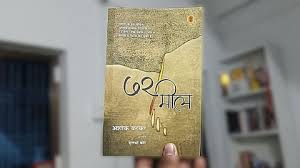
A gripping tale of caste, courage, and survival — Kailash Wankhede’s Ujla Andhera reveals the everyday struggles of Dalit communities in modern India through the eyes of a young boy. “Ujla Andhera” (The Bright Darkness), authored by renowned Hindi writer Kailash Wankhede, is a poignant and deeply moving novel that brings to light the lived realities of Dalit settlements in modern India. Published by Rajkamal Prakashan, this novel powerfully captures the essence of daily struggles, aspirations, and systemic neglect faced by marginalized communities, all through the innocent yet insightful lens of a young Dalit boy named Milind. Kailash Wankhede, recipient of the prestigious Hans Katha Samman and Madhukar Singh Smriti Samman, uses his signature realism to transport the reader into the heart of a Dalit locality that lies geographically close but socially distant from the urban elite. His narrative breaks down complex caste hierarchies, political indifference, and deeply ingrained social prejudices in a simple, accessible, and emotionally resonant manner. A Child’s View of a Fractured Society At the center of the story is young Milind, who presents a first-hand account of life in his Dalit neighborhood. His father, a principled Ambedkarite, repairs punctured tires for a living. Despite extreme poverty, he remains committed to constitutional values and celebrates Ambedkar Jayanti with pride and dignity — distributing sweets to children even when there’s not enough food at home. Through Milind’s eyes, we see a detailed and touching portrayal of his family: a hardworking mother, a supportive elder brother, and a loving grandmother. The mother, in particular, emerges as a symbol of invisible labor and silent suffering. Wankhede, via Milind’s narration, observes: “Evening is mother’s best friend. When it arrives, she stops speaking and becomes a machine. Her hands begin to move faster, picking up the mess of the house. Is it only a mother’s duty to keep the house in order?” Rain, Rage, and Repression The novel doesn’t just document daily life — it critiques it. The monsoon season becomes a metaphor for the state’s indifference, as homes in the Dalit colony leak, stink, and flood. Women drink less water to avoid defecating in the open due to the lack of toilets. The narrative raises a sharp but subtle question: Why do Dalit women die younger? The central tension of the novel builds around a disturbing incident during a Dalit wedding. When the groom, a relative of Milind, mounts a horse — a symbol of pride and honor — the upper-caste neighbors attack the wedding procession. “Dalits don’t have the right to ride horses,” they say, as they beat up the entire baraat (wedding party). The family is forced to seek police protection, but even the police, steeped in caste bias, refuse to help. “The authorities believed that over time, enthusiasm dies down… the crowd will lose interest, and the demand will fade. Life, caught between daily survival and social humiliation, forgets its dreams.” This episode becomes the crux of the novel’s critique — of the continued caste-based humiliation that exists even after 75 years of independence. Language, Power, and Erasure In a powerful meta-commentary, Wankhede criticizes how language itself becomes a tool of exclusion: “The dictionary is a conspiracy against life… It excluded the language of our homes, our lanes, and our lives. Language was used not just to communicate, but to suppress.” The book argues that dominant castes shaped language, religion, and literature to project themselves as superior and to erase the existence of marginalized voices. Dalits were excluded not just from land and temples, but from the very vocabulary that defines human dignity. This deeply philosophical commentary draws a chilling parallel — tools that once built life are now used to destroy it. Words have become weapons. Education, Humiliation, and the Police State The novel also explores how lack of education and healthcare continues to haunt Dalit colonies. When a teacher calls Milind’s community “dirty people,” he is left confused and hurt, questioning his family about why others think that way. The narrative also highlights how young Dalit boys are falsely accused of thefts in nearby areas and are sent to jail without evidence. This pattern of criminalizing the oppressed is shown not as an exception but as a rule — part of a systemic cycle of caste-based injustice. Death, Loss, and Unanswered Questions Tragedy strikes when Milind’s elder brother dies due to poor medical access. His father, too, is left on the brink of death. Yet, despite the personal losses and social attacks, Milind’s observations remain tender, intelligent, and quietly radical. Even as the novel concludes, the reader is left with an aching sense of incompleteness — not due to a lack of closure, but because the questions it raises remain unanswered in real life as well. Why is justice still denied? Why is equality still aspirational? Final Thoughts “Ujla Andhera” is not just a novel; it is a necessary document of our times. It serves as both a mirror and a warning — reflecting the ongoing marginalization of Dalits while challenging readers to confront uncomfortable truths. With poetic language, powerful metaphors, and a child’s perspective full of clarity, Kailash Wankhede has created a masterpiece that deserves to be widely read, debated, and remembered. Courtesy : Rajan Chaudhary, The Mooknayak Note: This news is originally published on https://themooknayak.com/ and is for use by the non-military/non-commercial community, especially those in the human rights sector.
Cong youngsters see hope in Rahul’s ‘Srijan’
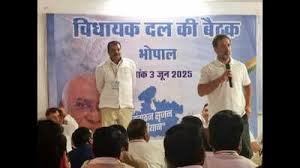
Bhopal: How effective would the “Sangthan Srijan” campaign be in rejuvenating Congress organisation in MP? While some leaders, particularly youngsters, seem excited at the prospect of “Race Ka Ghoda” finding prominence in the party, many veterans, who have seen it all, look at this with a pinch of salt. “The campaign will surely rejuvenate our organisation. Rahul Gandhi and the leadership want to find competent persons to take on BJP. AICC observers have come from outside the state to go among the party workers and people, find out about reputation of leaders contending for the post of district president, their ability to take people along, reach out to people and put up a fight with BJP,: said Yogendra Singh ‘Guddu’, a young Congress leader from Bhopal. “We wish ground-level leadership is handed over to horses, who have the strength to win the race,” Singh said. Another young Congress leader said the party has launched ‘Srijan’ campaign at places where Congress and BJP are the only two options but BJP is miles ahead in organisational strength and electoral effectiveness. The leadership understands Congress cannot take on the combined might of RSS-BJP, unless the organisation is strengthened and there’s transparency in selection of party office-bearers and poll candidates. Deputy leader of Congress in the assembly, Hemant Katare said: “The campaign will have a revolutionary effect. AICC has sent observers for each district. They are ex-ministers, who have won multiple elections, and run the organisation. Since they are outsiders, they will look at the contenders with fresh eyes and may find able people ignored so far may be because they were not at the forefront or because of factionalism. Once we have a strong organisation at the ground level, the problems we face in elections would be taken care of.” However, a senior PCC office-bearer said: “Are we trying to get rid of people, who gave their lives to the party by calling them ‘langda ghoda’? If you give an impression that a district president was changed because he was incompetent, the party would be further divided and there will be local factions fighting against each other. If the campaign is carried out as planned, even 2028 elections is lost,” he said. A PCC office-bearer, said: “It is similar to the one floated by Rahul Gandhi earlier- to have an elected NSUI and Youth Congress presidents. You can see the situation of NSUI and Youth Congress. Even journalists don’t remember their names nowadays. The Congress will also get to the same situation if they go ahead with the plan of a survey by outsiders to select district presidents.” Courtesy : TOI Note: This news is originally published on https://timesofindia.com/ and is for use by the non-military/non-commercial community, especially those in the human rights sector.
Rahul Gandhi sets zero tolerance for factionalism in Haryana Cong, outlines roadmap for setting up district units
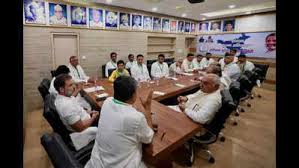
Chandigarh: Congress MP and leader of opposition in Lok Sabha Rahul Gandhi on Wednesday delivered a message of zero tolerance for factionalism among Haryana leaders and issued strict guidelines to central observers to remain impartial and uninfluenced by local or state leaders during their assignments. Rahul unveiled a comprehensive plan to constitute district units of the Haryana Pradesh Congress Committee (HPCC), aimed at reviving the party’s grassroots presence ahead of the 2025 elections. According to party sources, observers will begin field visits from June 10, with final panels of three candidates for each district expected by June 30. The All India Congress Committee (AICC) will then announce district presidents. The selection process emphasises social engineering, with special focus on Scheduled Castes (SC), Backward Classes (BC), and women’s representation. Observers are instructed to prioritise young leadership between the ages of 35 and 55, alongside merit-based criteria. This marks the first concerted effort by AICC to end long-standing factionalism within the Haryana Congress and properly constitute district executives after an 11-year hiatus. During his three-hour visit to HPCC headquarters here, Rahul chaired three key meetings. The first involved a 17-member committee of senior Haryana leaders and AICC officials, including former chief minister Bhupinder Singh Hooda, HPCC president Udai Bhan, Lok Sabha MP Selja, former Union minister Birender Singh, Rohtak MP Deepender Hooda, and other senior functionaries. Sources said that Rahul warned the leaders against allowing factional disputes to damage the party and patiently heard their concerns. Following this, he met with central and state observers, outlining strict dos and don’ts for finalising district executive panels. The AICC has appointed 22 observers, including MPs and former ministers, who will work alongside 51 HPCC-appointed observers to assess aspirants across districts. B K Hariparsad, AICC general secretary in-charge of Haryana affairs, told mediapersons, “Rahul has instructed observers not to favour senior leaders, sitting or former MLAs or MPs, nor to avail any facilities provided by them. Complaints against observers will be taken seriously, and replacements can be made if necessary. Effective and honest observers may receive more responsible assignments.” Hariparsad acknowledged that factionalism has stalled district unit formation for over a decade, contributing to narrow election losses. “We lost by a margin of just 0.5% due to weak grassroots organisation. The year 2025 will be dedicated to party strengthening. Observers have clear instructions to avoid favoritism. Only real performers will be at the forefront.” Rahul Gandhi was received at Chandigarh airport by Chandigarh Territorial Congress Committee president Harmohinder Singh Lucky and PPCC President Amrinder Singh Raja Warring. Rahul’s gesture for Birender In a gesture of respect, Rahul asked AICC general secretary K C Venugopal to invite veteran leader Birender Singh to the dais ahead of the observers’ meeting. Tanwar springs surprise A surprise attendee was former HPCC president Ashok Tanwar, who was invited last minute. Tanwar left Congress in 2019, joined various parties, including the BJP, before returning to Congress. ‘5-yr no-post rule for BJP entrants’ B K Hariparsad, AICC general secretary in-charge of Haryana affairs, clarified the party’s position on recent entrants from BJP or RSS backgrounds. “Anyone joining from BJP or RSS must serve as a volunteer for five years before eligibility for any Congress post. This does not apply to those who left Congress earlier and then returned,” he said. Seniors asked to give tips Before launching the roadmap, Rahul gave senior leaders a platform to voice their concerns and suggestions to strengthen the party at all levels in Haryana. MSID:: 121626445 413 | Courtesy : TOI Note: This news is originally published on https://timesofindia.com/ and is for use by the non-military/non-commercial community, especially those in the human rights sector.
State Cong chief accuses Chirag, Manjhi of failing dalit community
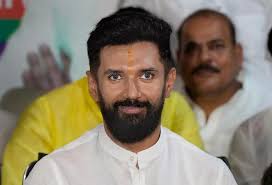
Patna: State Congress president Rajesh Kumar on Tuesday launched sharp attacks on two dalit leaders—Union ministers Chirag Paswan and Jitan Ram Manjhi—for maintaining silence over the death of a minor girl who succumbed to a brutal assault after rape. Addressing a press conference, the state Congress chief said both Chirag and Manjhi claim to be the leaders of the dalit community, but they remained mysteriously silent over such a horrendous crime. “You want the votes of the dalits to stay in power but have not uttered a word of sympathy for the dalit girl, let alone helping her,” Kumar told the reporters in Patna on Tuesday, adding they need to answer this to the people of the state. He said although they happen to be a part of the double-engine govt in Bihar, they failed to do anything for the girl who ultimately died due to “callousness”. “You couldn’t even get her a hospital bed or an oxygen cylinder as that innocent girl died. The question is why are you hesitating to speak out against injustice? Are you keeping silent under the influence and pressure of the RSS agenda? When will you demand justice for the dalit girl?” asked the Congress chief. Later, a team of Congressmen, led by the state president, visited the victim’s house in Muzaffarpur and extended all support to the family. “The Congress party stands with you in this hour of crisis. We will provide every possible assistance in the fight for justice for the girl,” the state president told the victim’s family. Courtesy : TOI Note: This news is originally published on https://timesofindia.com/ and is for use by the non-military/non-commercial community, especially those in the human rights sector.
Jagan Mohan Reddy Slams ‘Red Book Constitution’ After Tenali Police Brutality On Dalit Youths
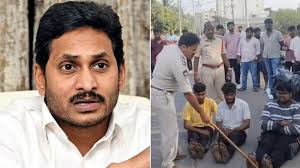
YSRCP chief Jagan Mohan Reddy visited Tenali victims’ families, condemning police brutality against Dalit and minority youths as a sign of Andhra Pradesh’s ‘Red Book Constitution’ under TDP rule. The April 2025 incident sparked protests and demands for a probe. YSR Congress Party (YSRCP) chief Y.S. Jagan Mohan Reddy on Tuesday visited the families of three young men in Tenali who were allegedly subjected to police torture and public assault. He described the incident as indicative of a broader institutional decline under the current administration, referring to it as evidence of the “Red Book Constitution” — a term he uses to critique the state’s governance. The alleged incident occurred on April 25, involving Chebrolu John Victor, Karimullah, and Doma Rakesh. According to reports, the three men were detained, forced to sit on the roadside, and beaten with batons in public view. Reddy claimed they were also threatened with electric shocks while in custody. “In the state of Andhra Pradesh, every institution has taken a back seat,” Reddy said. “Thanks to the N. Chandrababu government and the Red Book Constitution, the police have become complicit in these activities.” While the YSR Congress Party condemned the incident and called for an impartial investigation, Andhra Pradesh Home Minister Vangalapudi Anitha defended the police’s actions. She stated that the police were acting against individuals involved in criminal activities. “Police acted against rowdy sheeters and the ganja batch. It is not right to attribute caste and religion to this,” she said in a public statement. The victims belong to Dalit and minority communities, raising concerns among rights groups who have called for an independent probe into the incident. The episode has further intensified the political standoff between the TDP government and the opposition YSRCP over law enforcement and civil liberties in the state. Stay informed on all the latest news, real-time breaking news updates, and follow all the important headlines in india news and world News on Zee News. Courtesy : Zee News Note: This news is originally published on https://zeenews.com/ and is for use by the non-military/non-commercial community, especially those in the human rights sector.
Phagwara: Dalit organisations convene meeting to condemn sacrilege of Ambedkar statue
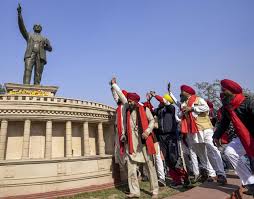
Leaders of several Scheduled Caste (SC) organisations gathered in Phagwara on Tuesday to strongly condemn the act of sacrilege involving the defacement of Dr BR Ambedkar’s statue at village Nangal in Phillaur tehsil of Jalandhar district. The meeting, held at… Leaders of several Scheduled Caste (SC) organisations gathered in Phagwara on Tuesday to strongly condemn the act of sacrilege involving the defacement of Dr BR Ambedkar’s statue at village Nangal in Phillaur tehsil of Jalandhar district. The meeting, held at the Phagwara Rest House, was organised by prominent Dalit outfits, including the Guru Ravidas Tiger Force, Ambedkar Sena Moolnivasi and Yuva Vikas Morcha The meeting was convened in response to the incident that took place on the intervening night of June 1 and 2, where unidentified miscreants allegedly vandalised a statue of Dr Ambedkar — a revered figure among the SC community and principal architect of the Indian Constitution. The gathering saw participation from notable SC leaders including Yash Barna (Chairman, Guru Ravidas Tiger Force), Dharmender Both (president, Ambedkar Sena Moolnivasi), Anu Suhota and Ashvini Suhota (president and vice-president, Yuva Vikas Morcha), along with other activists and representatives from Ambedkarite and Moolnivasi organisations. Addressing the attendees, advocate Randeep Kumar Kailey, a member of Ambedkar Sena, unequivocally condemned the incident and expressed concern over the failure of the local administration and police to safeguard symbols of Dalit pride. He urged community leaders to unite on a common platform to counter the alleged provocations by Gurpatwant Singh Pannu, a separatist and pro-Khalistan advocate. Kailey also noted the financial challenges in pursuing legal redress, stating that “justice through the judiciary remains out of reach for many in the SC community due to high legal costs”. Yash Barna, representing the Guru Ravidas Tiger Force, referred to Article 25 of the Constitution, asserting that Dr Ambedkar envisioned equal respect for all religions and rejected the conflation of Sikh identity with that of ‘Keshdhari Hindus’—a claim he said was being promoted by Khalistani elements. Barna accused Pannu of using local youth to incite communal tension and facilitate their escape abroad by supporting asylum claims. The silence of elected SC representatives drew sharp criticism from Manveer Bodh of the Ambedkar Sena Moolnivasi, who questioned the absence of statements from local SC MPs and MLAs, particularly targeting former Punjab Chief Minister Charanjit Singh Channi. Similarly, Money Ambedkari raised concerns over the future of Dalits, warning of the danger of suppressing SC voices. He added that no separatist group or leader had condemned the act, further deepening the community’s sense of alienation. Ajay Moolnivasi, president of the National Moolnivasi Sangh, echoed the call for unity, urging all Dalit organisations to consolidate their efforts to prevent future acts of sacrilege. He also held the Central Government accountable for not acting against Gurpatwant Singh Pannu, demanding his deportation from the United States. Moolnivasi further alleged that the Rashtriya Swayamsevak Sangh (RSS) was indirectly behind such incidents in Punjab and West Bengal—states where it traditionally has weaker influence—claiming that Pannu might be acting as an “agent of RSS” to create instability. At the conclusion of the meeting, it was resolved that all SC leaders and supporters in Phagwara would assemble on Wednesday morning at 10 am at Ambedkar Park, Hargobind Nagar. They plan to submit a memorandum to the local Sub-Divisional Magistrate (SDM) demanding swift justice and immediate steps to safeguard Ambedkar statues across the region. Among the measures proposed is the installation of sensor-based alert systems on statues to notify local police in real-time in case of tampering. Courtesy : The Tribune Note: This news is originally published on https://thetribune.com/ and is for use by the non-military/non-commercial community, especially those in the human rights sector.
Why A Mega Dalit Outreach Is Part Of BJP’s Plan For Poll-Bound Bihar From June 20
Caste arithmetic and an unfavourable result in the elections last year have prompted the party to take steps to win the poll battle The BJP has decided to go all out to woo Dalits of poll-bound Bihar, even before seat-sharing talks have begun among the NDA constituents for the upcoming election. Starting June 20, the party will target the Ravidas community by organising the Sant Shiromani Ravidas Sammelan-cum-honour ceremony in Bihar. Sant Ravidas, a 15th-century Bhakti saint, is a significant figure in the Dalit community and is widely recognised as a Dalit icon. Last year, Prime Minister Narendra Modi commemorated Ravidas’ 647th birth anniversary in his Lok Sabha constituency Varanasi. Now, with Bihar election around the corner, BJP has decided to hold such conclaves in different districts and created a schedule for that. News18 has learnt that BJP has fixed conclave dates for Begusarai on June 20, Samastipur on June 22, Madhubani on June 25, Bagaha and Bhagalpur on June 29, Saharsa on June 30, Muzaffarpur and Siwan on July 6, Darbhanga on July 7, Gaya on July 13, Banka on July 16, Arwal on July 18, Khagaria and Sitamarhi on July 20 and Gopalganj on July 31, which will be the season finale. There will also be a special conclave through which Dalit outreach efforts will be made in Bihar’s capital Patna though the date for it is not yet finalised. The party wants the Patna conclave to be a show-stopper with big names in attendance, and hence, the date will depend on their availability, say BJP sources. But why the focus on Dalits? Sources in the know suggest there are two reasons behind it. One is pure caste arithmetic. Though the Ravidas community constitutes just 5 per cent of Bihar’s voters, if the total Dalit pie in Bihar is taken into consideration, the number jumps to 19 per cent. While BJP is confident about upper castes and OBC support of a few, JDU too brings OBC strengths. Even NDA’s smaller allies like Rashtriya Lok Morcha leader Upendra Kushwaha can influence OBC votes. Only former Bihar CM Jitin Ram Majhi’s Hindustan Awam Morcha-Secular(HAM-S) and LJP (RV) Chirag Paswan have limited sway over those known as the backwards. The second reason stems from an unfavourable experience in last year’s Lok Sabha election when the BJP-led NDA lost nine Lok Sabha seats in Bihar. In 2019 Lok Sabha polls, NDA won 39 seats while in 2024, it managed to win 30. In neighbouring Uttar Pradesh, the situation was even more grim. The BJP-led NDA lost a whopping 28 seats. Later, BJP went on record to accept that Congress managed to twist BJP’s ‘400 paar’ campaign slogan as fear mongering among Dalit voters, suggesting their reservation rights are on the line. This worked against the BJP in the two Hindi heartland states. Since June 4 last year, when the results were declared, BJP has taken corrective measures to win the narrative war. However, the party feels that with no big alliance partner that has a solid grip among the Dalit community, the outreach is the best way forward. Sources in the BJP say the plan to carpet-bomb the Ravidas Sammelans was conceived in mid-May when Leader of Opposition Rahul Gandhi alleged that the Bihar Police stopped him on his way to Ambedkar hostel in Darbhanga, adding that “they could not stop me because your power (minority community) is watching over me”. Back then, Bihar BJP president Dilip Jaiswal had hit out at Gandhi, saying: “He should use his mind. If he had to use a government building or hostel, he should have sent an official itinerary. He is the Leader of Opposition and a state president of a party has to teach this?” However, it is learnt that this visit may have worked as a catalyst for the state BJP to pre-emptively launch a mega Dalit outreach, having learnt its lessons last year. Authorimg Anindya Banerjee Anindya Banerjee, Associate Editor brings over fifteen years of journalistic courage to the forefront. With a keen focus on politics and policy, Anindya has garnered a wealth of experience, with deep throat in …Read More Get Latest Updates on Movies, Breaking News On India, World, Live Cricket Scores, And Stock Market Updates. Also Download the News18 App to stay updated! Sources said LJP (Ram Vilas) leader Chirag Paswan is serious about the Bihar assembly polls and is likely to contest from a general seat rather than a traditionally reserved seat The BJP may have made it clear that Nitish Kumar will be chief minister if they win the Bihar assembly election – regardless of the numbers – but Chirag Paswan’s desire to leave Delhi and return to state politics is being seen in many quarters as a challenge to the JD(U) leader. Union minister Chirag Paswan, the leader of NDA ally Lok Janshakti Party (Ram Vilas), has been “positioning” himself to ask for a better share of seats, 45 to be precise, reliable sources told News18. “Chirag Paswan is aware of the sanctity of an endorsement (of Nitish Kumar) by someone like that of Amit Shah (in the Gopalganj rally). He is not in that race (to become CM), let me be very clear about that. But does he want his party to have a fair deal this election and grow bigger? Yes,” said a source on condition of anonymity. Chirag on Monday expressed his intention to contest the assembly election. “I don’t see myself in central politics for too long. My reason for entering politics was Bihar and the people of Bihar. I want to take forward my vision of ‘Bihar First, Bihari First’,” he said. “Sometimes, when national leaders contest state elections, it does help the party grow. If my participation helps the alliance and strengthens the NDA’s position in Bihar, I will contest,” he added. According to sources, Chirag is serious about the election and his party MP Arun Bharti, who is also his brother-in-law, told the media that rather than contesting
AAP disengages from INDIA bloc, says alliance was only for 2024 LS polls
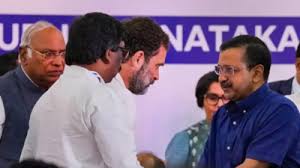
NEW DELHI: AAP on Tuesday disengaged itself from the INDIA bloc, saying the opposition grouping was formed only for the 2024 Lok sabha polls. It also alleged BJP and Congress had entered a “secret, corrupt deal”. The statement came as Congress and 15 other opposition parties wrote to PM Narendra Modi demanding a special session of Parliament on developments following the Pahalgam terror attack. AAP made the same demand separately. AAP national media in-charge Anurag Dhanda said on X , “The real alliance is between BJP and Congress behind the scenes. Rahul Gandhi says only that which benefits Modi politically. In return, Modi saves the Gandhi family from going to jail. Neither of them is interested in providing basic facilities like schools, hospitals, electricity and water to the countrymen.” “To clean Indian politics, we must end this behind-the-scenes collusion. Rahul Gandhi and Modi may appear as opponents on stage but the truth is that they’ve become guarantees of each other’s political survival. Congress’s weak politics empowers BJP, and BJP’s rule hides Congress’s corruption,” Dhanda alleged in a statement issued by the party later. Asserting that the INDIA bloc was formed specifically for the 2024 Lok Sabha elections, Dhanda said, “The alliance ensured that opposition parties secured 240 seats – this is a significant achievement.” He drove home the point that the alliance as far as AAP had lived its purpose and the party was not part of the bloc anymore. “AAP will contest every state election on its own. We will be contesting all seats in Bihar later this year, “ Dhanda told TOI. “In Parliament, however, our MPs will support the opposition’s position based on what is best for the country and our MPs will vote accordingly in both Lok Sabha and Rajya Sabha,” Dhanda said. AAP and Congress have had a turbulent equation even as INDIA bloc partners. After much to and fro on seat sharing talks and much resistance to the alliance from the Congress’s Delhi unit, the two parties finally did fight as allies in Delhi and also in Gujarat and Haryana in the Lok Sabha polls but were pitted against each other in Punjab. Later last year, the two parties failed to reach a consensus on seat-sharing in the Haryana assembly polls and fought against each other. In the Delhi assembly elections earlier this year too both parties fought a bitter battle that had put a big question mark on how both AAP and Congress would carry off as allies in the INDIA bloc. Courtesy : TOI Note: This news is originally published on https://timesofindia.com/ and is for use by the non-military/non-commercial community, especially those in the human rights sector.