
UP: Stampede among the baraatis as soon as stone pelting happened, saved their lives by hiding in the fields; uproar over stopping the marriage procession of a Scheduled Caste youth
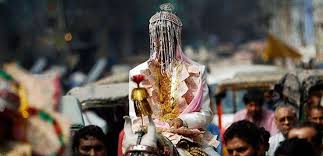
There was a lot of uproar and stone pelting when a Dalit’s marriage procession was stopped in Etah. There was chaos here after the stone pelting. A constable was injured in this. The marriage procession came to village Dhakpura of Awagarh police station area on the night of 21 June. SSP and SDM also reached the spot. People created a ruckus in village Dhakpura alleging that a Dalit’s marriage procession was stopped in Etah. A constable was seriously injured in this, who has been referred to Agra from PHC. In this case, the police have registered a report against 50 unknown people including 15 named ones. Village resident Late Prem Babu’s daughter Aarti’s marriage was fixed with Vikas Kumar, resident of Rudayan of Hathras district. The marriage procession came on the night of 21 June. It is alleged that the people of Kshatriya community stopped the marriage procession from going on a road. There was an uproar over this. On getting the information, Awagarh police station reached and seeing the ruckus, police from nearby police stations were also called. Police was explaining to the people of both the sides and consensus was also being made. Meanwhile, some people again created ruckus and pelted stones. Constable injured A stone hit the head of a constable posted in Sakrauli police station, due to which he was bleeding. He was brought to PHC Awagarh. From here he was referred to Agra. After this, SSP Shyam Narayan Singh, ASP Rajkumar Singh, SDM Jaleshwar Bhavana Vimal, CO Gyanendra Pratap Singh, Tehsildar Neeraj Varshney reached the spot. People of both the sides were explained and after getting the baraat to pass, all the rituals of marriage were also performed in their presence. An application was already given to DIG Some pre-planned things are also coming to the fore regarding the matter. A woman had already given an application to DIG. It was written in it that people of Thakur community will not allow the baraat of a youth of SC community to go out. People from all communities had helped in the marriage. The girl’s father had passed away earlier and the financial condition of the family is also not very good. According to the villagers, people from all communities had helped in this marriage. Then why did the ruckus happen, questions are also being raised on this. BSP officials made allegations The BSP delegation reached the village on Sunday. They took information about the whole matter from the people of the Dalit community. Aligarh division in-charge Raju Ramratan alleged that people from the other side threw stones from the roofs. Due to this a policeman got injured but the police took action against the people of the Dalit community. Many people were beaten, people were dragged out of their homes and taken to the police station. People from the Dalit community reached the police station on Sunday and gave a complaint, which was not taken. BSP district president Dharmendra Soni, district in-charge Vijay Singh, Rajiv Singh, Niranjan Singh, Rajesh Diwakar were part of the delegation. As soon as the stone pelting started, the baraatis ran away to save their lives. There was a stampede among the baraatis after the stone pelting and uproar over stopping the procession from Rudayal to village Dhakpura in Etah. The baraatis ran away from there at night and returned to the village through the fields. On hearing about the fight in the baraat in the village, the women of the groom’s side started crying. The groom’s mother fell ill on Saturday night itself, she has been admitted to the hospital. On Sunday morning, the groom’s sister-in-law also fell ill. The marriage of Nahar Singh’s son Vikas, a resident of village Rudayal, was fixed in the said village of Etah, the baraat went on Saturday evening. After the welcome and breakfast, preparations were going on for the procession to go in the night. The baraatis told that at that time some people stopped the ritual of baraat from being performed. Due to this, there was an altercation and a fight from both sides. The baraatis ran away from there and saved their lives. They reached their village hiding in the fields. When they reached the village and told the whole story, the groom’s mother fell ill. The bride was sent off at around 12 o’clock at night with five baraatis. The groom’s father says that other post-wedding functions are also to be held in the same village, so he is worried. He has informed the police about his dilemma and has asked for help. There are two routes in the village, the baraatis insisted on going through the other route. The baraat was moved forward from there in the presence of the police. Meanwhile, a voice was heard. A constable has been injured. All the marriage rituals were performed peacefully under the protection of the police-administration. The condition of the injured constable is out of danger. – Shyam Narayan Singh, SSP Published by: Shahrukh Khan Courtesy : Hindi News
‘You’re not fit to fly an aircraft, go back and stitch slippers’: IndiGo Dalit trainee pilot ‘harassed’ by seniors

Police filed FIR against IndiGo officials Tapas Dey, Manish Sahni and Captain Rahul Patil under the SC/ST (Prevention of Atrocities) Act. A trainee pilot with IndiGo has accused three senior officials of insulting him by saying that he was “not fit to fly a plane” and “must stitch shoes.” The 35-year-old trainee pilot, who is a Dalit, has lodged a police complaint. Following this, the police filed an FIR against IndiGo officials Tapas Dey, Manish Sahni and Captain Rahul Patil under the SC/ST (Prevention of Atrocities) Act, reports NDTV. According to the report, the complainant first approached the police in Bengaluru. The cops there registered a zero FIR — an FIR that can be filed in any police station irrespective of where the crime took place. This FIR has now been sent to Gurugram, where IndiGo is headquartered. In his complaint, the complainant referred to a meeting on April 28 at Indigo’s Gurugram office. He alleged that during the 30-minute meeting, he was told, “You are not fit to fly an aircraft, go back and stitch slippers. You are not even worthy of being a watchman here.” The trainee pilot has said the harassment was aimed at forcing him to resign. He has said the derogatory remarks were aimed at degrading his identity as a Scheduled Caste person. He has also alleged that he had suffered “professional victimisation” through unjustified salary cuts, forced retraining sessions and unwarranted warning letters. He said he had raised the matter with higher officials and IndiGo’s ethics panel, but no action followed. Eventually, he was forced to file a police complaint. Courtesy : TNIE Note: This news is originally published on https:/thenewindianexpress.com/ and is for use by the non-military/non-commercial community, especially those in the human rights sector.
Transgender community, activists demand space for talks, acceptance, & infrastructure
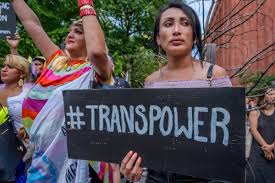
Ranchi: A pride month sensitisation programme was held on Saturday bringing together transgender individuals, mental health professionals, civil society organisations, and govt representatives. The event was organised by the Child in Need Institute (CINI) under its G-SAFE+ initiative, in collaboration with RINPAS and other community stakeholders. The aim of the event was to create a space for dialogue on the legal, psychological, and infrastructural needs of the transgender community while celebrating their identity and resilience. Citing the poor implementation of the Supreme Court’s judgment that mandated transgender welfare boards in every state, Jharkhand high court Ritwik Sinha said, “We are talking about rights, but they remain largely on paper. There is zero follow-up.” Mental health emerged as a key focus, with statistics revealing that mental health issues are four times more prevalent among transgender individuals. Dr Manisha Kiran, the HOD of Psychiatric and Social Work at RINPAS, attributed high school dropout rates to bullying and lack of support. Discrimination, emotional negligence, minority stress and rejection, verbal and sometimes physical abuse, along with stigma, push the trans community into anxiety, depression, self-harm, suicidal ideation, and substance abuse. “The govt should actively involve members of the transgender community in lawmaking for the community and needs to invest in research in this area, as the lack of data in the region hinders effective policy making,” said S J Sangeeta of CINI. Amarjeet Shergil of Utthaan CBO, a group led by LGBTQIA+ members from Jamshedpur, lamented the lack of basic facilities in Ranchi for transgender community. “Jamshedpur and Chaibasa have separate washrooms, but Ranchi doesn’t. We’re seen as provocateurs — people murder, rape, and abuse us, but no police reports are filed,” she said, calling for dedicated transgender cells in police stations. Courtesy : TOI Note: This news is originally published on https:/thetelegraph.com/ and is for use by the non-military/non-commercial community, especially those in the human rights sector.
ID cards for transgenders originally from Assam: Sarma

Add Your Heading Text HeGuwahati: The Assam cabinet on Sunday classified the transgender community in the state as a socially and educationally backward class.re “Today our cabinet has granted the status of socially and educationally backward class to the third gender, whom we call transgenders. But we will give identity cards to only those who are residents of Assam. This status won’t be enjoyed by those transgenders who are here for various works. It will only be enjoyed by those who are the original inhabitants,” CM Himanta Biswa Sarma said during a press conference, following a cabinet meeting. The cabinet’s decision to classify the transgender community as ‘socially and educationally backward classes’ is in line with the spirit of the direction of the Supreme Court. District commissioners have been saddled with the responsibility to verify an applicants status when issuing identity cards. The cabinet also approved a new initiative called ‘Shradhanjali’, which will support transportation of deceased bodies of students and youths working in other states. The state govt will prioritise covering the costs of bringing back the remains of low-income youth workers who may have died while working in other states, said a govt release. “In this year’s budget, we decided that if youths or students, especially if they die outside the state, the govt will bring back their bodies with respect. Today, the state cabinet has approved a scheme named Shradhanjali. Under this scheme, their bodies will be brought back at the state govt’s expenditure,” Sarma said. From Oct 1, the scheme will ensure easy, lawful, and coordinated transportation of the bodies from other states. According to an official statement, the scheme will primarily be applicable for youth engaged in low-wage employment outside the state and those who have died in exceptional circumstances like murders and accidents. Deaths during medical treatments, outside Assam, have been excluded. A DIG-level officer from the Assam Police special branch will serve as the nodal officer to oversee the return of the bodies. The statement said families can report through local administration, police or by dialling 112. Without formal implementation, approximately 15 bodies have already returned to the state this year, the statement said. Further, the cabinet approved the creation of the Rabha development council for people from the Rabha community residing outside the Rabha Hasong Autonomous Council (RHAC) area. The council will implement welfare programmes to enhance the socio-economic, educational and cultural development. In other major decisions, the cabinet approved the Assam State Mineral Exploration Trust Rules, 2025, for establishing the State Mineral Exploration Trust (SMET) to advance exploration of minor minerals such as sand, gravel, stone, granite, limestone, quartzite and china clay. They also approved allocation of a site to Hinduja Renewables Energy Private Limited for a 900 MW off-stream pumped storage project in West Karbi Anglong. “With an investment of Rs 5400 crores, this project will contribute towards achieving the state’s target of 2 GW PSP capacity by 2030,” the release said. The cabinet also approved establishment of Rs 3000 crore SEBI-registered Assam Industrial and Green Growth Fund — an alternate investment fund for Assam with Anchor Investment worth Rs 500 crore in a phased manner to mobilise long-term capital for renewable energy, green infrastructure, priority start-ups, agro-tech, tourism, MSMEs and other priority sectors. The cabinet has also agreed to fill half the supervisor posts with experienced Anganwadi workers, while maintaining direct recruitment for the remaining positions. Moreover, two wetlands in Goalpara and Urpad and Hasila Beel has been designated as proposed reserve forests. The cabinet also approved an increased honorarium for cook cum helpers, under the PM POSHAN scheme from Oct. Courtesy : TOI Note: This news is originally published on https:/timesofindia.com/ and is for use by the non-military/non-commercial community, especially those in the human rights sector.
Thakurs stone Dalit wedding party over route in an Uttar Pradesh village, four injured
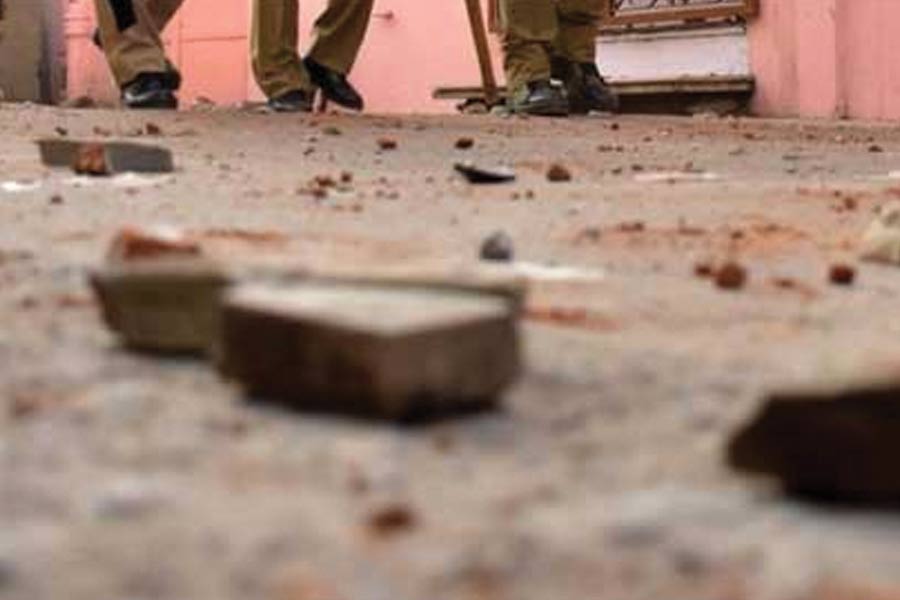
Thakurs had objected to the route taken by the groom’s party on its way to the Dalit bride’s home in village Dhakpur in Etah district, says senior superintendent of police Shyam Narayan Singh Thakurs stoned a Dalit groom’s procession in an Uttar Pradesh village on Saturday night, leaving a police constable and three baraatis injured, police sources said. The Thakurs had objected to the route taken by the groom’s party on its way to the Dalit bride’s home in village Dhakpur in Etah district, senior superintendent of police Shyam Narayan Singh said on Sunday morning. “The marriage was solemnised in the presence of the police and the bride left for the groom’s home in a peaceful atmosphere,” Singh said. A relative of the bride said on the condition of anonymity that the family would not lodge a police complaint. “The Thakurs had declared two days ago that they wouldn’t let the baraat pass through their hamlet,” he said. “We gave a written application to the police and they deployed cops on the route, which was shorter than the one the Thakurs wanted us to take.” The Thakurs blocked the procession and the stoning began in the presence of the police. Singh said: “Stone-throwing during a minor altercation between villagers from the two communities left constable Sunil Kumar injured. He has been admitted to hospital.” Another police source said three baraatis too suffered injuries. “Nobody should be allowed to block any road for any reason. The villagers are peace-loving. They listened to us and allowed the baraat to pass through its chosen route,” Singh said. He added: “The girl’s father died a few years ago, and so the entire village had pitched in for the marriage. However, we have deployed forces in the village to avert any backlash.” Dev Charan, a relative of the groom, said: “The police helped us complete the marriage rituals and we returned home (to another village in the district) without any ill-will against anybody.” A member of the Thakur community was quoted as telling local reporters: “They suddenly decided to follow a route that was not in their plans before. We don’t know who started pelting them with stones.” On April 17, some upper caste villagers of Chhalesar in Agra, 85km west of Etah, had attacked a Dalit groom for riding a horse and playing music on his way to the bride’s home. Piyush Srivastava Courtesy ; The Telegraph Note: This news is originally published on https:/thetelegraph.com/ and is for use by the non-military/non-commercial community, especially those in the human rights sector.
Cong forms panel to probe two Dalit men’s murder in Chhatarpur
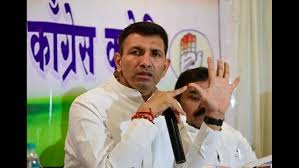
Bhopal: Congress state unit president Jitu Patwari on Sunday announced the formation of a four-member panel to probe the recent murders of two Scheduled Caste men in Chhatarpur district. In a statement, the party said a man from the SC community was shot dead by anti-social elements at Lav Kush Nagar on June 21, while his wife and daughter were abducted. Earlier, a resident of Naugaon was killed allegedly by a group of influential individuals. The committee comprises former minister Surendra Chaudhary, former MLA Narayan Prajapati, Kiran Ahirwar and Pradeep Khatik. It will look into the circumstances of the two incidents, and submit a report to the Pradesh Congress Committee, the statement added. In a separate post on ‘X’, Patwari said a woman and her two children were abducted from their home in Chhatarpur. The abductors arrived in a car, opened fire, and escaped with the three victims, he claimed. He further wrote that despite disconcerting figures of “atrocities against women, crimes against women are touching new heights” in the state and CM Mohan Yadav, who holds the home portfolio, has nothing to say on the “worsening law & order situation” in the state. Bhopal: Congress state unit president Jitu Patwari on Sunday announced the formation of a four-member panel to probe the recent murders of two Scheduled Caste men in Chhatarpur district. In a statement, the party said a man from the SC community was shot dead by anti-social elements at Lav Kush Nagar on June 21, while his wife and daughter were abducted. Earlier, a resident of Naugaon was killed allegedly by a group of influential individuals. The committee comprises former minister Surendra Chaudhary, former MLA Narayan Prajapati, Kiran Ahirwar and Pradeep Khatik. It will look into the circumstances of the two incidents, and submit a report to the Pradesh Congress Committee, the statement added. In a separate post on ‘X’, Patwari said a woman and her two children were abducted from their home in Chhatarpur. The abductors arrived in a car, opened fire, and escaped with the three victims, he claimed. He further wrote that despite disconcerting figures of “atrocities against women, crimes against women are touching new heights” in the state and CM Mohan Yadav, who holds the home portfolio, has nothing to say on the “worsening law & order situation” in the state. Courtesy : TOI Note: This news is originally published on https:/timesofindia.com/ and is for use by the non-military/non-commercial community, especially those in the human rights sector.
Two decades on, hunger still haunts Gujarat: Survey exposes stark gap behind poverty claims
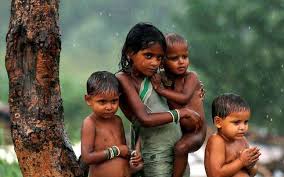
A Niti Aayog report, released about two years ago, estimated that in Gujarat — which our powers-that-be have long considered a model state — 11.66% of people are “multidimensionally poor,” a term referring to an index that seeks to estimate “multiple and simultaneous deprivations” at the household level across three macro categories: health, education, and living standards. The report suggests that multidimensional poverty in Gujarat declined by around 7% over a period of five years, pointing out that in tribal-dominated districts, where poverty levels were particularly high, there has been a clear improvement: in Dahod from 54.93% to 38.27%, in Dangs from 57.33% to 26.61%, in Narmada from 37.11% to 22.62%, and in Panchmahal from 41.52% to 18.11%. Basing its estimates on the National Family Health Surveys of 2015–16 and 2019–21, the report claims the “most rapid reduction” in multidimensional poverty occurred in districts located in four states: Gujarat, Madhya Pradesh, Uttar Pradesh, and Rajasthan. While not directly disputing what the Government of India report highlights regarding Gujarat, a new survey carried out by a civil rights group in two tribal districts — Dahod and Panchmahal — and two non-tribal districts — Bhavnagar and Morbi — suggests that things aren’t as rosy as they are made out to be. A follow-up to a similar survey carried out in 2004, the new survey — conducted in 2025 by Anandi (Area Networking and Development Initiatives or ASAA) — reveals that, even after two decades, total food security continues to elude nearly 80% of the population in the surveyed areas. To quote Sejal A. Dand, a senior activist directly involved in both the 2004 and 2025 surveys, two decades ago, 10% of people were found to be “food secure,” and this percentage has gone up by just 2% over the years — to 12%. Releasing details of the 2025 survey, which was conducted with the help of senior academic Prof. Dipa Sinha, currently with Azim Premji University, another Anandi activist, Neeta Hardikar, told the Ahmedabad media that there is certainly a change: unlike in 2004, there is “no full day hunger” as found then, “but our survey suggests that a large number of households often don’t have access to food, especially in the tribal areas.” The survey results confirm this: in 2004, it was found that in the sample households of the tribal area of Panchmahal, a staggering 73.66% were food insecure for more than six months in a year. In contrast, the 2025 survey shows that 7.06% “live in hunger,” while a whopping 86.38% have “incomplete meal,” and only 6.56% have a “full meal.” Conditions are worse in Dahod district: here, 24.61% live in hunger, 58.78% have “incomplete meal,” and only 16.61% have a “full meal.” The 2025 results indicate that the situation is not much better in the non-tribal areas of the Saurashtra region of Gujarat where the survey was also conducted. In Malia (Morbi district), 9.10% “lived in hunger,” 75.51% had “incomplete meal,” while only 15.38% had a “full meal.” Similarly, in Shihor and Umrala of Bhavnagar district, 15.98% “lived in hunger”, 54.84% had “incomplete meal,” and just 14.13% had a “full meal.” The 2025 survey was undertaken specifically to assess how effectively the National Food Security Act, 2013 — which aims to provide subsidized food grains to approximately two-thirds of the country’s 1.4 billion people — has been implemented since it became operational in Gujarat about a decade ago. A total of 1,261 households were included in the survey, mostly belonging to marginalised communities, with a deliberate effort to include those facing social vulnerabilities such as single women, the disabled, and the elderly. “The results are therefore not representative of the state on average, but they give an indication of what is happening among some of the vulnerable communities in the state — these were the communities and families that the NFSA was expected to help,” a survey note underlines. It adds, “Over a third (34%) belonged to Adivasi communities and more than half (54%) to OBC communities. Most of the Adivasi respondents are from Dahod and Panchmahal, and the OBCs from Bhavnagar and Morbi. The remaining were SCs and OBCs, with only 21 respondents belonging to the ‘general’ category.” While 86% of the respondents reported having a smartphone in the household — the lowest in Dahod (77.3%) and highest in Morbi (93.1%) — only 43.7% had cultivable land. Most of the households in Bhavnagar and Morbi owned no cultivable land (over 80%), while in the tribal districts of Dahod and Panchmahal, most households were engaged in their own cultivation, although the land size was less than 2 bighas. Respondents were asked about the frequency of consumption of different foods for each season (summer, monsoon, winter) — cereals, pulses, fruits and vegetables, milk and milk products, and flesh foods (chicken, meat, eggs) — to define what qualifies as a “full meal.” The “incomplete meal” category was used to identify households where not all members consume rice, dal, fruits, vegetables, milk, curd, meat, eggs, oil, etc., on a regular basis. These households rely mainly on carbohydrate-based food to satisfy hunger. The “living with hunger” category identified households whose meals are “donated, borrowed, and largely cereal-based, infrequent and inadequate.” The note observed: “In spite of the legislation, which covers 75% of rural households under the targeted public distribution system, the proportion of households which are not food secure is very high. Only around 12% of the households are able to entirely meet their food security needs in the sense of having a diverse diet regularly, including foods from different food groups.” By Rajiv Shah Courtesy : Counterview Note: This news is originally published on https:/counterview.com/ and is for use by the non-military/non-commercial community, especially those in the human rights sector.
Global NGO slams India for media clampdown during conflict, downplays Pakistan
A global civil rights group, Civicus has taken strong exception to how critical commentaries during the “recent conflict” with Pakistan were censored in India, with journalists getting “targeted”. I have no quarrel with the Civicus view, as the facts mentioned in it are all true. However, what surprised me was that the global NGO was conspicuously silent on how the military-controlled Pakistan government is known to have propped up terrorists — which is actually the first trigger — while continuing to target mediapersons critical of the regime. After receiving the Civicus email, I decided to check whether it had a commentary on Pakistan as well. I did find a comprehensive commentary under the heading “Government criminalises activists, increases online controls and cracks down on protests by the opposition and ethnic groups”, but there is no update on how the authorities behaved during the conflict — even as rating India’s civic space as ‘repressed’ — the same as Pakistan’s. Let me first recount what Civicus has to say about India in the context of the Pahalgam terror attack and Operation Sindoor. It starts off by offering background on how, in recent years, the government has “misused the draconian anti-terror Unlawful Activities (Prevention) Act (UAPA) and other laws to keep activists behind bars and fabricate cases against activists and journalists for undertaking their work.” It states, “The authorities have blocked access to foreign funding for NGOs and human rights defenders, using the restrictive Foreign Contribution (Regulation) Act (FCRA). Travel restrictions have been imposed on academics, journalists and human rights defenders by suspending their work visas, denying them entry to the country and cancelling their Overseas Citizen of India status.” Civicus quotes the Geneva-based United Nations-linked Global Alliance of National Human Rights Institutions’ (GANHRI) Sub-Committee on Accreditation (SCA) report from March 2025, which recommended downgrading India’s National Human Rights Commission (NHRC) from category ‘A’ to category ‘B’. “Among the concerns was the failure to address shrinking civic space and increased instances of targeting human rights defenders, journalists and perceived critics,” it notes. This is followed by how, in the aftermath of the dastardly terrorist attack in Pahalgam, followed by Operation Sindoor, “India blocked social media accounts and YouTube channels, while journalists and others were criminalised.” Thus, on 29 April 2025, the Indian government ordered the blocking of the YouTube channel 4PM News Network, citing national security and public order following its coverage of the anti-war movement. “The channel remains offline at the time of writing. The Editors Guild of India said that it was ‘deeply concerned’ by the government’s directive ‘without any disclosure of the specific reasons or evidence, and without following principles of natural justice’,” said Civicus. Then, Civicus noted how, in the same month, “police in Uttar Pradesh launched criminal investigations into political commentators and satirists Neha Singh Rathore and academic Madri Kakoti, for allegedly ‘inciting unrest and threatening national unity’ through their online posts about the attack.” It further stated, “The government also ordered the blocking of accounts of some international news organisations, as well as 16 YouTube news channels linked to Pakistan,” adding, “In May 2025, the authorities ordered the blocking of over 8,000 social media accounts on Twitter (X), including the Kashmir-based news outlets Free Press Kashmir, The Kashmiriyat, and Maktoob Media, which focuses on human rights and minorities.” Civicus continued, “The Ministry of Electronics and IT also temporarily blocked the Indian news website The Wire on 9 May 2025, apparently in retaliation for an article it published about India’s fighter jet procurement. The Wire reported that its site went dark without notice after posting a CNN-sourced story about Rafale jets, and though it was later unblocked, the outlet is now pursuing legal action against the government for this blatant infringement of press freedom.” Giving more details, Civicus said that in May 2025, the Nagpur police arrested Rejaz M. Sheeba Sydeek, a Kerala-based journalist, for posting a social media message criticising Operation Sindoor. On 16 May 2025, he was charged under various laws, including the UAPA. Similarly, journalist Hilal Mir, a Srinagar-based senior journalist who has worked with leading Indian and international news organisations, was placed under preventive detention from 7 to 13 May 2025 for allegedly “spreading anti-national content and promoting secessionist ideology online.” Then, said Civicus, there were academic arrests. In May 2025, Ali Khan Mahmudabad, an associate professor and head of the political science department at Ashoka University, was arrested for stating in a social media post that while there was praise for one of the armed forces spokespersons for media briefings on Operation Sindoor, there was silence around “victims of mob lynchings, arbitrary bulldozing,” and the ruling party BJP’s “hate mongering.” Citing more examples of how civic space is narrowing in India, Civicus said that on 29 April 2025, eight students were arrested in Kochi while holding a peaceful demonstration in solidarity with victims of the Kashmir conflict and those killed in the Indo-Pakistani strikes. And on 10 May 2025, police blocked an anti-war rally in Thrissur organised by the People’s Anti-War Front. Eleven activists were arrested and taken into preventive custody. Then, Civicus noted that as of 1 June 2025, at least 81 individuals in Assam had been arrested and labelled “anti-national” for allegedly expressing sympathy toward Pakistan in the wake of the Pahalgam terror attack. “This sweeping action — justified by the state government as a measure against ‘pro-terror sentiment’ — has drawn sharp condemnation from civil rights groups, journalists, and political commentators. Many have pointed out the dangerous precedent it sets for criminalising expression and dissent in an already fragile rights environment,” claimed Civicus. In sharp contrast to its commentary on India, the Civicus commentary on Pakistan, while also rating the country as “repressed”, gives no details of how the media curbs took place in Pakistan during the conflict. While it does say, based on 2024 facts, that Pakistan has seen “criminalisation of human rights defenders and journalists, crackdown on human rights movements and protests,” it offers no specifics in
After Rahul Gandhi’s big experiment in Gujarat, Congress announced city and district presidents, see full list
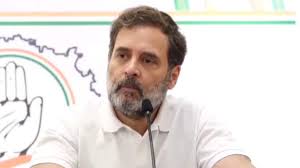
Gujarat Congress District President List: To defeat BJP in the 2027 Gujarat assembly elections, Congress started the organization creation campaign in March. Under this, Congress had decided to give strength to the district and city presidents. Congress has announced the names of new district and city presidents for the state. Ahmedabad: Congress has announced the new district and city heads of the state after the exercise of organization creation campaign in Gujarat. On the initiative of Congress leader Rahul Gandhi, the party had changed the process of appointment of district presidents from Gujarat. The party has made Sonal Patel the Ahmedabad city president, while the old heads have been retained in Vadodara city and district. Rahul Gandhi had visited Gujarat. After this, he appointed PCC observers along with the appointment of AICC observers. After this the party has appointed new city / district presidents. The presidents have been repeated in the list announced by the Congress, but according to an estimate, there are about 50 percent such names. Those who have got the responsibility of district / city president for the first time. Congress announced 40 city and district presidents for Gujarat. 2027 assembly election target A statement issued by the Congress said that the party’s national president Mallikarjun Kharge has approved the appointment of District and City Congress Committee (DCC) presidents in Gujarat with immediate effect. These appointments have been made after a long exercise done under a rigorous organizational under the Organization Creation Campaign. To give a tough fight to the BJP in the 2027 Gujarat Assembly elections, the Congress has started the process of change in the organization from Gujarat. Its goal has been set to revive the party structure from booth to district level. List of new district and city presidents of Gujarat Congress Sl. No. Name of District/City President 1 Ahmedabad City Sonal Patel 2 Ahmedabad Rural Rajesh Kumar Gohil 3 Amreli Pratap Dudhat 4 Anand Alpesh Padiyar 5 Aravalli Amubhai Patel 6 Banaskantha Gulab Singh Rajput 7 Bharuch Rajendra Singh Rana 8 Bhavnagar Rural Pravinbhai Rathore 9 Bhavnagar City Manohar Singh Lalbha 10 Botad Himmat Kataria 11 Chhota Udepur Shashikant Rathwa 12 Dahod Harshadbhai Ninama 13 Dang Snehil Thackeray 14 Devbhoomi Dwarka Palbhai Ambalia 15 Gandhi Nagar Arvind Singh Solanki 16 Gandhinagar City Shakti Patel 17 Shakti Patel Punjabhai Vansh 18 Jamnagar City Virendrasinh Jadeja alias Diggubhai 19 Jamnagar Rural Manoj Kathiria 20 Junagadh City Manoj Joshi 21 Kheda Kalusingh Dabhi 22 Kutch V.K. Hambal 23 Mahisagar Harshad Shantilal Patel 24 Mahesana Baldevji Thakor 25 Morbi Kishorbhai Chikhlia 26 Narmada Ranjitsinh Tadvi 27 Navsari Shaileshbhai Patel 28 Panchmahal Chetansinh Parmar 29 Patan Ghembarbhai Patel 30 Porbandar Rambhai Maru 31 Rajkot City Dr. Rajdeepsinh Jadeja 32 Rajkot Rural Hitesh M Vohra 33 Sabarkantha Rambhai Solanki 34 Surat Rural Anand Chaudhary 35 Surat City Vipul Babubhai Udhnawala 36 Surendranagar Naushad Solanki 37 Naushad Solanki Naushad Solanki 38 Naushad Solanki Jashpal Singh Padhiyar 39 Vadodara City Ritwik Joshi 40 Valsad Kishanbhai B Patel Observers were announced in April The party had announced Gujarat Assembly polls on April 12, 2025 43 AICC observers and 183 PCC observers were deployed in all the districts of the state. These included state in-charges, MPs, MLAs and former PCC presidents. After this, the AICC observers along with the PCC observers visited all 26 Lok Sabha constituencies, 182 assembly constituencies and almost all 235 block Congress committees. After this, the names of the district and city presidents were decided. Congress is in the worst position in Gujarat till now. Out of 26 Lok Sabha seats, Congress has only Banaskantha seat, while it has only 12 MLAs in the assembly. Congress state chief Shakti Singh Gohil is the only Rajya Sabha member. His term is till April next year. Written by: Achalendra Katiyar Achalendra Katiyar has studied from Jamia Millia Islamia Delhi. After this, he worked in reputed national newspapers of Meerut, Kanpur and Delhi. Since June 2020, he has been active in understanding the politics and culture of Gujarat. Courtesy: Hindi News
Rahul Gandhi says English is ’empowering’
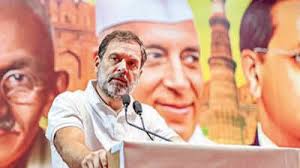
English is “empowering” not “shameful” and it is a tool to break the chains, Congress leader Rahul Gandhi has said following home minister Amit Shah’s reported remarks on English. On Friday, Rahul on X also said, “English is not a chain – it is a tool to break the chains.” “In today’s world, English is as important as one’s mother tongue because it will provide employment and boost one’s confidence,” Rahul said. “Every language of India has soul, culture, knowledge. We have to cherish them ,” he said. Courtesy : TOI Note: This news is originally published on https:/timesofindia.com/ and is for use by the non-military/non-commercial community, especially those in the human rights sector.