
Dalit man killed over Rs 70 in 2020: 2 brothers get life imprisonment

AGRA: An SC/ST court in Aligarh sentenced two brothers, Virendra Singh and Hoshiyar Singh, both in their early 50s, to life imprisonment for murdering 26-year-old Dalit man Manoj Jatav over a Rs 70 dispute in 2020. The judgement, delivered on Friday, was made available on Saturday. Prosecution officer Chaman Prakash Sharma said that on June 5, 2020, Manoj and his cousin had gone to a shop in Sarkoriya village, where the shopkeeper demanded Rs 70 that Manoj owed, leading to an argument. Later, the brothers and four others allegedly attacked Manoj’s house, killing him and injuring his uncle, Arun. Police booked all six accused under IPC sections for murder, rioting, unlawful assembly, attempt to murder, insulting the modesty of a woman, and criminal conspiracy, along with the Arms Act and SC/ST Act. Five were granted bail months later, but Virendra remained in custody. After the trial, four co-accused were acquitted for lack of evidence, while Virendra and Hoshiyar were convicted and fined Rs 55,000 each. They were taken into custody after the verdict. “The case was being heard in the SC/ST court. After examining all evidence and witnesses, the court on Friday acquitted the four co-accused but convicted Virendra and Hoshiyar, imposing life terms and a fine of Rs 55,000 each. As the court pronounced its judgement, both convicts were taken into police custody and sent to jail,” prosecution officer Sharma said. Courtesy : TOI Note: This news is originally published on https:/timesofindia.com/bha and is used purely for non-profit/non-commercial purposes, especially human rights.
INDIA bloc has no objection to Uddhav-Raj coming together: MP Raut
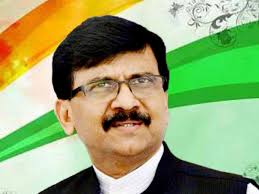
Mumbai: Shiv Sena (UBT) MP Sanjay Raut on Saturday said the alliance between Shiv Sena (UBT) and MNS is directly or indirectly discussed at the INDIA bloc meetings, and no one in the INDIA bloc has any objection to the two brothers, Uddhav and Raj Thackeray, coming together. Raut also said that the Raj-Uddhav alliance was not a subject of the INDIA bloc, and local body polls are not discussed at the national level. “The alliance between Uddhav Thackeray and Raj Thackeray is not a matter of the INDIA bloc. It is a matter of local bodies, and local body elections are not discussed at the national level. Since some people’s party chiefs are in Delhi, they may have gone to Delhi and discussed it. The two brothers have taken the decision to come together. Politically, this is a big development in Maharashtra. That is why it is being discussed,” Raut said. “This issue is discussed directly and indirectly in the INDIA bloc meetings. Therefore, no one in the INDIA bloc has any objection to the two brothers coming together. The picture there was such that no one has any objection to this. This is the position of (state Congress Chief) Harshvardhan Sapkal on the Marathi issue, that is, the Congress here on the Marathi issue also,” Raut said. On Thursday, Uddhav dismissed speculation about any third-party involvement in a potential alliance with his cousin Raj. During his Delhi visit, when asked if Raj was also going to meet Congress Neta Rahul Gandhi, Uddhav said the two brothers are capable of taking their own decision and do not need any third-party intervention. On being asked if Raj will also attend the INDIA alliance meeting and meet Rahul Gandhi in Delhi, Uddhav said, “Both the brothers are capable enough. We will do whatever we have to do. There is no need for any third person.” Uddhav was on a three-day Delhi trip on August 6, 7, and 8 to attend the meeting of the INDIA bloc. In Delhi, Uddhav called on Rahul Gandhi and Congress President Mallikarjun Kharge. Uddhav met NCP (SP) supremo Sharad Pawar at his residence. Pawar hosted a dinner meeting of Maha Vikas Aghadi (MVA) MPs at his residence. Uddhav’s son, Sena (UBT) MLA Aaditya, wife Rashmi, and Raut were also in Delhi with Uddhav. Uddhav attended the dinner meeting hosted by Rahul on Thursday and also attended the INDIA bloc meeting. Courtesy : TOI Note: This news is originally published on https:/timesofindia.com/bha and is used purely for non-profit/non-commercial purposes, especially human rights.
‘Huge criminal fraud’: Congress launches campaign against ‘vote chori’; urges citizens to register
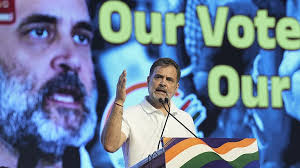
NEW DELHI: The Congress party rolled out a dedicated portal to rally public support behind Rahul Gandhi’s explosive allegations of large-scale poll rigging, which he has called “vote chori”. The platform allows citizens to register their backing for the Congress leader’s demand for digital voter rolls and to access what the party claims is proof of electoral fraud. The website hosts Gandhi’s video reiterating his charge of a “huge criminal fraud” carried out through alleged collusion between the BJP and the Election Commission of India (ECI). Citing analysis from a Karnataka constituency on Thursday, Gandhi called it “a crime against the Constitution.” Alongside the video, a message on the portal warns that “the vote is the foundation of our democracy, but it’s under systematic attack by the BJP, with the Election Commission complicit”. It claimed, “In just one assembly segment of Bangalore Central, we found over 1 lakh fake voters that helped the BJP win this Lok Sabha seat. Imagine this happening in 70-100 seats – it would destroy free elections.” The Congress asserted it has previously raised concerns in states like Maharashtra, but now has “proof”. “We will fight this vote chori with all our strength. Join us to defend our democracy,” the message adds. Visitors to the portal can register by clicking a link or by calling a phone number to receive a registration link via SMS. Once signed up, they receive a personalised certificate declaring their opposition to “vote chori” and stating, “I support Rahul Gandhi’s demand of digital voter rolls from the EC.” The document carries the signatures of Congress president Mallikarjun Kharge, general secretary K C Venugopal and treasurer Ajay Maken. Several party leaders and supporters have posted their certificates on social media to amplify the campaign. The move comes as the Election Commission doubles down on its pushback. On Saturday, poll officials again called on Gandhi to either sign a formal declaration backing his allegations or issue a public apology for making what they term “fake” charges. This followed a day of heated exchanges between the Congress leader and the EC over claims of voter list manipulation in at least three states. Courtesy : TOI Note: This news is originally published on https:/timesofindia.com/bha and is used purely for non-profit/non-commercial purposes, especially human rights.
‘Voter fraud’, SIR row: Kharge to host dinner for INDIA bloc MPs; what’s on agenda?
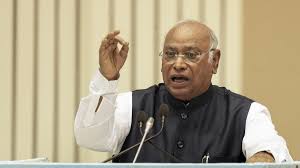
NEW DELHI: Congress chief Mallikarjun Kharge will host a dinner for MPs of the INDIA bloc on Monday, as opposition parties intensify their joint push against the special intensive revision (SIR) of electoral rolls in Bihar and alleged poll rigging, sources told news agency PTI. The gathering at the Hotel Taj Palace in Chanakyapuri will coincide with a protest march by opposition MPs from Parliament to the Election Commission’s office over what they call “poll fraud.” The dinner comes on the heels of a rare show of unity last week, when top INDIA bloc leaders met at Rahul Gandhi’s residence and pledged to resist the electoral roll revision in Bihar and the “vote chori model” they accuse the BJP and Election Commission of running. That meeting marked the first in-person session of the bloc’s senior leaders since June 2024, shortly after the Lok Sabha elections, when they assembled at Kharge’s residence. Leaders from 25 parties attended, including Kharge, Sonia Gandhi, NCP-SP chief Sharad Pawar, National Conference’s Farooq Abdullah, PDP’s Mehbooba Mufti, SP’s Akhilesh Yadav, RJD’s Tejashwi Yadav, TMC’s Abhishek Banerjee, Shiv Sena (UBT) chief Uddhav Thackeray, DMK’s Tiruchi Siva and T R Baalu, CPI(M)’s M A Baby, CPI’s D Raja, CPI(ML)’s Dipankar Bhattacharya and MNM chief Kamal Haasan. During the meeting, Rahul Gandhi gave what the Congress described as a detailed presentation on the “vote chori model” allegedly executed by the BJP via the Election Commission. He laid out “the entire game” of how elections were being “rigged,” according to the party. “A united front against electoral manipulation! We are committed to protecting democracy and will save it from being destroyed at all costs,” the Congress later posted on X. Earlier, at a press conference, Gandhi had reiterated his charge of a “huge criminal fraud” in elections through “collusion” between the BJP and the Election Commission. “The way opposition parties have been united in Parliament in national interest and have cornered the government, the same unity was visible in the meeting as well,” said Gaurav Gogoi, Congress’ deputy leader in the Lok Sabha. Opposition parties have strongly opposed the ongoing SIR exercise in Bihar, warning it could result in the disenfranchisement of many voters. Courtesy : TOI Note: This news is originally published on https:/timesofindia.com/bha and is used purely for non-profit/non-commercial purposes, especially human rights.
Bihar govt sets up board to protect transgender community’s rights
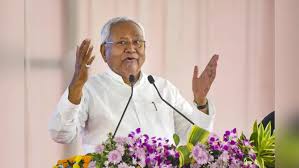
A notification for the constitution of the ‘Bihar Rajya Kinnar Kalyan Board’ was issued by the Social Welfare Department The Bihar government has constituted a welfare board to protect the rights of the transgender community and take measures for their social development and empowerment, an official said on Friday. A notification for the constitution of the ‘Bihar Rajya Kinnar Kalyan Board’ was issued by the Social Welfare Department, she said. Bihar Social Welfare Minister Madan Sahni has been made the chairman of the 28-member panel, the official said. The department has constituted the ‘Bihar Rajya Kinnar Kalyan Board’ to protect the rights of the transgender community and take measures for their social development and empowerment. The board has seven members belonging to the transgender community,” Social Welfare Department Secretary Bandana Preyashi told PTI. The measures for the social development of the transgender community will be implemented and monitored by the board, she said. The state government also wants to provide them education and vocational training to prepare them for respectable and regular employment, said Preyashi, adding, “it will also allow them to enhance their socio-economic status”. “The government is trying to provide them an atmosphere where they feel protected and live a respectful life like any other citizen in the country,” she added. (Only the headline and picture of this report may have been reworked by the Business Standard staff; the rest of the content is auto-generated from a syndicated feed.) Courtesy : BS Note: This news is originally published on https:/businessstandard.com/bha and is used purely for non-profit/non-commercial purposes, especially human rights.
Madurai NGO serves free meals to trans community
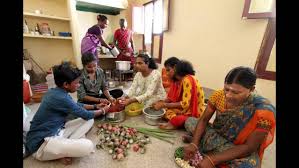
Madurai: Abinaya V, 22, a transwoman who travelled from Coimbatore to Government Rajaji Hospital (GRH) for treatment, had food at The Transgender Resource Centre (TRC), an NGO that created the first transgender library in India, at the launch of a free meal initiative for the community on Friday. She had to drop out of school at the 8th-grade due to poverty in her family consisting of her mother and sister. “If I had gotten food, perhaps I would’ve continued my studies,” says she. At the age of 14, when she experienced gender dysphoria, she attempted suicide, she said. Within a year, she ran away to Bangalore and lived in the railway station for a month. She was then supported by people of the community. She returned to Madurai at the age of 17, and now lives with her mother. Priya Babu, founder of TRC, told TOI that the meal initiative was born after seeing an increased number of trans members visiting GRH for various hormone-related treatments. Every Thursday, GRH holds medical sessions for transgender people, and of late, many come from various districts, she said. “The transgender clinic in Madurai GRH is by far the most successful in the state,” Priya said. The NGO’s desk functioning in the hospital guides community members. Over time, they also sensitised and increased awareness around gender among hospital faculty, which has made it a more favourable place, she added. “Now we see people coming from Chennai and other districts. Often they may not be able to afford meals and will have to return overnight. Through our new initiative, we will provide them food which they could pack for their travel too,” she said. Hafeez A, a transman and member at TRC, said the initiative aims at providing healthy food to not just those who come for treatment but also transgenders who may not be able to afford three meals a day. Food is available from 12am to 4pm, he said On the inaugural day, TRC served food to 40 transgenders, Priya said. “Every Thursday, we would take a head count at 9.30 at the hospital, and pack food for them accordingly,” Priya added. Courtesy : TOI Note: This news is originally published on https:/timesofindia.com/bha and is used purely for non-profit/non-commercial purposes, especially human rights.
In The Salt Pans Of Thoothukudi, A Rs-10 Patriarchal Tax On Dalit Women Speaks To Enduring National Discrimination
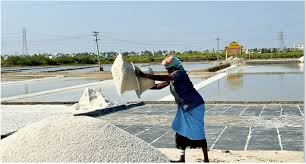
A mural beneath an overpass in Thoothukudi, Tamil Nadu, depicts a woman salt worker, highlighting the role of women in the region’s salt economy/ MANIDEEP GUDELA Decades after equal pay laws, Dalit women in the Thoothukudi salt pans of Tamil Nadu still earn Rs 10 less daily or Rs 300 less monthly than men. They carry 25-kg baskets under the scorching sun, yet tradition justifies the gap and serves as a reminder that men are still regarded as superior. Despite court rulings and hard labour, gender—and caste—discrimination persists across generations. Thoothukudi, Tamil Nadu: At sunrise, the salt pans in this southeastern district shimmer like glass and, by noon, feel like a furnace, with temperatures soaring to 40 deg C. The feet of the women workers—mostly Dalits—are cracked from years of standing in saline water. Their backs are bent under the weight of 25-kg salt sacks, carried from drying plots to storage sheds. For this exhausting, debilitating work, they earn Rs 590 a day—less than the Rs 679 daily state minimum wage paid to skilled workers at a nearby power plant. That wage is barely enough to live on—but what galls the women most is that they earn Rs 10 less than the men. Not because they work less. Not because the industry cannot afford to pay them equally. But simply, they say, because tradition demands it. The Rs 10 missing from a woman’s wage is so small it can almost go unnoticed. But that invisibility makes it a daily, invisible denial of dignity. The patriarchal tax is compounded across generations. “The mother accepted Rs 1 less—a supervisor recalls that was the gap in his parents’ time. Today, the daughter accepts Rs 10 less. If the pattern continues, a few decades from now, the granddaughter will take home Rs 100 less for the same work.” The Tax That Preserves Power It is clear that the Rs-10 patriarchal tax in Thoothukudi is not about profit. It appears to be a tool to preserve a social hierarchy that reinforces and reminds women of their place in power structures. At the end of the month, a woman would have earned Rs 300 less than a man, less than half a day’s wage. The underpaying is not because the owner needs the savings, but because underpaying women is a societal tradition that goes unchallenged. In a 20-acre salt pan, where 25 people work, 20 of them women, the Rs-10 wage gap—you could call it a patriarchal tax on women—amounts to a savings of no more than Rs 6,000 for the employer. That is a negligible sum for the industry, yet it is a calculated reminder of who holds power and who is subservient. R (name changed), a salt pan supervisor in his fifties, overseeing the day’s work. Supervisors, mostly men, manage operations, monitor tasks on site, and keep track of the workers/ MANIDEEP GUDELA Such stories are common in India’s informal economy, which employs about 85% of India’s workforce of about 440 million, with marginalised communities constituting approximately 70% of this workforce: this is also where more than 81% of Indian women work. This is where the most pervasive forms of gendered labour exploitation occur, deeply rooted in caste and patriarchal structures within the production system, with women in the informal sector earning 34% less than their male counterparts. This was evident in Thoothukudi, home to one of India’s major salt-producing belts. The Paraiyars: Bottom Of The Heap Tamil Nadu ranks second in salt production in India, with Thoothukudi district at the heart of the state’s salt industry. Spread over 25,000 acres, the industry in Thoothukudi contributes 70% of the state’s salt output, playing a crucial role in the local economy, directly employing 30,000 workers. A 45-year-old woman, who says she has worked for over two decades in the salt pan, pours dried salt into heaps using an aluminium basket/ MANIDEEP GUDELA Dalit women, primarily from the Paraiyar community, form the backbone of this labour-intensive industry. Known locally as uppalaththu kooli (salt pan labourers), their families have worked in the salt pans for generations. Historically landless, Paraiyars are concentrated in Tamil Nadu’s central and southern districts. The salt pans, mostly leased from the government, are controlled by the Nadars—a powerful, dominant caste in the region. That Dalit women make up the majority of the workforce is no coincidence. Caste has long dictated who performs the most gruelling and degrading labour; gender only deepens this entrenched hierarchy. Dalit men are slightly better off, often working in supervisory or processing roles. It is the women who remain trapped in the most physically demanding tasks. “Our work is more tedious than theirs,” said G*, who is in her 50s and has worked at the pans for over 40 years. “We have to draw pan lines, refill the plots with brine, and sometimes collect the salt too. The men only collect salt—we largely have to do everything.” Salt work is seasonal and closely tied to rainfall. The season typically begins in February and continues until August or September, depending on the monsoon. Workers are paid a daily wage. “There’s no salary on days when there’s no work,” said G. “During the monsoon, we have no income. Even if we’re injured and return home midway through the day, we lose the entire day’s wage.” A Microcosm Of A National, Global System The wage gap in Thoothukudi’s salt pans isn’t an exception. It’s a microcosm of the global system that devalues women’s labour, a pattern of exploitation rooted in patriarchal and capitalist structures. Even though 43% of Tamil Nadu women participated in the workforce (vs 32.5% nationally), according to Periodic Labour Force Survey (PLFS) data for 2020-21, the latest available, the state has one of India’s widest gender pay gaps with women earning just 74 paise for every rupee men earn in regular salaried jobs. This is not limited to Tamil Nadu. According to the ministry of agriculture’s data for 2020-21, a woman agriculture field labourer earns Rs 88 per
Indian state refiners stopped buying Russian oil amid Trump tariff threat: Report

India, the world’s third-largest oil importer, is the biggest buyer of seaborne Russian crude, a vital revenue earner for Russia as it wages war in Ukraine for a fourth year. Indian state refiners have stopped buying Russian oil in the past week as discounts narrowed this month and US President Donald Trump warned countries not to purchase oil from Moscow, industry sources said. India, the world’s third-largest oil importer, is the biggest buyer of seaborne Russian crude, a vital revenue earner for Russia as it wages war in Ukraine for a fourth year. The country’s state refiners – Indian Oil Corp, Hindustan Petroleum Corp, Bharat Petroleum Corp and Mangalore Refinery Petrochemical Ltd – have not sought Russian crude in the past week or so, four sources familiar with the refiners’ purchase plans told Reuters. IOC, BPCL, HPCL, MRPL and the federal oil ministry did not immediately respond to Reuters’ requests for comment. The four refiners regularly buy Russian oil on a delivered basis and have turned to spot markets for replacement supply – mostly Middle Eastern grades such as Abu Dhabi’s Murban crude and West African oil, sources said. Private refiners Reliance Industries and Nayara Energy, majority owned by Russian entities including oil major Rosneft, have annual deals with Moscow and are the biggest Russian oil buyers in India. On July 14, Trump threatened 100% tariffs on countries that buy Russian oil unless Moscow reaches a major peace deal with Ukraine. Indian refiners are pulling back from Russian crude as discounts shrink to their lowest since 2022, when Western sanctions were first imposed on Moscow, due to lower Russian exports and steady demand, sources said. Refiners fear the latest EU curbs could complicate overseas trade including fund raising — even for buyers adhering to the price cap. India has reiterated its opposition to “unilateral sanctions”. Trump on Wednesday announced a 25% tariff on goods imported from India from August 1, but added that negotiations were ongoing. He also warned of potential penalties for purchase of Russian arms and oil. On Monday Trump cut the deadline to impose secondary sanction on buyers of Russian exports to 10-12 days from the previous 50-day period, if Moscow does not agree a peace deal with Ukraine. Russia is the top supplier to India, responsible for about 35% of India’s overall supplies. Private refiners bought nearly 60% of India’s average 1.8 million barrels per day of Russian oil imports in the first half of 2025, while state refiners that control over 60% of India’s overall 5.2 million bpd refining capacity, bought the remainder. Reliance purchased Abu Dhabi Murban crude for loading in October this month, an unusual move by the refiner, traders said. Courtesy : MINT Note: This news is originally published on https:/mint.com/bha and is used purely for non-profit/non-commercial purposes, especially human rights.
Caution on SIR: Bihar’s voter list shrinks by lakhs, more deletions feared
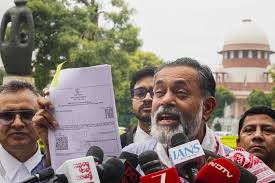
Psephologist Yogendra Yadav and the CPIML-Liberation have warned that the special intensive revision (SIR), launched on June 25, had resulted in a shrinking electorate and could lead to further deletions On the eve of the publishing of Bihar’s freshly revised draft electoral roll, Opposition leaders and election experts raised concerns about the possibility of a large-scale deletion of voters. Psephologist Yogendra Yadav and the CPIML-Liberation have warned that the special intensive revision (SIR), launched on June 25, had resulted in a shrinking electorate and could lead to further deletions. Preparation for the SIR has begun across India, and the EC is expected to extend the drive after completing Bihar. The Trinamool Congress government in Bengal has vehemently opposed it on the suspicion that it would selectively disenfranchise the working-class voters ahead of the 2026 elections. Yadav, a petitioner in the Supreme Court against the SIR, told The Wire: “I have the figures from the districts of Darbhanga and Kaimur. It shows that 10 to 12 per cent have been marked for deletion, which is to say that where BLO said ‘not recommended’. This does not mean permanent deletion. They have the right to notice, hearing, etc. Ten per cent would mean 72 lakh people, over and above the 94 lakh that we have spoken about.” On July 27, the EC confirmed that the state’s electoral roll has shrunk from 7.89 crore to 7.24 crore — smaller than the electorate of the 2020 polls — in the first phase of the drive itself. The 65 lakh names deleted include the dead, those enrolled in multiple places in Bihar, and those who are permanently shifted or not found. In his response to the Election Commission’s counter-affidavit, Yadav used population projections of the Union health ministry in 2019 to claim that the actual number of voters in Bihar should be around 8.18 crore. India’s population census has not been conducted since 2011, hence the reliance on projections. He said even if one’s name is on the draft roll, “you can still be thrown out a) because the BLO said you are suspect, b) because the documents were not found or are not there, and c) because the electoral registration officer can make a local inquiry and say that you do not belong there. So we are looking at a substantial chunk over and above the 94 lakh we are talking about”. Yadav added: “We are looking at the birth rate of 2002-2007. A 28 per cent increase has taken place in the population. After population growth, the electorate has shrunk. How astonishing!” CPIML general secretary Dipankar Bhattacharya cited a purported SIR status report from Darbhanga district. Of around 30 lakh voters in the district, 2 lakh have been deleted in the enumeration phase. “Of the remaining 2.8 million (28 lakh), some 2.5 million (25 lakh) names have been recommended by BLOs, and 3 lakh voters are not recommended by BLOs. Are these voters on the waiting list for eventual deletion? Will they be treated henceforth as D-voters with voting rights suspended? Will some end in detention centres as has been happening in Assam?” he asked. Courtesy : The Telegraph Note: This news is originally published on https:/thetelegraph.com/bha and is used purely for non-profit/non-commercial purposes, especially human rights.
Pune | Three Dalit Women Allege Illegal Arrest | Protests Erupt Outside District Collector’s Office
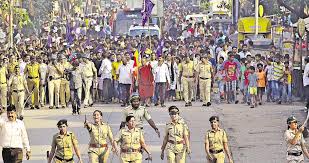
On August 1, Pune Police allegedly took three young Dalit women into illegal custody. According to the women, police raided their homes, hurled casteist slurs, made derogatory comments about their sexuality, and physically assaulted them. A week had passed since the alleged harassment and atrocities inflicted on three women in Pune; however, no FIR has been registered yet. The police claim that, based on a preliminary inquiry, there is no evidence to support the women’s allegations, and therefore, an FIR cannot be filed. The city witnessed a protest outside the District Collector’s office, demanding that action be taken against the police. Courtesy : Outlook India Note: This news is originally published on https:/outlookindia.com/bha and is used purely for non-profit/non-commercial purposes, especially human rights.