
Rahul Gandhi trapped by bringing Reddy-Stalin in the yatra? BJP’s Self Respect move in Bihar elections
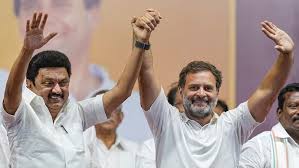
Bihar Politics: BJP has opened a new front over the inclusion of MK Stalin and Revanth Reddy in Rahul Gandhi’s Voter Rights Yatra. Now in this episode, the party has made a political move of self-respect. Patna: Protests have intensified over the inclusion of Tamil Nadu Chief Minister MK Stalin and Telangana Chief Minister Revanth Reddy in the ‘Voter Rights Yatra’ of Leader of Opposition in Lok Sabha Rahul Gandhi. The Bharatiya Janata Party (BJP) burnt the effigy of Tamil Nadu Chief Minister MK Stalin and Telangana Chief Minister Revanth Reddy in the capital Patna on Wednesday and protested against their coming to Bihar. Rahul Gandhi trapped by bringing Reddy-Stalin in the yatra? Hundreds of workers came out in the form of a procession from the BJP state office. During this, all the workers had posters and placards in their hands with slogans written against Congress leader Rahul Gandhi, Priyanka Gandhi, RJD leader Tejashwi Yadav, Stalin and Revanth Reddy. All the workers were raising slogans against them. BJP made it an election issue Near the Income Tax Golambar, BJP workers burnt the effigy of Tamil Nadu CM Stalin and Telangana CM Revanth Reddy. Pasmanda Foundation officials and a large number of members attended the program. BJP state media in-charge Danish Iqbal, who was involved in the effigy burning program, said that even after Revanth Reddy insulted the people of Bihar, Sanatan, the ‘yuvraj’ of Congress and RJD are bringing him to Bihar and roaming around. Why were those who insulted Bihar brought here – Danish He said that Tejashwi Yadav should have understood that this is a matter of Bihar’s honor and self-respect. Tejashwi Yadav should answer why he brought those who insulted Bihar here? He said that Bihar will not tolerate those who insult Bihar. Revanth Reddy and Stalin have misbehaved with Biharis, for this you should apologize on the soil of Bihar. The people of Bihar never compromise with their self-respect, the people of Bihar will prove this this time too. The people of Bihar will take revenge – BJP BJP State Vice President Anamika Paswan said that the people of Bihar will definitely take revenge for this insult in the next elections. Those who insult Bihar will not be tolerated. Today, Tejashwi Yadav may be welcoming those who insult the people of Bihar in his hunger for power, but he will have to bear the consequences. Edited by: Rishikesh Narayan Singh About the author Rishikesh Narayan Singh is the Bihar-Jharkhand in-charge of Navbharat Times Digital. A 20-year journey in journalism from Janmat TV, IBN 7, ETV Bihar-Jharkhand, News18 Bihar-Jharkhand to Times Internet. After starting from the national capital Delhi, now Bihar is his workplace. Deeply interested in news of the country, abroad, crime and politics. Courtesy : Hindi News
Votes stolen in 70-80 seats in Lok Sabha elections… Now preparations in Bihar, Rahul said- they will first snatch votes, then land and houses
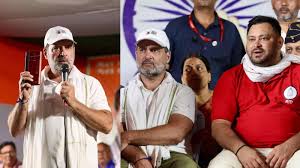
Bihar Assembly Election: During the ‘Vote Rights Yatra’ in Sitamarhi, Rahul Gandhi accused the Election Commission and the Central Government of vote theft. He said that the BJP had stolen votes in the Lok Sabha elections in connivance with the Election Commission and wants to do the same in the Bihar Assembly elections. Sitamarhi: Congress leader Rahul Gandhi reached Sitamarhi on Wednesday under the ‘Vote Rights Yatra’. He was given a grand welcome here. While coming from Muzaffarpur, Rahul Gandhi held a public meeting at the Runnisaidpur block headquarters of Sitamarhi district. He was accompanied by Leader of Opposition Tejashwi Yadav, CPI ML National General Secretary Dipankar Bhattacharya, and VIP’s Mukesh Sahni, among many other leaders. In the public meeting, Rahul Gandhi strongly attacked the Election Commission and the Narendra Modi government at the Center. The Commission and the Central Government were cornered on the issue of vote theft. Vote theft in connivance with the Election Commission Rahul Gandhi accused the BJP of vote theft in connivance with the Election Commission. He said that the BJP government at the Center had stolen votes in 70 to 80 seats in the Lok Sabha elections. Now it wants to steal votes in the assembly elections to be held in Bihar as well. Rahul said that they will first snatch your vote, then your land and your house. Every person in Bihar has been told that preparations are being made to steal votes here. Vote theft will not be possible in Bihar. Operation Sindoor stopped on the orders of America The Congress leader said that the Central Government passed a law in the year 2024, under which no action can be taken against the Election Commission. Taking advantage of this, the BJP wants to steal votes in the Bihar assembly elections as well with the connivance of the Election Commission. It was on the orders of America that the Prime Minister had announced a ceasefire in Operation Sindoor. He said that the Prime Minister was asked in the Lok Sabha whether the US President Trump is lying, but the Prime Minister did not deny the statement of the US President even once. Question on reinstatement of Agniveer Rahul Gandhi also accused the central government of working for Adani and Ambani. On stopping permanent recruitment in the army, Gandhi said that earlier pensions were given on retirement from the army, now Agniveer is reinstated. Agniveer soldiers martyred by enemy bullets on the country’s border are not given the status of martyr. Leader of Opposition Tejashwi Yadav also attacked the central government / Election Commission. Accused the Bihar government of being immersed in corruption. Said that Bihar has to be made murder, crime and corruption free. We will take along all the poor-rich, caste, class and religion people. We all have to build a new Bihar together. Bhattacharya’s words like Rahul CPI-ML National General Secretary Dipankar Bhattacharya also accused the BJP and the Commission of vote theft like Rahul Gandhi. He said that the people of Bihar are facing inflation, unemployment, poverty and migration under the present government. The meeting was also addressed by Congress leaders Colonel Rohit Chaudhary, Alka Lamba, former RJD MLA Mangita Devi and former MP Arjun Rai, among others. The meeting was presided over by District Congress President Raktu Prasad, while the stage was conducted by Block Congress President Vijay Singh Rathore. Edited by: Ravi Sinha•Reported by: Amrendra Kumar About the author Ravi Prakash Sinha is a Senior Journalist (Principal Digital Content Producer) at Navbharat Times Online. He has 25 years of experience in current affairs, Jharkhand-Bihar politics and ground reporting. Ravi Sinha has been working with NBT (Digital) for the last 3 years. Courtesy : Hindi News
Another case against Congress MLA Rahul Mamkootathil for stalking, harassing women on social media; Kerala CM Vijayan says ‘deeply criminal’
THIRUVANANTHAPURAM: The Crime Branch on Wednesday registered a case against Palakkad MLA Rahul Mamkootathil on various charges, including stalking and harassing women on social media. The development came hours after chief minister Pinarayi Vijayan strongly reacted to the sexual misconduct allegations against the legislator and said all possible legal steps would be taken on them. Earlier, Vijayan told a news conference that those affected need not hesitate to file complaints and full protection would be provided to them. He also questioned the shocking nature of the alleged remarks, including reported statements that a pregnant woman “would not take much time to be killed”, calling it “deeply criminal and unacceptable”. Case filed on DGP’s directive The case was registered on the directive of state police chief Ravada A Chandrasekhar under Sections 78 (stalking) and 351 (criminal intimidation) of Bharatiya Nyaya Samhita (BNS), along with Section 120(O) of the Kerala Police Act that pertains to harassment through repeated or unwanted communication.Section 78 of the BNS defines stalking as following a woman without consent, monitoring her electronic communications, or repeatedly approaching her despite resistance. The offence carries imprisonment of up to three years for the first instance and up to five years for repeat offences. Section 351 covers criminal intimidation, including threats to cause harm to body, reputation or property and is punishable with up to two years’ imprisonment, a fine or both. The Kerala Police Act provision applies to nuisance caused through calls, messages or electronic communication. Crime Branch Thiruvananthapuram range DSP C Binukumar is in charge of the investigation, a police statement said. The allegations against Mamkootathil had gained traction after audio recordings surfaced in which he was purportedly heard issuing even death threats. Police had initially sought legal opinion on the allegations as there were no complainants, but proceeded to register a suo motu case following the CM’s remarks. They had not acted on a petition filed by a high court lawyer at the Ernakulam Central police station seeking an investigation into allegations that the legislator had forced a woman to undergo abortion, citing the absence of details about the alleged victim or the location of the incident. Though the affected parties had not come forward with complaints, the state police chief had received petitions demanding action against the legislator. Mamkootathil had quit as Youth Congress state president after a young actor accused “a young leader” of a prominent political party of misbehaviour, triggering protests by BJP and CPM. Subsequently, several women and a transgender person came forward with similar allegations. Congress later suspended the MLA from the party’s primary membership but resisted calls for his resignation Courtesy : TOI Note: This news is originally published on https:/timesofindia.com/bha and is used purely for non-profit/non-commercial purposes, especially human rights.
Will EC probe how 10 unknown Gujarat parties got Rs 4,300 crore: Rahul
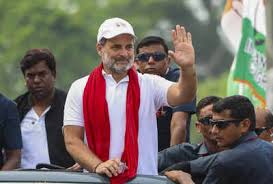
NEW DELHI: Congress MP Rahul Gandhi on Wednesday claimed that 10 anonymous parties in Gujarat received a massive donation of Rs 4,300 crore in five years, asking if the EC will probe where this money has come from and who is running the unknown outfits. Rahul made the remark based on a newspaper report that he quoted on social media. As per the news item, 10 anonymous parties in Gujarat fielded 43 candidates in two Lok Sabha polls and one assembly election between 2019-24, garnering around a meagre 54,000 votes. Also, they showed an expenditure of Rs 39 lakh in election reports but claimed an expenditure of Rs 3,500 crore in audit reports, while they received a donation of Rs 4,300 crore. “There are some unknown parties in Gujarat whose name nobody has heard but they received donations worth Rs 4,300 crore. They have contested elections, and spent money on them, on very few occasions. Where did these thousands of crores come from? Who is running them? And, where did the money go? Will the Election Commission investigate, or will it ask for an affidavit here too? Or will it change the law itself so that this data can also be hidden?” Rahul wrote on X. tnn Courtesy : TOI Note: This news is originally published on https:/timesofindia.com/bha and is used purely for non-profit/non-commercial purposes, especially human rights.
Accused arrested for assaulting Dalit woman: Dispute over solar light pole, sent to jail under SC-ST Act
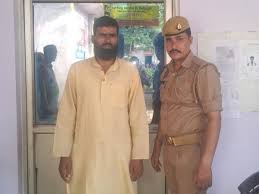
A dispute broke out over installing a solar light pole on a government road in Makhdoompur village of Hazratnagar Garhi area of Sambhal. During this, a Dalit woman was injured. Police have arrested one accused and sent him to jail. The incident took place on Saturday. There was a fight between Jaivendra son of Lalu Singh and Talib son of Tasleem over installing a solar light pole on a government road. Both sides had sticks. During this, the woman was attacked with a sickle. On the complaint of the victim Pooja Valmiki, the police have registered a case against four people. The accused Jareef s/o Farzand Ali, Jaanesar s/o Jareef, Talib s/o Tasleem and Rabia s/o Tasleem have been booked under sections 115(2), 352, 352(3), 118(1), 76 of the IPC and 3(2)(va) of the SC/ST Act. Inspector Anuj Tomar said the injured woman has been sent for medical examination. One of the accused was arrested and produced in court. The court has sent him to jail. A case is already going on in the court regarding the dispute over the government road. Sunny Gupta, Courtesy : Hindi News
Lakhimpur Kheri: First the house of a Scheduled Caste family was demolished with a bulldozer, now the officers are busy in settling them
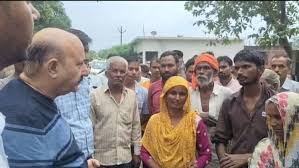
The matter of demolition of the hut of a Scheduled Caste family in Maharajnagar village reached Lucknow. The Chief Minister took cognizance of the matter. After this, the officers are now busy in settling the victim family. The matter of demolition of the hut of a Scheduled Caste family settled for the last several years in Panchayat Grant No. 10 of Bankeganj in Lakhimpur Kheri has become a matter of concern. After the Chief Minister took cognizance, the Gola Tehsil administration has come on the back foot. On Tuesday, BJP MLA Romi Sahni reached the spot and assured the victim that he would be settled at the same place. He also provided financial assistance of Rs 10,000 for this. On Saturday, the Tehsil administration demolished the house of Udan of Scheduled Caste, who was living on a Bhumidhari land for the last several years, with a bulldozer in Maharajnagar village. After the matter came into media headlines, the Chief Minister took cognizance of it and obtained complete information. Due to this, the Gola tehsil administration came on the back foot. Efforts were started to rehabilitate the victim family at the same place from where they were displaced. Regional MLA Romi Sahni also reached the spot on Tuesday. He assured the victim family that they will be rehabilitated at the same place from where they were removed. He has given 10 thousand rupees from his own pocket to the victim family for putting up a tin shed. During this time, SDM Gola, Tehsildar, Police Station Incharge Mailani and many other people were present. Published by: Mukesh Kumar Courtesy: Hindi News
JD(S) MLA G.T. Deve Gowda clarifies his stand on govt. nomination to co-operative societies; says he is not anti-Dalit
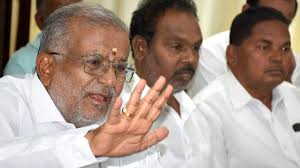
Seeking to make it clear that he was not “anti-Dalit”, JD(S) MLA and former Minister G.T. Deve Gowda said that he was not opposed to the proposed nomination to the Boards of co-operative societies, but had questioned the Karnataka government’s prerogative to nominate members to the co-operative institutions that had not received any financial assistance. Addressing a press conference in Mysuru on Tuesday, Mr. Deve Gowda said he had asked the government to also include representatives from the backward classes along with members of SC/ST communities and women among the nominated members. Mr. Gowda’s press conference was in the backdrop of protests against him by Dalit organisations over his reported opposition to the provisions of the recently passed Karnataka Co-operative Societies (Amendment) Bill 2025 during a discussion in the Legislative Assembly. He said his opposition to certain other provisions of the piece of legislation were only aimed at protecting the autonomy or freedom of the co-operative institutions. Further, Mr. Gowda cited several examples of his efforts to ensure prominent posts to Dalits in co-operative sectors as well as in politics. “I am not anti-Dalit. I am not casteist,” he said. Dharmasthala case With regard to the row over alleged mass burials at Dharmasthala, Mr. Gowda said that it was not possible to malign the reputation of an institution like the Sri Kshetra Dharmasthala or its trustee Veerendra Heggade, but asked the government to ensure that the ongoing probe into the allegations is completed at the earliest. He said it was necessary for the government, which had constituted a Special Investigation Team to probe the matter, to complete the investigation as early as possible and punish the persons guilty. Dasara inauguration Speaking about the BJP’s opposition to the State government’s decision to invite Booker Prize winner Banu Mushtaq to inaugurate this year’s Dasara festival, Mr. Gowda said that the author will not do the same if she does not have faith in the deity of Chamundeshwari. As Chief Minister Siddaramaiah had been vested with the power to take a decision on choosing a suitable guest to inaugurate Dasara 2025, he has exercised his prerogative and chosen Ms. Mushtaq, he said. The Hindu Bureau Courtesy : The Hindu Note: This news is originally published on https:/thehindu.com/bha and is used purely for non-profit/non-commercial purposes, especially human rights.
Dalit skinner stabbed by cow vigilantes in Adalaj

Ahmedabad: A 58-year-old Dalit skinner from Rohitvas village in Adalaj was stabbed and beaten on Sunday by four ‘cow vigilantes’ while he was skinning a dead cow. The victim, Mahendra Parmar, in an FIR filed with the Adalaj police on Sunday, stated: “I live with my family in Rohitvas and have a gram panchayat permit to dispose of dead cattle.” He said that around 2pm, he got a call from Naresh Parmar about a dead cow near Khodiyar village. “We were skinning the cow when Naresh left for some work. Around 3pm, four youths came and asked why I was killing a live cow,” the FIR states. Parmar explained, “I am from a skinner community which comes under the scheduled caste. This is our traditional work. I only handle dead cattle and I have a permit.” According to the FIR, one of the men, identified as Sachin Suthar, allegedly hurled casteist slurs at Parmar and slashed him below his right shoulder. Three others attacked him with sticks and pipes. “I fell on the ground and shouted for help,” Parmar told police. A passerby, Vishnu Solanki, intervened and rescued Parmar from them. Parmar was later shifted to Civil Hospital, Gandhinagar, where he received stitches for his injury and a medico-legal case was lodged. Adalaj police registered a complaint under the Bharatiya Nyaya Sanhita (BNS) sections for grievous hurt, criminal intimidation, and under the SC/ST (Prevention of Atrocities) Act against the four men. Courtesy : TOI Note: This news is originally published on https:/timesofindia.com/bha and is used purely for non-profit/non-commercial purposes, especially human rights.
Dalits’ struggle for dignity continues even after conversion: New book
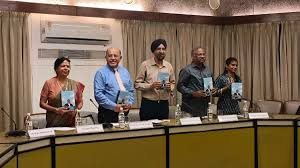
Six essays in the book ‘Dalit Journeys for Dignity’ explore the distinct trajectories of Dalit communities in their search for religious alternatives — Christian conversions in colonial Tamil Nadu to Buddhist renunciations in Maharashtra. New Delhi: Religion, for Dalits, is not always about faith, it’s about social possibilities and transformation, said K Satyanarayana, a professor at the English and Foreign Languages University in Hyderabad. He was speaking at the launch of the book Dalit Journeys for Dignity at the India International Centre, last week. The book is part of a series on Dalit studies. The first volume, Dalit Studies, edited by Ramnarayan S Rawat and K Satyanarayana, was published in 2016 by Duke University Press. The book’s second volume was published in April 2025 after facing several rejections for two years from Indian and US publishing houses, primarily because the contributing scholars were not widely known personalities, said the professor. “There were various kinds of rejections because most of these scholars are not visible or known. They have no name. They have no fame,” said Satyanarayana. Eventually, the volume was published by Permanent Black in the Indian subcontinent and by the State University of New York (SUNY) press for other regions. The panelists at the launch included Madhulika Sonkar, assistant professor, IIT, Delhi, Harish Wankhede, assistant professor at Jawaharlal Nehru University, Delhi University professor Charu Gupta, Satyanarayana, and Ramnarayan S Rawat, associate professor at University of Delaware. Dalit Journeys for Dignity: Religion, Freedom, and Caste is a collection of essays that highlight the fight for dignity and equality in India. Edited by Satyanarayana, Rawat, and P Sanal Mohan, the book unveils personal narratives of caste hierarchies and explores the creation of neo-cultural practices. “The book urges us to re-examine the interests of the mind, and the histories of caste, religion, politics, and literature in shaping modern India,” said Satyanarayana. A university press in the US rejected the book due to their internal policy, which requires approval from two reviewers. Since the book did not receive it, it was ultimately turned down. Most contributors were young or marginalised scholars without recognition, which many publishers see as a disadvantage. “Dalit Studies II is a project of knowledge production — knowledge created from the margins, by scholars rooted in those very experiences,” said Satyanarayana. “This volume is not only about resistance; it is about dignity — human dignity even before civic status.” Journey of conversion Six essays in the book explore the distinct trajectories of Dalit communities in their search for religious alternatives — Christian conversions in colonial Tamil Nadu, Buddhist renunciations in Maharashtra, and contemporary Dalit-Christian movements in Telangana, Andhra Pradesh and Kerala. One of the essays is by Chakali Chandra Sekhar, who traces the story of Nanchari, a Mala weaver-trader and community headman of Rayasaleema in southern Andhra Pradesh. He was sent to jail for trying to enter a Hindu temple, after which he converted to Christianity in prison in 1838 in search of dignity. Nanchari’s conversion then started a mass conversion movement amongst local Mala weaver-traders. “Conversion is not an escape, but a confrontation and a way of asserting self-worth,” said Sonkar. Three of the essays in the book specifically examine the struggle against the caste system in Hinduism. They include stories of people who struggled and fought for land ownership, sartorial choices, and even their living spaces and jobs. Anupama, one of the nine authors of the book, talks about Dalit clothing in colonial India. She explains how the clothing served as a manifesto, a way of expressing identity. “Wearing the clothes of the dead was a symbol of being branded as death itself. So reclaiming attire was a way of reclaiming one’s skin and identity,” said Charu Gupta. In his essay, Sumeet Mhaskar uncovers how in Mumbai’s mills, caste influences factory work, pushing Dalits into the dirtiest forms of labour. Another essay by Rawat and Sekhar also focuses on Muslim conversions among Dalit women where the act of conversion is reshaping the discourse of empowerment within deeply patriarchal contexts. “Conversion to Islam is also offered as a way of stepping outside or moving beyond the caste Hindu framework,” said Sonkar. However, conversion does not come without consequences. Many Dalit converts encounter a complex predicament — while they shed the caste identities imposed by Hinduism, they often face new forms of invisibility and denial within the secular or non-Hindu spaces they enter. “Caste doesn’t disappear with conversion,” said Surinder Jodhka, a professor at JNU who moderated the discussion. “Their struggles for dignity continue in new guises.” A daily struggle Sonkar shared a story from her classroom at IIT Delhi. One of her students, who comes from a marginalised community, told her, “Every semester, I have to change my rank.” The student was in the Computer Science (CS) branch which is typically chosen only by top rankers in the JEE Advanced exam. But because he gained admission through reservation, people often questioned whether he truly deserved the seat. Every semester, he felt the need to prove that he had earned his seat. “What if we had more such texts, more stories like these, in classrooms? What if students could learn about caste not just through numbers and data, but through lived experiences?” said Sonkar. Gupta, meanwhile, explained the daily struggles faced by Dalits and other marginalised communities — within the community to schools, colleges, and workplaces. She said Dalit stories of struggle have helped other marginalised people to come forward and express themselves. Books like Dalit Journeys for Dignity will further help the marginalised in future. “Dalits are socially flourishing through conversion, poetry, new rituals, reclaiming names, and love that defies boundaries,” Gupta said. Almina Khatoon (Edited by Aamaan Alam Khan) Courtesy : The Print Note: This news is originally published on https:/theprint.com/bha and is used purely for non-profit/non-commercial purposes, especially human rights.
Dalit student burnt with hot iron inside hostel in Andhra Pradesh, school staff accused of ignoring

A Dalit student was attacked by classmates in a private school hostel in Morampudi in Konaseema district, mother saw the incident and got him treated, police started investigation. Andhra Pradesh: A shocking incident has come to light from Konaseema district. A Dalit student studying in a private school hostel here was allegedly burnt with a hot iron by two of his classmates. After the incident, the student started getting severe burns, but the hostel staff did not pay any attention to it. The secret was revealed when the mother noticed it According to the police, this incident is from Morampudi area. When the mother of the victim student reached the hostel to meet him, she saw burn marks on his body. On enquiry, the son revealed the entire incident. After this, the mother immediately admitted him to a hospital in Razole, where he is undergoing treatment. All students from Dalit community According to the information, all the three students involved in this entire episode belong to the Dalit community. Police said that on August 16, a film was shown for children in the hostel. After this, two students removed the hostel’s surveillance camera (CCTV) and put it in the bag of the victim student. The dispute started with the missing camera When the camera was found missing, the hostel in-charge called the three students. During that time, the victim student told that his classmates had done this mischief. Angered by this, both the students called the victim to their room on August 18 and branded his stomach and hands with a hot iron. Police investigation continues After this inhuman incident came to light, the police have registered a case and started investigation. At the same time, the treatment of the victim student is going on in the hospital. Rajan Chaudhary Courtesy : Hindi News