
Did Rahul Gandhi’s Bihar visit strengthen the India Alliance?

Rahul Gandhi and Tejashwi Yadav were always seen together during the Mahagathbandhan’s Voter Rights Yatra in Bihar. Congress gave the message of taking along the rest of the alliance parties as well. Political analysts believe that Congress seems to be gaining an edge in Bihar at the moment. New Delhi: India Alliance’s 16-day Voter Rights Yatra in Bihar ended in Patna on September 1. The Yatra, led by Leader of Opposition in Lok Sabha Rahul Gandhi, passed through 25 districts of Bihar. During this, the Yatra covered a distance of 1300 km with RJD leader Tejashwi Yadav, CPI-ML General Secretary Dipankar Bhattacharya, Vikassheel Insaan Party chief Mukesh Sahni. At the end of the Yatra, Rahul Gandhi addressed the public meeting from the stage in Patna, saying ‘Vote Chor, Gaddi Chhod’. When the crowd repeated this slogan loudly, Rahul Gandhi said – ‘This slogan worked.’ The yatra passed through more than 100 assembly constituencies The yatra, which passed through more than 100 of the 243 assembly constituencies in Bihar, has strengthened the position of the RJD-led opposition alliance ahead of the Bihar elections in November this year. The question is whether the unity of the Mahagathbandhan seen during this yatra will be able to maintain its momentum? On this question, Tejashwi Yadav says that there is no need to worry about it, we are working on it. But one question is still being asked that what was the achievement of this yatra? 1990…when Congress became politically extinct Before knowing the answer to this question, let us go back. Congress became politically extinct in Bihar in 1990, and Lalu Prasad Yadav came to power. In the 2000 assembly elections, Congress got only 23 seats. Later, the party joined the alliance with Lalu-led RJD. The country’s oldest party performed better in the 2015 elections when JDU supremo and Chief Minister Nitish Kumar joined the grand alliance. At that time, Congress won 27 seats. Congress’s weak performance responsible for the defeat of the grand alliance? However, in the 2020 elections, when Nitish returned to the NDA, the Congress contested 70 seats and won only 19 seats, while its ally RJD emerged as the largest party with 75 seats. The NDA returned to power by winning 125 seats, while the grand alliance got 110 seats. The weak performance of the Congress was blamed for this minor defeat of the grand alliance. Congress gained lead in Muslim areas Senior journalist of Indian Express Santosh Singh says on this visit of Rahul Gandhi, Congress also gained lead in many Muslim-dominated constituencies including RJD strongholds like Darbhanga, Madhubani and Araria. The decline of the Congress in the state began after its alleged failures in handling the 1989 Bhagalpur riots, which led to a large section of Muslim voters moving to the Janata Dal and later to the RJD. After becoming the chief minister for his first term in 1990, Lalu became a prominent leader of the minority community in the state. Santosh Singh says that before Rahul Gandhi started his Voter Rights Yatra, the Congress was called the ‘weak link’ of the Mahagathbandhan. But, with the huge crowds gathering in this yatra across the state, the Congress got an edge as it was mainly a demonstration of the party under Rahul’s leadership. How much does RJD need the support of the Congress? With outgoing chief minister Nitish Kumar battling health issues, Prime Minister Narendra Modi is set to lead the NDA’s election campaign in the Bihar elections. In such a situation, the RJD will be more dependent on Rahul to counter PM Modi’s campaign at the national level. Rahul gave a message of taking everyone along Throughout his yatra, Rahul Gandhi was accompanied by Tejashwi, the leader of opposition in the Bihar assembly, which brought him into the national spotlight, while also cementing his position as the chief ministerial face of the Mahagathbandhan for the elections, albeit unofficially. Though Rahul evaded a reporter’s question about Tejashwi’s chief ministerial candidature in Araria during the yatra, Samajwadi Party (SP) chief Akhilesh Yadav, who joined the yatra in Ara on August 30, called for ‘supporting Tejashwi’ to build a new Bihar. Subsequently, Tejashwi also projected himself as the opposition alliance’s chief ministerial candidate in the Ara and Patna legs of the yatra and asked the crowd whether they wanted a real or fake chief minister. He targeted Nitish, saying he was allegedly ‘copying’ his various proposed welfare schemes like enhanced social security pension, free electricity and youth commission. Mahagathbandhan unity visible? Rahul made the trip to raise his allegations of “vote theft” in various elections against the ruling BJP and the Election Commission (EC) and to protest the ongoing Special Intensive Revision (SIR) of voter list in Bihar. The SIR slogan united the entire opposition party India, which was seen throughout the trip as several faces from the alliance joined in from time to time, from DMK supremo and Tamil Nadu Chief Minister MK Stalin to Akhilesh and JMM chief and Jharkhand Chief Minister Hemant Soren, TMC’s Yusuf Pathan and Shiv Sena’s Sanjay Raut. Pappu Yadav also joined, impact on 15 seats In view of the yatra, the Mahagathbandhan has now been joined by Independent MP from Purnia, Rajesh Ranjan alias Pappu Yadav, who had bad relations with RJD despite being associated with Congress. Pappu Yadav has influence on about 15 seats including Supaul, Madhepura, Saharsa, Araria and Purnia in Kosi-Seemanchal region. Pappu had merged his Jan Adhikar Party with Congress ahead of the 2024 Lok Sabha elections, but had to contest as a rebel from Purnia after the party refused to give him a ticket under pressure from RJD. Despite this, he managed to win the seat by defeating JDU MP Santosh Kushwaha along with RJD candidate Bikram Singh. Edited by: Varun Shailesh About the author Varun Shailesh is an Assistant News Editor at Navbharat Times Online. He has more than 15 years of experience in current affairs, politics, social issues and features. Started career with news agency IANS
Cong launches ‘Vote Chor, Gaddi Chhod’ stir from Kamptee, Sapkal predicts early polls

Nagpur: The Maharashtra Pradesh Congress Committee (MPCC) on Wednesday launched its state-wide ‘Vote Chor, Gaddi Chhod’ agitation from Kamptee. State president Harshwardhan Sapkal claimed that the Narendra Modi government had been rattled after Rahul Gandhi exposed the BJP’s alleged vote theft. He asserted that the PM would be forced to step down and that early elections could take place any time, urging party workers to start preparations. Addressing a rally at the Agricultural Produce Market Committee (APMC) premises in Kamptee, Sapkal also warned the government against “tampering with democracy.” He alleged that the BJP came to power through vote theft and that the malpractice began in Kamptee constituency, represented by former state BJP president Chandrashekhar Bawankule. “Since Rahul Gandhi exposed the irregularities here, we launched our state-wide agitation from Kamptee. We will not remain silent until these ‘vote thieves’ are pulled down from power,” he said. In an apparent reference to the RSS chief’s remarks, Sapkal claimed that Nagpur had ordered leaders above 75 years of age to retire. “The ground is slipping from under PM Modi’s feet, and he will be forced to step down. A new dispensation inspired by Shiv, Shahu, Phule, and Ambedkar will replace the BJP,” he added. Congress legislature party leader in the Assembly, Vijay Wadettiwar, alleged massive irregularities in the voter lists, claiming that one house in Chandrapur showed 56 children while a 10×10 room had 109 registered voters. “The BJP won 132 seats through vote theft. The Kamptee strongman was at the forefront of this. Voters will eventually punish these thieves,” he claimed. Legislative Council group leader Satej Patil said Rahul Gandhi’s August 7 press conference on vote theft had drawn global attention and raised doubts about whether citizens’ votes were being counted correctly. “We must now take this fight to the people and strengthen Rahul Gandhi’s hands,” he added. Senior leaders Balasaheb Thorat, Sunil Kedar, Yashomati Thakur, Naseem Khan, Rajendra Mulak, Congress MPs Pratibha Dhanorkar, Shyamkumar Barve, Balwant Wankhede, Prashant Padole, as well as AICC secretaries Kunal Chaudhary and Praful Gudhde, also targeted the BJP and the Election Commission. A large number of workers and citizens attended the rally. Courtesy : TOI Note: This news is originally published on https:/timesofindia.com/bha and is used purely for non-profit/non-commercial purposes, especially human rights.
‘Dalit devadasis lowest on social ladder’— Karnataka tackles twin stigma of caste, sex work

Despite being banned, the devadasi system still traps tens of thousands of Dalit women in Karnataka. A new survey and state law target both caste oppression and sex work stigma. Ballari/Koppal/Bagalkot: When Huligemma went to school for the first time, the teacher asked her father’s name. She did not have any idea. Whispers followed her down the corridor — “sule maklu”, prostitute’s child. “I never looked for a father. Although I always knew a father figure in life would have security, which my mother did. I heard people saying my mother is a devadasi. It took me time to understand,” said the 21-year-old, who lives with her mother Kenchamma and three siblings in Sandur village, Ballari district. Now a new state law in Karnataka is going beyond a 1982 ban on the devadasi system. It promises housing, healthcare, inheritance rights, and protection from stigma for both devadasis and their children. The practice, which consecrates mostly Dalit women to temples but brands them as prostitutes, continues to haunt tens of thousands of lives across the state. But who benefits also depends on who gets counted. The State Human Rights Commission has asked the Siddaramaiah-led Congress government to finish a survey of Devadasis and submit recommendations by 23 October. The last survey in 2007-08 counted 46,660 women across Karnataka. The reach of the new law’s benefits will depend on how this survey is done. If, as before, it includes only women dedicated before the 1982 ban, younger Devadasis like Kenchamma — and by extension her daughter — will be left out again. Earlier this month, Siddaramaiah announced that the Devadasi survey will be carried out starting from the first week of September. “If the Devadasi system is still alive today, it is a matter of shame for all of us,” he said. Devadasis are poised at the thorny intersection of caste, religion, and sex work. Huligemma first heard about the Karnataka Devadasi (Prevention, Prohibition, Relief and Rehabilitation) Act, 2025, passed in the state assembly on 18 August, through a community newsletter. She narrated it to her mother, who struggles to read. “My mother is hopeful we four children will now be able to live a life free of poverty and discrimination,” said Huligemma. In their single-room home, she prepares sugary milk tea for Kenchamma. “I know the horrors. I will never let my daughter go through this,” said Kenchamma, a frail 45-year-old who was only ten when her parents dedicated her as a devadasi because she was “beautiful” and they needed the money. She pulls out two necklaces hidden under her blouse: a white-red beaded muthu and a mangalsutra tied at the temple. They were meant to mark her as a handmaiden of the goddess; in practice, they marked her out to men as a sex worker. When I was applying for a passport, it was so difficult to get away with the column for my father’s name. It was the worst experience. With this law, devadasi children will no longer be subjected to such atrocity -Nari Kamakshi, daughter of a devadasi “It is the worst practice, people only see you as a sex worker,” said Kenchamma, who now works as a farm labourer. More than her three sons, she dotes on Huligemma, who is doing her BA (general course) at a local college. But it’s a struggle. She has not been able to pay fees for this term. “I do not want to leave studying, it is the only way my family and I can move out of this hell,” Huligemma said. Centuries ago, no one knows exactly when, girls from poor families were dedicated to goddesses to serve in temples. What began as ritual worship turned into systematic sexual exploitation of Dalit women, particularly from Madiga, Madar, and Holeya communities. In Karnataka, about 95 percent of devadasis are Dalit. In 1982, the state banned the practice through the Devadasis (Prohibition of Dedication) Act. Yet the system stayed entrenched across northern districts like Belagavi, Vijayapura, Bagalkot, Koppal, Ballari, Raichur and Kalaburagi. To wrest themselves free, women have relied on educating children and asserting dignity through caste pride. The state’s role has been minimal, though those counted in the last survey received devadasi certificates through which they accessed some benefits. Some received land, pensions of around Rs 2,500, and financial incentives for marriage—Rs 3 lakh for men marrying a devadasi, Rs 5 lakh for women. This time, devadasis had a bigger say in shaping the law. It was drafted after seven months of research by a National Law School of India University (NLSIU) team working with NGOs, activists, and more than 15,000 devadasis. Children of 15 devadasis documented problems and suggestions across districts in northern Karnataka. Consultations followed, with the community itself proposing changes to improve their lives. RV Chandrashekar, coordinator of the drafting committee, said the survey would spell out caste details and show how the practice is bound up with casteist oppression. “Among Dalit women, devadasis are lowest on the social ladder, and the caste census in the survey will prove that,” he said. “It will give them and their children a better life.” In the Harijan colony of Bagalkot’s Rabkavi town, 33-year-old Lakshmi drapes a red-and-white chiffon saree, puts on lipstick and kajal, and sends her two children to the back room. It is sundown, the time when she starts getting customers at her doorstep, though she’s worried the incessant rain might keep them away. Lakshmi is a second-generation devadasi. She was 12 when her mother encouraged her into the profession. Unlike her four sisters, who were good at studies, her only skill was singing and dancing. For her desperately poor Dalit household, dedicating her was a way out. “Ma told me not to make noise, cooperate with the man, just do the deed,” said Lakshmi. “I did not cry, I was numb. It was just for 20 minutes.” She laughed as she spoke, as if the memory belonged to someone else. Fifteen years later, Lakshmi sits in
UP man gets death penalty for rape, murder of 8-yr-old Dalit girl
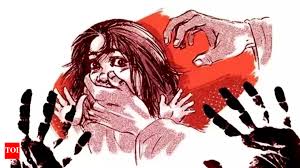
Agra: A special SC/ST court in Mathura on Tuesday awarded the death penalty to a 50-year-old man for abducting, raping and murdering an eight-year-old Dalit girl in 2020, calling it a “rarest of rare case for its brutality”. The autopsy report revealed multiple sharp injuries to the victim’s private parts, with severe damage to her uterus and internal bleeding in her kidneys and liver, which led to her death. Additional district govt counsel Subhash Chaturvedi said, “The doctor, Sonu Chaturvedi, who conducted the autopsy, also found injuries on the rectum and neck, deep bite marks on her shoulder and scratches on several parts of her body. She possibly died due to acute blood loss, as the convict, after assaulting her, strangled and left her to die in the forest at night.” On Nov 26, 2020, the Class II student was abducted while collecting firewood with a woman from her village in Mathura district. Her father filed a missing person complaint when she didn’t return home that evening. Police later found her body in a forested area of Vrindavan, where she had been strangled with her own clothes. The accused, a local villager, was arrested two days later on Nov 28. An FIR was registered under IPC sections 363 (kidnapping), 376 (rape), 377 (intercourse against the order of nature), 302 (murder) and 201 (destruction of evidence), along with sections of the Pocso Act and SC/ST Act. A chargesheet was filed on Jan 25, 2021, and the trial began the following month. During the trial, police presented testimonies of nine individuals, scientific evidence and autopsy findings. Investigators found the convict’s skin tissues in the victim’s nails, and a woman from the village testified that the man was a habitual offender who often misbehaved with girls. Chaturvedi said the court of additional sessions judge Brijesh Kumar rejected the convict’s plea for leniency, which claimed it was his first offence. Considering the savagery of the act, the court held him guilty and ruled that “the convict be hanged by neck till death”. It also imposed a fine of Rs 3,20,000 on the convict. Courtesy : TOI Note: This news is originally published on https:/timesofindia.com/bha and is used purely for non-profit/non-commercial purposes, especially human rights.
Nine arrested for murdering dalit youth in Madurai

Madurai: The Madurai rural district police arrested a nine-member gang on Monday for beating a 19-year-old dalit youth to death near Perungudi, allegedly due to previous enmity on Sunday. According to police, the deceased was identified as C Alagar alias Ajay, 19, of Valayankulam in Madurai. Alagar reportedly worked for a drum set owner. On Sunday afternoon, a gang of men on two-wheelers waylaid him when he was standing near a community hall in Valayankulam. The gang, who were from a different caste, allegedly verbally abused Alagar, denoting his caste, and threatened him. They proceeded to beat and kick Alagar badly. Though people nearby tried to intervene, the gang threatened them too and fled. Despite being rushed to Government Rajaji Hospital, Alagar died on the way. The Perungudi police registered a case, including sections of the SC/ST (Prevention of Atrocities) Act, and were investigating. On Monday, police arrested nine men: Karthik, Vishnu, Indrajit, Pandi Murugan, Hari Raghavan, Pandi, Prem Kumar, Praveen Kumar, and Karuppu in connection with the murder. Police said the gang had enmity with Alagar and they had an argument before the murder. Courtesy : TOI Note: This news is originally published on https:/timesofindia.com/bha and is used purely for non-profit/non-commercial purposes, especially human rights.
Dalit teenager rape case: Meerut accused sentenced to 20 years imprisonment and Rs 2 lakh fine

The court has sentenced the accused to severe punishment in the case of rape of a Dalit teenager in Rampur. Abdul Qadir, a resident of Lisadi Gate, Meerut, has been sentenced by the court to 20 years imprisonment and a fine of Rs 2 lakh. The case is of 2 September 2023. The father of the minor living in the Civil Lines police station area had lodged a complaint with the police. He told that his daughter was kidnapped and raped. The police took immediate action and investigated the matter and presented the charge sheet in the court. Special Public Prosecutor Sumit Sharma presented solid evidence against the accused in the court. The defense claimed that the accused has been framed due to enmity. The ADJ POCSO Court pronounced its decision after hearing the arguments of both the parties. Police Captain Vidyasagar Mishra said that the court has settled this serious case in just two years. This decision will send a positive message in the society. Shannu Khan Courtesy : Hindi News
Dalit woman’s house wall broken in Raebareli: Gram Pradhan forcibly got Kharinja installed, victim complained to DM

A case of breaking the wall of a Dalit woman’s house has come to light in Barha village of Lalganj area of Raebareli. A woman named Meena has accused Gram Pradhan Kishore. On January 24, 2025, there was no one in Meena’s house. During this time, the Pradhan along with his associates demolished the wall of her kutcha house. Meena immediately informed the police. When the police arrived, the accused threatened the victim that they would demolish the entire house if she complained. The victim told that the Kharinja installed by former Pradhan Mahendra Singh was at the right place. The current Pradhan has demolished the wall of the house and got Kharinja built from the other side. Meena went to the police station, tehsil and block office for justice. But no officer reached the spot for investigation. On August 2, at 12 noon, Meena gave a complaint letter to District Magistrate Harshita Mathur. She has demanded to register a case against the accused under the SC-ST Act. They have also demanded removal of illegal Kharinja and their own security. Arvind Bharti Courtesy: Hindi News
Dalit Tamil Nadu official falls at DMK councillor’s feet, BJP hits out
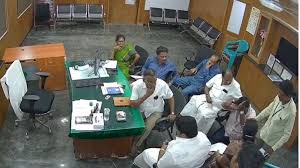
A video from Tamil Nadu’s Villupuram district shows an officer belonging to the Scheduled Caste falling at DMK councillor Ramya Raja’s feet inside Tindivanam Municipality office. He later alleged threats and casteist slurs. BJP’s Annamalai accused DMK of “social injustice.”A video from Tamil Nadu’s Villupuram district showing a Scheduled Caste government officer falling at the feet of a DMK councillor inside Tindivanam Municipality office has triggered outrage and political backlash. The officer, Muniyappan, is seen apologising to councillor Ramya Raja as voices in the room asked him to say sorry. Courtesy : India Today Note: This news is originally published on https:/indiatoday.com/bha and is used purely for non-profit/non-commercial purposes, especially human rights.
Transformative Change: Empowering Transgender Rights

India’s premier human rights body is set to host a transformative national conference focused on transgender rights, aiming to ensure dignity and equal opportunity for the community. The event will gather diverse stakeholders to discuss and recommend policy reforms, enhancing inclusion and supporting transgender rights in India. India’s National Human Rights Commission is leading the charge for transformative change by hosting a national conference on transgender rights. Scheduled for September 4 at the India Habitat Centre, the event aims to ensure dignity and equal opportunities for transgender individuals, according to officials. The NHRC emphasizes that integrating transgender persons into society is not just a legal obligation but a moral duty. The conference is expected to draw government officials, legal experts, policymakers, civil society representatives, and media to discuss strategies for advancing transgender rights. Focusing on the theme ‘Revamping Spaces, Reclaiming Voices’, the conference seeks to address systemic discrimination and foster inclusion. It will also evaluate legal frameworks and welfare programs to propose reforms that promote equal access to education, healthcare, and employment for transgender persons. (With inputs from agencies.) Courtesy : Devdiscourse Note: This news is originally published on https:/devdiscourse.com/bha and is used purely for non-profit/non-commercial purposes, especially human rights.
NHRC to organise national conference on Rights of Transgender Persons in Delhi on Sept 4

The National Human Rights Commission (NHRC), India, is hosting a national conference on the Rights of Transgender Persons on Thursday in the national capital. The National Human Rights Commission (NHRC), India, is hosting a national conference on the Rights of Transgender Persons on Thursday in the national capital. Centered on the theme “Revamping Spaces, Reclaiming Voices,” the conference, which will be held at the Stein Auditorium, India Habitat Centre, emphasises the immediate need to tackle systemic discrimination, uplift lived experiences, and promote meaningful inclusion for transgender persons in all areas of life. Justice V Ramasubramanian, Chairperson, NHRC, will be gracing the event as the Chief Guest. A wide spectrum of participants, including government officials, judicial and legal experts, policymakers, civil society organisations, community leaders, academics, law enforcement agencies, and media representatives, will convene for an in-depth, day-long dialogue focused on the challenges, opportunities, and policy priorities necessary to guarantee the rights of transgender persons in India. The conference aims to create a national platform for dialogue on the rights and welfare of transgender persons, review the implementation of legal provisions and welfare schemes such as the Transgender Persons Act, 2019, and the SMILE scheme, and recommend practical policy reforms to strengthen institutional care, reduce stigma, and enhance access to education, healthcare, and employment. It also seeks to ensure greater accountability and sensitisation within law enforcement agencies, while celebrating the voices and resilience of transgender persons and acknowledging their contribution to India’s social fabric. As transgender persons have always been part of India’s social and cultural fabric, their journey reflects a passage from invisibility to recognition and now towards inclusion. Once respected and celebrated in epics, traditions, and community practices, their dignity and social standing gradually diminished over time, leaving the community struggling for acceptance and equality. Courtesy : The Statesman Note: This news is originally published on https:/thestatesman.com/bha and is used purely for non-profit/non-commercial purposes, especially human rights.