
Rahul’s pro-OBC pitch leaves upper caste Congress leaders uneasy in Magadh region

Gaya: In the 2020 assembly elections, Congress contested five general seats, including Aurangabad, Tekari, Gaya Town, Wazirganj, Hisua and Warisaliganj, in the Magadh division. On all these five seats, Congress fielded upper caste candidates. The five seats were divided between two dominant upper castes in the 3:2 ratio. The strike rate of the party was much lower than alliance partners RJD and CPI-ML. Of the five general seats it contested, the party won two (Aurangabad and Hisua) and lost three. The Left party registered a 100% strike rate as it won both Ghosi and Arwal seats. Ghosi win was significant as it was regarded as the fiefdom of Jagdish Sharma. Things have changed a lot within the Congress in the last five years. In a major strategic shift, leader of opposition in Lok Sabha Rahul Gandhi has taken a distinctly pro-OBC stand with emphasis on caste census and poor representation of OBCs, EBCs in the decision making positions.On account of changed position of the Congress, the upper caste Congress ticket aspirants feel uncomfortable and this was also felt during meets preparatory to the ‘Voter Adhikar Yatra’ where some of them appeared dismayed. The yatra got better traction in areas dominated by the OBCs thereby strengthening the pro-OBC lobby within the Congress, feel observers. According to Ali Hussain, principal of a Gaya-based college, politics is a game of numbers and as such no party can prosper without taking into account the arithmetical realities. Hussain, who has been teaching political science, said in Bihar, politics per se has gone OBC-dalit centric and even BJP has re calibrated its strategy along those lines. Vijai Kumar Mithu, a senior Congress leader of Magadh division and former member of the All India Congress Committee, said Congress all along has accommodated all sections in its fold and comprehensive representation of different section commensurate with their numbers was in the party’s larger interests. In order to be seen walking the talk, Congress has been promoting leaders like Chandrika Yadav, Santosh Kushwaha, Naina Devi, Priye Ranjan, Kailash Pal and Shweta Yadav etc. In 2020, both Congress and BJP-HAM(S) fielded same caste candidates in Aurangabad, Tekari, Wazirganj, Hisua and Warisaliganj. Party insiders believe that the strategy did not yield the desired result and as such things may be different this time. The resignation of Arun Kumar Prasad from the Congress is also being seen in the context of party’s changing social profile where the wings of upper caste leaders are likely to be sufficiently clipped. Prasad told this newspaper that he resigned from the Congress to join the Jan Suraaj as he found it ideologically superior to the Congress. Courtesy : TOI Note: This news is originally published on https:/timesofindia.com/bha and is used purely for non-profit/non-commercial purposes, especially human rights.
Odisha cops serve notice to Rajiv Foundation seeking foreign contribution details
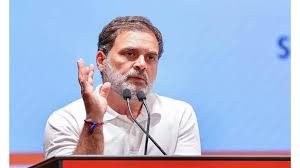
BHUBANESWAR: Police on Sunday served a notice to the Rajiv Gandhi Foundation (RGF), seeking details of its financial records and foreign contributions, in connection with a case registered earlier this year in Jharsuguda against Congress leader Rahul Gandhi for his alleged “anti-national” remarks. Police said notice has been issued under section 94 of BNSS. The foundation director has been summoned by the police as well. Police have sought a range of documents, including year-wise foreign contributions since the foundation’s inception in 1991, details of bank accounts, authorized signatories, names and contacts of auditors, a copy of the FCRA license, and clarifications on specific donations. Jharsuguda police have specifically asked the foundation if it has brought foreign donations from controversial preacher Zakir Naik and the Chinese government. Additionally, an explanation has been sought regarding the alleged diversion of the PM relief fund during the UPA era. “Failure to comply with the notice could result in penal action under Section 210 of the BNSS,” a police officer said. An FIR had been lodged on February 7 against Gandhi in Jharsuguda after his speech at the inauguration of the new Congress headquarters in Delhi on January 15, where he accused the BJP and RSS of capturing national institutions and stated, “We are now fighting the BJP, the RSS, and the Indian State itself”. The complaint was filed by local BJP units and allied organizations, alleging that Gandhi’s remarks incited subversive activities and undermined India’s sovereignty. Inspector General (Northern Range) Himanshu Lal said, “Police are well within their scope to investigate the case. The case is progressing well”. This case is notable as it is one of the first high-profile cases under the BNSS, which replaced the Indian Penal Code in July 2024, marking a significant shift in legal proceedings related to national security and public order. Courtesy : TOI Note: This news is originally published on https:/timesofindia.com/bha and is used purely for non-profit/non-commercial purposes, especially human rights.
Rahul held Voter Adhikar Yatra in Bihar to protect voters’ rights: Congress

Patna: After completing the fortnight-long Voter Adhikar Yatra across 25 districts of Bihar, the Congress on Sunday released a newsletter highlighting leader of opposition in Lok Sabha Rahul Gandhi’s nationwide campaign to “expose vote chori and defend democracy”. The initiative takes on added significance ahead of the Bihar assembly elections, for which both the NDA and the opposition INDIA bloc have mobilised all resources. In an X post, the Congress drew attention to Rahul’s ongoing campaign against “vote theft”, saying that his Voter Adhikar Yatra in Bihar was aimed at safeguarding voters’ rights. “Our campaign against vote theft has exposed how the BJP, in connivance with the Election Commission, is stealing the votes and rigging the elections,” the Congress said, urging people to read the newsletter for further details. Detailing the campaign against electoral manipulation, the newsletter stated that Rahul had, for months, exposed “voter fraud and the ECI’s role in aiding the BJP”. It added that the turning point came when he uncovered over 1 lakh fake votes in Bangalore Central, after which he launched the Voter Adhikar Yatra in Bihar to take the message directly to the people. “What began as the fight of one leader has now grown into a people’s movement to protect our right to vote,” the newsletter claimed, adding that the yatra, highlighting “the disenfranchisement of lakhs of voters through the special intensive revision (SIR)” of electoral rolls, covered 1,300 km across Bihar and included 18 rallies attended by INDIA bloc leaders, such as RJD’s Tejashwi Prasad Yadav, CPI-ML’s Dipankar Bhattacharya and VIP’s Mukesh Sahani. The newsletter also mentioned Rahul hosting a tea party with Bihar residents declared “dead” on the EC’s SIR draft rolls, participating in makhana harvesting with farmers in Purnia, and taking a bullet ride on pillion with his sister Priyanka Gandhi alongside Tejashwi. It further alleged that BJP operatives have been “stealing votes” using five methods – fake and invalid addresses, misuse of Form 6, duplicate voters, bulk voters at a single address and invalid photos. Courtesy : TOI Note: This news is originally published on https:/timesofindia.com/bha and is used purely for non-profit/non-commercial purposes, especially human rights.
Towards Equality: Why transgender-inclusive education must enter Indian schools
A landmark PIL seeks to reform curricula, highlight transgender experiences and make classrooms more inclusive for future generations A historic petition, with promise A decisive public interest litigation (PIL) filed in the Supreme Court has placed a long-neglected issue at the centre of India’s educational debate: the absence of scientifically accurate, transgender-inclusive sexuality education in school textbooks. The petition, spearheaded by Kaavya Mukherjee Saha, a Class XII student, does not merely challenge outdated institutional frameworks — it calls for a comprehensive overhaul of curricula designed by the National Council of Educational Research and Training (NCERT) and State Councils of Educational Research and Training (SCERTs). In response, the Supreme Court promptly issued notices to the Centre and six state governments — Maharashtra, Andhra Pradesh, Telangana, Punjab, Tamil Nadu and Karnataka — underscoring the urgency of the matter. At a time when conversations around equity and representation are reverberating worldwide, this litigation could become a watershed moment in shaping how Indian schools approach gender diversity. The legal and statutory backdrop The petition draws strength from binding precedents and statutory mandates. It cites the 2014 NALSA vs Union of India judgement, where the Supreme Court recognised transgender persons as a third gender and directed governments to ensure institutional inclusion. Equally significant is the Transgender Persons (Protection of Rights) Act, 2019. Sections 2(d) and 13 mandate inclusivity in education, requiring institutions to create curricula and methods that reflect gender diversity. Yet, the PIL argues, these provisions remain largely ignored. Audits of school textbooks show systematic omissions across states. While Kerala has made limited progress, most others fail to mention transgender identities meaningfully or provide teachers with sensitivity training. The result, the petition contends, is a gaping disconnect between law and classroom reality. Beyond laws: Why inclusion matters The absence of transgender representation in education is not a matter of oversight — it has profound consequences. According to the plea, such exclusion violates constitutional guarantees of equality (Article 14), non-discrimination (Article 15), freedom of expression (Article 19), and the right to life and education (Articles 21 and 21A). But the case is not only about rights on paper. Without inclusive, accurate education, schools risk perpetuating harmful stereotypes, encouraging bullying and reinforcing the social ostracism transgender students already face. As the petitioner’s counsel stressed, true reform requires “structured, examinable content” — not token mentions or optional addenda. Only when curricula embed gender diversity meaningfully can schools foster empathy, respect, and critical understanding among students. What comprehensive sexuality education should deliver At the heart of the PIL is a call for comprehensive sexuality education (CSE) that is age-appropriate, scientifically validated and informed by international benchmarks. UNESCO and the WHO’s International Technical Guidance on Sexuality Education provides such a framework, recommending curricula that address gender, sexuality, relationships and respect in a sensitive and staged manner. The petition urges Indian policymakers to adopt these global best practices, highlighting three key areas: Curricular reform that integrates transgender-inclusive content across subjects. Mandatory teacher training to ensure educators are equipped to handle sensitive discussions. Binding guidelines applicable to both public and private schools. Evidence of systemic omissions Textbook reviews across the six states named in the PIL reveal an alarming vacuum. References to transgender lives, rights, or histories are either non-existent or superficial. In May 2025, a Right to Information (RTI) reply from NCERT confirmed that no teacher training programmes on transgender-inclusive sexuality education had been conducted to date. This silence has dual consequences. Transgender students are denied affirmation and essential knowledge about their identities, while their cisgender peers grow up without the tools to become allies. A generation of young Indians, the petition argues, is being educated with dangerous blind spots around gender diversity. Judicial response: A turning point The Supreme Court’s decision to seek responses from both the Centre and the six states suggests a recognition of the issue’s Constitutional gravity. The coming months will likely see intense debate involving educators, civil society groups, policymakers and the judiciary. Should the court uphold the PIL’s demands, schools across India could soon see exam-oriented, transgender-inclusive content, alongside guidelines for effective teaching. Such an outcome would not only reform classrooms but also reaffirm the judiciary’s role in advancing social justice through education. The stakes: Rights today, progress tomorrow The urgency of the matter cannot be overstated. Today’s students will become tomorrow’s professionals, policymakers, and leaders. The biases they absorb — or the empathy they learn — are shaped directly by the education system. For transgender students, inclusive curricula are not merely symbolic; they are a matter of dignity, health and equal opportunity. For society at large, they represent a chance to move towards a culture of acceptance rather than prejudice. In essence, this debate is not about isolated reforms. It is about defining what kind of future India wants to build — one where diversity is silenced, or one where it is celebrated. Towards a new educational ethos This PIL resonates beyond its immediate legal demands. It challenges Indian society to rethink the ethos of its education system. True reform, it argues, must reflect the diversity and complexity of all children. This requires not just curriculum changes but also societal support — from parents, teachers and communities — to create schools that are safe and empowering for every student. If successful, this litigation could provide a global model for inclusive education, demonstrating how courts, policymakers and educators can work together to transform classrooms into spaces of empathy and empowerment. The road ahead: Classrooms as beacons of inclusion As the Supreme Court deliberates, the nation watches closely. Responses from governments, curriculum reviews and judicial directions will shape the trajectory of this case. Whatever the verdict, the petition has already succeeded in one crucial respect: it has forced a long-overdue conversation into the mainstream. The silence around transgender representation in schools can no longer be ignored. At its core, this litigation is not about textbooks alone. It is about whether India’s education system can rise to the Constitutional promise of equality and dignity for
Bodoland of Assam became the first tribal region in the country, where 15 lakh land records were digitized – know the full story

Bodoland Territorial Region created history, it became the first tribal area of Assam where all land records are completely digitized. This is being considered a big step towards transparency and resolution of land disputes. New Delhi: Bodoland Territorial Region (BTR) of Assam has become the first tribal council area in the country to completely digitize all its land records. This achievement is considered an important step in the councils formed under the Sixth Schedule of the Constitution. According to officials, more than 15 lakh land-related documents, including text and maps, have been digitized in BTR, spread over an area of 8,970 square kilometers. This work was completed just a few weeks ago, ending the process of manual record-keeping that was going on for decades. Councils under the Sixth Schedule North-east India has a total of 10 autonomous tribal councils under the Sixth Schedule—three each in Assam, Meghalaya and Mizoram, and one in Tripura. Assam’s Karbi Anglong-West Karbi Anglong and Dima Hasao councils were set up nearly five decades before the Bodoland Territorial Council (BTC). The BTC was set up in 2003. The BTC currently administers five districts in north and west Assam. Why was digitisation necessary? The Sixth Schedule gives special rights to tribal areas in matters related to land, forest and local governance. Despite this, these councils face lack of resources, infrastructure challenges and administrative difficulties. The BTR administration has adopted a technology-based governance system to overcome these obstacles. According to officials, the council has made this big change by working on the lines of the e-office system and the Digital India Mission. BTC secretary Dhiraj Saud said the process, which began in 2023, was aimed at bringing transparency in land ownership and simplifying traditional land ownership patterns. “The process involved ground-level surveys in all districts — Baksa, Chirang, Kokrajhar, Tamulpur and Udalguri. Old records, including those dating back several decades, were digitised and matched with revenue records and maps,” he said. Geographical Information System (GIS) mapping was also used to ensure accuracy of land boundaries. Boost to Mission Bwismuthi 2.0 This digitisation has also given new impetus to the BTR government’s Mission Bwismuthi 2.0. The scheme, launched earlier this year, gave land rights to 47,000 landless indigenous families, including about 9,000 small tea growers and rubber farmers. In its first phase, 14 land related services were made available and so far more than 2.11 lakh applications have been settled. New digital facility for the public Through the new digital platform, farmers, landholders and common citizens can now get information related to their land through kiosks, mobile applications and web portals. A revenue department official said, “Land disputes in our region have often become a cause of social tension. Digitization will ensure transparency and the chances of corruption, fraud and conflict will be reduced to a great extent.” An example for other councils Officials believe that the digitization of land records and e-office system in BTR has become an ideal example for other autonomous councils of the North-East. Rajan Chaudhary Courtesy : Hindi News
‘Extremely Vulnerable Tribal Groups’ (PVTGs) may be counted separately in the upcoming census
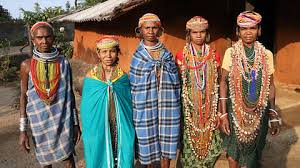
The government may count Extremely Vulnerable Tribal Groups (PVTGs) separately in the upcoming census for the first time New Delhi – The Ministry of Tribal Affairs (MoTA) last month wrote a letter to the Registrar General and Census Commissioner of India (RGI) urging that ‘Extremely Vulnerable Tribal Groups’ (PVTGs) be counted separately in the upcoming census. The ministry said in its letter that the exact number of PVTG families and individuals as well as their demographic, cultural and socio-economic aspects should be recorded. The ministry believes that this information will be helpful in the effective implementation of schemes targeted for PVTGs—such as the Pradhan Mantri Janjati Adivasi Nyay Maha Abhiyan (PM JANMAN). Who are PVTGs? Extremely Vulnerable Tribal Groups (PVTGs) are a special sub-category of Scheduled Tribes (STs). They share some common characteristics—decreasing or stagnant population, geographical isolation, pre-agricultural lifestyle (hunting and gathering), economic backwardness and extremely low literacy levels. This category was formed on the recommendations of the Dhebar Commission set up in 1960-61. The commission’s chairman and then MP U.N. Dhebar studied the socio-economic status of scheduled tribes in collaboration with state governments. His report found that some tribes were far more vulnerable than others. First, 52 groups were identified as PVTGs during the Fifth Five Year Plan (1974-79). Later, 23 more tribal groups were added in 2006. Currently, there are a total of 75 PVTGs in the country, spread across 18 states and the Andaman and Nicobar Islands. Have PVTGs ever been counted separately before? No census has so far counted PVTGs separately. Being a sub-category of Scheduled Tribes, they are usually included in the broader list of STs. At times, multiple PVTG groups are counted under the same name. In a reply to the Lok Sabha in December 2016, the ministry had said that 40 of the 75 PVTGs have been notified as ‘single entry’ Scheduled Tribes under Article 342 of the Constitution. For example, the Baiga community of Madhya Pradesh was counted separately in the 2011 census. But the Abujh Maria, Bharia, Hill Korba and Camara were not listed separately. Later in 2013, Abujh Maria and Hill Korba were added to the ST list of Chhattisgarh through a law of Parliament. According to parliamentary replies, only data of main STs is published by the RGI, which also includes information on their sub-groups and synonymous groups. What is the estimated population of PVTGs? In November 2023, the central government launched the PM JANMAN scheme at a cost of Rs 24,104 crore. It aims to improve the socio-economic condition, health, education, livelihood and infrastructure of PVTG communities. The scheme is being implemented in more than 200 districts. The central and state governments jointly conducted a comprehensive survey for this scheme. In this, data of PVTG settlements was collected and the lack of infrastructure was assessed. According to the survey, the estimated number of PVTGs across the country is 47.5 lakh. Of these, the highest number of 13.22 lakh is in Madhya Pradesh. This is followed by 6.7 lakh in Maharashtra and about 5.18 lakh PVTGs in Andhra Pradesh. The 2011 census also revealed that the population of 13 PVTGs in the country was less than 1,000. These include Jarawa, Onge, Sentinelese and Shompen of Andaman and Nicobar Islands. Apart from this, Raji of Uttarakhand, Kota of Tamil Nadu, Birhor of Odisha, Camera of Madhya Pradesh and Savar, Birhor, Birjia, Korwa, Parhaiya of Bihar also come in this list. The group with the least population was Sentinelese, whose number was recorded as only 15. At the same time, the highest population of 4,14,526 was of Baiga community of Madhya Pradesh. Why is separate census necessary? Government officials say that by getting the correct number of PVTGs and their socio-economic data, major flaws in the implementation of schemes can be removed. Especially schemes like health and education can be implemented more effectively. Also, this information will also help in understanding whether the criteria set for identifying PVTGs are still relevant today or there is a need to change them. This move will not only highlight the real condition of the tribal groups but will also help the government to formulate a concrete strategy towards bringing them into the mainstream and improving their living conditions. Rajan Chaudhary Courtesy : Hindi News
‘Fake caste certificate deprives a qualified tribal candidate of opportunity’: Supreme Court gives relief to MBBS student of Maharashtra, imposes Rs 5 lakh fine on father

On July 7, 2022, the verification committee passed an order that Chaitanya “Mannervarlu” does not belong to the Scheduled Tribe. By this time Chaitanya had not only completed her MBBS degree but also got admission in the Post Graduate (PG) course in the general category, where she is currently in the second year. New Delhi- The Supreme Court has given a big relief to the appellant MBBS pass Chaitanya by giving an important verdict in a famous fake caste certificate case of Maharashtra. But the apex court has imposed a fine of Rs 5 lakh on her father. With a fake caste certificate, Chaitanya not only got admission in MBBS but also completed the degree and internship and now has got admission from the general category for the post graduate degree. The court, while maintaining a balance between equity and law, has granted relief to the student and imposed penalty on the father, saying that “this act has deprived an eligible tribal candidate of an opportunity.” The court ordered Chaitanya’s father to deposit Rs 5 lakh in the National Defence Fund within two months. The case pertains to the “Mannervarlu” category of Scheduled Tribes (ST), under which Chaitanya had claimed she belonged to this tribe. Chaitanya was born on 7 August 1998, and when she was a minor, a caste certificate was issued in her favour on 1 July 2009, declaring her as a member of the “Mannervarlu” Scheduled Tribe under Section 27 of the Presidential Order 1976. Chaitanya, who wanted to take admission in MBBS course, approached the Scheduled Tribe Caste Certificate Verification Committee, Aurangabad for verification of her certificate through her father Sanjay Vithalrao Palekar on 30 July 2015. Unfortunately, the committee delayed the verification of this claim, which led to Chaitanya getting admission to the MBBS course on 24 July 2016 on the basis of his caste certificate. He successfully completed MBBS in 2021 and started internship after completing the final year on 5 May 2021. The records show that Chaitanya excelled in class 12 and his academic performance was also excellent during MBBS. However, on 7 July 2022, the verification committee passed an order that Chaitanya does not belong to the “Mannervarlu” Scheduled Tribe. By this time Chaitanya had not only completed his MBBS degree but also enrolled in the Post Graduate (PG) course in the general category, where he is currently in the second year. Chaitanya filed a writ petition in the Bombay High Court against this decision of the committee, but it was dismissed. The core issue of the case was the fraud committed by Chaitanya’s father and uncle, who obtained new certificates in 2007 by concealing the rejection of their tribal claims in 1989. Bombay High Court gave this decision The Aurangabad Bench of the Bombay High Court, while passing judgement on writ petition no. 8531/2022 on July 24, 2023, upheld the order of the Verification Committee dated July 7, 2022. The High Court found that the tribal claims of Chaitanya’s father Sanjay Palekar and uncle Rajiv Palekar were rejected in 1989, and their appeal was dismissed in 1991. Despite this, they obtained new validity certificates in 2007 by concealing this fact. The High Court termed it a constitutional fraud and said that Chaitanya’s father had filed a false affidavit before the committee, claiming that no one in his family’s claim was rejected. The court cited the Supreme Court case Raju Ramsing Vasave v Mahesh Deorao Bhiwapurkar (2008) 9 SCC 54, which held that certificates obtained by fraud are invalid and not binding on other family members. The High Court also observed that the certificates of other relatives submitted by Chaitanya were also based on fraud, as earlier rejections were concealed. Rejecting the debate on the review power of the committee, the court clarified that this is a clear case of fraud and not an issue of review. The High Court rejected Chaitanya’s reference to other cases where directions were given to issue validity certificates pending scrutiny of relatives’ certificates. The court said that this case is an example of clear fraud on the Constitution and Chaitanya cannot benefit from the fraud of his father and relatives. Dismissing the petition, the High Court said that the affidavits filed by Chaitanya and his father were false and the committee was justified in rejecting the claim. Supreme Court order The Supreme Court bench of Justice J.B. A bench of Justices Pardiwala and KV Vishwanathan partly allowed Chaitanya’s appeal in Civil Appeal No. 11196/2025. The court upheld the High Court’s findings, saying there was no legal error, but granted relief in special circumstances, taking into account Chaitanya’s educational qualifications and career prospects. The court noted that Chaitanya has completed MBBS and is pursuing a PG course in the general category. If the appeal was dismissed, her entire career would be at stake. The court held Chaitanya’s father primarily responsible for the situation, who put his daughter in trouble by concealing crucial facts. Referring to its interim order (28 November 2023), the court took on record the affidavit of the father, in which he gave up the claim of “Mannervarlu” Scheduled Tribe for himself and his family. The court regularised Chaitanya’s MBBS admission and directed the university to issue his degree certificate, which would be final. Chaitanya was, however, barred from claiming Scheduled Tribe anytime in the future. Acknowledging that due to this fraud a deserving Scheduled Tribe candidate lost the opportunity of pursuing MBBS course, the court ordered Chaitanya’s father to deposit Rs 5 lakh in the National Defence Fund within two months. The matter was again listed after two months for a compliance report. The court also observed that if the verification committee had conducted a timely inquiry, this situation might not have arisen. The Supreme Court order overrides the High Court’s decision, regularising only Chaitanya’s MBBS admission, while upholding the High Court’s decision on all other aspects. Geetha Sunil Pillai Courtesy : Hindi News
Dalit professor of IIM Bangalore is among the top 20 marketing researchers in the world, but is facing the brunt of caste-based humiliation in the institute.
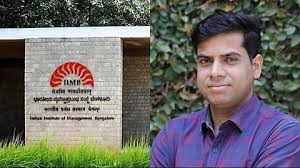
Professor Gopal Das, who is also included in the list of Stanford University, has accused 8 people including the IIM director of harassment, know what was revealed in the DCRE investigation report. Bangalore: On one hand, there is the story of India’s flag flying in the global academic world, on the other hand, the agony of struggling for respect in the country’s prestigious institute. Gopal Das, Marketing Associate Professor and Dalit scholar of Indian Institute of Management Bangalore (IIMB), has registered his name among the top 20 marketing researchers in the world. In this list released by Marketing Big15 USA in August, he has got the first place in India and second place in Asia, while globally he is at the 17th position. This honor has been given to him for his exceptional contribution to the world’s most prestigious ‘Marketing Big 15’ journals from 2018 to 2025. These journals are recognized by global standards like University of Texas at Dallas and Financial Times. Professor Das is the only Indian in this exclusive global list, which is a proud moment not only for IIMB but for the entire country. But behind this glorious achievement lies a bitter truth. Professor Das has made serious allegations of systematic harassment, humiliation and denial of opportunities at IIMB because he belonged to the Scheduled Caste community. A long journey of achievements This global ranking of Professor Das is a testimony to his consistent excellence. He has been making it to the list of top 2% scientists in the world released by Stanford University for five consecutive years, including the recent 2024 list. He joined IIMB in 2017 after completing his PhD from Indian Institute of Technology Kharagpur. His research focuses on areas such as consumer emotions, sensory marketing and ethical decision making. He is also on the editorial review board of several prestigious journals such as the ‘Journal of Public Policy and Marketing’. Serious allegations of discrimination and legal battle Professor Das, who belongs to the Scheduled Caste (SC) community and identifies himself as a Dalit, has publicly alleged caste-based discrimination at IIMB. His claims have sparked a major debate. June 2024: Professor Das lodged a complaint with President Draupadi Murmu, who visited IIMB. In this, he accused the then director of the institute Rishikesh T Krishnan, Dean (Faculty) Dinesh Kumar and six other faculty members of harassment, humiliation and denial of equal opportunities on the basis of caste. He claimed that he was excluded from important committees, not promoted and investigations were initiated against him for financial irregularities and complaints of students in a vindictive manner. November-December 2024: The Directorate of Civil Rights Enforcement (DCRE) of the Government of Karnataka investigated the matter. The inquiry report released on December 19, 2024 confirmed that Professor Das faced “humiliation and exclusion” due to caste discrimination. The report recommended action under the Scheduled Castes and Scheduled Tribes (Prevention of Atrocities) Act, 1989. December 21, 2024: Based on the DCRE report, Bengaluru police filed an FIR against the eight accused under sections of the SC/ST Act and IPC. Student organisations such as the All India OBC Students’ Association (AIOBCSA) demanded the director’s resignation. IIMB’s side However, IIMB dismissed all these allegations as “baseless”. The institute says that these allegations surfaced after Professor Das’ promotion was deferred in 2024 due to complaints of misconduct and sexual harassment by students against him. The institute emphasised its commitment to inclusivity, saying that Professor Das had been appointed to key positions such as the chairperson of the Institutional Review Board before the controversies. Until December 31, 2024, the court stayed all proceedings, giving the accused an opportunity to challenge the FIR. The case has become the centre of a wider discussion on caste dynamics in India’s top institutions. Professor Das’s supporters see his global ranking as a fitting reply to alleged bias against him. As of September 2025, the case is still sub judice with no final verdict. Geetha Sunil Pillai Courtesy : Hindi News
Ahmedabad upper caste full of contempt towards not just Dalits but also OBCs
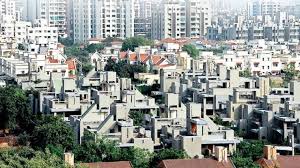
Who doesn’t know that casteism is all-pervasive in India. However, when one talks of casteism, often things boil down to the intensity of untouchability, officially abolished after India became a republic, found in not just in rural areas but also in towns and cities. I found it existing when I settled down in Ahmedabad, living in a two bedroom apartment in a supposedly posh area. The person who would come to pick up trash daily at our doorstep would be given food leftover in the evening. While we wouldn’t have any leftover, the next door neighbour would give it in such a way that she or he doesn’t come in direct contact (touch) of the person, who would belong to the Valmiki community, “lowest” in the Hindu social ladder. That was in mid-1990s. We are now living in the third decade of the 21st century. It’s a middle class society where I live in Ahmedabad. I often hear phrases like “these scheduled castes” from persons belonging to upper castes to declare how Dalits refuse to live clean when they see footwear lying in the corridors outside the doorsteps of the flats where Dalits live. Of course, they are not so much contemptuous towards Banias or Brahmins, many of whom also keep footwear outside the doorsteps, in the corridor. They are at least not identified with their caste. Be that as it may, I have found, casteism takes various forms in Ahmedabad societies where mainly upper caste people live. Thus, a person very close to me told me how the society chairman angrily protested against the move to sell the flat to an individual with Mali surname. “We were told not to sell to a Mali, who belongs to the other backward class (OBC). We were warned, if the society flat was sold to Mali, the flat wouldn’t be transferred in his name. Only Brahmins and Banias are allowed”, the person close to me told me. Yet, the person told me, the flat was sold to Mali, despite resistance. A rich person, Mali was finally accepted, as he was apparently identified as a good person, an “exception” among OBCs! Apparently, the society chairman found out that a transfer fee of Rs 30,000 wouldn’t be received if the transfer is “not allowed” — and the Mali fellow didn’t care two hoots. By Rajiv Shah Courtesy : Counterview Note: This news is originally published on https:/counterview.com/bha and is used purely for non-profit/non-commercial purposes, especially human rights.
Dalit leader attacked in front of DGP office by ‘VCK workers’
BJP state president Nainar Nagenthran alleged that opposition leaders were increasingly being targeted. CHENNAI: The attack on Puratchi Tamizhagam Katchi (PTK) president ‘Airport’ Moorthy outside the DGP’s office here on Saturday, allegedly by Viduthalai Chiruthaigal Katchi (VCK) cadre, has attracted sharp criticism from opposition parties. Moorthy, who accompanied Pattali Makkal Katchi (PMK) MLA R Arul to submit a complaint to DGP (in-charge) G Venkataraman on Saturday, was attacked and the video of the incident was viral on social media. He later told media persons that he was attacked by a group of VCK cadres over his criticism of VCK president Thol Thirumavalavan. Further, Moorthy alleged that he has been constantly facing threats to his life from VCK cadre. PMK leader Dr Anbumani Ramadoss termed the assault “highly condemnable” and called for the immediate arrest of the attackers, besides calling for security for Moorthy. BJP state president Nainar Nagenthran alleged that opposition leaders were increasingly being targeted. AMMK general secretary TTV Dhinakaran said the attack outside the DGP’s office was a “disgrace to the police force”. Naam Tamilar Katchi leader Seeman described the assault as proof of deteriorating law and order. Both Moorthy and VCK worker Selvam later went to the Greater Chennai Police Commissioner’s office to file separate complaints against each other over the incident. Courtesy : TNIE Note: This news is originally published on https:/thenewindianexpress.com/bha and is used purely for non-profit/non-commercial purposes, especially human rights.