
SC to hear plea on reservation for Transgender in medical education

According to Jaising, both petitioners had written the entrance exams, but ambiguity persisted over the cut-off marks applicable in case of transgender reservation being recognised. New Delhi: The Supreme Court on Tuesday agreed to hear on September 18 a plea over reservation of seats for transpersons in higher medical education institutions. A bench comprising Chief Justice B R Gavai and Justice K Vinod Chandran said if there was a top court order for granting quota to transgender persons, then it should be followed. Senior advocate Indira Jaising, appearing for few petitioners, said one of the issues was whether quota for the third gender persons will be horizontal or not. Under horizontal quota, transgenders, irrespective of the fact whether they belonged to SC, ST, OBC, and general categories, would get the benefit of reservation on account of them belonging to the third gender. Jaising sought implementation of reservation benefits for transgender candidates in postgraduate medical courses in line with the landmark 2014 NALSA judgment that recognised the rights of transgender persons, including their entitlement to affirmative action. The senior lawyer said she was representing three persons who applied for postgraduate medical training institutes. She said while one of the petitioners have now sought to withdraw the plea, the rest of the candidates, who belong to OBC and the general categories, respectively, want to avail the quota benefits. According to Jaising, both petitioners had written the entrance exams, but ambiguity persisted over the cut-off marks applicable in case of transgender reservation being recognised. She pointed out various high courts issued conflicting orders, some granting ad-hoc reservations for transgender candidates and some declining the relief. Posted by Marziya Sharif Courtesy : TSD Note: This news is originally published on https:/thesiasatdaily.com/bha and is used purely for non-profit/non-commercial purposes, especially human rights
Breaking barriers: Raj’s first transgender lawyer vows to fight for equality
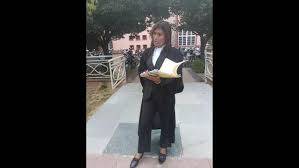
Jaipur: Raveena Singh was raised as a boy named Ravindra Singh in a conservative family in Sojat City in Rajasthan’s Pali district. Yet from an early age, her heart and soul resonated with a different truth—she felt like a girl. Her gestures, the way she spoke and the choices she made all expressed her authentic self. Despite facing rejection and lack of support, Ravindra’s determination never wavered. On Aug 2, she became the first transgender lawyer to register as a woman named Raveena with the Bar Council of Rajasthan—marking a historic milestone. Her journey from a conservative upbringing to the hallowed halls of the Rajasthan High Court is a testament to her resilience and determination. Raveena always felt a disconnect between her assigned gender and her true identity. Despite societal pressures and familial expectations, she embraced her authentic self, a decision that came with its own set of challenges. “I may have a manly body but I act, walk and think like a woman,” she recalls telling her family, a revelation that was met with resistance. Raveena’s path was not an easy one. She was initially compelled to conform to the traditional roles expected of the transgender community, such as singing and dancing at auspicious occasions—a practice she found uncomfortable and stigmatising. “There was vulgarity involved; things I did not like,” she shares. Her aspirations lay elsewhere. Driven by a desire to advocate for her community, she pursued a law degree from Maharaja Ganga Singh University in Bikaner. On Aug 2, Raveena’s dream came to fruition as she registered with the Bar Council of Rajasthan, a historic milestone that she hopes will pave the way for greater representation of transgender individuals in all professional fields. “My career as a lawyer has just started but I also work as a freelance makeup artist to sustain myself financially,” she explains, in an exclusive interview with TOI. “I will fight for transgender rights. Just as there are men and women in every field—politics, civil services, education—there should also be transgender representation in these fields,” she asserts. She points out the irony that while the Supreme Court has mandated rights for transgenders in education and employment, official categories for transgenders are still missing in many systems. “If my story inspires even one transgender person, I will be happy,” she says, while filing a writ petition related to transgender rights at the Rajasthan high court Tuesday. Courtesy : TOI Note: This news is originally published on https:/timesofindia.com/bha and is used purely for non-profit/non-commercial purposes, especially human rights
Pro-Khalistan group SFJ threatens Punjab Congress leaders for honouring Rahul Gandhi with siropa
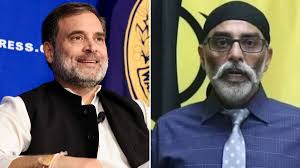
CHANDIGARH: The banned terrorist group Sikhs for Justice (SFJ) has issued direct threats to Punjab Congress President Amarinder Singh Raja Warring and Amritsar MP Gurjit Singh Aujla for facilitating the presentation of a siropa (robe of honour) to Rahul Gandhi during his recent visit to Gurdwara Baba Budha Sahib. In a press release received Wednesday morning, SFJ’s legal counsel Gurpatwant Singh Pannun said Warring and Aujla would be “targets of pro-Khalistan Sikhs” for honouring a member of the Gandhi family, which the group holds responsible for the 1984 anti-Sikh riots. He described them as “dalal (agent) politicians” acting on behalf of a party SFJ accuses of complicity in the Sikh genocide. The siropa was presented to Rahul Gandhi by the management of Gurdwara Baba Budha Sahib during his visit to flood-affected areas in Punjab on Monday. The gesture has drawn sharp criticism from several Sikh organisations, including the Shiromani Gurdwara Parbandhak Committee (SGPC), which has launched an inquiry. The SGPC condemned the act, saying that honouring a Congress leader from the Gandhi family is “absolutely unacceptable under any circumstances.” Warring and Aujla were among the Congress leaders who accompanied Gandhi to the gurdwara. The incident, already politically sensitive, has now escalated following SFJ’s threats. In the same release, Pannun further claimed that SFJ activists had painted pro-Khalistan slogans on the Amritsar-Haridwar train, along with the message: “From Ayodhya to Haridwar, Diwali 2025 will be blacked out.” Courtesy : TOI Note: This news is originally published on https:/timesofindia.com/bha and is used purely for non-profit/non-commercial purposes, especially human rights
After Rahul yatra, Congress & RJD assess options over Bihar CM face

Patna: Until the middle of last month, it was RJD leader Tejashwi Prasad Yadav who appeared to be dictating terms to his INDIA bloc allies, holding frequent conferences at his official residence and announcing his strategies. But since Aug 17, when leader of opposition in the Lok Sabha Rahul Gandhi launched the Voter Adhikar Yatra, it is the Congress that seems to be steering the narrative.The fortnight-long yatra passed through 25 of Bihar’s 38 districts and drew impressive crowds, particularly in rural areas. According to informed sources, Congress sensed a surge of public support during the march and is now keen to test its political impact. That public response has created a new dynamic for Tejashwi, who was appointed chairman of the INDIA bloc’s coordination committee for the Bihar assembly polls at a meeting in Patna on April 17. Despite the role, he still awaits formal projection as the opposition’s chief ministerial face. “Tejashwiji ke haath me hi chunav abhiyan toh phir bach kya jata hai (If Tejashwi is shouldered with the responsibility to launch the election campaign, then what’s left)?” said a senior state Congress leader, requesting anonymity. While allies such as the Left parties and the Vikassheel Insaan Party (VIP) have openly endorsed him as CM face, Congress has carefully avoided making a similar commitment. Rahul, who led the yatra supported by all INDIA bloc partners, party media in-charge Pawan Khera, and Bihar in-charge Krishna Allavaru have all sidestepped the question in press briefings. This studied silence has begun to irritate the RJD, prompting its leaders to assert Tejashwi’s claim on their own. During a media interaction in Araria last month, Rahul deftly evaded the CM question, instead highlighting the unity among opposition parties on the “vote theft” campaign. Later, Allavaru said, “The people of Bihar will choose their leader,” while Khera too avoided a direct answer, adding only that “they (RJD and Congress) enjoy a different kind of relationship.” The RJD’s annoyance is increasingly evident. On Tuesday, the party’s chief spokesperson Shakti Singh Yadav declared, “Tejashwiji happens to be the coordination committee chairman, he is the opposition’s CM face and will become the CM after assembly polls. There is no doubt about it.” He reminded that Tejashwi was the opposition’s CM face in 2020 as well and came close to forming a govt. Congress insiders, however, claim Tejashwi himself agreed at the INDIA bloc’s first meeting, when the coordination committee was set up, that the decision on the opposition’s face would be taken jointly by all allies at the appropriate time. Downplaying talk of friction, state Congress media in-charge Rajesh Rathore said, “The issue of who will be the CM is not to be decided by one party. It will be decided when all the alliance members sit together.” He added that the yatra had boosted Congress morale, saying, “The masses came to the streets in large numbers and reacted to our slogans. We benefited a lot from the yatra.” The BJP, meanwhile, has seized on the discord. Party spokesperson Prem Ranjan Patel said, “Tejashwi projected Rahul as the PM face, but the latter didn’t reciprocate in a similar fashion and declare him as the CM face. That means Rahul has no trust in his friend.” JD(U) also mocked the situation. “Matlab gathbandhan me gaanth hai,” said JD(U) spokesperson Neeraj Kumar. Courtesy : TOI Note: This news is originally published on https:/timesofindia.com/bha and is used purely for non-profit/non-commercial purposes, especially human rights
1st nat’l leader to seek Punjab flood relief, Rahul’s delayed visit sparks mixed reactions
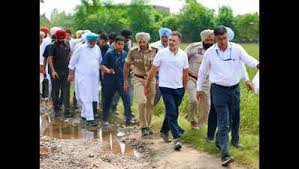
Chandigarh: Despite being among the first national leaders to voice concern over the devastating floods in Punjab, the visit of former Congress president and Lok Sabha leader of the opposition Rahul Gandhi, which was cut short, appears to have had limited political impact. Instead, it has sparked questions over timing, effectiveness, and whether it achieved the desired political resonance. The recent floods, described as Punjab’s worst in 40 years, devastated nearly 2,300 villages across all districts. More than 4 lakh people were affected, 55 lives lost in 14 districts, and 1.72 lakh hectares of farmland in 18 districts damaged, alongside extensive losses to homes, livestock, and infrastructure. There is public anger against the Aam Aadmi Party govt in Punjab over alleged mismanagement, while dissatisfaction has grown with the BJP-led central govt for announcing only a Rs 1,600-crore relief package against estimated losses exceeding Rs 20,000 crore. Against this backdrop, Gandhi’s visit appeared unable to harness prevailing public sentiment. His tour came a week after Prime Minister Narendra Modi’s Sept 9 visit to review the damage. Since the first week of Sept, central BJP leaders have been frequenting Punjab, while strongly criticising AAP govt’s handling of the crisis. Although flood-affected families met him during his visit, Gandhi avoided making direct attacks on either the state or central govt, both of which continue to face negative public opinion over their management of the disaster. Party insiders acknowledged the Punjab Congress leadership, which had been sharply critical of the AAP govt, expected Rahul’s presence to energise them politically. Gandhi was the first national leader to demand a relief package on Sept 2, but explained his delay in visiting Punjab by citing his engagement with the Voter Adhikar Yatra in Bihar, which concluded on Sept 1. Thereafter, he travelled abroad. His foreign visit drew criticism from BJP and AAP leaders, who accused him of shirking responsibility. A Punjab Congress functionary, who did not wish to be named, defended Gandhi’s timing, arguing he chose to visit later so as not to disrupt relief operations. Drawing a contrast with the PM, the functionary remarked: “Unlike PM Modi, who did a photo-op, Rahul Gandhi went on the ground, met affected people, and took details that he will raise at the right platform.” On social media, however, criticism persisted. Tractor2twitr_P, a farmer-support page, asked: “Can anyone explain a single benefit of LoP Rahul Gandhi visiting a flood-affected state one month late? LoP was needed when state and central govts failed rescue ops and when Delhi threw peanuts for rehab. But he was nowhere to be found.” Prof Mohammed Khalid, a former faculty member of Panjab University’s political science depatment, said Gandhi was “a bit late” in visiting Punjab and the Congress failed to gain politically from the exercise. He noted the visit might have gone largely unnoticed had Gandhi not been stopped from visiting areas across the Ravi. “He could have tapped into public anger had he visited a bit sooner,” Khalid observed, adding that all parties appeared more intent on scoring political points than on helping those affected. Gandhi’s plan to visit Toor village, across the Ravi river, had to be cancelled. He reached Makora Pattan for onward travel by boat but, according to the party, could not proceed after Congress president Mallikarjun Kharge received a call from Union home minister Amit Shah advising against crossing the flooded river for safety reasons. Prof Ashutosh Kumar, who too is from the political science department of Panjab University and has an expertise in Indian politics, especially Punjab, took a more measured view. He argued that visits by senior leaders, whether PM Modi or Gandhi, always had political value. He recalled Gandhi’s previous visits to the Golden Temple helped soften Sikh community attitudes toward the Gandhi family. Courtesy : TOI Note: This news is originally published on https:/timesofindia.com/bha and is used purely for non-profit/non-commercial purposes, especially human rights
Laxmanpur Bathe Massacre, 58 Dalits killed at midnight, 5 girls raped:Women’s breasts cut, shot in private parts; 45 accused but none proven guilty

Rabri Devi had not even been Chief Minister of Bihar for five months. Lalu Yadav was in prison in connection with the fodder scam. The government was being run with outside support from the Congress party. It was another matter that all its 29 MLAs had been made ministers. Jehanabad district in Bihar. The year was 1997 and the date 1 December. It was around 9 PM on a cold winter night. Thirty to thirty-five people were talking as they moved quickly towards the Son River. They carried guns, swords, sickles, and sticks in their hands. Within minutes, they reached the riverbank. Two or three men shouted – “Is there any boatman?” A boatman came running but froze on seeing the armed group. Trembling, he said, “Sir… where do you want to go at this hour? All the boats are tied up at the shore.” “Then untie them, we need to cross the river. Call two or three more boatmen,” said a middle-aged man of about 40–45 years, adjusting the gun belt on his shoulder. The boatman shouted out, “Hey, are you listening… the gentlemen need to go across, bring the boat quickly.” Within minutes, four boatmen arrived with two more boats. Everyone boarded the three boats. After an hour’s journey, the boats reached the other side. There, fifty to sixty armed men were already waiting for them. Their numbers had now swelled to about a hundred. They formed a circle and began talking amongst themselves. Then one man said, “Finish off these boatmen, otherwise the secret will be revealed.” Ten to fifteen people grabbed the five boatmen. Their hands and feet were tied. A man around thirty-five years old picked up a sword and struck it against a boatman’s neck. He screamed. The attacker struck his neck again, this time with force. The boatman’s neck was severed and hung limply. Now five or six others from the crowd attacked the remaining boatmen with swords. The boatmen pleaded, crying, “Sir… we have small children. Who will take care of them? We will not say a word to anyone. Please don’t kill us.” The attackers did not stop. They beheaded the remaining four boatmen as well. Blood spread through the boats. The sand on the riverbank was stained with blood. One attacker said, “Shall we pack these @#$%% in a sack?” A thin, middle-aged man spoke up, “Oh no, throw them all onto the shore. The more bodies are seen, the better it will be.” Now the group of attackers moved ahead. In front of them lay a village named Laxmanpur Bathe. One part of it was a Dalit settlement, while the other had the houses of the upper castes. The Dalit homes were made of mud, with many not even having doors. It was now 10:30 at night. The attackers quickly moved towards the Dalit settlement. They split into groups of ten to fifteen and began entering different houses, firing as they went. Three people were sleeping in the verandah of one house – a husband, wife, and their daughter. Hearing the gunshots, the husband jumped over the wall and fled, but his wife and daughter were caught. One attacker pointed a gun at them, but another said from behind, “Don’t waste bullets. Cut them with a sword.” The attacker struck the woman in the chest with a sword. She collapsed to the ground with a thud. Another attacker struck her neck three or four times, severing it. Meanwhile, one of the attackers grabbed the daughter. She began to tremble and pleaded, “Brother, please don’t kill me… let me go… I am falling at your feet.” The attacker, gritting his teeth, said, “@#%^& should I let you live to testify?” He slapped the girl hard three or four times, pushed her to the ground, and began raping her. She screamed continuously. Then a second attacker also raped her. Afterwards, he shot her in the lower part of her body before moving on. A forty to forty-five-year-old woman was hiding in a corner with her husband, brother-in-law, and two children, paralysed with fear. An attacker struck her husband with a sword, severing his hand, which hung loosely as he fell to the ground, writhing in pain. When her brother-in-law and the two children tried to escape, other attackers opened fire from behind. One was shot in the chest, another in the head. All three died on the spot. The woman could not bear to see her own sons murdered in front of her eyes. She began screaming loudly. At that moment, one of the attackers struck her husband’s neck with a sword, splattering blood on the walls. Another attacker chopped off his limbs. Within minutes, he lay motionless. Four or five attackers now dragged the woman into the courtyard. She screamed frantically. One attacker said, “Hey, this @#$%% is screaming too much. Stuff her mouth with a cloth.” One of them tore a towel and stuffed it into her mouth. Two or three attackers began pulling off her sari. Each attacker then took turns raping her. Meanwhile, one said, “Make sure she doesn’t survive.” The attacker shot the woman two or three times in the chest before leaving. An hour later, the man who had escaped by climbing over the wall returned home, crying. He switched on his torch and saw his wife’s mutilated body lying in the verandah. Blood was everywhere. His daughter’s body lay inside the room, blood flowing from her chest and lower waist. He sat holding his head, then staggered to his feet. Moving forward, he switched on the torch again. In another room lay the bodies of his two sons and two grandsons. And in the courtyard lay the naked body of his daughter-in-law. In a frenzy, he screamed and ran out of the house. He went to a neighbour’s house, where he saw the bodies of five people scattered. Some had been shot, others hacked with swords and axes. The breasts of a 25–30-year-old
Dalit Teen Beaten, Stripped in Chennai for Meeting Girl from Different Caste
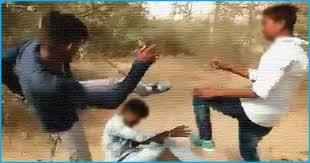
NEW DELHI – Dalits continue to face widespread persecution and marginalisation, despite constitutional protections and laws aimed at preventing caste-based discrimination. They are often subjected to violence, social exclusion, and economic exploitation, with many being forced to live in segregated communities and perform jobs considered “polluting” or “unclean”. Symptomatic of the continued harassment and persecution of the Dalit community, a 17-year-old scheduled caste boy was stripped, beaten and abused for meeting a girl of the different caste. The teenager had gone to meet the girl at her relatives’ house in Secretariat Colony of Chennai in Tamil Nadu on Friday (September 12). The accused have been identified as Saravanan, said to be a former BJP functionary, and his brother Logesh. According to police, the girl’s relatives confined the boy in a room and then called Saravanan, who and his brother allegedly assaulted the boy, stripped him, and hurled casteist abuses, media reports reaching here said on Sunday. The boy, who belongs to the Scheduled Caste (Adi Dravidar) community, has been friends for years with the girl, who is from the Most Backward Class (Vanniyar) community. They reportedly continued to stay in touch through social media even after moving to different schools. “The boy was beaten badly and humiliated. Saravanan used caste slurs against him,” a police officer said. The teenager is now receiving treatment at Kilpauk Medical College (KMC) Hospital, the officer was quoted as saying. Police have booked the accused under the Scheduled Castes and Scheduled Tribes (Prevention of Atrocities) Act along with multiple provisions of the Bharatiya Nyaya Sanhita (BNS), including charges of obscene acts, voluntarily causing hurt, attempt to murder, and criminal intimidation. The persistence of caste-based violence and atrocities against Dalits is a grim reminder of the deep-seated prejudices that still exist in Indian society. Incidents of Dalits being lynched, beaten, or otherwise attacked for alleged transgressions of caste norms are regularly reported, highlighting the need for more effective implementation of laws and policies aimed at protecting their rights and dignity. Furthermore, initiatives promoting social inclusion and awareness can help challenge and dismantle the entrenched caste-based prejudices that perpetuate such persecution. Courtesy : Clarion India Note: This news is originally published on https:/clarionindia.com/bha and is used purely for non-profit/non-commercial purposes, especially human rights
Karnataka to discuss Scheduled Tribe status for Kuruba community on September 16
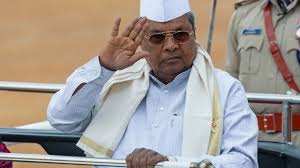
Karnataka will hold a meeting on September 16 to consider including the Kuruba community in the Scheduled Tribe list as a synonym of the Gonda tribe. Chief Minister Siddaramaiah, himself a Kuruba, could be recognised as Dalit if reclassified. The move precedes his statewide caste census. The Karnataka government has scheduled a key meeting on September 16 at 3 pm in Vikas Soudha, Bengaluru, to examine the inclusion of the Kuruba community of Bidar, Kalaburagi, and Yadgir districts in the Scheduled Tribe list. An official notice dated September 12 confirms the session, to be chaired by an IAS officer from the Department of Welfare of Scheduled Tribes. Kurubas, currently classified as Other Backward Class (OBC), have for years sought ST status, arguing it would bring greater benefits and protections. The community also wields significant political influence in Karnataka. The move carries added political weight because Karnataka Chief Minister Siddaramaiah, himself a Kuruba and the state’s Tribal Welfare Minister, would be recognised as a Dalit if the community is reclassified. Officials from multiple departments and welfare boards have been directed to attend the meeting, which will specifically look at recognising the Kurubas of the three northern districts as part of the Gonda ST group. This meeting comes just days before Siddaramaiah’s fresh caste census, a statewide Socio-Economic and Educational Survey scheduled between September 22 and October 7. The Chief Minister has said the new survey is crucial to capture current social realities and design welfare programmes, after the 2015 caste census was set aside. Nagarjun Dwarakanath Courtesy : India Today Note: This news is originally published on https:/indiatoday.com/bha and is used purely for non-profit/non-commercial purposes, especially human rights
‘Housing for All’ Bypasses Dalits: Family Denied Shelter, Pension in UP Village
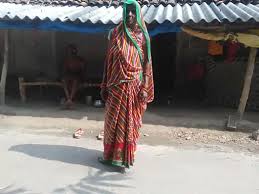
In Prayagraj’s Koraon block, a Dalit family has been forced to live on the banks of a pond after their house nearly collapsed due to heavy rainfall. Ramlal Chamar and his wife Rajaua have no land of their own, leaving them without shelter or basic facilities. Although the government approved housing and toilet schemes for them, officials refused construction permission because the family has no land except the pond bank. They have also been denied old age pension benefits. Villagers expressed anger at the neglect. “This family is surviving only through hard work. No official is ready to help them,” said local resident Bulle Adivasi. Others, including Rajesh Kumar, Kanhaiyalal, Mithai Lal, Bachchan and Bhim, accused the village head and panchayat secretary of ignoring the family’s plight. Despite repeated assurances, the family continues to live without proper shelter or support. “The government talks about housing for all, but here a family is left to live beside a pond,” said Rajesh Kumar. Courtesy : TOP Note: This news is originally published on https:/theobserverpost.com/bha and is used purely for non-profit/non-commercial purposes, especially human rights
Dalit woman demands compensation from Kerala govt over ‘mental torture’ at police station
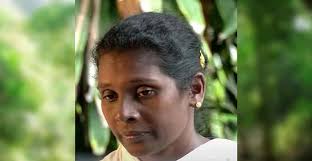
Thiruvananthapuram, Sep 15 (PTI) A Dalit woman who recently suffered “mental harassment” at a police station over an alleged fake theft case approached the state Human Rights Commission on Monday to demand compensation from the state government. The woman, R Bindhu, demanded compensation when Commission chairperson Justice Alexander Thomas considered the case during the sitting. In view of the demand of the victim, the panel decided to name the state home secretary and state and district police chiefs as official respondents and the two accused police personnel in the case as contesting respondents. The Commission asked them to examine Bindhu’s request and submit a written response in this regard, an official statement said here. Bindhu, a domestic help, recently made serious allegations against the police, citing a theft case registered against her that was later proven to be false. She had alleged that she had to suffer acute mental torture and harassment in the custody of police in Peroorkada station here in April after the owner of the house, where she was working, lodged a complaint that she had stolen their gold chain. The woman’s claims of being detained overnight at the police station without food or sleep and being asked to drink toilet water by police personnel recently sparked widespread outrage. The accused police personnel had been suspended from service following an internal inquiry. Meanwhile, Bindhu, on Monday, joined as a peon in a private school in Vithura, as the management offered the job after knowing about the incident through the media. (This story has not been edited by THE WEEK and is auto-generated from PTI) Courtesy : The Week Note: This news is originally published on https:/theweek.com/bha and is used purely for non-profit/non-commercial purposes, especially human rights