
Samiti urge Dalits to register their religion as Buddhist in the upcoming Socio-Educational survey
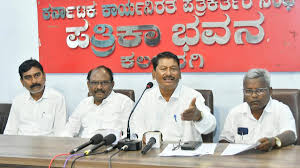
Devendra Hegde, member of Akhil Karnataka Buddha Dakhalaathi Andolan Samiti, addressing presspersons in Kalaburagi city on Saturday. Devendra Hegde, member of Akhil Karnataka Buddha Dakhalaathi Andolan Samiti, addressing presspersons in Kalaburagi city on Saturday. | Photo Credit: ARUN KULKARNI Akhil Karnataka Buddha Dakhalaathi Andolana Samiti of district unit-a consortium of Dalit Organisations, has urged the followers of B.R. Ambedkar to mark “Buddhism” as their religion while mentioning their respective castes in the caste column in the Socio-Economic survey by Karnataka State Backward Classes Commission to begin on September 22. Samiti members Devendra Hegde, Mariyappa Halli, and Arjun Bhadre addressing presspersons in Kalaburagi city on Saturday claimed that one does not face difficulties in enjoying reservation benefits by mentioning Buddhism as their religion. According to the Constitution (Scheduled Castes) Order (Amendment) Act, 1990, the members of Scheduled Castes who converted to Buddhism would continue to be recognised as Scheduled Castes and remain eligible for reservation benefits. Mr. Hedge said that Buddhism was not only a religion but a powerful force that could eliminate inequality inherent in the caste system. Members of the Karnataka State Scheduled Castes Right Communities Forum during a meeting held on September 18 at Bengaluru have resolved that people belonging to the ‘Right Communities’ to mention Buddhism as their religion followed by their respective castes in the caste column during the survey, Mr. Bhadre added. The Hindu Bureau Courtesy : The Hindu Note: This news is originally published on https:/thehindu.com/bha and is used purely for non-profit/non-commercial purposes, especially human rights
SHO removed over assault on Dalit teen, protesters seek FIR for ‘brutality’
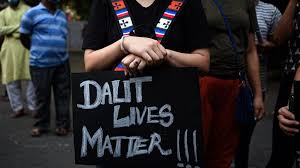
Bareilly: The station house officer (SHO) of Mohammadi police station in Lakhimpur Kheri district, Indrajit Singh, was removed from his post on Friday, 10 days after videos showed him thrashing a 14-year-old Dalit boy during a protest. Singh has been accused of kicking the boy with his boots after pushing him to the ground. The protest on Sept 9 in JB Ganj was held over the alleged murder of 32-year-old Sanjay Gautam from Budaun. Gautam was found hanging in his room, and his family alleged that his wife, Seeta Urf Geeta, 29, and her lover, Prabhakar, 30, killed him and staged it as a suicide. Carrying Gautam’s body on the highway, his family demanded that an FIR be registered against Geeta and Prabhakar. Singh, who reached the protest site, allegedly dragged Gautam’s body on the road and assaulted women and children, sparking a confrontation. “My mother’s arm was broken in the attack,” said one family member. “The police’s actions worsened the situation and turned the protest into a clash between them and the family members,” he added. Arun Kumar Singh, circle officer (CO) Mohammadi, told TOI, “Soon after taking the body into custody, a postmortem was conducted and the autopsy confirmed hanging as the cause of death. Despite that, to address the family’s grievance, an FIR was filed the same day under BNS section 103 (murder) against Geeta, her 14-year-old daughter who allegedly assisted her, and Prabhakar. The adults have since been arrested and sent to jail.” The family has now shifted their focus, submitting a written complaint demanding a case be filed against Singh for “police brutality.” They said merely transferring him to another station is not enough and have called for stricter action. Kheri SSP Sankalp Sharma said “an inquiry will be conducted and action taken accordingly.” Courtesy : TOI Note: This news is originally published on https:/timesofindia.com/bha and is used purely for non-profit/non-commercial purposes, especially human rights
‘Hydrogen bomb’ incoming? Rahul Gandhi to hold special presser on Sept 18; ‘vote chori’ row set to intensify
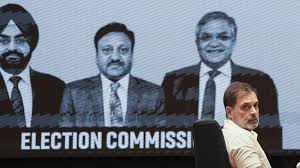
NEW DELHI: Congress leader Rahul Gandhi will hold a “special press briefing” on Thursday, days after he hinted of dropping a “hydrogen bomb” on the alleged voter theft charges. In a social media post on X, Congress leader Pawan Khera sent out invitation saying, “Tomorrow, 18 September, Special Press Briefing by the Leader of the Opposition in Lok Sabha, Shri Rahul Gandhi at 10 am Indira Bhawan Auditorium. Media is requested to be seated by 9.30 am.” This comes after Rahul had warned Bharatiya Janata Party of a new expose on alleged “vote chori” claims, claiming that Prime Minister Narendra Modi would not be able to “show his face to people after we bring hydrogen bomb of ‘vote chori’.””I want to tell the BJP people. Have you heard of anything bigger than an atom bomb, it is a hydrogen bomb. BJP people, be ready, a hydrogen bomb is coming. People are soon going to find out the reality of vote chori,” he said. “In the coming time, I am guaranteeing you that after the hydrogen bomb (comes), Narendra Modi ji will not be able to show his face to the country,” he added. Earlier, Rahul had unveiled what he had described as an “atom bomb” of evidence against the Election Commission. On August 7, citing data from the Mahadevapura assembly segment, which falls under the Bengaluru Central parliamentary constituency in Congress-ruled Karnataka, he accused the poll body of “colluding” with the BJP. Rahul said the Congress had analysed the Mahadevapura electoral rolls over six months and found that out of 1,00,250 alleged bogus voters, 40,009 had “fake and invalid addresses” and 10,452 were “bulk voters” registered at common addresses. Examples included entries with “0” in the address field, non-existent locations, and addresses that could not be verified. Rahul also accused the EC of colluding with the BJP to “destroy Indian democracy and steal elections,” and argued that if the EC does not provide electronic voter data of 10–15 years and CCTV footage, then it is “partaking in crime,” since these are now “evidence of crime.” He urged the judiciary to intervene to save Indian democracy. Citing the study, Rahul claimed the BJP won Bangalore Central by 32,707 votes while 1,00,250 fake votes were polled in its favor. He said the fake votes fell into five categories: duplicate voters (11,965), fake/invalid addresses (40,009), bulk voters at a single address (10,452), invalid photos of voters (4,132), and “misuse of Form 6” for first-time voters (33,692). Showing files, he cited examples to argue that people had voted multiple times in different booths of the seat, while voter list addresses included “Street 0” and “House no. 0.” He said there were cases where as many as 80 voters were shown at one address, or 50 in a single one-bedroom house, and that attempts to cross-check resulted in either researchers being beaten up or confirmation that the voters did not live there. Courtesy : TOI Note: This news is originally published on https:/timesofindia.com/bha and is used purely for non-profit/non-commercial purposes, especially human rights
After US visa order, Rahul Gandhi calls Modi ‘weak PM’
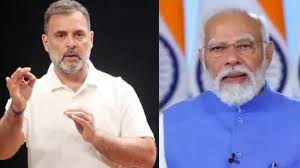
NEW DELHI: With the US imposing one lakh dollar fee on H-1B visas, Congress neta Rahul Gandhi called Narendra Modi a “weak Prime Minister”, exhuming a 2017 tweet in which he had used the same epithet on the issue concerning the US visas for highly skilled workers. Taking potshots at Trump’s recent phone call to wish Modi on his birthday, Congress president Mallikarjun Kharge said, “Indians are pained by the return gifts you have received after the birthday call” – listing the gifts from “Abki Baar, Trump Sarkar” Govt as $100,000 annual fee on H-1B visas, 50% tariff, HIRE Act targeting Indian outsourcing, lifting of waiver for Chabahar port, and exhorting the EU to impose 100% tariff on Indian goods. Congress lamented Modi’s “strategic silences” and “loud optics” have become liability for the country, adding that bear hugs, hollow slogans, concerts, getting people to chant ‘Modi, Modi’, and superficial bravado is not foreign policy. Posting a news report that said India has 71% of H-IB visas and would be hit the hardest by the levying of steep US fees, Rahul posted on X, “I repeat, India has a weak PM.” In the same message, he reposted his 2017 tweet when he had reacted to Modi not raising the visa issue with President Donald Trump with the remark, “India has a weak PM”. In fact, Rahul’s 2017 tweet, highlighting the repetition of the H-1B issue with the US under the same India PM and US President, became the Congress handle to attack the Modi govt. AICC spokesman Pawan Khera said “8 years later, Rahul Gandhi is vindicated yet again. He called it out back in 2017 and nothing has changed. India is still stuck with a weak PM.” Courtesy : TOI Note: This news is originally published on https:/timesofindia.com/bha and is used purely for non-profit/non-commercial purposes, especially human rights
Grand Alliance to contest polls after naming CM face: Tejashwi

Patna: RJD leader Tejashwi Prasad Yadav on Saturday said the Grand Alliance would not contest the forthcoming state assembly polls without declaring a chief ministerial candidate. A section of leaders in ally Congress remains hesitant to endorse him as the CM face. “Are we the BJP that we do not have leaders for the post of the chief minister? We will contest the assembly elections only after projecting a leader as the chief ministerial face,” Tejashwi told reporters in response to questions about the Grand Alliance’s leadership in Bihar. On Saturday, Tejashwi returned to Patna after covering 11 districts during his ‘Bihar Adhikar Yatra,’ launched from Jehanabad on Sept 16 to highlight unemployment, rising crime and other issues ahead of the assembly elections. The yatra concluded in Vaishali district. His solo campaign came soon after the high-profile ‘Voter Adhikar Yatra,’ which featured all Mahagathbandhan leaders and was led by Congress leader Rahul Gandhi. Although Tejashwi participated, the spotlight largely fell on Rahul, who has been spearheading a national campaign against alleged vote theft and accusing the Election Commission of favouring the BJP. The RJD clarified that Tejashwi’s yatra was designed to cover only those districts not included in the ‘Voter Adhikar Yatra.’ Yet, its timing, amid ongoing debate over the opposition’s CM face and unresolved seat-sharing talks, has fuelled speculation about whether Tejashwi has additional political objectives in mind. Recently, at a rally in Muzaffarpur, he startled many by saying, “And this time, Tejashwi will contest all 243 seats, whether it is Muzaffarpur, Kanti or Bochahan.” Observers interpreted the remarks as an attempt to underline his authority as the opposition alliance’s undisputed leader. Later, he clarified there was “no confusion” regarding the CM face and that the name would be announced at the “right time.” Tejashwi’s insistence on an early declaration stems from the RJD’s strength within the alliance. In the last assembly polls, it secured 75 seats, the highest tally and one more than the BJP. However, the Congress has so far refused to formally back him as the CM candidate. During the ‘Voter Adhikaar Yatra,’ Rahul Gandhi sidestepped direct questions on the matter, merely emphasising the “good understanding” among partners. This, despite Tejashwi previously declaring that Rahul would become PM once the opposition secured victory in the next Lok Sabha elections. Courtesy : TOI Note: This news is originally published on https:/timesofindia.com/bha and is used purely for non-profit/non-commercial purposes, especially human rights
Cong launches signature campaign against ‘vote stealing’
Udupi: Congress MLC Ivan D’Souza said that the ‘Vote Chor, Gaddi Chhod’ campaign launched by opposition in Lok Sabha, Rahul Gandhi has evoked a huge response from the people. He told reporters that a signature campaign to support the initiative will be launched in Udupi district. He said 100 signatures will be collected from each of the 1,111 booths in Udupi district, with a target to achieve 1,11,100 signatures during the campaign. The campaign, which has already commenced, will continue for 15 days, he said, criticising the BJP. “The BJP came to power by stealing votes. The main aim of this campaign is to send a strong message to draw the attention of the Election Commission. People will be given an opportunity to express their anger,” he said. Despite Rahul Gandhi producing evidence to substantiate his claims, no measures were taken to check the election malpractice, he alleged. He alleged that the stealing of votes takes place continuously. People should participate in the campaign to ensure that the central govt and Election Commission respond and investigate the matter. “The govt not accepting criticisms and suggestions of the people is a threat to democracy. Those who were elected and secured power through election malpractices should be sent out of power,” he added. Udupi District Congress Committee president Ashok Kumar Kodavoor, former minister K Jayaprakash Hegde, and former MLA Gopal Poojary were present. Courtesy : TOI Note: This news is originally published on https:/timesofindia.com/bha and is used purely for non-profit/non-commercial purposes, especially human rights
Mau: Dalit girl raped on pretext of marriage, accused who threatened her absconds
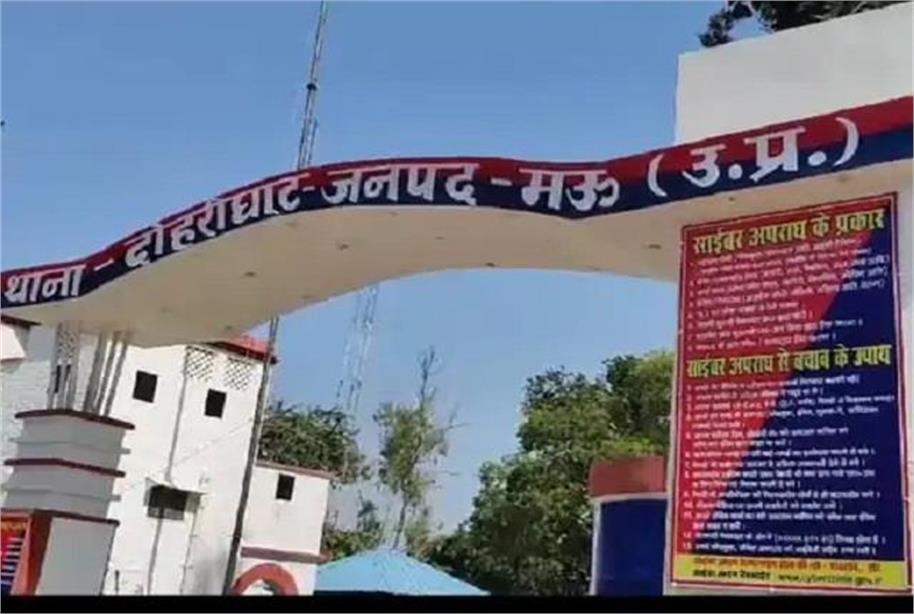
Mau: A case of rape of a Dalit girl on the pretext of marriage has come to light in the Doharighat police station area of Mau district, Uttar Pradesh. The victim alleges that a young man from the same village had been having physical relations with her for the past three to four years, promising to marry her. According to the woman, when she pressured the accused to marry her, he began to evade the proposal. Furthermore, when the victim reached the accused’s home, he used casteist slurs and threatened to kill her. Station in-charge Rajkumar Singh stated that based on the victim’s complaint, a case has been registered against the accused under sections of rape, intimidation, and the SC/ST Act. Police teams are searching for the accused, and an arrest is expected soon. Noida: Police in Noida, Uttar Pradesh, arrested three cyber criminals on Thursday for defrauding a retired officer from the Union Ministry of Commerce and Industry of ₹1.7 crore (17 million rupees) by digitally arresting him for three days. Meanwhile, the Cyber Crime Branch of the police has frozen Rs 17,48,000 of the fraud amount. Edited By Ramkesh, Courtesy: Hindi News
Rajasthan News: Dalit youth beaten to death in Kuchaman, sparking widespread anger and tension

Rajasthan News: A heartbreaking incident unfolded on Wednesday night in the Kuchaman City area of Nagaur district, Rajasthan. Ashok Meghwal (25), a Dalit youth returning from work, was attacked by miscreants on the road. It is alleged that a youth named Rakesh Amla stopped him and brutally beat him with slippers. He then called his friends and attacked him with sticks. The accused also filmed the entire incident, in which Ashok is seen sitting on the ground while the attackers continue to beat him. Condition deteriorated while being taken to the hospital After suffering serious injuries, Ashok’s family rushed him to the government hospital in Kuchaman late Thursday night. As his condition worsened, doctors referred him to JLN Hospital in Ajmer. Ashok succumbed to his injuries there. Family protests over the body As soon as news of Ashok’s death spread, family and villagers became enraged. The villagers began protesting, placing the body there to make it clear that they would not conduct the post-mortem or cremation until all the accused were arrested. The family warned the police administration that the culprits must be arrested immediately and the case investigated impartially. Police Action and Situation According to sources, the Makrana police have detained Rakesh, the main accused seen in the video. The search for the remaining accused is ongoing. A tense atmosphere prevails in the area, as a result of which the police and administration are constantly on the scene and trying to pacify the villagers. Anger in the Dalit Community, Demand for Investigation Ashok’s death has angered the Dalit community. Sanjeev Khinchi, Vice President of the Akhil Meghvansh Meghwal Mahasabha, stated that the post-mortem and cremation will not be conducted until a high-level and impartial investigation is conducted. The organization has warned that if the culprits are not severely punished, the agitation will be intensified. Courtesy: Hindi News
Faridabad News: Transgender community participates in Swachhata Hi Seva program
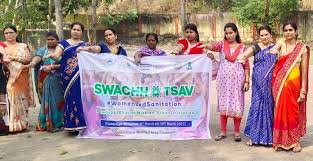
Faridabad. Under Seva Pakhwada-2025, the Zila Parishad organized a special Swachhata Pakhwada program. The primary objective of this program was to raise awareness about the importance of cleanliness in the community and to take concrete steps towards environmental protection. The active presence of transgender self-help groups and the transgender community not only enhanced the program’s prestige but also sent a powerful message of unity, inclusion, and cooperation in society. The program began by highlighting the importance of the Swachhata Abhiyan. Speakers emphasized that cleanliness is not just an individual habit, but a collective responsibility. A clean and healthy environment is difficult to imagine unless every segment of society actively participates. The presence of children, youth, women, senior citizens, as well as the transgender community, on this occasion conveyed the message that the Swachhata Abhiyan is for everyone, and everyone has an equal role to play. Courtesy: Hindi News
Why LGBTQIA+ community is battling India’s blanket ban on blood donation
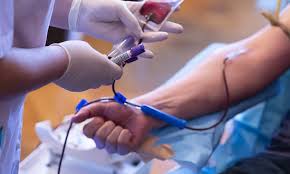
Activists condemn exclusion of transgender women and gay men from donating blood, calling it unscientific, discriminatory, and out of step with global standards Despite strides in transgender and gay rights, India has latched on to a rather archaic and discriminatory policy, stemming from a fearful mindset, when it comes to the rights of homosexuals and transgender individuals in donating blood. Activists, medical experts, and members of the LGBTQIA+ community, who echo these sentiments, have slammed the Centre’s recent decision refusing to alter a long-standing ban on blood donation by transgender women and gay men. They say the ban is discriminatory, unscientific, and ignores advances in blood screening technology that make transfusions over 99 per cent safe. The government’s order has come even though the Supreme Court, in May this year, while hearing a petition on the matter, asked whether an entire identity group needs to be stigmatised when medical science has advanced to screen blood for infection. The issue in short ♦ India upholds blood donation ban on trans women, gay men ♦ Supreme Court questions rationale behind identity-based exclusions ♦ Activists call policy outdated, discriminatory, and unscientific ♦ Global shift favours behaviour-based screening over blanket bans ♦ Experts say modern tests ensure over 99% blood safety ♦ Queer community urges inclusive reforms, cites systemic healthcare bias “Why should an entire community be deemed unsafe when modern medical science can effectively screen blood for infection? This discourages willing donors and denies life-saving blood. Such prejudice is appalling,” Ujan, a transwoman from West Bengal, told The Federal. What does the law say? Clauses 12 and 51 under the Guidelines on Blood Donor Selection and Referral tag transgender individuals, homosexual and bisexual men, and female sex workers as “high-risk” groups and bar them from donating blood irrespective of their lifestyle, health conditions, or sexual practices. The guidelines were drafted in 2017 by the National Blood Transfusion Council (NBTC) and the National AIDS Control Organisation as a precaution during a time of declining HIV/AIDS incidence. It, however, continues to exclude entire communities without scientific justification, say activists. Santa Khurai, a transgender activist from Manipur, founder of the community organisation AMANA, and a petitioner in a 2021 case challenging this policy, noted, “The Supreme Court of India questioned the government’s stigmatising response to our petition in May 2025.” It was Khurai’s petition that the Supreme Court had referred to while posing the question to the Centre in May this year. Status in other countries Activists say the continuation of the ban in India is unfortunate, even though many countries, including the US, the UK, Canada, Brazil, and Australia, have replaced such blanket bans with behaviour-based risk assessments. “The US Public Health Service initially implemented a lifetime ban on men who have sex with men (MSM) donating blood in 1983, in response to the emerging HIV/AIDS epidemic. However, in 2023, the US Food and Drug Administration revised these guidelines to adopt a gender-inclusive, behaviour-based screening process,” Naveenraj, a queer activist and trainer based in Tamil Nadu, told The Federal. He emphasised that this modern approach prioritises individual risk factors over blanket bans based on sexual orientation or gender identity. Many countries, including Brazil, the UK, Canada, Australia, France, Spain, Italy, Argentina, and Chile, have already scrapped such discriminatory policies. Brazil’s Supreme Federal Court, for instance, ruled the ban unconstitutional and highlighted the efficiency of modern blood screening technologies. “India’s Supreme Court should similarly lift the ban, in keeping with its commitment to equality, dignity, and inclusion,” Naveenraj added. ‘Flawed science guides policy’ Medical professionals are also calling out the “flawed science” underpinning the policy. Umang, an undergraduate medical student in Pune, remarked, “Heterosexual and homosexual individuals can both transmit HIV. It’s practically impossible to determine someone’s sexual orientation during blood donation. With current methods, HIV detection in India is over 99.5 per cent accurate, so targeting MSMs is not about safety—it’s about exclusion.” This sense of injustice resonates deeply within the queer community. “Whether or not it’s a fundamental right, denying a minority group the chance to donate blood is dehumanising. India must take progressive steps, like the EU, Canada, and Australia, where donor eligibility is assessed based on behaviour, not identity,” Srini, a volunteer with Good As You, a Bengaluru-based queer support group, told The Federal Echoing this sentiment, Jayant Iyer, founder of Queer Nilayam in Bengaluru, called the government’s continued enforcement of the ban “disappointing, outdated, discriminatory, and unscientific.” He shared personal frustration: “I’ve been denied the chance to donate blood multiple times despite being healthy and willing. Even during shortages, prejudice trumps science and compassion.” ‘Structural transphobia’ For many, the policy reflects broader systemic bias. “Can the Indian government ban cisgender heterosexual people based on their gender or sexuality?” asked Rudrani Rajkumari, a transgender activist and founder of Xomonnoy in Guwahati. “This is not about protection; it’s about discrimination. Rather than investing in quality testing, the system excludes LGBTQIA+ people from saving lives.” From a global perspective, the issue strikes a chord with transgender communities elsewhere. “The Indian government’s stance wrongly associates LGBTQI+ identities with risk,” said Mandy Jovial, a South Africa-based transgender activist. “This is more than a blood ban—it’s structural transphobia. Fortunately, in South Africa, policies aren’t based on sexual orientation or gender identity, even though stigma persists.” What India needs Even within India, trans individuals raise questions about the logic of such exclusion. Vaidehi, a trans woman from Mysuru, asked, “How would anyone know someone’s SOGIESC [sexual orientation, gender identity and expression, and sex characteristics] unless disclosed? Assuming trans or homosexual persons have HIV is discriminatory. Anyone can have HIV. Besides, trans persons on hormone replacement therapy should consult a doctor before donating, but that’s a medical concern— not a reason to ban an entire community.” Medical experts agree that the government’s approach is flawed and misleading. “One data point doesn’t scientifically justify a ban,” said Dr Swathi SB, a public health practitioner and HIV physician in Karnataka. “Equating identity with sexual behaviour is dangerously reductionist. We need