
Rahul Gandhi’s comments on India’s freedom struggle is nothing but a distortion of our history
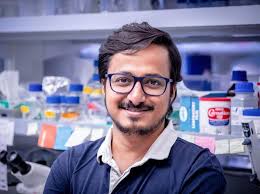
“The Indian political ethos, our entire freedom struggle was in fact the only freedom struggle where these two principles were central. The British could kill our freedom fighters, but our freedom fighters would not act violently against them. And so, this is a very, very powerful and deep value” – Rahul Gandhi stated during an interaction at EIA in Columbia last week. Rahul Gandhi’s efforts on establishing Mahatma Gandhi’s non-violence policy as the only value or axis or principle of India’s freedom struggle vouches for his poor literacy level on freedom struggle. Even a person with semi-functional brain can understand the time difference between East India company’s win in the battle of Plassey in 1757 and Mahatma Gandhi’s return to India from South Africa in 1915. So, equating Gandhi’s non-violence policy as the only principle of India’s freedom struggle is nothing but demeaning our freedom heroes and an act of distorting the history. Polygar War, Maratha War, Mysore War, Sikh War and the first war of independence at 1857 are only a few prominent examples of early wars of resistance against British rule in the country. Around the same time, Kol rebelation, Santhal rebelation, Munda rebelation, Tamar rebelation, Paika rebelation are examples of few war against British fought by our tribal brothers and sisters. The iconic creation of Bankimchandra Chattoadhya’s “Anandamath” was based on Sanyasi rebelion in Bengal around the same time. In 1902, Pramathnath Mitra and Satish Chandra Bose established “Anushilon Samiti”. Later in 1906 Rishi Aurobindi and his brother Barendra Ghosh established “Jugantar Dol”. Together these two organizations mobilized our arms movement against British. From one of youngest martyrs Khudiram Bose, Bagha Jatin, Surja Sen, Prafulla Chaki, Binay Badol Dinesh and almost all freedom fighters from Bengal were associated with either Anushilon or Jugantor. Around the same time, Bal Gangadhar Tilak used his newspapers Kesari and Maratha to defend revolutionary acts. He was sentenced to jail for 6 years for supporting Khuidram Bose and Prafulla Chaki’s act of ambush bombing of the infamous British magistrate Douglas Kingsford. While Bengal became the hub of nationalist force against British led by Shri Aurobindo, Vianayk Savarkar established an underground revolutionary organization “Abhinav Bharat Society” in 1906 and continued his anti-British activities. He was also an advocate for arms revolutionaries against British. In 1912, one of the most prominent heroes of Indian freedom struggle, Rasbehari Bose entered the scenario by orchestrating a bomb attack on Viceroy Lord Hardinge in Delhi, an act that forced him into hiding and exile in Japan. He became a prominent figure in Japan to establish “Azad Hind Fauz” which was later handed over to the Netaji Subhas Chandra Bose. One can easily understand the path of freedom journey from the book “The Indian Struggle” by Netaji. Subhas Chandra Bose’s heroic resignation from the National Congress after winning the general election of the party for having difference in opinion with Mahatma Gandhi’s non-violence is just an example that Gandhi’s views were not unanimously accepted within the party. Another example, Punjab Keshari, Lala Lajpat Rai who was often labelled as extremist within the congress. The saga of Bhagat Singh, RajGuru, Sukhdeb was also an example of how spontaneously our patriots sacrificed their lives in the war of independence against British. Stupidity needs to go beyond a reasonable limit of acceptance when someone from Indian parliament came to USA to state India’s freedom struggle was relying on Gandhi’s principle of non-violence. Last but not the least, it became more evident after 75 years or Independence that British left because of armed resistance of Indian National Army (INA) led by Netaji Subhas Bose at the early 1940s. That courage of INA eventually triggered the Navy movement in 1946. I am deeply sympathetic to Rahul Gandhi’s mental disability that has been reflecting consistently for last few years through his statements on various platforms. He can certainly enjoy his liberty within his own party for being the son and grandson of former Prime Ministers; however, he should not have any Right to demean our freedom struggle. Without any hesitation, I request members of our houses to demand an apology from Rahul Gandhi for his disgraceful comments on India’s freedom struggle at EIA in Columbia. On this context, I would also like to urge our Government to declare Netaji’s birthday as the national Holiday and officially declare Netaji as the first Prime Minister of undivided India; later one might be difficult but at least celebrating his birthday as the national holiday would certainly mute the descendants of a “Dictator” from demeaning our freedom struggle in future. Dr Rudra Prasanna Banerjee Dr Rudra Prasanna Banerjee is a Research Scientist at Texas Medical Center, specialising in molecular biology and genetics. Courtesy : TOI Note: This news is originally published on https:/timesofindia.com/bha and is used purely for non-profit/non-commercial purposes, especially human rights
Bihar polls: CM face confusion in Mahagathbandhan, seat chaos in NDA – decoding political drama

NEW DELHI: As Bihar gears up for another high-stakes assembly election, the political landscape is once again abuzz – not with Nitish Kumar’s next move – but with poetry, posturing, and power plays. From poetic pleas for justice to sharp rebukes over “dignity” in seat offers, alliance partners across the spectrum are flexing muscles and testing loyalties. In the NDA camp, Union minister Jitan Ram Manjhi has invoked Dinkar’s Rashmirathi to press for a fair share, while in the Mahagathbandhan, Left allies are growing restless over what they deem “insulting” proposals. Amid the flurry of negotiations, one thing is clear — in Bihar’s shifting sands of coalition politics, every seat counts, and every word carries weight. Yet, beneath the poetic appeals and fiery rejections lies a deeper churn: the absence of a clear chief ministerial face, the confusion over leadership within alliances, and the persistent tug-of-war between old guards and rising heirs. ‘Ho Nyay Aagar To Aadha Do … ‘ Union minister and former Bihar chief minister Jitan Ram Manjhi struck a poetic yet pointed note as he expressed his seat-sharing expectations. Hinting that his party, the Hindustani Awam Morcha (HAM), had once aspired to contest half of the state’s 243 constituencies, Manjhi said he was ready to settle for 15 seats in the spirit of coalition unity. Taking inspiration from Ramdhari Singh Dinkar’s Rashmirathi, he invoked Lord Krishna’s appeal for justice before the Mahabharata war, writing on X, “Ho Nyay Aagar To Aadha Do” — a plea for fairness seemingly directed at the BJP. Continuing in the same poetic vein, Manjhi added that if full justice was not possible, HAM would be content with “15 villages” — a metaphor for 15 constituencies — and would not “raise arms against kin,” underscoring his commitment to the NDA alliance. The statement came shortly after BJP leaders Dharmendra Pradhan and Vinod Tawde visited his residence to deliberate on seat-sharing. — jitanrmanjhi (@jitanrmanjhi) The Mahagathbandhan’s not so ‘dignified’ proposal After putting up quite a show in the last assembly elections, the CPI (Marxist-Leninist) Liberation did not find the proposal to contest on 19 seats “dignified” enough. In 2020, CPI (ML) won 12 seats of the 19 contested. This time, it demanded 40 seats initially, later bringing it down to 30, PTI reported citing a party source. The party has kept “all its options open” in case its demands are rejected. “CPI(ML) rejected the offer as it was not a dignified proposal, and we are going to make a fresh proposal to fight around 30 seats. We are reducing the number of seats by almost 25 per cent,” the source said. In 2020, RJD contested 144 seats and won 75, while the Congress contested 70 seats and won 19. Meanwhile, Congress’ central election committee is set to meet today to finalize its candidates. What does Chirag want from NDA? Lok Janshakti Party (Ram Vilas) president Chirag Paswan has made headlines for calling out Bihar administration, ruled by ally Nitish Kumar’s JDU, on rising crime levels and his recent war cry of “Abki baari, yuva Bihari,” as unemployment remains major poll attack agenda of the opposition this time. It had left the NDA in 2020 over disagreements with chief minister Nitish Kumar, dealing a significant blow to the JD(U), despite managing to win only one of the more than 135 seats it contested. This time, while he has explicitly ruled out any CM ambitions, his party is eyeing specific constituencies considered favorable and has requested a few assembly seats in each of the five Lok Sabha constituencies it won in 2024, PTI reported citing a party source. — LJP4India (@LJP4India) Tejashwi for CM, Tejashwi for CM not Whether RJD patriarch is in “dilemma between his sons and daughters” or not, Congress has clearly stated its stance. Tejashwi Yadav could be RJD’s CM face, but not INDIA bloc’s, at least not for now. “Tejashwi Yadav may be CM face for RJD but INDIA bloc’s CM face will be decided collectively,” Congress leader Udit Raj said. This came after Tejashwi posted on X, a poster which implied him as the CM face: “When Tejashwi becomes the CM, none of our brothers and sisters in Bihar household would be unemployed.” — yadavtejashwi (@yadavtejashwi) BJP was quick to catch on to this mocking Tejashwi saying that while “he called Rahul Gandhi PM several times but Rahul Gandhi did not call him (CM candidate).” “He is presenting himself but people of his alliance are not saying the same. He called Rahul Gandhi PM several times but Rahul Gandhi did not call him (CM candidate). Let alone the alliance, now the situation is different even within the family. Lalu Yadav is in dilemma between his sons and daughters. There is a crisis in the family,” BJP MP Sudhanshu Trivedi said. A throwback to Nitish’s flips but no flops In the 2020 Bihar elections, Nitish Kumar led the NDA to a 125-seat majority. In August 2022, he broke with the BJP to form a government with the RJD-Congress-led Mahagathbandhan and became a key figure in the INDIA bloc. However, in January 2024, ahead of the Parliamentary polls, Kumar returned to the NDA, which now includes JD(U), BJP, Chirag Paswan’s LJP (Ram Vilas), Jitin Manjhi’s Hindustan Awami Morcha, and Upendra Khushwaha’s RLSP. This time, the NDA faces the INDIA bloc, led by Tejashwi Yadav, along with Congress, Left parties, Mukesh Sahani’s VIP, and newcomer Prashant Kishor’s Jan Suraaj. Well, there’s a saying in Bihar. No matter the poll outcome, the winner is always Nitish Kumar. Let’s see if it holds true this time. Courtesy : TOI Note: This news is originally published on https:/timesofindia.com/bha and is used purely for non-profit/non-commercial purposes, especially human rights
As PM Modi Backs Dalit-Buddhist CJI, Here’s Why BR Gavai’s Identity Matters Ahead Of Bihar Poll
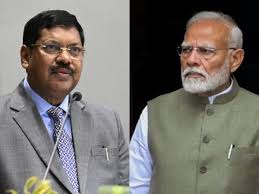
By condemning the attack, PM Modi made it clear that it won’t be treated as a petty offence and the identities associated with the person occupying the Chair will be protected The Executive and the Bharatiya Janata Party (BJP) intervened at its highest level on Tuesday when Prime Minister Narendra Modi did not just stop at a social media post condemning the act of shoe hurling at CJI BR Gavai, calling it “inconsistent with dignity”, but dialled the Chief Justice of India before the post and had a chat with him, enquiring about the incident. In his post, he praised Gavai’s composure during the attack. In doing so, the prime minister sent out two messages. One, the CJI may not have registered a complaint, but the government of India does not treat it as a petty offence as the attack was not just on a person but against an institution. Two, the government will not only protect the Chair, but the identities associated with the person occupying the chair—in this case, Gavai’s Dalit and Buddhist identity. Reported By : Anindya Banerjee Edited By : Apoorva Misra Courtesy : News18 Note: This news is originally published on https:/news18.com/bha and is used purely for non-profit/non-commercial purposes, especially human rights
Dalit Murder Case: Rahul Gandhi lashed out at the murder of a Dalit in Rae Bareli, asking, “Will justice now be based on caste?”
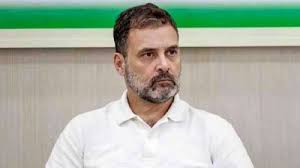
Mobocracy is protected by power, bulldozers have replaced the Constitution: Rahul Gandhi Dalit Murder Case: Former Congress President Rahul Gandhi on Tuesday claimed that violence and mobocracy are protected by power, where bulldozers have replaced the Constitution and fear has replaced justice, in the wake of the murder of a Dalit man in his parliamentary constituency, Rae Bareli. In a joint statement with Congress President Mallikarjun Kharge, he also termed the murder of Dalit man Hariom Valmiki a “grave crime against the Constitution.” He said that since 2014, “mob lynching,” “bulldozer injustice,” and mobocracy have become the horrific hallmarks of our times. Sharing this joint statement on X, Rahul Gandhi said, “The brutal murder of Dalit youth Hariom Valmiki in Rae Bareli is not just the murder of a human being, but the murder of humanity, the Constitution, and justice. Today in India, Dalits, Adivasis, Muslims, backward classes, and the poor—everyone whose voice is weakened, whose share is being snatched away, and whose life is considered cheap—is being targeted.” He claimed that hatred, violence, and mobocracy have the patronage of power in a country where bulldozers have replaced the Constitution, and fear has replaced justice. The former Congress president said, “I stand with Hariom’s family. They will definitely get justice. India’s future rests on equality and humanity, and this country will be governed by the Constitution, not the whims of the mob.” In a joint statement, the two top Congress leaders said, “Our country has a Constitution that recognizes every human being as equal. There is a law that gives equal status to every citizen’s security, rights, and expression. What happened in Rae Bareli is a grave offense against the Constitution of this country.” They say that crimes against the Dalit community are a stigma on this country and society. Kharge and Rahul Gandhi said, “The number of crimes against Dalits, minorities, and the poor in the country has increased beyond limits. This violence is most prevalent against those who are deprived, Bahujans, and those who have neither adequate participation nor representation. Whether it is the crimes against women in Hathras and Unnao, the murder of Hariom in Rae Bareli, or the institutional murder of Rohit Vemula some time ago, the inhuman incident of a leader urinating on a tribal youth in Madhya Pradesh, the brutal beating of Dalits in Odisha and Madhya Pradesh, or the murders of Pehlu Khan in Haryana and Akhlaq in Uttar Pradesh, each incident reflects the growing insensitivity of our society, administration, and ruling powers.” According to Congress leaders, since 2014, trends like “mob lynching,” bulldozer injustice, and mobocracy have become a horrific hallmark of our times. They said, “Violence cannot be a hallmark of any civilized society, therefore, what happened to Hariom poses a serious question mark on our collective morality.” Kharge and Rahul Gandhi said, “The India of Dr. Bhimrao Ambedkar’s dreams and the India of Mahatma Gandhi’s ‘Vaishnav Jan…’ is an India of social justice, equality, and compassion, in which there is no place for such crimes. Humanity is the only way.” They stressed that the Congress Party is committed to the empowerment of the deprived and vulnerable sections of society. The Congress leaders said, “We call upon citizens to unite against this injustice. This fight must continue until the rights and dignity of life of every Indian are fully protected.” Courtesy: Hindi News
Horrifying hallmark of our times: Congress condemns lynching of Dalit man in Raebareli
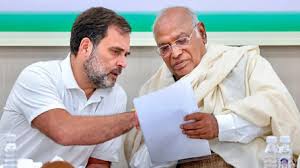
‘Since 2014, mob lynching, bulldozer injustice and mob rule have become horrifying markers of our times, but violence can never be a hallmark of a civilised society New Delhi: Strongly condemning the “brutal and heinous” lynching of a Dalit in Raebareli, top Congress leaders Mallikarjun Kharge and Rahul Gandhi have said “mob lynching, bulldozer injustice and mob rule” have become “horrifying markers” since 2014 but violence can “n president Kharge and Leader of the Opposition in the Lok Sabha Gandhi said in a joint statement that what happened to Hariom, a 40-year-old Dalit who was lynched by villagers mistaking him for a thief, raises “deep questions about our collective morality”. “The Congress party is committed to the empowerment of the deprived and weaker sections of society. We call upon all citizens to unite against this injustice. This struggle must continue until every Indian’s rights and dignity of life are fully protected,” they said. Insisting that the Constitution recognises every individual with equality and the country has a law that guarantees equal protection, rights, and freedom of expression to all citizens, the leaders said what happened in Raebareli was a “grave crime against the Constitution of this country, a crime against the Dalit community, and a stain on our society and nation” Both the leaders emphasised that crimes against Dalits, minorities and the poor have “increased alarmingly” across the country and violence most often targets those who are deprived — the Bahujan, the marginalised — who have “neither adequate participation nor representation”. Recalling crimes against women in Hathras and Unnao, the “institutional killing” of Rohith Vemula, the “inhuman act” of a leader urinating on a tribal youth in Madhya Pradesh, the “brutal beatings” of Dalits in Odisha and Madhya Pradesh and the killings of Pehlu Khan in Haryana and Akhlaq in Uttar Pradesh, they said each incident mirrors the “growing insensitivity of our society, administration, and those in power”. “Since 2014, tendencies like mob lynching, bulldozer injustice, and mob rule have become horrifying markers of our times. Violence can never be a hallmark of a civilised society. What happened to Hariom raises deep questions about our collective morality,” they said. The India of B R Ambedkar’s dreams and Mahatma Gandhi’s ‘Vaishnav Jan…’ ideal is an India of social justice, equality, and compassion — an India where such crimes have no place. Humanity is the only path forward, they said. Sharing the statement on X, Rahul said, “Today in India, Dalits, Adivasis, Muslims, backward classes, and the poor — every person whose voice is weak, whose share is being snatched away, and whose life is considered cheap — is being targeted.” “In the country, hatred, violence, and mob rule have received the patronage of those in power — where bulldozers have taken the place of the Constitution, and fear has replaced justice. I stand with Hariom’s family — they will surely get justice. India’s future rests on equality and humanity, and this country will run on the Constitution, not on the whims of the mob,” he added. Courtesy : DH Note: This news is originally published on https:/deccanherald.com/bha and is used purely for non-profit/non-commercial purposes, especially human rights
‘Crime against Constitution’: Rahul, Kharge condemn killing of Dalit man by lynching in Rae Bareli
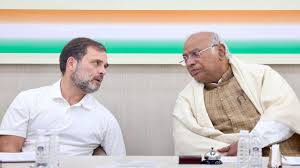
On the night of October 2, a man named Hariom was on his way to his in-laws’ house. During this time, some villagers brutally beat him up on suspicion of theft, leading to his death. The Congress Party on Tuesday called Rae Bareli lynching incident a ‘crime against Constitution’. Congress Chief Mallikarjun Kharge and Lok Sabha LoP Rahul Gandhi have condemned the incident in a joint statement. “Our country has a Constitution that recognizes every individual with a sense of equality. There is a law that grants equal status to the safety, rights, and expression of every citizen. What happened in Raebareli is a grave crime against the Constitution of this country. It is a crime against the Dalit community and a stain on this nation and society,” the two leaders said in a joint statement. About the incident On the night of October 2, a man named Hariom was on his way to his in-laws’ house. During this time, some villagers brutally beat him up on suspicion of theft, leading to his death. While dying, Hariom allegedly called Rahul Gandhi’s name, seeking his help. Several videos of the entire incident have gone viral on social media. Accused arrested Raebareli Police on Saturday arrested five men for allegedly lynching Hariom after mistaking him for a thief. Rahul Gandhi dials victim’s father Meanwhile, Congress leader Rahul Gandhi has reached out to the father and brother of the Dalit man who was lynched in Raebareli, expressing his full support and standing firmly with them during this difficult time. “The horrific lynching of a Dalit youth in Raebareli is both heartbreaking and enraging. In his final moments, as he was being mercilessly beaten with sticks and belts, the deceased young man remembered his last hope – Shri Rahul Gandhi. For Rahul ji, who represents Raebareli in Parliament and considers its people his family, this tragedy is deeply wounding. He has personally spoken to the father and brother of the deceased and stands in complete solidarity with them in this hour of unbearable grief. He has also expressed his profound concern over the dangerous normalisation of lynching in India, vowing that such violent elements must face their legal end,” Pawan Khera posted on X. Edited By: Abhishek Sheoran Courtesy : India TV News Note: This news is originally published on https:/indiatvnews.com/bha and is used purely for non-profit/non-commercial purposes, especially human rights
HC: Transgender inclusion in jobs still not adequate
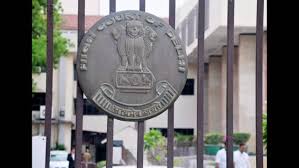
New Delhi: Lamenting the lack of “adequate steps” by both the Centre and Delhi govt to ensure transgenders’ participation in public employment, Delhi High Court on Monday decided to treat the matter as a public interest litigation (PIL). The court expanded the scope of an individual plea—seeking reservation for a court attendant post—into a PIL to examine the measures taken in Delhi for the welfare of transgender persons since the landmark 2014 NALSA verdict of the Supreme Court. The verdict recognised transgender people as the “third gender”, affirming their fundamental rights to equality, dignity and self-identity under the Constitution. “We are of the prima facie opinion that, for the inclusion of transgender persons in society and to secure their full and effective participation, the govt by now should have taken some policy decision to provide a quota for them in public employment as already mandated by the Supreme Court. However, no such policy decision appears to be in sight to date, as far as public employment is concerned,” observed a a bench of Chief Justice DK Upadhyaya and Justice Tushar Rao Gedella. The HC noted that since the issues raised concern the welfare of transgender persons, the matter will be heard as a PIL. The Centre, Delhi govt and the National Council for Transgender Persons (NCTP) have been made parties to the proceedings and asked to submit their responses. The court acknowledged the “concern expressed that after the NALSA verdict requisite steps have not been taken by the govt” and pointed out that the Supreme Court had directed transgender persons to be treated as socially and educationally backward classes, entitled to all forms of reservation, including in public appointments. During the hearing, the court referred to a 2021 notification from the Delhi govt allowing a five-year relaxation in age and a 5% concession in qualifying marks for transgender applicants seeking public employment. It questioned whether these concessions were applied in the latest recruitment drive by the Delhi Subordinate Service Selection Board (DSSSB) for court attendant posts. The plea alleged that despite the SC ruling, no such reservation was provided to transgender applicants in the recent notification. HC noted that “Parliament has since enacted a law on protection of rights and framed rules. However, it appears that the welfare measures required under these statutory obligations have not been implemented.” The court ordered the Delhi govt to decide within 10 days on extending reservation for transgender persons in the DSSSB advertisement, noting that many transgender individuals were unable to apply as they were not given relaxation. It also directed the DSSSB to publicise the decision once made. Courtesy : TOI Note: This news is originally published on https:/timesofindia.com/bha and is used purely for non-profit/non-commercial purposes, especially human rights
Delhi Police nab 10 transgender Bangladeshi illegal immigrants

New Delhi: Ten transgender Bangladeshi nationals, residing illegally in Delhi, have been apprehended by the Delhi Police in three separate operations, officials said on Tuesday. The operations were carried out by the Foreigner Cell of the North-West District Police, with eight individuals detained in the jurisdiction of Police Station Shalimar Bagh and two in the jurisdiction of Police Station Mahendra Park. According to officials, during verification, it was discovered that the individuals were living in India without valid documents and were involved in begging during the day while engaging in objectionable activities at night. “Recently, information was received regarding the movement of some suspected Bangladeshi nationals near Haiderpur Metro Station and New Subzi Mandi, Mahendra Park. Acting on this input, regular surveillance and area domination exercises were conducted in the said localities,” the officials stated. Based on the gathered intelligence, a dedicated team comprising Sub-Inspector Sapan, Sub-Inspector Shyambir, Assistant Sub-Inspector Rajender, Head Constables Vikram, Kapil Kumar, Vikash Yadav, Parveen, Tika Ram, and Kapil, along with Women Head Constables Poonam and Deepak, Constables Nishant Mattoo, Hawa Singh, and Deepak Bangar, was constituted under the close supervision of Inspector Chaitanya Abhijit, incharge of the Foreigner Cell, and overall supervision of Rajeev Kumar, ACP, Foreigners Cell. Acting on actionable intelligence gathered during routine checks, the team conducted raids with the help of informers. During these operations, eight suspicious individuals were intercepted near Haiderpur Metro Station within Shalimar Bagh jurisdiction, while two others were caught near New Subzi Mandi in the Mahendra Park area. The authorities further stated that during initial questioning, the suspects claimed to be Indian citizens, but their inconsistent responses and nervous behaviour raised doubts about their claims. A detailed investigation involving document verification, analysis of digital footprints, and examination of photographic evidence later revealed strong links to Bangladesh. “Corroborating indicators, such as online connections with Bangladeshi entities, confirmed their identity as illegal Bangladeshi immigrants,” the police said. During further inquiry, photographs recovered from their mobile phones and Instagram accounts depicted locations in Bangladesh. On sustained interrogation, the accused admitted their Bangladeshi nationality and even produced their Bangladeshi National ID cards. “It was further revealed that they had undergone Gender-Affirming Surgery (GAS) to alter their physical appearance and resemble women. To conceal their identity, they regularly used heavy makeup, sarees or salwar suits, wigs, and other feminine accessories. They had also modified their voice and body language to imitate female mannerisms,” the police statement said. The investigation confirmed that all ten individuals were Bangladeshi nationals living in Delhi without valid travel documents, visas, or permits, in clear violation of the Foreigners Act, 1946, and other relevant immigration laws. Courtesy : THI Note: This news is originally published on https:/thehansindia.com/bha and is used purely for non-profit/non-commercial purposes, especially human rights
In a first in Maharashtra, transgender community forum gets licence to run ration shop

KOLHAPUR: In a first in Maharashtra, a forum for transgender community has got a licence to run a ration shop in Kolhapur city. “The transgender community sought a ration shop for them as they claimed they go through social discrimination, poverty, and unemployment. They made the demand to state food commission chairman Mahesh Dhawale. Following due procedure, Maitri, a forum for the transgender community, was granted the licence,” district supplies officer Mohini Chavan said. District guardian minister Prakash Abitkar handed over the licence to Maitri chief Mayuri Alavekar Saturday. “The transgender community members were confused as to which line – men or women – they needed to stand in to get ration. Also, without a ration card, many could not get benefits. Our shop will be open to all types of individuals,” Alavekar told TOI. Maitri has 500 transgender people as its members. Established in 2007, Maitri focuses on sex education and health within the transgender community. “Due to the orientation and gender confusion, many have left their homes. They don’t have their own permanent house. Through Maitri and district administration, we have got ration cards approved for many such individuals,” Alavekar said. District collector Amol Yedge said the initiative is an important step towards economic independence and social inclusiveness of the community by providing them dignified employment opportunities. In Kolhapur, several progressive measures have been implemented for transgender people, including access to higher education, employment opportunities, priority in the voting process, and reserved beds at CPR Hospital for treatment. Courtesy : TOI Note: This news is originally published on https:/timesofindia.com/bha and is used purely for non-profit/non-commercial purposes, especially human rights
Bihar elections 2025: The key players and what’s at stake for them

NEW DELHI: The countdown to the Bihar assembly elections has officially begun. The Election Commission on Monday announced that the polls will be held in two phases on November 6 and 11. The result will be declared on November 14. With this announcement, Bihar has entered full-fledged election mode, and political parties are already ramping up their campaigns. A lot is at stake for the state’s key players. Here’s a look at it: Nitish Kumar The 2025 Bihar assembly election is an obvious make-or-break moment for incumbent chief minister Nitish Kumar, with both his personal legacy and his party relevance on the line. This will be Nitish’s tenth bid for the chief minister’s post after two decades of rule marked by governance reforms, social welfare programs, and, of course, the dramatic alliance shifts that earned him the nickname ‘Paltu Ram’. Switches of Nitish This time, voters will judge whether his image of the ‘Vikas Purush’ (development man), known for stability and law-and-order credibility, still holds – or whether political fatigue, policy stagnation, and repeated flip-flops have eroded his mandate. The biggest challenge Nitish will face is to fight the anti-incumbancy wave. The biggest challenge for Nitish is indeed to combat the strong anti-incumbency wave against his government. After almost 20 years in office, he will now have to fight the fatigue among the voters. At 74, questions about his age and mental fitness have also entered the political debate, with opposition leaders openly raising doubts about his ability to govern effectively. Bihar assembly elections 2025. The 2025 election will therefore determine not just whether Nitish secures another term, but whether it’s time for him to finally hang up his boots. It is equally significant for the Janata Dal (United)’s survival as a major force in Bihar. The results will decide whether Nitish’s party maintains its independent clout or is relegated to a secondary role behind its ally, the BJP. Tejashwi Yadav For Lalu Yadav’s son and former deputy CM, Tejashwi Yadav, the 2025 Bihar assembly elections are a pivotal test of both his personal leadership and the prospects of the Rashtriya Janata Dal (RJD). This appears to be Tejashwi’s best chance yet to become chief minister for the first time as the anti-incumbency fatigue against Nitish creates a significant gain. Many voters tired of Nitish Kumar’s long tenure of almost 20 years are looking for a fresh alternative, which Tejashwi, as a young, dynamic leader, offers. This attracts both traditional RJD supporters and undecided or anti-establishment voters. In the 2020 elections, under his leadership, the RJD won 75 seats, making it the single-largest party in the state and positioning him as the primary face of the opposition in Bihar. Notably, the Mahagathbandhan’s vote share lagged narrowly behind that of the NDA by just 0.03%, approximately 12,768 votes out of around 3.14 crore. Given this near-miss, the stakes and expectations for Tejashwi are even higher in 2025 and his performance will also determine the viability of the opposition in the state. Managing coalition friction and addressing the aspirations of a broad base, especially youth and non-Yadav OBCs, remains a critical challenge. This election will test his ability to withstand the NDA’s political machinery, carry forward his father’s legacy, and present himself as a pro-development alternative to Nitish Kumar in the state. Rahul Gandhi For Rahul Gandhi, this election is a crucial test of his national leadership and the revival prospects of the Congress party, with far-reaching implications for the INDIA bloc and Congress’s place in opposition politics. Given the recent repeated losses in Maharashtra, Haryana and Delhi, Rahul faces immense pressure to secure substantive gains in Bihar. His direct involvement this time, rallying (Voter Adhikar Yatra), crafting manifestos like the ‘Atipichhda Nyay Sankalp’ for EBCs, and public campaigns, puts his leadership credibility on the line, especially after past performances. The results will reveal whether Rahul can translate high-profile campaigning into votes, or whether the JD(U)-BJP, and his ally RJD continue to dominate state politics. The Bihar elections will also be the test of Congress’s groundlevel organisational skills, showing if Rahul could actually appeal to the Hindi heartland and mobilise backward and marginalised groups. Chirag Paswan Chirag Paswan’s victories in Bihar have dazzled on paper but left his influence on the ground wanting. Sweeping six Lok Sabha seats in 2014, repeating the feat in 2019, and clinching all five in 2024, he has made headlines in New Delhi. Yet in the Hindi heartland, these wins have often felt more like hollow victories than a true mandate. This time, his biggest test is to prove if he can translate national-level clout and Dalit support into a substantial assembly presence, moving beyond being a “spoiler” or a junior partner to becoming a genuine regional force in the state’s power structure. Success would elevate the LJP from relying on bargaining chips in Delhi to wielding real legislative strength in Patna, giving the party leverage in coalition negotiations, government formation, and policy direction. The outcome will reveal whether his strategy of public bargaining and “kingmaker” posturing can convert into actual MLAs, or if it risks repeating the 2020 pattern of undermining allies without building his own base. Bihar Key Players & What’s At Stake Prashant Kishor What’s at stake for Prashant Kishor? Everything and nothing! The strategist-turned-politician is making his electoral debut in Bihar, attempting to disrupt an already established caste-based politics and carve a meaningful role for his Jan Suraaj Party (JSP). Kishor has announced that his party will contest all 243 assembly seats independently, refusing alliances and positioning JSP as a radical alternative aiming to break the longstanding political duopoly of JD(U)-BJP and RJD-Congress. For him, it’s a low-risk, high-reward gamble. He has declared that his party will either finish first or last, leaving no room for compromise. So this time, he will either create a new force in Bihar or fade into political irrelevance. The key challenge lies in converting Kishor’s personal brand and strategic expertise into actual legislative seats. The outcome