
Uttar Pradesh: Transgender Student Strives To Get Toilet Built For Her Community At her College
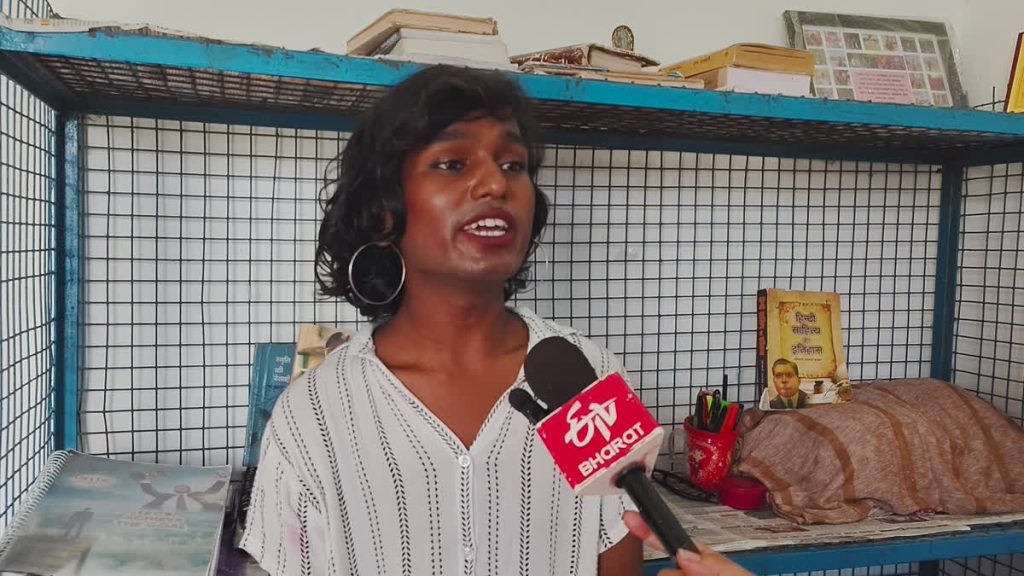
Hetvi, a student of Mahatma Gandhi Kashi Vidyapeeth, has written to the Vice Chancellor for a toilet for her community in the college. Varanasi: The transgender community in India remains marginalised despite legislations and voices of support for them from various quarters. But there are a few from the community who have vowed to fight for their rights. One of them is Hetvi from Varanasi who has sought restrooms for transgenders in colleges across Uttar Pradesh. Hetvi was born on September 8, 2003, in Chitaipur area of Varanasi. Her father is a delivery agent, and her mother, Babita, a housewife. She has a brother and a sister. Hetvi’s childhood normal. But as she reached the age of 12, she she began experiencing changes in her body which she ignored initally. However, As time progressed, she became increasingly worried. Hetvi said she gradually came to understand the changes and she gradually learned to live with it. Unlike other families, that of Hetvi supported her during the unusual transition. Hetvi said she continued her studies while managing herself during difficult times. After passing her high school and Intermediate exams, she enrolled at Mahatma Gandhi Kashi Vidyapeeth in 2023. Hetvi said when she joined the college, she couldn’t find a restroom for transgender. “I faced significant difficulties using the men’s restroom. At that moment, I realized that other transgenders might be facing similar problems. I decided to take the initiative to address the issue and wrote a letter to the Vice Chancellor, demanding the construction of a transgender restroom in the college,” she said. The transgender community in India remains marginalised despite legislations and voices of support for them from various quarters. Hetvi with her mother and siblings (ETV Bharat) Hetvi said only time will tell what decision the college administration will take on her letter, but she has fulfilled her responsibility. Hetvi is a member of the Transgender LGBT Group of Varanasi which has approximately 250 members. This group works for the welfare of transgenders and has joined Hetvi’s campaign. The group, along with Hetvi, runs a transgender culturalization programme and strives to bring transgenders into the mainstream of society. Hetvi said she formed an organization called ‘Rang’ to amplify the voice of the transgenders. “Transgender students studying at Kashi Vidyapeeth and its affiliated colleges are its members. Currently, 30 members have joined us,” she said. The transgender community in India remains marginalised despite legislations and voices of support for them from various quarters. Hetvi’s mother Babita (ETV Bharat) Babita said, when she learned about her child’s transformation, she began receiving taunts from society. “Whatever he is, he is my child. Nothing is more important to a mother than that. I have always raised him like my son. He will always be my son; I will never abandon him,” she said. Incidentally, Kashi Vidyapeeth has special facilities for transgender students. It also has the first transgender cell which works to help such students and address their problems. Hetvi said such an institution must also have a toilet for transgenders. Hetvi said at present she is focused on her objective of getting a toilet for transgenders constructed in the college. “I will raise other issued concerning the transgender community through ‘Rang’”, she said. Courtesy : ETV Bharat Note: This news is originally published on https:/etvbharat.com/bha and is used purely for non-profit/non-commercial purposes, especially human rights
Delhi govt launches ‘Pink Saheli Smart Card’ to provide free travel for women and transgender commuters across DTC buses

NEW DELHI: The Delhi government introduced the ‘Pink Saheli Smart Card’ on Sunday, a special initiative aimed at providing free and convenient travel for women and transgender individuals across Delhi Transport Corporation (DTC) and cluster buses.With this new scheme, daughters, sisters, and mothers above the age of 12 can now enjoy free rides across the capital. Delhi chief minister Rekha Gupta made the announcement on X post. “The Delhi government has launched the ‘Pink Saheli Smart Card’ for women and transgenders. Now, daughters, sisters, and mothers above 12 years of age will be able to travel free and conveniently on DTC and cluster buses,” CM Gupta said on X. “This initiative is a significant step towards making travel easier for women in Delhi, promoting the use of public transport, and providing more facilities and respect to women’s power,” the post further read. Earlier, Delhi education minister Ashish Sood on Friday announced that the Delhi government has taken a historic and significant decision under the visionary leadership of chief minister Rekha Gupta to grant recognition to private unaided schools operating in non-conforming areas of the city. According to a release, it’s a long-pending reform that restores the constitutional right to education for thousands of children across the city. According to this decision, all private unaided schools that have been functioning in non-conforming areas for a long time but have not yet obtained recognition from the Directorate of Education, either due to procedural reasons or due to the discriminatory approach of previous governments, can now apply for recognition from the Directorate of Education, Government of Delhi. The Directorate of Education’s online portal for submission of applications opened on November 1, 2025. All such schools willing to seek recognition may apply till November 30, 2025. After the completion of the application process, the received applications will be scrutinised, and a list of such schools that meet all the prescribed criteria for recognition will be issued thereafter, the release said. The education minister said, “For over a decade, this issue remained buried in files while children were denied their constitutional right to education. Previous governments played favouritism, recognising a few while neglecting many. Under the leadership of Chief Minister Rekha Gupta, we have ended this selective discrimination. This is not just administrative reform, it is justice for our children, fairness for our institutions and a genuine step towards democratising education in Delhi.” Courtesy : TOI Note: This news is originally published on https:/timesofindia.com/bha and is used purely for non-profit/non-commercial purposes, especially human rights
Rahul dives into Begusarai pond, joins locals in catching fish

Begusarai: In a strikingly spontaneous moment on Sunday, Congress leader Rahul Gandhi swapped the political stage for a splash in a village pond, joining local fishermen in catching fish after addressing an election rally in Begusarai. After concluding his speech, Rahul travelled about 3km to Bharra village in the Begusarai assembly constituency, accompanied by Congress leader Kanhaiya Kumar and Vikassheel Insaan Party chief Mukesh Sahani. Upon reaching the pond, Rahul boarded a small boat to meet fishermen casting their nets. When Kanhaiya jumped into the water, Rahul followed suit, drawing cheers from the locals gathered around. Even the SPG personnel waded into the pond to ensure his security as the Congress leader wove through the water, laughing and chatting with the fishermen. Begusarai Congress candidate Amita Bhushan said Rahul’s gesture was completely impromptu. “After Rahul ji concluded his speech, he was curious about some fishermen nearby. When told they were heading to catch fish in a pond close by, he immediately decided to follow them and reached Bharra village pokhar,” she said. During his time at the pond, Rahul not only displayed his swimming skills but also helped pull in fishing nets alongside the locals. Afterwards, he headed to the nearby home of Mahadev Sah, where he took a bath at a handpump in an open bathroom before changing clothes inside one of the rooms. Savita Devi, a member of Mahadev Sah’s family, said the experience was unforgettable. “It was amazing to have Rahul come to our house. After taking a bath at the handpump, he changed his clothes and chatted with us briefly. My daughters and I even took a selfie with him. He stayed for about 10 minutes and asked how we were before leaving,” she said. Courtesy : TOI Note: This news is originally published on https:/timesofindia.com/bha and is used purely for non-profit/non-commercial purposes, especially human rights
RJD put ‘katta’ to Cong head to push Tejashwi as CM face: PM

Patna: Prime Minister (PM) Narendra Modi on Sunday launched a sharp attack on the INDIA bloc, alleging that the Congress accepted Tejashwi Prasad Yadav as the INDIA bloc’s chief ministerial candidate in Bihar only after the RJD pointed a “katta” (a country-made gun) at its head. Addressing packed election rallies in Ara and Nawada, the PM accused the RJD of using strong-arm tactics to dominate the alliance. “The Congress never wanted to announce the chief ministerial candidate in favour of the RJD. The RJD secured it by placing a ‘katta’ on the head of the Congress. They have learned their lessons in the school of ‘jungle raj’. Such elements can never do good for Bihar,” he said. Modi’s remarks came amid persistent speculation that the Congress had initially been reluctant to project Tejashwi as the INDIA bloc’s CM face, agreeing only after sustained pressure from the RJD. The apparent strain between the allies continues to show with Rahul Gandhi and Tejashwi having shared the stage only twice so far — in Muzaffarpur and Darbhanga on Oct 29. Since then, Rahul has campaigned separately in Begusarai and Khagaria, while Tejashwi has held over 15 rallies across the state. RJD functionaries, however, have maintained that the two leaders were splitting campaign duties to cover the 121 constituencies going to the polls in the first phase on Nov 6. “Even NDA stalwarts like PM Modi and JD(U) president Nitish Kumar are not campaigning together,” they said. Speaking in Ara, Modi urged voters to “wait for the second phase of polling on Nov 11 to see them fighting”. Without naming either Rahul or Tejashwi, he said, “The crown prince of ‘jungle raj’ fears that the ‘Voter Adhikar Yatra’ of the other ‘yuvraj’ may dent his prospects. Hence, the RJD has put up its candidate against the state president of the Congress. Let the polls be over. The two allies will be breaking each other’s heads.” The remark referred to the Kutumba seat, where the RJD had initially announced a candidate against sitting MLA and state Congress president Rajesh Kumar, before withdrawing the move. Despite this, the two allies are locked in friendly contests in several constituencies. Claiming that the NDA was poised for a “record victory,” Modi said the ruling alliance would continue to provide an “upright and farsighted” govt and work towards a “developed Bihar” essential for “Viksit Bharat”. He said, “The jungle raj wallahs are set to get the worst drubbing in history.” Visibly pleased with the turnout, the PM said, “Analysts sitting in Delhi, who are racking their brains over poll arithmetic, would do well to come here and experience for themselves which way the wind is blowing.” Touting the NDA manifesto released last week, Modi described it as “honest” and visionary, in contrast to the INDIA bloc’s charter, which he dismissed as “a dossier of lies”. He envisioned a future where “the youth of Bihar will work in Bihar and make their motherland proud”, without migrating under economic duress. Listing his govt’s achievements, he said, “The condition of power connectivity was such that people used to dry clothes on electrical wires, but we changed it.” Highlighting the contribution of Bhojpur and neighbouring districts to the armed forces, Modi said national security and soldiers’ welfare were top priorities. “One rank one pension (OROP) has resulted in the disbursement of Rs 1 lakh crore, benefitting families of servicemen,” he said. He accused the RJD and Congress of serving “just two families — one most corrupt in Bihar and another most corrupt in the country”. Referring to the 1984 anti-Sikh riots, Modi said, “It was around the same time of the year, on Nov 1-2, when Sikhs were massacred in Delhi. Those who were guilty are being promoted by the party. The Congress has been unapologetic about the carnage.” In an apparent dig at Voter Adhikar Yatra, Modi alleged it was meant to protect “infiltrators (ghuspaithiye)” who must be driven out before they seize the resources meant for the people of Bihar. Recalling the abduction of a doctor in Tarari near Ara two decades ago and the Naxal insurgency that devastated Dalmia Nagar in Rohtas, he said the NDA had worked to restore peace and stability in these regions. Concluding his speech, Modi announced plans to develop the birthplace of Veer Kunwar Singh, the 1857 freedom hero, as part of the NDA’s commitment to combine development with cultural heritage. In Nawada, he lauded the NDA’s success in curbing Maoist insurgency and warned against “urban naxals” sympathetic to extremist ideologies, urging voters to reject those who “romanticise unrest”. (With inputs from Praveen in Ara) Courtesy : TOI Note: This news is originally published on https:/timesofindia.com/bha and is used purely for non-profit/non-commercial purposes, especially human rights
Rahul warns of ‘vote theft’, calls for vigilance at booths

Patna: Reiterating his charge that the BJP-RSS combine was attempting to “steal votes” in the Bihar assembly elections, leader of opposition in Lok Sabha, Rahul Gandhi, on Sunday urged voters to remain vigilant at polling booths and resist any effort by rival parties to rob them of their democratic rights. He alleged that the NDA had “set its eyes on capturing Bihar” after forming govts in four states through “fraudulent means.” Addressing election rallies in Begusarai and Khagaria, Rahul cautioned the crowd against what he termed “vote chori” in the upcoming Bihar assembly elections. He recounted that during the Special Intensive Revision conducted by the Election Commission, the names of a large number of voters believed to be supporters of the INDIA bloc were deleted from the voters’ list. “BJP-RSS together have stolen election after election. They did it in Maharashtra, Karnataka, Haryana, and Madhya Pradesh, and now they have set their eyes on Bihar. So, be alert at the polling booths and check the voters’ list so that they don’t snatch away the govt again,” Rahul told the gathering. Calling upon people to oppose ‘vote chori’ firmly, he described it as an attempt to “reject the Constitution and murder the ideology of B R Ambedkar and Mahatma Gandhi.” “Stay vigilant at polling and oppose any attempt for vote chori,” he said. He also accused chief minister Nitish Kumar of being powerless in his own administration, alleging that a group of “three or four bureaucrats” were running the state govt under “instructions from Delhi.” Rahul further charged that the NDA regime had turned Bihar into a “market of labourers” over the past two decades, forcing the state’s youth to migrate in large numbers in search of petty jobs. “But if the INDIA bloc comes to power, we will set up the world’s best university in Bihar, where students from across the world will come to study,” he promised, adding that his opposition alliance’s first priority would be to strengthen the education sector. The Congress leader also attacked the Modi govt’s major economic decisions, claiming that “policies like GST and demonetisation were aimed at destroying small businesses and benefiting big ones.” Renewing his jibe about Prime Minister Modi’s “56-inch chest,” Rahul claimed that “Operation Sindoor” was suspended under pressure from the United States. “PM Modi has a 56-inch chest, but the truth is that we don’t get to know a person’s courage from the size of his chest. (Mahatma) Gandhi ji fought against the British, he didn’t have a big chest but he was not afraid. There are many such people who don’t have a big chest but are not cowards, and there are others with a 56-inch chest who are cowards,” Rahul said. Continuing his attack on Union home minister Amit Shah, he said, “Shah claims there is no land in Bihar to set up industries, but strangely he gave away lands to his industrialist friend at throwaway prices in Bhagalpur.” Courtesy : TOI Note: This news is originally published on https:/timesofindia.com/bha and is used purely for non-profit/non-commercial purposes, especially human rights
NDA has turned Bihar into ‘market of labourers’: Rahul Gandhi

PATNA: Congress MP Rahul Gandhi intensified Sunday his attack on BJP and RSS, warning they were attempting to “steal votes” in the Bihar elections. Urging voters to stay alert at polling booths, he claimed NDA had “set its eyes on capturing Bihar” after forming govts in Maharashtra, Karnataka, Haryana and Madhya Pradesh “through fraudulent means”. Addressing rallies in Begusarai and Khagaria, the leader of opposition in Lok Sabha said: “BJP and RSS together have stolen election after election. They did it in four states, and now they want to do the same in Bihar. So be vigilant at polling booths and check the voters’ list carefully so that they don’t snatch your govt again.” Rahul alleged during EC’s SIR of electoral rolls, the names of thousands of people believed to be INDIA bloc supporters were deleted from voters’ lists. Calling on people to resist “vote chori” firmly, he said: “This is not just theft of votes but an attempt to reject the Constitution and murder the ideology of BRAmbedkar and Mahatma Gandhi. Stay vigilant and oppose it at every polling station.” Rahul also accused CM Nitish Kumar of losing control over his administration. “Nitish Kumar is CM only in name. Bihar is being run by three or four bureaucrats taking instructions from Delhi,” he said. He added that NDA had turned Bihar into a “market of labourers” over the past two decades, pushing young people to migrate in search of small jobs. Promising a reversal if INDIA bloc is elected to office, Rahul said his alliance would establish “the world’s best university in Bihar”, attracting students from across the world. “Education will be our first priority,” he said, asserting that a strong education system would stop mass migration. Renewing his jibe about Modi’s “56-inch chest”, Rahul alleged Operation Sindoor was halted under US pressure. “Courage isn’t measured by the size of a chest. Gandhi didn’t have a big chest, yet he wasn’t afraid. Many without big chests are brave. Others with 56-inch chests are cowards.” Taking on Union home minister Amit Shah, Rahul also said, he added: “(Home minister Amit) Shah says there’s no land in Bihar for industries, but he gave land to his industrialist friend in Bhagalpur at throwaway prices. This is BJP’s model of development.” Rahul also slammed economic decisions by PM Narendra the Modi’s govt, saying that policies like GST revisions and 2016 demonetisation were “crafted to destroy small traders and benefit big industrialists”. IMPROMPTU SPLASH: Rahul dived into a village pond to join fishermen in Begusarai on Sunday. He was accompanied by colleague Kanhaiya Kumar and VIP chief Mukesh Sahani. Rahul displayed his swimming skills as he helped the locals pull in their fishing nets Courtesy : TOI Note: This news is originally published on https:/timesofindia.com/bha and is used purely for non-profit/non-commercial purposes, especially human rights
Bihar elections 2025: Tejashwi Yadav CONFIRMS deputy CM from Muslim, Dalit community, says, ‘everyone will get fair chance…’

Ahead of Bihar elections, Mahagathbandhan CM face and RJD leader Tejashwi Yadav has confirmed that if they come to power after winning elections, there will be multiple deputy CM including one from Muslim community. Ahead of Bihar elections, Mahagathbandhan CM face and RJD leader Tejashwi Yadav has confirmed that if they come to power after winning elections, there will be multiple deputy CM including one from Muslim community. In an interview with India Today, Tejashwi Yadav responded, “Yes, definitely,’ when asked will there be a Deputy CM from Muslim community. Muslim community constitutes nearly 17% of the electorate and could play a decisive role in the formation of next government in Bihar. During the announcement of Tejashwi Yadav as CM face for Mahagathbandhan Alliance, Mukesh Sahani was named as the deputy CM face. Mukesh Sahani ‘Son of Mallah’ belongs to the Extremely Backward Class. EBCs comprise 30% of Bihar’s voters.Following this, demand of Muslim deputy CM were raised. What did Tejashwi Yadav Said? RJD Leader Tejashwi Yadav confirmed that there will multiple deputy CM. He said, ‘The day this announcement was made, Ashok Gehlot ji had said that if Mukesh Sahani would be made Deputy Chief Minister, there would also be others. The concerns raised by various sections will be addressed.’ He also said, ‘Yes’, when asked if there will be deputy CM from two of the major communities from Bihar, Muslims and Dalits. ‘We will take everyone along, and everyone will get a fair chance of representation, ‘ he added. Bihar elections 2025 Both Mahagathbandhan and NDA have released their Manifesto for the upcoming polls. NDA in Bihar released their manifesto ‘Sankalp Patra’ in Patna on Friday. Few days earlier, the Mahagathbandhan has released its manifesto, Tejashwi ka Prann. The first phase of the Bihar Assembly polls will take place on November 6, and the second phase will happen on November 11. The counting of votes will take place on November 14. This upcoming electoral contest will be between the NDA, led by the BJP, and Janata Dal (United) (JD(U)), and the INDIA bloc, led by Tejashwi Yadav of the Rashtriya Janata Dal (RJD). Prashant Kishor’s Jan Suraaj is also contesting on all 243 seats in this high-stake battle. Vanshika Tyagi Courtesy : DNA India Note: This news is originally published on https:/dnaindia.com/bha and is used purely for non-profit/non-commercial purposes, especially human rights
MRPS condemns attack on CJI, takes out ‘Dalit self-respect rally’
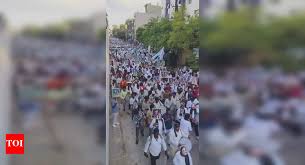
Hyderabad: Madiga Reservation Porata Samithi (MRPS) founder Manda Krishna Madiga questioned why the Delhi police did not register a case against the lawyer who tried to attack Chief Justice of India (CJI) Justice BR Gavai. He said that all systems in the country have remained silent, displaying the persistence of untouchability. Condemning the attack on Justice Gavai, the MRPS, along with thousands of participants, took out a ‘Dalit self-respect rally’ from Indira Park to Babu Jagjivan Ram’s statue. Along with Krishna Madiga, MRPS national president Munnangi Nagaraju Madiga, MRPS Telangana state president Govindu Naresh Madiga, AP state president Rudrapogu Suresh Madiga, Karnataka president Narasappa Madiga, Tamil Nadu MRPS president Lokesh Madiga, Maharashtra president Ajit, Chhattisgarh state leader Johnson Madiga, Uttarakhand state president Ashish Kumar, and others participated. Speaking at the rally, Krishna Madiga said that the attack happened because Justice Gavai is a Dalit. “If a judge from a higher caste were in his place, would this attack have occurred?” he asked, adding that they view the incident as an attack on Dalits because of Gavai’s identity. He questioned why the Delhi police had not yet filed a case and why the Supreme Court had not taken suo motu cognisance of the matter. He also questioned the NHRC’s silence on the incident. Stating that the Dalit self-respect struggle in Hyderabad marks only the beginning, he said the movement would soon be intensified at the national level. Announcing ‘Chalo Delhi’ on Nov 17, he said a massive Dalit self-respect will be organised across the country. He criticised political parties for their double standards on Justice Gavai’s case, questioning why they haven’t demanded legal action or punishment against the lawyer involved. He condemned the failure to punish those who commit violence in the name of beliefs and traditions, calling such acts unlawful. Courtesy : TOI Note: This news is originally published on https:/timesofindia.com/bha and is used purely for non-profit/non-commercial purposes, especially human rights
Deepavali sparks the caste conversation in Tamil cinema
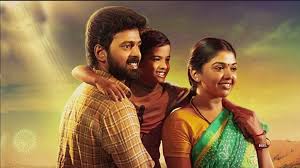
While Bison delves into the brutal, ancestral weight of caste oppression, Dude channels Gen Z energy to confront caste-based violence. Synopsis: Tamil Deepavali releases Bison and Dude delves into caste opressions. While Bison delves into the brutal, ancestral weight of caste oppression through the journey of a young kabaddi player, Dude channels Gen Z energy to confront caste-based violence. This Deepavali, Tamil cinema sparks a conversation on caste with two striking releases: Bison and Dude. While Mari Selvaraj’s Bison delves into the brutal, ancestral weight of caste oppression through the journey of a young kabaddi player, Dude channels Gen Z energy to confront caste-based violence with style, wit, and social conscience. Together, the films show how Tamil cinema challenges systemic inequalities, each in its own cinematic language. “Caste is not just a social hierarchy; it is a system that inflicts trauma and violence on its victims,” wrote Thenmozhi Soundararajan in The Trauma of Caste. Her observation captures how deeply caste shapes lives, far beyond mere social positioning. In Bison, Kittaan’s journey embodies this lived reality. His body, labour, and identity are marked by systemic oppression; he faces physical exploitation, social marginalisation, and emotional trauma imposed by the caste hierarchy. The violence he endures is structural, embedded in a society that categorises and controls him. Kittaan’s experiences echo Soundararajan’s argument: caste is not abstract or symbolic; it is a daily, brutal reality that shapes choices, relationships, and selfhood. As Nina Simone famously said, “An artist’s duty, as far as I’m concerned, is to reflect the times.” Mari Selvaraj stands as such an artist, reflecting his people, his land, and the collective grief of his community—while allowing them to breathe, dance, and live in his films. The poetry of defiance Mari’s cinema is remarkable not only for what it says, but for how it says it. Like Terrence Malick’s The Tree of Life (2011), which wove childhood, grief, and the cosmos into a symphony of light and silence — “There are no words. Just light, movement, and memory”— Mari’s frames flow like verses of a cinematic poem. In world cinema, resistance often finds its voice not in slogans but in poetic imagery, where defiance becomes a visual and emotional language. Mari carries this tradition forward. His dreamlike frames are rooted in reality: Blue-painted dogs as emblems of silenced loyalty, trains wailing over barren fields, runners fleeing oppression rather than chasing victory. Animals — pigs rooting in muddied honour, horses galloping through monsoon fury — become symbols of the oppressed, reflecting Dalit protagonists’ quest for liberation. Sweeping aerial shots of indifferent landscapes remind us of a society that watches cruelty from above, detached and complicit. Even desire in Mari’s films is radical. It is punished yet resilient — blooming in stolen glances, sweat-soaked triumphs, and acts of love that defy lineage. Mari transforms personal scars into collective anthems, each echoing like the beat of a parai, confronting audiences with the beauty and brutality of marginalised lives. Bison arrives as a fiery offering to southern Tamil Nadu’s soil, steeped in kabaddi, rage, and resilience. At its heart is Kittaan, a young kabaddi player crushed between caste politics and personal dreams. Inspired by real-life Arjuna Awardee Manathi Ganesan, Mari’s narrative portrays an athlete torn between faith, fate, and fury. While traditional sports dramas explore locker-room rivalries or personal sacrifices, Mari digs deeper. Like Pa Ranjith’s Sarpatta Parambarai, which examined boxing culture and its politics, Bison exposes the caste wounds and inherited injustices of the southern heartland. When Dhruv Vikram’s Kittaan asks, “Why should I leave this village? Why won’t they let me play? Why do the sins of our fathers stop me from living and loving?” Pasupathi’s quiet reply, “Because that’s our fate, son,” lands like a punch to the chest. Pasupathi, a broken father, carries the weight of generations—fighting, falling, praying, and howling with helpless rage. His performance is a masterclass in restraint and ruin. A land that still burns In one unforgettable scene, a bus journey becomes a bloodbath over something as trivial as a goat urinating on a rival’s leg. Mari stages this with terrifying precision, showing that violence in this land is never sudden — it simmers through generations of silence. Here, caste dictates not just marriage, but where one sits, what one eats, and whether one can play a sport. Kittaan’s rise highlights the near-impossible struggle of breaking invisible walls. His victory isn’t personal—it’s ancestral. When he storms the kabaddi court, every muscle and tear carries the grief of fathers, the defiance of sons, and the dreams of countless boys once told “No.” While Bison foregrounds the oppression faced by Dalits, it is crucial to recognise that much of the dominant caste’s behaviour around power and prestige is tied to caste. Even seemingly personal actions cannot be fully separated from caste dynamics. The animals speak for the land Mari’s cinema breathes through symbolism. Animals in his films are not props; they are the land’s soul: The dog in Pariyerum Perumal, the horse in Karnan, the pig in Maamannan and the bull in Bison. Each creature embodies defiance — the silent scream of the subaltern. Even love carries an earthy fragrance, with flowers and fallen petals creating tender poetry amid violence. Dhruv Vikram, expressing everything through his body, becomes a living metaphor — a Maadan whose silence roars louder than words. At a recent press meet, a journalist’s question, dripping with caste prejudice, attempted to challenge Mari, yet he responded with quiet resolve: “Your life is different from mine. I can’t satisfy everyone. I am a citizen of this country. I have the right to tell the stories that affected me, my father, and my grandfather — and I will tell them until my last breath.” This powerful retort encapsulates the essence of Bison — an ancestral cry, an unflinching archive of pain passed down through centuries of caste oppression. The journalist’s audacity reflects the entrenched hierarchical mindset that continues to provoke and question Mari’s narratives. Yet, Bison stands as
‘Kaalamaadan’ — Bison: Caste, colour, and anti-caste politics in mainstream cinema
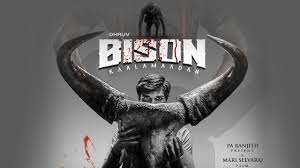
We live in an era where actors, regardless of their social background, eagerly await roles in movies by Dalit filmmakers such as Mari Selvaraj and Pa. Ranjith. Negating these historical and contemporary realities and confining the debate only to the ‘fair’ female leads in their movie is an elite conspiracy to subvert the political discourses constructed by Dalits. Kaalamaadan is a cultural icon associated with the beliefs and traditions of Dalit socio-cultural life. However, the term Kaalamaadan, especially in the cultural sphere of Kerala, often refers to people who act in ways that disturb public conscience, challenge morality, or defy social conditioning. Kaalamaadan has always carried a negative connotation and is used to blame or otherise people who adopt different perspectives or approaches in their thought processes or activities. This should also be understood as a historical continuity of caste practices to antagonise or defame the Dalit cultural symbols or icons. By naming the movie Bison, or otherwise known as Kaalamaadan, Mari Selvaraj is definitely dismantling the sarvarna gaze. Inspired by real-life incidents, the movie is set against the backdrop of socio-political happenings in southern Tamil Nadu during the 1990s. It discusses the survival, resilience, and triumph of Kittan, the Dalit protagonist. Relevance of Bison The social history of Tamil Nadu is, in fact, a history of caste conflicts. Especially the southern districts of Tamil Nadu are infamous for their brutal violence against Dalits. The (dis)honour killing of a Dalit IT professional, Kavin Selva Ganesh, by the family of his girlfriend was one of the latest caste atrocity reported from southern Tamil Nadu. The girl’s family hails from the dominant Maravar community, and both her parents are police inspectors. This reflects the current scenario of caste atrocities in southern Tamil Nadu, making the movie Bison more politically relevant. Though Bison doesn’t deal with the subject of honour killings, the film is presented in the larger context of the historical continuity of caste conflicts in Tamil Nadu. The Pandiaraj-Kandasamy rivalry in the movie actually refers to the Dalit-Nadar conflict that happened in southern Tamil Nadu during the 1990s and early 2000s. The disputes, retaliations, and the feud between the Dalit leader Pasupathi Pandian and the Pannaiyar family have been effectively referenced in the movie. And this narrative has been successfully conveyed through the life and struggles of the Dalit protagonist, Kittan, inspired by the life of the Arjuna Award-winning Kabaddi player Manathi Ganeshan. Dalit aesthetics The film is structurally built on the notion of Dalit aesthetics and socio-cultural nuances. As many critics have observed, a specific pattern or preset template is being followed in Mari’s filmography. And the repetition of these patterns has invited criticism of Mari’s films, including Bison. But what does this pattern really indicate? The heroic presentation of Dalit imagery, signifiers, gods, and belief systems is the fundamental characteristic of Mari’s style of filmmaking, and it is not an artistic limitation. In fact, these are counter-narratives against the epistemic violence in cultural representation created by the mainstream cinema for years. The symbolic presentation of animals pertinent to Dalit social life, and their incorporation into the aesthetics of cinema, are essentially political acts. Even if it is repetitive in his filmography, it is a deliberative aesthetic of resistance and a new technique among the established imaginations of mainstream cinema. Mari’s films, including Bison, subvert the established patterns, methods, and aesthetics of mainstream cinema and construct a counter-public discourse. It disturbs the public conscience, dominant perspectives, and morality constructed in films through different ages. So, the actual problem with critics is not the pattern of Mari but its content and politics. They are also triggered by the anti-caste politics occupying space in the public sphere through popular culture. Pride and prejudice Recently, veteran director Adoor Gopalakrishnan has made casteist and gendered remarks against aspiring Dalit and women filmmakers, saying that they should be given ‘special’ training for filmmaking if they are receiving government funds for making movies. This thought, which shares concerns about the public fund when it is allocated to the marginal communities, is fundamentally a casteist idea. This also stems from the belief that filmmaking is meant for people from elite social backgrounds, as they are ‘naturally’ talented, while those outside this social structure lack the skills and ‘merit’ to create movies. The criticism against Mari, based on the ‘patterns’ in his movies, also originates from a similar savarna gaze. Because Mari has not just made some random movies, he directed films that deconstruct existing belief systems, culture, and politics, and he also made them commercially successful. Had his movies been a failure at the box office, none of the critics would have even cared about the pattern, content, or quality. Therefore, the pattern he follows in his movies is successful in a political sense, as it disturbs the Gramscian idea of common sense. Loud questions and silence The criticisms that have erupted recently are negating the identities of Mari, Vedan, Arivu, and Dhruv, who are integral parts of the movie, and revolve solely around the ‘fair’ skin of non-Dalit female actors. It seems that even the skin tones—or the absence of dark skin tones—of female actors in Mari’s movies disturb the public, as they do not meet casteist expectations. The idea of equating Dalits with dark bodies is actually a casteist notion. Why do people never question the non-Dalit filmmakers for not casting dark-toned and/or Dalit actors? Why is this burden solely placed on Dalit filmmakers? How can Dalit filmmakers who entered the industry after years of struggle be held accountable for the absence of Dalits and dark-toned artists? These unfair criticisms emerge from a larger caste-ridden society. Furthermore, who decides that only Dalit actors should be portrayed as Dalit or characters with dark complexions? But suppose the intention behind this question stems from a democratic concern about the absence of Dalits or Dalit women in cinema, why is this question being raised only against Dalit filmmakers? Why is there no question directed against the elite