
Bihar shattered the nation’s biggest myth, turning it upside down.
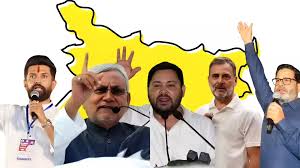
The mandate delivered by Bihar voters shattered the prevailing belief of the past decade and a half that record voter turnout signaled anti-incumbency. However, this time’s results clearly demonstrate that there was no widespread dissatisfaction with the government at the state level. The Bihar election results have surprised everyone this time. Bihar voters delivered a unanimous mandate. The notion that record voter turnout signified anti-incumbency has been shattered over the past decade and a half. The unprecedented 66.91% voter turnout in Bihar has proven this once again. This election result will only have shocked those who lived in a fantasy world or were unaware of the reality despite knowing it. The Congress, under Rahul Gandhi’s leadership, is now unwilling to accept the defeat. It saw vote theft in Maharashtra, Haryana, and even Karnataka, and the same will happen in Bihar. No Mass Discontent: In fact, speaking to people during the election, it was clear that there was no mass discontent at the state level with the Nitish Kumar government. Jan Suraj, which was trying to emerge as a third force, was well-known even in villages, but it lacked direct voter turnout as a party. Women’s turnout, outnumbering men, was a significant indicator of the election results. Lack of Coordination: In coalitional electoral contests, performance depends on how well they speak with one voice and demonstrate consistency on issues, statements, and strategies. The NDA appeared united from day one. Despite minor differences, the NDA publicly announced the seat-sharing arrangement. No public meeting of the Grand Alliance was seen. Everyone fielded their own candidates. There was also a considerable delay in announcing Tejashwi Yadav as the leader. The message that emerged was that they were united only to defeat the BJP, but there was no unity among them. LJP+RLM: The opposition alliance benefited from Chirag Paswan’s rebellion against the LJP (R) in the last election. This time, it is in the NDA. Upendra Kushwaha’s RLM was also in a different alliance last time. Consequently, the NDA brought together leaders with two social bases. On the other hand, there was only Mukesh Sahni’s VIP. Vote theft not an issue: The Congress’s entire strategy was limited to campaigns against vote theft and the Election Commission. No one in Bihar accused anyone of deliberately deleting names from the voter list. Therefore, this was not an issue on the ground, but rather a reaction to it. What will be the result if you campaign by making something that doesn’t exist a major issue? Women’s participation: For whom did women turn out to vote in greater numbers? Women’s participation was 71.6%. A total of 25.1 million women cast their votes, compared to 24.7 million male voters. Women’s turnout was 43.4 million more than men. In 2020, 20.8 million women voted. Compared to this, women’s turnout was 4.3 million more. This didn’t happen without reason. The government under Nitish Kumar’s leadership has done unprecedented work since its inception to bring women into the mainstream of society. Solid Hindutva Support Base: When assessing any election result in India, we must keep in mind that the BJP has a strong support base across the country, based on Hindutva and nationalism. Such BJP voters emerged from all castes in Bihar. There was a time when Bihar was divided between backward and forward castes. This time, too, it seemed as if Bihar was so divided along caste lines that it was now impossible to break free. The election results are a promising sign in this regard. Caste Stiffness Broken: Leaders of all parties should understand that no matter what caste we belong to, we don’t always have a caste-based mindset. From Panchayat to Lok Sabha elections, we work for each other and vote for each other. Inter-caste interactions have also increased significantly. The election results have proven that if gender equality is central to political principles and government policies, and a national spirit is integrated with social justice, development, law and order, and Hindutva, then the majority community can gradually break the caste barrier and move forward. Author: Awadhesh Kumar, Edited by: NBT Desk (The author is a senior journalist and thinker) About the author Whether it’s national, international, sports news, or the inside story of politics, NBT News Desk brings you every news.
Bihar poll results: Rahul Gandhi calls verdict ‘shocking’ as Congress sinks to historic low; wins just 6 of 61 seats
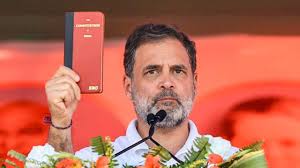
PATNA: Congress leader Rahul Gandhi on Friday said he was shocked at the outcome of Bihar poll as the Grand Old Party witnessed its worst ever performance in an assembly election in the state. The party, which is a part of the Grand Alliance, contested in 61 seats but won only six (strike rate of 9.83%). In 2020, the party contested 70 seats and won 19 (with a strike rate of 27.14%). All its prominent leaders, including state president Rajesh Kumar, Congress legislative party (CLP) leader Shakeel Ahmad Khan and former CLP leader Ajit Sharma, lost the election. In a post on social media, Gandhi alleged the election was not fair from the start. He wrote, “I express my heartfelt gratitude to the millions of voters in Bihar who placed their faith in the Grand Alliance. This result in Bihar is truly shocking. We failed to win an election that was not fair from the start. This fight is to protect the Constitution and democracy.” Party national president Mallikarjun Kharge said the Congress would study the election results in depth and, after understanding the reasons, would present a detailed account. Of the six seats it won, two were by very narrow margins. In Chanpatia, party candidate Abhishek Ranjan prevailed by 602 votes, securing 87 538 votes against BJP’s Umakant Singh who got 86,936. In Forbesganj, party candidate Manoj Biswas defeated BJP’s Vidya Sagar Keshri by 221 votes. Besides Chanpatia and Forbesganj, Congress registered victories in Valmiki Nagar (Surendra Prasad), Araria (Abidur Rahman), Kishanganj (Md Qamrul Hoda) and Manihari (Manohar Prasad Singh) Khan, who lost his sitting Kadwa seat to JD(U)’s Dulal Chandra Goswami by 18 368 votes, said the party would gracefully accept the mandate. He however alleged that the result reflected the effect of Rs 10,000 credited to the accounts of women before the election rather than the people’s mandate. Courtesy : TOI Note: This news is originally published on https:/timesofindia.com/bha and is used purely for non-profit/non-commercial purposes, especially human rights
Bihar election results: NDA stuns Mahagathbandhan in Muslim dominated seats; JD(U) surges
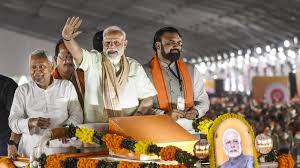
NEW DELHI: Early trends of the Bihar assembly election results on Friday indicated significant gains for the National Democratic Alliance (NDA) in several Muslim-dominated seats. According to the initial trends, the NDA appears on track to secure at least 16 such seats. Chief minister Nitish Kumar’s Janata Dal (United) seems to have benefited the most within the alliance, gaining around eight more seats compared to the 2020 assembly polls. Additionally, Chirag Paswan’s LJP (RV) is leading in six seats with sizeable Muslim voter populations. On the other hand, the Mahagathbandhan has struggled to convert votes despite campaigning heavily on employment and a new chief ministerial face. As per the latest trends, the RJD is losing at least seven Muslim-dominated seats it had won in the 2020 assembly elections, while Congress is trailing in four such seats it previously held. In 2020, the RJD had won 18 of these seats, and Congress had secured six. Historically, Muslims have supported secular alliances. They ensure community members vote for parties claiming to be inclusive. The 2022 Bihar survey showed Muslims make up 17.7% of population and nearly 80% Muslim votes went to MGB in 2015 and 77% in 2020. Meanwhile, the NDA alliance has taken decisive leads across the state, with the Mahagathbandhan trailing. According to the latest numbers, the NDA crossed the majority mark early in the day, with both the BJP and JD(U) delivering strong performances. The Mahagathbandhan (MGB) remains behind, with the RJD performing better than its ally Congress, though still unable to match the NDA’s spread. The RJD, despite the MGB’s overall deficit, continues to rank among the top individual parties in several seats. Jan Suraaj, however, is not appearing prominently in the early seat trends, and its vote share—where visible—remains marginal, having little impact on close contests. The counting operations are being supervised by 243 Returning Officers and an equal number of Counting Observers appointed by the Election Commission. More than 18,000 counting agents representing various candidates are present at the centres to monitor the process closely. Entry into counting centres is strictly limited to individuals with valid passes, and the use of mobile phones inside counting halls is fully prohibited. The election saw participation from over 7 crore voters who cast their ballots to decide the fate of both the ruling NDA and the Mahagathbandhan. Polling was held in two phases, on November 6 and 11. Courtesy : TOI Note: This news is originally published on https:/timesofindia.com/bha and is used purely for non-profit/non-commercial purposes, especially human rights
Madras HC Seeks Centre’s Reply on Transgender Exclusion in Adoption Rules by Dec 4
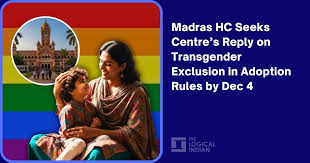
Despite the 2019 law guaranteeing equality, transgender persons in India remain excluded from adoption, prompting the Madras High Court to seek immediate government clarification. The Madras High Court has directed the Union government to clarify why current adoption rules under the Central Adoption Resource Authority (CARA) still exclude transgender persons, despite the 2019 Transgender Persons Act mandating non-discrimination and equal rights. The move follows a petition by a transgender individual challenging the validity of restrictive adoption laws, with the Centre now required to respond by December 4, 2025. This judicial intervention could mark a turning point in legal recognition and the rights of transgender persons to adopt children in India. Judicial Intervention: Challenging Exclusion In a landmark hearing on November 3, 2025, the Madras High Court’s division bench, comprising Chief Justice Manindra Mohan Shrivastava and Justice G. Arul Murugan, asked the central government to provide written clarification as to why CARA guidelines remain untouched by the principles of equality codified in the Transgender Persons (Protection of Rights) Act, 2019. The court’s involvement was prompted by a petition filed by B. Shama, a transgender plaintiff who highlighted the ongoing discrimination in India’s adoption laws-specifically, that CARA’s registration forms on its website exclude transgender individuals from even applying as prospective adoptive parents. Advocate Karthikaa Ashok, representing Shama, argued that CARA’s reference to “male” and “female” should now be interpreted to cover “transgender” applicants as well, reflecting the requirement in the 2019 law for equal treatment. According to the petition, the denial of adoption rights based on gender identity not only violates the 2019 Act but also Articles 14 and 21 of the Indian Constitution, which guarantee equality and life with dignity. During proceedings, the court remarked that CARA functions under the Ministry of Women and Child Development and therefore it is incumbent on the central government to clarify in detail the reasons for the lack of reform. The Additional Solicitor General, A.R.L. Sundaresan, asked for additional time to prepare the government’s reply, resulting in an adjournment of the case to December 4, 2025. Legal Precedents: Barriers and Advocacy This hearing was not the first time the exclusion of transgender persons from adoption had come before the judiciary. In October 2025, Justice M. Dhandapani of the same court dismissed a similar petition by K. Prithika Yashini, India’s first transgender police officer. Justice Dhandapani stated that without explicit legislative amendments, his “hands were tied” since adoption regulations currently classify applicants strictly as male or female, with no mention of non-binary or transgender identities. This legal binary leaves India’s transgender citizens with no official route to adopting under existing frameworks. The recent intervention by the Madras High Court’s division bench moves away from a narrow reading of the law and places the onus on the Union Ministry of Women and Child Development to justify the delay in compliance with Section 8 of the 2019 Act, which explicitly obligates the government to institute transgender-inclusive welfare schemes and rules. Advocates, including Ms. Ashok, have called for an “inclusive interpretation” of existing laws. They underline that parenthood is a fundamental human dignity and that exclusion based on gender is contrary to the spirit of constitutional rights and previous Supreme Court pronouncements, most notably the NALSA judgment establishing equality for transgender persons. National Impact: Law, Families, and Social Change With India’s adoption framework still essentially referencing a binary understanding of gender, the implications extend far beyond legal technicalities. The judiciary’s increasing engagement with the shifting definition of “family” reflects a broader movement in society, where diverse family units are increasingly recognised but not yet enshrined in central legal policy. Recently, the Supreme Court’s split verdict in 2023 around joint adoption by unmarried and queer couples highlighted both progress and persisting barriers within the system. For the transgender community, legal recognition through adoption rights is about more than bureaucracy-it is about dignity, family, and their place in Indian society. Experts caution that continued exclusion keeps “equality trapped in rhetoric,” and that law reform should not lag behind constitutional commitments. The ongoing proceedings and mandated government reply could offer vital clarity and possibly set a precedent affecting thousands seeking to realise their parental aspirations. The Logical Indian’s Perspective The Madras High Court’s proactive intervention reinforces that Indian law must reflect empathy, inclusiveness, and justice. Every citizen, regardless of gender identity, deserves equal opportunity to experience parenthood and familial joy. By amending CARA guidelines and strictly implementing the 2019 Act, the government can move closer to building a truly inclusive society where respect and kindness override stereotypes. Syed Muskan Shafiq Courtesy : TLI Note: This news is originally published on https:/thelogicalindian.com/bha and is used purely for non-profit/non-commercial purposes, especially human rights
A 150-year-old evil tradition was broken after 150 years! A Dalit groom rode a horse for the first time in Rewari, with the wedding procession escorted by police.
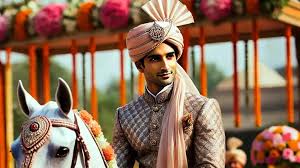
A 150-year-old evil tradition was broken in Khedi Dalu Singh village in Haryana’s Rewari district when a Scheduled Caste groom rode a horse for the first time. However, the family had sought security from the police and administration as a precaution, fearing untoward incidents. The procession proceeded peacefully under the presence of a police force. In Khedi Dalu Singh village, located in the Bawal area of Rewari, Haryana, a Scheduled Caste man’s wedding procession rode a horse for the first time in 150 years. The procession departed on Thursday, November 13th. Police forces from three police stations were deployed, supervised by the DSP. The procession departed from the village for Ateli. According to reports, a horse-riding procession for a young man had never been carried out in this village in history. This evil practice had been prevalent for years. The groom’s family feared an untoward incident. Due to this, they requested police protection. The family expressed gratitude to the police and administration. Ankit, the groom, who works in the Animal Husbandry Department, explained that this evil practice had been prevalent since the village was formed. He said that many people had tried before, but were unsuccessful. Fearing something untoward, the family filed a complaint with the Human Rights Commission, Rewari police, and the administration. The family appealed for protection from the Rewari police, administration, and the National Human Rights Commission. Following this, the wedding procession proceeded peacefully in the presence of police from three police stations and the duty magistrate. Following the incident, the family expressed gratitude to the police and administration. There was no tension in the village. Bawal DSP Surendra Sheoran stated that there was no tension in the village. He stated that police were present as a precaution, and the wedding procession proceeded peacefully. Meanwhile, Nepal Singh, the Sarpanch representative of Khedi Dalu Singh village, stated that there was no tension in the village, nor did anyone protest. He added that everyone in the village wants peace. The family had filed a complaint with the police administration, which led to precautionary measures being taken, and the horse-riding ceremony passed off peacefully. In many areas of Haryana, disputes have previously arisen over Scheduled Caste grooms riding horses, so as a precaution, the horse-riding ceremony was conducted under police protection. Authored by: Manoj Kumar Courtesy: Hindi News
Dalit leader murdered in Sangli, Maharashtra; accused attacked with knife and rod during birthday celebration

Uttam Mohite, president of the Dalit Mahasangh in Sangli, Maharashtra, was stabbed and killed with a knife and rod while celebrating his birthday. One of the attackers also died during the scuffle. Police have registered a murder case and launched an investigation. Digital Desk, New Delhi. Uttam Mohite, president of the Dalit Mahasangh in Sangli, Maharashtra, was stabbed and killed with a knife and rod while celebrating his birthday at his home. According to police, Mohite had a fight with the accused, Ganesh More, before the attack. In fact, the founder of the Dalit Mahasangh in Sangli, Maharashtra, was celebrating his birthday on Tuesday night. Mohite was celebrating his birthday at his home near the Garpir Dargah Chowk area. He was murdered during the celebration. One attacker also died One attacker also died during the incident. According to police, one of the attackers, Shahrukh Rafiq Shaikh (26), was seriously injured during the scuffle. During the scuffle, one of the attackers, Shaikh, sustained a serious knife injury to his thigh, possibly accidentally. He died at a hospital on Wednesday morning. Attack with knives and rods After the guests had left and preparations were complete, some men armed with knives, iron rods, and sticks began abusing Mohite. Fearing for his life, Mohite fled inside his house while being chased by the attackers. The attackers stabbed Mohite multiple times in the stomach and chest and hit him on the head and hands with iron rods and sticks. Mohite was rushed to Sangli Civil Hospital by his nephew, where doctors declared him dead. A police officer said on Wednesday that Mohite and one of the accused, Ganesh More, had a brief altercation during the birthday celebration. Before leaving the venue, More allegedly warned Mohite that he “won’t spare him.” Murder case filed against 8 people Based on a complaint by Mohite’s wife, Jyoti, police have filed a murder case against Indiranagar residents Ganesh More, Satish Lokhande, Shahrukh Shaikh (deceased), Banya alias Yash Londhe, Ajay Ghadge, Jitendra Londhe, Yogesh Shinde, and Sameer Dhole. (With inputs from news agency PTI) BY SHUBHAM TIWARI EDITED BY: SHUBHAM TIWARI Courtesy: Hindi News
BSP Plans Muslim-Dalit Outreach in Western UP, Mayawati to Address Noida Rally on December 6

Two months after holding a major rally in Lucknow that stirred political activity across Uttar Pradesh, the Bahujan Samaj Party (BSP) is now focusing on specific regions and voter groups where it hopes to regain lost ground. The party is planning to begin its Muslim Dalit outreach in western UP, with a public meeting likely to be held in Noida on December 6. Party sources said BSP chief Mayawati will attend the event as the main speaker. Senior party leaders visited the Rashtriya Dalit Prerna Sthal in Noida on Wednesday to review preparations. While officials avoided sharing details, they confirmed that planning for the event is underway. According to insiders, the gathering is designed to reconnect with Dalit and Muslim voters, two communities that have historically formed a crucial support base for the BSP. Party workers and supporters from eight divisions of western Uttar Pradesh are expected to attend. Mayawati is likely to give them directions on how to win back voters the BSP lost after 2012, when its political decline in the state began. The Dalit and Muslim bhaichara (brotherhood) committees, formed to strengthen ties between the two communities, are expected to play a key role in this campaign. Western UP has long been significant for the BSP because it has a strong presence of Jatav Dalits, the party’s core supporters, and a large Muslim population. The success of the BSP SP alliance in the 2019 Lok Sabha elections also reflected this. Out of the 10 seats BSP won in that election, four were in western UP, including Nagina, Saharanpur, Amroha, and Bijnor, all constituencies with a strong Muslim Dalit voter mix. The date of the upcoming event, December 6, marks the death anniversary of Dr. B.R. Ambedkar, which the BSP observes nationwide as one of its three key annual events. The other two are Ambedkar’s birth anniversary on April 14 and the death anniversary of BSP founder Kanshiram on October 9. Starting from December 6, the party is expected to hold a series of public meetings in different parts of Uttar Pradesh to assess its electoral prospects and strengthen its grassroots network. Courtesy : TOP Note: This news is originally published on https:/theobserverpost.com/bha and is used purely for non-profit/non-commercial purposes, especially human rights
Hinduism is bad, Muslimism is good… and then the miscreants abducted a Dalit girl from outside her school…
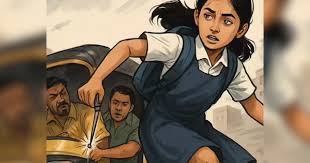
Hardoi News: In Hardoi, Uttar Pradesh, boys from another community kidnapped a Dalit girl from outside her school as part of a well-planned conspiracy. It is being reported that they had been harassing her previously. Read the full story. Ashish Dwivedi/Hardoi: A daylight kidnapping in Hardoi, Uttar Pradesh, caused a sensation. A 14-year-old Dalit girl was abducted from outside her school by four young men in a car. The police acted swiftly and rescued the girl safely from the clutches of the kidnappers and seized their car. However, the kidnappers escaped and police teams are searching for them. Edited By: Preeti Chauhan Courtesy: Hindi News
Cong stages protest in Ambala against ‘vote theft’
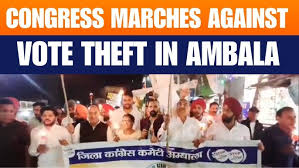
Ambala: Former chief minister and Leader of Opposition (LoP) Bhupinder Singh Hooda, along with Haryana Congress chief Rao Narendra Singh, led a protest in Ambala on Thursday against alleged large-scale vote theft in Haryana. A large number of Congress leaders, workers, and citizens gathered in the city, voicing strong anger and outrage over what they termed as a “theft of democracy.” The protesters later submitted a memorandum to the Ambala deputy commissioner’s office, addressed to the President of India. Addressing the gathering, Hooda said that LoP in Lok Sabha Rahul Gandhi exposed massive vote rigging across several states, including Karnataka, Maharashtra, and Haryana. “His revelations raised serious questions about the impartiality of the Election Commission. In some areas, 501 votes were registered from a single house, in others, 223 votes were recorded in the name of one woman, and even 22 votes were cast using the photo of a foreign woman,” Hooda claimed. He alleged that the actual scale of the fraud runs into lakhs of votes. “Rigging happened not only in constituencies where the Congress lost but even in those where it won. If the voting was fair, Congress MLAs would have won by far larger margins,” he added. Citing past electoral trends, Hooda said that the party leading in postal ballots always formed the govt in Haryana. “This time, Congress was leading in 73 out of 90 seats in the postal ballot count, but lost in the EVM count. On the night of the 5th, the Election Commission reported a 61.19% voter turnout; the next day, it increased to 65.65%, which mysteriously rose to 67.9% by the 7th — just before counting. Such discrepancies are beyond comprehension,” he said. Hooda termed the developments as an “open theft of not just votes, but the entire govt.” He asserted that the incident amounts to tampering with the country’s democracy, constitution, and the hard-earned freedom achieved through countless sacrifices. “Congress will launch state-wide and nationwide protests against vote theft and will not allow the BJP to undermine the Constitution,” he declared. Echoing Hooda’s sentiments, Congress state president Rao Narendra Singh said Rahul Gandhi’s disclosures revealed the “truth of machine manipulation.” “In the assembly polls, Congress received 39.5% votes against the BJP’s 39.9%. Yet, despite leading in 73 postal ballot seats, Congress was denied power. In the Lok Sabha polls, Congress got 47.6% votes — two and a half percent more than the BJP. This is a direct assault on Dr B R Ambedkar’s Constitution,” Rao said, vowing to take the battle to the streets to defend democracy and the people’s mandate. Courtesy : TOI Note: This news is originally published on https:/timesofindia.com/bha and is used purely for non-profit/non-commercial purposes, especially human rights
The pandemic of caste: Homebound exposes casteism and communalism amid COVID-19 lockdowns
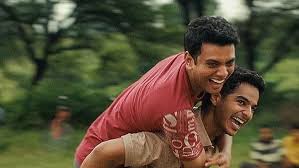
Neeraj Ghaywan’s ‘Homebound’ must be appreciated for its representation of how caste supremacy constantly suppresses Dalit and Muslim identities in the public sphere. It was March 24, 2020. Prime Minister Narendra Modi had driven the entire nation into a sudden, harsh and complete lockdown for 21 days in the wake of the COVID-19 pandemic. The country subsequently witnessed gut-wrenching visuals of clueless, poor informal sector contract workers and interstate migrant workers setting out on foot towards bus terminuses. The event may have now faded from popular public imagination in 2025 with the growing institutional talks of Vikshit Bharat of PM Modi. But to only surprise us, director Neeraj Ghaywan evokes those images with his film Homebound. The politics of naming has truly justified the title of the film. Homebound is loosely based on a field report by senior journalist Basharat Peer, published in The New York Times in 2020. Fraternity in times of hostility The first scene of the film is set in a railway station named Mapur, crammed with job aspirants for a railway police recruitment examination. A Dalit youth, Chandan (Vishal Jethwa), and Mohammed Shoaib (Ishaan Khatter) arrive at the station only to be devastated by the number of candidates waiting to catch the train for very limited vacancies. Chandan and Shoib grew up together in the village that truly epitomises the constitutional vision of fraternity, while they lived similar lives of social deprivations. Throughout the first half of Homebound, Shoaib and Chandan try hard for economic mobility. It’s when Shoib gets a private sector job as a spot boy that he immediately starts experiencing communalism from his dominant caste Hindu bosses. Though Chandan isn’t in a private sector job, Ghaywan shows how casteist brutalism against Dalits is unbounded. A desperate Chandan goes to the railway office to enquire about the recruitment results and ends up facing the casteist taunting by a railway clerk. The story of private sector discriminations is less known due to dominant caste gatekeeping. Ghaywan busts the myth that casteism isn’t rampant in the public sector. Caste and religion, the twin forces of brutalism Homebound must be appreciated for its representation of how the cruelty of caste supremacy constantly suppresses Dalit and Muslim identities in the public sphere. A good example is how Chandan is shown to repeatedly tick the general category box on job applications to escape caste-based stereotypes and degradation. Ghaywan exposes the incessant delays in public sector recruitments due to the ruling elites’ non-committal attitudes. Another critical example of casteism in the public sector workplace is how dominant caste parents force Chandan’s mother out of her job as a school cook. What comes as a soothing interlude for progressive audiences is a supporting character’s Buddhist wedding, where pictures of Buddha and Dr BR Ambedkar are spotlighted. The pandemic of caste Homebound’s second half is teary, as both Chandan and Shoaib unite at a garment factory in Surat. Their lives take a 120-degree turn when the COVID-19 pandemic hits. Garment factories suddenly close down due to strict lockdown protocols. Both friends are quickly faced with deep uncertainties and decide to go back to their villages. While they’re crammed on a truck’s rooftop, Chandan contracts COVID-19. Despite having opportunities to do so, Shoib doesn’t abandon Chandan. Exposing India’s stark social realities, they get off the truck and walk on the empty highway in search of a hospital. Ghaywan reveals how healthcare facilities in India are unequally spread and mostly centred near urban areas. Towards the end, Chandan lies dying on Shoib’s lap on the highway. Shoib discovers a small photograph of Ambedkar in Chandan’s wallet and his job application with the Scheduled Caste (SC) checkbox ticked. This, to me, is the most powerful visual in Homebound. It proclaims how Ambedkar creates hopes among India’s most oppressed. After Shazia Iqbal’s Dhadak 2, Ghaywan’s Homebound has created renewed anticipations from Bollywood producers and directors, as they have finally started telling the audience the most politely kept secret of India—caste hierarchy. The severe cuts imposed on both films by the Central Board of Film Certification (CBFC) show the shrinking space for freedom of speech in a right-wing political landscape. Nonetheless, Homebound lays bare how socioeconomic marginalities are associated with caste and religion. Needless to say, the film deserves to be India’s entry for the Academy Awards. However, Bollywood needs to nurture more Dalit actors and directors to tell such stories in gripping ways. Subhajit Naskar is a political scientist and teaches at the Department of International Relations at Jadavpur University. Views expressed here are the author’s own. Written by:Subhajit Naskar Courtesy : TNM Note: This news is originally published on https:/thenewsminute.com/bha and is used purely for non-profit/non-commercial purposes, especially human rights