
Caste Discrimination in US: Dalit Activist Thenmozhi Soundararajan’s Groundbreaking Survey and Advocacy
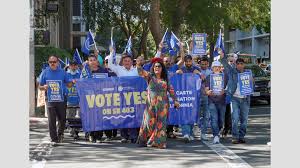
In 2015, Thenmozhi Soundararajan, a young activist, scholar, and co-founder of Equality Labs — a dalit civil rights organisation — spearheaded the first nationwide survey on caste discrimination in the US. The survey found that one in four dalits had faced physical or verbal assault, one in three reported discrimination in education, two in three encountered workplace bias, and more than half lived in fear of being ‘outed’. It emerged from repeated testimonies from dalit Americans even as dominant-caste South Asians insisted caste “was not an issue”. “These numbers showed what many denied: caste isn’t confined to South Asia. It exists in 21st-century America,” says Thenmozhi, who was conferred the Vaikom Award last month, which recognises contributions to caste justice and dalit civil rights. “Dalits faced slurs, physical threats and even organisational crises from those who didn’t want us to ask these questions,” says Thenmozhi, who wrote about it in ‘The trauma of caste’, published in 2022. Born to parents from Coimbatore, who later migrated to the US, Thenmozhi says she was driven by the suffering she witnessed in her family and among caste-oppressed communities. “It wasn’t one moment. It was the weight of intergenerational trauma in our diaspora and the silence that allowed caste harassment to be recreated in our homes, schools and workplaces,” says the US-based activist, who also co-founded ‘Dalit History Month’, celebrated globally. The ‘Lakireddy Bali Reddy’ case in the early 2000s in Berkeley shook her, she says. Reddy, a wealthy landlord, brought dalit women and girls from India on fake visas, exploited them for labour, and sexually abused minors. The crimes surfaced after a 13-year-old victim died in one of his buildings, leading to federal charges, a prison sentence and reforms in California’s anti-trafficking laws. “I recall letters from dominant-caste supporters asking for leniency. The impunity was devastating. We deserve a diaspora that heals together, stands with survivors, and refuses to repeat the injustices we inherited.” ‘We must de-brahminise technology and prevent a digital apartheid: Thenmozhi’ What were some of the other findings of your caste in the US report? We found 60% experienced caste-based slurs and derogatory comments; 40% felt unwelcome at their place of worship; 20% reported discrimination at a place of business. More than 40% said they had been rejected in a romantic partnership because of caste. In 2015, many US academics did not support this work. When working on the report, we were met with caste slurs. One organisation convened a board meeting to debate whether sharing our survey would “divide the community”. The truth is, the community was divided by caste; the survey revealed what had long been hidden. Your advocacy triggered support for anti-caste legislation across US cities. Our caste report, initially dismissed by many academics, mainly from dominant castes, became a foundational text for congressional briefings, institutional reforms and the legislative fight for SB 403, a bill in California to ban caste discrimination. In 2023, Senator Aisha Wahab championed SB 403, a bill that sought to add caste to California’s existing anti-discrimination laws, making it illegal to deny someone housing, employment or educational opportunities because of their caste. While SB 403 passed both houses, the governor, under pressure from dominant-caste Hindus, vetoed the bill. However, while vetoing the bill, the governor confirmed that caste discrimination is already against the law. In that sense, we still won: Californians who are denied housing, harassed at work, or subjected to physical or verbal abuse because of caste have clear pathways to redress, and our communities have stronger tools to live together with respect. Your work focuses on the tech industry. Tech companies are not neutral meritocracies; they are powerful corporate institutions that often protect dominant-caste networks. They benefit from public subsidies while funding anti-democratic political agendas. We must regulate tech, not worship it. Companies should explicitly include caste in anti-discrimination, vendor and harassment policies; provide caste-awareness training for HR, managers and staff; and audit datasets and algorithms to identify caste-coded biases. Just as earlier generations fought to de-brahminise access to public space, we must now de-brahminise technology and prevent a digital apartheid. Why must caste be considered in conversations about AI? If datasets, training corpora and annotation labour are marked by caste bias, and they often are, then AI will reproduce caste discrimination at scale. Caste must be included in algorithmic auditing, dataset review and ethical governance. The future must be built with caste-oppressed engineers, researchers, linguists and ethicists at the table. Where is the anti-caste movement today? Dalit art, literature, music, film, and political thought are shaping global culture. Our voices are visible. But visibility is not enough. This moment calls us to look to our ancestors such as Periyar, Iyothee Thass, Savitribai and Jyotiba Phule and Ambedkar. The next phase of our movement is about institution-building, not just reacting to harm, but designing the world that comes next. Courtesy : TOI Note: This news is originally published on https:/timesofindia.com/bha and is used purely for non-profit/non-commercial purposes, especially human rights
Education, unity path to progress for Dalits: Min Satish
Pic: Public works minister Satish Jarkiholi inaugurates the student talent awards and Kannada Rajyotsava programme organised by the Karnataka Rajya Sa-Abhivruddhi Sangha at Kannada Bhavana in Belagavi on Sunday Belagavi: District minister Satish Jarkiholi stressed that the progress of the Dalit community depends on unity, education, entrepreneurship, and strong social and political representation. “Our future rests on the Constitution given to us by BR Ambedkar,” he said, while inaugurating the Student Talent Awards and Kannada Rajyotsava programme organised by the Karnataka Rajya Sa-Abhivruddhi Sangh at Kannada Bhavan on Sunday. Jarkiholi said that understanding history is essential for building an equitable society. Acts such as segregating Dalits or humiliating them, he said, must end. “The injustice suffered by our ancestors should not be repeated for future generations. Education is the only way forward,” he added. He cautioned that without the Constitution, historically marginalised communities might still be denied basic rights. “Ambedkar’s contribution is the foundation of the community’s growth,” he noted. The minister pointed out that while the govt has implemented several initiatives to promote education among the poor, challenges persist. He suggested that financially stable individuals and govt officials adopt underprivileged students and support their higher education to bring meaningful social change. Jarkiholi also referred to a recent meeting in Hubballi, regarding issues faced by the community, and assured that the demand for land for the Karnataka Rajya Sa-Abhivruddhi Sangh in Belagavi would soon be addressed. Attempts to erase the history of great social reformers, he said, must be countered with awareness and education. Quoting Ambedkar, he said, “Those who know history can create history.” He urged the youth to draw inspiration not from film stars or sports icons, but from social reformers like Buddha, Basavanna, and Ambedkar, whose ideals can eliminate caste and religious conflicts and ensure the country’s progress. MLA Raju Sait, writer UR Patil, folk singer Jyotirling Honakatti, association president Subhash Netrekar, Bhimrao Pawar and Sukumar Dodamani were present. Courtesy : TOI Note: This news is originally published on https:/timesofindia.com/bha and is used purely for non-profit/non-commercial purposes, especially human rights
Chhattisgarh: Dalit youth assaulted, beaten in the middle of the road in Dipka, case filed
Dalit youth attacked in an Instagram dispute: assaulted with casteist slurs, FIR filed against Kunal Singh Rajput. Chhattisgarh: A serious case of assault against a Dalit youth has come to light in the Dipka police station area of Korba district. The victim alleges that a boy named Kunal Singh Rajput came to kill him. The Dalit youth suffered a serious head injury in the incident. However, in the presence of the Chhattisgarh Bhim Army Ekta Mission, the Dipka police have registered a case against the accused. According to the police, the accused is being interrogated and further action will be taken after the investigation is complete. The incident occurred on November 15th at Azad Chowk in Dipka, when Nitesh Kurre, a resident of Dipka, was going to the market with his wife at 5 pm. Kunal Singh Rajput attacked Nitesh Kurre, causing a head injury and serious injuries. The Dalit youth alleges that the accused, Kunal Singh Rajput, stopped him on the road, began assaulting him, and hurled casteist slurs at him over a social media Instagram chat and an old dispute. Police investigating the case Based on the victim’s complaint, the Dipka police have registered a case under relevant sections of the IPC, including sections 296, 115(2), and 351(2) of the Indian Penal Code, and have begun investigating the matter. Sharvan Kumar Courtesy: Hindi News
Major RPF action at Tatanagar station: 13 tribal minors, including 12 girls, being taken to Tamil Nadu were rescued.
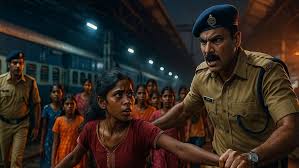
The plan was to make them work as laborers in a Tamil Nadu thread factory; the RPF apprehended them before they could board the Tatanagar-Ernakulam Express. Jamshedpur: The Railway Protection Force (RPF) has achieved a major success in its campaign against human trafficking in Jharkhand. The RPF, acting swiftly at Jamshedpur’s Tatanagar railway station, rescued 13 tribal minors from the clutches of human traffickers. Officials announced on Monday that the rescued children, including 12 girls and one boy, were being taken to Tamil Nadu under the pretext of providing them jobs. They were planning to go to Coimbatore. Tatanagar RPF in-charge Rakesh Mohan stated that the action was based on a strong intelligence report. Senior Divisional Security Commissioner P. Shankar Kutti of the Chakradharpur Division of the South Eastern Railway had provided a tip in this regard. Upon receiving information, the Flying Squad of the Anti-Human Trafficking Unit (AHTU) increased surveillance at the station. An RPF officer said, “These children were rescued from Tatanagar station on Sunday while they were waiting to board the Tatanagar-Ernakulam Express. During interrogation, the minors revealed that they were being taken to work at a yarn manufacturing unit in Salem, Tamil Nadu.” Two brothers arrested Taking action in this case, police arrested two alleged human traffickers. The accused have been identified as Sunil Tatonba and Jampira Tatonba. These two accused are real brothers and residents of Amdiha Panchayat, which falls under the Hatgamharia police station area of West Singhbhum district. On Monday, the RPF handed over all the rescued children and the two arrested accused to the Tatanagar Government Railway Police (GRP) for further legal action. All the children are residents of West Singhbhum. Tatanagar GRP in-charge Jitram Oraon confirmed the case and said that all the rescued minors are between 15 and 17 years old. They are residents of different villages in the Hatgamharia block of West Singhbhum district, Jharkhand. Giving details about the further process, the GRP in-charge said, “All 13 minors have been handed over to the Child Welfare Committee (CWC) in Jamshedpur for care and protection. Before being released to their families in Hatgamharia, these children will be produced in the Jamshedpur Civil Court to record their statements.” Accused Sent to Jail Sunil and Jampira Tatonba, two brothers arrested on charges of trafficking minors, were produced in court, from where they were sent to Ghaghidih Central Jail in judicial custody. This prompt action by the administration saved the children from a bleak future. Rajan Chaudhary Courtesy: Hindi News
Rajasthan Board’s arbitrary fee hike: Parents of tribal children worried, the board will fill its pockets but poor families will be burdened!
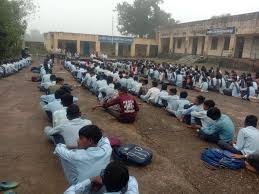
Over 38,000 students in Banswara district alone will be affected by this decision. Over 80% of the district’s population comes from the tribal community, most of whom live below the poverty line. Banswara – A decision by the Rajasthan Board of Secondary Education, Ajmer, has raised concerns among thousands of families in the tribal-dominated district of Banswara. The board has abruptly increased the examination fees for grades 10 and 12, jeopardizing the education of children from poor tribal families. The board has increased the theoretical exam fee from ₹600 to ₹850, and the practical exam fee from ₹100 to ₹200 per subject. This increase will apply to both regular and private students. Virendra Chaudhary, a senior leader of the Rajasthan Teachers’ Union (Siyaram), stated that the Ajmer Board of Secondary Education has declared the fee hike of Rs. 250 for theoretical exams and 100% for practical exams, from Rs. 100 per subject to Rs. 200, as unfair. Over 38,000 students in Banswara district alone will be affected by this decision. Over 80% of the district’s population belongs to the tribal community, with most families living below the poverty line. Most earn a living by working as laborers in Gujarat or neighboring states, making it difficult to even make ends meet. They can barely afford to pay their children’s fees. Local parents are outraged by this decision. Dhirajmal, a parent and former sarpanch of Bhanwar Vod Gram Panchayat, said, “This fee hike is an additional burden for poor tribal families. We are already struggling in this era of inflation. This will adversely impact our children’s education, especially girls’ education.” The looting of children and the hefty bonuses to board employees are unfair. Teacher leader Virendra Chaudhary stated that the Board employees are being given annual bonuses of thousands of rupees by robbing poor tribal students. The Board fails to make timely payments for all tasks, from application forms to fee invoices and other Board work, including evaluation and inspection. It also makes unnecessary 20% deductions for temple expenses, magazines, and other items. He demanded the state government conduct a high-level investigation into the arbitrary ₹35,000 bonus given to Ajmer Board employees and the additional honorarium paid in addition to their salaries. The Rajasthan Teachers’ Association, Siyaram, demanded the inclusion of a chairman and members from the tribal region in the Board’s executive committee and expressed the need for a separate board for the Banswara tribal region. Chaudhary stated that for years, a new executive committee has been formed and, under the influence of the administrator, anti-tribal and anti-student decisions have been taken unilaterally. He stated that, as decided in a meeting chaired by the Education Secretary, starting in the 2026-27 academic year, both regular and private students will now have to pay an examination fee of ₹850, which is a step and a deep conspiracy to financially deprive tribal students across the state from education. Furthermore, the fee for practical exams has been fixed at ₹200. However, this increase is the first since 2017. Currently, ₹600 is charged for regular students, ₹650 for private students, and ₹100 for practical exams. According to board officials, the fee increase has become necessary due to rising expenses on question paper printing, evaluation, and examination center arrangements. Currently, the board earns approximately ₹130 crore from examination fees. While this fee increase will increase this revenue, it will directly impact the pockets of approximately 2 million students across the state. Local students and parents have expressed disagreement with this decision. Student Narayan Lal Charpota said that the cost of coaching and books is already skyrocketing, and now the increase in examination fees will make education even more difficult for ordinary families. Siyaram Sharma, State Administrative President of the Rajasthan Teachers’ Union (Siyaram), said that the board’s decision cannot be considered administratively appropriate. The government should also announce a reimbursement relief scheme for the tribal BPL category so that economically weaker students are not deprived of the examination. 10th and 12th exams to be held from February 12 The Education Department has amended the Shivira Panchang to start the new session early. The exam schedule has been released. A letter in this regard was issued by Education Director Sitaram Jat. According to this, the 10th and 12th grade exams of the Board of Secondary Education will be held between February 12 and March 12. Annual exams for classes 9 and 11 will be held between March 10 and 25, and for classes 5 and 8 before March 12 instead of April 2026. Similarly, annual examinations for classes three and four, as well as six and seven, have been scheduled for March instead of April. The second competency-based assessment has also been scheduled for November instead of December, and the third assessment for March instead of April. The Education Department has begun preparations in the district in accordance with the revised schedule. Preparations are also underway in schools. Geetha Sunil Pillai Courtesy: Hindi News
Lucknow: Dalit research scholar Basant Kannaujiya’s protest continues at BBAU, with the university administration now issuing warnings to supporting students as well!
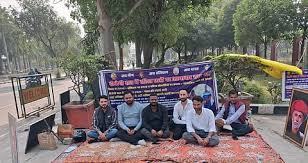
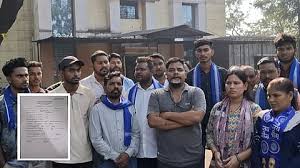
Following Kannaujiya’s expulsion, notices have been sent to students participating in the protest since November 20th. Lucknow – A peaceful protest against the expulsion of Dalit research scholar Basant Kannaujiya has been ongoing at Babasaheb Bhimrao Ambedkar University (BBAU) for over a week. Rejecting the university administration’s allegations of “indiscipline,” Kannaujiya continues to protest on campus to protect his constitutional rights to education and justice. However, the matter has now escalated, with the administration issuing warning notices to students who supported him. Prominent Bahujan activists, including Nagina MP Chandrashekhar Azad, have come out openly in the matter and are demanding the university’s immediate revocation of his expulsion. This incident adds another dark chapter of caste discrimination and administrative tyranny to BBAU’s history. Kannaujiya, a PhD scholar in the Department of History, had been studying at the university for the past 14 years. He was accused of “inciting students, vandalism, and trespassing into the Vice Chancellor’s office” during the alleged unrest on campus on September 17th. The Inquiry Committee and Disciplinary Committee recommended his expulsion based on CCTV footage, student statements, and his past record (which included 14 indiscipline cases, show-cause notices, and FIRs since 2012). Vice-Chancellor Professor Raj Kumar Mittal issued his expulsion order on October 17th, calling his response to the show-cause notice “baseless.” The order also barred him from entering the campus and future admissions. Immediately after his expulsion, Kannaujiya began a peaceful sit-in, within constitutional limits, which has now entered its seventh day. The protest site is near the main gate of the administrative building, where he is demanding student welfare, raising voice against caste discrimination, and the right to education. However, the administration’s response has become increasingly harsh. Notices have been sent to students participating in the protest since November 20th. The most recent case concerns Shivam Kumar, a student in the Department of Information Technology. The university’s Proctor’s Office issued letter number 1084/Proct./BBAU/2025 on November 21st, 2025, warning Shivam for “continued involvement in undisciplined activities.” The letter stated: “It has been found that you, in connivance with outsiders, have been participating in a protest at the main gate of the Administrative Building within the university campus since November 20th, 2025. You have obstructed the movement of teachers, officers, and staff entering and leaving the Administrative Building, and are also involved in creating unrest on the campus. Such actions are a gross violation of the university’s Student Code of Conduct.” The letter further warned: “You are therefore directed to immediately desist from such undisciplined activities and concentrate on your academic work. You may be punished as per university rules for your undisciplined activities.” This notice is not only for participation in the protest, but has also become a form of mental harassment for those expressing support. According to Kannaujiya, similar notices are now being sent to other students who have stood in support of him. Kanaujiya has exposed the administration’s tyranny in his response on social media. He wrote: “Another shameful example of the administration’s dictatorship! In a university with 50% reservation for Dalit students and 51 Dalit professors, Dalit researchers are facing the most caste-based harassment. I was expelled on false charges of indiscipline, and I have been staging a peaceful protest within the constitutional framework to protect my right to justice and education. But now the administration has issued notices to students who simply stood in my support. All department heads have been ordered not to allow any student/researcher to join Basant Kumar Kannaujiya’s protest. This clearly shows that the administration fears dissenting voices and is trying to suppress students with a casteist mindset. Now, another student who supported me has been issued a notice and is being mentally harassed. Is this democracy? Is this a university run in the name of Babasaheb? The truth is that voices against injustice cannot be suppressed with notices. We are on the path of the Constitution, and the struggle will continue.” Meanwhile, the matter has also taken a political turn. Nagina MP Chandrashekhar Azad has openly spoken out in support of Kannaujiya. He said, “Despite the ongoing peaceful protest against the fabricated and false charges of indiscipline leveled against a Dalit research scholar at BBAU (Central University) and the unjust expulsion based on them, the silence of the university administration and the Sanghi-minded Vice Chancellor is a matter of concern. Such silence is not only unethical but also raises serious questions about the democratic and constitutional dignity of a central university. This struggle is not just that of a student, but a struggle to protect identity, restore dignity, safeguard constitutional values, and save the democratic soul of BBAU (Central University). We clarify: “Atrocities on Dalit Research Scholar – Now the country will not tolerate it.” Swami Prasad Maurya, president of his Janata Party, wrote in a post: “Basant Kumar Kanojia, a Dalit research student at Baba Saheb Bhimrao Ambedkar Central University, Lucknow, was expelled on false charges of indiscipline, without any evidence or hearing his side of the story. While the true facts could have been ascertained by reviewing the CCTV footage installed on the university campus, the university administration, afflicted with a casteist mindset, has committed a despicable act of dictatorship and discrimination, which I strongly condemn. Similar discrimination against Dalits, tribals, and backward classes has been perpetrated in the past, sometimes by beheading Shamvuk and sometimes by cutting off Eklavya’s thumb. It is a matter of concern that people with Manuwadi thinking are still doing this, which is unfortunate.” Geetha Sunil Pillai Courtesy: Hindi News
‘Country in chaos’: Rahul slams SIR after BLOs death; calls roll revision ‘imposed tyranny’
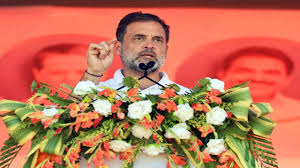
Leader of the Opposition in the Lok Sabha Rahul Gandhi on Sunday alleged that “chaos” has gripped the country in the name of the special intensive revision (SIR) of electoral rolls, claiming that 16 Booth Level Officers (BLOs) have died due to work-related stress.The SIR exercise is currently under way in nine States and three Union Territories. Its first phase was conducted in Bihar ahead of the State’s Assembly elections. “Under the guise of SIR, chaos has been unleashed across the country – the result? In three weeks, 16 BLOs have lost their lives. Heart attacks, stress, suicides – SIR is no reform, it’s an imposed tyranny,” Rahul Gandhi said in a post on X in Hindi. “SIR is a calculated ploy – where citizens are being harassed and the deaths of BLOs from unnecessary pressure are dismissed as ‘collateral damage.’ This is not a failure, it’s a conspiracy – a sacrifice of democracy to protect those in power,” the Congress MP alleged. A media report shared by Congress president Mallikarjun Kharge stated that 16 BLOs have died across six States — four each in Gujarat and Madhya Pradesh, three in West Bengal, two in Rajasthan, and one each in Tamil Nadu and Kerala. Following the death of a BLO in West Bengal that triggered a political dispute, governor CV Ananda Bose on Sunday said that the passing of Shanti Muni Ekka, who allegedly died by suicide due to “unbearable pressure” from SIR-related duties, would be examined thoroughly. “In such a situation, it is better to avoid a knee-jerk reaction. What the Chief Minister said has to be examined in detail. I am sure we have an Election Commission which is strong enough and has a balanced outlook. All these issues can be examined properly and appropriate solutions found, but what is required is free and fair elections in this country,” the governor said. The final electoral roll is scheduled to be published on February 7, 2026. The States and Union Territories currently undergoing SIR include Andaman and Nicobar Islands, Chhattisgarh, Goa, Gujarat, Kerala, Lakshadweep, Madhya Pradesh, Puducherry, Rajasthan, Tamil Nadu, Uttar Pradesh and West Bengal. Rahul on SIR Meanwhile, the Trinamool Congress will hold an internal review meeting on November 24, chaired by party general secretary Abhishek Banerjee. The meeting will focus on SIR-related assessments, improvements across districts, and ensuring that no voter names are omitted. Chief minister Mamata Banerjee is also scheduled to meet members of the Matua community in Bongaon, North 24 Parganas, on November 25. Courtesy : TOI Note: This news is originally published on https:/timesofindia.com/bha and is used purely for non-profit/non-commercial purposes, especially human rights
‘Dalits, Adivasis, Working Class Face Risk Of Disenfranchisement’ : Thol Thirumavalavan Moves Supreme Court Against Tamil Nadu SIR
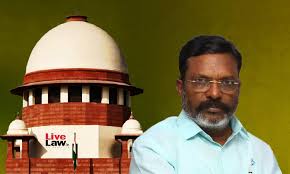
Member of Parliament and Viduthalai Chiruthaigal Katchi (VCK) president Thol Thirumavalavan has approached the Supreme Court challenging the Election Commission of India’s decision to conduct a Special Intensive Revision (SIR) of electoral rolls in Tamil Nadu ahead of the 2026 Assembly elections. He has sought the quashing of the Election Commission’s 27 October 2025 notification initiating the exercise in the State In the petition filed under Article 32, the petitioner contends that the SIR is arbitrary, non-transparent, and unconstitutional, and violates multiple fundamental rights, including equality, dignity, and universal adult franchise. He argues that the rushed exercise, announced less than a year before the State goes to polls, poses a serious threat of large-scale voter deletions, particularly among marginalised communities. According to the petition, the design and timing of the SIR disproportionately burden Dalits, Adivasis, migrant workers, women who relocate after marriage, the working class, disabled persons, and those lacking stable documentation or digital access. Structural barriers such as seasonal migration, informal housing, linguistic challenges and digital illiteracy could make compliance nearly impossible, resulting in wrongful deletions from the rolls. Citing the doctrine on indirect discrimination, the petitioner argues that even a facially neutral measure becomes unconstitutional if it disproportionately excludes disadvantaged groups. The petition points out that Dalits, Adivasis, women, and working-class citizens face disproportionate risks of being removed from the electoral rolls, effectively undermining the universal adult franchise that the Constitution makers envisioned for our democracy. According to the petitioner, there were large-scale voter deletions during similar revision exercises in Tamil Nadu, notably in 2002 and 2005, which later drew official acknowledgement of procedural lapses. Reports of over 50 lakh deletions ahead of the 2009 Lok Sabha polls and complaints from tribal communities in 2016 are cited to underscore the risks posed by intensive revisions. The petitioner points out that Tamil Nadu already underwent a Special Summary Revision between October 2024 and January 2025, with the updated roll published on 6 January 2025 and continuously maintained thereafter. The Election Commission, he argues, has offered no justification for a fresh statewide intensive revision, despite the proximity of the upcoming elections. The plea contends that the SIR process deviates from the statutory framework under the Registration of Electors Rules, 1960, which envisages home-based verification by Booth Level Officers. Instead, the EC has introduced additional form-based procedures through executive directions, allegedly lacking due safeguards such as notice and opportunity of hearing before deletions. Arguing that the right to vote is a constitutional right under Article 326, the petitioner submits that the SIR effectively creates a restricted franchise by imposing procedural burdens that vulnerable citizens cannot meet, amounting to “soft disenfranchisement” and undermining democratic legitimacy. The ruling party in Tamil Nadu, DMK, has approached the Supreme Court against the SIR. On the other hand, the AIADMK has filed an application supporting the SIR. Actor Vijay’s newly launched party TVK also filed a petition questioning the ECI’s move. The Supreme Court will consider the DMK petition on November 26. The petitiion was drafted by Advocate Disha Wadekar and filed through Aditi Gupta, AOR. Courtesy : Live Law Note: This news is originally published on https:/livelaw.com/bha and is used purely for non-profit/non-commercial purposes, especially human rights
India‘Called Me Low Caste, Beat Me, Threw Me Out’: Dalit Woman Names Nine In-Laws in Noida FIR
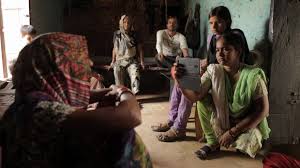
A Dalit woman in Noida has accused her in-laws of constant harassment after she married a man from an upper-caste family. The woman said her brother-in-law misbehaved with her and casteist slurs were repeatedly used against her. She also alleged that her in-laws beat her and eventually forced her out of the house. She has filed a police complaint against nine members of the family at Sector-20 police station. Sector-20 SHO D.P. Shukla said the woman reported that she married Bharat Sharma, son of Ravindra Sharma of Nithari village, on 5 February 2018 under Hindu rituals. According to her, her family spent around ₹25 lakh on the wedding, including jewellery and other items. She said it was an inter-caste love marriage, and from the very beginning her in-laws started demanding ₹50 lakh as dowry. The woman claimed she was repeatedly taunted for belonging to a “lower caste”. She said her in-laws openly insulted her by calling her caste names and would often tell her husband that he had brought home a girl from a “low caste”. She also alleged that one of her brothers-in-law refused to eat food cooked by her. According to the complaint, her husband began drinking heavily because he was disturbed by the constant harassment she faced. He later left her at her parental home, telling her to stay there until his family changed their behaviour. The woman said she gave birth to a child, but even then the harassment from her in-laws did not stop. She alleged that her elder brother-in-law molested her and she had earlier gone to the police with this complaint. When the matter reached the police station, she claims the accused family filed false allegations against her and her husband. According to the SHO, the woman has now filed an FIR against her father-in-law Ravindra Sharma, mother-in-law Rajrani Sharma, brothers-in-law Chandrakant Sharma and Sunil Sharma, a relative from her aunt-in-law’s side, her younger sister-in-law Renu, her younger brother-in-law Ram Sewak Sharma, her sister-in-law Sarika Sharma and her brother-in-law Gajendra Sharma. The charges include molestation, dowry harassment, assault, domestic violence and offences under the SC/ST Act. Police are investigating the case. Courtesy : TOP Note: This news is originally published on https:/theobserverpost.com/bha and is used purely for non-profit/non-commercial purposes, especially human rights
Constitution Month Special | A unique ‘Ambedkar Temple’ in Munger, Bihar, with a 12-foot-tall statue: A retired captain donated land to build it, where the Constitution is the supreme deity!

This year, on Baba Saheb’s birth anniversary, April 14th, a 12-foot-tall ‘Statue of Equality’, imported from Delhi, was dedicated to society. Munger – 185 kilometers from Bihar’s capital, Patna, on the National Highway in Ghorghat, a small village in Munger district, stands a structure completely different from traditional temples. There’s no Hindu deity, no mosque dome, no golden gate of a gurudwara, but only a 12-foot-tall statue of Dr. B.R. Ambedkar, which glows with the first rays of the sun and reminds people, “Educate, Agitate, Organize.” This is not a ‘temple’, but a living symbol of equality, social justice, and the Constitution. Its creator, 80-year-old retired Army Captain Yogal Kishore Paswan, says, “My religion is the Constitution. Babasaheb is like a god to us Dalits.” Tamal Saha of News The Truth (NTT) was on a 185-kilometer journey towards Patna. On the national highway near Munger, he suddenly saw a gigantic figure from a distance. Saha explains in his video that the statue was so impressive that he had to stop the car. Locals told him that it was a temple to Babasaheb, built by retired army officer Captain Yogal Kishore Paswan. 12-foot Ambedkar pillar erected in memory of his wife 80-year-old retired Army officer Captain Paswan said that he was a captain in the AUC (Armed Units Corps) and had traveled throughout India, from Ladakh to every corner. The Captain said that he had built this ‘Statue of Equality’, which is 12 feet tall. A statue this tall probably exists only in Patna, Bihar. Each one is 8-10 feet tall. Captain Paswan explained that in this building, children will study downstairs, and there will be office space upstairs. The lower portion will be an education center, where children will study without any discrimination. The upper portion will be for visitors and guests. At the top, there will be a statue of Babasaheb. When asked why people are building temples, why did you build this one, Captain Paswan replied: “It’s my hobby. I’m a soldier, not a leader who rises with the thought of earning money. I gave all my land in Babasaheb’s name. I have to die, so what will you take away?” Captain Paswan explained that just as the Emperor built the Taj Mahal, this one is also a Taj Mahal for me, which I built in memory of my wife, Maya Devi. The statue of Babasaheb was brought from Delhi. Respect for the Constitution: Babasaheb’s Contribution Captain says emotionally: “Ambedkar Saheb gave the country the Constitution. My granddaughter is a lawyer, and my younger daughter is a lawyer in the Patna High Court. They are all carrying the Constitution with them.” A soldier has no income, but he felt like doing this. He gave away 15-20 feet of land without even asking his son or daughter.” He insists, “Why not worship the Constitution? It’s a deity, equal to God. Baba Saheb is revered all over the world, and he gave us this Constitution, which runs the country. Whether the government is in Delhi or Bihar, it will have to abide by the Constitution, otherwise the people will overthrow them.” In response to a question about why Dalits were once not allowed to enter temples in Bihar, Captain says that here, visitors to the Ambedkar Temple “won’t be asked about their caste. Everyone from a beggar to a rich person can come and talk. Anyone can go inside.” On being asked about religion, Captain says, “I am a Hindu, but I consider Baba Saheb as God because there may be other gods, but he was a living person. What he gave to the country, no leader could give. The Constitution belongs to everyone—Hindus, Muslims, Christians, every caste.” Captain Paswan’s family consists of four daughters and a son who is an assistant manager at the LIC. He says, “I could have sold the land, but I donated it. I am indebted to Babasaheb from my previous life. I must have been stingy, so I gave away my share now.” Currently, construction work is underway, with the plastering of the ground floor remaining, which will be used for the children’s education once it is complete. (Courtesy: This report is based on the original video report by Tamal Saha and Ronnie Sanatra, broadcast by News The Truth (NTT) on November 9, 2025.) Geetha Sunil Pillai Courtesy: Hindi News