
PM silent when poor die while BJP leaders show arrogance: LoP
New Delhi: Congress president Mallikarjun Kharge and Lok Sabha LoP Rahul Gandhi targeted the governing BJP over deaths from contaminated water, calling the tragedy evidence of BJP’s “empty” claims and corruption, and lamenting that PM Modi always prefers silence when the poor die. Rahul said Madhya Pradesh has become the “epicentre of misgovernance” where unhygienic water deaths have been preceded by deaths from cough syrups and rats killing infants in govt hospitals. “Not water, but poison was distributed in Indore, and the administration remained in deep slumber,” he said. Alleging corruption in all the central govt schemes including Jal Jeevan Mission that Modi “never gets tired of trumpeting” about, Kharge pointed out that Indore has won the “cleanest city” award for eight consecutive years under the Centre’s “swacch sarvekshan survey”. The Congress brass, without naming the viral spat between a senior MP minister Kailash Vijayvargiya and a journalist, said the govt showed brazen arrogance when the families of the victims needed solace. “When ministers are questioned, they resort to abuse and intimidation. Drunk on the arrogance of power, they turn the tables on the journalists. The entire machinery swings into action to cover up the misgovernance of BJP govts,” Kharge said. Asking when would action be initiated against officials and leaders, Rahul said clean water is not a favour, but its “right to life” that has been destroyed by the “insensitive” govt. Kharge said the govt has fed India with empty promises for last 11 years, but has “failed to provide either clean water or clean air”. Courtesy : TOI Note: This news is originally published on https:/timesofindia.com/bha and is used purely for non-profit/non-commercial purposes, especially human rights
Karnataka govt removes EVM trust survey from its website after BJP bias charge
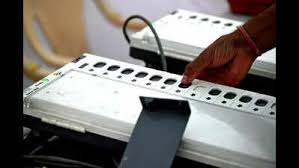
Bengaluru: Congress govt in Karnataka went on the defensive Friday after a survey assessing voter trust in Electronic Voting Machines (EVMs), commissioned by the Karnataka chief electoral officer (CEO), triggered political controversy, prompting the state to remove the report from the Karnataka Monitoring and Evaluation Authority (KMEA) website hours after it went viral. The survey, conducted by KMEA under the department of planning, programme monitoring and statistics at the behest of the CEO (Election Commission), concluded that a majority of voters believed elections in India were free and fair and that trust in EVMs had increased. Reacting sharply, Karnataka chief minister Siddaramaiah said the survey was being selectively used to create a misleading narrative that concerns raised by Congress leader Rahul Gandhi over electoral malpractice had been disproved. In a post on X, Siddaramaiah said the exercise was an end-line administrative evaluation of voter awareness under the SVEEP (Systematic Voters’ Education and Electoral Participation) programme, conducted in May 2025, and not a political opinion poll certifying electoral integrity. He noted that Rahul Gandhi had raised allegations of organised voter list manipulation, termed “Vote Chori”, only in Aug 2025, based on material that emerged later. The CM also questioned the survey’s limited sample size and flagged a possible conflict of interest involving the NGO that conducted it. Referring to Aland in Kalaburagi district, Siddaramaiah said a Karnataka police SIT had filed a 22,000-page chargesheet in a voter deletion case, arguing that administrative surveys could not override criminal evidence or pending questions before the election commission. Minister Priyank Kharge alleged the survey was biased, claiming CEO through KMEA had sought assistance from an NGO run by an individual closely linked to the Prime Minister’s Office. “The survey was conducted by a Modi’s man who works in the PMO and has authored a lavish tribute to the PM. The BJP is falsely peddling the survey as a state govt survey,” he alleged, adding that the data covered only 5,000 respondents across more than 100 constituencies. He said the BJP was answerable for alleged voter fraud reported from Aland. Congress MLC and former AICC general secretary BK Hariprasad charged that the survey was conducted “only to sing paeans” about the election commission. The survey, titled Lok Sabha Elections 2024: Evaluation of endline survey of KAP (Knowledge, Attitude and Practice) of Citizens, which was removed from website, covered 5,100 respondents across 102 assembly segments in the Bengaluru, Belagavi, Kalaburagi and Mysuru divisions. It was undertaken by the Grassroots Research and Advocacy Movement, Bengaluru, founded by Balasubramaniam, and monitored by KMEA. The findings showed high confidence in the electoral process even in Kalaburagi. “While recognition of the importance of each vote (above 81.3%) and trust in the electoral process and EVMs (above 83.6%) was high, concerns over inducements and the influence of money and muscle power remained, especially in regions like Kalaburagi,” the report said. It added rural voters generally perceived elections as fair due to effective booth-level officer engagement, while urban youth expressed concerns about elite dominance, lack of transparency and apathy. The evaluation adopted a mixed-methods KAP framework, using structured questionnaires, 23 in-depth interviews, 57 focus group discussions and 16 booth-level case studies across urban, semi-urban and rural areas. It reported EPIC possession at 99.02% and voter list inclusion at 98.1%, though awareness gaps persisted in urban areas. According to officials, KMEA is a statutory body tasked with independent evaluation of public programmes to support evidence-based policymaking. The state govt has not issued an official explanation for the removal of the survey from the KMEA website. Courtesy : TOI Note: This news is originally published on https:/timesofindia.com/bha and is used purely for non-profit/non-commercial purposes, especially human rights
Tamil Nadu assembly elections 2026: Congress asks DMK for 38 seats, three cabinet berths
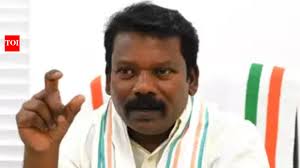
CHENNAI: Congress has asked DMK, its principal ally in Tamil Nadu, for 38 seats in the upcoming assembly election, and three cabinet berths if the alliance wins, multiple sources told TOI. The demand comes in the wake of a section within Congress whispering about a probable tie-up with Vijay’s TVK. “Our leadership has communicated this to DMK top leadership; negotiations will soon begin,” said a senior Congress leader who did not want to be named. He said the demand stemmed from his party’s “unconditional support to the DMK govt, which completed its full term in 2011 despite not having absolute majority in assembly” and “our willingness to give DMK ministerial berths in the UPA govts.” When contacted, two DMK leaders said they were not aware of the Congress demand. “There will be clarity only when formal seat-sharing talks between the parties begin.” Congress sources said attempts are being made to persuade the DMK leadership to provide “at least an oral assurance” on power sharing. “A meeting between AICC President Mallikarjun Kharge and former Union minister P Chidambaram is expected soon, after which the picture may become clearer,” said a source. Congress constituted a negotiation committee on Nov 22 last year, after an emissary of DMK president M K Stalin met Congress leaders Rahul Gandhi and Mallikarjun Kharge in Delhi. On Dec 3, the Congress panel led by AICC general secretary Girish Chodankar met Stalin. Two days later, AICC member Praveen Chakravarty met Vijay, sparking another round of speculation and confusion. While a few second-rung leaders fanned rumours of a Congress-TVK alliance in the making, TNCC president K Selvaperunthagai expressed concern over the party speaking in different voices. Recently, a few Congress functionaries shared stage with TVK leaders at a Christmas event in Arumanai in Kanyakumari. Those in Congress opposing any friendship with TVK ask how Rahul Gandhi could share a stage with Vijay who has been calling DMK an evil force. “Our MLAs haven’t spoken ill of DMK for years. How can we turn against the party overnight? Besides explaining such things, questions about leading and funding the campaign pose challenges to the idea of such an alliance,” said a senior Congress leader. Courtesy : TOI Note: This news is originally published on https:/timesofindia.com/bha and is used purely for non-profit/non-commercial purposes, especially human rights
Dalit BJP Leader Rakesh Sahay Alleges City Chief’s Gunman Pointed Weapon at Him in Aligarh
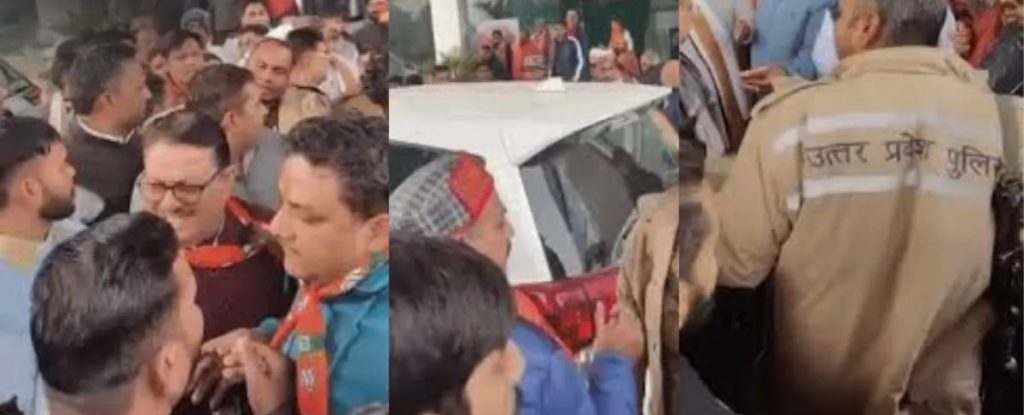
A controversy has erupted within the Bharatiya Janata Party (BJP) in Aligarh after the gunman of the party’s city president was accused of pointing a carbine at a Dalit leader during a party programme. The incident took place on Wednesday at the Atal Smriti Sammelan held at the Habitat Centre, which falls under the Civil Lines police station area in Aligarh. Rakesh Sahay, city general secretary of the BJP’s Scheduled Caste Morcha, alleged that the gunman of the BJP Aligarh city president, Engineer Rajiv Sharma, misbehaved with party workers and aimed his weapon at him during an argument. Speaking to the media, Sahay claimed the act reflected discrimination. “This happened because I am Dalit. Carbines will be pointed at us and cases will be filed against us. This gunman has been kept to intimidate party workers, not for security,” he alleged. According to eyewitnesses, the dispute began when BJP regional president Durvijay Singh Shakya arrived at the venue. As he moved from the fifth floor towards the auditorium, several party workers, including Sahay, tried to take selfies with him. During this, workers were allegedly pushed aside, leading to heated arguments between the city president’s entourage and BJP workers. Tensions rose again during the welcome ceremony on stage when Sahay, former mandal president Sanjay Sharma and Gorang Tiwari stepped forward to greet the regional president. They were reportedly stopped by the city president’s gunman, which led to another round of arguments. Senior party leaders intervened and managed to calm the situation for a while. However, after the programme ended and the regional president left the venue, another confrontation broke out. During this argument, the gunman allegedly pulled out his carbine and pointed it at Rakesh Sahay, creating panic among party workers. Other BJP leaders and security staff stepped in to defuse the situation. Metropolitan vice-president Sanjay Goyal confirmed that party workers were only trying to take photographs with the regional president. “There was pushing and arguments, but pointing a weapon at a worker is completely unacceptable,” he said, adding that the matter would be reported to the BJP’s state leadership. BJP Aligarh city president Engineer Rajiv Sharma denied the allegations. He claimed that some workers created chaos at the event and manhandled the gunman when he tried to manage the crowd. “This entire episode has damaged the image of the party,” Sharma said. Following the incident, the gunman, identified as Anoop Kumar, submitted a written complaint to Senior Superintendent of Police Neeraj Jadoun. Police officials said CCTV footage from the venue is being examined to establish the sequence of events. “An inquiry is underway, and all aspects of the incident are being verified,” a police officer said. The incident has caused unease within the BJP’s local unit in Aligarh, with several leaders demanding accountability and restraint at party programmes, especially when senior leaders and workers are present. Courtesy : TOP Note: This news is originally published on https:/theobserverpost.com/bha and is used purely for non-profit/non-commercial purposes, especially human rights
5 injured after gang opens fire at Dalit family:Dispute over cow grazing led to attack in Morena village; elderly man seen pleading with folded hands
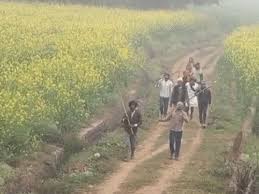
In Rajaram Ka Pura village of the Jaura development block in Morena, influential villagers allegedly opened fire and assaulted a Dalit family after the family refused to let their cows graze in the field or allow the removal of bajra stalks. The attackers are accused of firing indiscriminately and then beating the family with sticks. Injured admitted to the hospital Five members of the family are injured in the incident and have been admitted to Jaura Hospital. The victim’s family has also accused the police of delaying in registering the report. The incident occurred on the first day of the new year, i.e., Thursday at 3 PM. The video surfaced on Friday morning. According to the victim, Maharaj Jatav, the cows of influential villagers Banwari Gurjar and his associates were grazing in his field. When the family protested, they also took away the bajra stalks. Due to this, the dispute escalated, and the influential people threatened to take revenge. Fired 8-10 rounds, beaten with sticks It is alleged that Banwari Gurjar, along with his 10-12 companions, reached the house of a Dalit family. First, 8 to 10 rounds were fired, after which the family was attacked with sticks and batons. In the video, youths are also seen holding sticks and batons. Ramesh Jatav, Maharaj Jatav, Bahadur Jatav, Mahadevi Jatav, and Simla Jatav were injured in the assault. During the dispute, an elderly member of the family even folded his hands and apologized to the bullies, but despite this, the accused did not stop the assault. Police accused of delaying FIR After the incident, the injured family members reached the Jaura police station. It is alleged that their complaint was not registered immediately. The FIR was registered late at night. A case has been registered against Banwari Gurjar, Vishram Gurjar, Damodar Gurjar, Bunty Gurjar, and Veera Gurjar in the matter. Jaura SDOP Nitin Baghel said, The dispute was over a cow and fodder. The investigation revealed that there was first an altercation with a youth from the Gurjar family, after which there was a physical fight between both parties. An FIR has been registered based on the video and available evidence. The investigation of the case is ongoing. Courtesy : Bhaskar English Note: This news is originally published on https:/bhaskarenglish.com/bha and is used purely for non-profit/non-commercial purposes, especially human rights
I too want to become CM: Karnataka Home Minister Dr G Parameshwara
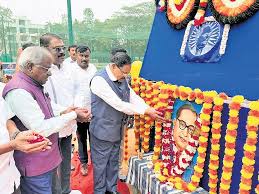
After becoming an MLA and minister, aspiring for the CM’s seat is a natural progression, hinted Parameshwara. BENGALURU: Home Minister Dr G Parameshwara on Thursday expressed his interest in becoming chief minister. “A human being must have aspirations, otherwise he/she will not feel human. Like everyone else, I too have aspirations”, he told reporters. Senior officers in the state home department have been given promotions and the minister was asked would he too get a political promotion. “I have lived as an optimist till now. Everyone has a desire for something to happen in life. If the high command decides, it will happen. It is up to the elders (to make a decision).” After becoming an MLA and minister, aspiring for the CM’s seat is a natural progression, hinted Parameshwara. The 74-year-old politician is a six-time MLA and one-time MLC. He has served as KPCC president for a record eight years (2010-2018). On Thursday he displayed his credentials as a Dalit and follower of Dr BR Ambedkar by attending an event commemorating the Mahars’ victory in Bhima Koregaon battle on January 1, 1818, near Pune in Maharashtra, at Nagasena Grounds near his residence in Bengaluru. According to sources Parameshwara, who has been in the good books of Congress Parliamentary Party (CPP) president Sonia Gandhi, has been silently lobbying for the top post. Some of his supporters, including former Hubballi Dharwad Corporation Mayor Anilkumar Patil, had met Sonia Gandhi in Delhi to submit a petition. Later some others had staged a demonstration outside Indira Bhavan while the Congress Working Committee (CWC) meeting was underway on December 27. Some of the sympathizers of Chief Minister Siddaramaiah, especially AHINDA leaders, have issued a statement that if he has to step down anytime in future Parameshwara should be given the top post and not Deputy Chief Minister DK Shivakumar. Interestingly, a section of Dalit leaders led by Bilikere Raju in Mysuru, Siddaramaiah’s home turf, last Sunday urged that the latter should sacrifice the CM post to a Dalit leader, especially Parameshwara. “Only then we will take part in the AHINDA convention (slated to be held in Mysuru on January 25), otherwise we will skip it”, he warned. Devaraj B Hirehalli Courtesy : TNIE Note: This news is originally published on https:/thenewindianexpress.com/bha and is used purely for non-profit/non-commercial purposes, especially human rights
Dalit dating in India is a choice between dignity and loneliness

Dating apps promised to disrupt the casteist marriage market. Instead, they’ve merely translated social biases into digital language. Let’s call her K. She is 34, single-child, and was ticking her Mr. Perfect checklist—has a larger goal or purpose, well-read, has to settle in her hometown, left-brained, must be a pothead, has high libido. And on top of it all, must be a neo-Buddhist. Oh, and bonus points for body count being in double digits (like her). She wanted all of this, no compromises at all, especially on the neo-Buddhist part. For educated Dalits, the harsh truth is: our dating pool is tiny. After decades of oppression, only a small fraction of Dalit youth have college degrees and job security like their Savarna peers. Even among Dalits, economic and educational uplift is uneven. My grandparents had arranged marriages within our extended clan, often prioritising family connections. Today, we discuss compatibility, but our pool is still largely comprised of members from our own community, and even that community is fracturing. As one essayist, Aashika Shivangi Singh, has noted, even marriage within first and third and fourth generation Dalits can provoke rejection from one’s own kin. In other words, this difference has left its scars even among “oppressed” castes. A shrinking dating pool Dalits carry intergenerational trauma, which can be hard to shake off, and it comes as an unavoidable baggage when it comes to finding a partner. They say, “The child of a broken home often seeks a perfect one, and in doing so, breaks the home they build.” For A, this reflects the anxiety of “getting it right” to avoid her parents’ fate. Her Dad left when she was 18. But her pursuit of ‘the perfect’ can stifle the natural, messy growth of a healthy relationship. And then there’s her checklist, the burden of expectation placed on a partner to be the permanent anchor that the parents failed to be. We often hear that modern love should transcend caste. After all, BR Ambedkar proclaimed, “the real remedy for breaking caste is inter-marriage. Nothing else will serve as the solvent of caste.” But in India, inter-caste unions remain rare; only about 5 per cent of marriages are between different castes. On dating apps, I see why. For every Dalit profile, there are dozens of profiles of young Savarna professionals. In swiping, I matched almost exclusively with Sharmas, Kumars and Chatterjees—upper-caste names that told me their caste before I even saw a picture. In a sense, the upper-caste majority on these apps makes us depend on each other: finding a socially aware partner often means dating within the Dalit/Bahujan community, not out of caste. This is not some romantic ideology of “dating within community” – it’s a quiet survival strategy. This isn’t about a lack of effort on apps. On the surface, dating technology promises openness, even anonymity. But caste filters itself in. As one Dalit writer wryly observed, even though apps don’t show your caste by default, “could it be that these apps are only casting a wider net to have access to people from different castes?” In practice, subtle markers, such as a surname, dialect, or even an English grammar test on a profile, serve as unofficial caste checks. “Many Savarna women,” an analyst notes, will declare themselves “grammar nazis” or post obscure cultural cues to signal they share Savarna upbringing. In short, technology is no match for what generations of social conditioning have normalised. The same caste boundaries that governed hometowns and schools quietly govern our swipes and likes. A big fault-line is generational. I’m a second-generation city dweller: my Dad earned a university degree and got a secure government job. For me, marriage is a choice about compatibility, love, and shared values. But for my parents’ generation (first-generation university-goers), marriage was often seen as proof that we’d escaped our caste past. They believe that if their daughter marries an Ambedkarite engineer, it will show their relatives that caste rules no longer bind us. In practice, this means they still mostly trust proposals within our sub-caste or those who look “respectable”. To them, each match is a statement: “See, our daughter is doing just fine.” This difference shows up in funny ways. I want to discuss relationship compatibility over coffee, but my mother quietly brings up the family’s job background. It’s a tension: elders see marriage as security and social proof, younger Dalits see it as an adventure of choices. Ideologies collide Another tension runs along ideological lines. In my family, we follow Ambedkarite neo-Buddhism, which means equality, rational thought, and rejecting caste rituals. We see ourselves as Buddhists first and caste-freed Dalits second. But many Dalit relatives I know (even if they outwardly call themselves “Buddhist”) still observe certain Hindu traditions: perhaps a puja, or an unshorn thread, or reverence for fasting on Thursdays. These differing worldviews can clash. For example, I’ve talked politics and social reform on dates, quoting Ambedkar or Buddha, only to find the match uncomfortable because I challenge even the smallest ritual they grew up with. Experiences like these remind us how deep caste memory runs, even in our own parents’ generation. The truth is, caste rules both the oppressor and the oppressed. As Dalit writer Suraj Yengde notes, even “in radical or progressive spaces, caste hierarchies continue to persist” in personal relationships. One painting of a Buddhist shrine on my wall might mean hope to me, and hostility to someone else. This ideological gap means our dating choices are often more constrained. I was assigned neo-Buddhist at birth, yet I can’t pretend all my kin left caste behind. In practice, many often screen potential Dalit partners by how seriously they take Ambedkar’s ideals versus caste heritage. And that difference matters: marrying outside one’s Dalit sub-caste can still upset even a Dalit community. Memory and trauma Intergenerational trauma casts a long shadow over Dalit dating. My parents lived through a lack of resources, an illiterate family, the barriers to education, and all that. They
DH Changemakers 2026 | How a transgender woman is empowering her community through livestock farming
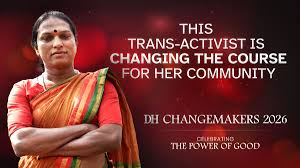
Arundathi, a transgender woman from Karnataka, is creating new opportunities for her community through livestock farming, skills training and legal support. From her small farm near Bharamasagara in Chitradurga, she helps transgender and other marginalised people raise goats and chickens so they can move away from begging and sex work and build steady, dignified livelihoods. Her simple pay-it-forward idea means that once someone becomes self-reliant, they pass on animals to another person in need, slowly spreading opportunity across districts. Along with livelihood support, Arundathi also helps people get Aadhaar cards, voter IDs and access to government schemes, making sure they are seen, recognised and included. Courtesy : DH Note: This news is originally published on https:/deccanherald.com/bha and is used purely for non-profit/non-commercial purposes, especially human rights
Odisha launches Sweekruti scheme for transgenders welfare and empowerment
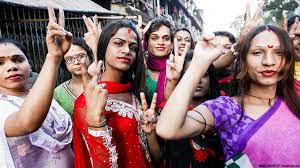
New state initiative provides financial aid, scholarships, skill training, legal support and housing to transgender persons and their families, aiming at social inclusion and dignity BHUBANESWAR: The Odisha government has launched a comprehensive welfare scheme for ensuring social inclusion, dignity and empowerment of transgender persons by addressing long-standing gaps in education, employment, healthcare, housing and legal support. Sources said the scheme Sweekruti, being implemented by the Social Security and Empowerment of Persons with Disabilities (SSEPD) department, has been designed to provide a structured, rights-based framework for the welfare of the transgender community and their families. Odisha, with a total transgender population of around 20,300 (as per the last census), is the first state to give transgender people social welfare benefits aimed at improving their overall socio-economic status. The scheme focuses on a set of key strategies that include financial assistance to parents of transgender children, pre and post-matric scholarships for transgender students, skill upgradation and entrepreneurship development training, strengthening of self-help groups, support for critical healthcare and group insurance, provision of legal aid and counselling. According to a resolution issued by the department, a key feature of the scheme is monthly financial assistance of Rs 1,500 to parents or guardians of transgender children to help them raise their children amid social stigma, discrimination and violence. This support will be provided until the child attains 18 years of age. In order to support education, eligible transgender students from families with an annual income not exceeding Rs 2.4 lakh will receive monthly scholarships ranging from `1,000 to `5,000, depending on the course pursued. Many transgenders are often denied entry into boys’ or girls’ hostels and refused rental housing, forcing them to drop out of education or employment, particularly when they migrate to cities such as Bhubaneswar, Cuttack, Rourkela, Berhampur, Balasore and Sambalpur. Secretary of the department RS Gopalan said Sweekruti will support the setting up of dedicated hostels for transgender persons by colleges, universities, urban local bodies and organisations working with the community. Transgenders will receive a stipend of Rs 3,000 per month for the duration of their studies. “The scheme will help districts set up rehabilitation centres to provide abandoned transgender persons, aged above 18 years and below 60 years, with shelter, basic amenities and capacity-building/skill development training,” he said. Hemant Kumar Rout Courtesy : TNIE Note: This news is originally published on https:/thenewindianexpress.com/bha and is used purely for non-profit/non-commercial purposes, especially human rights
Transgender community takes out procession in Secunderabad: Shri Khatu Shyam Nishan Kalash Yatra organized, people gathered to watch the procession
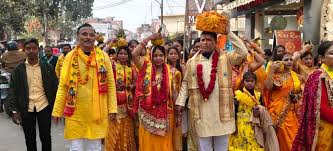
On Thursday afternoon, the Shri Khatu Shyam Nishan Kalash procession was taken out by the transgender community in Secunderabad town. The procession started from the ancient Baldev Temple on GT Road in the town and was led by the prominent Guru Rani Kinnar. Transgenders, dressed in colorful traditional attire, paraded through the town to the beat of drums and other musical instruments. The procession passed through Vijay Dwar, Bada Kabadi Bazaar, and Hanuman Chowk before concluding at the Shiva Temple in Ramwada. Along the route, townspeople showered flowers on the procession. A large number of people gathered to watch the procession. The police administration maintained security arrangements during this time. On this occasion, Guru Rani Kinnar said that this tradition is a symbol of the cultural identity of the transgender community and conveys a message of love and brotherhood in society. She also informed that a night-long vigil (Jagran) would be organized at the Shiva Temple to mark the New Year. Hemant Kumar, Secunderabad Courtesy: Hindi News