
Corrupt BJP’s Double Engine Governments Have Ruined People’s Lives, Rahul Gandhi Lashes Out at BJP
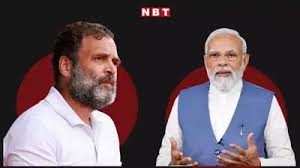
Rahul Gandhi said that the corrupt BJP’s double-engine governments across the country have ruined the lives of the people. Corruption, misuse of power, and the poison of arrogance have spread from top to bottom in BJP’s politics. New Delhi: Leader of the Opposition in the Lok Sabha, Rahul Gandhi, on Friday targeted the Modi government and the BJP on various issues. Rahul Gandhi said that the corrupt BJP’s double-engine governments across the country have ruined the lives of the people. Corruption, misuse of power, and the poison of arrogance have spread from top to bottom in BJP’s politics. Which BJP VIP is being protected by the protection of power? The Congress MP said in an X post, “In their system, the lives of the poor, helpless, laborers, and the middle class are just statistics, and a system of extortion is running in the name of “development”. Rahul Gandhi said, “The brutal murder of Ankita Bhandari in Uttarakhand has shaken the entire country. But the question remains the same today. Which BJP VIP is being protected by the protection of power? When will the law be equal for all?” Criminals were protected in the arrogance of power: Rahul Rahul Gandhi said, “In the Unnao incident in Uttar Pradesh, the entire country has seen how criminals were protected in the arrogance of power and how much the victim had to pay for justice.” Whether it is deaths due to drinking poisonous water in Indore or complaints of “black water” and contaminated supply from Gujarat, Haryana, and Delhi – there is fear of diseases everywhere. Whether it is the Aravalli range of Rajasthan or natural resources – wherever the greed and selfishness of billionaires have reached, the rules have been trampled upon. Mountains are being cut down, forests are being destroyed – and in return, the public is getting: dust, pollution, and disaster. The direct impact of corruption Deaths of children due to cough syrup, rats killing newborns in government hospitals, collapsing roofs of government schools – this is not “negligence,” but the direct impact of corruption. Bridges collapse, roads cave in, families are wiped out in train accidents, and the BJP government does the same thing every time: photo-ops, tweets, and the formality of compensation. Rahul Gandhi said, “Modi ji’s double-engine government is running – but only for billionaires. For the common Indian, this double-engine government of corruption is not a pace of development, but a pace of destruction – crushing someone’s life every single day.” Curated by: Varun Shailesh About the Author Varun Shailesh is an Assistant News Editor at Navbharat Times Online. He has over 15 years of experience in current affairs, politics, social issues, and features. He started his career with the news agency IANS in 2009. He worked on the central desk of Hindustan (Hindustan Times Group) for more than 5 years. Courtesy: Hindi News
Will take fight against G RAM G Bill to villages: CM
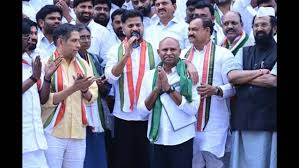
Hyderabad: Chief minister A Revanth Reddy on Thursday announced a statewide political mobilisation against the Centre’s new rural job guarantee scheme — G RAM G Bill — declaring that the Congress would take the fight from the assembly to the village level through public meetings and gram sabhas. The CM said he would address nine public meetings across the nine erstwhile districts, urging party leaders to campaign aggressively against the Bill and pass resolutions in every village. He added Sonia Gandhi, Rahul Gandhi or Priyanka Gandhi would participate in one of the meetings. Addressing the TPCC extended meeting, Revanth said the campaign would follow a comprehensive action plan finalised by the AICC in response to what he referred to as the ‘Ji Ram Ji’ law. He recalled that the state assembly had unanimously passed a resolution opposing the legislation and announced that similar resolutions would be adopted in all 12,702 villages between Jan 20 and 30. He stressed this was not merely the responsibility of village sarpanches but of every MLA. The CM asked TPCC president B Mahesh Kumar Goud and AICC Telangana affairs in-charge Meenakshi Natarajan to appoint ministers as party in-charges for 15 parliamentary segments, excluding Hyderabad and Secunderabad. He said national, state and district-level leaders would participate in the programme, with each leader assigned responsibility for one mandal. Revanth said he too would personally take charge of one mandal. “We will invite Sonia (if her health permits) or Rahul or Priyanka in Mulugu district, represented in cabinet by panchayat raj minister Seethakka,” he said. Large public meetings, each expected to draw one lakh people, will be held in the nine districts outside Hyderabad starting Feb 3, beginning in the undivided Mahabubnagar district. The meetings will oppose what the CM described as the Modi govt’s attempt to weaken the rights of the poor and agricultural labourers. Each meeting will be overseen by a different minister. Minister Ponguleti Srinivas Reddy will coordinate the programme, while Mahesh Goud, deputy CM Bhatti Vikramarka and Natarajan will monitor the campaign. Revanth accused the Modi govt of trying to undermine the employment guarantee scheme, calling it a globally recognised programme that brought transformative change. He alleged the BJP, having failed to secure 400 seats to amend the Constitution, was now attempting to curtail people’s rights through other means, including the special intensive revision. ‘PM should apologise’ He said the right to vote was the only weapon of the poor and alleged that its dilution would affect access to Aadhaar, ration cards and welfare schemes, amounting to a return to bonded labour. He said the Congress would not relent until the PM apologised to the nation and restored the employment guarantee scheme, particularly in the Telugu states. Calling for a clean sweep in the upcoming municipal elections, Revanth urged party cadres to ensure Congress control of local bodies. “We will be in power for the next eight years in the state, and only if we have a hold on local bodies can we develop these local bodies,” he said. Courtesy : TOI Note: This news is originally published on https:/timesofindia.com/bha and is used purely for non-profit/non-commercial purposes, especially human rights
Rahul Gandhi and Udit Raj’s troubles increase, they will have to appear before the court, also know about the case related to Mayawati
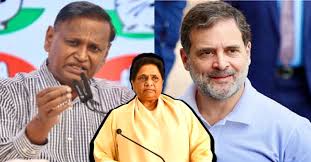
Poonam Singhal, Additional District Judge and Special Judge POCSO Act First, in Badaun, Uttar Pradesh, has issued notices against Congress MP Rahul Gandhi and Udit Raj. Badaun: Additional District Judge and Special Judge POCSO Act First, Poonam Singhal, in Badaun, has issued notices against Congress MP Rahul Gandhi and Udit Raj. Both Rahul Gandhi and Udit Raj have been ordered to appear in court on January 29, either in person or through their lawyer. The court issued this order while hearing a criminal revision petition filed by advocate Jai Singh Sagar in the case of objectionable remarks made by Congress leader and former MP Udit Raj against the BSP supremo. According to advocate Jai Singh Sagar, on February 16, 2025, Congress leader and former MP Udit Raj made objectionable statements against BSP supremo Mayawati and even talked about killing her. In this regard, an application was filed in the MP-MLA court the next day, February 17, to file a case. The MP-MLA court dismissed it, stating that the incident took place in Delhi. After this, advocate Jai Singh Sagar filed a criminal revision petition in the District Judge’s court on August 25, 2025. The case was then transferred to the Additional District Judge and Special Judge POCSO Act court. Since then, the hearing in this case has been ongoing. In this case, Additional District Judge and POCSO Act First, Poonam Singhal, has issued notices to Congress leader Rahul Gandhi, son of late Rajiv Gandhi, resident of 10, Delhi district, and Udit Raj, son of late Kallan, 192 North Avenue, near RML Hospital. In the notice, January 29 has been fixed as the date for both leaders to present their side, and they have been ordered to present their case either in person or through their lawyer. Curated by: Abhishek Shukla About the Author Abhishek Shukla is a Senior Journalist at Navbharat Times. He works here as a Senior Digital Content Creator. I have 9 years of experience in journalism. I have been working at Navbharat Times for the past 6 years. Here, I specialize in covering current affairs, politics, crime, administration, utilities, social issues, fact-checking, breaking news, and research-based stories. Courtesy: Hindi News
Humanity shamed in Bijnor: Dalit youth returning with medicine brutally beaten with shoes and slaps, forced to touch their feet
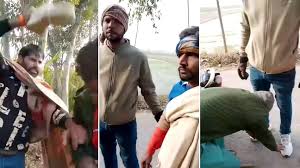
A video has surfaced showing a young man being brutally beaten in Bijnor. The incident is reported to have taken place near Dhokalpur village in the city’s Kotwali area. Dalit youth beaten in Bijnor Bijnor: In Dhokalpur village of Bijnor, Uttar Pradesh, a Dalit youth returning with medicine was stopped on the way by some influential young men who not only brutally beat him but also slapped him repeatedly and hit him on the head with shoes. After the video of the entire incident went viral on social media, the police took action and registered a case against three people and started searching for them. The viral video, which is about one minute and 36 seconds long, shows some young men surrounding the victim, first verbally abusing him, and then taking turns slapping and beating him with shoes. In the video, the victim is seen constantly pleading for forgiveness with folded hands. He even begs for mercy by holding the feet of the accused, but the bullies continued to beat him. According to local people, the accused first removed the victim’s cap and then continuously slapped his face and head. After that, one of the accused took off his shoe and hit the young man on the head with it. In just a few moments, the victim was hit with more than ten slaps and over a dozen shoes on his head. During the beating, the victim kept mentioning his mother’s illness and said that he was returning with medicine, but despite this, the accused did not listen to him. According to sources, the victim is a resident of Dhokalpur village, while the three accused are said to be from another nearby village. It is being said that the victim and the accused belong to different communities and the young man belongs to the Dalit community. A past dispute is also being cited as a possible reason behind the incident. Meanwhile, CO City Sangram Singh said that a video is going viral in which Kamal, a resident of Dhokalpur village, is being beaten by Himanshu and his two other companions from the same village. In this case, based on the victim’s complaint, the police have registered a case under serious sections of the law and are conducting raids to arrest the accused. Compiled by: Abhishek Shukla About the Author Abhishek Shukla is a Senior Journalist at Navbharat Times. He works here as a Senior Digital Content Creator. He has 9 years of experience in journalism. He has been working at Navbharat Times for the past 6 years. Courtesy: Hindi News
The plight of sanitation workers from the Valmiki community in Jodhpur: The District Collector is bent on making them do the work of four people, a complaint will be filed with the Human Rights Commission against this inhumane treatment!
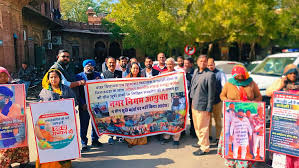
BJP government accused of ‘Manu mentality’ Jodhpur – The sanitation workers’ movement in the Jodhpur Municipal Corporation of Rajasthan is no longer limited to street protests, but has also become a sharp written struggle at the administrative level. Sardar Prakash Singh ‘Vidrohi’, the district president of the All India Safai Mazdoor Congress, has written a strong letter to the District Collector, directly targeting the shortcomings in the sanitation system. The letter makes serious allegations against Municipal Commissioner Siddharth Palanichamy of suppressing the Valmiki community, protecting non-Valmiki employees, and issuing arbitrary orders. Vidrohi has warned that if the demands are not met, the organization may file a complaint against the officials with the Human Rights Commission and pursue legal action. Vidrohi termed this the ‘Manu mentality’ of the BJP government, which is a violation of constitutional rights. This letter marks a significant turning point in the movement that has been ongoing for the past few months, starting from November 17, 2025. From semi-naked protests in the cold to threats of a broom-down strike, the sanitation workers’ struggle is centered on the dignity of the Valmiki community and the issue of equal workload. Vidrohi’s letter highlights the burning problems of the sanitation workers in three main points. This letter not only questions the policies of the Municipal Commissioner but also points a finger at the role of the District Collector, who himself is actively involved in sanitation system meetings. The main points of the letter are as follows: Impractical order for nighttime sanitation system: According to Municipal Commissioner’s letter number 3585, dated January 4, 2026, instructions have been issued to ensure sanitation services from 8:00 PM to 2:00 AM. Ward in-charges have been ordered to provide sanitation workers. The protesters have questioned the rationale behind such an order, given that ward in-charges do not have any reserve sanitation workers at their disposal. Even if employees were available, what arrangements are in place at the municipal level for their safety and security? Who will be responsible for the lives and property of sanitation workers who are forced to work in the dark of night? This order is not only impractical but also jeopardizes the safety of the employees. Opposition to undue pressure on Valmiki employees and the appointment of non-Valmikis: The letter directly questions the Collector, asking why he himself gives directives in sanitation meetings at the municipal office, but these directives only apply to Valmiki sanitation workers? Has he ever requested a list from the Commissioner of those sanitation workers who have not been performing sanitation duties for the past 7 years? Most of these are non-Valmikis, and their inaction is causing the entire sanitation system to collapse. The protesters argued that if the responsibility for sanitation rests solely with Valmiki employees, then why are non-Valmikis being appointed to sanitation positions? These employees accept the appointments but then shirk their primary duty of sanitation work. The Collector is accused of pressuring Valmiki employees in meetings – trying to make them do more and more work, even attempting to make one employee do the work of four. This is inhumane. The Municipal Act stipulates 5 sanitation workers per 1000 population, but in reality, a ward has a population of 10-15 thousand, and there are only 15-20 employees. The protesters suggested that if a well-organized sanitation system is desired, then sufficient employees should be appointed in each ward to reduce the burden and ensure proper functioning. Biased Use of the Monitoring Team: The Collector has formed a supervisory team to improve sanitation, but this team is only monitoring the working (primarily Valmiki) employees. The activist asked whether such monitoring has ever been imposed on the negligent, lazy, and non-performing non-Valmiki employees? The answer is no, because the administration itself is protecting them. This is why they are acting with impunity, and the commissioner remains a silent spectator. At the end of the letter, the activist issued a strong warning: “For this, the organization will be forced to file a complaint with the Human Rights Commission against such officers and initiate legal proceedings, for which you will be solely responsible.” BJP Government Accused of ‘Manu Mentality’ In a conversation with ‘The Mooknayak’, the activist delved deeper into the root of the movement. He said, “Things are very bad for sanitation workers in Jodhpur. The municipal commissioner is working to suppress the Valmiki community. The current BJP government has a Manu mentality towards the Valmiki community. They are giving benefits to non-Valmiki sanitation workers, not making them do sanitation work, and have placed them in other departments. This is against the Constitution, but the municipal commissioner is running his own law. He is issuing orders as he pleases, acting arbitrarily. The opposition Congress is also helpless. The struggle has been going on since November 17, 2025, but the solution is still zero.” The activist emphasized that there are 3300 sanitation workers in Jodhpur, of which 700 are non-Valmiki. Due to their failure to perform sanitation work, the entire burden has fallen on the Valmiki community. The area of 60 wards has now increased to 100, doubling the pressure. The ward changes for 2000 employees on November 15, 2025, added fuel to the fire. He reminded that the agreement reached in the presence of MLAs Atul Bhansali and Devendra Joshi is not being followed, where the promise was made to restore original positions and assign women and disabled employees to nearby wards. Geetha Sunil Pillai Courtesy: Hindi News
The search for livelihood has robbed him of his existence; a Dalit son from Telangana is searching for proof of his Indianness in Dubai’s dungeon.
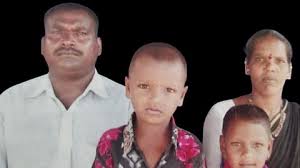
An Indian laborer who went abroad 8 years ago is now forced to languish in a Dubai jail due to the lack of a passport and other documents; his Dalit family has appealed for help. Dubai/Hyderabad: A man who went abroad with dreams of a bright future is now struggling behind bars to prove his citizenship. The case concerns a Dalit laborer from Telangana who has been stranded in the United Arab Emirates (UAE) for nearly two decades. He has been jailed for illegally staying, but ironically, he has no documents left to prove his Indian identity. Now, his family is running around government offices to bring him back. What is the whole matter? 59-year-old Mandula Rajanna, a resident of Madhapur village in the Son Mandal of Nirmal district in Telangana, went to the UAE in 2007 in search of livelihood. There, he started working in a construction company. But circumstances led him to flee the company after just a year and has been living there as an illegal resident ever since. Rajanna belongs to the Scheduled Caste (SC) and hails from a remote village in the erstwhile Adilabad district. Being illiterate, he has no educational records. Today, 18 years later, when he wants to return home, proving his citizenship has become a herculean task. Neither Rajanna nor his family has a copy of his passport. His name is also not on the voter list. When he left India 18 years ago, Aadhaar was not mandatory, which is why he didn’t have an Aadhaar card. Lack of Documents and the System’s Fault According to Rajanna, when he arrived in Sharjah in 2007, biometric registration wasn’t in place. Employer companies often kept workers’ passports, and this is exactly what happened to Rajanna. The company he worked for later closed down, and no trace of his passport (either original or photocopy) was found. Debt Burden and the ‘Gold Loan’ Trap A major reason for Rajanna’s illegal stay was debt. Rajanna, a father of two, had taken a loan under the ‘Gulf Gold Loan System,’ prevalent in Telangana. Under this system, people borrow gold in tolas (tolas) and are required to repay the excess weight as interest. Rajanna had borrowed 4 tolas (tolas) of gold and was required to return 6 tolas (tolas). Unable to repay the loan on time due to employment problems, he did not take advantage of the amnesty schemes announced by the UAE government from time to time and continued working there secretly. Through hard work and odd jobs in the desert, he repaid his debt. Meanwhile, his children, Nitish and Nikhita, grew up, but Rajanna himself found himself in trouble with the law. Only a passbook is his support. Rajanna is currently in jail on charges of illegal residence. Indian Embassy officials visited him at the detention center, but they demanded a copy of his passport or other proof of citizenship for his release, which Rajanna was unable to provide. Now, his wife, Lakshmi, has appealed for help. She has contacted the Chief Minister’s Grievance Cell in Hyderabad and the Nirmal District Collector to help prove her husband’s Indian citizenship. Ironically, the family has only a bank passbook (with a photo) in Rajanna’s name as proof. Now, it remains to be seen how the administration will help this poor laborer return to his homeland. Rajan Chaudhary Courtesy: Hindi News
Karnataka Honor Killing Case: Dalit Husband’s Anguish After Pregnant Wife’s Murder, Father Destroyed His Own Daughter’s World

Caste Pride Destroyed a Happy Family: Husband Vivekananda’s Painful Revelation After Pregnant Daughter’s Murder, Read the Full Story of the Hair-Raising Incident in Dharwad, Karnataka. New Delhi: “Manya’s father and my father were friends for a very long time,” Vivekananda Dhoddmani’s voice trembles as he says this. It is difficult for 22-year-old Dalit youth Vivekananda to understand how the wall of caste became so high that a father took the life of his own 20-year-old pregnant daughter. Two weeks have passed since this heartbreaking incident, but the question remains the same. Everything was fine until the friendship, but as soon as Vivekananda and Manya got married and crossed social boundaries, things changed. Speaking to the Indian Express with teary eyes, Vivekananda says, “I had a dream that perhaps one day my child would play in Manya’s father’s lap. I never imagined that the poison of caste would blind a father to such an extent that he would become his daughter’s murderer.” An Incident That Shook the Entire State Incidents of caste violence or ‘honor killings’ have occurred in Karnataka before, but the brutality with which pregnant Manya was murdered has shaken the entire state. While Dalit organizations have protested against it, Lingayat groups have also strongly condemned it and observed a ‘Repentance Day’. Currently, Manya’s father Prakashgouda Patil and his relatives Veerangouda Patil and Arunagouda Patil are in police custody. They have been booked under charges of murder and the SC/ST (Prevention of Atrocities) Act. Government and Administration Take Strict Action Considering the seriousness of the case, on January 4, Chief Minister Siddaramaiah announced that a fast-track court and a special public prosecutor would be appointed to hear the case so that the victim gets justice as soon as possible. He also said that his government would consider bringing in special legislation to curb evil practices like ‘honor killings’. In Inam Veerapur village in Dharwad district, where both Vivekananda and Manya lived, the administration has increased security. Dharwad SP Gunjan Arya said that eight CCTV cameras have been installed for surveillance at the police station level. Vivekananda and his family have been provided with 24-hour security. To maintain peace in the village, the police have held meetings with the villagers and are also taking the help of local religious leaders. The love story that ended tragically Vivekananda, a final-year BA student, says that he and Manya met three years ago when Manya was in pre-university. At the time of the murder, she was an engineering student. Inam Veerapur is a small village with about a hundred houses. Here, 60% of the population belongs to the Lingayat community, while 25% are from the ST (Talwar group). There are only six houses belonging to the Dalit Madiga community, to which Vivekananda belongs. Being from the same village, they knew each other since childhood, and their families were also acquainted. Vivekananda said that when he expressed his love, Manya accepted it, but due to the circumstances in the village, they could not meet often. Elopement and police negligence A year ago, when Manya’s father got wind of their relationship, restrictions began. Manya’s family wanted her to marry someone else. Fed up with the harassment, Manya decided to leave home. The couple eloped, got married in a temple, and registered their marriage. When Manya’s father filed a missing person report, the couple appeared before the police and stated that they had married of their own free will. Vivekananda recalls that Manya’s father had also threatened them at the police station, but he thought it was said in anger and that everything would be fine with time. Two constables from the Hubli Rural Police Station have been suspended following Manya’s murder. SP Arya acknowledged that there was negligence on the part of the police and that they should have anticipated the possibility of an attack. The ‘Dark Evening’ and the Unfinished Exam After the marriage, fearing threats, the couple started living at a relative’s house in Haveri city. Vivekananda started working at a shop. He says those were some of the happiest days of their married life. Manya was very happy, but even the news of her pregnancy did not soften her family’s hearts. On December 21, when this heartbreaking incident occurred, they had come to the village to update their Aadhaar cards. The hospital had advised that Manya’s records should include her husband’s name. Besides, Vivekananda had to take the Railway Recruitment Board’s ‘Group D’ exam in Dharwad the next day. Around 5 PM, when Manya was at Vivekananda’s parents’ house, Prakashgouda Patil and his relatives attacked. Vivekananda was not there at the time. When he returned, he saw the attackers assaulting Manya and his parents. Vivekananda was chased away, but by then, the father had taken his daughter’s life. Vivekananda’s parents were also injured in the attack and had to spend two days in the hospital. Irony: The very tradition they followed took their lives The greatest irony in this entire incident is that Vivekananda’s family followed the Lingayat traditions. Vivekananda says, “I was given Linga initiation in my childhood. We follow the principles of Basavanna (the founder of Lingayat beliefs), and we don’t even cook non-vegetarian food at home.” Despite this, caste pride destroyed a happy family. Rajan Chaudhary Courtesy: Hindi News
Dalit woman raped after being lured with marriage promise: Physically abused for three years, police arrest the accused

A case of rape has come to light in the Manikpur police station area of Pratapgarh, where a Dalit woman was raped after being lured with a promise of marriage. A case was registered three years later, after which the absconding accused, Adarsh Singh, was arrested by the police. Adarsh Singh, a resident of Miria village, frequently visited his relative’s shop. During this time, he met a Dalit woman who worked at the shop. Gradually, their conversations increased, and the accused trapped the woman in a love affair, promising to marry her. It is alleged that Adarsh Singh physically exploited the woman for about three years under the pretext of marriage. When the woman pressured him to marry her, the accused refused, citing that it was an inter-caste marriage. Following this, the victim filed a complaint at the Manikpur police station regarding the incident. Based on the complaint, the police registered a case against the accused, Adarsh Singh, under various serious sections, including rape and the SC/ST Act. The accused had been absconding since the case was registered. A police team led by Sub-Inspector Amarnath Singh took action and arrested the absconding accused, Adarsh Singh, near the Upper Primary School in Khamsara. After the arrest, the accused was brought to the police station for questioning, and after legal proceedings, he was produced before the court. The police said that a fair investigation of the case will be conducted, and further action will be taken. Manu Kumar Singh | Pratapgarh Courtesy: Hindi News
Attempted abduction of Dalit teenager in Meerut: Mother attacked with a sharp weapon for resisting, condition critical
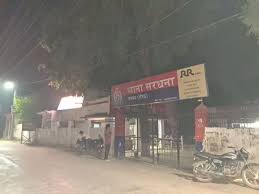
An attempt was made to abduct a minor Dalit girl in the Sardhana police station area of Meerut on Thursday morning. When the girl’s mother resisted, she was attacked with a sharp weapon, leaving her seriously injured. She has been admitted to a private hospital in Meerut, where her condition remains critical. According to the victim’s family, the incident occurred around 8 am on Thursday. The woman was going to the fields with her 17-year-old daughter to cut sugarcane. Near the canal, some young men from the same village stopped them. It is alleged that the youths misbehaved with the mother and daughter, and when they resisted, they started verbally abusing and assaulting them. It is alleged that the accused used casteist slurs and attacked the woman on the head with an axe. The woman was seriously injured in the attack and fell unconscious on the spot. After this, the accused abducted the minor girl and fled the scene. Upon receiving information about the incident, family members and villagers reached the spot. They admitted the injured woman to the hospital. The woman’s condition remains critical in the hospital. Based on the complaint filed by the victim’s family, the police have started an investigation into the matter. CO Ashutosh Kumar said that a case has been registered based on the complaint. The search for the accused is underway, and they will be arrested soon. Ajay Kumar | Sardhana, Meerut Courtesy: Hindi News
AIBE 20 result released at allindiabarexamination.com: Check direct link, more details here
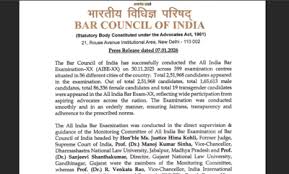
AIBE 20 result: The Bar Council of India has released the result for the All India Bar Examination-XX (AIBE-XX). The link is not yet activated on the official website. The exam was held on November 30, 2025. It took place across 399 centres in 56 cities. A total of 2,51,968 candidates appeared for the test. The overall pass percentage stands at 69.21 per cent. A total of 1,74,386 candidates have qualified, while 77,579 did not clear the examination. The candidate pool showed wide participation. It included 1,65,613 male candidates, 86,336 female candidates and 19 transgender candidates. The Bar Council of India said the examination was conducted in a smooth and orderly manner. It followed all prescribed norms. Fairness and transparency were ensured throughout. Category-wise and gender-wise outcomes Among male candidates, 1,13,063 qualified. The number of qualified female candidates stood at 61,310. Thirteen transgender candidates cleared the exam. Category-wise data shows the highest number of qualifiers from the unreserved category, followed by Other Backward Class, Scheduled Caste and Scheduled Tribe candidates. High-level monitoring ensured smooth conduct The examination was conducted under the direct supervision of the Monitoring Committee of the All India Bar Examination. The committee was headed by Justice Hima Kohli, former judge of the Supreme Court of India. Members included Prof. (Dr.) Manoj Kumar Sinha, Vice-Chancellor of Dharmashastra National Law University, and Prof. (Dr.) Sanjeevi Shanthakumar, Director of Gujarat National Law University. Senior legal academicians served as special invitees. Answer key review led to key revisions Following the exam, provisional answer keys were uploaded and objections were invited. All objections were examined by the Subject Oversight Committee. After detailed scrutiny, the Monitoring Committee withdrew five questions found to be incorrect. For two questions, two answers were accepted as correct. Full marks were awarded in such cases. The final result was calculated out of 95 marks. AIBE 20 result 2026: Steps to download scorecards Candidates can follow the steps elucidated here to download the AIBE 20 result 2026 once the link is activated on the official website: Visit the official website of the Bar Council of India at allindiabarexamination.com. On the homepage, click on the link for AIBE-XX Result. Enter the required login details, such as roll number or registration credentials. Submit the details. The AIBE-XX result will appear on the screen. Download the result and take a printout for future reference. Candidates can click on the link provided here to download the official notice related to the AIBE 20 result release. Courtesy : TOI Note: This news is originally published on https:/timesofindia.com/bha and is used purely for non-profit/non-commercial purposes, especially human rights