
Dalit Youth Brutally Beaten in Rampur: Four Villagers Accused, Dispute Arose While Returning from Market

Rampur. A serious case of assault on a Dalit youth has come to light in Purainia Kala village of Milak tehsil in the district. It is alleged that four people from the same village verbally abused and attacked the youth with sticks and rods, leaving him seriously injured. The injured youth reached the Milak police station and demanded strict legal action against the accused. The victim has been identified as Harpal. Harpal told the police that he is originally from Purainia Kala village but currently lives in Rudrapur, Uttarakhand, where he works in a factory. He had come to his ancestral village about two days ago. According to the victim, on Thursday evening, around 4 pm, he was returning home after buying goods from the market. At that time, some people were playing cards under a banyan tree at the village square. These included Chandrapal, Vedpal, Ramashankar, and Deshraj. During this time, he had an argument with Chandrapal over some matter. Harpal alleges that after the argument, all the accused ganged up and started using abusive language against him. When he protested, the four attacked him. He was seriously injured in the assault with sticks, rods, and fists. Hearing the commotion, people from the surrounding area arrived at the spot, and only then did the attackers leave him in an injured state and flee. After the incident, with the help of his family and villagers, the injured Harpal was brought to the Milak police station. Considering the seriousness of the matter, the police have conducted a medical examination. Several injury marks were found on the victim’s body. The Milak police station says that an investigation has been started based on the victim’s complaint. Further legal action will be taken against all the accused based on the evidence. The police are also investigating whether there was any old enmity behind the dispute. A tense atmosphere prevails in the village after this incident. The villagers say that strict action should be taken against the accused so that such incidents do not recur in the future. Currently, the police are investigating the entire matter and have assured the victim that justice will be served. Rohitash Mani Courtesy: Hindi News
Dalit winner MIM BMC group leader

Mumbai: Vijay Ubale, a dalit who won from ward 140 in Govandi in the BMC polls, is AIMIM’s group leader in the civic body, said former MLA and party leader Waris Pathan. “The appointment is aligned with the party’s attempt to empower weaker sections,” he said. tnn Courtesy : TOI Note: This news is originally published on https:/timesofindia.com/bha and is used purely for non-profit/non-commercial purposes, especially human rights
Two Dalit Families’ Homes Burned Down in Prayagraj: Belongings Reduced to Ashes, Families Left Homeless; They Plead for Help

A massive fire broke out on Wednesday in the Dalit settlement of Kohdar Pahari, under the Meja police station area of Prayagraj. Two Dalit families’ homes were completely destroyed in the incident. The affected families include Ram Milan Harijan (son of Jagannath Harijan) and Jagarnath (son of Ram Khelawan). Social worker Sanjay Kesarwani said that the fire started suddenly, causing panic in the settlement. By the time the fire department arrived, both houses had been completely reduced to ashes. All the household belongings kept in the houses were destroyed in the fire. As a result, both Dalit families have become homeless. They now have no means of shelter or food. The affected families have appealed to the government and administration for immediate financial assistance and rehabilitation. Rajesh Kumar Vishwakarma Courtesy: Hindi News
We Must Not Choose Between “Caste” And “Civic sense”

Caste explains the moral history of filth in India; collective-action failure explains its daily reproduction Why are Indian streets so often strewn with litter? Why do so many of us treat public spaces with such complete disregard? I have wrestled with these questions for many years—both as an ordinary citizen and as a Dalit who has studied Indian society academically and also lived within its social hierarchies as a fact of everyday life. Suraj Yengde’s recent piece offers a straightforward answer to this larger question of cleanliness and civic sense—caste. His well-placed assertion is that caste has trained much of Indian society to outsource responsibility to others. Imagine cleaning as the “job” of a designated group of Dalits, and it becomes easier to treat mess as morally weightless and inconsequential. In this arrangement, filth becomes public, but shame becomes privatised—or made invisible altogether—and accountability is shifted to others. I agree with this completely. It explains why most Indians are meticulously clean inside their homes, but readily throw garbage where it doesn’t belong, showing little concern for what happens outside their gates. But my own life experiences push me toward a more complicated picture. Caste is indeed a necessary explanation for India’s sanitation order (or rather, disorder) and civic sense. Who cleans your streets first thing in the morning, whose labour is stigmatized, and who is considered “designated” to clean “our mess”? Caste explains this division of labour and the moral permission it creates. But it does not fully explain why public neglect persists and keeps reproducing itself, even in situations where caste hierarchy is not the immediate or visible operating mechanism. To understand the everyday stability of littering and disregard for public goods, we also need to see sanitation as part of a wider social logic of chalta hai—a low-trust environment in which individuals routinely assume that public rules will not be followed or fairly enforced and therefore feel it is “rational” to break them first. The result is not just a caste problem but a public-goods trap, one whose moral authority draws on caste but whose daily reproduction is driven by collective-action failure. Let me give a concrete example. A few years ago, I attended an Ambedkar Jayanti rally in Delhi. For most Dalits, this day carries the same importance as, if not greater than, a national holiday. It is a day to celebrate hard-earned dignity, equal rights, and an unfinished struggle. The atmosphere was highly charged, with blue flags everywhere, slogans of “educate, agitate, organise,” speeches, songs, and dancing, in an intense sense of community. But as the crowd dispersed toward the end of the day, the pride turned into embarrassment. The road along which the procession had moved was blanketed with trash of pamphlets, plastic water bottles, paper plates, cigarette butts, and everything a large crowd could throw on the street. After the programme concluded, volunteers started cleaning up. However, the irony was sharp enough to hurt. We had spent the day invoking a politics of dignity and ended it by turning a shared public space into a dumping ground. My first instinct was to reach for excuses. The crowd was huge. There were no dustbins. The municipality should have planned better. Where were people expected to dispose of the litter—in their pockets? But these explanations didn’t touch the deeper truth, which is that we had behaved like nearly every other large gathering in India. It was no different from a student political rally I attended at Delhi University, where roads were plastered with posters, or a public roadshow by any politician, big or small. We left the mess for “someone else” to handle. And that “someone else” was a sanitation worker from a Dalit community itself, which made the moment even more bitter. This episode doesn’t disprove Yengde’s point. It revealed something deeper and adjacent to it, and pushed me to extend this narrative further. Even those who don’t believe in any caste hierarchy or champion the cause of Dalits can still fall into the habit of treating public space as morally disposable. Oppression does not automatically produce better public conduct. It produces people living within the same social environment, responding to the same incentives, and absorbing the same norms. I saw the same logic at work in the South Haryana village where I grew up. Everyday life was full of small acts of rule-breaking, routinely justified as necessary or common sense. Until recently, illegal hookups to electric poles (in simple terms, electricity theft) were common to avoid bills, cutting across caste groups. Giving a small bribe, known as ghoos or bakshish, to a traffic constable to avoid receiving a challan was/is a common practice. Calling a “politically connected” person in the tehsil or any government office, for that matter, to get some paperwork done. Finding jugaad for everything, from land registry to marriage certificates to even securing a hospital bed in a big Delhi hospital. Then there were election-time “gifts,” usually liquor or cash, to secure votes. I don’t want to take this piece in the direction of petty corruption—that’s a topic for another day—but these are everyday ‘Indian things’ cutting across caste backgrounds. It is true that those in power are often upper caste, but given the chance, no Dalit is magically immune to this great Indian phenomenon. These examples, among thousands of others, point to something very uncomfortable, that is, public order in India is treated as negotiable across the board, and oftentimes rules are mere suggestions. People curse corruption and rule-breaking, and then participate in it when they benefit from it and the consequences are low. Over time, this arrangement becomes a learned equilibrium. You become part of a large machine whose wheels need constant greasing to keep it moving. Consider a telling parable from North India about a farmer (Annadata Kisaan). He might quietly pull a sugarcane from his neighbour’s field, yet loudly accuse others of stealing from his crop, forgetting that their fields lie just as close to his.
Dhanbad Municipal Seat De-Reservation Sparks Dalit Protest Ahead of Elections

Dhanbad: Members of the Dalit community staged a sit-in on Thursday against the de-reservation of the Dhanbad municipal seat ahead of the upcoming civic body elections. Hundreds of protesters gathered at Randhir Verma Chowk to express their strong opposition to the state govt’s decision, alleging a biased approach and demanding immediate withdrawal of the order. The protesters claimed that the Dhanbad municipal seat had been reserved for the Scheduled Caste (SC) category on the basis of the 2011 caste census. However, the recent decision to make the seat unreserved has triggered widespread resentment within the Dalit community. Demonstrators described the move as a direct attack on their constitutional rights and social representation in local governance. Raising slogans against the govt, protesters accused it of ignoring established norms and undermining social justice. They asserted that the de-reservation decision has deeply hurt the sentiments of the Dalit community and could weaken their political participation in the civic administration of Dhanbad. Addressing the gathering, social activist Shantanu Chandra, also known as Bablu Paswan, said that the issue has already been taken to the Ranchi high court. He said that a petition challenging the govt’s decision has been filed and the matter is currently under judicial consideration. According to him, the court has reserved its verdict, and the community is hopeful of a favourable outcome. Shantanu Chandra further said that while they have full faith in the judiciary, the intentions of the government appear questionable. He emphasised that the agitation would continue until justice is delivered and the decision is reversed. “We respect the judicial process, but at the same time, we will not remain silent against injustice,” he said. Protesters warned that if the govt fails to reconsider its decision, the agitation would be intensified in the coming days. The demonstration concluded peacefully, with protesters reiterating their resolve to fight for their rights through both legal and democratic means. Courtesy : TOI Note: This news is originally published on https:/timesofindia.com/bha and is used purely for non-profit/non-commercial purposes, especially human rights
Transgender group refutes ‘kinnar jihad’

Jaipur: After a transgender persons’ residence was set ablaze Wednesday in Mahanto ka Bagh, Adarsh Nagar, Jaipur-based transgender group 3rd Voice Thursday protested against accusations of “kinnar jihad”, which it said were an attempt by vested interests to give a religious colour to a conflict over territory. Members said terms like “kinnar jihad” were being used to spread hatred, even though the transgender community participates in the joys and sorrows of people across religions. They alleged that their house was set ablaze as retaliation for opposing such statements during a transgender akhara held last week on Friday. More than 500 transgender persons from Delhi, Punjab, Maharashtra and Rajasthan took part in that gathering. Senior community representative Deepa Bai said, “Our elders were assaulted, money was demanded, and we were threatened with eviction. This is not a religious conflict; it is a fight for dominance and control.” Another member, Rekha Bai, said threats had been coming for days. “We received death threats on WhatsApp 3 to 4 days before the incident. The night before, we were told to ‘wait till tomorrow’” she said. Transgender activist Noor Singh Shekhawat asserted, “Transgender community has neither religion nor caste. We fall under OBC category. We visit every household, Hindu, Muslim or Sikh. Our only religion is humanity.” Community member Sunita Bai added that money received as blessings is used for social welfare. “Whether it is a temple or a madrasa, a community feast or a girl’s wedding, we contribute everywhere,” she said. Local resident and retired bank branch manager Om Prakash Sharma supported the community, saying, “I have never seen religious discrimination among them.” Courtesy : TOI Note: This news is originally published on https:/timesofindia.com/bha and is used purely for non-profit/non-commercial purposes, especially human rights
10 Army personnel killed in a heartbreaking accident in Doda… PM Modi, Rahul Gandhi, and Mallikarjun Kharge express grief

Ten soldiers were killed when an army vehicle fell into a deep gorge in Doda district. PM Modi, Leader of the Opposition Rahul Gandhi, Congress President Mallikarjun Kharge, and Priyanka Gandhi expressed their condolences over the accident. New Delhi: Prime Minister Narendra Modi, Leader of the Opposition Rahul Gandhi, Congress President Mallikarjun Kharge, and Priyanka Gandhi on Thursday expressed grief over the death of 10 soldiers in an accident in which an army vehicle fell into a deep gorge in Jammu and Kashmir’s Doda district. Expressing grief over the accident, PM Modi said that we have lost our brave army personnel. Their service to the nation will always be remembered. The PM prayed for the speedy recovery of the injured. He said that all possible help is being provided to those affected. An army vehicle fell into a deep gorge in Jammu and Kashmir’s Doda district on Thursday, killing 10 soldiers and injuring 11 others. Immediate need for road safety measures Congress President Kharge posted on the social media platform ‘X’ that he was deeply saddened by the tragic vehicle accident in Doda, Jammu and Kashmir, in which several army personnel made the supreme sacrifice and many others were injured. My deepest condolences to the bereaved families and loved ones. The nation stands united in profound grief, and we pray for the speedy recovery of the injured. He also said that many such accidents have occurred in the past. There is an urgent need to strengthen road infrastructure, improve mobility in difficult terrains, and implement road safety measures to prevent such heartbreaking losses. Rahul and Priyanka pay tribute to the martyrs Leader of the Opposition in the Lok Sabha, Rahul Gandhi, posted on ‘X’, “The news of the death of several of our soldiers and the injury of many others in the accident where an army vehicle fell into a gorge in Doda, Jammu and Kashmir, is extremely painful. I pay my humble tribute to the martyrs and hope for the speedy recovery of the injured soldiers.” He said, “In this hour of grief, we all stand with the bereaved families of our brave soldiers.” Congress General Secretary Priyanka Gandhi Vadra also expressed grief over the deaths of the soldiers. Priyanka Gandhi posted on ‘X’, “The news of the martyrdom of several soldiers due to the army vehicle falling into a deep gorge in Doda, Jammu and Kashmir, is extremely saddening. May God grant peace to the departed souls. My deepest condolences to the bereaved families. I pray for the speedy recovery of the injured soldiers.” Edited by: Anil Kumar About the Author Anil Kumar is part of the homepage team at Navbharat Times Digital. He has about 16 years of experience in both print and digital media. He has been associated with Navbharat Times Online since January 2021. He writes news and analysis related to politics and current affairs for the India and Delhi sections on the homepage. Courtesy: Hindi News
Follow the path shown by farmers to compel govt to withdraw G RAM G law, Rahul tells MGNREGA workers

New Delhi: Recalling how the “united resistance” mounted by farmer led protests forced the Central govt to roll back the three farm laws, leader of opposition Rahul Gandhi on Thursday called out to MGNREGA workers to take the path shown by the farmers by putting up a united fight to demand the withdrawal of the new law – Viksit Bharat – Guarantee for Rozgar and Ajeevika Mission (Gramin) Act.Referring to the BJP and the Central govt, Gandhi said, “Here is the only way to stop them, workers have been shown the way by farmers. I know these people, they are cowards. If we all stand together, they will be forced to restore MGNREGA,” he said, citing the example of farm laws. He was speaking at the ‘MGNREGA workers convention’ organised by the opposition party at Jawahar Bhawan in Delhi that brought together workers and activists from various states. Gandhi alleged the idea of BJP behind the new law that replaced MGNREGA was to dismantle “the “guaranteed right to work and right to demand work” and enable “centralisation” where the “Central government will decide where the money will be allocated, and naturally, the BJP-ruled states will get more and the Opposition-ruled states less”. “These people want to take India back to pre-independence days where one King used to decide everything,” he alleged. At the meet, Gandhi along with Congress President Mallikarjun Kharge and other senior leaders stood in solidarity with workers who shared their concerns and fears about the new law and raised slogans. Adorning the traditional labourer’s ‘gamchha’ on their head and holding spades on their shoulders, Kharge and Gandhi also posed with workers who in a symbolic gesture brought soil from their respective MGNREGA worksites and added it to tree saplings in what was seen to convey a message of unity and collective struggle. The Congress plans to build on the message by reaching out to gram sabhas and hold larger outreach programmes under its ongoing ‘MGNREGA Bachao Sangram”. Kharge alleged that the dismantling of MGNREGA by the Modi govt was part of a “conspiracy to erase Mahatma Gandhi’s name from public memory”and an attempt to turn the oppressed and downtrodden people of the country into “bonded labourers”. He said the party will raise the issue during the upcoming Budget session of Parliament. Gandhi claimed that scrapping of MGNREGA amounted to an attack on the Constitution, the same way the Modi govt had attacked it by bringing in “three black farm laws, demonetisation and the flawed implementation of the GST” and this new law now. “What is the name of this new law ….I don’t know,” Gandhi said. In response some in the audience spoke out saying “VB-G RAM G”. Courtesy : TOI Note: This news is originally published on https:/timesofindia.com/bha and is used purely for non-profit/non-commercial purposes, especially human rights
Don’t air internal issues in public: Congress warns Punjab leaders; no ‘group activity’ to be tolerated

NEW DELHI: The Congress on Thursday issued a stern warning to its Punjab leaders, asking them to stop airing internal differences in public or fuelling factionalism. The party asked them to instead work together to ensure Congress return to power in the upcoming 2027 assembly elections. The order came during a three-hour meeting convened by Congress president Mallikarjun Kharge at his residence in New Delhi, which was also attended by Rahul Gandhi, amid reports of infighting within the state unit, news agency PTI reported. Punjab goes to the polls in early 2027, and Congress is aiming to reclaim the state from the Aam Aadmi Party (AAP). Party leaders were asked to refrain from making statements against one another and were assured that there would be no immediate change in the state leadership. The high command, they were informed, would take decisions on candidate selection and campaign strategy in due course. AICC general secretary (organisation) KC Venugopal said Kharge and Gandhi reviewed the political situation in Punjab and heard the views of state leaders, describing the discussions as “very fruitful”. “The party has directed all leaders to refrain from making public statements on internal matters. Everyone may have their own views, but these should be raised only within party forums. Going to the media or spreading such issues on social media will not be tolerated,” Venugopal told reporters. He said the leadership had given a “very clear direction” and that all leaders present had unanimously agreed to it. On speculation about a leadership change in Punjab, Venugopal said there was “no question of it at present”. Addressing concerns raised by some leaders over representation of weaker sections, Venugopal said the Congress remained committed to ensuring adequate representation of Scheduled Castes, Scheduled Tribes, OBCs and economically weaker sections, including in Punjab. However, he stressed that such issues must be raised internally. “We have told the state leadership not to make statements in public. From tomorrow onwards, you will see the Congress united. We will fight the elections together and win Punjab,” he said. On reports of some leaders writing jointly to Rahul Gandhi seeking a separate discussion, Venugopal said individual requests were acceptable but “group activities” would not be tolerated. “If anyone wants to meet Rahul ji, they can write individually,” he said, adding that Kharge and Gandhi were planning a visit to Punjab soon. Courtesy : TOI Note: This news is originally published on https:/timesofindia.com/bha and is used purely for non-profit/non-commercial purposes, especially human rights
Sister Chandra and how Parai Attam announced the coming of Dalit women Sakthi to the world
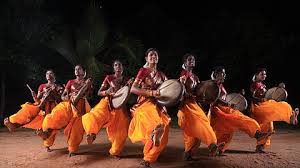
“I was rejected by village folk artistes as they didn’t believe a woman was strong enough to carry a parai and perform,” Sister Chandra remembered. It was the best of times, it was the worst of times for Dalit women to start performing Parai Attam, a traditional art form historically performed by Dalit men during funerals. Sister Chandra, the woman behind this quiet cultural revolution, had been doing community service in Dindigul when she noticed how poorly paid the men performing Parai Attam were. “I felt that people were not respecting the art or the artiste because of their social status,” she recalled. Sister Chandra also sensed the quick shift of the villagers’ interest from folk arts to community TV. “Each village has different art forms which they used to perform during festivals, but when people started enjoying television, art forms started dying,” she went on. Determined to revive the art form, Sister Chandra decided to form a troupe of her own. But being a woman, she had to also fight many gendered stereotypes around the art form, which was considered exclusively the domain of Dalit men. “I was rejected by village folk artistes as they didn’t believe a woman was strong enough to carry a parai and perform,” she remembered. At last, seeing her persistence, traditional village folk artiste Guru Ramadass taught her Parai Attam. Soon, Sister Felci and a group of village women joined, becoming the first batch of what would eventually be known as the Sakthi group. Now, Sister Felci has taken charge of it. As public perceptions changed, Sakthi’s popularity grew significantly. It began teaching more than 20 art forms including Parai Attam, Oyil Attam, and Silambam. Along with an offline batch of 20 students, two batches of online art classes were also introduced. They perform in and around several districts of Tamil Nadu and have also made their mark on the international stage. Sakthi is now flourishing. ‘Finally, you are making our girls take up Parai?’ In ancient Tamil society, parai, a hollow drum made out of a wooden frame and cow skin, was used as a percussion instrument to gather people and make announcements. Over time, it evolved into an art form predominantly performed by Dalit men. In the beginning, the idea of women performing Parai Attam was alarming to a society fed with stereotypical narratives on the art form. Concerned about their social status and perpetuating caste stereotypes, families strongly opposed the participation of their daughters. Parai artistes did not want their daughters to take up the art form as they believed their children would be discriminated against for their social status. “Initially, parents resisted sending their daughters to learn Parai Attam,” Sister Felci reminisced. They were met with questions filled with disbelief and anxiety such as ‘How can you make our girls take up Parai?’ Yet, against all odds, the team’s first performance became both a personal victory for Sister Chandra and a cultural milestone. “After that, we were invited to several villages to perform,” she said. Sakthi went on to become one of the earliest all-women Parai Attam troupes in Tamil Nadu. Sister Chandra and Sister Felci, driven by their mission to empower Dalits and women, were posted in Dindigul by their congregation, the Missionary Sisters of the Immaculate Heart of Mary, ICM. Every year, a new batch of twenty students joined Sister Chandra’s year-long residential course to learn various folk art forms such as Parai Attam, Oyil Attam, and Karagattam. The mix included young women who were school dropouts. “We encourage school dropouts to finish their studies and enroll in college. Some of them later became folk dance teachers in nearby village schools,” said Sister Chandra. Martial arts such as silambam and taekwondo are also taught by Sakthi. “This is a life-oriented program as women are also taught vocational skills such as tailoring, besides sex education and other lessons,” she said. Performances with social messages Rather than performing solely for entertainment, Sakthi’s programs are society-oriented. To spark a social dialogue and make society rethink its assumptions became the group’s goal. Sister Chandra believes that the dialogue initiated after performances has brought changes in society. She proudly spoke about how turning Parai Attam into an inclusive art form is part of such a change. “Now, women from non-Dalit communities also train for Parai Attam with the Sakthi group, which shows acceptance and how people are willing to challenge stereotypes,” she said. Sakthi’s unique style of incorporating social messages with performances made the team stand out. “Our performances raise awareness about social issues such as women empowerment, communal harmony, sexual harassment, caste, globalisation and unemployment,” said Sister Chandra. The importance of developing a reading habit is a recurring theme expressed by the team whenever it is invited for book launches and similar events. To instill confidence and capability among young talents, Sister Chandra believed that the group should be involved in choreographing, decision-making and every other aspect of their performance. This let the girls feel empowered by occupying spaces which were dominated by men, she said. ‘To build a better humanity, we have to break the chains of oppression’ is Sakthi’s motto. The group’s name reflects its goal of holding on to the female ‘energy’ and empowering women by creating a space exclusive to them. As recently as the early 2000s, women across different states were excluded from performing certain folk art forms. “For example, in Kerala, women were not allowed to perform chenda melam, an art form that involved drums. This trend is slowly changing nowadays,” said Sister Chandra. The logo of Sakthi depicts one foot of a performer bound by a chain, signifying the historical oppression, and the other foot adorned with an anklet, representing resilience and the struggle to break free from marginalisation. Taking Parai attam to the world The team of performers has kept changing over the years as many women dropped out after marriage and childbirth. However, that didn’t stop Sakthi from carrying forward its mission.