
Cess and surcharge money spent to benefit states: FM Sitharaman
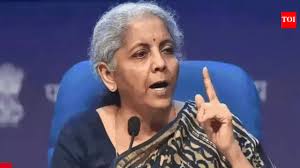
NEW DELHI: Finance minister Nirmala Sitharaman on Wednesday rejected the criticism by states over cesses and surcharges, arguing that it was in line with the Constitutional provisions and the money collected through these levies was spent on schemes that benefited the states. . While responding to the discussion on the Budget in the Lok Sabha, FM said that states should distinguish between the gross tax revenue and the net proceeds that are legally shareable. “States can’t have it both ways. The states should check if the entire net proceeds which form the divisible pool, after removing cess and surcharge from gross tax revenue, is received by them,” she said. The minister said that the Centre was transferring 41% to the states, as was recommended by the Finance Commission. “The 16th Finance Commission analysed the state’s share transferred by the Centre to the states from 2018-19 to 2022-23, and concluded that in each of these years, the devolution made by the Centre exactly matches the recommendation of the Finance Commission. So, we are not the only ones claiming this… There is no scope for any doubt in this for the states,” the minister said. Sitharaman also criticised states such as West Bengal, where Mamata Banerjee’s TMC was in power, arguing that they blamed the Centre for GST, but then imposed additional burden on consumers. “The state govt in West Bengal imposes road levies and charges taxes at the time of new vehicle registration. If there is so much concern about GST burdening citizens, then why impose additional state-level taxes? These could be waived for the people of Bengal, but instead, GST collections are criticised while state taxes continue to be levied,” she said while accusing Abhishek Banerjee of twisting facts on GST. She said govt is incentivising data centres in the country, in what was a rebuttal to Rahul Gandhi’s claims on Indian data. Further, she listed out measures on SEZs, customs reforms and support to MSMEs to counter Rahul’s concerns. “Leader of the Opposition expressed concerns over geopolitics, energy and weaponisation of finance. He said that the Budget acknowledges these challenges, but he didn’t read the Budget and the steps announced in it to address these challenges.” Courtesy :TOI Note: This news is originally published on https:/timesofindia.com/bha and is used purely for non-profit/non-commercial purposes, especially human rights
Revanth meets Kharge, exudes confidence of Cong win in civic polls
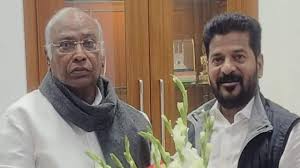
Hyderabad: Chief minister A Revanth Reddy on Wednesday met AICC president Mallikarjun Kharge in Delhi and expressed confidence that the Congress would win the ongoing municipal elections and continue its momentum in the upcoming polls to the Greater Hyderabad Municipal Corporation and two other corporations in the core urban area. Revanth travelled to the national capital to meet top AICC leaders and Union ministers. Sources said the visit had a dual purpose. He had not met Kharge or Rahul Gandhi since his Davos and US tour and had been busy with municipal election campaign work. With a considerable gap since his last interaction, he wanted to brief the leadership on the current political situation in Telangana. A senior AICC leader told TOI that another key objective was to meet Union ministers and seek clarity on approvals and central funding for major state projects. The state govt is preparing to present its annual budget soon, and clarity on central assistance would help factor allocations accordingly. MPs Mallu Ravi and Anil Kumar Yadav accompanied the CM to Kharge’s residence. Revanth will meet Union ministers to seek support on issues including Hyderabad Metro Rail expansion, Musi rejuvenation, devolution of funds, fertilisers, irrigation projects, and disputes with Andhra Pradesh over river waters and railway lines. The CMO has sought appointments with railways minister Ashwini Vaishnaw, fertilisers minister JP Nadda, and power, housing and urban affairs minister Manohar Lal Khattar. He is likely to meet Rahul Gandhi in Parliament on Thursday. Sources said meetings with Sonia Gandhi and Priyanka Gandhi are also possible. A Congress MP said Revanth would brief Rahul on efforts to check the revival of BRS and contain the BJP’s rise, besides outlining plans for the upcoming civic polls. Courtesy : TOI Note: This news is originally published on https:/timesofindia.com/bha and is used purely for non-profit/non-commercial purposes, especially human rights
US chokehold on PM Modi, he has sold India: Rahul Gandhi
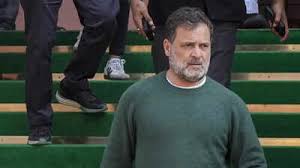
NEW DELHI: Leader of the opposition Rahul Gandhi accused the govt Wednesday of “completely surrendering” India’s core data, food and energy interests in the trade deal, in a sharp attack in Lok Sabha on PM Modi who, he alleged, had caved in to pressure due to the leverage that country has over him. Participating in the discussion on the Budget, Gandhi began his speech with mention of the concept of grip and chokehold players are taught in martial arts to floor rivals and then used the metaphor to target Modi in the US’s handling of him. Gandhi’s condemnation of the interim pact as a sellout of national interest was the theme of his speech. ‘Farmers left to mercy of mechanised US farms’ Rahul said the data of 140 crore Indians is the country’s most valuable asset, while the nation needs to secure its energy and food interests in these turbulent times. The LoP’s controversial references to a convicted child sex offender in the US, two Indian businessmen and Bharat Mata as he sought to corner govt was met with resistance from treasury benches and were expunged from records. He alleged that minister Hardeep Puri had introduced an Indian businessman to the child sex offender, and the files released by the US govt mention their names. The Chair asked him not to level the allegations. Rahul Gandhi’s condemnation of the interim trade pact as a sellout of national interest was the theme of his speech, hitting the BJP-led NDA govt on a plank which it has practically owned since coming to power in 2014. He alleged, “The most valuable asset (data) of India has been handed over. Our farmers have been left to the mercy of mechanised American farms. Our textiles have been wiped out. Our energy security has been handed over. We cannot buy oil from who we want to buy it from. This is a wholesale surrender.” Unlike Modi’s and NSA Doval’s assertion that it is not an era of war, Rahul said the world is in fact “moving into an era of war and instability” amid intensifying geo-political conflicts. Dollar’s supremacy is being challenged and world is moving away from the era of one superpower, he said. While the budget recognises these challenges, including the weaponisation of energy and finance, it offers no future pathways, he said, before turning to the agreement to hit out at govt. He alleged the deal has compromised security in all three critical things needed to run a modern country: data, food supply and energy. Courtesy : TOI Note: This news is originally published on https:/timesofindia.com/bha and is used purely for non-profit/non-commercial purposes, especially human rights
Bharat Bandh: Rahul Gandhi backs workers & farmers; takes ‘grip’ jibe at PM Modi
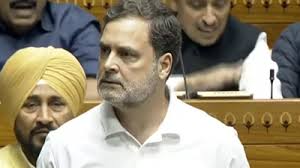
NEW DELHI: Congress leader Rahul Gandhi on Thursday backed nationwide protests by workers and farmers demanding protection of their rights. He flagged concerns over labour reforms, trade policies, and potential changes to the rural jobs programme MGNREGA. “Workers fear that the four labour codes will weaken their rights. Farmers are apprehensive that the trade agreement will harm their livelihoods. And weakening or scrapping MGNREGA could snatch away the last lifeline of villages. When decisions affecting their future were taken, their voices were ignored,” he said through a post on X. “Will Modiji listen now? Or is the “grip” on him too strong? I stand firmly with the workers and farmers on their issues and their struggle,” Rahul added. An all-India general strike called by ten Central Trade Unions (CTUs) and backed by the Samyukta Kisan Morcha (SKM) on Thursday is aimed at opposing a range of government policies, including the four labour codes, privatisation and contractualisation measures, the Electricity Amendment Bill 2025, changes to MGNREGA and the proposed Seed Bill. Large-scale participation from farmers, agricultural workers and industrial unions is expected at protest sites across the country, with power sector employees, PRTC staff and other worker organisations also set to join. In a statement, the SKM said the strike seeks the withdrawal of the four labour codes, the Electricity Bill 2025, the Seed Bill 2025 and the VB-G RAM G Act 2025, among other demands. It also called for the restoration of the old pension scheme and the implementation of minimum wages for all workers, including scheme workers. Communist Party of India (CPI) leader and All India Trade Union Congress (AITUC) working president Binoy Viswam expressed full support for the nationwide farmers’ strike, describing it as a movement to defend people’s basic rights. Apple farmers in Himachal Pradesh have also intensified preparations to join the nationwide farmers’ strike on February 12 and announced a march to Delhi, warning that recent import duty reductions under India-US and other free trade agreements could hurt the state’s apple-based economy. They expressed concern that cheaper imports could impact local growers, despite repeated assurances from union commerce and industry minister Piyush Goyal that the interests of Indian apple farmers will be safeguarded. While several trade unions and farmer organisations have decided to join the strike, the National Front of Indian Trade Unions (NFITU) said it would not participate, describing the protest as “politically motivated.” Courtesy : TOI Note: This news is originally published on https:/timesofindia.com/bha and is used purely for non-profit/non-commercial purposes, especially human rights
Gadchiroli: How did the dream of ‘justice at the doorstep’ for tribals become entangled in files? The system woke up after the Supreme Court’s strictness.
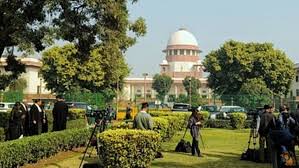
After the Supreme Court’s reprimand, the appointment was made in 7 days; the Aheri court remained empty for months without a judge, leaving hundreds of prisoners distressed. New Delhi/Gadchiroli: A vivid example of how the Aheri court, which was established with the vision of providing justice to tribals in the remote areas of Maoist-affected Gadchiroli, is being hampered by delays in the appointment of judges and administrative lethargy, was recently seen in the Supreme Court. The case involves Surendra Gadling, a co-accused in the Bhima-Koregaon case. On January 21, when his lawyer informed the Supreme Court that the trial in a case related to arson charges from 2016 had not yet begun due to the irregular attendance of the judge and the permanent public prosecutor in the court, it raised many questions about the system. What is the whole matter? Surendra Gadling is accused of conspiring to burn 76 vehicles carrying iron ore from the Surjagarh mines on December 25, 2016. His lawyer argued in court that his discharge petition had been pending in the single-judge District and Additional Sessions Court in Aheri since 2022. The reason was that there was neither a judge nor a permanent prosecutor there at the time. Following this information, the Supreme Court issued strict instructions to the Registrar General of the Bombay High Court, directing them to ensure “the regular posting of a competent judge within seven days.” This strictness of the Supreme Court had an immediate effect, and after the hearing, the vacant post was filled. A judge was appointed there just two days later. The seat remained vacant for 22 days in January. Although officials claim that the process for appointing a judge was already underway and that it takes time given the sensitivity of the post, the reality is that the court remained without a judge for 22 days, from the 1st to the 22nd of January. Court records indicate that this was not the first time the Aheri Court had been vacant while awaiting a judge. Work stalled for three months in 2025 The Aheri Court, which was inaugurated in July 2023 by then Supreme Court Justice Bhushan R. Gavai with the promise of providing “close-to-home justice” to 725 villages in Maoist-affected and tribal-dominated talukas, remained in a disturbing state in 2025. According to records, the court remained without a judge for nearly three months in 2025. During this period, trials, bail hearings, and regular judicial work effectively came to a standstill. When a judge finally assumed charge on July 22, 2025, he found that over 200 undertrial cases were pending. This is mentioned in a court order dated October 6, 2025, which stated, “Upon assuming charge on July 22, 2025, it was found that over 200 cases and several bail applications were pending, which were disposed of on a priority basis.” Lawyers and Prisoners Faced Increased Difficulties During the three-month vacancy, trial proceedings could not proceed. Accused persons were not brought from jail for hearings. Lawyers were forced to travel more than 120 kilometers to Gadchiroli, where a judge was given additional charge of the Aheri Court. The situation became so dire that undertrial prisoners wrote letters from jail to the Gadchiroli Court and the Bombay High Court, requesting the transfer of their cases, as proceedings had come to a complete halt. Accused yearn for bail The judge’s absence had the worst impact on those in jail. During this period, the in-charge court could only hear urgent bail applications or petitions for extensions for filing charge sheets. In one case, an accused arrested in 2020 sought bail, alleging that despite charges being framed in 2023 on the Supreme Court’s directive, no witnesses had been examined until July 2025. In another case, an accused remained in jail for over a year simply because he could not provide a surety of ₹30,000. He was released only after the appointment of a judge in August 2025. The Bar Association also raised its voice Aheri Bar Association President Rajendra Prasad Menganwar told the Indian Express that the primary purpose of establishing a court in Aheri was to prevent litigants and lawyers from having to travel up to 200 kilometers for hearings. He said, “In 2025, when no appointments were made for three months, we had to go to the Gadchiroli Court for important hearings. We then met with the administrative officials of the Nagpur Bench of the Bombay High Court and requested that the vacancy be filled, which, thankfully, was done immediately.” Delay due to sensitive cases? Court officials attributed the delay to the court’s handling of many important cases related to the UAPA and alleged Maoist activities. Therefore, judicial appointments require very careful scrutiny and consideration, which is a major reason for the delay. A Long Journey to Justice The establishment of the Aheri Court was the result of a demand dating back to 2008 to ensure that litigants, accused, and victims would not have to travel long distances through poor roads and irregular transportation in Maoist-affected forest areas. They often had to stay overnight for hearings. With this in mind, a Magistrate Court was inaugurated in 2015, and a Sessions Court in July 2023. At the inauguration, Justice Gavai stated that this court would help provide justice to 725 villages in the Aheri, Mulchera, Sironcha, Bhamragad, and Etapalli talukas. He said, “Justice has come to the doorsteps of the tribals of Gadchiroli.” It remains to be seen whether, after the Supreme Court’s intervention, this system will continue to function smoothly in the future. Rajan Chaudhary Courtesy : Hindi News
Jharkhand: 10 children from the Birhor community who went to a feast in Koderma have been missing since February 1st. Police have formed a Special Investigation Team (SIT), causing panic in the village.
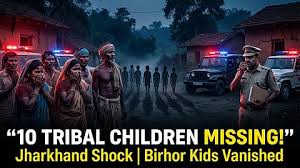
Innocent children aged 6 to 12 years old, who went to a feast in Parsabad, have not returned home. Police responded to a report from the head of the Berogai Panchayat, and the Superintendent of Police issued strict instructions. Koderma: A very worrying incident has emerged in Jharkhand’s Koderma district, where 10 children have mysteriously disappeared from the Gadiyai Birhor hamlet, which falls under the Jaynagar police station area. These children are reported to be between 6 and 12 years old. They have been missing since February 1st. Considering the seriousness of the matter, the police administration registered an FIR on Friday and formed a Special Investigation Team (SIT) to search for the children. It is worth noting that the Birhors are a ‘Particularly Vulnerable Tribal Group’ (PVTG) and one of the most vulnerable populations in Jharkhand. Around 50 families reside in the Gadiyai Birhor hamlet. The children had gone to attend a feast. According to information received from officials, the incident occurred on February 1st. The children had gone with their family to attend a feast (daawat) held in Parsabad, about 3 kilometers from their settlement. After the event ended, the elders returned home, but the children did not return. Initially, the families thought the children might have stayed with a relative or were playing nearby. However, as days passed and no trace of the children was found, an atmosphere of fear spread throughout the settlement. The Panchayat Chief’s Initiative Awakens the Administration After a few days of missing the children, the distraught parents contacted Rajendra Prasad Yadav, the head of the Berogai Panchayat, and narrated their ordeal. Upon learning of the incident, the chief immediately alerted the local Block Development Office (BDO) and the police. However, on Friday itself, the distressed parents officially lodged a complaint at the police station, requesting the safe return of their children. Upon receiving the information, a police team visited the settlement on Friday and assessed the situation. Missing Children Identified Police have obtained the names and details of nine of the 10 missing children, as follows: Rajesh Birhor’s two children: 7-year-old Nisha Kumari and 5-year-old Ramesh Kumar. Kela Birhor’s 8-year-old daughter, Sajani Birhor. Dhanku Birhor’s four children: Birju, Mithun, Shivani, and Kalpana. Suresh Birhor’s 8-year-old daughter, Rekha Birhor. Budhan Birhor’s 6-year-old daughter, Anisha Birhor. Police Action and Response Koderma SP Anudeep Singh stated that a high-level Special Investigation Team (SIT) has been formed to track the children. DSP Rati Bhan Singh said, “Several teams have been formed on the SP’s instructions. We have begun the investigation and will recover the children soon.” Kedarnath Yadav, a local district council member, demanded immediate and aggressive action. He said that recent incidents of missing children across Jharkhand have increased the sense of “fear” and insecurity among the people, so the administration must act swiftly. Rajan Chaudhary Courtesy: Hindi News
Rajasthan: 13-year-old tribal girl brutally assaulted; case filed under POCSO and SC/ST Act, but no arrests even after three days

Three days after the incident, the accused have not been arrested. Jodhpur – A serious case has been registered at the Karvad police station in Jodhpur, alleging assault, molestation, and caste-related insults against a minor tribal girl. The incident reportedly occurred on February 5th at around 6:30 pm in Kelava Kala village. The victim’s mother filed a written complaint at the police station on February 6th at around 5 pm. According to the complaint, she received information that her daughter had been severely beaten and seriously injured by the accused, Sunil Godara, and his mother. Upon arriving at the scene, she found her daughter lying unconscious and covered in blood, with deep injuries to her face, ears, and nose. The victim stated that Sunil used caste-related slurs like “lowly, bastard, Bhil woman,” pulled her hair, pulled her down, climbed on top of her, and attempted to molest her. He even tore her clothes. Upon hearing the screams, Sunil’s mother came and the two men assaulted her, threatening to kill her and harm her family if she told anyone. The police registered a case based on the complaint. Sections 115(2) (assault/voluntarily causing hurt), 126(2) (offences intended to outrage the modesty of a woman), 3(5) (general section) of the Indian Penal Code (BNS), 2023, sections 3(1)(r), 3(1)(s), 3(2)(va), 3(1)(w)(i) (caste-related insults, intimidation, molestation, etc.) of the Scheduled Castes and Scheduled Tribes (Prevention of Atrocities) Act, 1989 (amended 2015), and sections 7 and 8 (relating to child sexual abuse) of the Protection of Children from Sexual Offences Act (POCSO), 2012 (amended) have been invoked. The investigation of the case has been assigned to ACP Anil Kumar Sharma, Mandore, Jodhpur. Three days after the incident, the accused have not been arrested. Advocate Bhatraj Jogson has alleged that the accused enjoy political protection, which is delaying action. There is widespread anger among the Bahujan community on social media, where people are demanding strict action and justice. Geetha Sunil Pillai Courtesy: Hindi News
False case against Dalit using forged documents? Will SC/ST Act apply? Kerala High Court’s major ruling
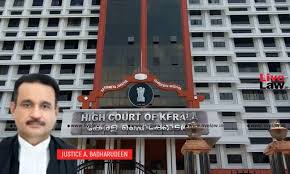
The High Court said, “When it is prima facie established that the suit filed… is false, malicious, or vexatious, particularly by using a forged plaint document, when the defendants are members of the Scheduled Castes and the plaintiffs are not members of the Scheduled Castes, the offence under Section 3(1)(q) of the SC and ST (POA) Act will prima facie be attracted.” Kochi—The Kerala High Court has held in a significant ruling that filing a false, malicious, or vexatious suit against a member of the Scheduled Castes (SC) using forged documents constitutes an offence under Section 3(1)(q) of the Scheduled Castes and Scheduled Tribes (Prevention of Atrocities) Act, 1989. A single bench of Justice A. Badruddin, on February 3, in the CRL.A. The decision was delivered in Court No. 2214 of 2025, in which the appellant, Velayudhan, a 68-year-old Dalit man, challenged an order of the Special SC/ST Atrocities Prevention Court in Thrissur. According to the case, Velayudhan filed a case at the Irinjalakuda police station. The allegation was that HIGHWAY KURIES PVT LTD and its Managing Director, Subhash, had filed a lawsuit, presenting a forged promissory note. This note was purportedly signed by Velayudhan and his father, but both denied it in written statements. The accused party withdrew the case after the complaint was filed. The complaint alleged offenses under sections 465, 468, and 471 of the Indian Penal Code, as well as sections 3(1)(p) and 3(1)(q) of the SC/ST Act. During the investigation, the Deputy Superintendent of Police filed a report on October 22, 2024, stating that the Koori company was unaware of the complainant’s caste, and therefore, the charges under the SC/ST Act should be dropped. On August 26, 2025, the Special Court dismissed the application in CRL.MP No. 1160/2024, which sought monitoring of the investigation. The court stated that the investigating officer’s report showed that the accused was unaware of the caste and had no criminal intent. The High Court, after hearing the appeal, ruled that the deemed acceptance of the investigating officer’s report by the Special Court was incorrect. The court said, “When it is prima facie established that the suit filed… is false, malicious or vexatious, particularly by using a forged plaint document, when the defendants therein are members of the Scheduled Castes and the plaintiffs are not members of the Scheduled Castes, the offence under Section 3(1)(q) of the SC and ST (POA) Act would prima facie be attracted.” The court cited Section 8(c) of the SC/ST Act, which came into effect from January 26, 2016. It states that if the accused has personal knowledge of the victim or his family, the court shall presume that the accused was aware of the caste of the victim, unless the contrary is proved. The court observed, “When a Kuri company engaged in the business of chitty (VC), after acquiring knowledge of the subscriber, deals with the subscriber for its Kuri transaction, and then files a case to recover the amount due under the Kuri transaction on the basis of an allegedly forged promissory note, the Kuri company cannot be considered to be a person who was unaware of the caste identity of the defendant in the case, especially when the knowledge of the accused’s caste identity is a matter of conjecture unless the contrary is proved by evidence.” The court upheld the offence under Section 3(1)(q) but did not comment separately on Section 3(1)(p). Partially allowing the appeal, the court partially set aside the special court’s order. The request for monitoring of the investigation was rejected, but directed that the investigating officer obtain the promissory note from the court and have the signatures examined by a forensic laboratory. The final report should be filed in the special court after obtaining expert opinion. This decision is significant in cases of false prosecution and forged documents under the SC/ST Act, as it strengthens the statutory presumption regarding caste information and emphasizes the need for thorough investigation. Geetha Sunil Pillai Courtesy: Hindi News
Odisha: Anganwadi in Nuagaon Shuts After Villagers Refuse to Let Dalit Woman Cook for Children
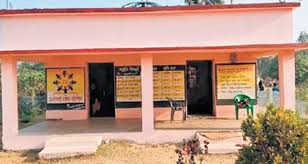
Odisha Anganwadi Shuts as Villagers Bar Dalit Woman In rural Odisha, deep-rooted caste prejudice has forced the closure of an anganwadi centre in Nuagaon village, Rajnagar block, Kendrapara district, for nearly three months. Parents have reportedly stopped sending their children to the centre after a 23-year-old Dalit woman, Sarmista Sethi, was appointed as a helper-cum-cook on November 24, 2025. According to Sarmista, villagers from upper-caste families openly resisted her appointment, saying their children would not eat food prepared by a Dalit woman. The village committee, which also included instructions for Dalit households, reportedly told families not to send their children to the centre. “After my appointment, some upper-caste villagers warned me not to cook for the children. When I refused, they stopped sending their kids. Even women stopped coming to the centre,” Sarmista said. Around 45 families, including seven Dalit households, live in the riverside village. The social boycott has affected nearly 60 children who are now deprived of anganwadi services. Pregnant and lactating women have also stopped visiting the centre, missing out on crucial health benefits, according to Ghadiamala sarpanch Sailendra Mishra. “We have repeatedly urged villagers to send their children, but they have not listened,” he said. Anganwadi worker Lizarani Pandav informed the chief development project officer (CDPO) of Rajnagar block about the situation. CDPO Dipali Mishra said, “We have been trying to convince parents to send their children. The tehsildar and I held discussions with villagers, but the issue remains unresolved.” A team of Dalit leaders visited Nuagaon village on Tuesday, demanding legal action against those preventing children and women from attending the centre. Nagen Jena, district president of Dalit Samaj, cited the 2004 Supreme Court interim order in PUCL vs Government of India, which prioritises SC/ST candidates as cooks in midday meal schemes. Kendrapara district collector Raghuram R Iyer said he has directed the district social welfare officer to submit a detailed report. “After receiving the report, appropriate action will be taken against those who are illegally preventing children and women from attending the anganwadi centre. We are also trying to resolve the matter amicably through discussions with villagers,” he added. Courtesy : TOP Note: This news is originally published on https:/theobserverpost.com/bha and is used purely for non-profit/non-commercial purposes, especially human rights
Government confident it did better in battle of wits with opposition
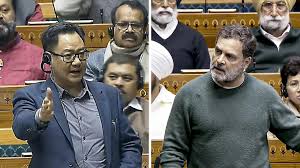
NEW DELHI: Any hope of normalcy returning to LS was apparently dashed when opposition stepped up their offensive and submitted a notice for the removal of the Speaker. In a twist, it turned out to be the end of a week-long impasse, laying bare faultlines within the opposition as pragmatic voices wanting to be heard on key issues in the House prevailed over those favouring uncompromising rigidity and confrontation. LS functioned normally even though the govt did not agree to the conditions set by Congress: allowing LoP Rahul Gandhi to speak, rectification of the Speaker’s “baseless” claim that he had to request PM not to speak during the debate on motion of thanks to the President for her address in view of plans of Congress’ MPs to do something unprecedented, and a probe into why BJP MP Nishikant Dubey’s mic was not switched off when he attacked Nehru-Gandhi family. The prevailing view within govt was that it had come out better in the battle of wits by not making any concession to the key Congress demand of allowing Rahul to speak first and revoking the suspension of eight MPs to defuse the crisis that had stalled proceedings. What helped the govt defuse the impasse was the keenness among some key regional BJP rivals for LS to function and allow discussion on regional concerns. Bengal and Tamil Nadu, where TMC and DMK are in office, are headed to polls, while political temperature is rising in UP, where Samajwadi Party is the main opposition party, with elections only a year away. While TMC made its differences clear by not signing the notice, MPs from different non-Congress oppn parties suggested many of them did not want the first half of the session to be consumed by the deadlock. Across the aisle, BJP’s allies stood firm with the govt, backing the Speaker and criticising the opposition for targeting a constitutional office. Taking high moral ground, Birla decided not to attend till the notice is disposed of, signalling the matter may be taken up later in the session. Courtesy : TOI Note: This news is originally published on https:/timesofindia.com/bha and is used purely for non-profit/non-commercial purposes, especially human rights