
Manipur trans groups protest ‘regressive’ bill
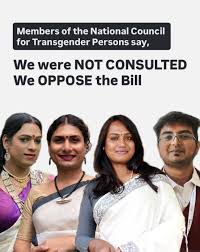
Imphal: Transgender rights groups in Manipur on Sunday staged a protest against the Transgender Persons (Protection of Rights) Amendment Bill 2026, terming it ‘regressive’ and contrary to the Supreme Court judgment which recognises self-identification of transgender individuals.Both Houses of parliament recently passed the bill. The protest was organised by the All Manipur Nupi Manbi Association (AMANA), Empowering Trans Ability (ETA), and the All Trans Men Association (ATMA) Manipur at the Mao Market in Imphal and Keishampat Leimajam Leikai in Imphal West. The transgender community gathered at the Mao Market in Imphal where they started the protest with a flash mob. Later, they staged a sit-in at Keishampat and burnt copies of the bill. Speaking to the media, AMANA secretary Santa Khurai said the bill undermines the landmark NALSA V/s Union of India ruling, which recognised the rights of transgender persons to self-identify their gender. “The bill is completely regressive and goes against the principle of self-identification. It attempts to pathologise transgender identity and impose restrictive definitions,” the activist said. The organisations alleged that the proposed law recognises only a limited set of identities such as Hijra, Kinnar and Jogappa, while ignoring diverse indigenous gender identities from the northeast. Santa cited identities such as Nupi Manbi and Nupa Manba in Manipur, along with similar culturally rooted identities in Mizoram, Arunachal Pradesh and Meghalaya, stating that the bill risks erasing these communities from legal recognition. “India is a diverse nation, yet this bill reflects a shallow outlook that fails to acknowledge identities beyond mainland constructs,” Santa said. “We did gender affirmative surgery before the bill came. We are going to continue doing gender affirmative surgery. This is our body. This is our identity. Whether the law recognised or not, we exist,” she added. Santa maintained the organisations are preparing to file a litigation in the Supreme Court along with partner organisations and build wider momentum to oppose the bill. Courtesy : TOI Note: This news is originally published on https:/timesofindia.com/bha and is used purely for non-profit/non-commercial purposes, especially human rights
Controversy over Registrar Appointment at Madras University: Dalit Professor Alleges Discrimination and Procedural Irregularities in Interview Process
Madras University Registrar Appointment: Allegations of Discrimination and Procedural Irregularities in Interview; SC/ST Commission Seeks Report Tamil Nadu: A 54-year-old Associate Professor belonging to the Dalit community, currently serving at a college in Chennai, has leveled serious allegations regarding the selection process adopted for the post of Registrar at the University of Madras (UoM). He claims that irregularities were committed at multiple levels during the interview held in June 2025. The professor himself was one of the candidates for this position. He expressed astonishment that, despite five out of the nine candidates being Dalits, not a single representative from this community was included in the entire selection committee. Regarding this matter, the professor approached the Madras High Court in December of last year. He has petitioned the court to direct the university to conduct a fair selection process utilizing a valid and properly constituted committee. Furthermore, he has demanded that the appointment be made strictly on the basis of merit, while also ensuring that his own candidature is duly considered. Applications for the post of Registrar were invited in May of last year, as the then-Registrar, S. Elumalai, was scheduled to step down from his position in June. Initially, a total of 15 individuals applied; of these, four were declared ineligible, and two candidates failed to appear for the interview. Consequently, a total of nine candidates appeared for the interview on June 24. The Associate Professor—who possesses over 24 years of experience in the fields of teaching and research—stated in an interview that the majority of the candidates did not perceive the process as fair. He asserted that not everyone was accorded equal opportunities and that the entire exercise appeared to be nothing more than a mere eyewash. He alleged that it seemed as though the selection committee had already pre-determined the current Registrar, Rita John, as the chosen candidate for the post. Another candidate—a 55-year-old professor from Madras University itself who appeared for the interview—also raised questions regarding the allocation of time during the process. He stated that while all other candidates were allotted only 10 to 15 minutes, the incumbent Registrar was evaluated for a full 46 minutes. He further alleged that Rita John already shared a close acquaintance with several members of the committee. According to the rules, the Vice-Chancellor (VC) is supposed to preside over this interview. In the VC’s absence, this responsibility typically falls to a Syndicate Committee constituted under the Secretary of the Higher Education Department. However, in this instance, the responsibility was entrusted to J. Innocent Divya—the then Commissioner of the Directorate of Technical Education (DoTE)—a move that casts a shadow of doubt over the entire process. According to departmental sources, Divya was appointed by the former Higher Education Secretary, C. Samayamoorthy. Samayamoorthy was transferred on June 23, and the interviews were scheduled for the very next day, June 24. Candidates are now questioning why the interviews were conducted with such haste—specifically, before the new Secretary, P. Shankar, could assume charge. The professor further questioned why the process was not deferred until the arrival of the new Secretary, Shankar, given that there is no provision allowing anyone other than the designated selection committee members to conduct such proceedings. Notably, the former Secretary, Samayamoorthy himself, had appeared for an interview for the post of Registrar at Bharathiar University just one week prior to the interviews held at the University of Madras. Candidates have also expressed strong objections regarding the lack of Dalit representation within the committee. They argue that, in accordance with UGC regulations, representation from the Dalit community is mandatory within such committees and cannot be compromised under any circumstances. In light of this, a member has lodged a complaint regarding these irregularities with the SC/ST Commission. Consequently, the Commission has issued stern directives to the Higher Education Department, mandating the submission of a comprehensive report on the entire interview process by the first week of April. Responding to these allegations, a senior administrative official at the University of Madras presented the institution’s stance. He asserted that the interviews were conducted in a completely impartial manner and that the position was awarded strictly on the basis of merit. The official clarified that this appointment does not involve any form of bribery, pressure, or irregularity. The official also informed that, since assuming the post of Registrar, Rita John has relinquished her previous positions as a Syndicate member and Head of the Department (HoD) of Theoretical Physics. Rajan Chaudhary Courtesy: Hindi News
MRPS founder flays SC order on Dalit converts, seeks SC status for them
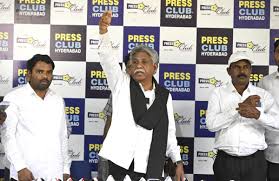
Opposes SC ruling denying SC status to Dalit converts, urging equal recognition for Dalit Christians Emphasising the need to recognise India’s continuing reality of caste discrimination, Madiga Reservation Porata Samithi (MRPS) founder-president Manda Krishna Madiga criticised the recent Supreme Court ruling that Dalits who convert to religions other than Hinduism, Sikhism or Buddhism lose their Scheduled Caste (SC) status. He called for SC status to be extended to Dalit Christians on par with the recognition granted to Sikh and Buddhist Dalits, and expressed MRPS’ support for Dalit Christians if they choose to fight for their rights. Addressing a press conference at the Press Club in Somajiguda here on Monday, he said the authorities and the judiciary must consider the fact that the preaching classes of both Christianity and Islam in India largely come from upper castes. He alleged that upper castes such as Brahmins, Vaishyas, Kammas and Reddys who converted to other religions carried forward discriminatory caste practices even within religions that preach equality. “The Supreme Court judgment is completely against Articles 14, 15 and 25 of the Constitution. Because of various conspiracies, Dalits lost the benefits of the Communal Award and their rights to religious freedom. During the framing of the Constitution, upper castes represented Christians, which is why they did not speak for Dalit Christians’ rights,” he alleged. When upper-caste Christians are eligible for EWS reservations, why should Dalit Christians not be eligible for SC reservations, he asked, claiming that B.R. Ambedkar had clarified that conversion to Christianity does not alter the social conditions of Dalits. The Hindu Bureau Courtesy : The Hindu Note: This news is originally published on https:/thehindu.com/bha and is used purely for non-profit/non-commercial purposes, especially human rights
Pinarayi targets Rahul Gandhi but silent on BJP: Sachin Pilot
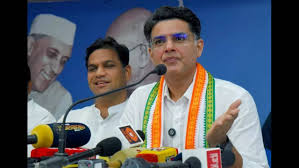
Pinarayi targets Rahul Gandhi but silent on BJP: Sachin Pilot
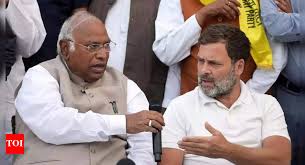
Kharge and Rahul accuse LDF of colluding with BJP
Activists condemn Transgender Bill passage in Lok Sabha, says haste in Rajya Sabha ‘scary’
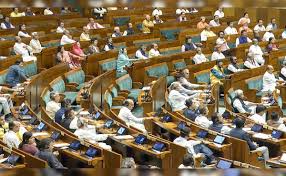
Transgender Bill Passed Amid Resistance By Opposition, Activists
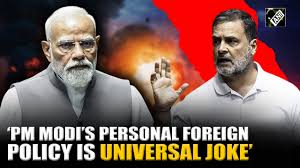
‘Universal joke’: Rahul Gandhi on PM Modi’s foreign policy, says he’s ‘compromised’
BSP’s strength benefits Dalits, OBCs, minorities, says Mayawati

Bahujan Samaj Party chief Mayawati on Sunday said that whenever and wherever her party has strengthened its hold, Dalits, tribals, OBCs and minority communities have benefitted immensely. In a statement, Mayawati said that it is necessary to take the master key of power into our own hands to properly implement the legal and constitutional rights given by Babasaheb Bhimrao Ambedkar for the benefit, welfare, upliftment of the bahujan across the country and for enabling them to live in an egalitarian society with self-respect. The BSP founder, Kanshi Ram, dedicated his entire life to this cause. His unfinished mission is now being pursued with enthusiasm by Mayawati, the statement said. “The need of the hour is to work diligently to achieve the missionary objectives of security, respect and identity for the bahujan, and achieve electoral success,” said Mayawati. Whenever and wherever BSP has strengthened, Dalits, tribals, OBCs and minority communities have benefitted immensely,” Mayawati said in the statement. In the meeting of BSP State committee members of Bihar, Madhya Pradesh and Chhattisgarh with Mayawati held on Sunday, guidelines given in the last All India meeting were reviewed in detail. Courtesy : The Pioneer Note: This news is originally published on https:/thepioneer.com/bha and is used purely for non-profit/non-commercial purposes, especially human rights