
Mirwaiz says NC’s statehood protest in Delhi should also include demand for restoration of Articles 370, 35A
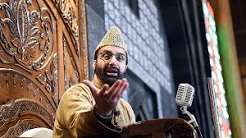
Hurriyat chairman says the proposed Jantar Mantar protest should go beyond the demand for statehood and include political prisoners’ rights and peaceful resolution of the Kashmir conflict. SRINAGAR: Hurriyat Conference chairman and cleric Mirwaiz Umar Farooq, who is among 52 political leaders invited by J&K’s ruling party National Conference (NC) for statehood protest at Jantar Mantar in New Delhi, has asserted that that protest should go beyond statehood and include restoration of Articles 370 and 35A, rights of political prisoners, and peaceful conflict resolution. In his Friday sermon at historic Jamia Masjid in Srinagar, Mirwaiz confirmed that he has received an invitation from NC president Farooq Sahib for attending the statehood protest at Jantar Mantar, New Delhi. The NC is planning a protest on the first day of parliament’s monsoon session at Jantar Mantar New Delhi to press for restoration of statehood to J&K. The party has invited 52 leaders of the country including Mirwaiz for the protest. The NC has applied for the permission for the protest and is yet to get go ahead. Referring to abrogation of Articles 370 and 35A and downgrading and bifurcation of erstwhile J&K state by centre, Mirwaiz said after the 2019 unilateral changes brought by the Government of India, the State of Jammu and Kashmir was downgraded to a Union Territory and its constitutional safeguards snatched from the people, leaving them vulnerable and disempowered. The Hurriyat chairman said any effort by any political alliance, organisation or individuals working for the restoration of the usurped rights of the people of Jammu and Kashmir , if based on sincerity , is the need of the hour. He said the protest agitation should go beyond statehood and include restoration of Articles 370 and 35A, rights of political prisoners, and peaceful conflict resolution. “It is the foremost responsibility of the NC government towards people of Jammu and Kashmir, who gave it a mandate on the clear promise that, once elected, it would revive the pre-2019 status of J&K, including restoration of statehood and Article 370 and 35A,” Mirwaiz said adding the agitation cannot be limited to the restoration of statehood, but has to be for all the seized safeguards and rights of the people of Jammu and Kashmir. The restoration of Article 370, which granted special status to J&K, was one of the main planks in NC’s campaign for the 2024 Assembly elections. “In fact, it should include the rights of our political prisoners and youth languishing in jails for years without trial or continued incarceration despite getting bail, and for people’s longing for lasting peace and life with dignity by conflict resolution,” added Mirwaiz. Other than Mirwaiz, NC has also invited Congress President Mallikarjun Kharge, Sonia Gandhi, Rahul Gandhi, Tamil Nadu CM C Joseph Vijay, TMC chief Mamata Banerjee, SP chief Akhilesh Yadav, NCP (SP) chief Sharad Pawar, Shiv Sena (UT) chief Uddhav Thackeray, former Odisha CM Naveen Patnaik, Asaduddin Owaisi, Y S Jagam Mohan Reddy, Sukhbir Singh Badal, Arvind Kejriwal, M A Baby CPI(M) General Secretary, D Raja of CPI, Kapil Sibal, BSP chief Mayawati, BRS President K. Chandrashekar Rao, AIADMK General Secretary Edappadi K. Palaniswami, former J&K Chief Minister Ghulam Nabi Azad, PDP chief Mehbooba Mufti, J&K Apni Party Chief Altaf Bukhari, J&K Congress chief G A Mir, J&K BJP president Satpal Sharma, Peoples Conference chairman Sajad Gani Lone and J&K Grand Mufti Nasir-ul-Islam for the statehood protest in national capital. Fayaz Wani Courtesy : TNIE Note: This news is originally published on https:/thenewindianexpress.com/bha and is used purely for non-profit/non-commercial purposes, especially human rights
Kerala government sets up expert panel for Wayanad landslide debris removal

The panel was formed following a meeting chaired by Chief Minister V D Satheesan with Home Minister Ramesh Chennithala and PWD Minister P K Basheer. THIRUVANTHAPURAM: The Kerala government has constituted a three-member expert committee to inspect the Wayanad tunnel and township project sites and submit recommendations for the safe removal of debris accumulated following a landslide. Seven bodies have been recovered from the site of the Wayanad landslide, which occurred on 7 July. The decision to form the panel was taken at a meeting chaired by Chief Minister V D Satheesan with Home Minister Ramesh Chennithala and Public Works Minister P K Basheer on Friday, according to a statement from the Chief Minister’s Office. The committee will include Dr Santhosh G Thampi, professor at NIT Calicut; Dr Jude Emmanuel, environmental scientist at the Directorate of Environmental and Climate Change; and a representative from the National Centre for Earth Science Studies (NCESS). An order issued by the Disaster Management Department said the panel would visit the tunnel and township project sites and assist the District Disaster Management Authority (DDMA) in carrying out the safe removal of debris. For the tunnel project, the debris will be transported to disposal sites identified by the Public Works Department (PWD). For the township project, the Project Implementation Unit (PIU) will identify suitable locations for depositing the material. The committee has also been asked to prepare a brief action plan with necessary safety measures for debris removal, which will be followed by the PWD and PIU. The government has directed the panel to inspect the sites and submit its report at the earliest. The Wayanad District Collector has been instructed to provide all necessary support to the committee. Courtesy : TNIE Note: This news is originally published on https:/thenewindianexpress.com/bha and is used purely for non-profit/non-commercial purposes, especially human rights
Congress may name new KPCC president within a week
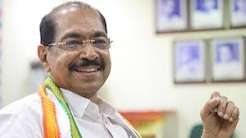
The exercise comes at a crucial juncture for the party. There is growing discontent among workers and leaders over the absence of a full-time KPCC president. THIRUVANANTHAPURAM: The Congress is set to kick-start the long-awaited organisational reshuffle in Kerala with the appointment of a new KPCC president. According to party sources, the high command could name a new state chief within a week. The process is likely to commence after July 10, once Leader of the Opposition in the Lok Sabha, Rahul Gandhi, returns to Delhi. Sunny Joseph, the incumbent KPCC president, had informed the high command his readiness to step down from the post after being inducted into the cabinet. However, he has been asked to continue until a replacement is appointed. The exercise comes at a crucial juncture for the party. There is growing discontent among workers and leaders over the absence of a full-time KPCC president. Though it’s been more than a month since the government assumed office in May, the committee meant to facilitate coordination between the government and the party has not yet been constituted. Leaders allege that the organisational inertia has affected the party’s ability to intervene on key policy matters. “The government has made U-turns on several appointments and courted controversy over some other decisions involving the party’s policy positions,” a Congress leader said. “Had there been a full-time working KPCC president and effective coordination between the party and government, contentious decisions such as the implementation of PM SHRI scheme, reduction of tax on low-alcohol beverages and private participation in mineral sand mining could have been avoided,” he said. Meanwhile, lobbying for the post of KPCC chief has also intensified, with former UDF convenor Benny Behanan and Lok Sabha Chief Whip Kodikunnil Suresh being seen as frontrunners. The reported rift between Chief Minister V D Satheesan and veteran leader V M Sudheeran has come as a setback for Suresh at a crucial juncture. The two were understood to have backed Suresh as the first Dalit KPCC president, in line with the party’s emphasis on social justice. Behanan, however, enjoys the support of different sections of the party. UDF convenor Adoor Prakash, V S Sivakumar, Anto Antony and Mathew Kuzhalnadan are also in the race. Party observers have submitted their assessment reports on prospective candidates to the high command. “The high command will initiate the appointment process once Rahul returns,” a leader said. Although a section in the party has demanded that the ‘one-person, one-post’ principle be applied while appointing the new president, the final decision will rest with the high command. Next steps The appointment of KPCC president is expected to set the ball rolling on a wider organisational overhaul, including the appointment of two working presidents and new general secretaries, followed by selection of new district chiefs. K S Sreejith Courtesy : TNIE Note: This news is originally published on https:/thenewindianexpress.com/bha and is used purely for non-profit/non-commercial purposes, especially human rights
Parliament passes Transgender Persons Amendment Bill, 2026 with Rajya Sabha approving it today
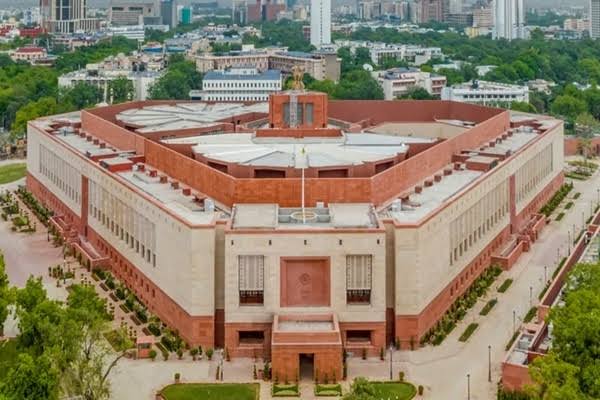
Parliament has passed the Transgender Persons (Protection of Rights) Amendment Bill, 2026, with the Rajya Sabha approving it today. The bill was passed by the Lok Sabha yesterday by a voice vote amid an Opposition-led walkout. The bill seeks to redefine the category of transgender, removes the provision of self-perceived gender identity and excludes several socio-cultural identities as well as transmasculine individuals from its ambit. It also further defines transgender persons within a biological framework, based on intersex variations and differences in sexual development. Replying to the discussion on the Bill in the Rajya Sabha, Social Justice and Empowerment Minister Dr Virendra Kumar said the government is compassionate towards the well-being of the transgender community. He said the Bill has provisions to empower the transgenders and give them dignity. The Minister said that the NDA government has taken several initiatives to bring transgender people to the mainstream and stop discrimination against them. Starting the discussion in the Upper House, Congress MP Renuka Chowdhury said this bill dilutes the privacy of an individual provided under the Constitution. Opposing the Bill, Ms Chowdhury said self-identification cannot be taken away through bureaucratic certification. Criticizing the government, she said that the proposed bill undermines the fundamental rights and dignity of transgender persons. Calling such a move wrong and illegal, she argued that forcing transgender persons to provide their identity through official certificates is against the spirit of equality and dignity guaranteed by the constitution. She also questioned the government’s approach for not properly consulting with the transgender community before bringing the Bill. She also referred to the Supreme Court’s landmark NALSA judgement of 2014, which recognized the right of transgender persons to self-identify their gender. Ms Chowdhury said the proposed Bill violates the principles laid down in that judgement and fails to respect an already established legal framework. DMK MP Tiruchi Shiva also opposed the Bill, saying that even if the Bill is passed in Parliament with a majority, it will be struck down by the Supreme Court. He further added that the Bill violates Articles 14, 15, 19 and 21 of the Constitution and it deprives the community of the right to freedom, dignity and self-determination. Supporting the Bill, BJP MP Medha Vishram Kulkarni said, ” This Bill ensures justice, dignity, protection from criminalisation and legal safeguards for transgender persons. She also thanked Prime Minister Narendra Modi for bringing this bill with certain amendments in order to ensure that the benefits reach the deserving people in a proper manner. She said there is a need for a law that brings justice to real transgender individuals and punishes fake ones. Mrs Kulkarni said the benefits should be extended to those who are transgender by birth. She said that the amendment to extend punishment will bring down the rate of crime and forced identities. TMC’s Saket Gokhale said that 31% of Transgender people in India have attempted suicide because of the discrimination that they are facing. He alleged that now the government is going to start discriminating against them as though social discrimination were not enough. He called it unacceptable. Mr Gokhale expressed concern that gender is going to be decided by the Chief Medical Officer and a District Magistrate, and the bill does not prescribe any qualifications for the Chief Medical Officer. Sanjay Singh of AAP said the Bill is a big let-down for the transgender community. He accused the government of not doing anything for the community. RJD’s Manoj Kr Jha said that prejudices against transgender people should stop, and they should be able to live with dignity. He added that self-determination of gender should not be taken away. CPI(M)’s John Brittas said it is a black-letter day and the Bill is taking India a century back. He pleaded with the government to either withdraw the Bill or refer it to a Select Committee. Jaya Bachchan of the Samajwadi Party also questioned the government over the legislation. She sought to know what the urgency was in bringing the Bill, without examining it with the depth and care that it deserved. Courtesy : News On Air Note: This news is originally published on https:/newsonair.com/bha and is used purely for non-profit/non-commercial purposes, especially human rights
Rajeev Khandelwal praises Pooja Sharma Rekha, apologises to transgender community

Mumbai: Actor and television host Rajeev Khandelwal has extended his support to the transgender community and publicly apologised for the discrimination they have faced, during an emotional episode of the television show Tum Ho Naa – Ghar Ki Superstar. The episode features social media personality Pooja Sharma Rekha, who shares her journey of resilience, self-acceptance and the challenges she faced while seeking acceptance in society. Rajeev’s heartfelt remarks have drawn attention for highlighting the need for dignity, equality and compassion towards transgender persons. Pooja Sharma Rekha shares her life journey In the upcoming episode, Pooja Sharma Rekha opens up about the struggles she endured because of her gender identity and the obstacles she overcame to build a life with confidence and self-respect. Her story focuses on courage, perseverance and acceptance despite years of prejudice and social discrimination. The conversation aims to shed light on the lived experiences of transgender individuals and encourage greater understanding among viewers. Rajeev Khandelwal offers an emotional apology After listening to Pooja’s experiences, Rajeev Khandelwal expressed solidarity with the transgender community and apologised for the way many members of the community have been treated by society. In an emotional message, he said he wished to apologise on behalf of everyone who had knowingly or unknowingly contributed to their pain and discrimination, adding that he bowed his head in shame over the treatment meted out to transgender persons. He also called for greater acceptance, respect and equal treatment, stressing that every individual deserves to live with dignity irrespective of gender identity. Episode highlights inclusion and acceptance The episode centres on the importance of recognising the struggles faced by transgender persons while celebrating stories of resilience and hope. According to promotional material for the show, Pooja Sharma Rekha’s appearance is intended to inspire viewers by demonstrating how determination and self-belief can help overcome adversity. The programme also reinforces the message that empathy, inclusion and equal opportunities are essential for building a more accepting society. Conversation sparks wider social message The episode comes at a time when conversations around inclusion and equal rights for transgender persons continue to gain prominence in India.South Asians & Diaspora By providing a national television platform for Pooja Sharma Rekha to share her experiences, the show seeks to encourage dialogue on acceptance and challenge stereotypes associated with the transgender community. Rajeev Khandelwal’s remarks have been widely shared online, with many viewers appreciating his public expression of support and his appeal for greater compassion and respect. Courtesy : News Karnataka Note: This news is originally published on https:/newskarnataka.com/bha and is used purely for non-profit/non-commercial purposes, especially human rights
Dalit family attacked, casteist slurs used: Case filed against five named accused in Sadabad

A Dalit family in the village of Heli Bhag Midawali in the Sadabad police station area has been accused of entering their home, assaulting them, and using casteist slurs. Based on the victim’s complaint, police have registered a case against five named accused under various sections and the SC/ST Act and have begun an investigation. Sanjeev, son of Sonveer, a resident of the village of Heli Bhag Midawali, stated in his complaint to the police that he is financially weak and lives with his family in a room near a tubewell outside the village. According to Sanjeev, at around 12:30 pm on July 7, Bani Singh alias Bijendra Singh, Arvind Kumar, Rahul, Gopal, and Shubham arrived at his room with iron rods and sticks. The accused entered the house and began assaulting Sanjeev’s wife, Preeti, and children. Sanjeev alleged that when he resisted, he was also assaulted, resulting in serious head injuries. Hearing the noise, Mukesh Kumar and Brajesh Kumar, who were working in a nearby field, rushed to the scene. They attempted to intervene, but the accused assaulted them as well, resulting in injuries to their hands. The complaint also alleges that during the assault, the accused used casteist slurs and threatened to kill him. They reportedly threatened to kill Sanjeev’s entire family and demolish the room he was living in with a JCB. Sanjeev somehow escaped and reached the Sadabad police station, reporting the incident to the police. Based on the complaint, the police have registered a case against the five named accused under relevant sections and the SC/ST Act. Deputy Superintendent of Police JN Asthana stated that the matter is being investigated and further legal action will be taken based on the facts that emerge from the investigation. Kishore Kumar Varshney | Sadabad, Hathras Courtesy : Hindi News
Dr B. R. Ambedkar’s Views on the Bhakti Movement and the Upliftment of Dalits

The Bhakti Movement occupies an important place in the social and religious history of India. Emerging between the seventh and seventeenth centuries in different parts of the country, it emphasized personal devotion (bhakti) to God, rejected excessive ritualism, and sought to establish a direct relationship between the devotee and the divine. Several Bhakti saints, including Kabir, Ravidas, Chokhamela, Namdev, Tukaram and Nandanar, condemned social discrimination and proclaimed the equality of all human beings before God. Because many of these saints came from marginalized communities or openly criticized caste prejudice, the Bhakti Movement is often celebrated as a movement of social equality and Dalit emancipation. Dr. B. R. Ambedkar, however, offered a far more critical and historically grounded assessment. While acknowledging the moral courage and egalitarian spirit of several Bhakti saints, he argued that the movement failed to dismantle the caste system or bring about the social, economic and political liberation of the Dalits. In his view, the Bhakti Movement represented an ethical protest against caste discrimination but not a programme for structural social transformation. The distinction between spiritual equality and social equality lies at the heart of Ambedkar’s critique. Ambedkar’s Appreciation of the Bhakti Saints Ambedkar did not dismiss the Bhakti tradition in its entirety. He recognized that many saints challenged the religious orthodoxy of their time and gave voice to the aspirations of the oppressed. Saints such as Ravidas and Chokhamela, themselves born into communities regarded as “untouchable,” exposed the inhumanity of caste discrimination through their poetry and personal experiences. Kabir boldly attacked Brahminical ritualism as well as Islamic orthodoxy, emphasizing morality, reason and the unity of humanity over religious formalism. These saints questioned hereditary privilege, criticized priestly domination and insisted that devotion, rather than birth, was the true basis of religious worth. They affirmed the dignity of labour and rejected the idea that spiritual status depended upon caste. Their teachings inspired generations of oppressed people and enriched India’s ethical and literary traditions. Ambedkar acknowledged these contributions and regarded them as important voices of dissent within Indian society. Bhakti as a Spiritual Rather Than Social Revolution Despite recognizing these achievements, Ambedkar argued that the Bhakti Movement remained essentially a spiritual movement rather than a social revolution. Its central concern was the individual’s relationship with God rather than the reconstruction of society. While Bhakti saints preached equality before God, they rarely developed a systematic programme for abolishing caste, redistributing economic power or transforming social institutions. For Ambedkar, this constituted the fundamental limitation of the movement. A religion that teaches spiritual equality while accepting social inequality cannot produce genuine human emancipation. Equality before God has little practical significance if people continue to suffer discrimination in everyday life. A Dalit who is denied entry into a temple, prevented from drawing water from a public well, excluded from education or deprived of economic opportunities cannot be considered equal merely because religion declares all souls to be equal before God. Ambedkar therefore insisted that social equality must precede or accompany spiritual equality. Without changes in the structure of society, devotional teachings remain largely symbolic. Failure to Destroy the Caste System Ambedkar’s most significant criticism was that the Bhakti Movement failed to destroy the caste system. Although many saints condemned untouchability and emphasized human brotherhood, caste hierarchy continued to dominate Hindu society long after the movement had spread across India. He pointed to a striking contradiction in Hindu society. Upper-caste Hindus often revered saints like Ravidas and Chokhamela as holy men while simultaneously refusing to treat ordinary Dalits as equals. Temples celebrated Dalit saints, but living Dalits remained excluded from temples, schools, public wells and positions of dignity. This paradox demonstrated, according to Ambedkar, that admiration for exceptional individuals did not translate into equality for the oppressed community as a whole. The Bhakti Movement produced revered saints but failed to eliminate the social practices that degraded millions of ordinary Dalits. Consequently, caste survived largely intact despite centuries of devotional preaching. Individual Salvation Versus Collective Liberation Ambedkar also criticized the movement for emphasizing individual salvation instead of collective social struggle. Bhakti encouraged devotees to seek liberation through prayer, surrender and devotion to God. While such devotion might provide spiritual consolation, it did not equip oppressed communities with the political organization or social consciousness necessary to challenge systems of exploitation. Ambedkar believed that no oppressed community could secure justice merely through moral persuasion or religious devotion. Real emancipation required education, political representation, legal rights, economic resources and organized social movements. His famous call to “Educate, Agitate and Organize” reflected this conviction. Liberation could only be achieved through collective action and democratic struggle, not through individual acts of devotion. Bhakti and the Absence of Social Democracy For Ambedkar, democracy was not simply a political system but a way of life founded upon liberty, equality and fraternity. Although Bhakti occasionally promoted the ideal of fraternity, it failed to establish liberty and equality within the social order. Hereditary occupations remained unchanged, caste endogamy continued, Brahminical authority survived, and untouchability persisted. As a result, the movement did not create the social conditions necessary for democracy. Ambedkar argued that political democracy cannot endure where society itself remains deeply unequal. Social democracy requires equal opportunities, equal dignity and equal citizenship—objectives that devotional reform alone could not achieve. Critique of Saint Worship Ambedkar was also skeptical of the tendency to rely upon saints as agents of social transformation. He argued that history is changed not by isolated holy individuals but by organized and conscious masses. Saints may awaken moral awareness, but lasting social change depends upon institutions, laws, political movements and collective action. He believed that excessive reverence for saints often encouraged passive acceptance of injustice rather than active resistance against it. The oppressed, he argued, must become the makers of their own history instead of waiting for moral reform from privileged sections of society. Ambedkar’s Alternative Vision Unlike the Bhakti saints, Ambedkar proposed a comprehensive programme for the emancipation of Dalits. This programme included the annihilation of caste, universal education, economic justice,
Rajasthan SI Suspended After Dalit Youth Dies in Knife Attack; Family Alleges Police Ignored Prior Complaint
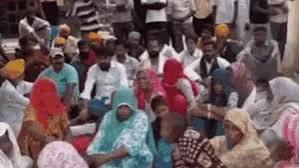
A police sub-inspector has been suspended in Rajasthan’s Sri Ganganagar district after a Dalit youth died following a knife attack, with the victim’s family alleging that police failed to act on an earlier complaint that could have prevented the incident. The action was taken after allegations of negligence surfaced against the officer, who had reportedly ignored a written complaint filed by the victim two days before the attack. Victim Had Filed Harassment Complaint Before Attack The incident took place on the evening of July 3 near the Shani Temple in Srikaranpur town, where two youths, Charanjit Singh and Shivraj, were allegedly attacked with knives. Charanjit, who suffered critical injuries, was shifted to a hospital in Sri Ganganagar, where he died during treatment on July 4. Shivraj is still undergoing treatment. According to the police, Charanjit had submitted a written complaint to Sub-Inspector Mala Singh two days before the attack, alleging that the accused had harassed a girl. However, no action was taken on the complaint. Police believe that after the complaint was ignored, the accused allegedly attacked Charanjit and Shivraj out of revenge. Family Alleges Police Negligence Following Charanjit’s death, his family staged a protest outside the police station on July 5, accusing the police of serious negligence. The family alleged that timely action on the earlier complaint could have prevented the attack and saved Charanjit’s life. District chief Dularam Meghwal also submitted a written complaint to the Inspector General of Police (Bikaner Range), alleging that SI Mala Singh had deliberately failed to act despite receiving the complaint. Meghwal further stated that Charanjit belonged to a Dalit family and urged strict action against those responsible. SI Suspended, Probe Underway After receiving the complaint, the Inspector General directed Sri Ganganagar Superintendent of Police Harishankar to take immediate action. The SP subsequently suspended SI Mala Singh pending an inquiry. Speaking on the matter, SP Harishankar said, “The investigation is underway. Teams have been formed to arrest the accused, and the entire incident is being thoroughly investigated.” Police said further legal action will be taken based on the findings of the investigation. Courtesy : TOP Note: This news is originally published on https:/theobserverpost.com/bha and is used purely for non-profit/non-commercial purposes, especially human rights
‘One Sewer Death Every 45 Hours’: Safai Karamchari Abhiyan Asks Prime Minister to Save Dalit Lives

After the law banning manual scavenging was passed, deaths while cleaning sewers and septic tanks rose from 39 in 2016 to 121 in 2025 and the figure is set to jump again in 2026. ‘One Sewer Death Every 45 Hours’: Safai Karamchari Abhiyan Asks Prime Minister to Save Dalit Lives A file photo from May 2019 of Delhi Univesity students and sanitation staff protesting. Credit: Riya Bhardwaj New Delhi: The Safai Karamchari Andolan (SKA) has questioned the government’s silence and delays in ending manual scavenging in India. Highlighting the death of 101 people across the country since January 2026 while engaged in manually cleaning sewers and septic tanks, SKA said that its figure – 121 deaths for the whole of 2025 – showed the situation was worsening. “Needless to say, Dalit lives don’t matter for government and they have turned into a new normal,” Bezwada Wilson, a Magsaysay Prize awardee and head of the SKA, said in a statement. The NGO’s figures show an “alarming” rise in the number of deaths in sewers and septic tanks ever since manual scavenging was banned by the Prohibition of Employment as Manual Scavengers and their Rehabilitation Act, 2013. “In 2016, only 39 deaths were reported, which jumped by 350% next year in 2017 to 137 deaths,” said the statement. It said over 1,726 deaths have been reported across the country since 2013. It said a sanitation worker’s death is being reported while cleaning sewers and septic tanks, on average, “every 45 hours”, while governments choose “shameless” silence. “We demand that our Prime Minister immediately announce a complete stop to deaths inside sewers and septic tanks,” it said. Governments in denial Wilson pointed out that the government has been denying sewer deaths though they were still taking place, more than a decade after the practice was outlawed. “No death has been reported due to manual scavenging, which is lifting of human excreta from insanitary latrines,” the government of India told parliament in 2023. “Further, no report from States/UTs has been received about the inhuman practice of manual scavenging,” Union Minister of State for Social Justice and Empowerment Ramdas Athawale said in parliament. A press release issued by the government based on this parliament (Rajya Sabha) response said in October 2023 that out of 766 districts, only 249 – fewer than 35% – had declared themselves manual scavengers-free “and uploaded the certificate on portal”. At the same time, in 2018, the Delhi government admitted that manual scavenging was ongoing in the capital, while the Superme Court asked the Union government to correctly assess the situation. The SKA statement records 12 deaths in Delhi-NCR, which are part of the “horrific” increase in cases across the country. It said 16 states had reported such deaths so far in 2026, an indication of the spread of the problem. Complete ban on dry toilets and manual cleaning Bezwada Wilson spent four decades battling the practice through SKA’s activism, a social movement and a court case (related to a 1993 law that has also proved ineffective in ending the scourge) before manual scavenging could be outlawed, without exception and across the country, by the 2013 law. Both the 1993 and 2013 laws are in place, seeking to address separate aspects of the practice: employment of people to clean sewers and septic tanks manually as well as building of dry toilets, etc., both of which perpetuate the practice. The statement also criticised state governments for not taking action to prevent manual scavenging and said it had expected better response to the law. Of the 1,726 deaths since 2013, 1,203 were just from Tamil Nadu (332), Gujarat (216), Delhi-NCR (157), Maharashtra (155), Uttar Pradesh (148), Haryana (104) and Bihar (94). “Despite such big numbers, none of these states have taken a single step to stop these deaths,” the statement said. State governments complicit The SKA statement was also critical of the government’s flagship ‘Swachh Bharat‘ scheme to build toilets across the country as well as of the scheme for mechanised cleaning of drainage systems, saying they neither mechanised the sanitation ecosystem nor completely eliminated dry toilets. Wilson said the failure of governments to elimitate the practice showed “how much they value the lives of safai karamcharis, who are still considered to be untouchable”. In 2019, the Supreme Court had come down heavily on the Union government over ambiguity in eradication of manual scavenging and passed an order banning the practice in six metropolitan cities. It had said it was “sick” of trying to get the Union and state governments to implement the 1993 law. India ranks very poorly in terms of its global sanitation status, for which are responsible lack of scientific cleaning methods and planning and caste- and gender-based inequality, as acknowledged by UNICEF, the Indian government’s partner in Swachh Bharat Abhiyan, in 2020. A survey by the Ministry of Social Justice and Empowerment revealed in 2024 that 91.9% of the 38,000 sanitation workers profiled (thus far) belonged to a Scheduled Caste, Scheduled Tribe or Other Backward Classes. Courtesy : The Wire Note: This news is originally published on https:/thewire.com/bha and is used purely for non-profit/non-commercial purposes, especially human rights
Allegations of extortion in the name of the second installment of the PM-Awas Yojana: Dalit youth beaten up for protesting, SDM says action will be taken after investigation

A case of alleged illegal extortion for the second installment of the Pradhan Mantri Awas Yojana has come to light in Amila Nagar Panchayat in Mau. It is alleged that a Dalit youth was assaulted for resisting the demand for money. A 36-second video of the incident is also circulating on social media. However, the viral video has not been independently verified. Vikas Kumar, son of Virendra, a resident of Saraya Dalit Basti, alleged that on Thursday afternoon, two young men, reportedly associated with the regional accountant, came to the village to photograph houses for the second installment of the PM-Awas Yojana. Vikas says that the construction work for the first installment of his house had been completed. When he asked for the photos, the young men allegedly demanded money in exchange for the photos. The victim alleges that when he refused to pay and started filming with his mobile phone, one of the young men seen in the video got up from his chair and began assaulting and abusing him. His mobile phone was also damaged during the incident. Vikas alleged that the two youths, under the protection of the regional accountant, extort money illegally in the name of photographing residences. He said that the government has designated authorized employees for this task, yet such activities continue to occur. According to the victim, similar complaints have been reported in the Nagar Panchayat area before, but the lack of effective action is encouraging such cases. The matter has gained traction after a video went viral on social media. However, the video could not be independently verified. Ghosi SDM Ashok Singh stated that an investigation will be conducted. If the investigation confirms irregularities or assault, appropriate action will be taken as per the rules. Mithilesh Kumar Rai | Amila, Mau Courtesy: Hindi News