
Mandal-Kamandal 2.0
The decision taken at a meeting of the Cabinet Committee on Political Affairs (CCPA), headed by Prime Minister Narendra Modi that caste enumeration will be part of the upcoming census exercise represents a tectonic shift in the BJP’s politics. It not only suggests the saffron party is ready to hijack the main poll plank of the Congress and its allies – the RJD and the SP -, but also to make it an integral component of its Hindootva politics. This is a variation of what was once known as the Mandal-Kamandal politics which was a combination of Dalit politics unleashed by the Mandal Commission report and the Hindootva ideology of the BJP. In 1979 the Morarji Desai-government appointed a commission under the chairmanship of Bindheshwari Prasad Mandal, who was then the Member of Parliament from Madhepura constituency in Bihar. The commission was entrusted with the task of identifying socially and educationally backward classes in India. In its findings the commission identified a total of 3,743 different castes and communities as backward on certain parameters. These castes comprised nearly 52 per cent of the country’s population. The commission proposed the idea of giving 27 per cent reservation to these backward castes/classes in public employment along with SCs and STs. However, after VP Singh became Prime Minister in 1989, he decided to implement the Mandal Commission recommendations to consolidate the votes of backward castes in his favour. But, the whole exercise became embroiled in bureaucratic procedures and continuous judicial interventions. It was finally implemented in 1993 during the tenure of the PV Narasimha Rao government. To counter this politics, the BJP launched its Kamandal politics to rally and unite the Hindoo population behind it. Many fence sitters who earlier were not supportive of the BJP did change their minds and stood with the BJP. The irony this time is that the BJP itself is espousing caste census to get electoral mileage along with its core Hindootva politics. The Assembly election in Bihar is due later this year and the caste composition of the state offers the best opportunity to test the efficacy of the new policy. The strategy of the BJP shows its nervousness over the Opposition’s move to consolidate its support base among the backward castes – mainly the OBCs – through its vocal demand for a caste census. Such a conclusion is inescapable considering the fact that the PM during the 2024 Lok Sabha poll launched a scathing attack on the Congress election manifesto that promised a caste census as a reflection of its “Urban Naxal” thinking. With that electoral propaganda, the BJP then asked the people for a massive LS majority so that it could overhaul the Constitution. The OBC and the Dalit groups saw in it a threat to dismantle caste reservations. This fear translated into votes for the Opposition for which the BJP failed to get a simple majority and fell far short of its expected tally of over 400 seats. Though the BJP has recovered much ground since then winning the elections in Maharashtra and Haryana, it seems it is not sure whether its hard-core Hindootva politics will pay the dividends as it expects in the next LS polls, given the undercurrent in favour of caste census. Till recently, the PM was telling the nation that there are only four castes in the country – women, youth, farmers and the poor. This was obviously an attempt to slam the Congress’ demand for caste census and removal of 50 per cent cap on reservations for SC/ST and OBCs. The government decision in a way follows the predictable pattern of functioning which is to spring surprises and catch the Opposition unawares. There is no doubt that the Opposition is indeed flummoxed by the announcement as is clear from Congress leader Rahul Gandhi’s response: “Modiji used to say there are only four castes in the country. I don’t know what caused the change of heart in the BJP.” The country was happy that he was clueless. However, the decision appears to be well thought out and a huge gamble. The BJP can ill afford to let the ground slip further. Pahalgam has been a mortal blow on the already fragile support frame work. Another clumsy Balakot style ‘surgical strike’ will not help quieten the vociferous groups trying to push India into a vortex of war. The people in power well understand that the Indian armed forces may not be willing to get entangled into a long drawn war. The world is watching current wars in Ukraine and Gaza. The minimum time that it has taken these yet unresolved conflicts has stretched to a few years. Those countries are not able to see the end of the fighting. The Indian populace and its economy are in no position to get into a long drawn military operation in which, most likely, China could play a direct role. Announcement of caste census has been a great help and hopefully it will divert attention from war to politics and, better still, caste based petty politics. Courtesy: Orissa Post Note: This news is originally published on https://www.orissapost.com/ and is for use by the non-military/non-commercial community, especially those in the human rights sector.
Denied dignity: How the Indian State enables caste system through manual scavenging

India’s persistent failure to eliminate manual scavenging, despite constitutional guarantees, progressive laws, and technological alternatives, stems not from a legal vacuum but from entrenched behavioural and sociological norms. Across the world, May 1 is set aside to honour the dignity of labour and the long struggle for workers’ rights. In India, this reverence is starkly at odds with the everyday reality faced by its poor and vulnerable working class. Despite being the world’s fifth largest economy, India continues to bury hundreds of its most marginalised citizens, mostly Dalits, in its sewers, septic tanks, and graveyards. The Indian State claims to have abolished manual scavenging, but the reality stinks of apathy, casteism, and systemic failure. The death toll of denial Since 2018, more than 400 workers have died while cleaning sewers and septic tanks in India, according to the Ministry of Social Justice and Empowerment’s admission in Parliament. This figure is widely seen as underreported. Civil society groups like the Safai Karmachari Andolan (SKA) estimate the actual number to be far higher. These deaths aren’t accidents, but caste murders. The victims are overwhelmingly Dalits, forced by social and economic discrimination to enter India’s filthiest spaces, often without safety gear. Take the case of Joy, a 42-year-old sanitation worker in Kerala’s capital, Thiruvananthapuram, who died in July last year while cleaning a clogged canal. His story is not unique. Similar deaths have occurred in Hyderabad, Delhi, Kolkata, Mumbai—cosmopolitan cities where manual scavenging is explicitly illegal, yet continues in plain sight. The contrast between legal prohibition and lived reality is stark. India outlawed manual scavenging over three decades ago, first with the Employment of Manual Scavengers and Construction of Dry Latrines (Prohibition) Act, 1993. The law was expanded in 2013 through the Prohibition of Employment as Manual Scavengers and their Rehabilitation Act, which went further to mandate rehabilitation, alternative employment, and the complete mechanisation of hazardous sanitation work. And yet, the State has largely failed to implement these provisions. The Supreme Court’s 2014 judgement reinforced the ban, ordered compensation of Rs 10 lakh to the families of deceased workers, and even applied this rule retrospectively. Yet compliance remains abysmal. Many states have failed to complete the most basic requirement — identifying the people still forced into this occupation. As a result, their deaths are often unrecorded, uncompensated, and unacknowledged. The court also directed governments to mechanise sanitation, but this remains a broken promise in most places. Machines are either unavailable, dysfunctional, or locked away behind bureaucratic red tape. In many municipalities, mechanisation exists only on official procurement sheets, not on ground. In Delhi, manual cleaning persists under the label of ‘voluntary’ labour performed by contract workers. What emerges is a story of institutional abandonment. At every level – from policy design to municipal governance – the system tolerates this caste-based exploitation. The deaths are not merely technical failures, but moral indictments. Each time a worker enters a sewer without protection, it represents a chain of failures — the failure to mechanise, rehabilitate, record, compensate, and above all, the failure to care. To end manual scavenging, India does not need more laws. It needs political will, administrative integrity, and a rupture with the caste logic that continues to justify this violence. Bone scavenging: A new horror If cleaning human excreta was not already a grotesque affront to human dignity, India now confronts an even more disturbing case in its caste ordeal — bone scavenging. A joint study report by the World Sanitation Workers’ Alliance, the South Asian Sanitation Labour Network (SASLN), and the Safai Karmachari Ekta Manch uncovers this harrowing practice in parts of West Bengal, Odisha, and Rajasthan, where marginalised Dalit communities – many already trapped in manual scavenging – are now collecting human bones from graveyards and cremation sites to earn their bread. This is not macabre curiosity or criminality; it is economic desperation forged by caste dynamics. In districts like Birbhum, Siliguri, and Cooch Behar, at least 178 individuals, mostly Dalits, are engaged in this invisible trade. The bones are sold to unregulated networks supplying calcium-processing units and cosmetic industries. The returns are shockingly low, often just Rs 200 per transaction, underlining the dual economic and social exploitation that defines their existence. This practice is more than illegal; it is profoundly inhumane. It reveals how caste and class conspire to extract value from the oppressed, not only in life but even after death. Historically relegated to ‘impure’ labour such as burial, leatherwork, and waste collection, Dalit communities are once again reduced to their perceived utility. Their suffering is attached even to death, and is monetised. To see bone scavenging as merely an outcome of poverty is to miss the point. This is the machinery of caste capitalism, where certain bodies are made economically viable through morally invisible, caste-coded labour. As anthropologist Veena Das argues, disposability becomes normalised in postcolonial governance. Here, it is institutionalised. The dead are harvested because the living are abandoned. Philosopher Achille Mbembe’s concept of necropolitics – the power to decide whose life matters and whose death is meaningful – finds terrifying resonance here. In India, Dalit death is doubly invisible — their lives are undervalued, and their deaths unacknowledged. The “economy of bones” turns the remains of the oppressed into industrial raw material, commodifying them beyond death and outside the gaze of the State and society. Even more damning is the ritual and moral collapse this exposes. Across cultures, the dead are honoured. The bodies are sacred, and their resting places inviolable. But in India, the poor, especially Dalits and Adivasis, are denied even this final dignity. The graveyard, meant to be a place of peace, becomes another site of caste-determined labour. Dignity is not just denied in sewers and toilets, but also beneath tombstones and smouldering pyres. The State’s silence is deafening. There are no relief packages, no targeted rehabilitation, no serious crackdowns on this underground economy. Welfare legislation like the Prohibition of Employment as Manual Scavengers and Their Rehabilitation Act (2013) ends at the
After 7 years, ex-Congress man gets life in prison for rape of Dalit woman

LUCKNOW: A special court in Ambedkar Nagar on Saturday sentenced former Congress Seva Dal functionary Achchhan Khan, 50, to life imprisonment for raping a Dalit woman, who was his fellow party worker. The court also imposed a fine of Rs 22,000, with additional three-month jail term in case of non-payment. Special Judge (SC/ST Act) Ramvilas Singh found Khan guilty under IPC sections 376 (rape), 506 (criminal intimidation) and provisions of the SC/ST (Prevention of Atrocities) Act. The judgment came nearly seven years after the first incident of sexual assault was reported to have taken place. According to special public prosecutor Sudip Mishra, the survivor, a grassroots Congress worker, alleged Khan first raped her on the evening of Sep 12, 2018, after barging into her home in Kanshiram Colony when she was alone. She testified in court that Khan, known to her through party work, physically restrained her, assaulted her and threatened to kill her if she spoke out and even used caste-ist slur to intimidate her. Despite her attempts to seek justice, including lodging complaints at Akbarpur police station and approaching the then superintendent of police, no action was taken. No FIR was registered and no medical examination was conducted. The woman alleged a second incident of sexual assault on Sep 17, 2020. She said Khan summoned her to a location in the Haria area under Basakhari police limits and raped her again. This time, she alleged, he took obscene pictures during the assault and later threatened to leak them online if she pursued legal action. One such partially nude photograph was allegedly circulated, adding to her trauma. Frustrated over police inaction, the survivor sent a registered complaint to Ambedkar Nagar SP on Oct 31, 2020 but received no response. It was only after she moved the local court that Basakhari police were directed to file an FIR, which was finally registered on Sep 20, 2021. A chargesheet was submitted on Jan 28, 2022. “The survivor’s detailed and consistent testimony under oath formed the backbone of the prosecution’s case,” said Prosecutor Mishra. “Despite initial lapses by law enforcement, we were able to secure a conviction based on the strength of her account and the supporting evidence.” The court also observed that police delay in taking cognisance of the complaint impacted significantly the investigation timeline but did not weaken credibility of the survivor’s account. Courtesy: Times of India Note: This news is originally published on https://timesofindia.indiatimes.com/ and is for use by the non-military/non-commercial community, especially those in the human rights sector.
4 held for assault on Dalit wedding procession over Ambedkar songs

Bareilly: Four men have been arrested and sent to jail after they attacked a Dalit wedding procession over songs related to Dr B R Ambedkar in Bareilly’s Kotwali area, police said on Saturday. Sonu Yadav, Pinku Yadav, Kanchan Yadav, and Pramod Yadav, all from the OBC community, were part of a group that stopped the wedding procession and hurled caste-related remarks, triggering violence that left three people injured on Wednesday night. The group allegedly blocked the wedding procession of Kajal, daughter of Arjun from Rustampur village. Her groom, Suraj, had arrived from Dhanora Gori, Sirouli, when the incident took place around 11.30pm. The attackers, said to be drunk, objected to the songs being played and made offensive remarks before summoning relatives and attacking members of the groom’s party. Three of the groom’s cousins were seriously injured. One of the attackers allegedly took Rs 20,000 and a mobile phone from the wedding guests during the assault. Initially, local police tried to resolve the matter through mediation. However, once senior officials were informed, an FIR was registered late on Thursday after Girish Prasad, a cousin of the groom, filed a complaint. Harshita Singh, circle officer, said, “The four accused of assaulting the wedding guests and attempting murder have been sent to jail. The ST/SC case will also be investigated.” Courtesy: Times of India Note: This news is originally published on https://timesofindia.indiatimes.com/ and is for use by the non-military/non-commercial community, especially those in the human rights sector.
Man gets life term for barging into house, raping Dalit woman.
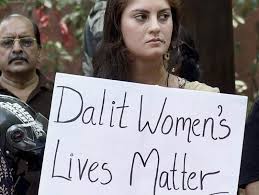
Agra: A local court in Agra has sentenced a 30-year-old man from Firozabad to life imprisonment for raping a 32-year-old Dalit woman in front of her two minor children after forcibly entering her home in Etmadpur. Additional district govt counsel (ADGC) Hemant Dixit said the crime took place around noon on Sept 23, 2016. The woman was alone with her children as her husband was working in his farmland and her in-laws had gone to Etah to consult a doctor. The accused then barged into her room, raped her and threatened to kill her if she spoke about the assault. He locked her inside and fled the scene. After her husband returned, the woman informed him of the incident and a complaint was lodged at Barhan police station. A case was registered the next day under IPC sections 376 (rape) and 452 (house trespass), along with relevant provisions of the SC/ST (Prevention of Atrocities) Act. The chargesheet was filed on Oct 10, 2016. “The accused was staying at his maternal uncle’s house and preparing for govt exams. He lived in the same neighbourhood as the survivor,” the ADGC said. He added, “On Thursday, special SC/ST court Judge Pushkar Upadhyay pronounced the judgement and imposed a fine of Rs 28,000 on the convict. Failure to pay the fine will result in an additional six months of imprisonment.” Agra: A local court in Agra has sentenced a 30-year-old man from Firozabad to life imprisonment for raping a 32-year-old Dalit woman in front of her two minor children after forcibly entering her home in Etmadpur. Additional district govt counsel (ADGC) Hemant Dixit said the crime took place around noon on Sept 23, 2016. The woman was alone with her children as her husband was working in his farmland and her in-laws had gone to Etah to consult a doctor. The accused then barged into her room, raped her and threatened to kill her if she spoke about the assault. He locked her inside and fled the scene. After her husband returned, the woman informed him of the incident and a complaint was lodged at Barhan police station. A case was registered the next day under IPC sections 376 (rape) and 452 (house trespass), along with relevant provisions of the SC/ST (Prevention of Atrocities) Act. The chargesheet was filed on Oct 10, 2016. “The accused was staying at his maternal uncle’s house and preparing for govt exams. He lived in the same neighbourhood as the survivor,” the ADGC said. He added, “On Thursday, special SC/ST court Judge Pushkar Upadhyay pronounced the judgement and imposed a fine of Rs 28,000 on the convict. Failure to pay the fine will result in an additional six months of imprisonment.” Courtesy: Times of India Note: This news is originally published on https://timesofindia.indiatimes.com/ and is for use by the non-military/non-commercial community, especially those in the human rights sector.
Article 15(5) in focus: Congress demands immediate implementation of reservations for OBC, Dalit, Adivasi in private institutions
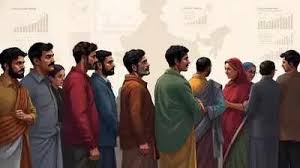
NEW DELHI: The Congress Working Committee (CWC) has ramped up its demand for the immediate implementation of the legislation, alongside Article 15(5) to extend reservation to OBCs, Dalits, and Adivasis in private educational institutions. In a directive issued on Friday, AICC General Secretary (Organisation) K.C Venugopal detailed the Congress party’s roadmap to ensure that the caste census is not delayed under any bureaucratic pretext. The instructions are part of the party’s campaign during the ongoing Samvidhan Bachao rallies, which will continue till May 30 across all states and districts. Venugopal noted that this legislative step is a result of “sustained and principled pressure” by the Congress, with party president Mallikarjun Kharge having formally written to the Prime Minister reiterating the demand. Rahul Gandhi, he said, had been the most consistent voice advocating the caste census as a prerequisite for ensuring true social justice. CWC’s key demands: Immediate implementation of Article 15(5) to extend reservation for OBCs, Dalits, and Adivasis in private educational institutions. Timely and transparent rollout of the caste census, without bureaucratic delays. Time-bound execution with immediate parliamentary debate and full budgetary backing. Inclusive design of the enumeration process, with transparency in questionnaire framing, classification, and data release. Use of the caste data to improve reservation policies, education access, employment schemes, and targeted welfare programs. At its May 2 meeting chaired by Kharge, the CWC also adopted a resolution demanding accountability and urgency in implementing the newly passed caste census legislation. The resolution underscored the need for mobilising people at the grassroots to support the move. Caste census In a significant reversal of its earlier stance, the Centre on April 30 announced that a nationwide caste-based count will be carried out alongside the upcoming population census. The move marks a major policy shift after years of rejecting opposition demands for such an enumeration. Union Minister Ashwini Vaishnaw, while announcing the Cabinet Committee on Political Affairs’ decision, said the Centre had taken note of the caste-based surveys recently conducted by several opposition-ruled states. These state-level efforts, he claimed, were politically motivated and lacked transparency, leading to confusion and mistrust in society. “Census is a constitutional responsibility of the Union government. However, some states have attempted caste enumeration through surveys that were neither consistent nor transparent,” Vaishnaw said. To avoid further division and politicisation, the government has decided to formally include caste data collection in the national census to ensure accuracy and maintain social harmony, he added. Courtesy: Times of India Note: This news is originally published on https://timesofindia.indiatimes.com/ and is for use by the non-military/non-commercial community, especially those in the human rights sector.
Anti-caste rap, arrest, and allegations of abuse: The many layers of the Vedan story
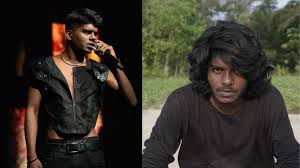
As the debate rages over the state action against anti-caste rapper Vedan, the voices of the survivors he allegedly abused must not be overlooked. Two of them tell TNM that Vedan has still not apologised to them personally. Vedan, who stormed into the Malayalam hip-hop scene five years ago, was granted bail on April 30 in a case that drew public outrage. He was picked up by the Forest Department and charged under the Wildlife Protection Act of 1972 for possessing what appeared to be a leopard tooth. Angry voices rose over the impropriety of the case, and the state action against the Dalit rapper was widely condemned as unjust and casteist. That this was the second case slapped on him within a week led many to question the intent of the police in “targetting” an anti-caste musician. In the first case, Vedan, along with eight others, was booked for possessing six grams of ganja. While in custody, officers noticed the pendant he was wearing, leading to the second case. He was charged under Section 51 of the Wildlife Protection Act of 1972 for possessing an article allegedly made from a protected animal. But the police could not yet prove it was real and Vedan himself drew a blank. He said it was a gift from a fan at a Chennai concert, and he knew little more than that. Allegations of attack on his identity rose after the investigation dug into his roots, linking his mother’s Sri Lankan heritage to the case, when it was found that the fan who had gifted him the pendant was of Sri Lankan origin. To many, this seemed like an attack of his Dalit identity and politics. Even the Perumbavoor First Class Magistrate, while granting him bail, observed: “While the Wildlife Protection Act, 1972, serves the vital purpose of safeguarding wildlife, the principles of fairness, proportionality, and individual liberty must guide bail orders. There is a need to balance conservation efforts with the fundamental rights of an individual.” In the absence of compelling evidence, denying bail would undermine the presumption of innocence and violate the petitioner’s right to personal liberty, the court said. But Vedan’s story is not so easy to unravel, there are layers to peel back to truly understand the debate that has emerged around it. Beyond the questions surrounding the propriety of the cases, what complicates his story are the allegations of sexual abuse that surfaced against him four years ago. TNM has spoken to two of the survivors, whose accounts follow Vedan’s story. Rise of Vedan After his thundering debut called ‘Voice of the Voiceless’, Vedan quickly gained a following with his curt, telling lyrics that looked down upon caste hierarchies (“I’m not a Paanan or a Parayan Or a Pulayan. Nor are you a Thamburaan. And even if you are I don’t give a f*ck!”). The hip-hop drew young listeners to his music. Singles that followed – ‘Vaa’, ‘Social Criminal’, ‘Aana’, ‘Urangatte’ – all became popular, sung along to by a large audience. He began rapping in feature films, and lines he rendered for Manjummel Boys, about a gang of working-class men, were widely quoted in posts supportive of Vedan: “Viyarppu thunniyitta kuppaayam/ Athil nirangal mangukilla kattaayam” (“In clothes sewn out of my sweat, the colours will never fade”). In five years, his popularity grew so much that venues in Kerala began to overflow, spilling fans into the streets outside. Even on the evening he was granted bail, the teaser for his upcoming song ‘Theruvinte Makan’ (Son of the Street) was released. Survivors talk But there were major falls along the way. In mid-2021, a few women spoke out about the sexual abuse they faced from him. Debates rose then, like now, with arguments torn between supporting the survivors and considering the caste location of the accused. Vedan issued a public apology in a Facebook post, but the women told TNM that he did not reach out to them personally. Four years later, he still has not, said two of the survivors we spoke to. They are strongly opposed to the casteist attacks on Vedan now, they said, but could not agree with the claims that he had shown genuine remorse. One of the survivors, a Muslim woman, said she could not believe Vedan was repentant when he had never apologised to her or the other survivors directly, even after she raised the issue with him. “I ran into him by accident once and told him that none of us could move on without an apology. All I wanted to hear was ‘sorry,’ but he simply walked away,” she said. What also upset her recently, she said, was learning that he had allegedly continued to be verbally abusive towards women. Addressing the argument about his caste location, she said that there was also a Dalit survivor among them. “What about justice for her?” TNM had spoken to the Dalit survivor in 2021. Anti-caste rap, arrest, and allegations of abuse: The many layers of the Vedan story “The biggest tool to overcome reality is imagination, and in my imagination, Vedan apologises to me and the other survivors directly,” the Muslim survivor said. Another survivor told TNM that she had not been able to come forward in 2021 when the others did, but she had wanted to speak up for some time. A young woman from the Other Backward Classes (OBC), she said she had intended to reveal her story much before the new cases surfaced. “The cause is not only against Savarna casteism but also about standing with women who are oppressed. I was sexually abused [by Vedan] for being outspokenly feminist,” she said. She added that just because Vedan spoke out against caste, it didn’t mean that he was standing against Brahminical ideologies. “Living in a Brahminical patriarchy, which confines womanhood to merely being a second sex or gender, these kinds of sexual harassment, advances, and manipulations perpetuate the same Savarna ideology. He takes, and has, all male
Tamil Nadu: Dalit teen attacked with sticks, rods for questioning upper caste man
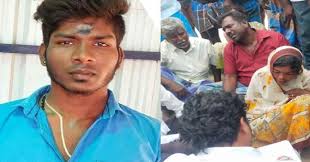
The teenager had worked at his attacker’s paddy threshing unit for six days before quitting. A 17-year-old Dalit boy was brutally beaten and tied to a tree overnight by upper caste men near Thenkaraikottai village in Tamil Nadu’s Dharmapuri district. Tharun had worked at his attacker, Ramakrishnan’s, paddy threshing unit for six days before quitting to work with a relative. Ramakrishnan reportedly spoke badly about Tharun to his uncle. This led to a confrontation. On April 30, Tharun and his friend were passing through Thenkaraikottai village when he spotted Ramakrishna and questioned him about his bad mouthing. Ramakrishnan invited them to his petrol pump, where both the boys were attacked. Although his friend escaped, Tharun was tied to a tree and beaten for several hours with bamboo sticks, iron rods, and belts. Ramakrishna and his men also shouted casteist slurs during the assault. Tharun was later found badly injured by his family, who rushed him to the Harur Government Hospital. His condition is said to be critical. A case has been registered under the SC/ST (Prevention of Atrocities) Act. Five people, including Ramakrishna, his sons – Selvam and Senthil – and employees Selvaraj and Senthil, have been arrested and are in judicial custody. Courtesy: Siasat Note: This news is originally published on https://www.siasat.com and is for use by the non-military/non-commercial community, especially those in the human rights sector.
“They Scratched My Chest, Insulted My Dignity”—Dalit Nurse’s Suicide Note Raises Alarming Questions on Casteism and Police Complicity in Rajasthan
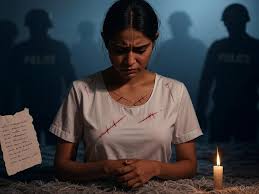
Kavita’s suicide note poignantly captures her despair: “It’s better to live one day like a lion than 100 days in fear… I fought for my family’s safety, but even they don’t support me. I don’t want a life filled with casteism, untouchability, and people’s filthy gazes.” Jodhpur – A 26-year-old Dalit woman, Kavita Chauhan, took her own life on Friday, May 2, after enduring alleged molestation, physical assault, and caste-based harassment by her neighbors, compounded by police inaction. The tragic incident, stemming from a minor dispute, has ignited protests in Jodhpur, with Kavita’s family and community demanding justice, the arrest of the accused, and the suspension of the police officer in charge. The incident began on April 30 in Keerti Nagar’s HUDCO Quarter, where Kavita’s mother, Bindu Devi Chauhan, was washing the courtyard of their home. A few water droplets splashed onto a neighbor’s SUV, sparking a violent reaction from Shankar Lal Bishnoi, his wife, and their sons, Rajendra (alias Raj) and Vikas (alias Vicky). The family allegedly assaulted Bindu Devi, Kavita, and her 20-year-old brother, Anand. According to the victims, the assailants clawed at Kavita’s chest and face, and Anand’s hands, in an act described as an attempt to outrage her modesty. Kavita’s suicide note explicitly mentions the caste-based humiliation and molestation she endured, stating, “These people scratched my chest with their nails, they insulted my dignity. I don’t want a life filled with casteism, untouchability, and people’s filthy gazes.” The victims sought justice at the Mata Ka Than police station, arriving at 8:30 AM. However, they were made to wait for nine hours, only to be told by Station House Officer (SHO) Bhanwar Singh Jakhad that the server was down. The police eventually registered a case under minor charges of breach of peace, allowing the accused to be released immediately. Kavita’s family alleges that this leniency emboldened the perpetrators, who then drove their Scorpio SUV around the victims’ home, intimidating them further. The suicide note accuses the police and a local councillor, Jani Devi, of colluding with the accused, with Kavita writing, “The police supported them. Councillor Jani Devi also backed them.” Devastated by the trauma, fear, and lack of support, Kavita, a nurse at a private hospital, hanged herself at 12:30 PM on Friday, 2 May. Her suicide note poignantly captures her despair: “It’s better to live one day like a lion than 100 days in fear… I fought for my family’s safety, but even they don’t support me. I can’t tolerate this anymore—casteism, court cases, and no job prospects.” The note highlights the caste-based discrimination she faced, pointing to the accused—Raj, Vicky, and their mother—as primary tormentors. Supreme Court Slams Casteism in Tamil Nadu’s 2003 Honour-Killing Verdict—Read Full Story The Dalit community and Kavita’s family have since staged protests, surrounding the Mata Ka Than police station and blocking Bhadwasiya Road. They demand the arrest of the accused and the suspension of SHO Jakhad, vowing not to allow Kavita’s body to be moved for post-mortem until their demands are met. Demonstrators allege that the accused, belonging to an upper-caste community, were shielded due to their social status and political connections. They claim Jakhad dismissed their pleas, stating, “Nothing will happen to them, they’ll be released.” The councillor reportedly added, “They have connections at the top, settle the matter privately.” The police have now registered a case against four individuals for abetment to suicide, with Assistant Commissioner of Police (Mandor) Nagendra Kumar assuring that arrests will be made soon. However, the community remains skeptical, citing systemic bias and police complicity in protecting the accused. Kavita’s death has brought renewed attention to the pervasive issue of caste-based violence and institutional apathy toward marginalized communities. Her family, consisting of four sisters and a brother, is now left grappling with grief and fear, with no father to support them. The protests continue as the community seeks justice for Kavita, whose final words echo a desperate plea for dignity in a society marred by caste prejudice. Courtesy: The Mooknayak Note: This news is originally published on https://en.themooknayak.com and is for use by the non-military/non-commercial community, especially those in the human rights sector.
Christianity has no cast, Dalit converts cannot invoke SC/ST Act: Andhra Pradesh High Court
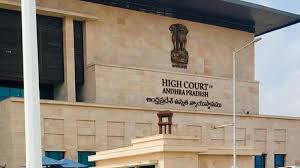
The Court quashed criminal proceedings against a group of people accused of using casteist language and assaulting a pastor. The Andhra Pradesh High Court recently held that the caste system is alien to Christianity and once a person converts to that religion, they cannot invoke the provisions of the Scheduled Castes and Scheduled Tribes (Prevention of Atrocities) Act (SC/ST Act) [Akkala Ram Reddy v The State of Andhra Pradesh]. Justice Harinath N held that once a person converts to Christianity, he stops being a member of the scheduled caste communitie. “Only a person belonging to Scheduled Caste and Scheduled Tribe can invoke the provisions of SC, ST (Prevention of Atrocities) Act… The 2nd respondent had voluntarily converted to Christianity and was admittedly working as a Pastor in a Church for the last 10 years as on the date of the incident. Thus, the 2nd respondent cannot be permitted to invoke the provisions of the protective legislation,” the Court said in its judgment of April 30. Pertinently, the Bench said that the SC/ST Act protection will not be available to a person holding the scheduled caste certificate if they have converted to Christianity. “Mere non-cancellation of the caste certificate by the authority to a person who has converted into Christianity cannot instill the protection granted under the Protective Legislation. The 2nd respondent has ceased to be a Member of the Scheduled Caste Community, the day he had converted to Christianity.” Justice Harinath N Justice Harinath N The observations were made by the Court while quashing the proceedings under the SC/ST Act against a group of people for allegedly using casteist language and assaulting a man. It was stated that the man converted to Christianity more than a decade ago and has been working as a pastor for several years. The police registered the case under Sections of the SC/ST Act and provisions of the Indian Penal Code (IPC). However, the accused argued that since complainant-pastor is a Christian, the registration of the case under the SC/ST Act was bad in law. After considering the case, the Court agreed with the argument and further held that even the IPC offences are not substantiated. “This Court is of the considered view that a false complaint is filed and no purpose would be served if the petitioners are relegated to the trial Court and to undergo the rigmarole of trial,” the Bench held. Advocate JV Phaniduth appeared for the petitioners who sought quashing of the case. Advocate Satheesh Kumar Eerla appeared for the complainant-pastor. State was represented through Public Prosecutor. Courtesy: Bar & Bench Note: This news is originally published on https://www.barandbench.com/ and is for use by the non-military/non-commercial community, especially those in the human rights sector.