
The State of Power and Poetry: Vedan, Caste, and the Revolutionary Awakening of Kerala’s Left

Vedan’s arrest shows what truly frightens the establishment: not weed or wildlife, but a Dalit voice with rhythm, rage, and reach. In the great theatre of Kerala politics, some performances are so overacted that even the audience begins to check if the actors have mistaken the stage for a mirror. Case in point: the Left government’s magical rediscovery of caste, which, until a few days ago, was filed somewhere between ‘British conspiracy’ and ‘bourgeois distraction.’ And what was the trigger for this radical epiphany? Not decades of data, demands for a caste census, or Dalit deaths in custody. No – it was Vedan. A 29-year-old Dalit rapper with verses sharp enough to cut through the haze of ideological gaslighting, and a fanbase that couldn’t be tamed with Marxist lullabies. On April 28, 2025, Kerala police raided a rented apartment in Vyttila, Ernakulam, where Vedan – fast becoming a cult icon among Kerala’s youth – was present with eight others. The officers seized six grams of ganja in total, amounting to less than a gram per person. Despite the nature of the charge (for which the station house officers could grant bail), the news was sensationalised – Asianet News aired it under the distasteful headline ‘The Shirt Stitched with Ganja’, a sarcastic parody of a line from his song that translates as ‘The Shirt Stitched with Sweat,’ evoking his rise from a Dalit ghetto to his current position through immense personal struggle. The law granted Vedan the station bail. However, during the search, officers noticed that he wore a pendant bearing what appeared to be a tiger’s tooth. And then Vedan is, again, arrested over the pendant by the forest department. The state, in a dazzling display of procedural enthusiasm, invokes the Wildlife (Protection) Act. He is jailed, shamed, and paraded like contraband. Abraham and a U-turn And in the backdrop? A scathing high court order had torn into the vigilance department’s handling of a corruption case involving former finance secretary K. M. Abraham – who now holds post-retirement posts as the chief principle secretary to the chief minister and the CEO of the Kerala Infrastructure Investment Fund Board (KIIFB). The court, expressing clear distrust in the vigilance, ordered a CBI probe. Abraham swiftly approached the Supreme Court. But just before that judgement could drop, the news cycle swerved. Suddenly, primetime was consumed not by the looming threat to the government’s credibility, but by the arrest of a very visible, very loud, very Dalit artist. The scandal disappeared, the spectacle took over, and the timing spoke volumes. Of course, the strategy was textbook: create a moral spectacle, weaponise the law, ride the waves of manufactured moral outrage and deflect attention from the haunting issue. Except, this time, the waves didn’t crash where expected. Social media didn’t play along. Neither did the youth. Neither did the left comrades. And neither, eventually, did the facts. Within days, the same Left government that had struck its most pious pose – arms folded, eyes closed, whispering “let the law take its course” – began pirouetting through a series of rhetorical backflips. It was, in short, the kind of U-turn that deserves its traffic signage. But the real showstopper came from the Left’s intelligentsia – those eternal gatekeepers of dialectical purity who’d spent years dismissing caste as “postmodern identity fetish”. Suddenly, they’ve become fluent in the vocabulary of Ambedkarite resistance. Facebook timelines that once shunned Dalit politics for being “divisive” are now gesturing solidarity with Vedan’s cause. Comrades who wouldn’t touch a caste census with a ten-foot pole are now rapping along with Vedan’s lyrics, as if rediscovering the minor inconvenience of systemic discrimination. The same media spaces that never placed a single Dalit face in front of the news camera are now speaking of “double justice” with the urgency of a corporate consultant trying to meet quarterly goals and with the theatrics of a rejected theatre school applicant who suddenly rediscovered the forgotten passion. It’s not conviction, it’s crisis management with hashtags. Let’s not forget: this is the same government that implemented EWS reservations for temple boards long before the BJP turned it into law. The same comrades who defended the idea of economic backwardness among Savarna with a straight face now pretend they’ve always been torchbearers of radical anti-caste politics. You’d almost believe them – if you had the memory of a goldfish and the political literacy of a houseplant. The glorious parallel universe of Savarna celebrity immunity Let’s recap. Vedan is arrested over a tiger tooth pendant—an item that becomes magically illegal when worn by a Dalit. The state, in a dazzling display of procedural enthusiasm, invokes the Wildlife (Protection) Act. He is jailed, shamed, and paraded like contraband. But curiously, when superstar-politician Suresh Gopi sported what looked suspiciously like a tiger tooth pendant on television, no forest officer went sprinting to file a case. No raid. No remand. The law, it seems, doesn’t just take its course – it checks your caste location before deciding which route to take. And lest we forget the precedent: Mohanlal, in 2011, was caught with ivory tusks in his house. The case meandered through a decade of legal somnambulism before the government conveniently moved to withdraw prosecution in 2023. Because apparently, public interest in wildlife protection has a caste and celebrity filter too – it spikes for Dalit rappers but flatlines for award-winning actors with the right social capital. Dalit with a pendant? Jail. Superstar with tusks? Souvenir. That’s the equality of enforcement in the People’s Republic of Casteist Irony. And now, in this theatre of irony, the chief minister and the CPI(M) secretary, two Avarnas themselves, have their historic roles to play When asked about the hunting of Vedan, the chief minister, with a wry smile, offered this gem: “When it is an issue of drug, no question of the abuser being forward or backward. But the tiger claw issue, it should have been dealt more carefully (my translation, listen from the 7.40-minute mark).
Indian court denies lower caste legal benefits to Christians
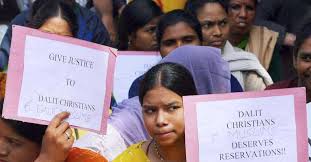
A person converted to Christianity cannot claim to be a member of a lower caste, court says Indian Dalit (Oppressed) Christian and Muslim women hold placards and shout slogans during a rally against the National Commission for Scheduled Castes and Scheduled Tribes for its recent rejection of the demand for reservation for Dalit Christians and Muslims, in New Delhi, 03 March 2007. Indian Dalit (oppressed) Christian and Muslim women hold placards and shout slogans during a rally against the National Commission for Scheduled Castes and Scheduled Tribes over its rejection of a demand for socio-economic reservations for Dalit Christians and Muslims, in New Delhi, on March 3, 2007. (Photo: AFP) An Indian court has denied Christians of Dalit origin legal protections meant for lower caste people, saying a person who converted to Christianity cannot claim to be a member of a lower caste group. The Andhra Pradesh High Court, the highest court in the southern Indian state, issued the ruling in an appeal challenging criminal proceedings against a group of non-Christians, based on a complaint by a Protestant pastor. The pastor, who comes from the Dalit community, officially referred to as Scheduled Caste people, filed the complaint in January 2021 against a group of people who allegedly abused him, violating clauses of the Scheduled Castes and the Scheduled Tribes (Prevention of Atrocities) Act. His complaint said that during an altercation, they used his caste name to denigrate and abuse him, a punishable crime under the law, enacted in 1989. The court’s April 30 ruling dismissed the criminal proceedings, saying a “person converted to Christianity cannot claim to be a member of the Scheduled Caste community”. “The Christian religion does not recognize any caste classifications. All Christians are treated as equals and there is no distinction between one Christian and another of the type that is recognized between members of different castes belonging to the Hindu religion,” the court said, referring to an earlier Supreme Court ruling in a similar case. Father Antonyraj Thumma, secretary of the Office for Dialogue and Ecumenism of the Catholic Bishops’ Conference of India, said the court ruling is “practically discriminatory and violates the fundamental rights of the pastor.” Christian leaders like him argue that conversion to Christianity does not automatically alter the socio-economic circumstances of Dalit people, as society continues to treat them as second-class citizens through subtle practices. Untouchability was outlawed in 1950, but Dalit people, across all religions, continue to face social exclusion, segregation, and even violence in various forms, they say. However, the government officially does not acknowledge the existence of caste discrimination and socioeconomic poverty within Christianity and Islam. In 1950, the government reserved social benefits intended for Dalit people exclusively for Dalit Hindus, viewing the caste system as a reality of Hinduism. This order was subsequently amended twice to include Sikhs and Buddhists, thereby recognizing caste practices within these Indian religions. Christian leaders say that this official government stand should be considered the basis of the court ruling. The court ruling said the “caste system prevails only amongst Hindus or possibly in some religions closely allied to the Hindu religion like Sikhism.” Christianity is a global religion and “nowhere does Christianity recognize caste division.” A Dalit person converted to Christianity ceases to be a Dalit, it reiterated. Christians have opposed this stance. Two decades ago, Christian leaders petitioned India’s Supreme Court to end such discrimination by including Christians of Dalit origin in the state’s affirmative action plans to help improve their social conditions. When the court sought an explanation, the government of Prime Minister Narendra Modi in October 2022 appointed a three-member panel to study the implications of extending benefits to Christians of Dalit origin. The panel is yet to report to the government. Out of India’s 1.4 billion people, 201 million belong to the Dalit community, and nearly 60 percent of India’s 25 million Christians trace their origin to Dalit and tribal communities. Courtesy: UCA News Note: This news is originally published on https://www.ucanews.com and is for use by the non-military/non-commercial community, especially those in the human rights sector.
Caste clash in Tamilnadu’s village, Dalit home torched, vehicle burnt; 14 arrested
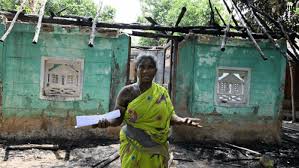
A clash erupted between Mutharaiyar and scheduled caste communities in Tamilnadu’s vadakadu village on Monday leading to damages to public properties and a Dalit’s family hut was set on fire. The youths from both communities who were drunk were arguing over fuel queues at the station. The situation quickly escalated and the youth followed each other to their home. Amidst this chaos, a Dalit home was burned down alongside a vehicle and windows of a government bus were smashed. The video of the clashes went viral on social media. After the clash, police arrested fourteen individuals from both communities and launched a thorough investigation. Injured individuals have been sent to hospitals for treatment. Police have urged the public to avoid sharing misinformation as it could potentially escalate tensions in the region. Courtesy: Muslim Mirror Note: This news is originally published on https://muslimmirror.com and is for use by the non-military/non-commercial community, especially those in the human rights sector.
Dalit Christians differ on how to identify themselves in Karnataka survey
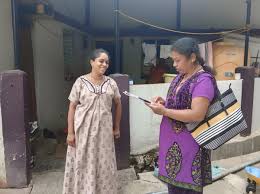
Dalit right (Holeya) groups are seeking a separate column for Dalit Christians, Dalit left (Madiga) groups believe that they are better off identifying themselves with the Dalit caste, from which they converted, to protect their reservation status An enumerator collects data on a hand-held device to record empirical data on sub-caste demographics, at Narayanaghatta in Anekal taluk of Bangalore Urban district, as Karnataka begins a statewide census for Scheduled Castes (SC). As the enumeration work to identify scheduled castes for internal reservation is underway in Karnataka, the identification of Dalit Christians has emerged as a contentious issue. While Dalit right (Holeya) groups are seeking a separate column for Dalit Christians, Dalit left (Madiga) groups believe that they are better off identifying themselves with the Dalit caste, from which they converted, to protect their reservation status. Meanwhile, the Dalit Christian Federation is advising them to be identified by their religion, arguing that it will result in better political representation. With the survey being conducted by the commission headed by retired judge H.N. Nagmohan Das set to cover 101 SCs, its outcome, including the population data, social, economic and educational backwardness, will be the benchmark for the commission to draw the internal reservation within the broader 17% reservation set aside for SCs, which they together (left and right) constitute 18.27% of the total population or about 1.09 crore. Internal reservation is a decades-long demand of Dalit left groups that have accused Dalit right groups of cornering reservation benefits. They want slicing up the reservation among Dalit left and Dalit right besides touchable castes of Bhovi, Korma, Korcha and Lambani. What courts say The courts have ruled that the SC reservation should be based on castes, and since Christianity does not have castes, reservation cannot be applied. In this backdrop, Dalit right groups are urging the commission to include a separate column for Dalit Christians as the Union Government is yet to decide on their reservation. “The commission should encourage Dalit Christians to identify their religion so that they can be kept outside the SC reservation matrix. The Karnataka Backward Classes Commission led by K. Jayaprakash Hegde has recommended reservation for Dalits in the backward classes reservation matrix,” a source in Chalavadi Mahasabha, which represents Dalit right, said. The Kalaburgi-based Dhamma Deepa Buddha Vihara has also petitioned the commission seeking a religion column in the enumeration. The 2015 Socio, Economic and Educational survey by the Karnataka State Commission for Backward Classes put the total population of Christians at 9.47 lakh, which included many caste-specific Christian groups, such as Brahmin Christians, Kuruba Christians, Holeya Christians, Jalagara Christians, Madiga Christians, Reddy Christians, Vishwakarma Christians, Vokkaliga Christians and Walmiki Christians, among many others. The survey also identified about 12,865 SC population converted to Christianity, and recommended them to be included in Backward Classes Category 1B, which is ‘most backward’. Political representation Sources in Dalit left (Madiga) group acknowledge that members of their community have converted to Christianity in big numbers, especially in the backward north Karnataka region. “Caste inequality, social backwardness, atrocities by upper castes and poverty have driven many to Christianity. However, even after conversion, their social standing has not improved. In the current context, there is a threat of losing reservation benefits if they identify themselves as Christians. We are creating awareness about identifying their caste only during enumeration,” said Basavaraj Kowthal of the Madiga Samudaya Jagruthi Andolana. However, Dalit Christian Federation president D. Manohar Chandra Prasad, who is also a pastor with the Church of South India, said that they are creating awareness among the converted population and encouraging them to identify as Dalit Christians. “The new recommendation has provided reservation in the backward classes. There is no need to worry about losing reservation status. We do not agree with the population figure cited by the commission for Christianity. Our survey in 2018 showed a population of about 40 lakh, or about 6% of the population of the State. A correct figure would help in seeking suitable political representation.” Courtesy: The Hindu Note: This news is originally published on https://www.thehindu.com and is for use by the non-military/non-commercial community, especially those in the human rights sector.
Man gets 4yrs in jail for molesting minor Dalit girl
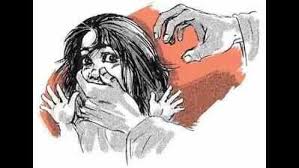
Pilibhit: The court of additional district and sessions Judge (Pocso Act), Geeta Singh, on Monday evening, sentenced a 28-year-old man to four years of imprisonment for molesting a 15-year-old Dalit girl. The incident took place on June, 2018 when the convict had forcibly barged into the minor’s house in a village in Pilibhit district. An FIR had been lodged, following a written complaint by the victim’s father, under multiple IPC Sections and relevant sections of the Pocso and SC/ST Act. The complainant stated that all his family members were asleep at the time of the incident. Upon hearing his daughter’s screams, he woke up and saw the accused molested his daughter. The accused then threatened to eliminate the family if they took up the matter with police, before fleeing . Public prosecutor, Anil Kumar Sharma said, “The accused was arrested and remained in jail before he was released on bail.” Courtesy: Times of India Note: This news is originally published on https://timesofindia.indiatimes.com and is for use by the non-military/non-commercial community, especially those in the human rights sector.
NEET PG 2025 Transgender Horizontal Reservation Plea – SC Asks Centre to Respond, Hearing Soon.
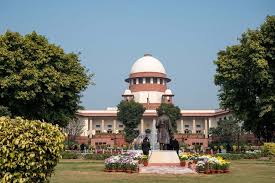
The Supreme Court on Monday asked the Centre and others to respond to a plea seeking horizontal reservation for transgender persons in the NEET-PG 2025 examination. The bench issued notices to the Centre, states, Union Territories and others, including the National Medical Commission, seeking their responses on the plea and posted the matter for hearing after two weeks. The Supreme Court on Monday asked the Centre and others to respond to a plea seeking horizontal reservation for transgender persons in the NEET-PG 2025 examination which is scheduled on June 15. A bench of Justices B R Gavai and K V Viswanathan agreed to hear the plea filed by three transgender persons who are doctors and have challenged the April 16 notice and information bulletin dated April 17 regarding the National Eligibility-cum-Entrance Test-Post Graduate (NEET-PG) 2025. The petitioners have claimed that the notification was issued in contravention of the directions given by the apex court in a 2014 judgement as it has not outlined any scheme/policy of horizontal reservations for transgender persons. Senior advocate Indira Jaising appeared for the petitioners. The plea said that in its 2014 verdict, the top court had directed the Centre and the states to take steps to treat transgender persons as socially and educationally backward classes of citizens and extend all kinds of reservations in cases of admission in educational institutions and for public appointments. “As a result of the impugned notice, the petitioners are left with a right without remedy, whereby there are now no reservations for transgender persons in educational institutions in post-graduate courses in medical education in institutes despite the binding declaration of the law by this court,” said the plea, filed through advocate Paras Nath Singh. The bench issued notices to the Centre, states, Union Territories and others, including the National Medical Commission, seeking their responses on the plea and posted the matter for hearing after two weeks. Seeking quashing of the admission notice and the information bulletin, the plea also called for a direction to authorities to issue a fresh admission notice that provides compartmentalised horizontal reservation for transgender persons by reserving one per cent seats for them in each vertical category. The horizontal reservation is a type of reservation that is provided across all categories namely the General Category, as well as vertical reservation categories –Scheduled Tribes, Scheduled Castes, and Other Backward Classes. The plea said in the absence of horizontal reservations, the petitioners would be deprived of equal opportunity with no specific reservation being extended to them to ensure representation of transgender persons in postgraduate medical education despite such persons facing several social barriers. It said the apex court, in its 2014 verdict, had recognised the fundamental rights of transgender persons under the Constitution, including the right to self-determination of gender identity. Courtesy: Telegraph India Note: This news is originally published on https://www.telegraphindia.com/ and is for use by the non-military/non-commercial community, especially those in the human rights sector.
‘Scratched my chest…’ Jodhpur Dalit nurse dies by suicide after assault, police inaction

Police have now registered a case of abetment to suicide against the four accused. Hyderabad: A 26-year-old Dalit nurse died by suicide on May 2, after allegedly being molested, assaulted, and humiliated by her upper-caste neighbours in Rajasthan’s Jodhpur district. The young woman was the eldest of five siblings and worked as a nurse. Her suicide has triggered protests and outrage. Dispute over water The incident occurred on April 30, after a few drops of water from cleaning the courtyard reportedly landed on the neighbour’s car. This led to a violent attack by Shankar Lal Bishnoi, his wife, and their sons Rajendra alias Raj and Vikas alias Vicky. They allegedly assaulted the victim, her mother, and her younger brother. MS Creative School According to The Observer Post, the victim’s family said she was scratched on her chest and face. In her handwritten suicide note, she named the accused and described the attack as caste-motivated. “They scratched my chest, insulted my dignity. I don’t want a life filled with casteism and people’s filthy gazes,” her letter read. She also accused the police of failing to act. Despite waiting for over nine hours at the Mata Ka Than police station, only minor charges were filed, and the accused were released immediately. In her note, the victim reportedly named station house officer (SHO) Bhanwar Singh Jakhad and local councillor Jani Devi, writing, “The councillor said they have high-level connections. The SHO told us: ‘Nothing will happen to them.’” The victim’s final words remain etched in the hearts of many: “No one stood by me. Not the police. Not the system. Not even my own.” Police register abetment case The incident has led to protests outside the police station. Demonstrators blocked Bhadwasiya Road and demanded the arrest of the accused and the suspension of the SHO. They have refused to allow the post-mortem until action is taken. Police have now registered a case of abetment to suicide against the four accused. The assistant commissioner of police, Nagendra Kuma,r said action will be taken. Courtesy: Siasat Note: This news is originally published on https://www.siasat.com and is for use by the non-military/non-commercial community, especially those in the human rights sector.
Wedding torchbearer to education flagbearer: Dalit boy becomes first Class X passout in UP village
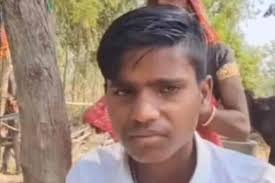
The child who works as a lightbearer at weddings to earn a handful of rupees for his family has now shone a light for others in his village. On April 25, the boy became the first person from this Dalit hamlet of 200 people to clear the Class X board exam. The child who works as a lightbearer at weddings to earn a handful of rupees for his family has now shone a light for others in his village. “I earn ₹250 to ₹300 a night carrying a battery-driven lamp on my head at weddings. I get 20 to 40 days’ work a year,” Ramkeval told reporters on Sunday at his village, 28km from the Barabanki district headquarters. The Uttar Pradesh board exam results were announced on April 25 but Ramkeval’s feat became widely known only on Sunday. Ramkeval’s mother Pushpa is a cook at the Government Primary School in Nizampur and his father Jagdish Prasad is a farm labourer. “The village school teaches only up to Class V; most of the children drop out after that. Some get admitted to the Government High School in Ahmadpur but quit after failing their Class X exams,” Ramkeval said. “I secured admission to the Ahmadpur school with two other boys from my village but Luvlesh dropped out in Class VIII. Mukesh, my other friend, failed this year but has decided to try again next year.” Ramkeval has now enrolled himself in Class XI at the Ahmadpur school, 5km from his village. He wants to become an engineer. His father Jagdish never went to school but mother Pushpa studied till Class V. Ramkeval’s siblings are in Classes IX, V and I. “We have two sons and two daughters. Ramkeval is the eldest. He never asked us for money: he bought his books and stationery with his own earnings. If he doesn’t get work at weddings, he works in the fields. He studies mostly at night,” Pushpa said. Barabanki district magistrate Shashank Tripathi called Ramkeval and his parents to his office on Sunday and announced the local administration would be responsible for the teen’s further education. Villagers said that when Ramkeval’s teachers learnt that the DM had asked to meet him, they bought new clothes and shoes for him. The boy used to attend his classes barefoot. “For now, we have arranged for his education up to Class XII. We have to ensure that he can study as long as he wants,” district inspector of schools O.P. Tripathi said. Ramkeval’s success has inspired others in the village. Nanku, father of Luvlesh, said he wanted his son to resume his studies. “I studied till Class VIII and work in the fields. But I don’t want my son to remain a labourer. Education is the only way forward,” Nanku said. Many women in the village expressed joy and said they were now more determined than ever to educate their children. Courtesy: Telegraph India Note: This news is originally published on https://www.telegraphindia.com and is for use by the non-military/non-commercial community, especially those in the human rights sector.
Tension in Pudukkottai’s Vadakadu following clash between two communities; Dalit family’s hut set on fire
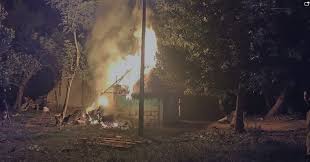
More than 10 people from both sides sustained injuries and are undergoing treatment at Alangudi Government Hospital and Pudukkottai Government Medical College Hospital. PUDUKKOTTAI: Tension prevailed in Vadakadu village near Alangudi after a violent clash broke out following the Muthumariamman temple festival on Monday night, according to sources. Members of the Muthuraja and SC/PR communities, who reportedly had prior enmity, got into a confrontation that escalated when a man from one group was attacked with a sickle by members of the other group. In the ensuing violence, a hut and two two-wheelers were set on fire. A government bus was also vandalized, with its windows smashed. More than 10 people from both sides sustained injuries and are undergoing treatment at Alangudi Government Hospital and Pudukkottai Government Medical College Hospital. Following the incident, Tiruchy Range DIG Varunkumar and Law Minister S. Regupathy visited the affected areas around 1:30 am to assess the situation. Heavy police deployment has been made in Vadakadu, and transport services in the area have been suspended. Buses on the Pudukkottai-Pattukottai route are being diverted via alternate routes. According to a police statement shared on social media platforms, the clash was triggered by a quarrel over who would refuel first at a local petrol bunk around 11:30 pm. Intoxicated youths from both sides reportedly followed each other to the SC/PR residential area, leading to further altercations and physical assaults. A hut and a vehicle were set on fire, and a government bus was attacked during the brawl. Police have arrested the suspects involved in the incident and warned the public against believing rumors circulating on social media. Legal action will be taken against those spreading false information, they said. According to sources, police have arrested 14 suspects, and cases have been filed under the SC/ST Atrocities Prevention Act based on the complaint from the SC community, and under the Attempt to Murder section based on the complaint filed by the Caste Hindus. When TNIE reached out to Pudukkottai District SP Abhishek Gupta, he was unavailable for comment Courtesy: New Indian Express Note: This news is originally published on https://www.newindianexpress.com/ and is for use by the non-military/non-commercial community, especially those in the human rights sector.
In Rural Telangana, How a Dalit Women-Run Radio Station Is Changing Lives
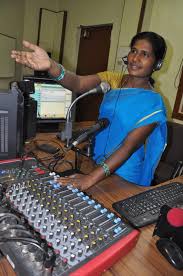
Hyderabad: Not long ago, in a corner of southern India where caste and gender boundaries still hold strong, the idea of Dalit women speaking boldly into microphones would have seemed improbable. Yet today, in over 150 villages across Telangana, their voices crackle through the air — telling stories, asking questions and singing songs that have long been pushed to the margins. “This is not just a radio. It is our voice. We talk about our gods, our food, our problems. Before this, nobody listened,” said Naligindla Narsamma, Sangham Radio’s lead producer and anchor. Launched in 2008, Sangham is India’s first community radio station run entirely by rural Dalit women. Based in Sangareddy, Telangana, it began as an initiative by the Deccan Development Society (DDS), a grassroots organisation working with women farmers. Today, it stands as a rare example of local media built by and for marginalised voices — especially in villages where the internet is patchy, electricity unpredictable and caste hierarchies persistent. In Naligindla’s voice, traditional folklore blends with public health tips, farming know-how and open conversations about everything from menstruation to alcoholism to gender rights. Now in her mid-40s, Naligindla still remembers how strange it all seemed in the beginning. In the early 2000s, the DDS organised a village meeting with All India Radio and UNESCO representatives. Naligindla Narsamma “They told us to speak on the radio. But how could we know if anyone heard us? We did not even own radios,” she said. That early doubt soon turned into determination. With support from UNESCO, the DDS secured a transmitter, tower and a studio. Naligindla, who had only studied till 10th grade, taught herself to record, edit and broadcast. She was not alone. Other Dalit and marginalised women followed. Some walked long distances. Some brought their babies on their backs. They learned by doing, sometimes without even knowing how to read manuals. “We did not know English. We were scared of machines. But now, we do everything — reporting, editing, RJ-ing,” Naligindla said. Across India, over 300 community radio stations are licensed by the Ministry of Information and Broadcasting. Most are linked to NGOs or academic institutions. Very few are run entirely by women — and fewer still by Dalit women from remote areas. Empowerment in every frequency With a broadcast range of about 40 kilometers, Sangham Radio now reaches more than 150 villages. Its team is small — just two full-time staffers and a handful of volunteers — but its message is far-reaching. “Villagers visit once a month to share their concerns. Some record their own segments and bring them to us,” said Naligindla. Sunitha Sunita, a farmer from Bilalpur, heard the radio through her local farmers’ association. “They told us that women have equal rights as men. I never knew that before. Now, we talk openly about rights and problems. Earlier, we did not even have a way to speak,” she said. Lakshmama, another villager, contributes folk songs. Her father supported DDS’s early work, and she remembers singing at village festivals. “Now, young girls from our village are learning too. The radio keeps our traditions alive,” she said. Each day, the station airs deeply local content: market prices, farming updates, seasonal rituals, songs and health programs. Much of this knowledge is not found in textbooks. “We have over 2,000 recordings of songs and stories that are not written down anywhere else,” Naligindla said. On summer nights, when farm work slows down, villagers gather to listen to broadcasts about local deities like Yellamma and Pocha Amma. “It becomes a shared experience — part entertainment, part education,” she added. Lakshmama But the station is also a space for truth-telling and taboo-breaking. “We talk about women’s health, rights, periods… things that are usually whispered, not said aloud,” said Naligindla. “At first, people were scared. Some refused to be recorded. I had to coax them with tea and snacks.” Over time, the station earned the community’s trust. Pushing through bureaucracy Though villagers embraced the radio early on, the government was slower to recognise it. For nearly 10 years, Sangham Radio operated without a full license. Naligindla and her team travelled across India, attending policy meetings and media forums. “We would carry clips of our programs and tell them, ‘This is our village, this is our work,’” she said. Even today, the station scrapes by on a monthly budget of Rs 15,000 – Rs 20,000 (about $180–$240). Much of the equipment is outdated. Repairs are done in-house, often using recycled parts. “We have not received much support from higher authorities. But we continue. This is our life,” Naligindla said. Staying relevant in digital world With more young people turning to smartphones, the team at Sangham Radio is adapting. They are experimenting with interactive voice response (IVR) systems, allowing listeners to dial in and hear pre-recorded shows on demand. “We want youth to hear our voices. Right now, they are glued to their phones and private songs. If we can bring our content to mobile, they might listen,” said Naligindla. They have also started informally teaching local youth how to record and edit audio — laying the groundwork for a future generation of community journalists. “It is our way of ensuring this does not die with us,” she said. But getting young people to invest deeply remains a challenge. “Some come here not to learn but to complete their PhDs or films. We need people who want to stay,” she said, half-laughing. Though the station does not track outcomes in charts and graphs, its impact is visible in the way people now approach them — not as outsiders, but as a trusted part of the village. A group photo of all the singers “People call us with their problems. Sometimes, they need advice. Sometimes, they just need someone to listen. That is a success too,” Naligindla said. Lakshmama agreed. “The radio is like a bird’s nest. It keeps hope alive. Even when we do not have electricity, even when the roads are