
Kerala Dalit domestic worker alleges harassment by police over false theft complaint.
Bindu, a 39-year-old woman, was taken to the Peroorkada police station for questioning regarding a gold chain from a house she worked as domestic help. The complaint was later withdrawn. A Dalit woman from Thiruvananthapuram in Kerala has alleged harassment by the police over a theft case, which later proved to be false. The woman has now filed complaints with the Chief Minister of Kerala, State Police Complaint Authority and the Kerala State SC/ST Commission alleging harassment by Peroorkada Sub Inspector and four other police officers. Bindu R, a 39-year-old woman, was taken to the police station on April 23 for questioning about the alleged theft of 2.5 sovereigns of gold from the house where she worked as domestic help, following a complaint. Bindu alleged the police refused to listen to her version and harassed her by accusing her of the crime and registering a First Information Report (FIR). The complaint was later withdrawn and police are taking steps to quash the FIR. The harassment “I spent a night at the police station. They questioned me till three in the morning. They were never ready to listen to my version,” Bindu told TNM. Bindu, who had been working as a domestic help for the past four years took up the new job at a house in Ambalamukku on April 14. Bindu said she worked only for three days April 14, 15 and 19 and then discontinued. “I don’t know why, but I didn’t like going there. So, I stopped,” she said. On April 23 Bindu received a phone call from the Peroorkada police station around 3.30 in the evening. “The police said they received a complaint against me. When I reached there, the house owner and her daughter from the house where I discontinued domestic work were present. They accused me of stealing their gold chain,” Bindu said in her complaint. According to Bindu, the police officers had this preconceived notion that she had committed the crime. “They used very harsh and bad language. They never asked whether I committed the crime or not. They asked where the gold was,” she said. After the first round of questioning, police took Bindu to her house for a search, where they found nothing. Then they again took her to the station and booked her under Section 306 of the Bharatiya Nyaya Sanhitha (BNS). Bindu also alleged that the police threatened to lock up her children, two girls aged 15 and 17, along with her husband if she failed to commit the crime. “My husband and relatives came to the station following the house search, but the officers did not allow them to give me food,” Bindu alleged. She said was able to have food only on the afternoon of April 24. No theft happened Bindu spent nearly a day at the station and was only able to go home after the complainant informed the police that they had retrieved the gold from their home. “The house owner never informed me that they got the gold back. They said they are forgiving me because I have two girl children. Later, my husband came to know about that through a police officer,” she said. Bindu told TNM that the incident made her life tough as the police made her look like a thief before her relatives and neighbours. “Now I have stopped going to work. The police officers never apologised for what they did,” she said. Peroorkada SHO denied the allegations. “There are CCTVs in the station. How is it possible to harass a woman?” he said. Following Bindu’s complaint, the state SC/ST commission directed the Thiruvananthapuram cantonment Assistant Commissioner on May 6 to file the inquiry report within 20 days. Courtesy: The News Minute Note: This news is originally published on https://www.thenewsminute.com and is for use by the non-military/non-commercial community, especially those in the human rights sector.
Police Thrash Dalit Women With Sticks In UP’s Meerut; 5 Cops Suspended.
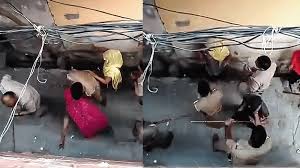
Cops can be seen slapping and thrashing the women with sticks in narrow lane. The woman can be heard shouting in the 08-second-long video. Meerut: A huge uproar has erupted over the brutal police action against Dalit women in Lavad village of Meerut district of Uttar Pradesh, after a video of the police allegedly thrashing the women was caught on camera and is making rounds on the internet. In the viral video, it can be clearly seen how the policemen are chasing the women and beating them with sticks. Soon after the video surfaced, opposition parties staged a protest demanding strict action. After which, Meerut SSP Vipin Tada took immediate action in the case and suspended 5 policemen and ordered a departmental probe in the matter. Cops can be seen slapping and thrashing the women with sticks in narrow lane. The woman can be heard shouting in the 08-second-long video. Meerut SSP Vipin Tada has suspended Inchauli police station in-charge Nitin Pandey, Lavad outpost in-charge Indresh Vikram Singh, inspector Sumit Gupta, Pawan Saini and constable Wasim. Departmental probe has been initiated against all of them. The echo of this case has now reached the National Women’s Commission and Scheduled Caste Commission. Earlier last week, a dispute broke out between two brothers Anil and Sushil over a house in Lavad village. The people of the locality informed the police about this. The police arrived at the spot and started taking the two brothers to the police station. When the women of the family protested against this, it is alleged that the police not only thrashed them but also dragged them to the police station. Reportedly, the matter has now reached the National Commission for Women and the SC-ST Commission. The commissions have started preparations to summon a report from the district administration. Courtesy: Free Press Journal Note: This news is originally published on https://www.freepressjournal.in and is for use by the non-military/non-commercial community, especially those in the human rights sector.
Nepal’s Dalits: Poor, illiterate, and married too young.
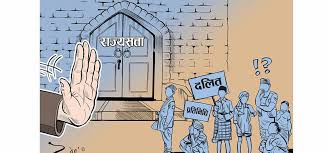
Dalits, who constitute 13.4 percent of Nepal’s total population, continue to face severe socioeconomic disparities compared to non-Dalit communities, a newly released government report has revealed. KATHMANDU, May 12: Dalits, who constitute 13.4 percent of Nepal’s total population, continue to face severe socioeconomic disparities compared to non-Dalit communities, a newly released government report has revealed. The National Statistics Office on Sunday published a detailed report on Dalit-related statistics based on the 2021 national census. The data paints a stark picture of inequality, with a significant portion of Dalit families categorized as extremely poor. According to the report, Nepal’s total population stands at 29,164,578, of which 3,898,990 (13.4 percent) are Dalits. Among them, 8.6 percent are hill Dalits and 4.8 percent are from the Terai region. Non-Dalit communities make up 86.2 percent of the population—56.2 percent are hill non-Dalits, and 25 percent are Tarai non-Dalits. A staggering 36 percent of Dalits fall into the category of extreme poverty, compared to only 18 percent of non-Dalits. Among Dalits, Terai Dalits are the most economically disadvantaged, with 44 percent categorized as extremely poor, in contrast to 32 percent of hill Dalits. Presenting the report, Sharad Kumar Sharma, Deputy Chief of the Statistics Office, noted that non-Dalits in both hill and Terai regions are economically far better off. In the highest wealth category, 22 percent of non-Dalits are represented, while only 6.2 percent of Dalits fall in that range. For Terai Dalits, the figure is a mere 1.9 percent. Among hill Dalits, 8.2 percent belong to the highest economic tier. Sharma said Dalits remain underrepresented in education, healthcare, prosperity, and state mechanisms, which continues to pose challenges to national development. Madhu Sudan Burlakoti, the chief statistician, added that the poor economic condition of Dalits stems from their limited access to basic services such as education, health, nutrition, and development. “Historically, Dalits were subject to untouchability and social discrimination, which pushed them to the margins,” he said, “Though such practices are gradually decreasing due to rising awareness of equality and human dignity, the statistical reality calls for targeted policy reform.” He emphasized that the data should now guide state policy and program planning for the upliftment of Dalit communities. “It is difficult to achieve the vision of a prosperous Nepal while leaving behind 13 percent of its people,” he said. 32 percent illiteracy rate The national literacy rate for individuals aged five and above is 76.2 percent. Among non-Dalits, it stands at 77.6 percent, while the average literacy rate for Dalits is 67.4 percent—8.8 percentage points lower than the national average. Further disparities emerge when broken down regionally. Literacy among Terai Dalits is only 51.9 percent, compared to 75.7 percent among hill Dalits, which closely aligns with the national average. Sharma said these disparities call for educational policies tailored to Terai Dalits, backed by appropriate budget allocations. 13 percent never attended school Among the population aged 5 to 25, 8.1 percent in Nepal have never attended school. However, the rate is 13.1 percent among Dalits, compared to 7.1 percent among non-Dalits. For Terai Dalits, the figure jumps to 27.5 percent. Among Terai Dalit women, a staggering 31.6 percent have never been to school. Overall, 32.6 percent of Dalits remain illiterate. Caste Categories: 5 hill and 17 Terai Dalit groups Dhundi Raj Lamichhane, spokesperson for the Statistics Office, said affirmative action and inclusive quotas have encouraged Dalits to identify themselves more openly by caste. Among hill Dalits, there are five main subgroups: Bishwakarma (Kami), Pariyar (Damai), Mijar (Sarki), Badi, and Gaine. Bishwakarma represents the largest share with 5 percent of the total population, followed by Pariyar (1.9 percent) and Mijar (1.6 percent). The Badi population is 11,470, and Gaine are 6,971 nationwide. Tarai Dalits include 17 caste groups. Major ones include Chamar/Harijan/Ram (1.4 percent), Musahar (0.9 percent), Dusadh/Passwan/Pasi (0.9 percent), Tatma/Tatwa (0.4 percent), Khatwe (0.4 percent), Dhobi (0.4 percent), and Bantar/Sardar (0.2 percent). The Kalwar caste has the lowest Dalit population at just 931 individuals. 23 percent child marriage rate among Dalits The child marriage rate among Dalits stands at 23 percent, significantly higher than the 13 percent rate among non-Dalits. The report indicates that 8 percent of Dalit men and 34 percent of Dalit women were married as children. In contrast, 4.4 percent of non-Dalit men and 20 percent of non-Dalit women were married before the legal age. Province-wise, Karnali Province records the highest child marriage rate at 20.1 percent, while Bagmati has the lowest at 8.4 percent. Dalit population growing The Dalit population has gradually increased over the past two decades. In 2001, Dalits made up 11 percent of the total population—7.1 percent hill Dalits and 3.9 percent Tarai Dalits. By 2011, the number had grown to 12.5 percent (8.1 percent hill Dalits and 4.4 percent Tarai Dalits). The 2021 census now records Dalits at 13.4 percent of the population, with 8.6 percent hill Dalits and 4.8 percent Tarai Dalits. Among the Dalit population, 2.4 percent are living with disabilities, and 7.8 percent are single women. Courtesy: My Republica Note: This news is originally published on https://myrepublica.nagariknetwork.com and is for use by the non-military/non-commercial community, especially those in the human rights sector.
Debunking the Lies: Upper Caste Myths on Reservations Exposed

The Truth About Reservations and Caste Privilege For decades, the upper castes have peddled the same tired myths to justify their privilege and undermine the struggles of marginalized communities. From crying “meritocracy” to whining about “reverse discrimination,” their arguments crumble under the slightest scrutiny. The truth? Reservations aren’t about charity—they’re about justice. They’re an attempt to balance centuries of oppression, exclusion, and systemic denial of opportunity. Yet, the privileged continue to gaslight the oppressed, dismissing their struggles while clinging to unearned advantages. This article dismantles the most common upper-caste myths with hard facts and unapologetic truth. If you’ve ever heard, “Reservation destroys merit!” or “Rich Dalits don’t need quotas!”—it’s time to set the record straight. The game has been rigged for too long. Now, the oppressed are speaking up, and the excuses of the privileged won’t hold up anymore. Let’s begin. Merit has been destroyed by reservations! Oh, really? If merit was really destroyed, then how come your community still fills up 90% of the top positions in the country? You think it’s merit that got your great-grandfather his post in the British army, or your family’s decades-old monopoly on top educational institutions? Let’s be honest, you’re not all competing on a level playing field. Your family had centuries to establish itself as “meritorious” while the rest of us were buried in oppression and deprivation. If merit had any real role, it would show in the numbers, not in your unfounded claims. We are being discriminated against now ! Discriminated against? Seriously? Maybe you should try being born into a caste that’s been so oppressed for centuries that we still can’t even drink water from the same well without getting the stink-eye. For you, “discrimination” is being told you can’t sit in the front row of the school bus. For us, it’s being denied the opportunity to even get on the bus in the first place. How about you check your privilege before complaining about a few percentage points in a government job? Why can’t you rich Dalits be satisfied? You’ve had it good! Oh, we’ve had it good, alright. You’ve heard of the “one in a million” story where a Dalit rises to stardom? Well, that’s not the norm, my friend, that’s the exception, and even then, we’re constantly reminded of our place. When a Dalit makes a little bit of progress, you’re quick to point out how we’re “rich.” But the rest of us are still waiting for that mythical treasure chest of wealth that you think we’ve discovered. Guess what? We still can’t even own land without running into a thousand barriers, and you think we’re rolling in gold? Try again. Reservation is reverse discrimination! Reverse discrimination? Oh, the irony is delicious. For centuries, the same people who held the power and wealth are now whining about reverse discrimination because for once, their positions are threatened by the idea of equality. Imagine if the tables were turned and suddenly, you were denied access to basic rights and opportunities for a few hundred years. Would you still call it reverse discrimination, or would you cry for justice? And, by the way, the reservation isn’t a free pass; it’s an attempt to level a playing field that has been tilted against us since time immemorial. If anything, it’s a long-overdue compensation. You’re just using reservation as an excuse for not working hard. I’m sorry, but last I checked, we are the ones who’ve had to work twice as hard just to get in the door. It’s cute when you claim it’s all about hard work, but remember: hard work is a privilege when the path ahead is clear, and the door is unlocked. We’ve been dealing with locked doors and unlevel ground since forever. The fact that we still manage to enter, to rise, to succeed, is proof of tenacity, not an excuse. There are no real ‘poor’ Dalits anymore! Well, tell that to the millions of us still stuck in villages where the toilets don’t flush, the water doesn’t run, and the jobs are worse than slavery. Oh, but sure, there are no real poor Dalits anymore. The rich Dalit family you know—does that represent the entire community? Let’s look beyond your anecdotal “evidence” and examine reality: 45% of SCs still own no land. Compare that to your cozy little inherited piece of real estate. Don’t get me started on the stifling bureaucracy that ensures that SCs can’t access capital. The struggle is real. The only thing that’s changed is that we no longer need to pretend we’re content with the crumbs thrown at us. Stop crying and start integrating! The system is fine! You know what? If the system was “fine,” we wouldn’t be here, still fighting for our right to be treated as equals. Let’s face it—if the system had worked, we wouldn’t still be facing systemic atrocities and caste-based violence every other day. And as for integrating? How about you first stop making it impossible for us to integrate by clinging to the caste system like a safety blanket? Integration doesn’t happen with empty words; it happens when the roots of caste discrimination are pulled out and replaced with something called equality. Courtesy: The Mooknayak Note: This news is originally published on https://en.themooknayak.com and is for use by the non-military/non-commercial community, especially those in the human rights sector.
Life expectancy in India drops for the first time in five decades; 2020-21 saw 2 million excess deaths
Birth rate registration also sees marginal drop Expectation of life at birth for India has dropped for the first time in 50 years, registering a decrease of 0.2 years in a year. Life expectancy at birth has been estimated at 69.8 years between 2017 and 2021, compared to 2016-2020. For rural and urban areas, life expectancy has declined by 0.1 years and 0.3 years respectively for the same time period. According to the Sample Registration System-based Abridged Life Tables 2017-21, “On an average, female life expectancy at birth is more than male life expectancy at birth by more than two years. Even at age 70 years, this difference is favourable towards females by about one year.” Life expectation at birth was registered highest in Delhi at 73 years for males and Kerala for females at 77.9 years. The lowest was noted in Chhattisgarh with 62.8 years for males and 66.4 years for females. “The maximum per annum average increase in life expectancy for males during the period 1970-75 to 2017-21 has been observed in Odisha and the minimum in Haryana. For females, the maximum annual increase has been recorded in Himachal Pradesh and Odisha and the minimum in Kerala,” the report stated. The report was published by Registrar General of India (RGI), under the Union Ministry of Home Affairs. Three other reports — Vital Statistics of India Based on the Civil Registration System (CRS) 2021, the Sample Registration System (SRS) Statistical Report 2021 and the Report on the Medical Certification of Cause of Death (MCCD) 2021 — were also published on May 7. This decrease in life expectancy coincides with India registering an almost two million jump in deaths during the peak pandemic year 2021, government data has shown. According to the Vital Statistics of India Based on the Civil Registration System (CRS) 2021, the number of registered deaths increased from 8.1 million in 2020 to 10.2 million in 2021. But the government has linked nearly 0.6 million of these deaths to COVID-19 in its report. It stated, “In the age-group 25-34 years, the first two leading causes, Diseases of Circulatory System and Codes for Special Purposes: COVID 19 have contributed to 21.2 per cent and 15.6 per cent respectively.” While in the age-group 35-44 years, the same two leading causes, have shares of 25.9 per cent and 20.3 per cent respectively. The total registered deaths were estimated to increase by 26 per cent. Across 32 states and Union territories that reported higher deaths, Uttar Pradesh, Gujarat, Maharashtra, Tamil Nadu, Madhya Pradesh, Karnataka, Bihar, Andhra Pradesh, Kerala, West Bengal, Odisha, Chhattisgarh, Haryana, Punjab, Telangana, Jharkhand and Delhi have recorded significantly increased number of deaths registered in a year — from 2020 to 2021. The increase in deaths and drop in life expectancy coincide with the peak pandemic years and contrast with the declining death rate the country has been documenting in previous decades. However, the government report has attributed 17.3 per cent of these deaths (574,198) to COVID-19. Of these 160,618 deaths were reported in 2020 while 413,580 deaths occurred in 2021. Leaving COVID-19 deaths aside, there will still be about 1.4 million excess deaths, but not directly associated to COVID-19. Meanwhile, deaths owing to respiratory disease also spiked from 181,160 in 2020 to 305,191 in 2020 and 2021 respectively. Deaths due to diseases of the circulatory system also increased from 580,751 to 714,072 for the same timeframe. Symptoms, signs and abnormal clinical findings also increased marginally from 191,609 in 2020 to 232,430 in 2021. Life expectancy in India drops for the first time in five decades; 2020-21 saw 2 million excess deaths Multiple studies show that COVID-19 and post-COVID-19 conditions cause several health issues including lung and heart abnormalities, increasing risks to heart attacks and lung diseases. On the other hand, as per the SRS report, the death rate in the country increased from 6.0 in 2020 to 7.9 in 2021. This is contrary to the trend where the death rate in India has recorded dramatic decline from 14.9 in 1971 to 6 in 2020. Death rate offers the closest estimate of morality and is measured as the number of deaths per thousand population in a given region and time period. In 2021, the death rate in rural areas increased from 6.4 to 7.9, while in cities it increased from 5.1 to 6.6 between 2020 and 2021 respectively. The birth rate also saw a decline at the all India level, dropping from 36.9 in 1971 to 19.3 in 2021. The factor is a crude determinant of fertility of a population and crucial measure to understand population growth. Birth rate gives the number of live births per thousand population of a given region and year. The birth rate was recorded to have shrunk by 11 per cent in the past decade — from 21.6 documented in 2012 to 19.3 in 2021. The corresponding decline in rural areas (from 23.1 to 20.9) is higher than in urban areas (from 17.4 to 15.9) respectively. Meanwhile, the registered births have also reduced marginally by about 0.1 per cent — from 24.22 million to 24.2 million. Almost all states have seen a decline in registration of births but 12 states — Jharkhand, Karnataka, Assam, Gujarat, Madhya Pradesh, Telangana, Haryana, Chhattisgarh, Delhi, Kerala, Odisha, and Tamil Nadu — have contributed highly to the decrease in registered births in 2021, compared to 2020. Three states — Uttar Pradesh, Bihar and West Bengal — have shown an increase in birth registration during 2020-2021. Courtesy: Down to Earth Note: This news is originally published on https://www.downtoearth.org.in and is for use by the non-military/non-commercial community, especially those in the human rights sector.
How Conversion of Dalits to Buddhism has Helped Dalits in their Emancipation?
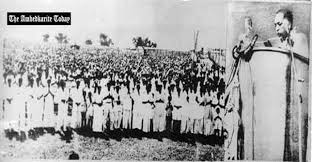
The conversion of Dalits to Buddhism under Dr. B.R. Ambedkar’s guidance, culminating in the mass conversion event on October 14, 1956, in Nagpur, was a pivotal moment in their emancipation. This movement, often called the Ambedkarite or Neo-Buddhist movement, offered Dalits a pathway to break free from the oppressive caste system entrenched in Hinduism, providing social, psychological, and cultural liberation. Here is how it contributed to their emancipation: Rejection of Caste-Based Oppression Hinduism, as Ambedkar saw it, institutionally sanctioned untouchability and caste hierarchy through scriptures like the Manusmriti. By converting to Buddhism—a religion he viewed as egalitarian, rational, and devoid of caste—Dalits could reject the theological basis of their subjugation. This act of conversion was a symbolic and practical renunciation of a system that deemed them “impure,” empowering them to redefine their identity outside the Hindu fold. Restoration of Dignity and Self-Respect Ambedkar emphasized that emancipation was not just about material upliftment but also dignity. Buddhism, with its focus on equality (all beings can attain enlightenment) and ethical living, gave Dalits a new sense of self-worth. The 22 vows he administered during the conversion—such as rejecting Hindu gods and rituals—were a deliberate assertion of agency, encouraging Dalits to shed the internalized inferiority imposed by centuries of discrimination. Cultural and Social Alternative Conversion provided Dalits with a distinct cultural identity rooted in Buddhist values like compassion, wisdom, and community (Sangha). This countered the exclusion they faced in Hindu society, where they were barred from temples and social spaces. By embracing Buddhism, they built their own communities, rituals, and spaces—like viharas—fostering solidarity and pride. Over time, this created a subculture that challenged the dominance of upper-caste norms. Political Consciousness and Mobilization The conversion movement was not just spiritual; it was deeply political. Ambedkar framed it as a revolt against caste tyranny, galvanizing Dalits into a collective force. This heightened their political awareness and strengthened their resolve to demand rights and representation. The Neo-Buddhist identity became a rallying point for Dalit activism, reinforcing Ambedkar’s broader efforts through organizations like the Scheduled Castes Federation. Education and Empowerment Ambedkar saw Buddhism as a rational, scientific faith that encouraged inquiry and education—key tools for Dalit upliftment. By embracing it, many Dalits were inspired to pursue learning, as Ambedkar himself had urged (“Educate, Agitate, Organize”). This shift helped break the cycle of illiteracy and poverty that caste had perpetuated, enabling social mobility. Long-Term Impact on Caste Dynamics The mass conversion—initially involving over 500,000 Dalits and growing to millions in subsequent decades—sent a powerful message to Indian society. It pressured the state and upper castes to confront the injustices of untouchability, accelerating reforms and the implementation of constitutional safeguards. It also inspired future generations of Dalits to resist caste oppression, whether through Buddhism or other means. Practical Outcomes In Maharashtra, where the movement took root most strongly, Neo-Buddhists (often from the Mahar caste, Ambedkar’s own community) saw gradual improvements in education, employment, and political participation, aided by reservations and their newfound assertiveness. While not all socio-economic woes were erased—poverty and discrimination persisted—the conversion gave Dalits a framework to challenge their marginalization more effectively. In summary, Ambedkar’s leadership in converting Dalits to Buddhism was a radical act of emancipation, offering them a spiritual escape from caste, a platform for self-assertion, and a tool for long-term empowerment. It did not end all their struggles, but it planted the seeds for a sustained fight against inequality, reshaping their place in Indian society. Courtesy: Countercurrents Note: This news is originally published on https://countercurrents.org and is for use by the non-military/non-commercial community, especially those in the human rights sector.
Daily weather tracker: Hot & humid weather likely over Assam & Meghalaya on May 10
Hot and humid weather is likely over Assam & Meghalaya on May 10, 2025, the India Meteorological Department (IMD) said in its daily bulletin. “Hot & humid weather is likely to prevail over Odisha during 10th-14th; Assam & Meghalaya on 10th; Tripura on 10th& 11th; Tamilnadu Puducherry & Karaikal during 10th-13th; Kerala & Mahe on 10th & 11th May,” the IMD said. It added that heat wave conditions are very likely in isolated pockets of West Uttar Pradesh on May 15 and 16; eastern Uttar Pradesh during May 14-16; Sub-Himalayan West Bengal and Sikkim on May 10 and 11; Gangetic West Bengal during May 10-14 and Bihar, Jharkhand and Odisha during May 11-14. According to the IMD, the southwest monsoon is very likely to advance into the South Andaman Sea, some parts of Southeast Bay of Bengal and Nicobar Islands around May 13, 2025. “It is likely to advance over some parts of south Arabian Sea, Maldives & Comorin area; some more parts of South Bay of Bengal, entire Andaman & Nicobar Islands and Andaman Sea; and some parts of central Bay of Bengal during subsequent 4-5 days,” the bulletin added. In the west, isolated light/moderate rainfall, accompanied with thunderstorm, lightning and gusty winds at speeds reaching 40-50 kmph and gusting to 60 kmph is likely over Gujarat on May 10, Madhya Maharashtra, Marathwada during May 10-14; with winds speed reaching 30-40 kmph and gusting to 50 kmph over Konkan & Goa on May 10; Gujarat on May 11 and 12. In eastern and central India, isolated to scattered light/moderate rainfall accompanied with thunderstorm, lightning and gusty winds at speeds reaching 40-50 kmph and gusting to 60 kmph is likely over Madhya Pradesh, Vidarbha, Chhattisgarh, Sub Himalayan West Bengal and Sikkim during May 10-14; Gangetic West Bengal during May 11-14 and Odisha on May 11 and 12; and with winds at speeds reaching 30-40 kmph gusting to 50 kmph over Jharkhand on May 11. Courtesy: Down to Earth Note: This news is originally published on https://www.downtoearth.org.in and is for use by the non-military/non-commercial community, especially those in the human rights sector.
28 held in Vadakadu communal clash; plaint filed against VCK leader Thol Thirumavalavan
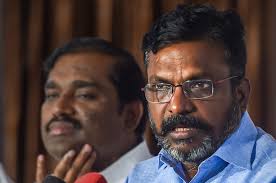
Violence broke out on May 5 when a dispute between Dalits and caste Hindus over rights at a temple festival escalated into an attack in a Dalit residential area. PUDUKKOTTAI: The number of arrests made in connection with the communal clash in Vadakadu rose to 28 with the arrest of two more persons on Saturday. According to police, 20 caste Hindus and 6 Dalits had earlier been arrested in this connection. On Saturday, one person from each group was arrested, taking the total to 28. Violence broke out on May 5 when a dispute between Dalits and caste Hindus over rights at a temple festival escalated into an attack in a Dalit residential area, leaving several people injured on both sides. Following the incident, VCK leader Thol Thirumavalavan alleged that Dalits, traditionally allowed to pull the car of the Muthumariamman temple, were denied that right on May 5. Countering his statement, the ‘Servaikaranpatti servai’, a caste Hindu organisation, claimed a 300-year-old right over the ritual. The organisation filed a complaint in Vadakadu police station accusing Thirumavalavan of spreading false and provocative remarks. Responding to this on Sunday Thirumavalavan said his comments were based on inputs from affected people, and would stand corrected if proven wrong. Courtesy: New Indian Express Note: This news is originally published on https://www.newindianexpress.com and is for use by the non-military/non-commercial community, especially those in the human rights sector.
forces Dalit kids to trek two km daily after school
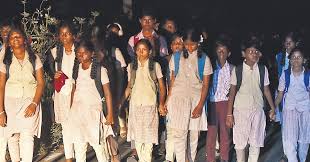
“It is unsafe. We also instruct girl students not to accept rides from any strangers,” said S Priya, a female resident. CHENNAI: With the weight of a school bag on her back, Vinodhini, a Class 11 student at a private school in Gummidipoondi, walks nearly two km daily from the nearest bus stop in Rettambedu to her village, Kuruviagaram, often after sunset due to special classes. The path has no street lights and is also a haven for snakes. She is just one among the scores of girl students from Kuruviagaram, who, equipped with nothing but torchlights, risk their lives every day while returning from school as there are no buses to the village. “It is unsafe. We also instruct girl students not to accept rides from any strangers,” said S Priya, a female resident. Around 1,000 Dalits who live in Kuruviagaram have long been demanding bus services to their village, but have so far not been able to elicit any official action. Around 60 high school students go out of the village to study every day, as Kuruviagaram only has a primary school. One resident, M Kannadasan (20), who is pursuing his masters in social work at the Loyola College, Chennai, said that route number 43 (Gummidipoondi-Pallipalayam) stops at Rettambedu which is two km away from the village. In the evening, there are only two buses, one at 4.30 pm and another service at 6.30 pm. The bus is operated from the Ponneri depot. Students and workers (including women) who take the 6.30 pm bus are left to brave the dark and snakes, he said. Urging the government to extend the bus route till Kuruviagaram, Kannadasan said the move will positively impact around five panchayat villages surrounding Kuruviagaram, with a population of around 2,000. Another resident, V Ramya (33), said that the lack of buses is an obstacle especially during medical emergencies. We have to transport the patient either by two-wheeler or an autorickshaw if the 108 ambulance is not available, she added. Speaking to TNIE, Gummidipoondi MLA TJ Govindarajan said, “Kuriviagaram hamlet has less population. We will do an estimate and depending on the patronage we will talk to the transport department and take steps to extend the bus service to the village” Courtesy: New Indian Express Note: This news is originally published on https://www.newindianexpress.com and is for use by the non-military/non-commercial community, especially those in the human rights sector.
Out to play, 7yo Dalitboy brutally murdered
Agra: A 7-year-old Dalit boy was found brutally murdered at a village in Hathras district on Saturday, police said. The Class 1 student, who had gone missing on Thursday evening when he went out to play, was found dead with limbs tied and injury marks all over the body. DSP (Sadabad) Himanshu Mathur said, “The body was sent for postmortem. The forensic team along with a dog squad were called to the spot where the body was found. Four police teams were formed to work on this case. Investigation is on.” The boy’s father, Rajpal Singh, who runs a flour mill, said that despite efforts to locate him, he did not return, prompting the family to file a missing persons complaint at the local police station. On Saturday, the body was sighted at a nearby farm with his limbs tied and severe injury marks on stomach and chest. A black cloth was also tied to the body, leading family members to suspect a “pre-planned murder”. A case under BNS section 103 (murder) was registered against an “unknown person”. The boy’s grandfather, Prem Singh, alleged the killing appeared deliberate. “The way the body was dumped suggests he was murdered elsewhere. Police must look for the culprit and punish him,” he said. Rajpal Singh lives in Khuntipur Jatan village with his wife and three children. The victim was his only son. Courtesy: Times of India Note: This news is originally published on https://timesofindia.indiatimes.com/ and is for use by the non-military/non-commercial community, especially those in the human rights sector.