
593 workers lost their lives in sewers, the government concealed 261 deaths: Safai Karmacharis took to the streets to protest false data and negligence.

The Safai Karmachari Andolan demanded that the government acknowledge the failure of the NAMASTE scheme and admit that despite the scheme, there has been an abnormal increase in deaths. New Delhi—On Tuesday, August 4, sanitation workers from more than 10 states, families of those killed in sewer and septic tank accidents, civil society members, writers, and students gathered in the capital to strongly condemn the illegal practice of forcibly pushing people to clean drains and septic tanks and the resulting deaths. The protest, organized by the Safai Karmachari Andolan (SKA) at Jantar Mantar, focused on the huge discrepancies in official data. On July 21, Social Justice and Empowerment Minister Ramdas Athawale told Parliament that 332 people died in sewer and septic tank accidents between January 2021 and June 2026. Meanwhile, according to the SKA’s own data, 593 people died during the same period. The organization alleges that the government concealed and underreported 261 deaths. According to the SKA, 113 people have died in sewers and septic tanks in the first 207 days of 2026, including 15 deaths in July alone. The organization stated, “The government’s brazen concealment of such a large number of deaths is criminal. Making 261 people and their families invisible is shameful.” The SKA has submitted these figures to MPs and urged them to raise the issue in Parliament. The organization calls the attempt to conceal the figures a national shame and an act of untouchability. It says that instead of preventing deaths, the government is focused on concealing the truth. The SKA has declared the practice illegal and linked the high mortality rate to caste-based work, despite the existence of laws prohibiting manual scavenging. The organization has made the following demands: The formation of a Parliamentary Standing Committee to investigate sewer and septic tank deaths, requiring the government to submit an annual report to Parliament on deaths, prosecutions, compensation, and rehabilitation. A time-bound national plan to immediately prevent sewer and septic tank deaths. Acknowledging the failure of the NAMASTE scheme and recognizing that despite this scheme, there has been an abnormal increase in deaths. National Convenor Bezwada Wilson said that the Prime Minister should acknowledge this failure and take immediate action. The protest ended with the slogan “#STOP KILLING US.” What is the NAMASTE scheme? The NAMASTE scheme is a central sector initiative to mechanize sewer and septic tank cleaning, eliminate hazardous cleaning tasks, and provide safety kits, skill training, and health insurance to Safai Mitras (sanitation workers). It is jointly implemented by the Ministry of Social Justice and Empowerment and the Ministry of Housing and Urban Affairs. It was launched as a central sector scheme in 2022. Its primary objective was to reduce deaths related to sanitation/cleaning work in India to zero, ensure that all sanitation work is carried out by skilled workers, and ensure that no sanitation worker comes into direct contact with human excreta. The Namaste scheme has not been completely shut down or declared a failure on paper, but it has faced significant criticism due to serious implementation gaps, sluggishness on the ground, and persistent sewer deaths. Despite stringent laws and the scheme’s claims, deaths of workers from toxic gases while cleaning septic tanks and sewers have not been completely stopped. According to reports from Parliament and parliamentary committees, far fewer than the designated sanitation workers have actually received PPE kits and modern safety equipment. The procurement and operation of modern machinery and robotic cleaning equipment in urban local bodies remains sluggish, leading to private contractors continuing to employ hazardous manual work. The rate of effective legal action or punishment for contractors and bodies that engage workers in illegal manual scavenging or hazardous work is very low. Geetha Sunil Pillai Courtesy: Hindi News
Rajasthan Dangavas massacre: 40 accused acquitted after 11 years, Dalit community shocked; ‘Who killed our five people?’

Speaking to The Mooknayak, Dalit thinker and writer Bhanwar Meghvanshi said, “The acquittal of all the accused in the Dangawas massacre case is not just the end of a case, but a serious question mark on the right to justice for Dalits.” Nagaur – The memory of the brutal incident that occurred on May 14, 2015, in Dangawas village of Nagaur district due to a land dispute, in which six people were brutally murdered by being crushed by a tractor and attacked with sharp weapons, still haunts the Dalit community. These included five members of the Dalit Meghwal family. On Wednesday, August 5, the SC-ST Special Court in Merta acquitted all 40 accused named by the CBI in this case. A large crowd gathered outside the court premises when the verdict was announced. While the faces of the accused were filled with joy, the families of the victims were clearly filled with despair. This decision has come as a shock to the Dalit community. There is a wave of deep despair and grief. The victim’s family is asking, “When all the accused were acquitted, who killed our five people? We will go to the High Court.” Judge Ashish Bijaranian of the Merta SC-ST Special Court delivered the verdict, acquitting all 40 accused. According to Advocate Mahipal Latiyal, the plaintiff presented eight witnesses, while the prosecution presented 82 witnesses. After a lengthy trial, the court acquitted the accused. What was the dispute? This case involved a nearly 40-year-old land dispute. A dispute was ongoing between Jat and Dalit (Meghwal) families over 3.77 hectares of land in Dangavas village. The Dalit family claimed that they had borrowed 1,500 rupees from a Jat family about 40 years ago, giving them the right to cultivate the land. When they returned the money, they were not given back the land. Under Section 42 of the Rajasthan Tenancy Act, 1955, Scheduled Caste land cannot be sold or transferred to a non-SC person. The dispute reached a head when Ratnaram Meghwal began building a house on the same land in May 2015. May 14 In 2015, more than 200 members of the Jat community allegedly attacked with sticks, sharp weapons, and tractors. Dalit women were molested, men were severely beaten, and several were crushed by tractors. Ratanaram Meghwal, Pokharram Meghwal, Pancharam Meghwal, Khemaram Meghwal, Ganpatram Meghwal, and Rampal Gosain were killed in the attack. A total of six people, including five Dalits, were killed. Given the gravity of the case, the Rajasthan government first handed over the investigation to the CID and then to the CBI. The CBI filed a charge sheet. In 2019, the Rajasthan High Court took a tough stand and ordered a three-month stay on the trial to apprehend the absconding accused. Subsequently, special police teams raided the premises, arrested all 40 accused, and sent them to jail. The trial had been ongoing in the Merta court since January 2018. When six people were brutally murdered, the entire country witnessed the brutality. For years, the victim families ran from court to court, hoping for justice. But ultimately, if no one is convicted, it signals a failure not just of the prosecution, but of the entire judicial process. – Bhanwar Meghwanshi, Dalit thinker The victim’s family has expressed deep sorrow over the verdict. They ask, “If all the accused were acquitted, who killed our five people?” They are preparing to challenge the verdict in the High Court. Dalit thinker and writer Bhanwar Meghwanshi, speaking to The Mooknayak, said, “The acquittal of all the accused in the Dangavas massacre is not just the end of a trial, but a serious question mark on the right to justice for Dalits. The question is simple: were those six innocent people not killed by anyone? Did they die on their own? When six people were brutally murdered, the entire country witnessed that brutality. For years, the victim’s families ran to the courts, hoping for justice. But ultimately, if no one is convicted, it signals a failure not just of the prosecution, but of the entire judicial process.” If the accused in such cases are acquitted in the absence of a fair investigation, bold evidence, and a fair trial, the biggest message it sends is that justice is becoming increasingly difficult for Dalits. This undermines the trust of marginalized communities in the judiciary. The Scheduled Castes and Scheduled Tribes (Prevention of Atrocities) Act was intended to provide effective justice to victims, but if convictions fail even in such heinous cases, it raises serious questions about the implementation of the law. The victims of Dangavas did not receive justice. This is not only a defeat for the victim families, but also a defeat of the promise of Indian democracy that the law is equal for all. This verdict forces us to introspect: where does justice lie for Dalits? This verdict reminds us of the many cases where victims of caste violence are denied justice even after a long wait. The wound of Dangavas has now been reopened. Geetha Sunil Pillai Courtesy: Hindi News
Amit Shah responsible for violence against students, lacks courage to face Parliament: Rahul Gandhi
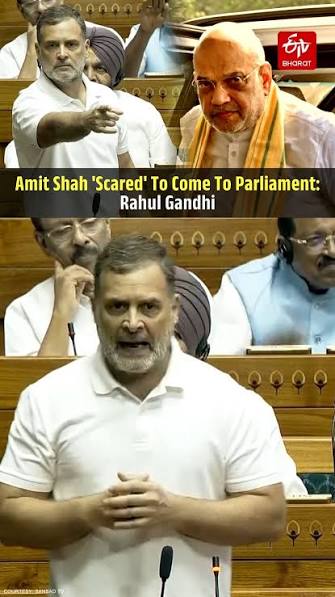
Gandhi said that raising concerns about the country’s education system was not a crime and argued that students were demanding reforms, not resorting to violence. Leader of Opposition (LoP) in Lok Sabha Rahul Gandhi, Rajya Sabha LoP Mallikarjun Kharge, Samajwadi Party (SP) MP Ram Gopal Yadav, Congress MP Priyanka Gandhi Vadra and other opposition members stage a protest demanding Home Minister Amit Shah’s statement in Parliament. Leader of Opposition (LoP) in Lok Sabha Rahul Gandhi, Rajya Sabha LoP Mallikarjun Kharge, Samajwadi Party (SP) MP Ram Gopal Yadav, Congress MP Priyanka Gandhi Vadra and other opposition members stage a protest demanding Home Minister Amit Shah’s statement in Parliament.Photo | PTI Congress leader Rahul Gandhi on Wednesday slammed Home Minister Amit Shah, accusing him of being responsible for the alleged police violence against students protesting the paper leak issue and claiming that he lacked the courage to explain the incident in Parliament. The Leader of Opposition in the Lok Sabha made the remarks after meeting a group of students who had protested last month, demanding the resignation of then Union Education Minister Dharmendra Pradhan over the paper leak controversy. The students have alleged police excesses during the July 20 protest. “I just met young protesters from various states and had a discussion. I want to thank them and I am proud of thousands of students like them as they fought for the Constitution, the education system and the future of India,” Gandhi told reporters outside former Congress president Sonia Gandhi’s 10, Janpath residence. “They mentioned to me how they were assaulted, beaten and threatened.They have defended the Constitution, protected the idea of India and the future of India,” Gandhi said, flanked by the students. He said raising concerns about the country’s education system was not a crime and argued that students were demanding reforms, not resorting to violence. “If anything, the system needs to be changed, it needs to be corrected and that is all they (the students) were asking for. They were not indulging in violence, they were not being aggressive or nasty. They were beaten, assaulted and threatened,” Gandhi alleged. Leader of Opposition (LoP) in Lok Sabha Rahul Gandhi, Rajya Sabha LoP Mallikarjun Kharge, Samajwadi Party (SP) MP Ram Gopal Yadav, Congress MP Priyanka Gandhi Vadra and other opposition members stage a protest demanding Home Minister Amit Shah’s statement in Parliament. Rahul Gandhi accuses Modi, Shah of intimidating Gen Z with FIRs, says they are ‘India’s past’ On the alleged police brutality student protesters, Gandhi said, “Forcing them, sending ‘goondas’ and forcibly taking their apology, taking apology from a 15-year-old and accepting that apology, is nonsense and unacceptable to us,” he said. Gandhi said the country needed an education system that worked and urged an end to exam paper leaks. He also directly targeted Shah, alleging that the Union home minister was accountable for the alleged violence against the protesters. “The person who is responsible for this violence is the home minister.” “The person who had pellet gun fired at this young lady, the person who had a pellet gun fired at that young man whom I brought before the press a few days ago, the person who has turned the police force against this young lady, is Amit Shah and he is the home minister of India,” Gandhi said. “He (Shah) does not have the decency to come to Parliament. He does not have the decency or the courage to comment on what has happened. “There are two possibilities, he did not know that violence was carried out on children, in which case he is incompetent; or he ordered that the pellet gun be fired and violence unleashed against youngsters, which means he is culpable. Either way, he is responsible,” the former Congress chief said. Courtesy : TNIE Note: This news is originally published on https:/thenewindianexpress.com/bha and is used purely for non-profit/non-commercial purposes, especially human rights
‘No need to apologise’: Rahul meets student protesters, slams PM Modi, Shah over police brutality

NEW DELHI: Congress leader Rahul Gandhi on Wednesday met five student protesters who he said were targeted during the Gen Z demonstrations that led to the resignation of Dharmendra Pradhan as Union education minister. Narrating their experiences, the leader of the opposition in the Lok Sabha said the students were assaulted during the protests and continued to face abuse on social media even after the demonstrations had ended. Addressing the youth of the country, Rahul said they had “done no wrong” and did not need to apologise. He accused Prime Minister Narendra Modi of failing to understand the youth’s concerns. “We had a freewheeling conversation with some of the young protesters. They mentioned to me how they were assaulted, breaten and threatened. I am very proud of them, very proud of what they have done, what thousands of young Indians like them have done. They have defended the Constitution, they have protected the idea of India, they have protected India’s future. Complaining about the education system, which is a flawed system, a collapsing system, a useless system is not a crime,” Rahul said. “If anything, the system needs to be changed, it needs to be corrected. That is all they were asking for. They were not doing violence, they were not being aggressive, they were not being nasty. They were beaten, assaulted and threatened. Forcing them first, sending gundas to their house, forcibly demanding apology of a 15-year-old girl and then accepting that apology is complete nonsense. We do not accept it, we want education system that works, we want exam leaks to stop and we want the future of this country to be respected and protected,” he added Rahul also launched a sharp attack on PM Modi Modi and Union home minister Amit Shah. “They are young people who are standing here, in front of India’s press. But Amit Shah and the Prime Minister don’t have the courage to stand here,” Rahul said. Calling the students “exactly the type of youngsters that this country needs”, he said they had faced “harassment, violence and torture” for speaking out. “I am very proud that they have the courage to speak so eloquently,” he added. Rahul also accused Shah of being responsible for the alleged use of pellet guns against protesters. He said the home minister was either “incompetent” if he was unaware of the violence or “culpable” if he had ordered it, adding that “either way, he is responsible”. His remarks came after PM Modi released a video saying he had forgiven young protesters for allegedly using abusive language against him and his mother during the demonstrations. On Tuesday, the leader of the opposition had said students were in “severe pain” and needed an apology from the government, not forgiveness. He argued that they were protesting over unemployment, unfair examinations and a failing education system. Gandhi also alleged that the RSS was attempting to impose a single version of India’s history, saying every state had the right to preserve and express its own language, culture and traditions. He said the student protests reflected resistance to any attempt to undermine India’s diversity, adding that “India will not tolerate its history being trampled upon by anybody”. Courtesy : TOI Note: This news is originally published on https:/timesofindia.com/bha and is used purely for non-profit/non-commercial purposes, especially human rights
With all eyes on delimitation & FCRA, Parliament monsoon session sinks deeper into deadlock

NEW DELHI: Parliament remained paralysed for the 13th consecutive day on Wednesday as relentless protests by Opposition parties forced repeated adjournments in both Houses, even as the government pushed through key legislative business. Amid the deadlock, efforts to break the impasse gathered pace with Parliamentary Affairs Minister Kiren Rijiju holding meetings with Lok Sabha leader of the opposition Rahul Gandhi and Union home minister Amit Shah, while Prime Minister Narendra Modi separately met BJP MPs over breakfast. Opposition marches to Parliament Opposition MPs led by Rahul Gandhi and Priyanka Gandhi Vadra marched from Prerna Sthal to Makar Dwar, demanding accountability from Amit Shah over the alleged police action against CJP protesters on July 20. They also raised the alleged Ram Temple donation embezzlement issue and other matters. Priyanka Gandhi said those responsible for ordering the alleged use of pellet guns, tear gas and lathi charges against students must be held accountable, asserting that “This is a democracy, not a dictatorship; it is not someone’s royal court.” No special session Rijiju dismissed speculation that the Monsoon Session could be extended or that a special session might be convened later this month. He said there was no proposal before the government to either prolong the current session or hold a separate sitting in mid-August. His clarification came amid continued disruptions that have prevented the Lok Sabha from completing Question Hour since the session began on July 20. Despite the logjam, the Lok Sabha passed the Bankers’ Books Evidence Bill, 2026, by voice vote without discussion after Opposition members refused to end their protest. Rijiju accused Opposition parties of deliberately stalling the House despite time being allotted for debate. He also criticised the Congress, CPI and Samajwadi Party over their protests relating to the alleged Ram Temple donation theft, alleging they had disrespected Lord Ram through demonstrations inside the Parliament complex. Rahul-Rijiju meet In a significant political development, Rijiju met Rahul Gandhi in his Parliament office for nearly 50 minutes in what sources described as a confidence-building exercise aimed at ending the parliamentary deadlock. Congress MP Priyanka Gandhi Vadra was present throughout the meeting, while Gaurav Gogoi and K C Venugopal joined later. According to sources, discussions covered the proposed Delimitation Bill, the Foreign Contribution Regulation Act (FCRA) Bill and other contentious issues that have fuelled the ongoing standoff. It was Rijiju’s second meeting with Rahul Gandhi in the past 10 days, signalling continued backchannel engagement between the government and the Opposition despite the public confrontation inside Parliament. Amit Shah likley to speak on FCRA Soon after meeting Rahul Gandhi, Rijiju met Amit Shah at Parliament House. Sources said the government is preparing to engage the Opposition on the proposed FCRA Bill and Shah is expected to address the issue in Parliament. Rijiju is also expected to reach out to leaders of other Opposition parties, including Samajwadi Party chief Akhilesh Yadav, in an effort to build consensus and restore normal functioning of the House. The proposed FCRA amendments have emerged as one of the key flashpoints of the session alongside the protests over NEET, police action against students and the Ram Temple donation controversy. Derek blames govt disruption Trinamool Congress leader Derek O’Brien accused the government of being responsible for the continued disruption in Parliament, alleging that Amit Shah’s prolonged absence from the House had worsened the situation. O’Brien maintained that Opposition MPs continued to perform their parliamentary duties despite the protests by raising public issues through Zero Hour notices and starred questions. He highlighted his own notices seeking national recognition of the 75th anniversary of Mother Teresa’s Missionaries of Charity and raising concerns over the proposed FCRA Bill. TMC sources said the party had submitted more than 100 questions during the session on issues ranging from MGNREGA dues and manual scavenging to air pollution, bank frauds, the UDAN scheme and the Nirbhaya Fund. PM meets BJP MPs Prime Minister Narendra Modi hosted a breakfast meeting with 37 BJP MPs at his official residence as part of his regular outreach during Parliament sessions. The gathering included MPs associated with the NDA as well as former AAP leaders who later joined the BJP. Senior BJP leaders Tarun Chugh, Vinod Tawde and party chief Nitin Nabin also attended. Sources told news agency PTI said the Prime Minister shared personal experiences and discussed governance, parliamentary strategy and constituency feedback with the MPs. The interaction forms part of Modi’s practice of meeting smaller groups of BJP parliamentarians during every session to strengthen coordination and receive direct feedback from lawmakers. Bill on Supreme Court judges passed Despite the disruptions, the Rajya Sabha passed the Supreme Court (Number of Judges) Amendment Bill, 2026, completing Parliament’s approval of the legislation. The Bill raises the sanctioned strength of the Supreme Court from 34 to 38 judges, including the Chief Justice of India. Replying to the debate, law minister Arjun Ram Meghwal said the increase was a “demand of the time” given the growing workload, rising pendency and the need for more Constitution Benches. He said the expansion would improve disposal rates and help ensure quicker access to justice. Meghwal also highlighted the government’s ongoing investment in expanding Supreme Court infrastructure and reiterated its commitment to judicial reforms and the independence of the judiciary. Courtesy : TOI Note: This news is originally published on https:/timesofindia.com/bha and is used purely for non-profit/non-commercial purposes, especially human rights
Evening news wrap: Meta CEO Mark Zuckerberg apologises to Centre; Rahul Gandhi meets student protesters, targets PM Modi & more

Meta CEO Mark Zuckerberg apologises to Centre over CSAM, deepfakes. Rahul Gandhi meets student protesters, attacks PM Modi and Amit Shah over crackdown. Dramatic visuals show India-flagged ship ablaze before sinking in Red Sea attack. Rijiju holds talks with Rahul Gandhi to break Parliament deadlock. Trump-era crackdown detains families of active-duty US military personnel. Here are the top stories of the day: Meta apologises to Centre over CSAM, deepfakes; safe-harbour under scrutiny Meta CEO Mark Zuckerberg has reportedly apologised to the Centre over child sexual abuse material (CSAM), deepfake content and platform moderation issues during talks with government officials. The Centre questioned Meta’s compliance with Indian laws and warned its safe-harbour protection under the IT Act could be at risk. Read full story Rahul meets NEET protesters, says students defended India’s future Congress leader Rahul Gandhi met five student protesters involved in the NEET agitation, praising them for standing up against what he called a “broken” education system. He alleged the students were assaulted during protests and later harassed online, while accusing Prime Minister Narendra Modi and Union home minister Amit Shah of failing the country’s youth. Read full story Visuals emerge of Indian tanker engulfed in flames before sinking off Yemen Dramatic visuals released by Iran’s Press TV show an India-flagged cargo vessel engulfed in flames moments after it was hit by a projectile in the Red Sea before sinking off Yemen’s western coast. The MSV Faize Noore Oliya was carrying 14 crew members, all of whom were rescued safely. Read full story Rijiju meets Rahul Gandhi as Centre seeks to break Parliament deadlock Parliamentary affairs minister Kiren Rijiju held a nearly 50-minute meeting with Rahul Gandhi to discuss the ongoing Parliament logjam and the proposed Delimitation Bill amid repeated disruptions in the Monsoon Session. The talks came as the Lok Sabha was adjourned again over opposition protests on issues including the alleged police action against student protesters. Read full story Trump’s immigration crackdown hits US military families: Report The Trump administration has detained dozens of parents and spouses of active-duty US service members as part of its immigration crackdown, according to an AP investigation. At least 51 family members have been detained and six deported, reversing decades of practice that largely shielded military families. Read full story Courtesy : TOI Note: This news is originally published on https:/timesofindia.com/bha and is used purely for non-profit/non-commercial purposes, especially human rights
Parliament passes Transgender Persons Amendment Bill, 2026 with Rajya Sabha approving it today
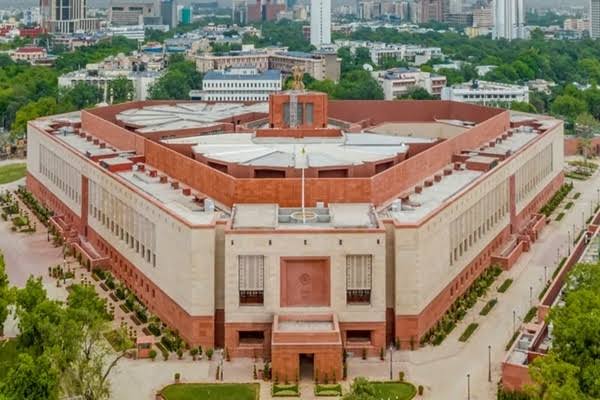
Parliament has passed the Transgender Persons (Protection of Rights) Amendment Bill, 2026, with the Rajya Sabha approving it today. The bill was passed by the Lok Sabha yesterday by a voice vote amid an Opposition-led walkout. The bill seeks to redefine the category of transgender, removes the provision of self-perceived gender identity and excludes several socio-cultural identities as well as transmasculine individuals from its ambit. It also further defines transgender persons within a biological framework, based on intersex variations and differences in sexual development. Replying to the discussion on the Bill in the Rajya Sabha, Social Justice and Empowerment Minister Dr Virendra Kumar said the government is compassionate towards the well-being of the transgender community. He said the Bill has provisions to empower the transgenders and give them dignity. The Minister said that the NDA government has taken several initiatives to bring transgender people to the mainstream and stop discrimination against them. Starting the discussion in the Upper House, Congress MP Renuka Chowdhury said this bill dilutes the privacy of an individual provided under the Constitution. Opposing the Bill, Ms Chowdhury said self-identification cannot be taken away through bureaucratic certification. Criticizing the government, she said that the proposed bill undermines the fundamental rights and dignity of transgender persons. Calling such a move wrong and illegal, she argued that forcing transgender persons to provide their identity through official certificates is against the spirit of equality and dignity guaranteed by the constitution. She also questioned the government’s approach for not properly consulting with the transgender community before bringing the Bill. She also referred to the Supreme Court’s landmark NALSA judgement of 2014, which recognized the right of transgender persons to self-identify their gender. Ms Chowdhury said the proposed Bill violates the principles laid down in that judgement and fails to respect an already established legal framework. DMK MP Tiruchi Shiva also opposed the Bill, saying that even if the Bill is passed in Parliament with a majority, it will be struck down by the Supreme Court. He further added that the Bill violates Articles 14, 15, 19 and 21 of the Constitution and it deprives the community of the right to freedom, dignity and self-determination. Supporting the Bill, BJP MP Medha Vishram Kulkarni said, ” This Bill ensures justice, dignity, protection from criminalisation and legal safeguards for transgender persons. She also thanked Prime Minister Narendra Modi for bringing this bill with certain amendments in order to ensure that the benefits reach the deserving people in a proper manner. She said there is a need for a law that brings justice to real transgender individuals and punishes fake ones. Mrs Kulkarni said the benefits should be extended to those who are transgender by birth. She said that the amendment to extend punishment will bring down the rate of crime and forced identities. TMC’s Saket Gokhale said that 31% of Transgender people in India have attempted suicide because of the discrimination that they are facing. He alleged that now the government is going to start discriminating against them as though social discrimination were not enough. He called it unacceptable. Mr Gokhale expressed concern that gender is going to be decided by the Chief Medical Officer and a District Magistrate, and the bill does not prescribe any qualifications for the Chief Medical Officer. Sanjay Singh of AAP said the Bill is a big let-down for the transgender community. He accused the government of not doing anything for the community. RJD’s Manoj Kr Jha said that prejudices against transgender people should stop, and they should be able to live with dignity. He added that self-determination of gender should not be taken away. CPI(M)’s John Brittas said it is a black-letter day and the Bill is taking India a century back. He pleaded with the government to either withdraw the Bill or refer it to a Select Committee. Jaya Bachchan of the Samajwadi Party also questioned the government over the legislation. She sought to know what the urgency was in bringing the Bill, without examining it with the depth and care that it deserved. Courtesy : NOA Note: This news is originally published on https:/newsonair.com/bha and is used purely for non-profit/non-commercial purposes, especially human rights
The Regressive Turn in India’s Transgender Law
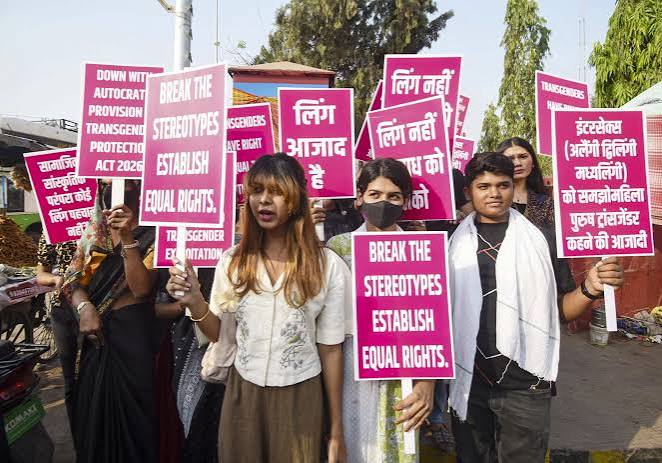
Woes of a transgender person begin at birth. Cursed, cussed, and ostracised, transgender people live on the margins of society. The spectre of hopelessness and despondency looms over them from cradle to their grave. They find safe harbour and joy not within but outside the society. My recent participation in a congregation organised by Vikalp and Gujarat Queer People’s Alliance brought this reality vividly to the forefront. Their struggle in getting a place under the sun exemplified what is wrong with the Transgender Amendment Act, 2026. Every testimonial that was presented at the jan sunvai (people’s hearing) revealed egregious flaws in the Act. The amendment seeks to alter the fundamental principle of self-identification governing laws related to transgender persons. Gender self-identification allows a person to alter their legal gender marker on official documents by making a self declaration without having to go through the excruciating process of a medical exam, psychological evaluation or gender affirming surgeries. The 2026 amendment has overturned this fundamental principle by necessitating a medical exam to determine gender identity, thereby hollowing out the agency conferred on an individual without regard to the havoc brought by it. The rationale provided by the state is “fakery”; the constant refrain one hears is that a section of persons could avail of benefits that are meant for transgender persons. Why the state’s reasoning is flawed First, is this not the same problem the state is confronted with when configuring benefits for minority communities like Scheduled Castes, Scheduled Tribes, Other Backward Castes and others. Therefore, would the state deny benefits to a vast majority who fall under these groups only because of the possibility of a fraudulent claim being made? It is evident that this logic is often employed by the state to strip that section of the citizenry of their rights which is not electorally significant, requiring courts to intervene. Sadly, courts, instead of the beneficent state, are called upon to make the course correction which invariably drains the transgender community of their time and resources. This pattern is familiar to most marginalised groups. A case in point is horizontal reservations which were fructified after hard-fought court battles. Good examples of those who received benefits of horizontal reservation, among others, are persons with disabilities and former servicemen. Second, is the state’s failure to recognise transgender persons’ right of self-identification. Self-identification received the imprimatur of the Supreme Court via its NALSA judgment (2014), followed by the legislature with the enactment of the 2019 Transgender Act until the roll out of the 2026 Transgender Amendment Act. The United Nations too has passed several resolutions urging nation states to align their domestic laws with the aforementioned principle. Of the many problems that have sprung up with the enactment of the 2026 amendment, the core grievance is the state’s inability to appreciate that a transgender person is a one whose mind is not in tune with the body the person is born with. Third, what is the benefit that a person will secure who, purportedly, falsely claims to belong to the trans community. Presently, apart from insurance, there is no substantial benefit available to a transgender individual. There are no safe houses or shelters; there is no provision for reservation despite the NALSA judgment observing that transgender persons should be categorised as “Socially and Economically backward class”; there is no provision for financing gender affirming surgeries for those who wish to adopt that route. Empirical data would show that many do not go through surgery because of the expense involved, paucity of doctors who specialise in this field, and more importantly the low success rate of such surgeries and the long after care period involved post the surgery. Stigma attached with being declared a transgender disincentivises persons not belonging to this group from registering as transgenders. Pejorative slurs such as ‘chakka’, ‘hijra’, and ‘bhand’ chase transgender people all their lives, rehabilitated or not. Fourth, the 2026 amendments are founded on mistrust and invasion of privacy. Medical exams and certification by an official who is untrained and unexposed in the field of gender-affirmation or therapy is a recipe for disaster. At the jan sunvai, the testimony of Ramesh, who said, “mein alag hoon magar galat nahin hoon (I am different but I am not wrong)” struck me. Another transman, Yogesh, said that while his family of origin accepted him for who he was, his neighbours stripped him naked to know what lay below the waistline. He also spoke of the builder’s refusal to allow a “kinnar” from occupying a flat, which they had bought with their own legitimate funds, because of opposition from other residents in the society. These testimonies brought to the fore the deep sense of hurt that transgenders carry and the flawed understanding of a vast section of the society. Some of us are, perhaps, unable to fathom the future, i.e., what if our children or grandchildren have the same dilemmas or challenges. What left me speechless was Maria’s retort to a bystander who ridiculed her for begging and not working because she was otherwise able-bodied: “Agar kaam nahi deh sakte ho , Aap koh koi adhikar nahi hai yeh kehna ka ki mein apni aajivika kaise kammah hoon” What needs to be done Plainly, the 2026 amendment is regressive for a variety of reasons. It moves away, as indicated above, from self-identification, to medical examination; it does nothing for providing shelter to those in distress, has no provision for employment, funding gender-affirming care, or for ensuring that specialised public facilities are setup in sufficient number which are run and managed by domain experts; and significantly, there is no attempt bring about legislative and administrative changes to increase awareness about issues concerning transgender persons, within the society at large, in particular, among those who manage institutions, i.e., police, doctors, judges and lawyers. Lack of awareness and sensitivity to what affects the lives of transgender people begins at the elementary level. Transgender persons, as wrongly understood, are not a “Third Gender”, an
Uproar over high-tension line in Banda! Allegations of the line being laid over a Dalit settlement, complaint to DM
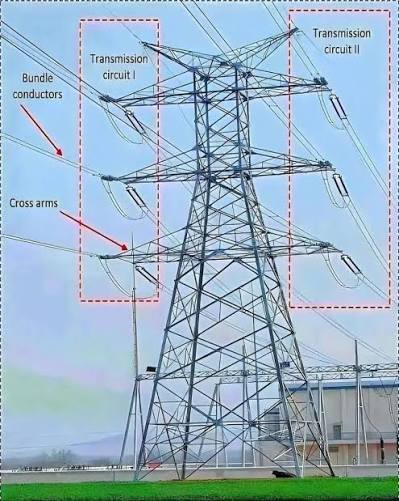
A dispute has escalated over an 11,000-volt high-tension line in Parsaunda village, Banda. Villagers allege that the line is being laid over the houses of the Dalit settlement. A memorandum has been submitted to the DM demanding a rerouting. 4PM News Network: A controversy has erupted over the proposed 11,000-volt high-tension line during road widening in the Gram Panchayat Parsaunda, located in the Tindwari block of Banda district. Villagers allege that the electricity department is preparing to lay the high-voltage line over the houses of the Scheduled Caste settlement. Regarding this, residents have submitted a memorandum to the District Magistrate demanding a rerouting of the line. Villagers ask, “Why is the line over a populated area despite vacant land?” Residents of Pradhan Ka Purwa (a Scheduled Caste settlement) say that there is ample vacant land available on the other side of the road, yet plans are being made to lay the power line over the populated area. Villagers say that if a high-tension line passes over their homes, there will be a risk of serious accidents in the future. They say that the line’s route should be changed, prioritizing public interest and safety. Memorandum submitted to DM, administrative action awaited Villagers submitted a memorandum to the District Magistrate demanding that the proposed 11 kV power line be rerouted to the other side of the road. The memorandum bears the signatures and thumbprints of several villagers. Currently, no official statement has been issued by the administration or the electricity department on this matter. Locals are now watching the administration’s decision following the complaint. Report – Iqbal Khan, Banda Courtesy: Hindi News
High Court Takes Major Action in Basti’s High-profile Dalit Girl Case, Commission Issues Notice to DM, SP
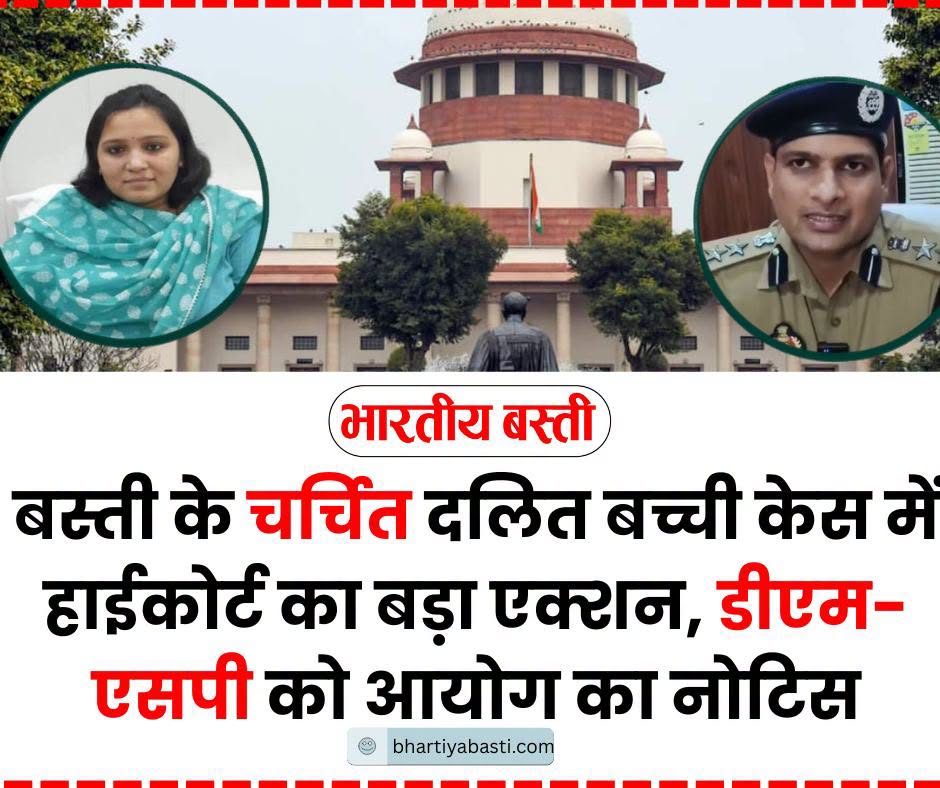
The Allahabad High Court has taken a tough stand in the highly publicized case of the alleged rape and murder of a five-year-old Dalit girl in Siddhnath village, under the Lalganj police station area. A press release issued by the Bhim Yuva Vahini organization claims that the High Court’s double bench has directed the Director General of Police (DGP) of Uttar Pradesh to personally monitor the case and ensure necessary action. According to the press release, the organization alleges that the local administration failed to take effective action against the accused in this incident, which occurred approximately 14 months ago. The organization states that after persistent advocacy and efforts in the court, the High Court took cognizance of the matter and issued directives to the DGP on July 30, 2026. The release states that the High Court has directed the DGP to take appropriate action against the concerned officials, if necessary, and to file an affidavit within three weeks. The organization also claims that the case is being monitored under the supervision of its national president, Sonu Rao, and senior advocate, Hanuman Deen Verma. According to a press release, the National Commission for Scheduled Castes (Government of India) has also issued a notice to the District Magistrate and Superintendent of Police, Basti, directing them to submit a report on the action taken in the case to the Commission within 15 days. Sonu Rao, National President of the Bhim Yuva Vahini, welcomed the action taken by the High Court and the National Commission for Scheduled Castes and expressed hope for justice. By Vikas Kumar Courtesy: Hindi News