
Tribal youth, who empowered 2000 tribal and Dalit youths with higher education, looks for support
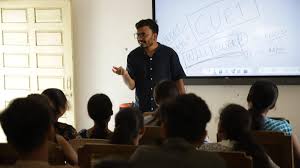
TISS alumnus has been working for the last eight years to democratise higher education for the backward communities of India, has reached five lakh underprivileged youth till now A tribal youth from a nomadic tribe in Vidarbha, who not only made it to the foreign shores for education on the basis of his own merit, but also showed the path of quality higher education to over 2000 tribal and Dalit youths from across the backward regions of India, now seeks support for sustaining the social cause. Raju Kendre, an alumnus of the Tata Institute of Social Sciences and a Chevening scholar who completed his post-graduation from the School of Oriental and African Studies (SOAS), University of London, runs the Eklavya India Foundation for the last eight years. It has so far reached five lakh underprivileged Dalit and tribal youths from over 25 States. Almost all of them are first-generation learners in their families. “Eklavya India Foundation empowers first-generation university students from historically marginalized communities – Scheduled Castes, Scheduled Tribes, Nomadic and De-notified Tribes, and Other Backward Communities, representing over 1 billion people in India, which is 12% the world’s population. We facilitate their successful career transitions by accessing world-class higher education, breaking the poverty cycle, and inspiring them to become community role models,” Raju Kendre said. Many of these students who have attended any of the 700 workshops or residential programmes run by the Foundation, have been able to gain admission to leading national and international universities, gaining prestigious fellowships. Today, not only are they empowered, but the 600-odd alumni have become the role models and community aspirations for the marginalised communities across the country. Take the examples of Nazar Mohideen from Kerala or Eknath Wagh from Maharashtra. Both the youth belong to marginalised communities, and are today pursuing postgraduate courses at the Harvard University. Nazar studies Public Health at the Harvard Medical School, while Eknath pursues his post-graduation in Public Policy at the Harvard Kennedy School. Raju Kendre, an alumnus of the TISS runs the Eklavya India Foundation for the last eight years. Raju Kendre, an alumnus of the TISS runs the Eklavya India Foundation for the last eight years. | Photo Credit: Special arrangement “Over the past eight years, we’ve dedicated approximately one million hours to mentorship and career guidance. Our students have received scholarships totalling more than 7 million USD from government programs, private trusts, and globally renowned institutions. Our mission is empowering the under-represented Indian communities by dismantling education and career barriers, cultivating equitable leadership, fostering social mobility, and building a just society,” he said. Raju was recently awarded the British Council’s Global Alumni Award for social action. As a young man who had himself faced challenges while accessing education, he found his calling in empowering other youths. His parents, married before they even turned 10 years old, could not complete even primary education. “At 18, I dreamed of becoming an Indian Administrative Service (IAS) officer – a prestigious bureaucratic role that I believed could bring change to people like my parents, who spent their entire lives working on farms but never experienced a better future. In 2011, I travelled 300 miles from my village to the metro city of Pune, hoping to access quality higher education – becoming the first in my entire generation to aspire for a university degree. My mother had given me a few thousand rupees – all she could save – but it was not enough to survive in the city. Despite my good academic record, I struggled. I had no financial support, no guidance, and no understanding of how to navigate life in a big city. Within a few months, I was forced to drop out from the Pune University,” Raju Kendre talked about his journey. “I felt like an outsider in the big city. My language, culture, and dialect were not accepted in that elite system. I felt isolated, overwhelmed, and alone – just like many first-generation students who experience university for the first time in India. We often hear about suicide cases and dropouts in this so-called “meritocratic” system, where many struggle to fit in and succeed. After dropping out of university, I returned to my village and continued my studies through distance learning. During this time, I joined a grassroots organization working with indigenous communities in central India. Over two years, I witnessed their struggles – children travelling over 100 miles just to get a basic degree, and entire communities lacking basic resources and opportunities. That’s when I realized that becoming a bureaucrat, working in an office far removed from the real issues, was not my true calling. I wanted to work directly with my community. I saw children fighting to get primary-secondary education, walking miles to attend school, and generations trapped in poverty because they had no access to opportunities. This first-hand experience, combined with my own journey, sparked my passion to create real change,” he said. This made him join the prestigious Tata Institute of Social Sciences. Today, eight years after laying the foundation stone of Eklavya India Foundation, Raju reaches out to the marginalised communities across India, but particularly those in the tribal belts of central India. “Our current annual expenditure is around Rs 1.5 Crore. We receive support from the Echoing Green Fellowship, the Nudge Foundation, and the Mariwala Health Initiative, along with small individual donations and partnerships with smaller CSR contributors. But we have been operating out of a rented campus. We also want sustained funding to expand out work further, to buy our own place for holding regular workshops and training programmes. We are located in barren lands. There is no support system here. For any networking or support, we need to travel to Delhi or Mumbai. All the top universities are located there. There are no good colleges around us. We want to start a central institution in central India, which has dense tribal population. For that, we need good institutional support and mechanism,” he said. He now hopes
Dalit man lynched in Odisha for ‘cow slaughter’; six arrested

Investigations are ongoing to determine whether the cow had indeed died naturally, and if more people were involved in the assault A 35-year-old Dalit man was lynched and his associate seriously injured by a mob on suspicion of cow slaughter in BJP-ruled Odisha’s Deogarh district, police confirmed on Thursday, 4 September. The incident took place on 3 September, Wednesday, in Kundeijuri village, which falls under the jurisdiction of Riamal police station. The victims have been identified as Kishore Chamar, who was killed in the attack, and Goutam Nayak, who sustained injuries but managed to flee the scene. Both men were residents of the neighbouring village of Kaunsidhipa and were known in the area for working as cattle skinners — individuals who remove hides from the carcasses of dead animals, a profession typically associated with marginalised communities. According to police reports, a group of villagers discovered the two men in a nearby forested area as they were chopping beef. A severed cow head was also found at the location, which immediately raised suspicions among the locals that the animal had been slaughtered locally. Though Chamar reportedly attempted to explain that the cow had died naturally and they were only processing the meat, the mob did not accept the explanation and turned violent. “The two were beaten up by the group and Chamar died on the spot. Though Nayak was injured, he managed to escape,” said Deogarh superintendent of police Anil Kumar Mishra, speaking to PTI over the phone. Police have since arrested six individuals in connection with the incident. Investigations are ongoing to determine whether the cow had indeed died naturally — though the materiality of this to the case of assault and manslaughter seems doubtful — and whether more people were involved in the assault. The case has raised concerns once again over mob violence and vigilante justice, particularly in cases involving marginalised communities and sensitive issues such as cow slaughter. Courtesy : NH Note: This news is originally published on https:/nationalherald.com/bha and is used purely for non-profit/non-commercial purposes, especially human rights.
Jarange wants govt to keep word on Satara Gazette, form panel for dalits, Muslims, farmers

Chhatrapati Sambhajinagar: Maratha quota activist Manoj Jarange on Thursday said govt’s failure to implement the Satara Gazette within the promised deadline would attract “consequences”. He demanded that a cabinet sub-committee should be formed for dalits, Muslims, farmers, tribals and others, on the lines of the one set up for OBC community. “If govt fails to act, I will be forced to hit the streets again,” he said. Jarange criticised a section of ‘leaders’ and ‘experts’ speaking on Maratha reservation, accusing them of misleading the community on multiple occasions. “We don’t trust anyone else. The Maratha community will not fall into any trap. I will bring the entire community in Marathwada under reservation. People will see this in just a few days,” he said. The activist reiterated his determination to secure OBC status for the Maratha community, while launching a sharp attack on senior minister Chhagan Bhujbal. Speaking to media from a private hospital in Chhatrapati Sambhajinagar, Jarange said, “I will ensure Marathas get included in the OBC category.” Regarding govt’s recent decision to replace Bhujbal with BJP leader Chandrashekhar Bawankule as head of the OBC sub-committee, Jarange said, “It does not concern me who is appointed. My only issue is reservation.” Jarange’s remarks follow state govt accepting six of his eight demands and issuing a govt resolution (GR). Following this, Jarange withdrew his protest at Mumbai’s Azad Maidan. However, the GR angered OBC leaders, with several activists threatening to initiate legal action, prompting the govt to form a sub-committee to address the community’s concerns. Courtesy : TOI Note: This news is originally published on https:/timesofindia.com/bha and is used purely for non-profit/non-commercial purposes, especially human rights.
Mysterious Death of Dalit Man in Amethi

A 45-year-old Dalit man named Ram Bahal Pasi was found dead under mysterious circumstances along a roadside in Amethi, Uttar Pradesh. Police are investigating the case and have sent the body for a post-mortem examination to determine the exact cause of death. The community awaits clarity. ADalit man, aged 45, was discovered dead under suspicious circumstances along a roadside in Amethi, Uttar Pradesh, on Friday, raising concerns in the community. The deceased, Ram Bahal Pasi, hailed from Panwaria Agresar village in the Ramganj police station area. Authorities revealed that Pasi’s body was located near Khargipur Mod on the Ramganj-Sonari road. The Station House Officer of Ramganj, Krishna Mohan Singh, remarked that the body has been sent for a post-mortem examination to ascertain the cause of death. “The exact cause of death will be clear only after the report is received,” Krishna Mohan Singh stated, indicating that a precise understanding of the circumstance surrounding the death is awaited, prompting an ongoing investigation. (With inputs from agencies.) Courtesy : Devdiscourse Note: This news is originally published on https:/devdiscourse.com/bha and is used purely for non-profit/non-commercial purposes, especially human rights.
Why casteist attack on Dalit priest in Bhilwara, Rajasthan? Fact finding team reveals – Conspiracy to capture 400 year old temple
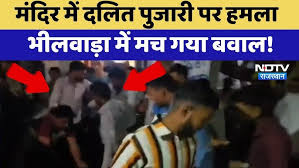
Till July 2025, 3651 cases of atrocities against Dalits were registered in the monthly report of Rajasthan Police, which includes 44 murders and 325 rapes. Bhilwara – Last month, a Dalit priest and his family were attacked by casteist people at Khakhuldev temple in Barana village of Asind police station area of Bhilwara district of Rajasthan. This attack is not just an incident of normal assault, but a well-planned conspiracy to snatch the rights and management of the 400-year-old temple of a Dalit family running for four generations. This conclusion has been presented in its detailed report by a fact-finding team, which visited the spot and talked to the victim’s family, local residents and officials. This report by Dalit Adivasi and Nomadic Rights Campaign Rajasthan, People’s Union for Civil Liberties (PUCL), Ambedkar Welfare Society, and other human rights organizations is based on the investigation of a fact-finding team constituted on 22 August 2025, aimed at uncovering the truth of the well-planned attack on Dalit priest Vishnu Meghvanshi and his family on 14 August, providing speedy justice to the victims and strengthening their voice for the protection of the rights of the Dalit community in Rajasthan. According to the fact-finding team, at around 10 pm on 14 August, a group of about 50-60 people, led by some influential people from casteist Hindu groups, forcibly entered the ‘Khakuldev Temple’ and attacked priest Vishnu Meghvanshi and his family, using caste-related abusive language. The attackers beat up eight people, including women of the family, and tried to drive them out of the temple. The next day, on August 15, the attackers again broke into the temple and looted the donation boxes kept there by cutting them with sharp-edged weapons. Following the attack, Vishnu Meghvanshi filed FIR No. 218/2025 at the Asind police station under sections 189(2), 115(2), 126(2), 303(2), 74, 342(2) of the IPC and sections 3(1)(r), 3(1)(s), 3(2)(va) of the SC/ST (PoA) Act. However, the police have not yet arrested any of the accused and the aggrieved party has accused the administration of bias and inaction. The attackers united non-Scheduled Caste groups under the banner of “Sakala Hindu Samaj” and falsely alleged disorder and violation of traditions in temple management. A protest was organized on August 18, 2025 and a Mahapanchayat on August 21 demanding the removal of the Dalit priest from the temple. This well-planned conspiracy is an attempt to exclude the Dalit community from social and religious activities and spoil social harmony. The background of this incident is very deep and historical. According to the fact finding team, the Khakhole Ji Maharaj temple was established about 400 years ago by the ancestors of Lakshmi Devi, grandmother of priest Vishnu Meghvanshi, on their private land. Since then, the responsibility of worshiping, looking after and managing this temple has been with this Dalit family. It is believed that the deity appeared in the dream of Ghela Meghvanshi, an ancestor of this family, and he ordered the construction of the temple. Over time, the fame of the temple spread and it became a major center of faith in the surrounding area. The report said that some people from the local Shakti community, who had an eye on the growing popularity and resources of the temple, hatched a well-planned conspiracy to oust this Dalit family from the management of the temple. They spread false propaganda in the village that the temple is a ‘trust’ and the Dalit priest is not following the traditions, whereas according to the report there is no legal document like a trust. After the attack, the attackers fueled their false narrative by holding a press conference and dharna in the name of ‘Sarv Hindu Samaj’. The fact-finding team has also raised questions on the role of the administration and the police. The report said that despite the FIR being registered, no accused has been arrested so far, due to which the accused are roaming freely and threatening the victim’s family. This negligence has boosted the morale of the accused and created an atmosphere of fear in the village. The team said in its report that the Dalit community in Rajasthan has been a victim of social boycott, ban on temple entry and violent attacks for a long time. As of July 2025, the monthly report of Rajasthan Police recorded 3651 cases of atrocities against Dalits, including 44 murders and 325 rapes. The Meghvanshi community in Asind area is particularly vulnerable to persecution and the lack of effective action by the administration is further fuelling it. The fact-finding team, based on conversations with the victim’s family, the local Meghvanshi community and other witnesses, found that the attack was entirely motivated by caste discrimination. The Meghvanshi community says that the temple is the heritage of their ancestors and the attempt to forcibly occupy it is not only a violation of their religious rights but also a violation of the principles of constitutional equality. Dalit organisations termed the administration’s inaction a matter of serious concern and demanded immediate action against the culprits. The Asind police and the local administration claimed that they were investigating the case impartially, but the victim’s side alleged that the police delayed filing the FIR and protected the accused. On 20 August 2025, Dalit organizations and the Meghvanshi community submitted a memorandum in Asind demanding a speedy investigation and arrest of the accused. Despite this, no concrete action was taken, due to which the morale of the accused is high. These demands of Nomadic Rights Campaign/ Dalit Rights Organizations: Dalit Adivasi and Nomadic Rights Campaign, PUCL and other organizations demand the following- Immediate arrest and punishment- Immediate arrest of the accused named in FIR number 218/2025 – Sampat Lal son of Shravan Lal Jat, Mishrilal son of Uda Jat, Banna Ram son of Hardev Jat, Daluram son of Kalyan Jat, Shankar Lal son of Banna Jat, Gaju son of Gopi Jat, Pokhar son of Jamna Jat, Sanwar son of Hardev Jat etc. and other co-accused and strict action under
Former minister’s temper flared up in traffic jam! Slapped Dalit constable calling him ‘Harijan’? After FIR, CCTV will now reveal the whole secret
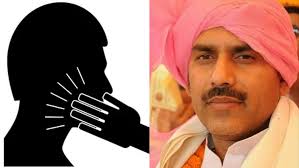
Former minister Krishna Nand Tripathi called the allegations ‘revenge’, said- CCTV footage will reveal the truth. Ranchi: Jharkhand politics has heated up once again. A Dalit police constable has accused former minister of the state and senior Congress leader Krishna Nand Tripathi of assault and using casteist abuses. This incident happened when the convoy of the former minister was stuck in a traffic jam. On the complaint of the victim constable, the police have registered a case and started investigation. What is the whole matter? According to the information received by the police, this incident happened in Latehar at around 1:30 pm. Dalit constable Ravindra Rikhyasan, posted in the personal security squad of former minister Krishna Nand Tripathi, said in his complaint that there was a huge traffic jam on the road due to Karam festival. The former minister’s car also got stuck in this jam. It is alleged that Tripathi, annoyed with the jam, ordered constable Ravindra to get out of the vehicle and clear the way. “As we tried to handle the situation, Netaji (Krishan Nand Tripathi) got out of the vehicle and started abusing us,” Ravindra said in his complaint. The constable also alleged that the former minister insulted him with casteist words like “Adivasi” and “Harijan” and said that he was not fit for the job. Following this, Tripathi also slapped him. Police action A zero FIR has been registered in the Daltonganj town police station in this case. Daltonganj Town police station in-charge Jyoti Lal Rajwar said that a case has been registered against the accused under relevant sections of the Indian Justice Code and the Scheduled Castes and Scheduled Tribes (Prevention of Atrocities) Act, 1989. He also clarified that the case will be transferred to Latehar police for investigation as the incident took place there. Former minister denied the allegations Meanwhile, Krishna Nand Tripathi, former minister of important departments like Rural Development, Labor, Employment and Training and Panchayati Raj, has completely rejected all the allegations against him. He has described this FIR as done out of “revenge”. Tripathi said in his defence, “I just asked my bodyguards to be more vigilant, got the road cleared and then left for the Circuit House. I did not beat or abuse anyone. Everything is clearly visible in the CCTV.” He further said, “When my bodyguards could not get the car out of the jam and I got the road cleared myself within a minute, they felt insulted. That is why they have lodged this FIR.” Police Men’s Association condemned After this incident came to light, the Latehar Police Men’s Association has strongly condemned it. The association has written a letter to the state’s Director General of Police (DGP) and called it an attack on the honor of the uniform. Association president Karan Singh wrote in his letter, “If a leader feels that a bodyguard is unfit for his duty, he should complain about it to senior officials, not attack him. There is clear evidence of the incident in the CCTV footage.” At present, the police have started investigation after hearing the arguments of both the parties. Now everyone’s eyes are on the police investigation and CCTV footage, which will make it clear what the truth is. Rajan Chaudhary Courtesy : Hindi News
Meerut Court: Father murdered after attempting to rape Dalit minor, convict sentenced to life imprisonment

A special court in Meerut has sentenced the accused to life imprisonment and fine in the case of attempting to rape a minor and murder of a Dalit father. Uttar Pradesh: A special (POCSO Act) court in Meerut district has sentenced a 45-year-old man to rigorous life imprisonment for poisoning and killing a Dalit youth. The court gave this verdict in the context of the incident when the accused tried to rape the minor daughter of the deceased in 2011 and the father was killed when he lodged a case against him. According to the prosecution, the deceased was 35 years old and his body was found in a drain in Meerut city on 20 April 2011. This incident took place when a day before, on 19 April 2011, he had lodged a rape case against the accused. ADGC Amit Dhama said that the accused had tried to rape the minor daughter of the deceased that day by taking advantage of her being alone at home. The girl’s parents, who were labourers, were not present at home at that time. After the complaint was lodged, the accused had threatened the victim’s family to withdraw the case. But the very next day, the girl’s father left home for work and a few hours later his body was found in the drain. During the investigation, it became clear that the deceased was addicted to alcohol. The accused called him on the pretext of talking and made him drink alcohol mixed with poison. He died due to consumption of this poisonous liquor. There was no mention of any injury in the post-mortem report, due to which the cause of death could not be ascertained. The body parts were preserved and the Forensic Science Laboratory (FSL) report confirmed that poison was present in the body. Earlier, the accused had been convicted in the rape case and was sentenced to seven years in prison. Now, on Wednesday, the court of Additional District and Sessions Judge Mohammad Aslam Siddiqui convicted him of murder and sentenced him to life imprisonment and a fine of Rs 70,000. The court rejected the mercy plea and remarked that the crime was extremely heinous. The court said, “In such cases, it is the duty of the court to give a harsh punishment considering the gravity of the crime, so that the purpose of the law is fulfilled and the society gets a message that such crimes will not be tolerated.” Rajan Chaudhary Courtesy : Hindi News
‘Development, jobs to be NDA’s poll plank in state’
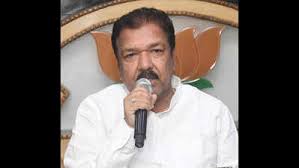
Prime Minister Narendra Modi’s mother will not be a poll issue, BJP state president Dilip Jaiswal tells TOI’s Jainarain Pandey in an exclusive interview. He says development and jobs under the leadership of PM Narendra Modi and CM Nitish Kumar will be the main election plank in Bihar. Excerpts: Will BJP make the abusive language used for PM Modi’s mother an election issue in Bihar? No. The Darbhanga incident from the Congress-RJD stage during the Voter Adhikar Yatra in on Aug 27 has shamed the state. BJP and the NDA will go to the people with the development works and welfare schemes launched under the leadership of PM Narendra Modi and CM Nitish Kumar. Then why was a Bihar bandh called? It was a spontaneous decision taken by the women’s wings of the NDA partners after the PM shared his agony with the Jeevika didis in Bihar. RJD leader Tejashwi Prasad Yadav says the PM was laughing abroad but started crying in India over the Darbhanga incident Tejashwi can never say anything on his own. It’s all scripted and shameful. The controversy would have ended that very day if Rahul Gandhi or Tejashwi had condemned the incident. Which areas of the state, in your view, need more attention before the assembly polls? NDA partners are working together like never before. Even during the Bihar bandh, flags of all NDA partners were seen on the streets. Our assembly-wise workers’ meetings have been a great success. We will connect with every household in the state to highlight what has been done during the NDA regime for women’s empowerment, youth, jobs and employment. The steps taken by the NDA govt have been historic for Bihar. What success mantra did the Union home minister give Bihar BJP core committee members in the Delhi meeting? Every NDA worker should spend at least five days in each village to convey the works of the govt. How will GST rate cuts impact the Bihar polls? It is a slap on the face of opposition leaders like Rahul Gandhi, who called the Indian economy ‘dead’. It is also a strong reply to the US 50% tariff, and PM Modi has shown how Bharat turns every challenge into an opportunity. That’s the beauty of quality leadership in a country like India. The PM is coming again on Sept 15. How are the preparations? He is coming to Bihar for the 10th time in the last one year — after Darbhanga, Jamui, Bhagalpur, Jhanjharpur, Bikramganj, Siwan, Motihari, Gayaji and now Purnia on Sept 15. Each time, he has gifted Bihar schemes and projects worth several crores for the benefit of the people. Over 3 lakh people are expected in Purnia, where 1.5 lakh chairs will be arranged for the audience. Courtesy : TOI Note: This news is originally published on https:/timesofindia.com/bha and is used purely for non-profit/non-commercial purposes, especially human rights.
BJP: Marshals were signalled to assault MLAs
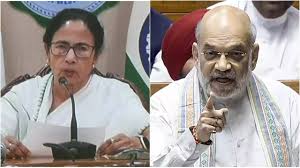
NEW DELHI: BJP on Thursday accused West Bengal chief minister Mamata Banerjee, of unleashing “anarchy” and turning the state assembly into a stage for “hooliganism”. Party spokesperson Gaurav Bhatia alleged that Banerjee had abused constitutional privilege to hurl “derogatory” remarks against Prime Minister Narendra Modi and home minister Amit Shah. Bhatia said the “language of indecency” in Indian politics was first set by Congress neta Rahul Gandhi and is now being carried forward by Banerjee. “Rahul Gandhi began with uncivil and indecent language… now Mamata Anarchist Banerjee is carrying that fire of anarchy forward in Bengal,” he told reporters. He alleged that BJP MLAs, the principal opposition in Bengal, were manhandled on the assembly floor at the chief minister’s behest. “Marshals were signalled to physically assault our legislators. BJP MLAs were beaten, some fainted, sustained injuries and had to be rushed to hospital in ambulances,” Bhatia claimed. The remarks come amid a heated political climate in Bengal. Bhatia demanded Banerjee’s resignation, saying, “She is no longer fit to be chief minister. The people of Bengal will teach her a lesson.” Calling Banerjee a “symbol of jungle raj”, he said, “The one who took oath to protect the Constitution is today tearing it to shreds on live television.” He further accused her of appeasement politics, alleging, “She loves Rohingyas but strikes at an honest Prime Minister. For her, their religion and future vote bank matter more than constitutional propriety.” Courtesy : TOI Note: This news is originally published on https:/timesofindia.com/bha and is used purely for non-profit/non-commercial purposes, especially human rights.
‘Collecting taxes from common people …’: Kharge’s ‘one nation, 9 taxes’ jibe at Centre over GST revamp; questions delay
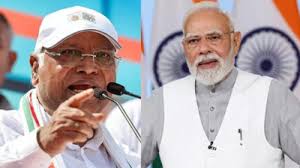
NEW DELHI: Congress on Thursday took a swipe at the Centre, accusing it of “celebrating” the Goods and Services Tax “as if collecting taxes from the common people were some great achievement.” Congress president Mallikarjun Kharge also accused the government of turning the vision of “One Nation, One Tax” into “One Nation, 9 Taxes,” with multiple slabs. — kharge (@kharge) He said that Congress had advocated for GST 2.0 in its 2019 and 2024 manifestos, urging simplification of the complex GST compliance system that had severely affected MSMEs and small businesses. “The Congress Party, in its 2019 and 2024 manifestos, demanded GST 2.0 with a simple and rational tax system. We also called for simplifying the complex GST compliances, which had severely impacted MSMEs and small businesses,” Kharge said. “On 28 February 2005, the Congress-UPA government formally announced GST in the Lok Sabha. In 2011, when the then finance minister Pranab Mukherjee introduced the GST Bill, the BJP opposed it. When Modi was Chief Minister, he vehemently opposed GST. Today, the same BJP government celebrates record GST collections, as if collecting taxes from the common people is some great achievement” he added. ‘They finally have to follow Rahul Gandhi’s advice’ Meanwhile, Congress leader Pawan Khera claimed that the government followed Rahul Gandhi’s advice after eight years. In a social media post on X, Congress leader Pawan Khera pointed to a series of tweets by Rahul, in which he had criticised the previous tax structure by labelling it as “Gabbar Singh tax.” “When they finally have to follow Rahul Gandhi’s advice, why do they take so much time doing that?” Khera asked. The posts, dating back to 2016 and 2017, show leader of opposition in Lok Sabha urging the GST Council to cap the rate at 18% to benefit both industry and consumers, especially the poor. “As the GST Council begins its deliberations today I want to stress again that an 18% cap on the GST rate is in everybody’s interest,” Gandhi had tweeted in 2016. In another post, he called for a simpler GST structure. “India doesn’t need a Gabbar Singh Tax, but a simple GST,” Gandhi tweeted in 2017, stressing Congress’ long-standing demand for a single-rate GST. ‘8 years too late’ Former finance minister P Chidambaram also reacted to the Centre’s latest GST rate cuts, describing them as “8 years too late.” In a post on X, he said the prevailing taxes should not have been introduced in the first place. “The GST rationalisation and the reduction in rates on a range of goods and services are WELCOME but 8 years too late. The current design of GST and the rates prevailing until today ought not to have been introduced in the first place,” Chidambaram said. GST council approves major rate revamp, introduces two-tier structure The latest GST revamp, announced after the 56th GST Council meeting, simplifies the previous four-tier tax system of 5%, 12%, 18% and 28% into a two-rate structure of 5% and 18%. Certain high-end items, including vehicles, tobacco, and cigarettes, will attract a special 40% ‘sin tax.’ Several essential goods will now face 0% or nil tax, aiming to ease the burden on common consumers. The 10.5-hour Council meeting, attended by representatives from the Centre and states, deliberated on potential rate reductions and reclassification of numerous goods and services, marking one of the most comprehensive revisions in recent years. Courtesy : TOI Note: This news is originally published on https:/timesofindia.com/bha and is used purely for non-profit/non-commercial purposes, especially human rights.