
Kharge chides farmer hit by flood, BJP says conduct ‘arrogant’
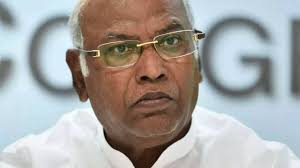
NEW DELHI: BJP and its allies on Monday lashed out at Congress president Mallikarjun Kharge over a viral video purportedly showing his interaction with a distressed farmer in Karnataka’s Kalaburagi, calling his conduct “arrogant” and unbecoming of a senior neta. BJP also criticised Rahul Gandhi over his reported trip abroad, describing him as “a casual politician” and saying it would have been good had the Congress neta visited flood-hit Karnataka and Punjab where farmers are in distress. The clip from Kalaburagi, which has circulated widely on social media, captures Kharge’s conversation with a farmer whose crop was damaged by the recent floods in the region. Slamming Kharge for allegedly chiding a farmer for telling him that he had lost the crop on his four-acre farm in Kalaburagi in Congress-governed Karnataka due to heavy rains, BJP functionary Ravi Shankar Prasad asked, “What kind of arrogance is this?” Kharge told the farmer from his traditional political turf that he himself had suffered damages at his 40-acre farm. Prasad also reminded Gandhi that there is no break in public life. “Best wishes to Rahul Gandhi when he is on vacation. When someone is a casual politician, it is bound to happen – ‘Now I have worked a lot. Let me take a break’. Let me gently remind Rahul Gandhi that there is no break in public life,” Prasad said. Meanwhile, JDS functionary and Union minister H D Kumaraswamy reacted sharply on X, saying, “Respected Mallikarjun Kharge, I was deeply disappointed by your behaviour towards the farmers. From a senior functionary, I certainly did not expect such conduct. If a farmer in distress cannot approach you and share his pain, then who else should he turn to? You are LoP in Rajya Sabha and the President of the AICC. Yet, you completely forgot these responsibilities while speaking!” Courtesy : TOI Note: This news is originally published on https:/timesofindia.com/bha and is used purely for non-profit/non-commercial purposes, especially human rights.
13-year-old Dalit girl allegedly raped, filmed by accused in UP village
In a horrific incident in a village under the Bazar Shukul police station area, a 13-year-old Dalit girl was allegedly raped by a man from her village, who also filmed the assault, police reported on Sunday, September 7, 2025. The accused, now in custody and under interrogation, faces serious charges following the crime that has sparked outrage. According to police, the incident occurred on Friday evening when the accused lured the girl out of her home and assaulted her. He recorded the act and threatened to upload the video online and kill her if she disclosed the incident to anyone. Despite the threats, the traumatized girl confided in her mother upon returning home. Her father promptly lodged a complaint at the Bazar Shukul police station on Saturday, detailing the harrowing ordeal. Station Officer Abhinesh Kumar confirmed that a case has been registered against the accused under relevant sections of the Bharatiya Nyaya Sanhita, the Protection of Children from Sexual Offences (POCSO) Act, and the Scheduled Castes and Scheduled Tribes (Prevention of Atrocities) Act. The police are conducting a thorough investigation to ensure justice for the victim. The case highlights the persistent issue of violence against marginalized communities, particularly Dalit girls, in rural India. Authorities are under pressure to act swiftly, as the incident underscores the urgent need for stronger measures to protect vulnerable children and enforce stringent penalties for such heinous crimes. Courtesy : Muslim Mirror Note: This news is originally published on https:/muslimmirror.com/bha and is used purely for non-profit/non-commercial purposes, especially human rights.
Uttar Pradesh: 19-year-old Dalit woman alleges gang rape in Pratapgarh Gang Rape, raped

In a distressing incident in the Patti area of Pratapgarh district, a 19-year-old Dalit woman, a college student, was allegedly raped by two men on Saturday, September 6, 2025, police reported on Sunday. The assault occurred when the victim visited a village under the Patti police station jurisdiction to collect money from a friend’s acquaintance, according to Additional Superintendent of Police (ASP), East, Shailendra Lal. Based on the victim’s complaint, a case was registered on Saturday evening against the two accused, identified as Aman and his accomplice, under relevant legal provisions, including sections of the Bharatiya Nyaya Sanhita and applicable laws for crimes against Scheduled Castes. The police have launched a manhunt, forming four specialized teams to apprehend the suspects. ASP Lal assured that the accused would be arrested soon, emphasizing the authorities’ commitment to swift justice. This case underscores the ongoing issue of violence against Dalit women in India, raising concerns about safety and systemic discrimination. The police are under pressure to act decisively to ensure accountability and provide support to the victim, as the community demands stringent action against the perpetrators to prevent such heinous crimes. — With Agencies Inputs Courtesy : Muslim Mirror Note: This news is originally published on https:/muslimmirror.com/bha and is used purely for non-profit/non-commercial purposes, especially human rights.
Anticipatory bail in SC/ST Act is not easy! Supreme Court’s latest decision to stop Dalit oppression which is very important for you to know
The court, citing Ram Krishna Balothia vs State of Madhya Pradesh (1995), said that such crimes belong to a special category, which are related to untouchability, so the criminal cannot be given a chance to threaten the victims by granting bail. New Delhi- In a recent important decision, the Supreme Court has overturned the order of the Bombay High Court, taking a tough stand on granting anticipatory bail under the Scheduled Castes and Scheduled Tribes (Prevention of Atrocities) Act, 1989 (SC/ST Act). This decision is very important because it limits the facility of anticipatory bail in cases of casteist oppression against Dalit and tribal communities, thereby strengthening the process of getting justice to the victims and preventing the criminals from threatening or influencing the witnesses. The court clarified that there is a complete ban on anticipatory bail under Section 18 of the SC/ST Act, except in cases where the crime is not proved prima facie. This judgment is a strong step towards social justice, which strengthens the principle of abolition of untouchability under Article 17 of the Constitution. The case pertains to the Paranda police station of Dharashiv district of Maharashtra, where the appellant Kiran, who belongs to the Matang (Mang) Scheduled Caste community, lodged an FIR on November 26, 2024 against the accused Rajkumar Jivraaj Jain and others. The FIR registered offences under Sections 118(1), 115(1), 189(2), 189(4), 190, 191(2), 191(3), 333, 324(4), 76, 351(3) and 352 of the Indian Penal Code (BNS) along with Sections 3(1)(o), 3(1)(r), 3(1)(s), 3(1)(w)(i) of the SC/ST Act. The incident took place on 25 November 2024 at 11 am, a day after the assembly elections, when the accused and their associates reached the appellant’s house and attacked him using casteist slurs. According to the FIR, accused Rajkumar Jain hit the appellant on the head and back with an iron rod, saying “Mangtyan, you have become very arrogant”, causing the appellant to fall down. The accused also hurled casteist slurs at the appellant’s mother Mohini and aunt Rekha, pulled their sarees, assaulted them and threatened to burn down the house. During this, the mother’s one tola gold mangalsutra fell off and household articles were damaged. The appellant’s friend Yashwant Bodre was also beaten up for being from the Ramoshi community and voting against the government. The accused had a petrol bottle in their hand and were threatening to burn down the house. Some people from the village came to intervene, following which the appellant was sent to the hospital and an FIR was registered from there. The judgment is significant as it limits the facility of anticipatory bail in cases of casteist atrocities against Dalit and tribal communities, thereby strengthening the process of access to justice for victims and preventing perpetrators from threatening or influencing witnesses. The incident occurred due to the appellant not voting for the accused’s preferred candidate in the assembly election, which is an offence under Section 3(1)(o) of the SC/ST Act, as it deals with punishing a Scheduled Caste member for voting or not voting. The appellant alleged casteist insult, insult in a public place (Sections 3(1)(r) and 3(1)(s)), and touching of sexual nature against women (Section 3(1)(w)(i)). The accused belong to the Jain community, which is not a Scheduled Caste/Tribe, hence the SC/ST Act applies. Additional Sessions Judge, Paranda rejected the anticipatory bail plea of the accused as prima facie offence was proved, caste certificate confirmed the Scheduled Caste of the appellant and statements of witnesses were available. But the Aurangabad bench of Bombay High Court on 29th April 2025 granted anticipatory bail to the accused in Criminal Appeal No. 201/2025, stating that the case appears to be exaggerated, there are inconsistencies in the statements of witnesses and the incident is motivated by electoral politics. The High Court granted bail terming the nature of injuries as minor. The special leave petition of the appellant was heard in the Supreme Court, where Justice N.V. Anjaria along with Chief Justice B.R. Gavai and Justice K. Vinod Chandran delivered the judgment. The court set aside the High Court order and said that there is a complete bar on anticipatory bail under Section 18 of the SC/ST Act, which prevents the application of Section 438 of the Code of Criminal Procedure (CrPC). Citing earlier judgments such as Vilas Pandurang Pawar v State of Maharashtra (2012), Prithvi Raj Chauhan v Union of India (2020) and Shajan Skaria v State of Kerala (2024), the court clarified that the court has to examine the prima facie offence only on the contents of the FIR and not conduct a detailed analysis of the evidence or a mini trial. Here, it is clear from the FIR that the accused insulted the appellant by using the casteist word “mangtyans”, which happened in public view and was caste-related. The court said that in such cases, the bar can be lifted only as an exception when the offence is not made out prima facie, but here all the elements are present. The State of Maharashtra also opposed the bail of the accused. The judgment strengthens the objective of the SC/ST Act, which is to make the Scheduled Castes and Tribes socio-economically strong and protect them from humiliation. Citing Ram Krishna Balothia vs State of Madhya Pradesh (1995), the court said that such crimes belong to a special category, which are related to untouchability, so the offender cannot be given an opportunity to intimidate the victims by granting bail. Referring to the interpretation of “public view” in cases like Swarn Singh (2008), Hitesh Verma (2020) and Karuppudayar (2025), the court said that the incident outside the appellant’s house falls in public view. The judgment clarified that these comments are prima facie and will not affect the trial. The decision has been welcomed by Dalit rights activists, as it will speed up justice in cases of oppression and avoid political pressure. BANAE National President Dr Nagsen Sonare said, “Anticipatory bail cannot be granted under Section 438 of CrPC as it is prohibited
Kerala: Tribal settlements of Idukki still deprived of basic facilities, warning of election boycott

Tribal settlements of Idukki still away from road and health facilities, angry community decided to boycott elections. Kerala: Ahead of the local body and assembly elections in the state, the lack of basic facilities in the major tribal settlements of Idukki district has once again become a topic of discussion. The biggest concern is that two Muthuvan tribal settlements of Edamalkudi Panchayat and five settlements of Vattavada Panchayat are still completely cut off from road connectivity. A report submitted by the State Special Branch to the Kerala Government states that the resentment of the people is increasing due to the continuous lack of facilities in the Edamalkudi area. Carrying patients on bamboo stretchers Due to lack of road connectivity, patients in areas like Edamalakudi, Swamiyarlakudi, Koodallarkudi, Mele Valsapettikudi, Vayaltharakudi and Parasukkadavukudi have to be carried to the hospital through forests on makeshift stretchers made of bamboo. Recently, an elderly woman was carried to the hospital in Mankulam through dense forests for 10 km in a similar way. A child died on August 21. In another incident, a woman suffering from asthma could not be taken to the Family Health Centre in Societykudi in time, due to which her condition deteriorated and she later lost her life. “The tribals of the district have been demanding basic amenities and road connectivity for a long time, but no concrete steps have been taken so far,” said a tribal member of the Vattavada panchayat. Announcement of boycott of elections In a recent meeting of tribal leaders of two wards of the Vattavada Gram Panchayat, a decision was taken to boycott the upcoming elections. In the meeting of tribal chiefs (Ooru Kootam), it was decided that there will be no participation in the elections. To fill the reserved seats in the Panchayat, political parties need to field candidates from these five settlements, but no one is ready to come forward. Unfulfilled hopes even after 15 years According to the information, the recent death of a five-year-old child in Koodallarkudi settlement of Edamalakudi has shaken the people of the Panchayat. It is noteworthy that in the year 2010, the first tribal Gram Panchayat was formed exclusively for the Muthuvan community. But even after 15 years, the community is struggling for basic facilities. The Intelligence Wing report has recommended the government to intervene immediately and solve the problems. Rajan Chaudhary Courtesy: Hindi News
Reservation for SC/ST/OBC students in private educational institutions under Article 15(5): Bahujan population is 90% but only 0.53% Adivasi, 0.89% Dalit and 11% OBC students reached!
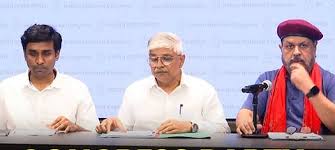
Parliamentary committee’s shocking report: Congress exposed BJP’s 11 years of inaction, said make law immediately! New Delhi- Congress leaders Rajendra Pal Gautam, MLA Dr. Vikrant Bhuria and Anil Jaihind in an aggressive press conference recently made serious allegations against the BJP-led central government for not implementing the constitutional reservation for Scheduled Caste (SC), Scheduled Tribe (ST) and Other Backward Class (OBC) students in private educational institutions. They exposed the ignorance of the rights given under Article 15(5) of the Constitution, which provides for reservation for SC, ST and OBC students in private higher educational institutions. Citing a recent report of a parliamentary committee headed by senior Congress leader Digvijaya Singh, the leaders revealed that only 12% of Bahujan students have access to private institutions. This is a sad fact and underlines the discrimination prevalent in society and the backwardness of underprivileged communities. They attributed this to 11 years of inaction by the BJP, privatisation of education, and rising fees. The Congress demanded immediate legislation, free coaching, scholarships, and anti-discrimination measures to ensure equal opportunities for Bahujan students. Article 15(5) and legal victories, still not implemented AICC SC Department National President Rajendra Pal Gautam at the beginning of the press conference highlighted India’s growing population and the growing demand for higher education. He pointed out that the lack of government educational institutions has led to the rise of private institutions, but the absence of reservation and high fees have made these institutions out of reach for SC, ST and OBC students. Gautam discussed the landmark amendment made by former Prime Minister Manmohan Singh under the UPA-1 government, which added Article 15(5) to the Constitution. This article provides for 27% reservation for OBCs, 15% for SCs, and 7.5% for STs, including in private educational institutions. He referred to three important Supreme Court judgments that upheld this provision. In 2008, in Ashok Kumar Thakur vs Union of India, the Constitutional Bench of the Supreme Court upheld reservation for SC/ST/OBCs in private institutions. This was further strengthened in 2011 by dismissing the challenge of the Indian Medical Association. Finally, in 2014, in Pramati Educational and Cultural Trust vs Union of India, the Supreme Court clearly stated that Article 15(5) is constitutional and does not violate anyone’s fundamental rights. Gautam stressed that the central and state governments can implement it, but no effective law has been made in the 11 years since the BJP came to power in 2014. Gautam also cited the fee structure of private institutions as a hindrance. For example: The annual cost of a B.Pharm degree at BITS Pilani is Rs 11 lakh, which reaches up to Rs 44 lakh for a four-year degree. The tuition fee for a BA programme at OP Jindal Global University for 2025-26 is Rs 6.5 lakh and hostel fee Rs 3.5 lakh, which comes to around Rs 10 lakh per year. Courses like the six-year BA Honours can cost over Rs 60 lakh. Gautam said it is impossible for even Class 1 bureaucrats to afford such fees, depriving SC/ST/OBC students of education. Parliamentary committee report: Only 12% Bahujan representation The leaders cited the report of the standing committee of Parliament headed by Digvijaya Singh, which focused on education, health, women and youth affairs. After extensive interaction with vice-chancellors of universities, higher education officials and leading institutions, the committee presented shocking statistics: the share of SC students in private educational institutions is only 0.89%, ST 0.53%, and OBC 11.16%. This shows only 12% representation for the 90% Bahujan population (SC/ST/OBC), which undermines the principle of equality. All India Adivasi Congress chairman Dr Vikrant Bhuria described education as “lioness’ milk” and quoted Babasaheb Ambedkar’s statement that right to vote and reservation are essential for equality. He accused the BJP of a “planned conspiracy” that includes weakening government institutions, not opening new ones, and closing old ones. This has led to education shifting to the private sector, where reservation does not apply. Bhuria said that 90% of Bahujan society getting only 12% representation is the “biggest irony of democracy”. The committee, which comprised 31 MPs from various parties, unanimously recommended 15% reservation for SCs, 7.5% for STs, and 27% for OBCs in private higher education. Bhuria described Article 15(5) as “revolutionary” but targeted the BJP’s 11 years of inaction, saying the government prioritised corporate interests. He described vote theft, PSU privatisation, and denial of education as a systematic injustice against 90% of the population. The report also mentioned caste-based discrimination in premier institutions, where SC/ST students admitted under reservation quotas face stigma and discrimination from classmates and faculty, which affects their performance and mental health. The committee recommended strict anti-discrimination policies, grievance redressal cells, sensitization programmes, free coaching, bridge courses, and scholarships to prevent dropouts due to financial reasons. The lack of government educational institutions has led to the rise of private institutions, but the lack of reservation and high fees have made these institutions out of reach for SC, ST and OBC students. BJP’s inaction, demands immediate action AICC OBC wing president Anil Jaihind accused Prime Minister Narendra Modi, who claims to be an OBC, of causing more harm than Manusmriti supporters. Chaudhary said that on January 29, 2014, the Supreme Court had upheld the UPA law as constitutional, but the BJP did not take any action on it for 11 years, while EWS reservation was passed in 48 hours. He cited parliamentary data: India has 517 private universities and over 45,000 degree colleges, of which only 21.5% are government (where reservation applies) and 78.5% are private (without reservation). Chaudhary described the last 11 years as the “darkest” for SC/ST/OBCs since Independence, with a return to the Manuwadi system through expensive education and privatisation. He criticised the “Not Found Suitable” (NFS) practice in appointments, where qualified SC/ST/OBC candidates are rejected, and ignoring the OBC creamy layer income limit (Rs 8 lakh since 2017, to be reviewed in 2020). Chaudhary demanded that the vacant seats of non-creamy layer OBCs be given to creamy layer OBCs, as is
Sabrina Carpenter brings transgender rights message to the 2025 MTV VMAs stage

Throughout the show, drag queens carried picket signs promoting trans rights. Messages like “Protect Trans Rights” and “In Trans We Trust” appeared prominently. Singer and songwriter Sabrina Carpenter turned heads at the 2025 MTV Video Music Awards with a debut performance with her song ‘Tears’ to advocate for transgender rights. The performance was inspired by Carpenter’s music video, which features Colman Domingo in drag, and she brought that vision to life on stage. Joining her were some of the biggest names in drag, including Honey Balenciaga, Symone, Dashaun Wesley, Richie Shazam, Jewels Sparkles, Lexi Love, Jonte’ Moaning, and Denali. Male dancers in police uniforms and performers in retro ‘90s streetwear added energy and movement. Throughout the show, drag queens carried picket signs promoting trans rights. Messages like “Protect Trans Rights” and “In Trans We Trust” appeared prominently. Carpenter entered the awards show with nine nominations. Her album ‘Short ’n Sweet’ was in the running for Album of the Year, while her lead single ‘Manchild’ from the album ‘Man’s Best Friend’ received nominations across multiple categories, including Video of the Year, Best Pop, Best Direction, Best Cinematography, Best Editing, Best Visual Effects, and Song of the Summer. She took home Best Album for ‘Short ’n Sweet’ and Best Visual Effects for the ‘Manchild’ video. Fans of Carpenter may remember her first VMA appearance in 2024, when she performed a medley of her hits “Please Please Please,” “Taste,” and “Espresso.” That year, she also celebrated her first VMA win, taking home Song of the Year for “Espresso.” Courtesy : The Statesman Note: This news is originally published on https:/thestatesman.com/bha and is used purely for non-profit/non-commercial purposes, especially human rights.
Rahul’s pro-OBC pitch leaves upper caste Congress leaders uneasy in Magadh region

Gaya: In the 2020 assembly elections, Congress contested five general seats, including Aurangabad, Tekari, Gaya Town, Wazirganj, Hisua and Warisaliganj, in the Magadh division. On all these five seats, Congress fielded upper caste candidates. The five seats were divided between two dominant upper castes in the 3:2 ratio. The strike rate of the party was much lower than alliance partners RJD and CPI-ML. Of the five general seats it contested, the party won two (Aurangabad and Hisua) and lost three. The Left party registered a 100% strike rate as it won both Ghosi and Arwal seats. Ghosi win was significant as it was regarded as the fiefdom of Jagdish Sharma. Things have changed a lot within the Congress in the last five years. In a major strategic shift, leader of opposition in Lok Sabha Rahul Gandhi has taken a distinctly pro-OBC stand with emphasis on caste census and poor representation of OBCs, EBCs in the decision making positions.On account of changed position of the Congress, the upper caste Congress ticket aspirants feel uncomfortable and this was also felt during meets preparatory to the ‘Voter Adhikar Yatra’ where some of them appeared dismayed. The yatra got better traction in areas dominated by the OBCs thereby strengthening the pro-OBC lobby within the Congress, feel observers. According to Ali Hussain, principal of a Gaya-based college, politics is a game of numbers and as such no party can prosper without taking into account the arithmetical realities. Hussain, who has been teaching political science, said in Bihar, politics per se has gone OBC-dalit centric and even BJP has re calibrated its strategy along those lines. Vijai Kumar Mithu, a senior Congress leader of Magadh division and former member of the All India Congress Committee, said Congress all along has accommodated all sections in its fold and comprehensive representation of different section commensurate with their numbers was in the party’s larger interests. In order to be seen walking the talk, Congress has been promoting leaders like Chandrika Yadav, Santosh Kushwaha, Naina Devi, Priye Ranjan, Kailash Pal and Shweta Yadav etc. In 2020, both Congress and BJP-HAM(S) fielded same caste candidates in Aurangabad, Tekari, Wazirganj, Hisua and Warisaliganj. Party insiders believe that the strategy did not yield the desired result and as such things may be different this time. The resignation of Arun Kumar Prasad from the Congress is also being seen in the context of party’s changing social profile where the wings of upper caste leaders are likely to be sufficiently clipped. Prasad told this newspaper that he resigned from the Congress to join the Jan Suraaj as he found it ideologically superior to the Congress. Courtesy : TOI Note: This news is originally published on https:/timesofindia.com/bha and is used purely for non-profit/non-commercial purposes, especially human rights.
Odisha cops serve notice to Rajiv Foundation seeking foreign contribution details
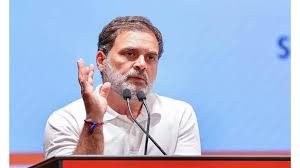
BHUBANESWAR: Police on Sunday served a notice to the Rajiv Gandhi Foundation (RGF), seeking details of its financial records and foreign contributions, in connection with a case registered earlier this year in Jharsuguda against Congress leader Rahul Gandhi for his alleged “anti-national” remarks. Police said notice has been issued under section 94 of BNSS. The foundation director has been summoned by the police as well. Police have sought a range of documents, including year-wise foreign contributions since the foundation’s inception in 1991, details of bank accounts, authorized signatories, names and contacts of auditors, a copy of the FCRA license, and clarifications on specific donations. Jharsuguda police have specifically asked the foundation if it has brought foreign donations from controversial preacher Zakir Naik and the Chinese government. Additionally, an explanation has been sought regarding the alleged diversion of the PM relief fund during the UPA era. “Failure to comply with the notice could result in penal action under Section 210 of the BNSS,” a police officer said. An FIR had been lodged on February 7 against Gandhi in Jharsuguda after his speech at the inauguration of the new Congress headquarters in Delhi on January 15, where he accused the BJP and RSS of capturing national institutions and stated, “We are now fighting the BJP, the RSS, and the Indian State itself”. The complaint was filed by local BJP units and allied organizations, alleging that Gandhi’s remarks incited subversive activities and undermined India’s sovereignty. Inspector General (Northern Range) Himanshu Lal said, “Police are well within their scope to investigate the case. The case is progressing well”. This case is notable as it is one of the first high-profile cases under the BNSS, which replaced the Indian Penal Code in July 2024, marking a significant shift in legal proceedings related to national security and public order. Courtesy : TOI Note: This news is originally published on https:/timesofindia.com/bha and is used purely for non-profit/non-commercial purposes, especially human rights.
Rahul held Voter Adhikar Yatra in Bihar to protect voters’ rights: Congress

Patna: After completing the fortnight-long Voter Adhikar Yatra across 25 districts of Bihar, the Congress on Sunday released a newsletter highlighting leader of opposition in Lok Sabha Rahul Gandhi’s nationwide campaign to “expose vote chori and defend democracy”. The initiative takes on added significance ahead of the Bihar assembly elections, for which both the NDA and the opposition INDIA bloc have mobilised all resources. In an X post, the Congress drew attention to Rahul’s ongoing campaign against “vote theft”, saying that his Voter Adhikar Yatra in Bihar was aimed at safeguarding voters’ rights. “Our campaign against vote theft has exposed how the BJP, in connivance with the Election Commission, is stealing the votes and rigging the elections,” the Congress said, urging people to read the newsletter for further details. Detailing the campaign against electoral manipulation, the newsletter stated that Rahul had, for months, exposed “voter fraud and the ECI’s role in aiding the BJP”. It added that the turning point came when he uncovered over 1 lakh fake votes in Bangalore Central, after which he launched the Voter Adhikar Yatra in Bihar to take the message directly to the people. “What began as the fight of one leader has now grown into a people’s movement to protect our right to vote,” the newsletter claimed, adding that the yatra, highlighting “the disenfranchisement of lakhs of voters through the special intensive revision (SIR)” of electoral rolls, covered 1,300 km across Bihar and included 18 rallies attended by INDIA bloc leaders, such as RJD’s Tejashwi Prasad Yadav, CPI-ML’s Dipankar Bhattacharya and VIP’s Mukesh Sahani. The newsletter also mentioned Rahul hosting a tea party with Bihar residents declared “dead” on the EC’s SIR draft rolls, participating in makhana harvesting with farmers in Purnia, and taking a bullet ride on pillion with his sister Priyanka Gandhi alongside Tejashwi. It further alleged that BJP operatives have been “stealing votes” using five methods – fake and invalid addresses, misuse of Form 6, duplicate voters, bulk voters at a single address and invalid photos. Courtesy : TOI Note: This news is originally published on https:/timesofindia.com/bha and is used purely for non-profit/non-commercial purposes, especially human rights.