
October 2nd Special: Gandhi and Ambedkar’s Clashing Thoughts – Find Out Which Ideas Could Never Be Consensual?
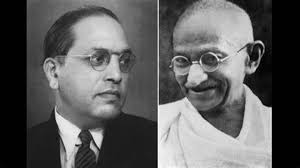
Gandhi and Ambedkar: A Clash of Ideas That Gave a New Direction to Indian Society India’s freedom movement is filled with the ideas and struggles of great leaders. Among them, Mahatma Gandhi and Dr. Bhimrao Ambedkar are two figures whose contributions cannot be forgotten. Gandhiji showed the path to freedom through truth and non-violence. Dr. Ambedkar championed the rights of the weaker sections of society. Both aimed to improve India, but their views differed on many issues. This led to frequent disagreements. Gandhiji is remembered as the “Father of the Nation,” while Dr. Ambedkar is considered the “Father of the Indian Constitution” and the voice of the Dalit community. Their disagreement wasn’t just a personal one; it concerned social order, social justice, and political rights. Today, on October 2nd, as we celebrate Gandhi Jayanti, it’s important to understand the ideas on which Dr. Ambedkar disagreed with Gandhi. Differences on the Caste System Gandhi believed in the fundamental unity of Hindu society. He believed that untouchability and discrimination could be eradicated by reforming Hinduism. Gandhi initiated the Harijan movement and declared that untouchables were also children of God. However, Dr. Ambedkar was not satisfied with this approach. He believed that the caste system was deeply rooted in Hinduism and could not be changed by reforms. Ambedkar wanted complete freedom for Dalits from the caste system. According to him, simply labeling them “Harijans” would not solve the problem. Dalits need equal rights and social justice. Dr. Ambedkar argued that abolishing the caste system was the only solution. Gandhi, on the other hand, emphasized reform and brotherhood. This was a major reason why their paths diverged. Disagreements on Religion and Social Reform Gandhiji sought to bring about social change through religion. For him, Hinduism was a matter of tradition and faith. He carried the messages of the Gita and the Ramayana to the people. He believed that only morality and virtue could reform society. Dr. Ambedkar differed from this thinking. He prioritized reason and social justice. According to him, religion is useful only as long as it promotes equality and freedom. If religion promotes exploitation and discrimination, it should be abandoned. For this reason, he ultimately embraced Buddhism. It is clear here that Gandhiji favored religious reform, while Ambedkar believed in pursuing a religiously distinct path. Untouchability and the Term Harijan Gandhiji began calling the Dalit community “Harijan,” meaning people of God. His intention was to show respect. However, Dr. Ambedkar did not consider this a real solution. He argued that simply changing the name would not solve the problem. Dalits need social, economic, and political equality. Ambedkar wanted Dalits to have the right to their own identity. He considered the term “Harijan” a patronizing approach. It seemed to show pity rather than eliminate discrimination. This very idea led to a deep disagreement between the two. Political Rights and Separate Electorates The biggest conflict between Gandhiji and Dr. Ambedkar occurred in 1932. This is known as the Poona Pact. The British government proposed giving Dalits separate electorates, meaning they could choose their own representatives. Ambedkar was in favor of this decision. He believed that separate representation would ensure the voice of Dalits was heard in politics. However, Gandhiji was against this decision. He felt that it would divide Hindu society. In protest, Gandhiji went on a hunger strike. A compromise was reached with great difficulty. Under the Poona Pact, Dalits were given reserved seats, but not separate electorates. Dr. Ambedkar was unhappy with this compromise, but was forced to accept it. This incident deepened the differences between the two leaders. Differences on Economic Outlook Gandhi believed in simplicity and village self-rule. He believed that if villages were self-reliant, the country would become strong. He did not support big industries. Dr. Ambedkar’s thinking was completely different. He believed that only modern industry and urbanization would lead to social development. According to him, caste-based exploitation and backwardness were only strengthened in villages. Therefore, he emphasized industry, education, and urban infrastructure. Thus, their economic outlook also differed. Differences on the Importance of Education Gandhi valued the spinning wheel, handicrafts, and vocational education. He believed that rural craftsmanship and labor would create a self-reliant society. Ambedkar believed that higher education was the most powerful weapon for achieving social equality for Dalits and backward classes. He advocated, “Educate, organize, and fight.” He wanted the poor and oppressed to rise above modern education. Here too, there was a significant difference in their perspectives. Non-violence vs. Struggle Gandhi’s entire political landscape was based on non-violence and Satyagraha. He believed that only moral strength could change those who perpetrate injustice. But Ambedkar’s thinking was realistic. He believed that eliminating oppression and exploitation through non-violence alone was difficult. Organized struggle for rights was essential. Therefore, Ambedkar created social and political movements. This difference is clearly reflected in their perspectives. Differences on the Definition of Equality Gandhi’s goal was to establish harmony and brotherhood in society. He considered freedom from discrimination a major achievement. For Ambedkar, true equality meant equal participation in education, employment, and politics. He would only be satisfied if the Dalit community received rights and opportunities. Merely demonstrating solidarity would not achieve this objective. What was the outcome of these disagreements? Mahatma Gandhi and Dr. Ambedkar disagreed on many issues. But these disagreements were not detrimental to India. Rather, they strengthened democracy. Gandhiji showed the path of non-violence, morality, and reform. Dr. Ambedkar fought for rights, equality, and justice. Today, independent India stands on a balanced framework because of these two. On one hand, Gandhiji’s spiritual and moral ideology, on the other, Ambedkar’s approach based on logic and justice. The contributions of both are invaluable to Indian society. Remembering Gandhiji on October 2nd, we must also understand the weaknesses that a great man like Dr. Ambedkar pointed out. Disagreement is the true strength of democracy. This legacy of Gandhi and Ambedkar teaches us that despite differing opinions, national interest must be paramount. Rajan Chaudhary Courtesy: Hindi News
Two Dalit Elders Assaulted for Not Greeting Attackers with ‘Ram-Ram’ in UP’s Banda
In Jabrapur village (Fatehganj police station), two Scheduled Caste elders, Bhagat Verma (60) and Kallu Shriwas (70), were attacked on Tuesday evening by a group of people using sticks and a knife. The assault reportedly began after the victims did not stand up or greet the attackers with “Ram-Ram,” according to the allegations. The attackers allegedly used caste-based abuses and looted Rs 500 from one of the elders. The incident occurred while the victims were working in their fields. Bhagat was beaten with sticks, and Kallu was stabbed when he tried to intervene. Villagers nearby did not intervene, and the attackers fled after threatening the victims. Bhagat’s son, Gangaram, lodged a police complaint. Police have registered the case under assault and the Scheduled Castes and Scheduled Tribes (Prevention of Atrocities) Act. CO Praveen Kumar, however, suggested that the complainants may have exaggerated the involvement of the attackers, claiming links to the deceased criminal Ambika Patel alias Thokia, whose gang is reportedly no longer active. The case remains under investigation. Courtesy : TOP Note: This news is originally published on https:/theobserverpost.com/bha and is used purely for non-profit/non-commercial purposes, especially human rights
Azam Khan and Rahul Gandhi should be booked under the NSA… Why did Minister Ravindra Jaiswal call them traitors?
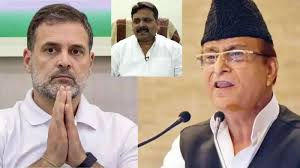
Independent Charge Minister of State in Uttar Pradesh, Ravindra Jaiswal, held a meeting with administrative officials in Ghazipur. During the meeting, he made a scathing statement against Rahul Gandhi and Azam Khan. Rahul Gandhi and Azam Khan, UP Politics Ghazipur: Ravindra Jaiswal, Minister of State in charge of the Stamps, Court Fees, and Registration Department of Uttar Pradesh, held a meeting with administrative officials in Ghazipur. He reviewed development work and law and order in the district during the meeting, held at the Public Works Department guest house. The minister directed officials to accelerate Mission Shakti 5.0, in accordance with Chief Minister Yogi Adityanath’s vision, to promote the safety, protection, respect, and awareness of women and girls. He also emphasized the need to accelerate development work and maintain law and order. During his media interaction, he launched a political attack on Azam Khan and other opposition figures. Speaking to the media, Jaiswal sharply rebutted Azam Khan’s statement after his release from jail. Without naming anyone, he said that those who have just been released from jail spread poison in society. Strict action should be taken against those who spoil the atmosphere of the country. He advocated imposing the NSA on those who spread communalism and casteism, saying that no one has the right to spoil the atmosphere of society. Referring to the Bareilly riots, Ravindra Jaiswal said that this is Yogi Adityanath’s government. Those who create terrorism and destroy the atmosphere will not be spared. Ignorant people forget, but strict action reminds them. Taking a dig at Rahul Gandhi’s foreign tour and his statement on Operation Sindoor, Ravindra Jaiswal said that anyone who commented on Operation Sindoor is a traitor. If he had his way, NSA should be imposed on such people too. Referring to the brave Abdul Hamid of Ghazipur, he said that we should talk about the true sons of the country. Edited by: Dhirendra Singh About the Author Dhirendra Singh is a senior journalist at Navbharat Times Online. He covers politics, crime, governance, and other issues. He also has experience in ground reporting in Uttar Pradesh, Delhi, and Jammu and Kashmir. He has nearly 11 years of experience in journalism, starting his career in Delhi. Courtesy: Hindi News
Mumbai Congress minority cell vice-chairman quits party, joins Ajit Pawar-led NCP
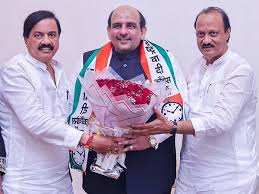
Mumbai: Congress minority cell (Mumbai) vice-chairman Haji Mudassar Patel quit the party and joined the Ajit Pawar-led Nationalist Congress Party (NCP) on Tuesday. He had joined the Congress in 1995 as a youth activist. Patel, who was close to many past and present senior Congress leaders including Ahmed Patel, Ghulam Nabi Azad, Vilasrao Deshmukh, Prithviraj Chavan and Sushilkumar Shinde, said he was upset with the way the party leadership treated junior leaders. He alleged that Lok Sabha MP Rahul Gandhi has no time for genuine party workers. “This happened with Himanta Sarma Biswa, Ghulam Nabi Azad and many others. Now, I will put all my efforts behind NCP and strengthen the party in Mumbai and Maharashtra,” he said. Praising Ajit Pawar, Patel called him a visionary leader of Maharashtra who believes in action. “I truly trust his leadership. Under him, the minority community in the state will progress. He is genuinely concerned about our issues and problems, and that gives me confidence in the future,” Patel said. Courtesy : TOI Note: This news is originally published on https:/timesofindia.com/bha and is used purely for non-profit/non-commercial purposes, especially human rights
Gujarat Man arrested for `illegally converting’ people from Dalit tribal communities

Nadiad, A man has been arrested in Gujarat’s Nadiad town for allegedly converting people from the Dalit and tribal communities to Christianity by offering inducements, police said. Steven Macwan, the accused, was held on September 28 after he was allegedly found attempting to convert 59 persons including nine minors at a seminar, the Kheda police said. He was allegedly involved in these activities for the last three years, and received funds from foreign nationals, police said, adding that a local court remanded him in police custody for seven days. “Investigation is ongoing to determine whether the funds provided by foreign nationals were linked to any foreign organisation,” the police release said. Macwan traveled to other parts of Gujarat, the country and even neighboring Nepal to carry out his activities, it claimed. He was booked under the Gujarat Freedom of Religion (Amendment) Act dealing with conversion through fraud, force, or misrepresentation and `not obtaining prior written permission from the district magistrate for conducting religious conversion’, and relevant sections of the Bharatiya Nyaya Sanhita (BNS). The trust the accused was linked to — Restoration Revival Trust — is also under the police’s scanner. Macwan’s bank account showed transactions of around Rs 1.34 crore in the last three years, and involvement of donors from abroad was also revealed, police said. Of those present at the seminar in Nadiad, the nine minors were shifted to a child protection home, the police said, claiming that one of the girls, belonging to a Scheduled Caste, was baptised at the program without her father’s consent. (This story has not been edited by THE WEEK and is auto-generated from PTI) Courtesy : The Week Note: This news is originally published on https:/theweek.com/bha and is used purely for non-profit/non-commercial purposes, especially human rights
Dalit Girl Gangraped In Chittoor By Men Posing As Forest Officials; Two Arrested, One On The Run
The three men were identified by the police after a group of people convinced the girl’s parents to lodge a complaint. Police arrested two men, who posing as forest department officials gangraped a minor girl in Andhra Pradesh’s Chittoor last week, on Tuesday and has launched a manhunt for another. The incident has led to a political controversy in the state after the Telugu Desam Party (TDP) claimed that the accused are members of the Yuvajana Sramika Rythu Congress Party (YSRCP). The YSRCP has claimed instead that the accused are close to the TDP. The Hindu, which first reported that the accused posed as forest officials in a bid to commit the crime, said in their report that the three men were loan recovery agents. They had first apprehended her and her friend and snatched her gold chain. The newspaper also identified the minor girl as a member of the Dalit community. Both of them had visited the Nagara Vanam recreation park located near a forest area at Murakambattu locality on the outskirts of Chittoor on September 25. Chittoor Deputy Superintendent of Police T. Sainath told the newspaper that the Taluk police registered an FIR on September 29 night based on information provided by the girl’s friend. He added that the victim’s family was initially hesitant to file a complaint, but a special team located them and persuaded them to seek justice. Sources told News18 that M. Mahesh (21), P. Kishore (31) and J. Hemanth Prasad (27), all residents of Chittoor, were identified by the police. Two of the accused, Kishore and Mahesh, have been taken into custody, while a manhunt is underway to trace the third accused, Hemanth. The minor girl’s friend was also thrashed by the trio. Responding to claims that the accused may have recorded video footage of the crime, DSP Sainath told the newspaper that the matter is under investigation and the facts will be clarified in due course. The trio has been booked under the POCSO Act, the SC/ST (Prevention of Atrocities) Act, and other relevant provisions of the Bharatiya Nyaya Sanhita (BNS). Police added that Mahesh and Kishore are married and have children. Curated By : Shankhyaneel Sarkar Courtesy : News18 Note: This news is originally published on https:/news18.com/bha and is used purely for non-profit/non-commercial purposes, especially human rights
Jat-OBC duo replaces Jat-Dalit leadership in Haryana – Congress’s big bet
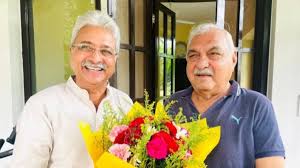
For the first time in 18 years, the Haryana Congress has excluded Dalits from its leadership, raising questions about Rahul Gandhi’s vision of ‘social justice’. Gurugram: The Haryana Congress has made a major change by appointing Bhupinder Singh Hooda as the leader of the Congress Legislative Party (CLP) and Rao Narendra Singh as the president of the Haryana Pradesh Congress Committee (HPCC). Until now, the party’s top positions were held by Jat-Dalit leaders, but this time, a Jat-OBC leadership duo has emerged. For the first time in nearly two decades—more precisely, 18 years—there will be no Dalit face in the Haryana Congress leadership. Since 2007, the positions of Leader of the Opposition/Chief Minister and State President have been held by Jat-Dalit duos. Before the 2024 assembly elections, the Congress had expressed confidence in the Jat-Dalit duo of Hooda and Uday Bhan. The party had hoped to return to power after 10 years in opposition, but the result surprised not only the Haryana Congress but also the high command. The party then took almost a year to appoint new leaders to both positions. The new Jat-OBC leadership was announced on Monday. The Jat-Dalit alliance in the Haryana Congress began on August 7, 2007, when Phoolchand Mulana was appointed state president. The post fell vacant after Bhajan Lal’s resignation in 2006. In 2007, Bhajan Lal formed his own party, the Haryana Janhit Congress. Hooda remained CLP leader and Chief Minister during Mulana’s tenure, a position he held until October 2014. Following this, on February 14, 2014, the Congress appointed Sirsa MP and Dalit leader Ashok Tanwar as state president in Mulana’s place. Tanwar’s tenure lasted 5 years and 202 days. After Hooda stepped down as CLP leader in 2014, Jat leader Kiran Chaudhary held the position from 2014 to 2019, maintaining the Jat-Dalit alliance. Then, on September 4, 2019, Dalit leader Kumari Selja replaced Tanwar, and Hooda became CLP leader and Leader of the Opposition in the Assembly elections held that year. Thus, the Jat-Dalit alliance continued. On April 27, 2022, Dalit leader Uday Bhan replaced Selja, and this alliance continued until the 2024 Lok Sabha and Assembly elections. According to data from the Centre for the Study of Democratic Societies (CSDS)-Lokniti, Haryana’s Scheduled Caste voters were divided between the BJP (40%) and the Congress (42%) in 2024. Of the 17 SC-reserved seats in the Assembly elections, the BJP won eight, while the Congress secured nine. Congress performed better in the Lok Sabha elections held this year. It countered the BJP’s “400 plus” slogan with the Constitution being in danger, garnering 68% of the Dalit vote. The BJP received only 24% of the Dalit vote. But after the Lok Sabha elections, the BJP government attempted to woo the poorest sections, particularly the Valmiki community, by creating sub-categories of Dalits. This severely challenged the Congress’s Dalit vote bank in the assembly elections. Dalits, who constitute 20-21% of the state’s population, have been a key pillar of Congress politics, but cracks are now appearing. Dalits are missing from the Haryana Congress leadership. This is the first time in 47 years that a Jat-OBC alliance has formed a top Congress party. This formula last operated from December 1972 to July 1977. At that time, OBC leader Rao Nihal Singh was the state president, and Jat leader Bansilal was the CLP leader. Bansilal held this position from 1968 to 1975. This year, for the first time, the Haryana Congress will have an OBC leader as its state president. However, the Congress party has never had an OBC Chief Minister. In 1967, Rao Birendra Singh served as Chief Minister for 241 days, representing his own “Vishal Haryana Party.” This decision by the Congress completely excludes Dalits from top party positions. Currently, no party in Haryana has a Dalit leader in a top position. The formation of a Jat-OBC alliance in the Haryana Congress is also surprising because Rahul Gandhi, the Leader of the Opposition in the Lok Sabha, has consistently advocated for the promotion of Dalit leaders since entering politics. In 2010, he visited Mirchpur, where Dalits were attacked by the Jat community. At that time, Bhupinder Singh Hooda was the Congress Chief Minister, and Rahul’s visit made him uncomfortable. Political analyst Jyoti Mishra, an assistant professor of political science at Amity University, Mohali, told ThePrint that the Congress high command, by appointing Rao Narendra Singh as HPCC president, has adopted the BJP’s line of OBC politics, but perhaps underestimated its potential consequences. Mishra said, “This decision cuts the Dalit thread within the party that Rahul Gandhi has painstakingly woven over the years. Even before 2007, the Dalit share was very low.” Before Phoolchand Mulana became state president on August 27, 2007, the Congress had only one Dalit president—Kumari Selja’s father, Dalbir Singh, who held the post for 220 days from November 3, 1979, to June 10, 1980. No Dalit has ever become the Chief Minister of Haryana. Political analyst Kushal Pal, principal of Indira Gandhi National College, Ladwa, told ThePrint that while the decision to appoint Rao Narendra Singh as president may seem like a lesson from the BJP, it was also a compulsion for the Congress as the party’s OBC vote bank has almost vanished. Pal said, “Due to the distance from the OBC community—Yadav, Gujjar, Saini, Kamboj—the Congress concentrated on southern Haryana, namely Gurugram, Faridabad, It has almost completely lost its base in Palwal, Rewari, and Mahendragarh. Nuh is the only district where the party can win, and that too because Meo Muslims do not vote for the BJP.” According to Pal, the coronation of Rao Narendra Singh will also provide personal benefits to Hooda. The Kosli assembly constituency falls within the Rohtak Lok Sabha constituency held by his son, Deepender Singh Hooda. Rao Narendra Singh’s Ahir community has a significant number of voters here. Sushil Manav Courtesy: Hindi News
A 12-year-old Dalit boy was locked in a cowshed, then news of his death surfaced… Major questions raised about the silence of political parties!

The Dalit Shoshan Mukti Manch raised serious questions about the silence of the government and political parties, warning of a major movement if the culprits are not immediately arrested. Shimla: The tragic incident of caste-based harassment of a 12-year-old Dalit boy in Limbara village, Rohru, has spread like wildfire throughout the region. The boy was allegedly locked in a cowshed, after which he took his own life by consuming poison. The Dalit Shoshan Mukti Manch has expressed strong objection to this serious incident and demanded immediate and strict action against the culprits. The Dalit Shoshan Mukti Manch strongly condemned the incident and said that the accused should be immediately arrested and the strictest possible action should be taken against them under the Scheduled Castes/Scheduled Tribes (Prevention of Atrocities) Act (SC/ST Act). The Manch also expressed concern about the safety of the victim’s family. They demanded that the victim’s family be given adequate compensation and full protection, so that they are not pressured to withdraw the case or tamper with evidence. Questioning the government’s attitude, the forum stated that the government’s lack of will to effectively implement the SC/ST Act is contributing to the rise in incidents of caste-based atrocities in the state. The forum also expressed deep disappointment over the silence of major political parties like the Congress and BJP on this issue. The forum believes that these parties prioritize vote bank politics over social justice. Suggesting a concrete solution to prevent caste-based atrocities, the forum said that just as awareness campaigns are run against smoking, a comprehensive campaign needs to be launched about the provisions of the SC/ST Act. Jagat Ram, state convener of the Dalit Shoshan Mukti Manch, said, “It is the need of the hour to protect the rights of Dalits and stop their exploitation. We want to ensure that those who commit caste-based atrocities are brought to justice.” He also announced that the Manch would launch a massive mass movement against the increasing caste-based incidents and to uphold the Constitution. Rajan Chaudhary Courtesy: Hindi News
“Gay grooming halftime show”: Jason Whitlock claims NFL is promoting demonic worship and pushing transgender agenda

The NFL’s announcement that Bad Bunny will headline the 2026 Super Bowl halftime show has triggered an explosive response from former sports columnist Jason Whitlock. Known for his outspoken conservative views, Whitlock accused commissioner Roger Goodell and the league of openly rejecting Christianity while pushing cultural agendas that clash with faith-based values. Jason Whitlock accuses NFL of targeting Christian fans with Bad Bunny choice Speaking on his show Fearless, Jason Whitlock didn’t hold back. “The National Football League despises Jesus, Christ and Christianity and Christian values,” he said, adding that the league was using the halftime stage as “a tool to promote demonic worship, demonic energy, gayness, transgenderism, anything that defiles Jesus Christ.” His fiery remarks came just hours after the NFL confirmed Bad Bunny would perform at Levi’s Stadium in Santa Clara, California. For Whitlock, the decision was not simply about entertainment—it was, in his view, a calculated cultural signal. He questioned, “Need to ask Roger Goodell, how far is this going to go? Will Satan personally receive an invitation to perform at halftime next year?” The criticism taps into an ongoing clash between traditionalist fans and the NFL’s push toward diverse, globally minded halftime productions. With Roc Nation and Apple Music producing the show, the league has emphasized inclusion and cultural reach. But for critics like Whitlock, those choices represent a sharp break from the values they believe football once upheld. Call for boycott and church-led protests against the Super Bowl Whitlock went beyond criticism and called on Christian groups to take action. “We can make the NFL reverse course on this decision and or pay a price for this decision,” he said, urging churches to organize Sunday night worship services instead of tuning into the game. “There’s no way in heck I’m watching this Super Bowl not with this Bad Bunny gay grooming halftime show.” — PopBase (@PopBase) While Whitlock’s words reflect one end of the spectrum, others in the entertainment world have embraced the decision. Former halftime performers like Bruno Mars, Shakira, and Jennifer Lopez have voiced support for Bad Bunny, who is set to become the first solo Spanish-language artist to headline the event. The backlash highlights the cultural tug-of-war that continues to play out on one of the world’s biggest stages. For the NFL, the halftime show remains a chance to capture global audiences. For Whitlock and his followers, however, it’s another sign that the league is drifting away from the values they once held dear. Courtesy : TOI Note: This news is originally published on https:/timesofindia.com/bha and is used purely for non-profit/non-commercial purposes, especially human rights
Why did Rahul Gandhi suddenly leave for South America before the Bihar elections? BJP questions secrecy
Bihar Election 2025: The BJP has questioned Rahul Gandhi’s sudden departure for a four-nation trip to South America and the secrecy surrounding his schedule. The opposition has dismissed the BJP’s allegations as baseless. Patna: With just days left for the announcement of the Bihar Assembly elections, Congress MP and Leader of the Opposition (LoP) in the Lok Sabha, Rahul Gandhi, has embarked on a trip to South America. Why did Rahul Gandhi leave the heat of Bihar and head to South America just before the elections? On Tuesday, the Bharatiya Janata Party (BJP) questioned his trip, claiming that Rahul Gandhi was “missing.” The BJP accused Rahul Gandhi of maintaining excessive secrecy regarding his trip. However, opposition parties have defended Rahul Gandhi, calling the BJP’s allegations politically motivated and baseless. According to the Congress, Rahul Gandhi will meet leaders, university students, and members of the business community in the four countries during his trip. BJP leader Tuhin Sinha questioned the purpose and secrecy of Rahul Gandhi’s visit. He said, “Rahul Gandhi is a strange leader. He travels to South America to celebrate Navratri instead of participating in the Navratri pujas taking place in the country. If this trip is indeed an official visit, as Congress spokesperson Pawan Khera has claimed, then why the need for so much secrecy? Why hasn’t he shared his South America itinerary yet?” Calling Rahul Gandhi ‘missing’ will create a false impression The opposition immediately reacted to these comments by the BJP and defended the opposition leader. Shiv Sena (UBT) MP Priyanka Chaturvedi rejected the BJP’s claim that Rahul Gandhi is ‘missing.’ She said, “I think it’s wrong to say he’s missing. It’s not right to use the BJP’s narrative on this issue. The Congress has confirmed through its official spokesperson that he is meeting people in South America. Calling him missing will only create a false impression among the public.” Congress leader Rajesh Thakur also defended Rahul Gandhi’s visit. He compared his actions to those of Prime Minister Narendra Modi. Rajesh Thakur said, “He is not shameless like the Prime Minister, who is always focused on elections. Rahul Gandhi goes abroad to meet students and citizens of the country. He engages in meaningful conversations. This is not like Modi, who rushes to election sites for photo ops. BJP leaders are nervous. Their own members, Dilip Jaiswal, Sanjay Jaiswal, and Ashok Chaudhary, are under investigation. Their secrets are being exposed. Therefore, they are trying to divert attention by targeting Rahul Gandhi.” CPI-M called BJP’s comments foolish CPI-M leader Hannan Mollah called the BJP’s comments “foolish.” He said, “Rahul Gandhi’s foreign trip has nothing to do with the Bihar elections. He has been touring Bihar for a long time. He raised important issues like vote rigging and the Nitish Kumar government’s failures. I don’t think the BJP’s criticism should be taken seriously. Those comments are foolish.” Hannan Mollah completely rejected the BJP’s allegations. Rashtriya Janata Dal (RLD) leader Maluk Nagar also reacted to the issue. He said, “When elections are near and leaders travel abroad, they should consider how it affects the perception of the alliance. Congress is the largest party. Rahul Gandhi is its biggest leader. Therefore, these decisions should be carefully considered.” Maluk Nagar questioned the timing of Rahul Gandhi’s trip, but also acknowledged the importance of the Congress and Rahul Gandhi. Rahul Gandhi’s trip to South America was announced on Saturday by Pawan Khera, head of the Congress’s media and publicity department. However, he did not disclose the specific countries Rahul Gandhi will visit. Rahul will meet leaders, students, and business communities in four countries. Pawan Khera posted on X: “Lok Sabha Leader of the Opposition Rahul Gandhi has embarked on a trip to South America. He will interact with leaders, university students, and members of the business community in four countries.” According to the Congress, this is Rahul Gandhi’s first foreign trip in September. The trip aims to deepen democratic, trade, and strategic ties. It builds on historic India-South America cooperation. It also strengthens solidarity among countries in the Global South. During his visit to Brazil and Colombia, Rahul Gandhi is expected to meet university students. He will also hold discussions with presidents and senior leaders to strengthen democratic and strategic ties. The party also stated that Gandhi will interact with business communities to explore new opportunities. This is especially important as India seeks to diversify trade and partnerships amid US tariffs. (Input from IANS) Curated by: Suryakant Pathak About the Author Suryakant Pathak is a consultant at Navbharat Times Online. He has been a journalist for 31 years. He writes news, analysis, and blogs on India’s international relations and political and social developments in India and the world. He began his career as a reporter at Dainik Bhaskar in 1995. Courtesy: Hindi News