
Congress Says Rahul Gandhi Condemns Dalit Youth lynching In Raebareli
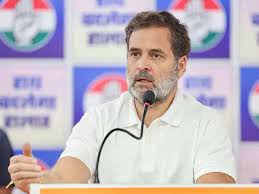
In the post, Khera said that Rahul Gandhi has also expressed his profound concern over the dangerous normalisation of lynching in India, vowing that such violent elements must face their legal end. Congress leader Rahul Gandhi spoke to the father and brother of the Dalit youth who was lynched in Raibareili. In the post, Khera said that Rahul Gandhi has also expressed his profound concern over the dangerous normalisation of lynching in India, vowing that such violent elements must face their legal end. Police in Raebareli arrested five men on Saturday for allegedly lynching Hariom after mistaking him for a drone thief. Congress leader Rahul Gandhi spoke to the father and brother of the Dalit youth who was lynched in Raibareili, AICC media and publicity department head Pawan Khera has said. In a post on X on Sunday, Khera said the horrific lynching is both heartbreaking and enraging. “In his final moments, as he was being mercilessly beaten with sticks and belts, the deceased young man remembered his last hope – Shri Rahul Gandhi,” he said. “For Rahul ji, who represents Raebareli in Parliament and considers its people his family, this tragedy is deeply wounding. He has personally spoken to the father and brother of the deceased and stands in complete solidarity with them in this hour of unbearable grief,” Khera said. In the post, Khera said that Rahul Gandhi has also expressed his profound concern over the dangerous normalisation of lynching in India, vowing that such violent elements must face their legal end. “Justice must be served,” the Congress leader said. Congress spokesperson Shama Mohamed stated that she saw the video and “When he (Dalit youth) repeatedly said ‘Rahul Gandhi, Rahul Gandhi’, those criminals claimed they were supporters of Yogi. This is what the double engine of Yogi and Modi has done in Uttar Pradesh. Their politics of hate is taking the lives of Dalits and the marginalised.” “Muslims are under attack, women are unsafe, and Dalits and OBCs are being targeted — no one is safe under the BJP government anywhere,” she added. Police in Raebareli arrested five men on Saturday for allegedly lynching Hariom after mistaking him for a drone thief. Police have said that Hariom was reportedly mentally unstable. He was walking to his in-laws’ house in Dandepur Jamunapur when a mob surrounded him and accused him of being a member of a gang marking houses with drones for theft. He was beaten with belts and sticks and died soon after. Curated by : Abhijay vaish Courtesy : Outlook India Note: This news is originally published on https:/outlookindia.com/bha and is used purely for non-profit/non-commercial purposes, especially human rights
Dalit Man Brutally Lynched In Raebareli After Being Mistaken For Thief, Sparks Outrage Across Uttar Pradesh
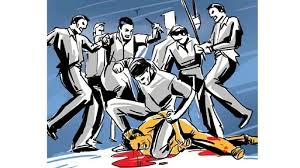
According to his family, he was on his way to his in-laws’ house in Dandepur Jamunapur when a mob surrounded him and began thrashing him, suspecting him to be a drone thief. Raebareli: A Dalit man was brutally lynched in Uttar Pradesh’s Raebareli after being mistaken for a thief, sparking outrage and political uproar across the state. Police have arrested five people in connection with the incident so far. The victim, identified as Hariom, was allegedly beaten to death with sticks and belts by a group of locals. According to his family, he was on his way to his in-laws’ house in Dandepur Jamunapur when a mob surrounded him and began thrashing him, suspecting him to be a drone thief. Raebareli ASP Sanjeev Kumar Sinha confirmed that a case has been registered and an investigation is underway. “In the Unchahar police station area, a case has been filed immediately, and five people have been sent to jail in connection with the case of a man being beaten to death by some people who mistook him for a thief. The remaining accused will soon be identified and arrested, and efforts are underway to apprehend them,” he said. Sinha also informed that three police officials, including a sub-inspector, have been suspended for negligence. Hariom’s wife, Pinki, demanded justice for her husband’s killing. The couple has a four-year-old daughter. “They caught him and beat him to death. The accused should be punished in the same way my husband was killed. I want justice from the government,” she told IANS. Hariom’s father also demanded the death penalty for the accused and called for bulldozer action. “My son was murdered. We received the information on October 2. We demand that the killers be given the death penalty and their houses be demolished with bulldozers,” he said. The incident has triggered a sharp political reaction, with Opposition parties accusing the BJP-led Uttar Pradesh government of failing to ensure the safety of Dalits and marginalised communities. The government, however, has assured that strict action will be taken against those responsible. Deputy Chief Minister Brajesh Pathak, speaking to IANS, said, “This is a very tragic incident, and I strongly condemn it. Strictest action will be taken against all those found guilty. If any responsible police officers are found negligent, strict action will be taken against them as well.” (Except for the headline, this article has not been edited by FPJ’s editorial team and auto-generated from an agency feed.) Courtesy : TFPJ Note: This news is originally published on https:/thefreepressjournal.com/bha and is used purely for non-profit/non-commercial purposes, especially human rights
Police conduct counselling for transgender community
Ongole: Prakasam district police have conducted special counselling sessions for the transgender community in Ongole’s Indirammagari Colony and Islampet areas under the supervision of Women’s Police Station Inspector P Sudhakar. The police advised transgender individuals that stopping vehicles on national highways or main roads to seek money and harassing the public is illegal. They emphasised that suddenly halting vehicles creates accident risks for following traffic, and such actions must be avoided. They warned against harassing, threatening, or intimidating people for money, stating that legal action would be taken against such behaviour. Instead, they encouraged the community to utilise government schemes and opportunities for self-employment to lead dignified lives. Police assured the transgender community of full departmental support in bringing positive social change. Meanwhile, the department has also conducted searches at firecracker agents and used drone cameras at village outskirts, fields, and hill areas to identify illegal activities under various police station limits in the district. The police warned the firecracker shops that unauthorised sales won’t be tolerated, filed cases against drivers under the influence of alcohol, and arrested 55 rummy players at nine locations. The police requested that the public call 112 or 9121102266 to report information about illegal activities anonymously. Courtesy : THI Note: This news is originally published on https:/thehansindia.com/bha and is used purely for non-profit/non-commercial purposes, especially human rights
‘Show me one LoP who … ‘: Kiren Rijiju slams Rahul Gandhi’s remarks in Colombia; rebuts Congress
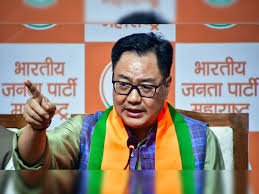
NEW DELHI: Union minister Kiren Rijiju on Monday accused Congress leader Rahul Gandhi of resorting to the constant “India-shaming & India-bashing” statements, saying “we are worried” about his remarks abroad. Rijiju said he didn’t want to comment on the Congress scion’s personal visits, but his remarks abroad “against India’s interest” as the Lok Sabha leader of opposition are “worrying”. “Tell me one Leader of Opposition who spoke against India’s interest in a foreign country. I don’t want to comment about Rahul Gandhi Ji’s regular personal trip abroad. But as leader of opposition, we are worried due to his constant India-shaming & India-bashing!” he told news agency ANI. The remarks come after Rahul, while speaking at an event at EIA University in Colombia on Thursday, said, “India has strong capabilities in areas like engineering and healthcare, so I am very optimistic about the country. But at the same time, there are also flaws in the structure that India has to correct. The biggest challenge is the attack on democracy taking place in India.” Speaking on the Gen-Z (Generation-Z: born between 1997-2012), which has come to the spotlight after violent protests in the neighbouring Nepal that overthrew the Oil-led communist government, Rijiju said: “India’s Gen-Z are sensible, sincere, sharp, smart and steadfast in their mission to make India a great nation.” Rijiju, in a piercing attack at the Congress party, said “the Gen Zs would not tolerate the party and the family who kept India poor for 6 decades”. “They will reject corrupt and inefficient politicians who only care for one family!” he said. After his presser claiming deletion of voters from Karnataka’s Aland constituency last month, Rahul Gandhi had written in a post on X, “The youth of the nation The students of the nation The Gen Z of the nation Will protect the Constitution, defend democracy, and prevent vote theft. I will always stand with them. Hail India!” His shoutout to Gen Z to “stop vote theft” sparked a sharp retort from the BJP, with Nishikant Dubey quipping: “They are against corruption, why wouldn’t they drive you out?” Dubey claimed that Gen Z wants “an Islamic state in Bangladesh and a Hindu state in Nepal, why wouldn’t they make India a Hindu state?” “Gen Z is against family rule. Why would they tolerate Rahul Ji after Nehru Ji, Indira Ji, Rajiv Ji, Sonia Ji? They are against corruption, why wouldn’t they drive you out? They want an Islamic state in Bangladesh and a Hindu state in Nepal, why wouldn’t they make India a Hindu state? Get ready to leave the country, they are coming,” he said. Courtesy : TOI Note: This news is originally published on https:/timesofindia.com/bha and is used purely for non-profit/non-commercial purposes, especially human rights
‘Indira never spoke outside’: Kiren Rijiju slams Rahul Gandhi over Colombia comments; questions Congress’s free speech usage
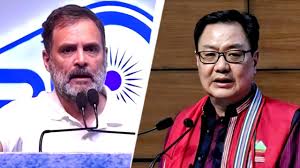
NEW DELHI: Union minister Kiren Rijiju on Sunday criticised Congress leader Rahul Gandhi for his recent remarks made during a visit to Colombia, claiming that he is the first leader of opposition (LoP) to speak against India on foreign soil. In an interview to ANI, the parliamentary affairs minister said, “Even Indira Gandhi ji was LoP after losing elections, but she never spoke about the country outside. All other LoPs after her – whether it is Lal Krishna Advani, Atal Bihari Vajpayee, Sushma Swaraj, Sharad Pawar – never did that.” “Show me one LoP who has ever gone outside India and made statements against the country or the Government. Rahul Gandhi is the first LoP who goes abroad and speaks against the country, our system and our democracy,” Rijiju added. The remarks come after Rahul, while speaking at an event at EIA University in Colombia on Thursday, said, “India has strong capabilities in areas like engineering and healthcare, so I am very optimistic about the country. But at the same time, there are also flaws in the structure that India has to correct. The biggest challenge is the attack on democracy taking place in India.” Rijiju alleged that Rahul’s comments misrepresent India and could harm its global image. “Our LoP went abroad and said that India cannot be a global leader. The problem is that if people abroad get the impression that everyone in India is like Rahul Gandhi, it would tarnish the country’s reputation,” he said. “There are intelligent people in our country, we have good leaders and people with good ideology. But if Rahul Gandhi speaks like this, people would think that such people are higher in number in India. This is not right,” Rijiju added. The Union minister also rejected Congress’s allegations of curbs on free speech, saying that the party was misusing the idea of freedom of expression for political purposes. “From morning to evening, they keep on abusing PM Modi and say there is no freedom to speak. They want to misuse this freedom of expression to such an extent that they want to split the nation,” he said. Rijiju further claimed that some leaders advocating for free speech are those who, according to him, have supported divisive causes. “Those who talk about freedom of speech are the people who want to separate Jammu and Kashmir and the North East from the nation,” he said. He emphasised that the BJP’s response to Rahul’s remarks is not personal. “We have nothing to do with him personally. He is LoP… If he speaks irresponsibly, we will not like it,” Rijiju said. Courtesy : TOI Note: This news is originally published on https:/timesofindia.com/bha and is used purely for non-profit/non-commercial purposes, especially human rights
A man disguised himself as Anil and raped a tribal woman, then said, “I will marry you if you change your religion.”
Amir, posing as Anil, raped a tribal woman and pressured her to convert. A young man from Deoband was arrested. Dhar, Madhya Pradesh: A very serious case has come to light in Dhar district. A man from Deoband, Uttar Pradesh, has been accused of befriending a tribal woman by concealing his true identity, raping her, and then pressuring her to convert. Based on the complaint, police registered a case late Thursday night and arrested the accused. What is the whole matter? According to Amjhera police station in-charge Raju Makwana, the 26-year-old victim is married and has two children. She worked with her husband in a construction company in Surat. There, she met a young man named Anil, with whom she developed a love affair. When the woman’s husband learned of the relationship, he left her at her parents’ home in Padampura village, near Dasai in Dhar district. Subsequently, Anil, with the woman’s consent, picked her up in Padampura and took her to Kanwan. There, they stayed at a dharamshala, where the accused allegedly raped her on Wednesday and Thursday. How the Truth Was Revealed In her statement to the police, the woman revealed that Anil revealed his true name to her around 4 p.m. on Thursday. He said his real name was not Anil, but Aamir Sheikh, and that he was from Deoband, Uttar Pradesh. Aamir told the woman that since her husband had abandoned her, she should convert to Islam so that he could marry her. Police Action Upon learning of the accused’s true identity and intentions, the woman immediately informed the police. A police team arrived at the scene and detained both Aamir Sheikh and the woman. After recording the woman’s statement, she was handed over to her parents. A case was registered against the accused, Aamir Sheikh, under relevant sections of the Indian Penal Code (IPC) and the Religious Freedom Act, 2021. He was produced in court on Friday and sent to jail. Rajan Chaudhary Courtesy: Hindi News
Rajasthan: Arson and attack on Dalit farmer’s field, accused still absconding, questions raised about police inaction
The victim’s family lives in fear due to the lack of arrest of the accused in the case, raising serious questions about police action. Tapra, Balotra: In the Tapra village of the district, accused Umed Singh has not yet been arrested in the case of violence and harassment against tribal farmer Mohanlal Bhil on the farm of Dalit farmer Chhagna Ram Meghwal. This has caused distress to the victim and his family. The victims say that the accused party is continuously applying social pressure to reach a settlement and are being mentally harassed. Farm owner Chhagna Ram is a taxi driver by profession and suffers from serious illnesses like diabetes, high blood pressure, and allergies. Despite this, they are not getting justice, and the police are hesitant to take action. According to the incident, laborers were clearing and plowing Chhagna Ram Meghwal’s field. Umed Singh was present in the field during this time, but did not respond. When Mohanlal went to build a fence with laborers, Ummed Singh suddenly appeared, verbally assaulted him, and threatened to kill him with a sword, forcing Mohanlal to stop work. Mohanlal, with the help of farm owner Chhagna Ram Meghwal and other villagers, tried to reason with the accused several times, but Ummed Singh refused and continued the assault. The most serious incident occurred on September 10th, when Ummed Singh brought a chemical flammable substance and attempted to burn down Chhagna Ram’s farm and fence. A video of this incident is available. Mohanlal and his fellow witnesses later filed a police complaint and gave statements at the DySP office, but no action has been taken yet. The victims allege that the police repeatedly mislead them, asking them to return in two or four days, and are attempting to hush up the matter. The victims and villagers are now fearful for their safety. Social workers and villagers are questioning the police’s inaction. Victims’ demands: – Immediate arrest of the accused, Umed Singh. – Fair and speedy investigation of the case. – Ensuring the safety of the victims and workers. Sharvan Kumar Courtesy: Hindi News
Rewind: Silent erasure of Dalit voices, this time by AI!

Dalit literature faces a new threat — biased algorithms, poor digitisation, and academic neglect are pushing this powerful movement rooted in resistance and equality to the margins again Dalit literature, a significant post-Independence literary movement, today faces an existential threat — not by fire or censorship, but by neglect, disinterest, and biased algorithms.In an increasingly digital world and an education system skewed toward dominant narratives, the true essence of Dalit literature and its role in understanding caste discrimination is being diluted, ignored, or distorted. Dalit literature represents a powerful body of writing rooted in the lived experience of caste-based oppression, resistance, and emancipation. Emerging from the voices of India’s most marginalised communities, Dalit literature is an assertion of identity, human dignity, and equality. However, the widespread use of artificial intelligence (AI), declining interest among non-social science students, the persistent non-digitisation of Dalit texts, institutional bias in acquiring books on Dalit literature, and the failure of India’s schooling system to integrate Dalit perspectives all mean that a generation relying on AI grows up with a distorted and incomplete understanding of caste realities in India. As defined by Arjun Dangle, Dalit literature aims to raise awareness about the caste system while examining it through a sociological lens. Rooted in principles of negativity, rebellion, and scientific rationality, Dalit writing challenges traditional hierarchies and advocates for social change. Its revolutionary nature reflects a conscious effort to resist marginalisation and assert the dignity and identity of Dalit communities. Thus, Dalit literature serves as both a form of protest and a catalyst for transformative discourse in Indian society. A Continuing Reality According to the National Crime Records Bureau (NCRB), crimes against Scheduled Castes (SCs) increased by over 17 per cent from 2018 to 2022. In education, dropout rates for Dalit students remain disproportionately high; in rural India, nearly 30 per cent of Dalit students leave school before completing Class 10. In employment, despite affirmative action policies, Dalits remain underrepresented in higher judiciary, corporate leadership, and academia. Caste discrimination is not just social but structural. From segregation in hostels and places of worship to violence for riding a horse at weddings, caste-based atrocities persist across States and class strata. Dalit literature documents these lived realities, which are often overlooked in mainstream media. Algorithms aren’t Neutral Algorithms are often seen as neutral tools that simply process data without bias. However, they reflect the prejudices present in the data they are trained on. In India, where data is shaped by deep-rooted caste hierarchies, this has serious consequences. Dalits and Muslims are often misrepresented or excluded by algorithms that classify their communities as “high risk” due to historical poverty. Elite institutions favour upper-caste applicants, reinforcing inequality in CV screening. As a result, instead of offering fairness, algorithms can amplify social discrimination, leading to systemic exclusion at scale — especially for marginalised groups like Dalits — despite the illusion of objectivity. Caste discrimination in academia also takes a serious psychological toll on marginalised students and faculty, causing stress, anxiety, and, in extreme cases, suicide. It leads to academic and professional setbacks, as biased treatment, lack of support, and exclusion from networks hinder progress and reduce career opportunities. These practices deepen educational inequality by denying marginalised communities equal access and representation in higher education and professional fields. New Form of Exclusion Caste-based bias in AI is emerging as a critical concern in India, paralleling global concerns about racial bias. This bias originates from the use of prejudiced and unrepresentative datasets that reflect dominant caste perspectives. The upper caste dominance in India extends across culture, academia, economy, politics, and now technology. AI is increasingly shaped by powerful groups, leading to underrepresentation and biased algorithms that serve their interests. While not inherently unethical, this use of AI exacerbates inequality and portrays the technology as a barrier to social justice, rather than a neutral tool. The unequal access and control over AI reflect broader systemic disparities, raising concerns about fairness and inclusivity in its development and application within Indian society. AI tools in India often fail to represent Dalit and marginalised communities due to a deep misalignment between Western-centric notions of algorithmic fairness and India’s complex socio-cultural realities. Imported models of fairness overlook caste, regional disparities, and structural inequities rooted in centuries of exclusion. The absence of reliable socio-technical infrastructure for Dalits, Adivasis, and women leads to their underrepresentation or complete erasure in datasets. This digital divide is stark — only 14.1 per cent of Scheduled Tribes (STs) and 13.5 per cent of Scheduled Castes (SCs) are computer literate, compared to 31.2 per cent of upper castes. Consequently, algorithmic outcomes in crucial sectors like policing, employment, and loans become skewed. Moreover, AI developers in India are predominantly from privileged caste and class backgrounds, often from elite institutions. Their detachment, combined with weak regulatory oversight, produces opaque, “black box” algorithms that evade public accountability. For AI to be fair, it must be re-imagined within local contexts. This means engaging marginalised communities, building inclusive data ecosystems, and fostering a culture of transparency and critique. Disinterested Academia Despite caste being a deeply embedded issue, most students in engineering, medical, business, and science fields graduate without any meaningful exposure to Dalit literature or caste dynamics. The Indian education system has confined caste-related discourse primarily to the social sciences, preventing a broader, cross-disciplinary understanding. Institutions like the IITs, IIMs, and AIIMS — which have faced serious allegations of caste-based discrimination, including the tragic suicides of Dalit students — offer minimal curricular engagement with anti-caste thought. This academic silence contributes to a lack of awareness and empathy among students, many of whom later occupy influential roles. Missing Archives Despite India’s push toward digital learning, much of Dalit literature remains un-digitised. Pioneering works in Marathi, Tamil, Telugu, Kannada, and Hindi are often published by small presses without access to digital archiving. As of 2024, the Digital Library of India and National Digital Library still lack comprehensive Dalit literature collections, particularly vernacular autobiographies, regional poetry, and essays. This exclusion from digital ecosystems
Arrest warrants against 3 cops accused of Dalit minor girl’s rape, harassment
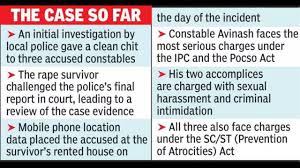
Alwar: A local Pocso court Saturday issued arrest warrants against three constables from Raini police station following allegations of rape and harassment of a minor Dalit girl. The accused — identified as constables Avinash Meena alias Sunny, Rajvendra alias Raju and Man Singh — face charges under various sections of the Indian Penal Code (IPC), the Protection of Children from Sexual Offences (Pocso) Act and the SC/ST Act. Avinash is accused of rape, while the other two are accused of molestation and harassment. The case, which dates to Nov 2023, initially saw Raini police station conducting an investigation and filing a final report (FR) that declared the accused policemen innocent. The case took a turn when the rape survivor challenged the FR in court, prompting a judge to review the evidence presented during the investigation. During later proceedings, the Pocso court demanded multiple pieces of information from the police, including call records and location data of the accused. The evidence unearthed through mobile phone calls and chat messages proved instrumental in the court’s decision to authorise the arrest of the three policemen. Special public prosecutor Vinod Kumar said that the minor girl, who he said was initially threatened by the accused policemen against filing a complaint, eventually took a brave stand against her perpetrators. He said her claims were corroborated when mobile phone location data from the three accused pointed to their presence at her rented residence on the day of the incident. The court subsequently overruled the local police’s clean chit to the accused while emphasising the importance of protecting the rights of minors, particularly of those from marginalised communities. Of the three accused policemen, constable Avinash faces the most serious charges under various sections of the IPC and Pocso Act. He is being charged under IPC sections 354A (sexual harassment), 506 (criminal intimidation), 363 (kidnapping), 366 (kidnapping with intent to compel a woman to marry), and 376 (rape). Stringent sections of the Pocso Act have also been made applicable to him. Constables Rajvendra and Man Singh also face multiple charges under various IPC sections, including sexual harassment and criminal intimidation, together with the Scheduled Castes and the Scheduled Tribes (Prevention of Atrocities) Act. Courtesy : TOI Note: This news is originally published on https:/timesofindia.com/bha and is used purely for non-profit/non-commercial purposes, especially human rights
Shot 5 times, remained in coma for 2 months:Continuously taunted by wife, police in hospital; couldn’t even move, let alone speak
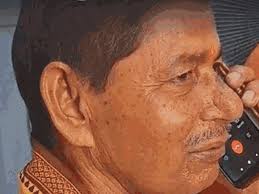
I am Arjun Paswan, from Jamuana village in Jehanabad district of Bihar. We did not own any land. Being Dalit, we survived on the mercy of landlords. We received millet to eat in exchange for working on their land. If we encountered landlords on the road, we would hold our shoes in our hands. Not only this, they kept an eye on our women. We even had separate wells. When famine struck the village, troubled by hunger, I came to Patna. When I opposed the smuggling of kerosene oil here, I was shot five times. I was in a coma for two months. My body could not move, but my mind was alert. I could hear everything—my wife’s sobs, the whispers of doctors and police officers—but could do nothing. Hearing the same kind of things repeatedly made me feel irritable inside. Actually, my story begins in the village, where I endured poverty, starvation, famine, the feudal system, and the caste system. We were a family of seven. I was the eldest among three brothers and two sisters. Therefore, I had the responsibility of running the entire family. I was married at the age of 13. Poverty was so severe that getting enough to eat was all that mattered. For that, I would go with my mother to dig soil from the canal so that water could easily reach the fields of landlords and upper castes. In return, we would get millet to eat. We had to grind the millet after bringing it home. For vegetables, we grew eggplants at home. Not just food, life itself was not easy there. If we encountered landlords while walking on the road, we would take off our shoes and hold them in our hands because wearing shoes was against their honour. Moreover, we had separate wells in the village. Bhumihar, Musahar, Kurmi, Rajput, and Dalits—all had separate wells. Additionally, if powerful landlords liked any woman from our house, they would abduct her. They would rape her. Even if we wanted to protest, we could not. Nobody would listen to us. In the name of justice, we would be given only a handful of grains. Life went on like this. Then in Bihar, there was continuous famine for three years in 1966, 1967, and 1968. The famine was so severe that people were on the verge of dying from hunger. Poor people and animals in our village began to die. To get news about the famine, we would go and listen to the radio at nearby wealthy landlords’ houses. Their rule was that they would sit on chairs in their courtyard while we sat on the ground. One day, the government announced on the radio that people from famine-affected villages should go to Punpun railway station from Jehanabad and bring fodder for their animals from there. Then four more bogies were added to the train for the 50-kilometre journey from Jehanabad to Punpun station. In the morning we would go to Punpun railway station and return by evening with grass for the animals. The entire day would be spent doing this. By then, there was nothing left to eat at home. During that time, for almost a year, our family survived by chewing sugarcane—the same sugarcane that had been brought as animal fodder during the famine. For breakfast, we would soak corn at night and eat it boiled in the morning. During the famine, a landlord falsely accused my father of theft. He was sent to jail. Then we faced new trouble. In a way, our problems were only increasing. At that time, my mother-in-law lived in Patna. She asked me to come to Patna with the family. After father went to jail, it was difficult to run the house. I felt it was better to go to Patna than to die of hunger there. We sold two cows and, with the money from that, I came to Patna with the family. After arriving in Patna, I started living with my mother-in-law in the Pirbamaria area. This is a Dalit settlement. Here, my mother-in-law got me work on the water ships running in the Ganges. These ships used to come from Kolkata to Patna. They carried oil, Dalda canisters, and sacks of sugar. Spices and makhana from Bihar’s Marufganj Mandi would go to Kolkata on these ships. I started working loading and unloading goods on them. Now, upon coming to Patna, there was just this much comfort: we did not have to sleep hungry. After a year, my father was released from jail and returned home. When he started managing the house by doing labour work, I felt that I should study; otherwise, I would have to load and unload goods all my life. I took admission in a school and started studying. I would stay in school from 10 AM to 4 PM, and after that would go to work on the water ship. There, I would work until 10 PM. This way, in 1971, I completed my education up to the 10th standard. After that, I did my intermediate from Bihar National College. During this time, I came under the influence of the leftist movement. Actually, when I was in my village, people in nearby Sikri village were also connected to leftism, whom I had seen in childhood. Here in Patna, the entire area where I lived was under leftist influence. Leftist leader Ram Avatar Shastri had been elected MP three times from here. He kept raising his voice against poverty, starvation, the feudal system, and the caste system, so I also joined them. After joining the movement, I started speaking out against the black marketing of kerosene in my area. The powerful people would loot the kerosene arriving at the depot and sell it at high prices. No one dared protest. My family members tried to stop me from opposing it, but I persisted. During this time, I began receiving threats. One day, when I left home in the morning for