
AP high court expresses displeasure at police for not filing report on transgender applicant
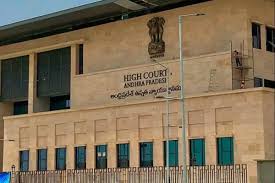
Vijayawada: The high court on Monday criticised the police for not filing the report on the decision taken regarding the representation given by transgender Ganga Bhavani, who sought to have her application for the SI post considered. The court summoned principal secretary for home, Kumar Viswajit, to appear before it on the next date of the hearing. Ganga Bhavani moved the high court in 2019, contending that no option for transgender individuals was given in the application for the sub-inspector (SI) eligibility test. The counsel for the petitioner, Salmon Raju, told the court that the petitioner was born male but later, through a sex change operation, became a transgender. In the application for the SI eligibility test, only male and female options were provided, and no option was available for transgenders. In the absence of an option, the petitioner applied as female, participated in the written examination, and secured eligible marks under the BC category. However, the petitioner was not allowed to proceed to the next stage of the selection process. Challenging this, Ganga Bhavani filed a petition, but the high court dismissed it. Challenging the dismissal of the petition, Ganga Bhavani filed an appeal petition. A division bench of the high court on Dec 12, 2024, directed the police department to make a decision on Ganga Bhavani’s representation in accordance with the decisions taken by the home department on Nov 22 and asked for a report to be filed on the same. On Oct 6, the HC bench comprising Justices Battu Devanand and Hariharanatha Sharma expressed displeasure with the home secretary as no report was filed and directed the home secretary to appear before them. On Monday, additional advocate general Sambasiva Prasad informed the bench that home secretary Kumar Viswajit could not attend physically and appeared in virtual mode. While allowing Viswajit’s request, the HC directed him to appear physically on the next date of hearing. Courtesy : TOI Note: This news is originally published on https:/timesofindia.com/bha and is used purely for non-profit/non-commercial purposes, especially human rights
Tejashwi meets Congress netas in Delhi to strike seat deal

Patna: RJD leader Tejashwi Prasad Yadav on Monday met senior Congress leaders in New Delhi to finalise the seat-sharing arrangement among INDIA bloc allies ahead of the Bihar assembly elections. Insiders in the Congress said Yadav held discussions with Congress general secretary (organisation) K C Venugopal and the party’s incharge for Bihar, Krishna Allavaru, in the national capital. Bihar Congress president Rajesh Ram was also present at the meeting. Tejashwi was expected to meet Congress president Mallikarjun Kharge, though the meeting did not take place. Meanwhile, Rajesh Ram and Congress leaders Shakeel Ahmad Khan and Syed Naseer Hussain met Kharge separately and briefed him on their discussions with Yadav.The two principal allies — RJD and Congress — are in talks to finalise the distribution of seats among Mahagathbandhan partners amid claims and counterclaims over stronghold constituencies. Sources said despite multiple rounds of discussions between Congress, RJD and Left leaders, the INDIA bloc has not yet settled its seat-sharing formula. “Tejashwi and Congress leaders may finalise seat-sharing in the next few days and could announce their candidates along with a joint manifesto this week,” an RJD functionary said. Bihar Congress incharge Krishna Allavaru said, “Seat distribution is being finalised. The list of candidates will be released soon. Our effort is to form a good govt for the people of Bihar so that the alliance is not harmed and Bihar benefits.” The Congress is expected to receive fewer seats this time, given its poor performance in the 2020 assembly polls when it won 19 of the 70 seats it contested. The RJD had contested 144 seats, winning 75 in the 243-member assembly. Earlier on Monday, the Congress held its Central Election Committee (CEC) meeting in New Delhi to discuss Bihar seat-sharing. Rahul Gandhi, Mallikarjun Kharge, K C Venugopal, and BPCC chief Rajesh Ram attended the meeting. Rajesh Ram said, “All issues were discussed in the INDIA alliance meeting, in which Rahul Gandhi and other senior leaders participated. The discussions were positive, and preparations for seat announcements are underway. There is a possibility of a meeting with Tejashwi Yadav soon.” According to sources, VIP chief Mukesh Sahni has been offered 18 seats by the RJD, of which 10 would have RJD’s own candidates contesting on the VIP symbol. Meanwhile, the RJD has asked its likely candidates to start filing nominations for the first phase of polling. Courtesy : TOI Note: This news is originally published on https:/timesofindia.com/bha and is used purely for non-profit/non-commercial purposes, especially human rights
‘Rahiman dhaaga prem ka … ‘: Politics takes a poetic turn in Bihar; seat-sharing talks drag on in INDIA bloc
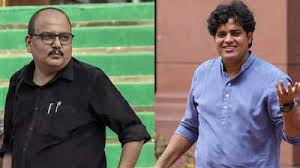
NEW DELHI: The seesaw in the Bihar seat-sharing saga seems to continue in the Mahagathbandhan as no party in the bloc appears to get off first without squeezing out every last seat possible. In the RJD-led Mahagathbandhan, allies are busy balancing ambition and arithmetic, each hoping to tip the scale in their favour before the final deal is struck. In Bihar’s opposition camp, the tension isn’t just political. It’s poetic. As seat-sharing talks appear to hit a rough patch, RJD’s Manoj Jha and Congress MP Imran Pratapgarhi traded shayaris that spoke volumes about the unease simmering between the allies. After RJD leader Tejashwi Yadav met Congress MP Rahul Gandhi on the seat-sharing agreement, Manoj Jha wrote on X: “Rahiman dhaaga prem ka, mat todo chhitkaay, toote se phir na mile, mile gaanth parijaay. Har avsar ke liye prasangik. Jai Hind”. (“Don’t snap the thread of love, Rahim says — once broken, it may be tied again, but the knot will always remain”.) Replying to ally Manoj Jha’s post, Congress MP Imran Pratapgarhi wrote: “Paani aankh mein bhar kar laaya ja sakta hai, Ab bhi jalta shehar bachaya ja sakta hai.” (Tears can still be brought to the eyes; even a burning city can still be saved.) — ShayarImran (@ShayarImran) The rhyme didn’t just reveal the rift, but it sparked the question: Can the Mahagathbandhan stay united, or are its allies gearing up to go solo? The seat-sharing puzzle in Bihar’s Mahagathbandhan continues to test tempers and timing. Despite several rounds of talks between the Congress, RJD and Left leaders, the INDIA bloc is yet to crack the final formula. “Tejashwi and Congress leaders may finalise seat-sharing in the next few days and could announce their candidates along with a joint manifesto this week,” an RJD functionary said. Bihar Congress in-charge Krishna Allavaru sounded cautious yet confident: “Seat distribution is being finalised. The list of candidates will be released soon. Our effort is to form a good govt for the people of Bihar so that the alliance is not harmed and Bihar benefits.” But the Congress may have to settle for a smaller slice this time, given its poor 2020 performance, bagging only 19 of the 70 seats it contested. The RJD, by contrast, had fought 144 seats and won 75 in the 243-member Assembly. Earlier on Monday, the Congress held its Central Election Committee (CEC) meeting in New Delhi to fine-tune its Bihar strategy. Rahul Gandhi, Mallikarjun Kharge, KC Venugopal, and BPCC chief Rajesh Ram were among those present. Rajesh Ram said, “All issues were discussed in the INDIA alliance meeting, in which Rahul Gandhi and other senior leaders participated. The discussions were positive, and preparations for seat announcements are underway. There is a possibility of a meeting with Tejashwi Yadav soon.” Meanwhile, sources said VIP chief Mukesh Sahni has been offered 18 seats by the RJD, of which 10 would have RJD’s own candidates contesting on the VIP symbol. The RJD, not waiting for last-minute chaos, has already asked its likely candidates to begin filing nominations for the first phase of polling. Courtesy : TOI Note: This news is originally published on https:/timesofindia.com/bha and is used purely for non-profit/non-commercial purposes, especially human rights
Rahul, Chirag to visit Kumar’s family
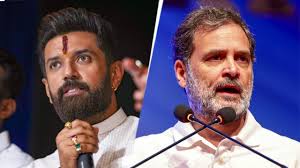
CHANDIGARH: IPS officer Y Puran Kumar’s suicide is reverberating beyond Haryana’s borders. Leader of Opposition in Lok Sabha Rahul Gandhi is due to visit the family on Tuesday. So will Union minister from Bihar, Chirag Paswan, reports Ajay Sura. Politicians from across the country are making a beeline to visit the Kumar household in Chandigarh to console the grieving family. Union minister of state for social justice and empowerment Ramdas Athawale and Telangana deputy CM Mallu Bhatti Vikramarka met the deceased officer’s wife, IAS officer Amneet P Kumar, in the morning. After meeting the family, Athawale said he has assured them of all support and that the entire country’s SC community is awaiting action against the officers responsible for Kumar’s suicide. Later, Athawale also met Haryana chief minister Nayab Singh Saini and discussed the case. Both Athawale and Paswan are allies of ruling BJP. The Telangana deputy CM criticized Haryana govt for ‘inaction’ in the case. Puran Kumar was a native of Telangana. K Raju, AICC in charge of Jharkhand Congress, alleged that authorities are not complying with the constitutional provision that provides for equality before law. Punjab ministers Harbhajan Singh, Harpal Singh Cheema, Mohinder Bhagat and Dr Ravjot Singh visited the family. Courtesy : TOI Note: This news is originally published on https:/timesofindia.com/bha and is used purely for non-profit/non-commercial purposes, especially human rights
Punjab: Rivals lap up issue of Haryana IGP’s death as BJP’s Dalit outreach takes a hit
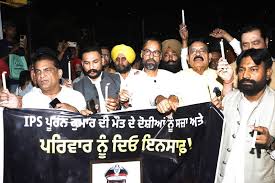
The socio-politico tremors of the death by suicide of Haryana-cadre IPS officer Y Puran Kumar are being felt in Punjab, the state having the largest proportion of Dalit population in the country. The incident is being termed as a case of “institutionalised caste-based discrimination”, which may have political resonance in Punjab that is set to go to the polls in just 15 months. Related news: Suicide by Haryana IPS officer: Punjab Congress to stage candle marches today, BJP says issue politicised Mahapanchayat gives 48-hr ultimatum to arrest Haryana DGP While Punjab’s ruling AAP has quickly lapped up the issue and that of the shoe attack on Chief Justice of India BR Gavai to target the BJP, which rules at the Centre and in Haryana, Congress Dalit leaders led by former CM Charanjit Singh Channi too have put their weight behind the officer’s family. While Punjab’s ruling AAP has quickly grasped the issue and that of the shoe attack on Chief Justice of India BR Gavai to attack the BJP, which rules at the Centre and in Haryana, Congress Dalit leaders led by former CM Charanjit Singh Channi too have put their weight behind the officer’s family. Apart from holding candle marches across the state on Sunday, AAP has got 100 FIRs registered over the shoe attack on the CJI. The party, led by CM Bhagwant Mann and Finance Minister Harpal Cheema, has also claimed of never falling for caste-based politics and blamed the BJP for atrocities against Dalits. On the other hand, political ramifications for the BJP are serious, especially at this time when it is trying to make political inroads into Punjab, mainly by winning over Dalit voters. Party leaders have reportedly not just been in touch with big deras where Dalits pay their reverence but attempts have also been made to woo them through several Centre-sponsored schemes. At this point, the more the issue of the deceased IPS officer lingers, the more it dents the political narrative of the BJP in the state. Realising this, Paramjit Singh Kainth, Punjab state vice-president of the BJP Scheduled Castes Morcha, told The Tribune that whosoever was guilty for atrocities on the late IPS officer should not only be removed from his post but also be booked by the Chandigarh Police under the Scheduled Castes and Scheduled Tribes (Prevention of Atrocities) Act. Eminent sociologist and chairperson of the Institute of Development and Communication, Pramod Kumar, said while the BJP would have to recover from the political setback of this, the Congress was trying to take advantage of resultant “political opportunity”. “While AAP is also trying to project itself as a party that stands by Dalits by registering 100 FIRs, it is also an opportunity for SAD to show its pro-Dalit face. The Dalit voters in Punjab, influenced by both tenets of Sikhism that preaches equality and the Arya Samaj that opposes caste system, have never restricted their political backing for a single party,” Kumar said. “But this incident has highlighted the institutionalised discrimination in the governance system where even the Chief Principal Secretary to the CM could not help the Dalit officer. This has created a narrative of Dalit marginalisation, which could consolidate the Dalit community. The political repercussions for each party, whether good or bad, are there,” he said. Academic Dr Ronki Ram, who has worked on Dalit consciousness and socio-political dynamics in Punjab, however, said on individual level the issue might have found resonance among members of the community, but politics had its own dynamics. “How it pans out will have to be seen, especially as Dalits vote for different political parties and not en masse,” he said. Article_Author Ruchika Khanna Couetesy : The Tribune Note: This news is originally published on https:/thetribune.com/bha and is used purely for non-profit/non-commercial purposes, especially human rights
Reading and writing kept my spirit unbroken: Anand Teltumbde
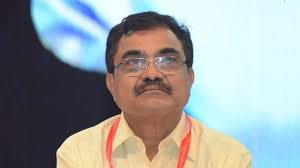
The scholar and activist on the books that shaped his politics, how reading 179 books in jail kept him intellectually alive, and more. Anand Teltumbde is a scholar, writer, and public intellectual whose work spans technology, management, and social justice. He has authored 33 books and contributed extensively to leading journals and periodicals, offering sharp theoretical insights on caste, oppression, and contemporary India. As a committed activist, he has played a significant role in India’s civil rights movement. Born into a poor, landless labourer family, Teltumbde overcame formidable odds to study at Visvesvaraya National Institute of Technology, Nagpur (Bachelor of Engineering), and the Indian Institute of Management Ahmedabad (MBA). He earned a PhD in Management on cybernetic modelling and went on to hold senior corporate positions, including Executive Director at Bharat Petroleum Corporation and Managing Director and Chief Executive Officer at Petronet LNG, before moving to academics. He served as a professor at the Indian Institute of Technology Kharagpur and later as a senior professor at the Goa Institute of Management, where he pioneered India’s first Big Data Analytics centre. In 2018, he was implicated in the Bhima Koregaon case and spent 31 months in prison, an experience that shaped his recently published prison memoir The Cell and the Soul (2025). He has also written a reflective biography of Ambedkar, Iconoclast (2024). Several of his new works are forthcoming. In this interview, Teltumbde reflects on his formative reading in a village school, the influence of Marxist and Dalit thinkers, his lifelong commitment to challenging oppression, and how reading and writing became tools of survival during his incarceration. He also recommends some essential readings for those interested in caste and social justice discourse. Edited excerpts: Tell us about your early relationship with books and reading during your childhood and adulthood? How did these experiences influence your commitment to social justice? I was born in Rajur, a small village in Yavatmal district of Maharashtra, which years later would be branded the farmers’ suicide capital. In those days, our school had only a single classroom but classes up to the fourth standard. When it expanded to the seventh, more cattle sheds were used to house children once the animals were driven out each morning. Books were a luxury; apart from a few stacked in the school office or in the homes of few literate elders, there was almost nothing to read. Yet the school had a tradition: every year, the student who topped the class received a book. That prize was mine for as long as I studied there. In the third standard, illness kept me from the exam, but the teachers awarded me the book anyway. It was a Marathi biography of Joseph Stalin. I could not grasp everything, yet it opened a crack in my world. As a child, I constantly pestered my mother with questions: why didn’t we have land, a cow, goats, or a proper house like others? My parents, landless labourers, bent their backs on others’ fields and at lime factories near the colliery. My mother would brush me off, promising that when I grew up, we would have all these things. Stalin’s story, though half-understood, suggested that inequality was not fate—it could be explained, even fought. That little book became my first key to a locked world. Around the same time, Rajur Colliery—with its large Dalit population—turned into a hub of Ambedkarite activism. We children sat in the front rows as speakers invoked Babasaheb Ambedkar, who had risen to become the most educated man in the world. He became my role model. Still, my earliest lens was not caste but exploitation. I saw it in the lime factories, where my parents laboured for a pittance while owners lived in comfort. Later, even as I came to see the annihilation of caste as the true path to liberation, I resisted the label of “Dalit rights activist”. Rights, to me, were never adjectival—they belonged to all human beings, and to all citizens. Looking back, that little biography of Stalin was more than a prize. It was the seed of my political awakening. Were there any particular books or authors during your formative years who had an impact on your intellectual journey and later writings? I cannot single out one book or author as decisive. I believe every book I read, every person I interacted with, directly or indirectly, shaped how I think and view the world. I was drawn early to revolutionary thought—first to stalwarts like Marx, Engels, Lenin, Trotsky, and Rosa Luxemburg, and later to Marxists from Gramsci and Althusser, Amin down to Žižek, as well as Indian thinkers such as D.D. Kosambi, Debi Prasad Chattopadhyay, and Suniti Kumar Ghosh. I also revered those who laid down their lives for the causes they believed in: Kartar Singh Sarabha, Bhagat Singh, Sukhdev, Rajguru, Chandrasekhar Azad, Ashfaqulla Khan—and the anti-caste crusaders: Ayyankali, Iyothee Thass, Acchutanand, and of course Ambedkar. Ambedkar, however, was my enduring inspiration, internalised through my illiterate parents. Until I moved to Nagpur after the tenth standard, I had not read a page written by or about him, save for a school lesson on his childhood. What we knew came through folklore—songs that celebrated him as a lover of books who built the largest personal library. That image of Ambedkar fostered my own passion for reading and collecting books, a passion that has stayed with me ever since. According to Bloomsbury, “Teltumbde writes of a heartless state that criminalises dissent with political imprisonment, of the relentless grind of injustice, and the profound cost of speaking truth to power.” According to Bloomsbury, “Teltumbde writes of a heartless state that criminalises dissent with political imprisonment, of the relentless grind of injustice, and the profound cost of speaking truth to power.” | Photo Credit: By Special Arrangement Can you share a turning point in your reading or writing life during your younger days? A book, event, or an experience that shaped the writer and thinker you eventually became. As a
After suicide by dalit boy, HP bodies call for mapping of ‘atrocity-prone areas’

Kullu: A number of civil society organisations have come forward calling for the declaration of “atrocity-prone areas” in Himachal Pradesh and have demanded strict police action in the case of suicide by a 12-year-old dalit boy after he was locked up in a cowshed by an ‘upper caste’ family in Shimla’s Rohru region. The People’s Campaign for Socio-Economic Equality in the Himalayas (PCSEEH), an organisation that works for an equal and discrimination-free society in the mountains, has written to chief minister Sukhvinder Singh Sukhu, demanding strict action under the Scheduled Castes and Scheduled Tribes (prevention of atrocities) Act against all those responsible for pushing the “dalit boy to commit suicide” and adequate compensation to the victim’s family. The PCSEEH has also demanded the state govt should identify all the regions of the state where caste-based atrocities are higher and declare them as “atrocity-prone areas” under Rule 3 of the SCST (prevention of atrocities) Rules, 1995. In the letter, PCSEEH national convener Sukhdev Vishvapremi has also stated that the state govt needs to initiate a campaign to create “socially just and safe panchayats” in Himachal Pradesh. A Scheduled Caste boy died after consuming a poisonous substance in Limbda village of Rohru sub-division in Shimla district on Sept 16. According to the police complaint, filed by the father of the victim, the boy committed suicide after he inadvertently entered the house of an ‘upper-caste family’ and a woman of the house locked him up in a cowshed and assaulted and humiliated him. A case has been registered by the Chirgaon police. “It’s not a suicide but a murder. This case is yet another reminder of the fact that how deeply entrenched the caste-based discrimination in Himachal is and how crimes stemming from caste-based mindsets continue to occur frequently in the state. It’s so tragic that such acts still take place even in the 21st century,” PCSEEH national convener Sukhdev Vishvapremi told TOI on Sunday. “We sincerely hope that strict action will be taken against those responsible for the deliberate killing of the boy. There is also an urgent need for the state govt to launch a campaign in coordination with the civil society organisations to make Himachal Pradesh a socially just and safe state,” added Vishvapremi. According to Kuldeep Verma, who runs People’s Action for People in Need (PAPN), an NGO that works against caste-based discrimination in the Sirmaur district of the state, atrocities against dalits are on the rise in Himachal Pradesh due to ineffective implementation of the law. “There are various rules against caste-based discriminations and atrocities but the law is not strictly and effectively implemented by the police, which in most cases tend to side with the accused. And when there is no fear of the law, atrocities in the name of the caste are bound to be committed,” said Verma. “The state govt is empowered by the SC/ST Act to identify and declare regions having a high rate of crimes against the Scheduled Castes as ‘atrocity-prone areas.’ The state govt must take an initiative and declare the Chirgaon area in Rohru as an atrocity-prone area. Such a move will send a strong message against caste atrocities,” added Verma. Led by former MLA Rakesh Singha, members of the Communist Party of India (Marxist) also staged a state-wide protest against dalit discrimination and atrocities in the state last Monday on Oct 6 in the wake of the Rohru incident. Two days later, on Oct 8, a large number of people from the general caste communities took out a march in Rohru and demanded an impartial investigation into the boy’s suicide. The angry crowd also raised slogans against Singha for his comments on the issue. “The protest by the CPM was on humanitarian and constitutional grounds. But the counter-protest by members of the general caste communities shows how polarised the society even in Himachal has become. This divide has further deepened in the last around ten years and is benefitting the politicians only,” said Lal Chand Dhissa, a Kullu-based veteran activist and former IAS officer. “The rot in our society runs deeper than you realise,” added Dhissa. Himachal Pradesh has the second highest population of Dalits in the country after Punjab and the caste-based untouchability and discrimination is widely rampant in the state. Among the 12 districts, Sirmaur has the highest percentage of dalits in the state, followed by Mandi, Solan, Kullu, and Shimla. Box: SCs / STs / OBCs in Himachal Pradesh Category Population Percentage (%) SCs 1,729,252 25.19 STs 392,126 5.7 OBCs 927,452 13.51 Total Population 6,864,602 Source: Census 2011 Box: District Total Population SC Population Percentage (%) Sirmaur 529,855 160,745 30.34 Mandi 999,777 293,739 29.38 Solan 580,320 164,536 28.35 Kullu 437,903 122,659 28.01 Shimla 814,010 215,777 26.51 Source: Census 2011 Box: Top Indian States with Highest SC Population State Population SC Population Percentage (%) Punjab 27,743,338 8,860,179 31.94 Himachal Pradesh 6,864,602 1,729,252 25.19 West Bengal 91,276,115 21,463,270 23.51 Uttar Pradesh 199,812,341 41,357,608 20.70 Haryana 25,351,462 5,113,615 20.17 Source: Census 2011 MSID:: 124500182 413 | Courtesy : TOI Note: This news is originally published on https:/timesofindia.com/bha and is used purely for non-profit/non-commercial purposes, especially human rights
Unchahar murder case of Dalit youth: Policeman suspended, but public anger over lack of action against Home Guard
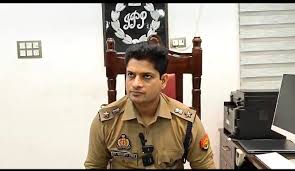
After police negligence was exposed in the case of the murder of a youth in the Unchahar area of Rae Bareli district, Superintendent of Police Dr. Yashveer Singh took action, but it was incomplete. The in-charge of the Dial 112 team, which arrived at the scene and released the accused after questioning, was suspended, but no action was taken against the Home Guard. The incident occurred when the Dial 112 team, number 1770, arrived at a dhaba. Hariom Valmiki, the accused of murder, was present there. Police interrogated him and later released him. Villagers made a video of the incident and made it viral on social media. In-charge suspended, but Home Guard ‘favored’ After the video surfaced, the Superintendent of Police conducted an investigation and suspended the in-charge of Dial 112. However, no action was taken against the Home Guard present on the team. This is what has angered the villagers. He says, “When the in-charge was found guilty, why wasn’t action taken against the Home Guard? Is he being favored by the police?” Action will be taken if the investigation finds him guilty: Commandant When the Home Guard Commandant was contacted regarding this matter, he stated that the case is being investigated. If the investigation finds the Home Guard guilty, strict action will be taken against him. Ashish Kumar Srivastava Courtesy: Hindi News
Section 163 imposed in Gwalior after Ambedkar statue row:Ban on organising any event on Oct 15; notices served to 50, 260 social media posts removed
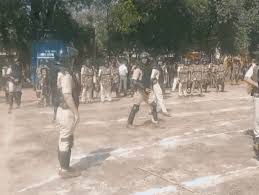
Tensions are rising in Gwalior after lawyer Anil Mishra made controversial remarks about Dr. Bhimrao Ambedkar, following disputes over his statue at the MP High Court’s Gwalior bench. Dalit groups have threatened strong protests on October 15, while upper-caste organisations have also announced plans to gather on the same day. Gwalior police are monitoring social media, conducting mock drills, removing 260 inflammatory posts, issuing notices to over 50 people, and registering two FIRs against Mishra one in Gwalior and another in Maharashtra. What the dispute is Dispute over installing Dr. Ambedkar’s statue at MP High Court: Azad Samaj, Bhim Army, OBC Mahasabha, and some lawyers support it; another group of lawyers opposes it. Lawyer Anil Mishra allegedly called Dr. Ambedkar a “slave-agent of the British” and a liar in a social media video, leading to FIRs. Section 163 imposed The district administration has imposed Section 163, banning protests, processions, and public ceremonies without permission. The Collector and SP held meetings with traders and local leaders, appealing for peace. It was agreed that no programs will be held on October 15, while police have warned they will act strictly to maintain law and order. No events allowed on October 15; strict action in place Section 163 is in force; no programs or protests allowed without permission. Collector Ruchika Chauhan and SSP Dharmveer Singh confirmed no events are planned on October 15. Officials urged citizens to celebrate festivals and conduct business peacefully. Cyber team is monitoring social media for inflammatory posts. Committee members instructed to warn those posting provocative content to avoid legal action. Police directed to take strict action if any unauthorized events occur; villages will also be monitored. Public representatives contacted to maintain law and order. Police meetings held at station level; locals assured cooperation to preserve peace and harmony. Mock drill conducted to handle riots and disturbances Police conducted a riot-control mock drill on Saturday at Bahodapur Police Lines. Two separate teams took part, including forces from city police stations and police lines. ASPs Vidita Dagar, Suman Gurjar, and Jairaj Kuber led the exercise along with all CSP teams. During the drill, the mock protest group pelted stones at the police. Police responded using tear gas to disperse the crowd. Constable Santosh Singh was injured after a tear gas shell fragment hit his forehead. He was taken to hospital and received two stitches. Practice wearing riot gear, always keep kit in vehicle During the riot parade, SSP Dharmveer Singh instructed all officers and personnel to keep riot kits in their vehicles and regularly practice cleaning and wearing them. He said that under no circumstances should there be a situation where one has to rush to the police line or station for riot gear. In May, lawyers snatched pipes from female police officers during the HC statue dispute In May, lawyers snatched pipes from female police officers during the HC statue dispute Dispute over Dr. Ambedkar statue at High Court Tension over statue installation began in May 2025. Senior and junior advocates of Gwalior High Court Bar argued over the issue. On May 17, 2025, a clash occurred outside the High Court. Former Bhim Army member Rupesh Ken, supporting junior advocates, was beaten by lawyers. Several protests and clashes followed over the statue. Installation of the statue was halted due to rising tension. The statue was moved to sculptor Prabhat Rai’s workshop, 15 km from the city. Two police personnel have been deployed to guard the statue. On May 11, the Bar Association hoisted the tricolor at the proposed statue site. Pushing and shoving occurred when police tried to stop the flag hoisting. Bar Association President Pawan Pathak said the flag was hoisted in memory of ‘Operation Sindoor’. Courtesy : Bhaskar English Note: This news is originally published on https:/bhaskarenglish.com/bha and is used purely for non-profit/non-commercial purposes, especially human rights
Bijapur leads in sexual minority survey; Bengaluru shows least progress due to stigma, say officials
BENGALURU: Karnataka’s ongoing sexual minority survey, the first ever in India, has managed to reach only about 6,000 transgender persons so far, against an estimated 43,000 across the state, officials from the Women and Child Development Department said. While districts like Bijapur and Bagalkote have shown encouraging participation, Bengaluru Urban has recorded the least progress. “This is the first state-wide enumeration of transgenders in India,” said Mahesh Babu N, Director, Women and Child Development Department. “As per EPIC card data, there are around 43,000 transgender persons, but in 15 days, only 6,000 have been identified. Bengaluru is volatile — enumerators are often shouted at or told to go to hamams and homes to collect data,” he said. The department attributes the low turnout in urban areas to social stigma and lack of trust. “Some trans men fear that revealing their identity could disturb their family lives, as many are married and have children,” sources explained. Hospitals have emerged as safer enumeration points since people visit them routinely for treatment. Mahesh Babu said the survey will guide future welfare and skilling schemes. “This information will help channel CSR for group housing and employment programmes. The government is spending about ₹1 lakh a day on remuneration for enumerators — nearly ₹1 crore overall. The socio-economically disadvantaged members stand to gain through better policy design if they make their presence known,” he said. However, many in the community remain wary. Jaanu, a ventriloquist, said, “People don’t want to come out for fear of stigma from neighbors. My friend refused to register because she has a family. I told her it’s confidential and could help with pension or housing.” Nakshatra, a Bengaluru-based member, said, “People fear data misuse. In the past, trans women have been blackmailed by predators posing as NGOs.” Officials said participation was higher in Bijapur due to earlier pilot projects and stronger community engagement. Courtesy : TOI Note: This news is originally published on https:/timesofindia.com/bha and is used purely for non-profit/non-commercial purposes, especially human rights