
A 150-year-old evil tradition was broken after 150 years! A Dalit groom rode a horse for the first time in Rewari, with the wedding procession escorted by police.
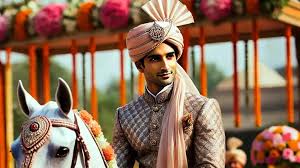
A 150-year-old evil tradition was broken in Khedi Dalu Singh village in Haryana’s Rewari district when a Scheduled Caste groom rode a horse for the first time. However, the family had sought security from the police and administration as a precaution, fearing untoward incidents. The procession proceeded peacefully under the presence of a police force. In Khedi Dalu Singh village, located in the Bawal area of Rewari, Haryana, a Scheduled Caste man’s wedding procession rode a horse for the first time in 150 years. The procession departed on Thursday, November 13th. Police forces from three police stations were deployed, supervised by the DSP. The procession departed from the village for Ateli. According to reports, a horse-riding procession for a young man had never been carried out in this village in history. This evil practice had been prevalent for years. The groom’s family feared an untoward incident. Due to this, they requested police protection. The family expressed gratitude to the police and administration. Ankit, the groom, who works in the Animal Husbandry Department, explained that this evil practice had been prevalent since the village was formed. He said that many people had tried before, but were unsuccessful. Fearing something untoward, the family filed a complaint with the Human Rights Commission, Rewari police, and the administration. The family appealed for protection from the Rewari police, administration, and the National Human Rights Commission. Following this, the wedding procession proceeded peacefully in the presence of police from three police stations and the duty magistrate. Following the incident, the family expressed gratitude to the police and administration. There was no tension in the village. Bawal DSP Surendra Sheoran stated that there was no tension in the village. He stated that police were present as a precaution, and the wedding procession proceeded peacefully. Meanwhile, Nepal Singh, the Sarpanch representative of Khedi Dalu Singh village, stated that there was no tension in the village, nor did anyone protest. He added that everyone in the village wants peace. The family had filed a complaint with the police administration, which led to precautionary measures being taken, and the horse-riding ceremony passed off peacefully. In many areas of Haryana, disputes have previously arisen over Scheduled Caste grooms riding horses, so as a precaution, the horse-riding ceremony was conducted under police protection. Authored by: Manoj Kumar Courtesy: Hindi News
Dalit leader murdered in Sangli, Maharashtra; accused attacked with knife and rod during birthday celebration

Uttam Mohite, president of the Dalit Mahasangh in Sangli, Maharashtra, was stabbed and killed with a knife and rod while celebrating his birthday. One of the attackers also died during the scuffle. Police have registered a murder case and launched an investigation. Digital Desk, New Delhi. Uttam Mohite, president of the Dalit Mahasangh in Sangli, Maharashtra, was stabbed and killed with a knife and rod while celebrating his birthday at his home. According to police, Mohite had a fight with the accused, Ganesh More, before the attack. In fact, the founder of the Dalit Mahasangh in Sangli, Maharashtra, was celebrating his birthday on Tuesday night. Mohite was celebrating his birthday at his home near the Garpir Dargah Chowk area. He was murdered during the celebration. One attacker also died One attacker also died during the incident. According to police, one of the attackers, Shahrukh Rafiq Shaikh (26), was seriously injured during the scuffle. During the scuffle, one of the attackers, Shaikh, sustained a serious knife injury to his thigh, possibly accidentally. He died at a hospital on Wednesday morning. Attack with knives and rods After the guests had left and preparations were complete, some men armed with knives, iron rods, and sticks began abusing Mohite. Fearing for his life, Mohite fled inside his house while being chased by the attackers. The attackers stabbed Mohite multiple times in the stomach and chest and hit him on the head and hands with iron rods and sticks. Mohite was rushed to Sangli Civil Hospital by his nephew, where doctors declared him dead. A police officer said on Wednesday that Mohite and one of the accused, Ganesh More, had a brief altercation during the birthday celebration. Before leaving the venue, More allegedly warned Mohite that he “won’t spare him.” Murder case filed against 8 people Based on a complaint by Mohite’s wife, Jyoti, police have filed a murder case against Indiranagar residents Ganesh More, Satish Lokhande, Shahrukh Shaikh (deceased), Banya alias Yash Londhe, Ajay Ghadge, Jitendra Londhe, Yogesh Shinde, and Sameer Dhole. (With inputs from news agency PTI) BY SHUBHAM TIWARI EDITED BY: SHUBHAM TIWARI Courtesy: Hindi News
BSP Plans Muslim-Dalit Outreach in Western UP, Mayawati to Address Noida Rally on December 6

Two months after holding a major rally in Lucknow that stirred political activity across Uttar Pradesh, the Bahujan Samaj Party (BSP) is now focusing on specific regions and voter groups where it hopes to regain lost ground. The party is planning to begin its Muslim Dalit outreach in western UP, with a public meeting likely to be held in Noida on December 6. Party sources said BSP chief Mayawati will attend the event as the main speaker. Senior party leaders visited the Rashtriya Dalit Prerna Sthal in Noida on Wednesday to review preparations. While officials avoided sharing details, they confirmed that planning for the event is underway. According to insiders, the gathering is designed to reconnect with Dalit and Muslim voters, two communities that have historically formed a crucial support base for the BSP. Party workers and supporters from eight divisions of western Uttar Pradesh are expected to attend. Mayawati is likely to give them directions on how to win back voters the BSP lost after 2012, when its political decline in the state began. The Dalit and Muslim bhaichara (brotherhood) committees, formed to strengthen ties between the two communities, are expected to play a key role in this campaign. Western UP has long been significant for the BSP because it has a strong presence of Jatav Dalits, the party’s core supporters, and a large Muslim population. The success of the BSP SP alliance in the 2019 Lok Sabha elections also reflected this. Out of the 10 seats BSP won in that election, four were in western UP, including Nagina, Saharanpur, Amroha, and Bijnor, all constituencies with a strong Muslim Dalit voter mix. The date of the upcoming event, December 6, marks the death anniversary of Dr. B.R. Ambedkar, which the BSP observes nationwide as one of its three key annual events. The other two are Ambedkar’s birth anniversary on April 14 and the death anniversary of BSP founder Kanshiram on October 9. Starting from December 6, the party is expected to hold a series of public meetings in different parts of Uttar Pradesh to assess its electoral prospects and strengthen its grassroots network. Courtesy : TOP Note: This news is originally published on https:/theobserverpost.com/bha and is used purely for non-profit/non-commercial purposes, especially human rights
Hinduism is bad, Muslimism is good… and then the miscreants abducted a Dalit girl from outside her school…
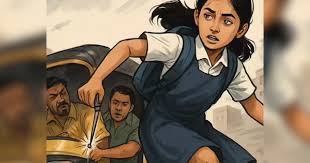
Hardoi News: In Hardoi, Uttar Pradesh, boys from another community kidnapped a Dalit girl from outside her school as part of a well-planned conspiracy. It is being reported that they had been harassing her previously. Read the full story. Ashish Dwivedi/Hardoi: A daylight kidnapping in Hardoi, Uttar Pradesh, caused a sensation. A 14-year-old Dalit girl was abducted from outside her school by four young men in a car. The police acted swiftly and rescued the girl safely from the clutches of the kidnappers and seized their car. However, the kidnappers escaped and police teams are searching for them. Edited By: Preeti Chauhan Courtesy: Hindi News
Cong stages protest in Ambala against ‘vote theft’
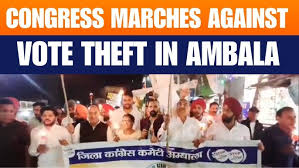
Ambala: Former chief minister and Leader of Opposition (LoP) Bhupinder Singh Hooda, along with Haryana Congress chief Rao Narendra Singh, led a protest in Ambala on Thursday against alleged large-scale vote theft in Haryana. A large number of Congress leaders, workers, and citizens gathered in the city, voicing strong anger and outrage over what they termed as a “theft of democracy.” The protesters later submitted a memorandum to the Ambala deputy commissioner’s office, addressed to the President of India. Addressing the gathering, Hooda said that LoP in Lok Sabha Rahul Gandhi exposed massive vote rigging across several states, including Karnataka, Maharashtra, and Haryana. “His revelations raised serious questions about the impartiality of the Election Commission. In some areas, 501 votes were registered from a single house, in others, 223 votes were recorded in the name of one woman, and even 22 votes were cast using the photo of a foreign woman,” Hooda claimed. He alleged that the actual scale of the fraud runs into lakhs of votes. “Rigging happened not only in constituencies where the Congress lost but even in those where it won. If the voting was fair, Congress MLAs would have won by far larger margins,” he added. Citing past electoral trends, Hooda said that the party leading in postal ballots always formed the govt in Haryana. “This time, Congress was leading in 73 out of 90 seats in the postal ballot count, but lost in the EVM count. On the night of the 5th, the Election Commission reported a 61.19% voter turnout; the next day, it increased to 65.65%, which mysteriously rose to 67.9% by the 7th — just before counting. Such discrepancies are beyond comprehension,” he said. Hooda termed the developments as an “open theft of not just votes, but the entire govt.” He asserted that the incident amounts to tampering with the country’s democracy, constitution, and the hard-earned freedom achieved through countless sacrifices. “Congress will launch state-wide and nationwide protests against vote theft and will not allow the BJP to undermine the Constitution,” he declared. Echoing Hooda’s sentiments, Congress state president Rao Narendra Singh said Rahul Gandhi’s disclosures revealed the “truth of machine manipulation.” “In the assembly polls, Congress received 39.5% votes against the BJP’s 39.9%. Yet, despite leading in 73 postal ballot seats, Congress was denied power. In the Lok Sabha polls, Congress got 47.6% votes — two and a half percent more than the BJP. This is a direct assault on Dr B R Ambedkar’s Constitution,” Rao said, vowing to take the battle to the streets to defend democracy and the people’s mandate. Courtesy : TOI Note: This news is originally published on https:/timesofindia.com/bha and is used purely for non-profit/non-commercial purposes, especially human rights
The pandemic of caste: Homebound exposes casteism and communalism amid COVID-19 lockdowns
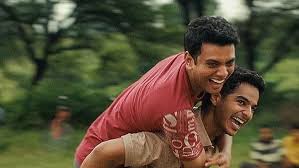
Neeraj Ghaywan’s ‘Homebound’ must be appreciated for its representation of how caste supremacy constantly suppresses Dalit and Muslim identities in the public sphere. It was March 24, 2020. Prime Minister Narendra Modi had driven the entire nation into a sudden, harsh and complete lockdown for 21 days in the wake of the COVID-19 pandemic. The country subsequently witnessed gut-wrenching visuals of clueless, poor informal sector contract workers and interstate migrant workers setting out on foot towards bus terminuses. The event may have now faded from popular public imagination in 2025 with the growing institutional talks of Vikshit Bharat of PM Modi. But to only surprise us, director Neeraj Ghaywan evokes those images with his film Homebound. The politics of naming has truly justified the title of the film. Homebound is loosely based on a field report by senior journalist Basharat Peer, published in The New York Times in 2020. Fraternity in times of hostility The first scene of the film is set in a railway station named Mapur, crammed with job aspirants for a railway police recruitment examination. A Dalit youth, Chandan (Vishal Jethwa), and Mohammed Shoaib (Ishaan Khatter) arrive at the station only to be devastated by the number of candidates waiting to catch the train for very limited vacancies. Chandan and Shoib grew up together in the village that truly epitomises the constitutional vision of fraternity, while they lived similar lives of social deprivations. Throughout the first half of Homebound, Shoaib and Chandan try hard for economic mobility. It’s when Shoib gets a private sector job as a spot boy that he immediately starts experiencing communalism from his dominant caste Hindu bosses. Though Chandan isn’t in a private sector job, Ghaywan shows how casteist brutalism against Dalits is unbounded. A desperate Chandan goes to the railway office to enquire about the recruitment results and ends up facing the casteist taunting by a railway clerk. The story of private sector discriminations is less known due to dominant caste gatekeeping. Ghaywan busts the myth that casteism isn’t rampant in the public sector. Caste and religion, the twin forces of brutalism Homebound must be appreciated for its representation of how the cruelty of caste supremacy constantly suppresses Dalit and Muslim identities in the public sphere. A good example is how Chandan is shown to repeatedly tick the general category box on job applications to escape caste-based stereotypes and degradation. Ghaywan exposes the incessant delays in public sector recruitments due to the ruling elites’ non-committal attitudes. Another critical example of casteism in the public sector workplace is how dominant caste parents force Chandan’s mother out of her job as a school cook. What comes as a soothing interlude for progressive audiences is a supporting character’s Buddhist wedding, where pictures of Buddha and Dr BR Ambedkar are spotlighted. The pandemic of caste Homebound’s second half is teary, as both Chandan and Shoaib unite at a garment factory in Surat. Their lives take a 120-degree turn when the COVID-19 pandemic hits. Garment factories suddenly close down due to strict lockdown protocols. Both friends are quickly faced with deep uncertainties and decide to go back to their villages. While they’re crammed on a truck’s rooftop, Chandan contracts COVID-19. Despite having opportunities to do so, Shoib doesn’t abandon Chandan. Exposing India’s stark social realities, they get off the truck and walk on the empty highway in search of a hospital. Ghaywan reveals how healthcare facilities in India are unequally spread and mostly centred near urban areas. Towards the end, Chandan lies dying on Shoib’s lap on the highway. Shoib discovers a small photograph of Ambedkar in Chandan’s wallet and his job application with the Scheduled Caste (SC) checkbox ticked. This, to me, is the most powerful visual in Homebound. It proclaims how Ambedkar creates hopes among India’s most oppressed. After Shazia Iqbal’s Dhadak 2, Ghaywan’s Homebound has created renewed anticipations from Bollywood producers and directors, as they have finally started telling the audience the most politely kept secret of India—caste hierarchy. The severe cuts imposed on both films by the Central Board of Film Certification (CBFC) show the shrinking space for freedom of speech in a right-wing political landscape. Nonetheless, Homebound lays bare how socioeconomic marginalities are associated with caste and religion. Needless to say, the film deserves to be India’s entry for the Academy Awards. However, Bollywood needs to nurture more Dalit actors and directors to tell such stories in gripping ways. Subhajit Naskar is a political scientist and teaches at the Department of International Relations at Jadavpur University. Views expressed here are the author’s own. Written by:Subhajit Naskar Courtesy : TNM Note: This news is originally published on https:/thenewsminute.com/bha and is used purely for non-profit/non-commercial purposes, especially human rights
Wardha University: Dalit and backward class students suspended for chanting “Sorry Savarkar,” administration says disrespecting “great men”

Following the Left Unity victory in the JNU Students’ Union elections, ten students who chanted slogans at Mahatma Gandhi International Hindi University have been suspended from the hostel. According to the administration, these students chanted “Sorry-sorry Savarkar, RSS’s little monkey, run Narendra run Narendra,” while the students said they chanted “Bal Narendra-Bal Narendra.” New Delhi: Mahatma Gandhi International Hindi University is once again embroiled in controversy. Ten students have been suspended from the hostel for chanting derogatory slogans against Prime Minister Narendra Modi and Vinayak Damodar Savarkar. All of these students belong to Dalit and backward classes. According to the university, these slogans “degraded the dignity of great men.” The matter began when, following the defeat of the ABVP (Akhil Bharatiya Vidyarthi Parishad) and the victory of the Left alliance in the JNU student union elections on November 6, some students of Wardha University protested on campus, chanting “Sorry, sorry Savarkar” and “Run Narendra.” Chandan Saroj, a PhD student at the university and associated with the AISF (All India Students Federation), says, “The slogan ‘Sorry, sorry Savarkar’ proved unbearable for the ABVP, which believes in Savarkar’s principles.” The very next day, the ABVP surrounded the university’s administrative building, alleging that a “great man” like Savarkar had been insulted. On November 7, the administration issued show-cause notices to six students (Kaushal Kumar, Karanveer Singh, Brijesh Sonkar, Rakesh Ahirwar, Ashwini Sonkar, and Dhananjay Singh). These students included four Scheduled Caste (SC) and two Other Backward Class (OBC) students. The notice states, “It has come to the notice of the university administration that on the night of November 6, 2025, you unauthorizedly and without informing the administration, gathered students in the university hostel premises, took out a procession, and raised slogans, including slogans derogatory to the dignity of great men. Your actions have affected the academic and peaceful environment of the university and created an atmosphere of unnecessary tension on the campus.” The notice sought an explanation from these students within three days. In a conversation with The Wire Hindi, Dhananjay, associated with the Congress student wing, NSUI, said, “We did not take out a procession. We were just out for a walk. There must have been ten or fifteen of us.” During this, we raised slogans like Inquilab Zindabad, Bhagat Singh Zindabad, Jai Bhim.’ In response to the notice, the students wrote to the Proctor on November 10, ‘With regard to the points mentioned by you, we wish to clarify that we have neither insulted any great man, nor raised any derogatory slogans, nor organised any gathering; the word ‘gathering’ is wrong because we were just a few people walking around.’ But the university administration was not satisfied with this response, and on November 11th, it suspended these six students, along with four others (Dharmendra Kumar, Manish Chaudhary, Satyendra Rai, and Abhijeet Kumar), from their hostel for 14 days. All ten students belong to Dalit and backward communities. The order, issued by Proctor Rakesh Kumar Mishra, states, “These students will be completely prohibited from entering the hostel premises during the period of their suspension.” Even before this order, the university administration had filed an NCR (non-cognizable report) against the six students at the Ramnagar police station on November 10th and demanded police action. The report shows that on November 6th, the university’s Board of Proctors met and reviewed the CCTV footage. The report states, “In the video, some students were heard shouting slogans such as ‘Sorry-Sorry Savarkar, RSS’s little monkey, run Narendra-run Narendra.’” The university has told the police that the students had “insulted and damaged the reputation” of “respectable individuals” by raising slogans against them. However, the suspended students told The Wire Hindi that they did not shout “Bhaag Narendra, Bhaag Narendra,” but “Bal Narendra, Bal Narendra.” To hear ABVP’s side, we contacted Vedika Mishra, the organization’s university unit secretary, but she declined to comment. Speaking to The Wire Hindi, the university’s Registrar, Kader Nawaz Khan, said, “We had to go to the police. The students forced us to. Look at the language of the slogans. Secondly, by shouting slogans until midnight, they spoiled the atmosphere of the hostel. They had not obtained any permission to hold such a rally. An attempt is being made to spoil the atmosphere here.” This action has been taken to stop this very thing.’ When asked whether the slogan ‘Sorry, Sorry Savarkar’ was sufficient for such action, the Registrar said, ‘You must have read the slogan that followed it.’ Does the university administration have any objection to ‘Bhaag Narendra, Bhaag Narendra’? On this issue, the Registrar said, ‘It’s not a matter of liking it or not. It’s a matter of spoiling the academic environment of the university.’ Chandan Saroj says, ‘A repressive atmosphere has developed in the university where no slogan other than ‘Jai Shri Ram’ is tolerated. If a student chants “Jai Bhim,” “Lal Salaam,” or “Jai Samvidhan,” they immediately become the target of the administration. He further adds, “The RSS holds regular shakhas on the Wardha University campus.” While the Registrar claims, “No student organization, regardless of its ideology, can hold rallies, processions, etc. without permission.” When asked whether the RSS holds shakhas on the university campus, the Registrar said, “I will have to verify. I will have to check the records.” When we asked if the university administration was unaware of the RSS shakhas being held on campus, the Registrar said, “I am not saying that… I am not saying whether (the administration) is aware or not. I will have to check the records.” Students explained that the university is located near Nagpur, and the Sangh Parivar’s ideology is dominant in this area. As a result, many students are facing pressure and action. Courtesy: Hindi News
Maharashtra: Dalit Mahasangh chief murdered in Sangli home; eight booked

The incident occurred on Tuesday at midnight when Mohite was celebrating his birthday in his home near Garpir Dargah Chowk area, police said. A group of men armed with knives, iron rods, and sticks started hurling abuses at Mohite after guests left the spot and arrangements were being wrapped up. The founder president of a Dalit outfit was allegedly stabbed to death by eight men in Sangli city when he was celebrating his birthday in his home, a crime suspected to be the fallout of a dispute, police said on Wednesday. The slain leader, identified as Uttam Mohite, 38, was the founder of Dalit Mahasangh. One of the attackers, identified as Shahrukh Rafiq Shaikh (26), suffered a severe injury during the scuffle, leading to his death on Wednesday morning at a hospital, according to police. The incident occurred on Tuesday at midnight when Mohite was celebrating his birthday in his home near Garpir Dargah Chowk area, police said. A group of men armed with knives, iron rods, and sticks started hurling abuses at Mohite after guests left the spot and arrangements were being wrapped up. Sensing danger to his life, Mohite ran inside his home while being chased by attackers. They stabbed Mohite multiple times in the stomach and chest, and hit him on his head and arms with iron rods and sticks. During the scuffle, one of the attackers, Shaikh, sustained a severe stab injury on his thigh, apparently by mistake, police said. Mohite was rushed to the Sangli Civil Hospital by his nephew, where doctors declared him dead on arrival. Meanwhile, the attackers carried severely injured Khan to the hospital, where he succumbed to his injuries on Wednesday morning, police said. A police official said on Wednesday that Mohite and one of the accused, Ganesh More, had a brief argument during the birthday celebration. Before leaving the venue, More reportedly warned Mohite that he “would not spare” him. Police have registered a case of murder against eight persons, identified as Ganesh More, Satish Lokhande, Shahrukh Shaikh (deceased), Banya alias Yash Londhe, Ajay Ghadge, Jitendra Londhe, Yogesh Shinde, and Sameer Dhole, who are residents of the Indiranagar area, based on a complaint lodged by Mohite’s wife, Jyoti. Edited By: Abhishek Sheoran Courtesy : India TV Note: This news is originally published on https:/indiatv.com/bha and is used purely for non-profit/non-commercial purposes, especially human rights
BSP plans to woo Dalit-Muslim with public meeting in Noida

Lucknow: Two months into holding a state-level rally in Lucknow on Oct 9 and creating political waves, the Bahujan Samaj Party (BSP) has now set its eyes on specific combinations of voters and regions where these combinations dominate politics. The party will start with an outreach of Muslim-Dalit (M-D) voters in west UP and may hold a public meeting in Noida on Dec 6 to tap into the vote base. Sources in the party said that party national president Mayawati will be the chief guest at the event. Senior party leaders on Wednesday visited the Rashtriya Dalit Prerna Sthal in Noida for inspection. Though some of them whom TOI contacted did not divulge much, they agreed that the planning is underway, thus lending credence to the information shared by insiders that the event has been designed to specifically reach out to Dalit and Muslim voters. Party cadres and supporters from eight divisions of west UP may be present at the gathering. They will get directions from Mayawati on how to bring back the voters that the party lost in the region after 2012, since when its downfall in UP began. The Dalit and Muslim bhaichara committees, which the party formed to woo Muslims and Dalits in UP to its side, are also relevant in west UP. Jatav, the most dominant sub-caste of Dalits, and BSP’s core voters, are also concentrated in west UP. Evidence of this was the 2019 Lok Sabha elections when BSP contested in alliance with the Samajwadi Party in UP and won 10 seats. Four of these seats were in west UP, which were Nagina, Saharanpur, Amroha, and Bijnor. Each has a formidable combination of Dalit and Muslim voters. The party has scheduled the event for Dec 6 as it is the death anniversary of Dr BR Ambedkar and one of the three annual events observed by the party nationally. The other two occasions are the birth anniversary of BR Ambedkar on April 14, and death anniversary of BSP founder Kanshiram on Oct 9. Beginning Dec 6, there may be a series of public meetings by the party in different regions of UP. These events will help the party analyse possibilities in different regions. Courtesy : TOI Note: This news is originally published on https:/timesofindia.com/bha and is used purely for non-profit/non-commercial purposes, especially human rights
Journalist stops transgender protester from jumping off bridge in Tamil Nadu
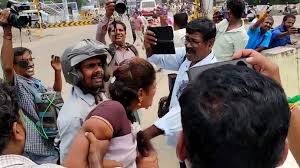
Transgender persons in Tamil Nadu’s Tirunelveli staged a protest demanding free house-site pattas or government housing. One protester attempted to jump off a bridge but was stopped by journalists. The District Collector assured action, and protesters dispersed. A tense moment unfolded in Tamil Nadu’s Tirunelveli on Wednesday when journalists intervened and stopped a transgender protester from jumping off a bridge during a demonstration demanding free house-site pattas or government houses. A group of transgender persons had gathered outside the Tirunelveli District Collector’s office, sitting on the Tirunelveli–Thiruvananthapuram Highway and blocking traffic. They held placards and raised slogans, alleging that despite submitting petitions several times, including during Chief Minister MK Stalin’s special grievance redressal camp, no action had been taken on their request for land pattas or housing. During the protest, one of the participants suddenly ran towards the Thamirabarani river bridge and attempted to jump. Journalists covering the protest chased after her and managed to pull her back, preventing a tragedy. Officials on the spot attempted to negotiate with the protesters. As District Collector’s convoy was exiting the premises, demonstrators blocked the vehicle, forcing the Collector to step out and speak to them. Surrounded by authorities, the Collector assured that steps would be taken to address their housing demands. Following the assurance, the protesters dispersed. Courtesy : India Today Note: This news is originally published on https:/indiatoday.com/bha and is used purely for non-profit/non-commercial purposes, especially human rights