
‘Venomous rhetoric’: 272 eminent citizens pen letter against Rahul Gandhi; accuse Congress of making unsubstantiated claims
NEW DELHI: A group of 272 eminent citizens, including 16 judges, 123 retired bureaucrats, 14 former ambassadors and 133 retired armed forces officers, issued an open letter accusing leader of opposition Rahul Gandhi and the Congress of trying to erode public faith in the Election Commission and other constitutional institutions. The letter, titled “Assault on National Constitutional Authorities,” alleged that opposition leaders were attempting to manufacture a sense of institutional breakdown through what it described as “venomous rhetoric” and “provocative but unsubstantiated accusations.” The letter said: “Some political leaders, instead of offering genuine policy alternative, resort to provocative but unsubstantiated accusations in their theatrical political strategy. After their attempts to tarnish the Indian Armed Forces by questioning their valour and accomplishments, and the Judiciary by questioning its fairness, Parliament, and its constitutional functionaries, now it is the turn of Election Commission of India to face systematic and conspiratorial attacks on its integrity and reputation.” The signatories singled out Rahul Gandhi for repeatedly alleging vote theft while, they said, failing to file a formal complaint or sworn affidavit to back his claims. They pointed to his assertions that he had “100 per cent proof” and an “atom bomb” against the Commission, alongside accusations of “treason,” and argued that such remarks came “without the prescribed sworn affidavit” required for accountability. The letter also noted that similar accusations had been amplified by Congress leaders, opposition parties and allied NGOs, including claims that the Election Commission had acted like the “B-team of the BJP.” It argued these assertions collapsed under scrutiny, pointing to the ECI’s public release of its methodology and verification done under court oversight. It said, “Moreover, several senior figures of Congress and other political parties, leftist NGOs, ideologically opinionated scholars, and a few attention seekers in other walks of life, have joined in with similarly blistering rhetoric against SIR, even declaring that the Commission has descended into complete shamelessness by acting like the ‘B-team of the BJP.’ Such fiery rhetoric may be emotionally powerful but it collapses under scrutiny, because the ECI has publicly shared its SIR methodology, overseen verification by court-sanctioned means, removed ineligible names in a compliant manner, and added new eligible voters.” The signatories described this pattern of criticism as “impotent rage,” stating that leaders who faced electoral setbacks “lash out at institutions instead of rebuilding their credibility.” The letter said, “This pattern of behaviour reflects what might be called ‘impotent rage’ deep anger born of repeated electoral failure and frustration, without a concrete plan to reconnect with the people. When political leaders lose touch with the aspirations of ordinary citizens, they lash out at institutions instead of rebuilding their credibility. Theatrics replace analysis. Public spectacle takes the place of public service.” Invoking the legacy of former chief election commissioners TN Seshan and N Gopalaswami, the letter said, “Today, thinking of ECI, the country also remembers the likes of TN Seshan and N Gopalaswami, whose unyielding leadership transformed the Election Commission into a formidable constitutional sentinel. They did not court popularity. They did not chase headlines. They enforced the rules fearlessly, impartially, relentlessly.” Calling for transparency, legal accountability and respectful political conduct, the letter concluded by saying, “We call upon the Election Commission to continue its path of transparency and rigour. Publish complete data, defend itself through legal channels when necessary, and reject politics dressed up as victimhood. We call upon political leaders to respect the constitutional process, to compete not through baseless accusation but through policy articulation, and to accept democratic verdicts with grace.” Courtesy : TOI Note: This news is originally published on https:/timesofindia.com/bha and is used purely for non-profit/non-commercial purposes, especially human rights
“You’re a Dalit, you can’t marry”: Karnataka HC denies bail to constable accused of having a relationship with a woman on the pretext of marriage, calling it a clear caste atrocity…
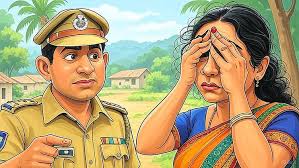
The High Court said, “According to the victim, the accused married her in front of a photo of Sai Baba and had physical relations with her several times, but refused to accept her as his wife. When she insisted, he deceived her using caste as an excuse.” Bengaluru – The Karnataka High Court has rejected the anticipatory bail plea of a police constable accused in a case where a Dalit woman was deceived in the name of love. The accused had physical relations with the woman after promising marriage, but later broke off the relationship and even assaulted her, citing her Scheduled Caste (SC) identity. In his judgment delivered on November 3, High Court Justice S. Rachaiah clearly stated that this is a serious offense under the SC/ST (Prevention of Atrocities) Act, and bail is strictly prohibited under Section 18A. The court stated, “It is clear from the allegations in the complaint that the accused refused to accept her as his wife because she belonged to a Scheduled Caste. The essential elements of the crime are established. Therefore, he is not entitled to anticipatory bail under Section 18A of the said Act.” Learn about the entire case The case relates to the Amrutur police station in Tumkur district, where both the accused constable and the victim were posted as colleagues. According to the prosecution, the incident began on February 14, 2023, when the accused arrived at the victim’s official residence. There, he expressed his desire to marry her and performed a simple wedding ceremony in front of a picture of Sai Baba. The accused assured the victim that the marriage would be kept secret until the caste dispute was resolved. Following this, the accused had physical relations with the victim several times, but did not allow her to wear a mangalsutra, fearing it would cause problems for both of them. The victim, trusting him, remained silent. However, when she demanded that the marriage be made public, the accused flatly refused. His excuse was that the victim belonged to a Scheduled Caste, while he himself belonged to a different caste. Not only did he refuse, but when she insisted on marriage, the accused also assaulted her. Hurt and betrayed, the victim finally filed a complaint, based on which the Amritsar police registered Crime No. 81/2025. Legal provisions applied in the case The accused has been charged under sections 318(2) (cheating), 352 (assault), 115(2) (criminal conspiracy), 351(2) (criminal intimidation), 54 (concealment of an offence), and 74 (abetment of an offence) of the Indian Penal Code (IPC), 2023, as well as section 3(5). Additionally, sections 3(1)(r) (insult on grounds of caste), 3(1)(s) (cheating on grounds of caste), 3(1)(w)(i) (caste-based offences), and 3(2)(va) (group offences on grounds of caste) of the SC/ST (Prevention of Atrocities) Act, 1989 (Amendment 2015) have also been added. The case is pending in the court of the Additional District and Sessions Judge, Tumkur. The trial court had rejected the accused’s bail plea (CRL.Miss.761/2025) on June 9, against which the accused filed an appeal under Section 14(A)(2) of the SC/ST Act. This appeal was filed in the Karnataka High Court as CRL.A No. 1363/2025, where the SPP appeared for the State and the lawyer appeared for the victim. The accused said the victim had proposed marriage. The appeal hearing took place on September 26th, where the accused’s lawyer, Dayanand Hiramath, presented a powerful argument. He claimed that the entire case was fabricated and that the victim had proposed marriage. When the accused refused, false allegations were made as revenge. The lawyer stated that there was no concrete evidence that the accused had married or physically abused her. He also refuted the caste-based denial, stating that mere allegations do not prove a crime. The lawyer also emphasized the accused’s personal hardship. The accused is a police constable and the sole earning member of the family. He is a permanent resident of Manapura village in Sindgi taluk, Vijayapura district. Failure to grant bail would cause financial hardship to the entire family. The lawyer requested that anticipatory bail be granted with strict conditions, stating that the accused is willing to comply with the court’s conditions. On the other hand, High Court government lawyer Waheeda M.M., representing the state, strongly objected. Citing the facts of the complaint, she argued that the accused deliberately lured the victim into a love affair. He engaged in physical relations with her repeatedly under the false promise of marriage, but when it came to granting her wifely status, he used caste as an excuse. She stated that the accused refused to recognize the victim as his wife and assaulted her. This constituted clear caste-based atrocity under the SC/ST Act. The lawyer cited Section 18A, which prohibits bail in such cases, and demanded that the appeal be dismissed so as not to hamper the investigation. The High Court rejected the bail plea for this reason. After hearing arguments from both parties, the High Court thoroughly reviewed the complaint record. Justice Rachaiah reiterated the facts in the judgment. He wrote that both the accused and the victim worked as constables at the Amritur police station. They grew close, leading to a decision to marry. According to the victim, the accused married her in front of a photo of Sai Baba at her home and began living as husband and wife. They had physical relations several times, but he avoided making a public announcement. When the victim insisted, the accused deceived her by citing caste. The court stated, “According to the victim, the accused married her in front of a photo of Sai Baba and engaged in physical relations several times, but refused to accept her as his wife. When she insisted, he deceived her by citing caste.” The court held that the allegations in the complaint attracted elements of the offense under the SC/ST Act. Therefore, bail cannot be granted due to the prohibition of Section 18A. The appeal was dismissed, and the accused will have to face trial. Geetha
Himachal: Organizations took to the streets in Nahan against Dalit oppression, submitted a 12-point memorandum to the Chief Minister.

The 12-point demands, including the investigation of pending cases under the SC/ST Act, the arrest of the culprits, and the formation of a clean-up commission, were submitted to the Chief Minister. Nahan (Sirmaur). Dalit organizations held a strong protest in Nahan on Monday against the increasing atrocities, discrimination, and rights violations against the Dalit community in Himachal Pradesh. Representatives from more than eight organizations, united under the banner of the “Dalit Shoshan Mukti Manch,” held a protest rally and presented their demands to the state government. The protest began at the Hindu Ashram in Nahan and passed through various parts of the city, culminating at the Deputy Commissioner’s (DC) office. Here, the protesters, led by the forum’s state convener, Ashish Kumar, submitted a 12-point memorandum of demands to the Chief Minister through the Deputy Commissioner. Anger over recent incidents Prior to the rally, a joint convention of various Dalit organizations was held at the Hindu Ashram. Ashish Kumar inaugurated the convention, while Satpal Mann moderated the forum. In his address, Ashish Kumar stated that incidents of atrocities against Dalits have increased in the state in recent times. He specifically mentioned the suspicious death of Dalit student Sikandar in Rohru and the fatal attack and death of a Dalit woman in Sainj, Kullu. He stated that these incidents have created deep resentment within the Dalit community across the state. Formation of a New Committee During the convention, a 31-member committee was also formed to formulate future strategies and strengthen the organization. Rajesh Tomar was unanimously elected as the convener, and Vijay Chauriya, Prasan Tomar, and Praveen Sodha were elected co-conveners. Key Demands Included in the Memorandum The memorandum sent to the Chief Minister includes several important demands related to the safety and rights of the Dalit community. The forum’s key demands are: Justice and Law: Pending cases registered under the SC/ST (Prevention of Atrocities) Act should be investigated in a timely and impartial manner, and the culprits should be immediately arrested. Reservation and Funds: An SC/ST Development Fund Act should be enacted in the state, modeled after Telangana, and the 85th Constitutional Amendment should be fully implemented. The reservation roster should be strictly followed in new recruitments. Victim Relief: Immediate financial assistance should be provided to families affected by harassment. Education: Timely payment of scholarships to Dalit students should be ensured. Monitoring: A state-level monitoring committee should be formed to investigate discrimination in government and educational institutions. Budget: The budget allocated for SC/ST welfare schemes should be utilized 100%, and a public report should be released. Sanitation Workers: Sanitation workers should be regularized in the state, the contract system should be abolished, and a ‘Sanitation Commission’ should be established in Himachal Pradesh, modeled after Delhi, Punjab, and Karnataka. Rajan Chaudhary Courtesy: Hindi News
CPI alleges increase in atrocities against Dalits, adivasi
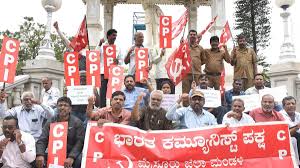
Members of the Communist Party of India (CPI) staged a demonstration in the city on Tuesday against what it called increase in atrocities against Dalits, adivasis, women, and minorities in the country. The protesters attributed the atrocities to the prevailing mindset in the society, which, it said, was shaped by caste discrimination encouraged by the Manusmirti. They regretted that such atrocities continue to take place in the society in the present times long after the country has become democractic. Instead of a reduction in such crime, the atrocities are on the rise, the CPI alleged. Citing statistics from the National Crimes Record Bureau, the CPI said that there were 57,000 recorded cases of atrocities against the Dalits in 2023 while there were 2,835 rape cases in which Dalit women were victims. They said these were only the registered cases while the actual numbers could be much higher. The rise in crime was also attributed to rise in communalism in the country and called for greater unity among the people to fight the scourge. The Hindu Bureau Courtesy : The Hindu Note: This news is originally published on https:/thehindu.com/bha and is used purely for non-profit/non-commercial purposes, especially human rights
CPI stages protest against attacks on dalits, minorities
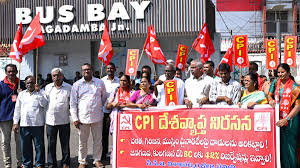
Leaders and activists of the Communist Party of India (CPI), staged a protest on Tuesday, following a call given by the party’s national council, demanding an end to the attacks on dalits, tribals and minorities. They also sought a caste survey and provision of 42% reservation for Backward Classes Addressing the gathering, CPI district secretary Sk. Rahaman alleged that the attacks on dalits and minorities had increased after Narendra Modi became the Prime Minister. He condemned the attacks on dalits, minorities and tribal people in Uttar Pradesh, Manipur, West Bengal and other States. He also deplored the alleged attempts of the Modi government to replace the secular character of the Constitution with ‘Manuvada’. Rahaman said that the ethnic clashes in Manipur had drawn flak from nations across the globe but the Centre and the State government had failed to condemn the attacks. He alleged that the natural resources of the forests were being destroyed and that the tribals were being deprived of their livelihood to benefit corporate companies. He called upon the people to oppose the move of the Centre to exploit the natural resources of the forest areas. Additionally, he condemned the attitude of the TDP-led Alliance government in Andhra Pradesh for failing to initiate action against the police officers responsible for the attack on dalit and minority youth in Tenali, and against the perpetrators of rape of a minor girl and women. He demanded that the Centre and State government put an end to attacks on dalits and minorities failing which the people would teach them a lesson in the next elections. CPI district assistant secretary P. Chandrasekhar, executive members M. Pydiraju, M. Manmadha Rao, CN Kshetrapal Reddy, N. Nagabushanam, MA Begam and K. Satyanjaneya were among those who participated in the protest. Madhu Gopal Courtesy : The Hindu Note: This news is originally published on https:/thehindu.com/bha and is used purely for non-profit/non-commercial purposes, especially human rights
UP: Dalit Vegetable Vendor Beaten, Forced to Call Attacker ‘Father’; Main Accused Arrested After Video Goes Viral

A Dalit vegetable vendor was beaten in Shahjahanpur district of Uttar Pradesh, leading to quick police action after a video of the assault went viral on social media. The incident happened in Paina Buzurg village under Sidhouli police station, where a local strongman attacked the vendor with sticks. In the video, the accused is seen hitting the man again and again and forcing him to call the attacker “father”. The disturbing footage caused widespread anger online, which pushed the police to step in without delay. The victim has been identified as Achal Kumar, a resident of nearby Paina Khurd. Officials said Achal had an ongoing legal dispute with some upper caste men in the area. On Sunday, he accidentally entered Paina Buzurg while selling vegetables. He was then surrounded by Chutakke Singh and his group, who assaulted him. A local resident filmed the attack and posted it online, which created more tension in the village. Achal later filed a complaint with the police. A case has been registered under the appropriate sections. Sidhouli Circle Officer Praveen Malik said, “We have arrested the main accused and the investigation is continuing.” He also said that the violence appeared to be a result of an old rivalry between the two sides. “The victim has been medically examined and the situation is under control,” he added. Courtesy : TOP Note: This news is originally published on https:/theobserverpost.com/bha and is used purely for non-profit/non-commercial purposes, especially human rights
Dalits, minorities targeted for deletions: VCK chief Thol Thirumavalavan on SIR
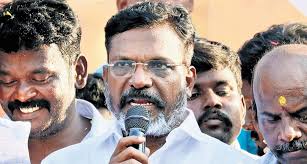
Addressing reporters at the party’s headquarters, he claimed that several constituencies with significant Dalit and minority populations are witnessing “unnatural” levels of voter-list deletions. CHENNAI: Viduthalai Chiruthaigal Katchi (VCK) president Thol Thirumavalavan on Tuesday alleged large-scale irregularities in the ongoing Special Intensive Revision (SIR) of electoral rolls and urged the Election Commission of India (ECI) to immediately intervene to ensure free and fair elections in Tamil Nadu. Addressing reporters at the party’s headquarters in Chennai, he claimed that several constituencies with significant Dalit and minority populations are witnessing “unnatural” levels of voter-list deletions. He said the pattern appears “targeted and deliberate” and warned that such actions could “distort the democratic rights” of marginalised communities. Thirumavalavan alleged that political forces “aligned with the BJP” are attempting to influence the revision process by filing mass objections and facilitating relocation of voters from other states into select constituencies. “These are coordinated attempts to alter voter demographics ahead of the 2026 polls,” he said. The VCK leader also criticised the ECI for what he described as “a lack of adequate monitoring” at the field level. He urged the ECI to deploy special observers, verify deletion requests and publish constituency-wise data on additions and removals to maintain transparency. Stating that TN had always maintained a “high standard of electoral integrity”, he said any deviation would undermine public confidence. He further announced that VCK would submit a detailed memorandum to the chief electoral officer highlighting specific irregularities. Calling for united action, Thirumavalavan appealed to all INDIA bloc parties to remain vigilant and protect the voting rights of all citizens. He further announced a protest against the ongoing SIR, calling to stop the exercise immediately on November 24 in Chennai. Courtesy : TNIE Note: This news is originally published on https:/thenewindianexpress.com/bha and is used purely for non-profit/non-commercial purposes, especially human rights
A ruling to restore trans rights

With the Jane Kaushik verdict, the Supreme Court pushes substantive equality and signals hope amid systemic discrimination The judgement of the Supreme Court in Jane Kaushik v Union of India, delivered on October 17, 2025, by a bench consisting of Justices J B Pardiwala and R Mahadevan, is not only the vindication of a transgender woman’s fight against discrimination, but also a much-needed boost to the LGBTQI movement in the country. It appeared that the ruling in Supriyo v Union of India, which rejected marriage equality, dealt a severe blow to the movement towards LGBTQI equality through legal process. However, the decision in Jane Kaushik has reopened a path to justice. The logic and reasoning of the judgement, the important mandatory directions issued to the Union and state governments, as well as the continuing commitment to improving transgender lives, as seen in the constitution of a committee to take forward the constitutional vision of transgender rights, mark Jane Kaushik as a significant intervention by the top court. The petitioner, Jane Kaushik, is a transgender woman who suffered an all-too-common experience of discrimination against the community. Jane’s application for employment as a school teacher was rejected on the grounds of her being transgender. There being no functional mechanism to deal with grievances about discrimination of this nature, she had no choice but to approach the Supreme Court for redress. The Court found that there was discrimination perpetrated by the school in which Jane sought employment, as the institution did not employ her solely because she is transgender. For this act, the Court ordered the school to compensate Jane Kaushik with Rs 50,000. The apex court went beyond the individual petitioner and identified structural reasons for the discrimination suffered by Jane in the inactions of the government of Uttar Pradesh and the Union government, for which they were both ordered to compensate Jane with Rs 50,000 each. A key reason why transgender persons continue to experience discrimination in society lies in the grossly apathetic attitude of both the Union and state governments, which have reduced the Transgender Persons (Protection of Rights) Act 2019 to a dead letter. The Court characterised this State inaction as neither ‘inadvertent or accidental’, but ‘intentional’ and stemming from ‘deep-rooted societal stigma’ which results in a ‘lack of bureaucratic will to effectuate the provisions of the 2019 Act and the 2020 Rules’. It is to be noted that the Act itself comes with flaws. For the Court, ‘the marginalisation of transgender persons is often perpetuated not only by overt acts of discrimination, but also through the silence and gaps in the statute, i.e., the 2019 Act.’ Jane Kaushik suffered discrimination during her application for employment because the state government has not bothered to implement even the flawed Act. This double failure is a form of ‘omissive discrimination’ which is violative of the constitutional guarantee of the equal protection of laws to transgender persons. The Supreme Court has refused to be silent in the face of this discrimination. It has taken constitutional action to both recognise and remedy gaps in the law so as to realise substantive equality, by crafting a series of innovative reliefs. Towards equal opportunity The Court has passed certain mandatory directions to both the Union and the state government to ensure that the Act translates into real protection of the community. Among the important interventions is the direction to state governments to ensure that every establishment (government or private) appoints a complaints officer to deal with grievances raised by transgender persons regarding violations of the Act. The Court, however, recognises that ‘directions’ alone may have a limited impact and has constituted a committee consisting of transgender rights advocates, academics, lawyers, and government officials. The committee has been tasked with the mandate of preparing a comprehensive report that includes the formulation of a ‘viable and comprehensive equal opportunity policy for the transgender community in the arenas of education and employment’. Among the members of the Committee from Karnataka are transgender rights activist Akkai Padmashali, senior advocate Jayna Kothari, and Nithya Rajshekhar from the Centre for Law and Policy Research. The committee must now initiate extensive engagement with the trans community and ensure that the concerns of every section of the community are represented in the committee’s deliberations. It is also up to the LGBTQI rights activists to engage intensively with the committee and ensure that it comes up with recommendations that can help transform the landscape for transgender rights in India. This is an opportunity that must not be missed. Arvind Narrain (The writer is a Bengaluru- based lawyer) Disclaimer: The views expressed above are the author’s own. They do not necessarily reflect the views of DH. Courtesy : DH Note: This news is originally published on https:/deccanherald.com/bha and is used purely for non-profit/non-commercial purposes, especially human rights
Transgender persons can’t avail assisted reproductive technology benefit under existing laws, Centre tells Kerala HC
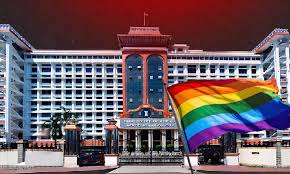
Kochi: A transgender person cannot avail the benefit of ART (assisted reproductive technology) under the existing ART Act and Rules in India, and the exclusion of transgender persons was made after detailed discussions and deliberations in parliamentary committees, the Union govt has submitted to the Kerala high court. The Act limits ART services to a specific category of people, namely, commissioning couples and single women, in the best interest of the child. Single men and transgender persons are not eligible to avail ART treatment, an affidavit filed by ministry of health and family welfare under secretary Vahboi Singsit, further stated. The affidavit was filed in response to a petition by a trans man who was female by birth and is currently undergoing sex reassignment treatment. The petitioner, a resident of Attingal in Thiruvananthapuram, sought permission to cryo-preserve his gametes so that he could use them for reproduction at a later stage. He had earlier approached a private fertility centre for gamete cryo-preservation, but the request was denied since the ART Act and Rules limit the benefits to commissioning couples and single women, prompting him to approach HC. Opposing his plea, the central govt submitted that whether transgender persons should be allowed to avail ART services is a matter of policy, and that experts must determine the impact of such a decision, particularly from the perspective of the welfare of children born through ART. The govt also pointed out that adoption regulations restrict unmarried and queer couples from adopting children, and that these issues have significant social consequences, especially concerning the health and welfare of future generations. Therefore, such questions fall within the policy domain, where the scope of judicial review is limited, the affidavit stated. Meanwhile, the bench of Justice Shoba Annamma Eapen adjourned the petition to Dec 1 for the petitioner to file reply affidavit. Courtesy : TOI Note: This news is originally published on https:/timesofindia.com/bha and is used purely for non-profit/non-commercial purposes, especially human rights
Simone Biles feud returns as MyKayla Skinner pushes IOC for transgender ban while Donald Trump joins the global discussion

MyKayla Skinner, the Olympic silver medal gymnast, is asking the International Olympic Committee to move forward with a full ban on transgender athletes in women’s sports. She reacted after reports said the IOC was getting close to blocking male-born athletes from taking part in the women’s category at future Olympic Games. These reports came out earlier this week and quickly sparked debate. MyKayla Skinner shared her views in an op-ed she wrote for Fox News on Monday. She said she wants to protect young girls who train and dream about competing one day. Her comments came soon after an IOC spokesperson said on Tuesday that the “working group is continuing its discussions” and that more information will be given later. Right now, no final decision has been made by the IOC. MyKayla Skinner says IOC must act now as Donald Trump and US stars enter the debate MyKayla Skinner won her silver medal in the vault at the Tokyo Olympics in 2021. In her piece, she said she feels a strong responsibility to speak because many female athletes feel scared to say anything. She wrote, “I want to be a voice for elite female athletes. I want to speak up for their futures.” She added that the early signs from the IOC gave her “hope” that things might finally change. — foxnews (@foxnews) MyKayla Skinner also asked the United States Olympic and Paralympic Committee to make sure every rule protects women’s sports. She wrote, “When men compete in women’s categories, it is unfair and unsafe.” She ended her message with a strong line: “Athletes get hurt every day, but we should not accept insanity.” Donald Trump has also supported a transgender ban for the Olympic Games. He shared his views in late 2024, giving hope to groups that want the 2028 Los Angeles Olympics to avoid gender-rule disputes. MyKayla Skinner is now an ambassador for XX-XY Athletics, a group pushing to block transgender women from entering women’s competitions. But MyKayla Skinner has also faced backlash before. During the Paris 2024 Olympics, she spoke on her YouTube channel and questioned the strength of the Team USA gymnastics lineup. She said, “Besides Simone Biles, the depth is not what it used to be.” These words upset many, including Simone Biles. Simone Biles fired back on Instagram after winning gold in Paris. She posted a team photo and added, “lack of talent, lazy, Olympic champions.” Simone Biles later wrote on Threads, “Not everyone needs a mic and a platform.” MyKayla Skinner blocked Simone Biles on Instagram, and Simone Biles posted about it on X. Jordan Chiles also shared a picture showing the block. Even McKayla Maroney joined in and criticized MyKayla Skinner’s comments. Courtesy : TOI Note: This news is originally published on https:/timesofindia.com/bha and is used purely for non-profit/non-commercial purposes, especially human rights