
Who is Admiral Rachel Levine? First openly transgender US health leader has name changed on official portrait
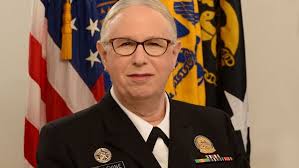
Admiral Rachel Levine is the first openly transgender person to win Senate confirmation in a four-star federal position. And now she has been in the spotlight again after the Department of Health and Human Services (DHHS) reportedly changed her official portrait in Washington, DC. It is part of the GOP government cracking down on “woke” culture and LGBTQ+ communities. Levine served as former President Biden’s assistant secretary for health for four years, overseeing the Commissioned Corps of the US Public Health Service. Her official portrait was displayed in a hallway on the seventh floor of the Humphrey Building alongside former Public Health Corps leaders. It has now been altered to show her previous name below the image, a spokesperson for HHS told NPR. HHS updated Rachel Levine’s official portrait to his real biological name: Richard Levine. HHS just updated Rachel Levine’s official portrait to his real biological name: Richard An HHS spokesperson said: “We remain committed to reversing harmful policies enacted by Levine and ensuring that biological reality guides our approach to public health.” pic.twitter.com/WqAINg1nX9 — Nicolas Hulscher, MPH (@NicHulscher) December 6, 2025 “During the federal shutdown, the current leadership of the Office of the Assistant Secretary for Health changed Admiral Levine’s photo to remove her current legal name and use a prior name,” said Adrian Shanker, former deputy assistant secretary for health policy and Levine’s spokesperson. He called the move an act “of bigotry against her.” Levine told NPR, “It was an honor to serve the American people as the assistant secretary for health and I’m not going to comment on this type of petty action.” HHS spokesperson Andrew Nixon defended the change, saying, “Our priority is ensuring that the information presented internally and externally by HHS reflects gold standard science. We remain committed to reversing harmful policies enacted by Levine and ensuring that biological reality guides our approach to public health.” The current assistant secretary for health, Adm. Brian Christine, was confirmed by the Senate in October. Levine’s tenure included major public health work on Covid-19, syphilis, HIV/AIDS, and the opioid crisis. The row comes amid ongoing anti-transgender actions under the Trump administration. Transgender servicemembers were forced out of the military without benefits, and passport policies were reversed. Courtesy : TOI Note: This news is originally published on https:/limesofindia.com/bha and is used purely for non-profit/non-commercial purposes, especially human rights
‘Humayun Kabir, who laid the foundation stone of the ‘Babri Masjid’, was targeted by Vijayvargiya, who also taunted Rahul Gandhi – perhaps Putin recognized him!’

Politics in West Bengal has heated up once again. BJP leader Kailash Vijayvargiya has reacted to the statement made by TMC leader Humayun Kabir in the state. Vijayvargiya not only questioned Kabir’s actions but also mocked Rahul Gandhi’s questions regarding Russian President Vladimir Putin’s visit to India. Indore: Politics in West Bengal has heated up once again. BJP leader Kailash Vijayvargiya has reacted to the statement made by TMC leader Humayun Kabir in the state. While speaking to the media, Vijayvargiya questioned Kabir’s actions and also mocked Rahul Gandhi’s questions regarding Russian President Vladimir Putin’s visit to India. Targeting TMC leader Humayun Kabir, Vijayvargiya said that Kabir was once a part of the Bharatiya Janata Party, and he himself had fielded him in the elections. But after joining the TMC, he is making such statements and actions to strengthen his position, which make no sense. Vijayvargiya said that Kabir has no emotional connection with the Babri Masjid, and he is now only making unnecessary moves to show his credibility within the TMC leadership and his community. TMC leaders uncomfortable with Humayun Kabir’s actions Kailash Vijayvargiya said that many TMC leaders are also uncomfortable with Kabir’s activities. Muslim organizations have also registered their protest against his statements. In fact, Humayun Kabir, the MLA expelled from the Trinamool Congress, laid the foundation stone of a mosque named ‘Babri Masjid’ in Murshidabad, West Bengal on Saturday. Vijayvargiya’s sarcasm: Perhaps Putin recognized Rahul During this time, Vijayvargiya was also asked about Rahul Gandhi’s statement in which the Congress leader said that he was not given a chance to meet the Russian President as the leader of the opposition during Putin’s visit to India. To this, Vijayvargiya said that Putin himself decides who he wants to meet, and if he had been interested in meeting Rahul Gandhi, the government would have certainly arranged a formal meeting. He sarcastically remarked that perhaps Putin recognized Rahul Gandhi, and therefore did not express a desire to meet him. Edited by: Chaitanya Soni • Contributed by: Sanjay Kumar About the Author Chaitanya Soni is a Consultant Writer at Navbharat Times Digital (NBT Online). He covers Madhya Pradesh politics, offbeat news, breaking news, current affairs, and unconventional stories. After completing his M.Com and MCJ from Dr. Harisingh Gour University, Sagar, Madhya Pradesh, he has been associated with journalism for about 23 years. Courtesy: Hindi News
Shashi Tharoor Attends Putin’s Dinner, Rahul Gandhi Not Invited: What’s the Controversy?

Putin’s India Visit: Was Rahul Gandhi, the Leader of the Opposition in the Lok Sabha, invited to dinner with Putin? Was Congress party president Mallikarjun Kharge also invited? Interestingly, Congress MP Shashi Tharoor was invited to the dinner with Russian President Putin. Shashi Tharoor was also seen with Finance Minister Nirmala Sitharaman, External Affairs Minister S Jaishankar, and Lok Sabha Speaker Om Birla during the event. Tharoor was seen talking to Nirmala Sitharaman, but the Congress party has been hurt by this. Rahul Gandhi did not receive an invitation to the dinner, while Tharoor was seated at Putin’s dinner table. Courtesy : Hindi News
‘Petty’: Priyanka Chaturvedi on no invite to Rahul, Kharge for Putin’s dinner; urges President Murmu to be ‘bipartisan’

NEW DELHI: Shiv Sena (UBT) MP Priyanka Chaturvedi on Saturday criticised the Centre for not inviting Congress president Mallikarjun Kharge and Congress leader Rahul Gandhi — the leaders of the opposition (LoP) in the Rajya Sabha and Lok Sabha, respectively — to the state dinner hosted by President Droupadi Murmu in honour of Russian President Vladimir Putin. Chaturvedi, a former Congress leader, described the omission as “petty.” “The position of the President is not affiliated with any political side. It is bipartisan. So the President has to take note of all sides… No trend should be started that further pollutes democratic rules and regulations. The dignity and responsibility attached to the President’s office must be upheld. It looked very petty that only the ruling side was invited,” she told news agency ANI. Earlier, in a post on X, Chaturvedi accused the government of “hijacking” the state visit, writing: “Dear @rashtrapatibhvn, your role in democracy is bipartisan… Unfortunate to see a state banquet to welcome a foreign dignitary being hijacked by the government to keep away leaders of the opposition. This doesn’t augur well for democracy and only shows the pettiness of the ruling dispensation. Don’t become another toolkit in their hand to throttle long-held customs and traditions.” Congress general secretary Jairam Ramesh had confirmed that the two LoPs were not invited to the official dinner at Rashtrapati Bhavan. Congress leader Pawan Khera also questioned the decision to invite party colleague Shashi Tharoor while excluding senior leaders, saying he was “quite surprised” by the guest list. Gandhi also alleged that the government had not scheduled a meeting between him, in his capacity as LoP, and President Putin, attributing the move to the government’s “insecurity.” The Russian president was on a two-day visit to Delhi on Thursday and Friday — his first trip to India since December 2021 and the first since the outbreak of the Ukraine war. Courtesy : TOI Note: This news is originally published on https:/limesofindia.com/bha and is used purely for non-profit/non-commercial purposes, especially human rights
Dalit youth assaulted, forced to strip at gunpoint in UP
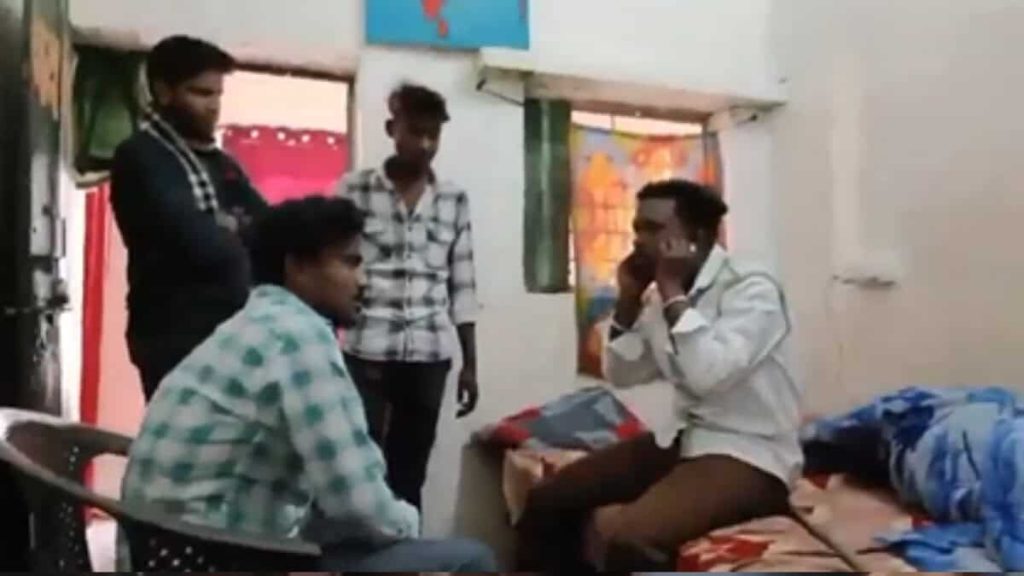
Jhansi police arrested three accused under the SC/ST Act. Jhansi: Police arrested three in Uttar Pradesh‘s Jhansi for brutally assaulting a Dalit youth with slippers, sticks, and even forced him to strip on gunpoint, all while they recorded the assault on camera. The incident took place on November 22, while the video surfaced on December 5, which shows four men assaulting the youth repeatedly while he pleads with them. The victim was reportedly standing near Goswami Restaurant in Rajgarh when three men, Nishant Saxena, Sukrit, and Kanishk, approached him. They had asked him to join them and together left the place on a scooter. However, instead of taking him to the shop for the cigarette as told, they took him to a house where two more individuals, identified as Bhanu Pal and Ravindra, were there. In the complaint, the victim alleged that at least six individuals assaulted him. They attacked him with punches, kicks, and sticks, while hurling casteist slurs and forcing him to strip. The video captures the attackers instructing the victim to touch their friend’s feet, all while they sat by, watched, and recorded the entire assault. Memory Khan Seminar One of the men in the video stated, “Do you know who I am? I am the king of Rajgarh.” The victim proceeds to hold his ears and apologise, when the accused takes out a pistol to threaten him to remove his clothes. At one point, the victim folded his hands and said, “I swear on my daughter I will not make a mistake again.” As the video went viral, Jhansi police, taking cognisance of the case, reported that three accused have been booked under the SC/ST Act, while the main accused, Nishant Saxena, remains absconding. The incident occurred in a village under the Premnagar police station. Courtesy : TSD Note: This news is originally published on https:/thesiasatdaily.com/bha and is used purely for non-profit/non-commercial purposes, especially human rights
The views of Ambedkar that the ‘Champions of Dalits’ don’t want the public to know
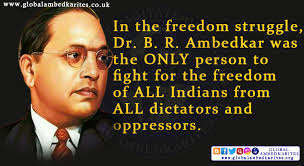
Politicians across the world often prefer to keep the masses ignorant, as it allows them to easily manipulate people. When a leader, like Ambedkar or Patel, emerges from among the common people, their followers frequently begin to idolize him or her. While such admiration is not inherently wrong, the unfortunate reality is that the political successors of these leaders often distort and misuse the legacy of the icon to advance their own agendas. This tendency is clearly visible in our country as well, and in this article, we will examine how the Congress party, leftists, and their allies have deliberately kept people unaware of many of Ambedkar’s actual views, simply because those views do not align with their political narrative. Ambedkar on Abrahamic Religions The Congress, Communists, and certain Dalit (SC – Scheduled Caste) leaders never miss an opportunity to proclaim that Ambedkar despised Hindu Dharma and that he burned the Manusmriti. They portray Manusmriti as the most sacred Hindu Grantha. In truth, it is merely one among many Hindu Granthas and by no means the holiest one. It is beyond the scope of this article to analyze the Manusmriti in detail, but it is sufficient to note here that several misconceptions surround this text. What these leaders conveniently ignore, however, is that Ambedkar was equally outspoken in his criticism of the Abrahamic religions. To illustrate this, I will quote passages from his book Pakistan or The Partition of India, which clearly demonstrate that although Ambedkar was critical of certain social evils within Hindu Dharma, he was by no means an admirer of Islam — contrary to what many of today’s so-called Ambedkarites would have the public believe. In the chapter titled “Social Stagnation,” Ambedkar openly discusses various social ills that plagued Muslim society, such as purdah, talaq, child marriage, and the caste system, without softening his words in any way. Pages 226-227: Take the position of women. It is insisted by Muslims that the legal rights given to Muslim women, ensure them a greater measure of independence than allowed to other Eastern women… the Muslim woman is the most helpless person in the world … her fate is ‘once married, always married’. She cannot escape the marriage tie; however irksome it may be. While she cannot repudiate the marriage, the husband can always do it without having to show any cause. Utter the word ‘Talaq’ and observe continence for three weeks and the woman is cast away. Pages 230-232: The Mohamedans observe not only caste but also untouchability. There can thus be no manner of doubt that the Muslim Society in India is afflicted by the same social evils as afflict the Hindu Society. Indeed, the Muslims have all the social evils of the Hindus and something more. That something more is the compulsory system of purdah for Muslim women. In page 233 he says, “The existence of these evils among the Muslims is distressing enough. But far more distressing is the fact that there is no organised movement of social reforms among the Musalmans of India on a scale sufficient to bring about their eradication … The Hindus have their social evils … and a few of them are actively agitating for their removal. The Muslims on the other hand, do not realise that they are evils and consequently do not agitate for their removal. Indeed, they oppose any change in the existing practices.” Ambedkar’s refusal to convert to Christianity or Islam, despite being offered large-scale inducements by both Christian missionaries and the Nizam of Hyderabad, clearly demonstrates his opposition to the Abrahamic religions. He firmly believed that anyone who converted to either of these faiths would, in effect, cease to be a Bharatiya. Instead, he supported conversion to one of the various Indic religions and encouraged his followers to do the same, stating, “I advise my Dalit brothers to convert to Buddhism and avoid conversion to non-Indic religions.” Ambedkar viewed the Abrahamic religions as a threat to national integration, and this should conclusively settle any doubts regarding his stance on these religions. His views on the RSS and Veer Savarkar Ambedkar not only attended an RSS programme in Pune in 1949 but was also impressed—and pleasantly surprised—by the RSS tradition of not inquiring about a fellow member’s caste. He therefore regarded the RSS as a genuinely nationalistic and non-casteist organization. Furthermore, he appreciated the social reform efforts undertaken by Veer Savarkar and believed that the eradication of the caste system to unite Hindus was essential for the community’s progress. In this regard, he echoed Savarkar’s position (though the topic of Savarkar’s views on Hindutva is a discussion for another day). Savarkar, too, maintained that the caste system was merely a social practice and not synonymous with or intrinsic to Hindu Dharma. Ambedkar wrote a letter to Savarkar when the latter was presiding over a Mahar conference in Ratnagiri and said “I, however, wish to take this opportunity of conveying to you my appreciation of the work you are doing in the field of social reform. If the Untouchables are to be part of the Hindu society, then it is not enough to remove untouchability; for that matter you should destroy ‘Chaturvarna’. I am glad that you are one of the very few leaders who have realised this.” (Source: Veer Savarkar by Dhananjay Keer). Some of his other thoughts Ambedkar urged his fellow SCs to pursue education, as he firmly believed that education was the only path through which the community could overcome poverty and social disadvantage. He was convinced that reservations, something every community now seeks to obtain, should be abolished after a decade. In essence, he had envisioned a time-bound reservation policy, meant as a temporary measure to uplift the underprivileged. Unfortunately, selfish politicians have continued this policy for more than seven decades simply because it serves their vote-bank interests. Ambedkar wanted his people to progress based on merit, not perpetual dependence on reservations. He was also opposed to Article 370, which granted special status
Ambedkar incorporated various Western texts to develop a unique sense of labour in India
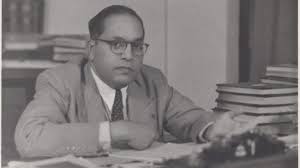
BR Ambedkar valued the Fourteenth Amendment to the US Constitution, which was ratified in 1868. This amendment granted equality to African Americans after the Civil War. In the classic story titled Jenvha mi Jaat Chorli by Marathi writer Baburao Bagul, the central character — Kashinath, a Dalit protagonist — challenges the systemic caste structure by affirming his faith in the Constitution of India. Published in 1963 as part of Bagul’s award-winning collection of short stories of the same name, the story reaffirms Dalits’ faith in their beloved Babasaheb Ambedkar and in the Constitution of India, which he served as the chairperson of the drafting committee and is widely regarded as its chief architect. However, history has been unkind to Ambedkar, whose thinking and actions went far beyond his banal fencing around reservation or Dalit issues alone. We take a look at some of the lesser-known aspects of Ambedkar’s thoughts, including his initiation of new discourses of manuski (humanity and compassion), his pursuit of civic rights through pragmatic law, and his foregrounding of the Indian principles of constitutional morality. The manoos (person) behind Dalit literature Ambedkar played a pivotal role in shaping Dalit literature, drawing inspiration from philosopher John Dewey’s ideas. He emphasised the role of education, social systems, and, primarily, the individual in confronting the systemic inertia that stabilises in favour of dominant classes. This idea became the driving force behind the architecture of Dalit literature, which began with autobiographies, poetry, and short stories, primarily challenging Victorian modernity and traditional methods long regarded as literary standards. Dalit literature comes from the rejection of, and resistance to, the injustices of the caste system. Consider this poem titled Empty Advice by poet Pralhad Chendwankar. This country, which demands. A pot of blood For a swallow of water— How can I call it mine? Though it gives the world The empty advice of peace. Chendwankar’s poem reflects the Dalit struggle for dignity and human rights in India, particularly through the lens of the Constitution. Marathi author Sharankumar Limbale notes in his book Dalit Sahityache Soundarya Shastra. that Ambedkar’s ideas helped awaken the Dalit community’s conscience. This achievement focuses on reclaiming humanism and placing people at the centre. Because of this emphasis on manuski, one of Ambedkar’s beloved words, Dalit literature is unique. It promotes inclusivity and speaks for everyone, not just for Dalits. Dalit literature prompts readers to reevaluate their assumptions and encourages them to delve deeper. It challenges them to move beyond traditional views and engage with the complexities of Dalit society. Engendering the politics of labour The distinctions between labour and work have been recognised since Aristotle, influenced by factors such as space, time, and personal experiences. Labour is often associated with physical effort and subservience, while philosophers such as Karl Marx and Hannah Arendt address this differentiation. In contrast, classical liberals, such as John Locke and Adam Smith, primarily focus on labour without acknowledging work as a distinct concept. Ambedkar (1891-1956), aware of his identity as an untouchable, approached labour and work in the Indian context, incorporating discussions on gender, caste, class, and culture, informed by his education in Deweyan pragmatism and Fabian socialism. Drawing from various texts, including Rousseau’s Social Contract, Marx’s Communist Manifesto, Pope Leo XIII’s Rerum Novarum, and John Stuart Mill’s On Liberty, he developed a unique sense of labour. Ambedkar’s perspective was evident when he contested the 1936 elections for the Bombay Legislative Council as a candidate of the Independent Labour Party (ILP), which he founded. In his party manifesto and campaign speeches, he presented a synthesis of labour, work, and action. His election symbol—a human figure, in contrast to other parties’ materialistic symbols—reflects his ideal of manuski and his view of labour as a form of qualified humanism. Later, in his interventions as a Labour member in the Viceroy’s Executive Council, Ambedkar emerged as an organic intellectual, prioritising principles over rigid traditions and continually undergoing pragmatic transformation. The interplay of law, Labour, and societal morals, along with their tangible and intangible impacts, significantly influenced Ambedkar’s socio-political movement. Ambedkar’s legal acumen Ambedkar’s pivotal role in drafting the Constitution of India needs no discussion today, and rightly, he is called the father of the Indian Constitution. His writings deeply inspire the masses, especially the Bahujan strata of society, and he stands as a symbol of excellence for them to emulate. Increasingly, he is gaining recognition for his work, which is drawing international attention for his championing of human rights and challenging patriarchal narratives of his times and inspiring an array of movements not only in India but across the world. His work provides a framework for social activism against injustices related to gender, race, and ethnicity. Known as the “poor man’s barrister,” Ambedkar valued the Fourteenth Amendment to the US Constitution, which was ratified in 1868. This amendment granted equality to African Americans after the Civil War (1861-1865). It clarifies the phrase “due process of law” when read with the Fifth Amendment. While drafting the Constitution of India, particularly clause 9 of the Advisory Committee on Minorities and Fundamental Rights, this phrase was included: “… Nor shall any State deprive any person of life, liberty, and property without due process of law.” Legal and constitutional expert BN Rau’s meeting with US Supreme Court Justice Felix Frankfurter raised concerns about the separation of powers among the executive, legislature, and judiciary. This separation could lead to the misuse of due process, as mentioned by him during this meeting, in the context of the Lochner vs New York (1905) case. This led to a tussle between the executive and judiciary, as seen in President Franklin D Roosevelt in 1937, whose statements sparked frictions between the two branches of the state. Ambedkar, in his debates in the Constituent Assembly, presented himself as a strong advocate of judicial independence, harmonious working between the executive and judiciary, and caution against executive overreach. (These very principles later came to be held as the basic structure of the constitution). However, he recognised the importance
How ‘Jai Bhim’ Was Born at a 1938 Marathwada Parishad
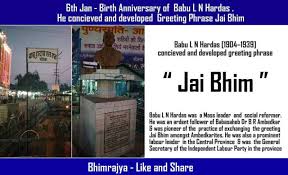
The slogan emerged at the Makranpur Parishad as a unifying Dalit greeting in Ambedkar’s presence. Jai Bhim: These two words have come to symbolise the awakening and empowerment of the Dalit community in independent India, but not many people know how they originated. The phrase was first used at the Makranpur Parishad, a conference held in Makranpur hamlet in Kannad teshil of today’s Chhatrapati Sambhajinagar district in Maharashtra. It also captures the great respect that Dr Bhimrao Ramji Ambedkar is held in. On December 6, 1956, Ambedkar, the primary drafter of the Indian Constitution, passed away. On December 30, 1938, the first Makranpur Parishad was established by Bhausaheb More, the first president of the Scheduled Castes Federation of Marathwada. According to Bhausaheb’s son, Assistant Commissioner of Police Pravin More, Dr Ambedkar spoke at the conference and urged the populace to oppose the princely state of Hyderabad, which at the time ruled over a large portion of central Maharashtra. “When Bhausaheb stood up to speak, he said every community has its own deity, and they greet each other using the name of that deity. Dr Ambedkar showed us the path of progress, and he is like God to us. So henceforth, we should say ‘Jai Bhim’ while meeting each other. The people responded enthusiastically. A resolution accepting ‘Jai Bhim’ as the community’s slogan was also passed,” More told PTI. “My father came in contact with Dr Babasaheb Ambedkar in his early years. Bhausaheb was aware of the atrocities the Nizam state committed on Dalits. He told Ambedkar about these atrocities, including the pressure to convert. Dr Ambedkar was strongly against these atrocities, and he decided to attend the 1938 conference,” he said. Ambedkar was permitted to travel through Hyderabad state but was prohibited from making remarks there due to his opposition to the princely states. Hyderabad and British India were separated by the Shivna River. According to ACP More, Makranpur was selected as the inaugural conference’s location since it was located in British territory, but on the banks of Shivna. The brick stage where Dr Ambedkar spoke at the conference is still in place. In order to sustain Ambedkar’s ideas, the conference is held annually on December 30. This tradition was maintained even in 1972, when Maharashtra went through one of the worst droughts in its history. “My grandmother pledged her jewellery for the conference expenses. People from Khandesh, Vidarbha and Marathwada attended it. Despite a ban imposed by the Nizam’s police, Ambedkar’s followers crossed the river to attend the event,” said ACP More. “This is the 87th year of Makranpur Parishad. We have deliberately retained the venue as it helps spread Ambedkar’s thought in rural areas,” he added. Curated by: Snehal Srivastava Courtesy : Outlook India Note: This news is originally published on https:/outlookindia.com/bha and is used purely for non-profit/non-commercial purposes, especially human rights
Defamation case: Pune court seeks Rahul Gandhi’s response to plea for US video sharing platform to provide original link of speech

Pune: A special MP/MLA court in Pune on Friday directed Rahul Gandhi’s lawyer to file a written response by Dec 11 on a plea seeking its directions to a US-based social media and video sharing platform and an Indian newspaper to furnish the original video link and a news report of the Congress MP’s speech in London in March 2023. The plea was filed by Vinayak Damodar Savarkar’s grandnephew Satyaki Savarkar, in an ongoing defamation case against Rahul Gandhi over the latter’s alleged defamatory remarks against the Hindutva ideologue. The plea mentions that the video link was published on March 5, 2023, on Gandhi’s official channel hosted by the video sharing platform. Similarly, a related news report was published by the Indian newspaper, it stated. The case is at the stage of the complainant (Satyaki) leading his evidence as part of examination in chief before the court. The complainant had earlier submitted a CD along with a 65B (verification) certificate under the Indian Evidence Act. However, it could not be played in court because of some unknown/technical reasons. His plea to play another CD was rejected by the court after Gandhi’s lawyer, Milind Pawar, raised objections on the grounds that it was not accompanied by a 65B certificate. On Friday, Satyaki’s lawyer, Sangram Kolhatkar, filed the plea regarding directions to the US video sharing platform and the newspaper stating, among other things, “The complainant submits that unless the original source is summoned, the accused (Rahul Gandhi) will secure an unfair advantage arising out of the loss of evidence, which was fully in the custody of the court, thereby gravely prejudicing the complainant and defeating the administration of justice.” The plea stated that the court needs to direct the video sharing platform to submit the video evidence along with details like the “upload date and time; URL and unique video ID; hash value/digital signature; server logs relevant to authenticity and integrity, any copies, backups, or archived version of the said video”. In a related development, Judicial Magistrate First Class Amol Shinde, presiding over the special court, allowed an application by Satyaki’s lawyer seeking an adjournment for a limited period. The adjournment sought was to enable the complainant make proper technical arrangements and reconstruction so that a CD of the speech, which could not be played earlier in court because of some unknown reasons, can be played and recorded correctly. “Also, to secure time to trace another CD from the record or be substituted so that the same can be relied upon in chief examination,” the plea stated. Pawar told TOI, “We have recorded our strong objection to the adjournment sought by the complainant today (Friday) as we feel the same was yet another delaying tactic by the complainant. We will file our written response, as sought by the court, on the other plea regarding directions to the US video sharing platform and the newspaper.” Courtesy : TOI Note: This news is originally published on https:/limesofindia.com/bha and is used purely for non-profit/non-commercial purposes, especially human rights
‘Everyone has their own conscience’: Cong vs Tharoor flares up again; this time over Putin dinner invite

NEW DELHI: Congress leaders on Friday launched a broadside against its Thiruvananthapuram MP Shashi Tharoor after he was invited for the Presidential dinner for Putin, while the government did not extend invites to Rahul Gandhi and Mallikarjun Kharge. Congress leader Pawan Khera said that members of Congress should understand the “game being played” by the Centre and should not be a part of it. “Those who issued such an invitation also raise many questions. And those who accepted the invitation are also open to scrutiny,” Khera said. — ANI (@ANI) “Everyone has their own conscience, their own inner voice. Had we been invited instead of our leaders, it is clear that we would not have accepted it. We should understand why the game is being played, who is playing the game, and why we shouldn’t be part of it,” he added. This comes after Thiruvananthapuram MP confirmed that he has been invited to the dinner and said that he will “definitely go.” “There was a time when the chairman of the external affairs committee was routinely invited. That practice seems to have been stopped for some years. It has been resumed, I think because I’ve been invited,” Tharoor said. “I think, frankly, the custom that usually used to be followed was for a wide representation. Certainly. I remember in the old days we used to have not only the LoPs, we used to have various other cross section of representatives of different parties. And I think it conveys a good impression. This is all done by the government, by the protocol, by the Rashapati Bhavan. What do I know? All I can say is I’ve been honored to be invited. Of course, I will go,” he added. Meanwhile, Congress MP Jairam Ramesh said that “the two LoPs have not been invited ” for the event. “There has been speculation whether the leader of the opposition in the Lok Sabha and the leader of the opposition in the Rajya Sabha have been invited for tonight’s official dinner in honour of President Putin. The two LoPs have not been invited,” Jairam Ramesh said in a social media post on X. Veteran Congress leader Salman Khurshid also attacked the government, claiming that the move is not in accordance with democratic traditions and the system. “I believe this is not in accordance with democratic traditions and the system. Even opposition leaders have not received the respect they deserve,” he said. This comes a day after Rahul had accused the Centre of barring foreign dignitaries from meeting the opposition leaders. Speaking to reporters in the Parliament complex, Rahul expressed displeasure and alleged that the government tells visiting foreign dignitaries not to meet the Leader of the opposition due to its “insecurity”. “Generally, the tradition has been that whoever visits India, the LoP used to have a meeting. It used to happen in the Vajpayee government, the Manmohan Singh government. But this is not the case now,”Rahul had said. “Whenever I visit abroad, they suggest that those people shouldn’t meet the LoP. People told us we have been informed not to meet the LoP. LoP provides a second perspective; we also represent India, but the government doesn’t want us to meet foreign dignitaries. PM Modi and the foreign ministry do not follow this now because of insecurity,” he added. Putin is on a 2-day visit to India. Following his arrival at the Palam Airport, PM Modi welcomed Putin with a hug. Both leaders shared the same car ride to Lok Kalyan Marg residence of the Prime Minister Modi where Putin was gifted a copy of the sacred Bhagwad Gita. Putin was also welcomed by President Droupadi Murmu as he received a ceremonial welcome and the tri-services guard of honour at the forecourt of the Rashtrapati Bhavan on Friday. The ceremonial welcome was accorded at the forecourt of the Rashtrapati Bhavan, following which, Putin inspected the Guard of Honour. Courtewsy : TOI Note: This news is originally published on https:/limesofindia.com/bha and is used purely for non-profit/non-commercial purposes, especially human rights