
Telangana: Dalit prof faces alleged social boycott after being branded ‘urban Naxal’

A Dalit professor at Telangana’s Satavahana University has alleged social boycott, caste-based harassment, and round-the-clock surveillance after being branded an “urban Naxal” by a colleague, prompting her to approach the SC Commission and police. A Dalit professor teaching at Telangana’s Satavahana University is allegedly facing social boycott at the institution over accusations of being an “urban Naxal”. Professor Sujatha Surepally, who heads the Department of Sociology, has alleged that vice chancellor U Umesh Kumar has been warning students against interacting with her because of her alleged “Maoist ideology”. She alleged that the VC has denied her promotion as the University Registrar, though she was entitled to it as per seniority. Further, a round-the-clock surveillance has been initiated on her to monitor her and activities, she alleged. The professor, who is a renowned Dalit-rights activist, approached the Telangana State Commission for Scheduled Castes on April 2, seeking action against the VC. Besides Sujatha, a Dalit student and member of students’ organisation Telangana Vidyarthi Vedika, Karike Mahesh, is also being subjected to harassment, she said. ‘Malicious campaign by colleague’ Sujatha was allegedly targeted by a colleague, assistant professor Penchala Srinivas, who faced disciplinary action in 2019 following allegations of sexual harassment. Srinivas, who teaches in the Department of Botany, was accused of misbehaving with girl students and calling them on phone at night. A committee constituted by the University on March 23, 2019, found him guilty and issued a memo. “He assumed that I was behind the campaign against him and started the witch hunt,” Sujatha told TNM. As part of this, the Dalit professor was labelled as an “urban Naxal” by Srinivas, she said. “In 2019, rumours started circulating about me that I took students to the central committee of Maoists. Srinivas was behind this Facebook campaign under pseudonyms, spreading false propaganda. In reality I took the students to Khammam for a study tour as part of the curriculum,” she said. An investigation was launched against Sujatha in the same year under Karimnagar district commissioner Kamal Hasan Reddy, who dismissed the allegations. Srinivas was expelled from the University in 2021 for allegedly working against the interest of the institution. “Since then, he started stalking me, closely monitoring my online and offline activities. All my Facebook posts were being circulated in right-wing groups, leading to targeted harassment,” Sujatha alleged. Her post on Operation Sindoor led to police complaints. The label of being an “urban Naxal” has cost Sujatha dearly. She recently faced humiliation during the Republic Day event at the University. While Sujatha, as Principal of the Arts College, was supposed to hoist the national flag, the event had to be called off over protests of her being an ‘anti-national’. The fresh harassment against her in the institution began after Srinivas was hired again by the University, allegedly defying the norms. He joined the University on April 1. Currently students are protesting the management’s decision. Sujatha alleged that vice chancellor Umesh Kumar, in collusion with Srinivas, is targeting her by trying to undermine her seniority and spreading false propaganda against her. “I was removed from the post of Dean of Arts College and denied positions and opportunities that are rightfully mine,” Sujatha said. ‘Unlawful surveillance’ According to Sujatha, the VC has initiated surveillance on her, monitoring her daily activities. She said, “There has been targeted and excessive surveillance, including the installation of cameras near my room and monitoring of my movements. Students are being warned against interacting with me, which is a clear violation of my right to privacy and academic freedom.” “There has been systematic defamation and caste-based targeting, including attempts to portray me and a Dalit student as an ‘urban Naxal’ and discouraging students from associating with us.” Expressing solidarity with Sujatha, the Save Education Committee demanded immediate intervention. “Despite possessing all necessary qualifications and experience, removing a Dalit woman professor, who also holds additional responsibilities as Principal, is an act of vindictiveness,” said professors K Chakradhar Rao, G Haragopal, and K Lakshminarayana, who serve as president and secretaries of the Committee. Police complaint On April 9, Sujatha filed a complaint with the police against Srinivas and the VC. “I am being subjected to systematic targeting and character assassination by Penchala Srinivas, a former contract lecturer in Botany, who was earlier expelled from the University. He has a documented history of misconduct, including allegations of inappropriate behaviour with female students, late-night harassment calls, and subsequent disciplinary inquiry by the university,” she stated. Alleging that Srinivas was behind terming her a Maoist, she said that the campaign was “thoroughly investigated by both the police authorities (under Sri Kamal Hasan Reddy) and the University, and was found to be completely untrue.” Sujatha said that Srinivas is again attempting to malign her reputation by branding her with false ideological affiliations. “He is allegedly mobilising students, particularly from certain student organisations, to file motivated and false complaints against me with the intention of damaging my professional standing. It is deeply distressing to state that such actions appear to be supported and encouraged by the current Vice Chancellor, Professor Umesh Kumar, who has failed to uphold institutional neutrality and instead enabled a hostile environment against me,” the complaint read. Written by:Balakrishna Ganeshan, Edited by:Maria Teresa Raju Courtesy : TNM Note: This news is originally published on https:/thenewsminute.com/bha and is used purely for non-profit/non-commercial purposes, especially human rights
‘Not a routine action’: Congress says Tamil Nadu chief ‘confined’ under pretext of IT ‘search’ ahead of poll rally
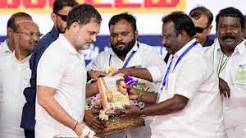
NEW DELHI: Congress on Monday said that its Tamil Nadu president K Selvaperunthagai was “unlawfully” confined by the Income Tax department, accusing the central agency of preventing him from carrying out his political duties ahead of Rahul Gandhi’s campaign in the poll-bound state. In a social media post on X, Congress termed the searches a “blatant misuse” of central agencies, claiming that the Bharatiya Janata Party is intimidating and obstructing opposition leaders ahead of polling. “As LoP Rahul Gandhi arrives in Tamil Nadu to campaign, a shocking incident has unfolded. K Selvaperunthagai ji, president of the Tamil Nadu PCC, was unlawfully confined in Sriperumbudur by the Income Tax Department under the pretext of a ‘search,’ preventing him from carrying out his political duties,” the party said. “This is not routine action. This is a blatant misuse of central agencies by the BJP to intimidate and obstruct Opposition leaders at a crucial moment. Such actions strike at the very heart of democracy. Silencing dissent and targeting political opponents through state machinery is unacceptable. India’s democracy cannot be reduced to intimidation and coercion. The people are watching, and they will respond,” it added. The Income Tax department is conducting a raid at the residence of the Congress leader following complaints alleging that cash intended for distribution to voters had been stashed there. Selvaperunthagai also targeted the BJP and said the action is a clear and calculated attempt to obstruct democratic functioning and weaken the activities of the Opposition. “As Rahul Gandhi ji arrives in Tamil Nadu today to undertake a crucial election campaign, the Income Tax Department, with Hindi-speaking officials, under the pretext of a ‘search’, unlawfully confined me within the Sriperumbudur Assembly constituency, effectively preventing me from discharging my political duties and engaging with the people. This deliberate action, carried out at a politically sensitive moment,” he said in a social media post on X. “The timing of this intervention exposes its true intent — not enforcement, but intimidation. It reflects a disturbing pattern of using central agencies as instruments of political pressure to silence dissent, restrict political participation, and create an atmosphere of fear among Opposition leaders and workers,” he added. Leader of Opposition and Congress MP Rahul Gandhi will campaign in the southern districts of Kanniyakumari, Thoothukudi and Tirunelveli on Monday, marking his second visit to Tamil Nadu ahead of the assembly polls. The high-voltage campaign is set to conclude at 5 pm on April 21, marking the end of public canvassing. Leaders have lined up their final campaign events across key constituencies. Courtesy : TOI Note: This news is originally published on https:/timesofindia.com/bha and is used purely for non-profit/non-commercial purposes, especially human rights
Delimitation decoded: What the Centre tried to do, why opposition shot it down & what happens next

NEW DELHI: Parliament has voted down the government’s proposal to expand the Lok Sabha from 543 to 850 seats, implement 33% reservation for women, and redraw constituencies accordingly, but the defeat has not closed the issue. If anything, it has exposed how a once-technical constitutional mechanism has become one of the most consequential unresolved questions in electoral politics. It is important to note that the Women’s Reservation Act 2023, which provides for a 33% reservation for women in the Lok Sabha and state legislative assemblies, came into force on April 16, 2026 amid the ongoing debate on proposed bills. The opposition was unambiguous about these bills. “This defeat is not of women’s quota but of delimitation by the backdoor,” said Revolutionary Socialist PartyMP N K Premachandran. Samajwadi Party chief Akhilesh Yadav called it a “defeat of BJP’s malice.” Trinamool Congress, whose 21 MPs had been urgently mobilised by the INDIA bloc, proved critical to the margin. After the vote, Congress’s Rahul Gandhi spoke personally with TMC’s Abhishek Banerjee to thank him for the support. Congress’s Priyanka Gandhi Vadra was direct: “PM Modi maliciously linked women’s quota to delimitation based on the 2011 census. His hollow attempt to pose as the messiah of women has failed today.” CPI MP Sandosh Kumar put the charge differently- that women should “see through BJP’s approach of delaying women’s quota by linking it to the census and delimitation.” On the government side, home minister Amit Shah, as the bill’s fate became clear, offered to adjourn the House and return with an amended bill. “I have the amendment prepared,” he said, pressing the government’s commitment to the 50% seat expansion. Prime Minister Narendra Modi made a final appeal before voting, asking MPs to “reflect on your conscience” and act on behalf of women across the country. The bill failed. Two related pieces of legislation, including the one to set up a delimitation commission, were not tabled in the Rajya Sabha. Parliament was adjourned. What government proposed The government’s plan was architecturally different from any previous delimitation exercise. Its central proposal was to increase total Lok Sabha seats by 50%, from 543 to 850, while keeping each state’s proportional share of seats unchanged. Uttar Pradesh, which currently holds 80 seats, would have received 120; Tamil Nadu, with 39, would have received 58 or thereabouts. The mechanism for women’s reservation flowed from this expansion. If every state’s seats increased by 50%, one-third of the new total — 33% — could be reserved for women, equalling precisely the one-third of the expanded total. The arithmetic was designed to be self-contained: no state would lose share, and the reservation obligation would be met without redistributing existing seats. The proposed delimitation commission, as described in the bill circulated to lawmakers, would be headed by a former Supreme Court judge, with the chief election commissioner or a nominee as a member, consistent with past practice. The exercise for the Lok Sabha, government sources made clear, was to be delinked from the 2011 census. Constituency boundaries would be redrawn; the proportional shares of states in the Lok Sabha would not change. In that structural sense, it was closer to the 2008 delimitation exercise than to the full reallocation exercises of 1952, 1963, or 1973. Why opposition read it as threat The bill’s legal architecture contained a provision that drew sustained fire. As Vidhi Centre for Legal Policy’s Swapnil Tripathi, lead at Charkha (Centre for Constitutional Law), explained: “Currently, Article 82 requires that delimitation of constituencies and readjustment of seats among states be undertaken after completion of every census, using population data of that census. The present bill removes this obligation and instead leaves it to parliament to determine both timing of delimitation and census to be used for the exercise. Importantly, this transforms what was a constitutional obligation into a matter of legislative discretion.” That shift from constitutional mandate to parliamentary choice was the provision that most alarmed critics. It would have allowed parliament to decide, at will, which census data to use and when to act, stripping Article 82 of its periodic, automatic character. Congress lead speakers Gaurav Gogoi and K C Venugopal accused the government of using women’s quota as “cover” for a larger electoral reengineering. Gogoi invoked the American term explicitly- BJP was using delimitation “like gerrymandering in the US, where seats are redrawn for political exploitation.” He pointed to what he called precedents in Jammu & Kashmir, where a delimitation commission used census 2011, and in Assam, where the election commission used census 2001, bypassing norms of geographical contiguity and uniformity. “What was done in Assam and J&K, government wants to do it in the entire country,” he said. DMK chief M K Stalin, who had led protests in Tamil Nadu, said his party’s concern was squarely about delimitation–”which requires careful thought to ensure it is fair, especially for southern states.” He said the government should have delinked women’s reservation from delimitation entirely. Congress challenged the government to implement women’s reservation immediately in the existing 543-seat House without linking it to census or delimitation. The government declined. Stakes for southern states The underlying anxiety that animated the southern bloc is rooted in demography and mathematics that are not in dispute. India’s seat allocation in the Lok Sabha has not been updated since 1977. It rests on the 1971 census. In the five decades since, population growth has been sharply uneven. Northern states Uttar Pradesh, Bihar, Madhya Pradesh, Rajasthan grew faster. Southern states Tamil Nadu, Kerala, Karnataka, Andhra Pradesh invested earlier in public health and fertility reduction, and their populations stabilised sooner. Based on 2011 census data, Tamil Nadu has a population of approximately 7 crore and sends 39 MPs to the Lok Sabha. Uttar Pradesh has a population of roughly 20 crore, nearly three times as large, and sends 80. A Tamil Nadu MP represents approximately 18 lakh voters; and a UP MP represents approximately 25 lakh. Vidhi Centre for Legal Policy’s research quantifies what a strict population-based
PM Narendra Modi attacks ‘one-family parties’; Rahul Gandhi says BJP out to destroy Tamil values

CHENNAI: The last leg of the election campaign in Tamil Nadu heated up on Saturday with Prime Minister Narendra Modi and opposition leader Rahul Gandhi flying down to make divergent pitches. While Modi attacked the “first family” and “scams”, Rahul stuck to TN chief minister M K Stalin’s narrative of BJP being the destructor of Tamil values. Addressing a rally in Coimbatore, Modi said, “DMK’s policy is by the family, of the family, and for the family.” Rahul accused Modi of attempting to rule TN from Delhi. “AIADMK is controlled by the Modi-Shah … and they are out to destroy Tamil history, culture and the language … BJP is trying to destroy the idea of Tamil Nadu,” Rahul said. Modi brought up the women’s bill without mentioning delimitation. “Why does it trouble DMK and Congress to see ordinary women rise? These one-family parties want power to remain confined within their own families,” he said. Courtesy : TOI Note: This news is originally published on https:/timesofindia.com/bha and is used purely for non-profit/non-commercial purposes, especially human rights
Attempted Abduction of Dalit Woman in Gorakhpur: Woman Heading to Market Rescued by Bystanders; Case Registered

A case involving the attempted abduction of a young Dalit woman has come to light in Gorakhpur. The woman was on her way to the market to shop for her wedding when a young man attempted to forcibly pull her into his vehicle. Thanks to the timely intervention of passersby, the woman managed to escape unharmed. The incident occurred within the jurisdiction of the Barhalganj police station. In her complaint to the police, the woman stated that her family had scheduled her *Tilak* (engagement ceremony) for April 21 and her wedding for April 28. She was heading to the market for wedding shopping when a young man named Dayanand, a resident of Semra Bujurg village, intercepted her on the way. The accused, Dayanand, physically assaulted the woman and attempted to forcibly drag her into his vehicle. When the woman screamed for help, several passersby began chasing the vehicle. During this ordeal, the accused threatened the woman, warning that if she did not accompany him, he would shoot her entire family. Due to the persistent pursuit and questioning by the passersby, the accused abandoned the woman and fled the scene. The woman remarked that had the bystanders not come to her aid, anything could have happened to her. She also revealed that the accused had previously physically assaulted members of her family. Based on the woman’s complaint, the police have registered a case against the accused, Dayanand, under Sections 140(1), 126(2), 115(2), and 351(3) of the Bharatiya Nyaya Sanhita, as well as Sections 3(2)(v), 3(2)(va), 3(1)(c), and 3(1)(d) of the Scheduled Castes and Scheduled Tribes (Prevention of Atrocities) Act, 1989. Gopal Tripathi | Gola Courtesy: Hindi News
Bulldozers Roll Over Dalit Homes in Basti! No Action Taken Despite Pleas for Justice

In Rampur village, within the jurisdiction of the Munderwa police station, the administration has demolished a Dalit’s house using a JCB machine in the presence of the police. The affected family members have been forced to take shelter with neighbors or live under the open sky. There is widespread outrage among the people as, despite sending letters to the Divisional Commissioner, District Magistrate, and Superintendent of Police pleading for justice, no action has been taken thus far. The semi-permanent and temporary houses belonging to Dalit residents of the Munderwa police station area—specifically Ram Awadh (son of Gobari), Rajendra (son of Ram Velas), Prem Sagar, and Ram Deen (sons of Ram Pher)—were demolished using a JCB in the presence of police forces. This act was carried out in blatant contempt of a court order, allegedly at the instigation of Abdul Wahid, a former village headman and known land mafia figure. This incident has sparked deep resentment among the citizenry. Dharmendra Kumar, the District IT Cell Convener of the Hindu Yuva Vahini—along with other office bearers and activists—had submitted a letter to the Divisional Commissioner demanding an impartial inquiry into the matter and punitive action against the culprits. Vahini officials have been continuously pleading for justice, yet their appeals have gone unheard so far. The letter addressed to senior officials states that on April 13, Revenue Official (Lekhpal) Virendra Kumar Pandey, the Naib Tehsildar, a Sub-Inspector, and other police personnel acted in contempt of the decisions of both the District Magistrate and the High Court by orchestrating the demolition of the Dalits’ homes. Furthermore, these individuals allegedly facilitated the erection of an illegal thatched structure on land parcel (Gata) number 611 for Appu, Subhash, and Bablu—sons of Munnilal—who are residents of the same village. The letter demands that a case be registered against the guilty parties and that new homes be constructed for the affected Dalits. Dharmendra Kumar, the Hindu Yuva Vahini District IT Cell Convener, has warned that if action is not taken against the culprits and if new houses are not built for the Dalits, the matter will be escalated directly to the Chief Minister. Residents of Rampur, located within the jurisdiction of the Munderwa Police Station, have reported that the former village head—a land mafia figure named Abdul Wahid—instills fear among the poor in the village and even prevents them from celebrating the birth anniversary of Baba Saheb Dr. Bhimrao Ambedkar. Residents of Rampur village—including Ram Awadh, Rajendra, Indal, Haribharan, Prem Sagar, Ramdeen, Sunil, Pramesh, Urmila, Shanti, Sheela, Kamalavati, Manju, Gudiya, Shumantri, Nilu, Chandravati, Sarita, Vedkala, Seema, and Vimla Devi—have appealed to the administration. They demand that action be taken against the culprits, that homes demolished using a JCB be reconstructed for those affected, and that strict punitive measures be initiated against the perpetrators. Courtesy: Hindi News
Ontario survey reveals invisible caste bias in South Asian communities across Canada

A first-of-its-kind survey on caste-discrimination in Canada by the South Asian Dalit Adivasi Network (SADAN) and researchers from four Canadian universities reveals subtle and overt discrimination experienced by caste-marginalised South Asians. A decade after US-based Equality Labs released its first survey on caste discrimination in the United States, an Ambedkarite group in Canada has released the findings of a similar survey in that country, which shows that people of South Asian heritage—the majority of them Indians—practise discrimination against people of lowered castes and Dalits. The South Asian Dalit Adivasi Network (SADAN) and researchers from four Canadian universities conducted the community-oriented survey and released the Caste Experiences in Ontario Survey report to coincide with Dalit History Month, which is observed in April, and Ambedkar Jayanti, which falls on April 14. The survey received responses from 128 people, the majority of whom—85%—traced their roots to India, while the remaining had ancestry in Pakistan, Bangladesh, Nepal, and Sri Lanka. 61% of the respondents were caste marginalised and 38% self-identified as Dalit or caste-oppressed. The respondents also professed different faiths—Hinduism, Buddhism, Ravidassia, Dalit and Adivasi practices. The majority of respondents spoke Hindi (70%), while 37% spoke Punjabi and 27% Tamil. Over 40% of respondents said they were discriminated against at the workplace and educational institutions. Discrimination also spilled over into social relationships such as friendships and marital alliances, as well as at places of worship and cultural gatherings. The report was authored by Kavya Harshita Jidugu, Harshita Yalamarty, Vijay Puli, Jatin, Chinnaiah Jangam, and Sailaja Krishnamurti. Kavya is a PhD candidate at Queen’s University. Harshita is an assistant professor and Canada Research Chair in gender and migration (Tier 2) at Toronto Metropolitan University. Vijay Puli is a founder and executive director of SADAN. Jatin is a PhD scholar and co-founder of the Forum for Anti-Caste Activism at the University of Toronto. Chinnaiah is an associate professor at Carleton University of Toronto and co-founder of SADAN. Sailaja is an associate professor and HoD of gender studies at Queen’s University. Kavya, who was a lead researcher in the project team, said in a press release: “The courage it took for community members to come forward and speak about caste-based discrimination is both powerful and essential to addressing casteism in Canada and we are grateful for the community’s leadership.” The report noted that South Asians formed the largest visible minority in Canada and while researchers had studied South Asians in terms of a diversity, equity and inclusion (DEI) framework, social relations within South Asians had not received much attention. The survey asked 38 questions divided into four sections: demographic information, personal experiences of caste discrimination, discrimination in the community, and personal reflections. Participants were also allowed to record their views on certain questions. Many respondents talked about caste discrimination being less overt compared to India. However, as one respondent put it, “subtle biases persist, making it harder at times to feel fully included or accepted. This has somewhat affected my sense of belonging, particularly within diaspora circles where caste consciousness continues to influence social relationships.” One respondent spoke of Brahmins wearing a sacred thread in public places such as swimming pools as an example of practices that “don’t directly attack anyone but quietly establish superiority in society”. “On the surface, this appears to be a religious practice, but it actually serves as a way of signalling to others that they are superior to other Hindus… it’s an assertion of religious and caste superiority”. Around 50% of the participants—of which 92% were from caste marginalised backgrounds—have experienced caste-based discrimination in their workplaces, educational institutions, while purchasing or renting homes, and in other social settings. More than half of these respondents said they had been subjected to discrimination more than once. Around 69% of respondents said that caste discrimination has impacted their mental health. How casteism affects life in Canada Casteism at the workplace included interviewers asking job aspirants for their caste because they couldn’t identify the candidate’s caste from their last name and paying lower wages to Dalits than others for the same work. More than 50% interviewees said that caste discrimination has prevented them from progressing in their career. Several people spoke of being asked about their caste by roommates or neighbours, encountering rental listings that specified acceptable caste backgrounds and housing being denied at the last minute when the tenant’s caste was identified. One respondent stated that “(my) upper caste roommate called me impure because I was eating meat (sic).” Many respondents described being bullied for their skin colour or meat diet in school. Students reportedly also face bias from their faculty during their vivas, assignments, or exams. A respondent noted the lack of diversity within university systems that work in the South Asian context, where there is “virtually no Dalit, Bahujan, Adivasi representation either at faculty-level or even in terms of the curriculum…” Many respondents spoke of how they were excluded or segregated in social settings, particularly religious gatherings. One respondent said, “The so-called upper caste people don’t prefer to mingle with Dalits … they won’t be invited in family puja, ceremonies, even if invited, they will have separate area to eat (sic).” One person spoke of how their family tried to ensure that their wedding was performed and “in contact” with only people from their caste (dominant). “Although this consideration was ultimately removed by me and my partner, we saw the initial hesitation (sic).” The report notes that some forward caste parents tell their wards not to speak to their marginalised caste peers. Dalit Muslim respondents drew connections between casteism and Islamophobia in both Canada and India. “I have witnessed behaviours that are exclusionary, oppressive, racist and sexist towards Christians, Dalits, Muslims and other groups,” said a respondent. Another spoke of being called slurs and names, and “even untouchability at times. Not willing to share food with us. Or not wanting to marry us.” One queer and Dalit woman talked about being unable to trust an Indian in Canada for fear of being
Why Did a Dalit Youth Set Himself on Fire in Muzaffarnagar? Allegations of Assault Surface; Know the Full Story

In Muzaffarnagar, Uttar Pradesh, a Dalit youth, distressed by caste-based harassment, attempted suicide by setting himself on fire. After he refused to perform manual labor, the farm owner subjected him to casteist slurs and physically assaulted him, leaving the youth critically injured. He has since been referred to Delhi for treatment. The police have arrested the accused and registered a case under the SC/ST Act. A spine-chilling video has emerged from the Muzaffarnagar district of Uttar Pradesh, showing a Dalit youth openly dousing himself with petrol and setting himself ablaze. In a matter of moments, the youth was engulfed in flames; bystanders struggled to extinguish the fire and rushed the critically injured Dalit youth to a hospital for treatment. Given the severity of his condition, doctors subsequently referred him to Delhi. According to reports, the victim—a Dalit youth—worked as a laborer on the farm of a farmer belonging to the Rajput community. It is alleged that on Friday morning, the farm owner asked the victim to load a cart with flowers. When the victim refused, the accused—in the presence of others—hurled casteist slurs at him and physically assaulted him. Driven by deep humiliation and distress over this incident, the victim poured petrol over himself in an attempt to commit suicide. Himanshu, a 22-year-old resident of Gangdhadi village within the Khatauli Kotwali police station area, sprinkled petrol on himself and set himself on fire. The incident was captured by a CCTV camera installed at a nearby house and subsequently went viral on social media. Himanshu sustained severe injuries in the incident and was admitted to a hospital for treatment; however, due to his critical condition, doctors referred him to Delhi. What Did the Victim’s Family Say? The victim’s family alleges that Himanshu worked as a laborer on the farm of a fellow villager named Tinku (alias Gaurav Rajput). Yesterday, the farm owner, Tinku, asked Himanshu to load a cart with flowers in the field. However, when Himanshu refused to do so, Tinku—in the presence of others—verbally abused him using caste-based slurs and physically assaulted him. It is further alleged that, driven by deep distress and humiliation, Himanshu attempted to end his life late that night by setting himself on fire. Bittu, the brother of the victim—a young Dalit man named Himanshu—alleges that the farm owner, Tinku (alias Gaurav Rajput), would frequently subject Himanshu to verbal abuse and physical violence. Meanwhile, acting on a written complaint filed by the victim’s family, the police have registered a case against the accused under the Scheduled Castes and Scheduled Tribes (Prevention of Atrocities) Act and have taken the accused into custody. **Accused Person Arrested** CO (Circle Officer) of Khatauli, Ramashish Yadav, stated that the police received information around 10:45 PM regarding a young man named Himanshu (son of Bedu) who had set himself on fire. Acting immediately upon this report, the police rushed to the scene. With the assistance of his family members, Himanshu was admitted to a hospital, where his condition is currently stable, and he is receiving the best possible medical treatment. Upon visiting the scene to conduct an inquiry into the incident, it came to light that Himanshu had been involved in an altercation with another young man from his own village named Gaurav (alias Tinku). Tinku (alias Gaurav) had physically assaulted him, and it was this act of violence that caused Himanshu such distress that he set himself on fire. In connection with this matter, the accused has been taken into custody, and an investigation is currently underway. Courtesy: Hindi News
Ayodhya News: Attack on Dalit Family in Kaithani; FIR Filed Against Seven Individuals

Sohawal: An incident involving physical assault and verbal abuse against a Dalit family has come to light in Kaithani—a hamlet within the Mustafabad Baragaon Gram Panchayat, under the jurisdiction of the Raunahi police station. Acting on a written complaint filed by the victim, Premchand, the police have registered a case against seven named accused individuals under various sections of the law, including the SC/ST Act. In his written complaint, the victim, Premchand, stated that influential local figures carried out the attack over a trivial dispute. It is alleged that the incident was triggered when a goat, while grazing, wandered into the accused’s house. A group comprising Mustakim, Zubair, Shahzadi, Saiyak, Amir, Bholu, Alma, and others barged into Premchand’s home; while hurling caste-based slurs, they began physically assaulting the family members. Upon hearing the commotion, Premchand’s mother and sister rushed to their aid but were also beaten. During the attack—which involved the use of iron rods and sharp-edged weapons—the sister sustained a head injury resulting in a deep gash. Premchand suffered injuries to his nose and head. The accused have also threatened the entire family with dire consequences. Arvind Sonkar, the Circle Officer (CO) of the Sadar zone, has initiated an investigation into the matter. CO Sonkar has given assurances that a fair and impartial inquiry will be conducted, and that protection will be provided to the victimized family. Samvad News Agency, Ayodhya Courtesy: Hindi News
Dalit man sets himself ablaze after ‘assault’; accused arrested

Agra: A 22-year-old Dalit man sustained severe burn injuries after he set himself on fire following an altercation with a local farmer who allegedly assaulted him and used caste-based slurs against him in public, leaving him severely distressed, police said on Saturday. The incident took place in Gangdhari village under Khatauli police station in Muzaffarnagar around 9pm on Friday and a CCTV footage of Himanshu Kumar, purportedly showing him pouring petrol and setting himself on fire, has since surfaced online. Khatauli DSP, Ramashish Yadav, said locals rushed to his aid and managed to douse the flames before taking him to a nearby hospital. “Doctors referred him to a higher medical centre, where he is undergoing treatment. His condition is stable,” he said. Himanshu’s brother, Bittu, lodged a police complaint stating that his brother worked as a labourer in the field of a local farmer, Gaurav alias Tinku. He said on Friday, Gaurav had asked Himanshu to load flowers in a cart. “When he refused, he slapped him… My brother felt insulted, following which he took the extreme step,” he told police. A case was registered under relevant sections of BNS, including 115(2) (voluntarily causing hurt), 108 (abetment to suicide), along with section 3(2)(V) of the SC/ST Act. The accused has been arrested and further investigation is underway, the DSP said. Courtesy : TOI Note: This news is originally published on https:/timesofindia.com/bha and is used purely for non-profit/non-commercial purposes, especially human rights