
Rahul Gandhi, Congress top brass to attend Vijay’s swearing-in as Tamil Nadu CM

The development comes as Vijay appears set to assume office after securing crucial support from several political parties, including the Congress and its five MLAs, enabling TVK to cross the majority mark in the 234-member Assembly Senior Congress leaders, including Leader of Opposition in the Lok Sabha Rahul Gandhi, are expected to attend the swearing-in ceremony of TVK chief C Joseph Vijay as the next Chief Minister of Tamil Nadu, according to Congress sources. The development comes as actor-turned-politician Vijay appears set to assume office after securing crucial support from several political parties, including the Congress and its five MLAs, enabling TVK to cross the majority mark in the 234-member Assembly, party leaders and sources said on Friday. The move follows Vijay’s meeting with Tamil Nadu Governor Rajendra Vishwanath Arlekar at Lok Bhavan, where he formally staked claim to form the government after consolidating support from multiple parties in the wake of the fractured mandate delivered in the recently concluded Assembly elections. TVK leader and Tamil Nadu CM designate Joseph Vijay Vijay moves closer to forming Tamil Nadu government as Left parties extend support; VCK decision awaited TVK had emerged as the single-largest party with 108 seats, but remained short of the majority mark of 118 required to form the government on its own. The Congress later formally announced its support to TVK and Vijay in forming the next government in the state, effectively ending its alliance with the Dravida Munnetra Kazhagam (DMK) in favour of backing the new political formation. Congress had contested the elections as part of the DMK-led alliance before extending support to TVK. With the backing of the Congress, the Communist Party of India, the Communist Party of India (Marxist) and the Viduthalai Chiruthaigal Katchi (VCK), Vijay’s party has crossed the majority threshold in the Assembly. The CPI, CPI(M) and VCK, which won two seats each, extended support to TVK, taking the alliance tally beyond the halfway mark along with the Congress’ five MLAs. In an official letter, the CPI(M) conveyed its support to TVK for the formation of the government in the state, while the CPI extended “conditional support” to the Vijay-led party in favour of “stable, secular and democratic governance for the people of Tamil Nadu.” Courtesy : TNIE Note: This news is originally published on https:/thenewindianexpress.com/bha and is used purely for non-profit/non-commercial purposes, especially human rights
UoH student fined for assaulting Dalit student, ASA protests inadequate action
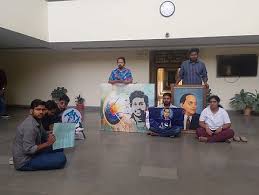
The Ambedkar Students’ Association is on strike against the University of Hyderabad administration, alleging institutional bias and inadequate action in a case of an alleged caste atrocity over a Dalit student, where a mere fine Rs 5,000 was imposed. Protests at the University of Hyderabad (UoH) entered their third day on Thursday, May 7, with students led by the Ambedkar Students’ Association (ASA) launching an indefinite relay hunger strike. The students are demanding the release of a fact-finding committee report into the alleged assault and casteist abuse of a Dalit student. According to the ASA, a Dalit student, Anuj Kumar, was allegedly assaulted and subjected to casteist slurs by fellow student Suryavardhan Singh Bablu following a personal dispute on December 11, 2025. After sustained student protests demanding official action, the university constituted a fact-finding committee. On May 4, Anuj was orally informed that the accused had been fined Rs 5,000, directed to issue a private apology through the Office of Anti-Discrimination, and barred from taking admission to any future course at UoH. Both students are second-year MA students. The ASA has strongly opposed the recommendations, calling them a “mockery of justice” and evidence of “institutional bias”. The student body argued that Dalit students had previously been fined ₹10,000 for minor infractions such as washing bikes near hostels, while an alleged caste assault had attracted only a ₹5,000 penalty. “The administration is effectively signalling that caste atrocities can be settled with a small fine,” the ASA said in a statement. “We demand justice and will not accept this cheap valuation of our lives and dignity.” Anuj Kumar, a second-year MA Sociology student, and his roommate Vinod were allegedly assaulted by Suryavardhan Singh Bablu, a second-year MA History student and former president of the All India Other Backward Castes Students’ Association (AIOBCSA). “He called me, ‘Dalit saale tum log naali ke keede hote ho. Tum jaison ko main apne ghutne ke niche rakhta hoon,’” Anuj told TNM. He alleged that the abuse took place in front of around seven people and that he was beaten with a thick wooden stick. The ASA had earlier protested over the issue in February and has continued to accuse the university administration of displaying “continued institutional bias” in handling the case. “After the protest, the administration addressed my complaint and formed a fact-finding committee,” Anuj said. According to him, the committee, headed by SC/ST liaison officers, submitted its report to the Vice Chancellor and Registrar, but the findings were never shared with him. Anuj alleged that despite assurances from university authorities that the matter would be resolved by April 30, he received no official communication until he emailed the Registrar on May 4. He said the Registrar directed him to meet P. Thukaram, a member of the Equal Opportunity Cell, who verbally informed him of the disciplinary action against the accused. The ASA criticised the administration for not releasing the fact-finding committee report or issuing the recommendations in writing. “They have not released the fact-finding committee report. They have only verbally communicated the recommendations of the anti-discrimination cell,” ASA president Dayanidhi told TNM. In a press release, the ASA described the recommendations as an “insult to the dignity of Dalits” that “exposes the deep-rooted Manuvadi mindset prevailing in the university”. The student body also pointed out that the university website routinely uploads details of disciplinary cases and recommendations, but claimed that Anuj’s case had not been uploaded or formally communicated. “I’m not satisfied with the verdict. I am the victim in this case,” Anuj said, adding that he wants the fact-finding report released so he can appeal the decision. “We want the university to acknowledge this as a caste atrocity. We also want the fact-finding committee report and recommendations to be made public,” Dayanidhi said. When TNM contacted university Registrar Devesh Nigam, he said the administration had acted in accordance with the committee’s recommendations. Written by:Syed Shahid Edited by:Azeefa Fathima Courtesy : TNM Note: This news is originally published on https:/thenewsminute.com/bha and is used purely for non-profit/non-commercial purposes, especially human rights
SC panel orders removal of encroachments on Dalit lands, graveyards

Andhra Pradesh State Commission for Scheduled Castes member Ravada Seetharam on Friday directed Revenue Department officials to clear encroachments on lands and graveyards belonging to Dalit communities in Cheepurupalli, Garividi, Rajam, Santakavti and other parts of Rajam constituency. He held a high-level meeting on Thursday in Rajam with Cheepurupalli Revenue Divisional Officer Sudha Rani and tahsildars of eight mandals of the district. He told the revenue officials that he had received 45 complaints from villagers of various places, and directed them to ensure justice to the petitioners after verification of the veracity in the complaints. Mr. Seetharam further directed the Rajam municipal authorities to allocate 22% works to societies belonging to the Scheduled Castes. He said that a consolidated report of the field visits and review meetings would be submitted to K. S. Jawahar, chairperson of the Commission for further follow up action on the subjects related to Scheduled Castes. The Hindu Bureau, K Srinivasa Rao Courtesy : The Hindu Note: This news is originally published on https:/thehindu.com/bha and is used purely for non-profit/non-commercial purposes, especially human rights
Tamil Nadu: A massive 67% increase in violence against Dalits, a huge gap between government claims and ground reality
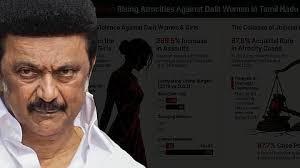
A shocking 67% increase in crimes against Dalits in Tamil Nadu: NCRB and NCDHR reports expose the state’s claims of ‘social justice’. New Delhi: The 2026 Tamil Nadu Assembly election results have created a major stir in the state’s politics. The DMK’s defeat and the TVK’s rapid rise have sparked numerous discussions. While anti-incumbency and political strategies are being blamed for this defeat, the ongoing violence against Dalits and the government’s lackadaisical response to it also point to a serious crisis. The DMK has long touted Tamil Nadu as a model of governance for social justice. However, data from the National Crime Records Bureau (NCRB) and the National Campaign on Dalit Human Rights (NCDHR) tell a different story. A deeper analysis of these reports reveals a massive 67 percent increase in atrocities against Dalits and tribals in the state. It’s noteworthy that both the AIADMK and the DMK were in power during this period. According to the NCDHR report “Five Years of Caste-Based Atrocity,” Tamil Nadu saw a 67.9 percent increase in crimes against Dalits between 2019 and 2023, the highest in the country. Madhya Pradesh, with 55.3 percent and Odisha, with 42.9 percent, came in second and third. These figures demonstrate a wide gap between the language of social justice and the real lives of Dalits in the state. The NCRB 2023 data paints an even more alarming picture. Cases of murder of Dalits saw a 40.4 percent increase, from 52 in 2019 to 73 in 2023. Cases of grievous hurt have increased by 240 percent, while criminal intimidation cases have seen a staggering 584.8 percent jump. These figures prove that whenever Dalits raise their voices for their rights, the caste system attempts to suppress them through violence. Crimes against Dalit women and girls have also seen an alarming increase. The total number of rape cases increased from 97 in 2019 to 132 in 2023, a 36.1 percent increase. In particular, atrocities against Dalit girls have increased by 73.2 percent. These are not just individual crimes; rape is often used as a weapon of caste oppression. Attacks intended to outrage the dignity of women have also seen a 289.5 percent increase. The failure of the justice system is also exacerbating this situation. In 2023, the conviction rate for Dalit atrocity cases was only 12.2 percent, while the acquittal rate was high at 87.8 percent. The pendency rate is also 87.7 percent, primarily due to the lack of special courts. Tamil Nadu has only 20 special courts for speedy trials, which is woefully inadequate for the caseload. According to law, the State-Level Vigilance and Monitoring Committee, chaired by the Chief Minister, must meet twice a year. However, these meetings have been ignored in Tamil Nadu since 2021. Only one meeting each was held in 2021, 2022, and 2023, while none was held in 2024. This reflects not an administrative lapse but the government’s priorities and attitude towards marginalized communities. Dalits are also being targeted in cases of violence in police custody. According to the 2021 Prison Statistics, 37 percent of those detained in the state were Dalits. Tamil Nadu alone accounts for 84.5 percent of India’s total Scheduled Caste prisoners. By 2023, this number was projected to rise to 42.2 percent, while Dalits constitute only around 20 percent of the state’s total population. The DMK’s electoral defeat is partly a result of growing discontent among Dalits over hollow slogans of social justice and the perceived insecurity of the state. On the other hand, the rise of the TVK is a result of cinematic influence and the search for an alternative among young people. However, celebrity culture or anti-incumbency alone cannot provide justice to marginalized communities. The TVK’s silence on issues like the recent honor killing of Dalit tech professional Kavin Selvaganesh has also raised questions. It will be important to see whether new political forces will engage in mere symbolic politics or work to ensure real protection and justice for victims by strictly enforcing the SC/ST (Prevention of Atrocities) Act. Rajan Chaudhary Courtesy: Hindi News
The Mooknayak Visual Story: NCRB data exposes the Tamil Nadu state government’s claims
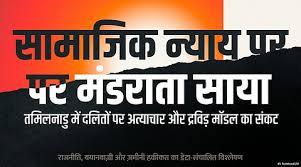
There has been a massive 67% increase in atrocities against Dalits in Tamil Nadu. NCRB data exposes the state government’s claims. Learn the full ground reality. NCRB data reveals a major revelation on atrocities against Dalits in Tamil Nadu The DMK has long touted Tamil Nadu as a model of governance for social justice. However, data from the National Crime Records Bureau (NCRB) and the National Campaign on Dalit Human Rights (NCDHR) tell a different story. A thorough analysis of these reports reveals a massive 67% increase in atrocities against Dalits and tribals in the state. It’s noteworthy that both the AIADMK and DMK have been in power during this period. According to the NCDHR report, “Five Years of Caste-Based Atrocity,” Tamil Nadu saw a 67.9 percent increase in crimes against Dalits between 2019 and 2023, the highest in the country. Madhya Pradesh, with 55.3 percent and Odisha, with 42.9 percent, came in second and third. These figures indicate a wide gap between the language of social justice and the real lives of Dalits in the state. Rajan Chaudhary Courtesy: Hindi News
A Dalit bride arrived at the Udaipur Collectorate on a horse, carrying a picture of Jyotiba Phule! Learn the full story.

People were stunned, as the Bhim Army announced, “Now, no Dalit daughter in Rajasthan will be dismounted…!” Udaipur – A unique and powerful demonstration was witnessed in the heart of Udaipur on Thursday. A newlywed woman sat on a horse, holding pictures of Jyotiba Phule and Savitribai Phule. Hundreds of Bhim Army workers marched alongside her, chanting slogans. As the convoy moved forward, shouting, “Now, no Dalit daughter in Rajasthan will be dismounted,” traffic stopped, and people stood in awe. The entire atmosphere echoed with chants of “Jai Bhim.” This was the same bride, Pooja Meghwal, whose wedding procession was taking place a few days earlier, on the night of April 29th, in Hariav village, under the Dabok police station area. Meanwhile, about 15 villagers, including women, stopped the procession, hurling casteist slurs. The accused forcibly dismounted the bride from the horse, shut down the DJ, and attacked the wedding procession with stones, sticks, rods, and swords. Fifteen people were injured in the attack, and women’s mangalsutras were snatched. On Thursday, newlywed Pooja returned on horseback to seek justice from the authorities. She said, “I was insulted, my family was assaulted.” She becomes emotional as she speaks. Recalling that moment is a traumatic experience for her, as a wedding day is considered the happiest day in a young woman’s life, but on that very day, she and her family suffered humiliation. In protest against this humiliation and oppression, Pooja Meghwal herself rode a horseback to the District Collectorate with the Bhim Army. The rally, which began at the Town Hall, traveled through various routes to the district headquarters, where protesters submitted a memorandum to the Chief Minister. Bhim Army State President Jitendra Hatwal said that the police administration should take strict action, not try to protect such criminals with a casteist mindset. The entire matter is clear and within the police administration’s knowledge: the bride was pulled off the horse, pelted with stones, and attacked with sticks and rods, resulting in numerous injuries. The administration should take strict action against such people with a casteist mindset, rather than trying to protect them. The emboldening of such casteist individuals in Rajasthan is growing, which is why such incidents are unstoppable throughout Rajasthan. Spokesperson Anil Panor warned, “If the government doesn’t take strict action against such criminals, the stone pelters of Rajasthan will be replaced by the stone pelters of Kashmir.” Bhim Army Vice President Roshan Meghwal stated that the organization demanded that only four people have been arrested, while all nine named accused should have been arrested immediately. They demanded the replacement of the investigating officer and the provision of security and compensation to the victim’s family. If their demands are not met, a Jaipur siege program will be organized soon. The rally, which began at Town Hall and traveled through various routes to the district headquarters, demanded the immediate arrest of the other perpetrators and strict action against them. A memorandum was submitted to the Chief Minister through the District Collector. Azad Samaj Party State Vice President Gopal Parmar, National Committee Member Satyawan Indsar, State Vice President Lala Meghwal, Bhim Army District President Kundan Khokawat, Dinesh Meghwal, Amrit Lal Yadav, Senior Vice President, State General Secretary Suresh Meghvanshi, social worker Ravi Meghwal, Roshan Meghwal, General Secretary Om Prakash Meghwal, Division Media Incharge Ravi Meghwal, Mewal President Shanti Lal Meghwal, Chetram Bairwa, Naresh Meghvanshi, and officials from across the Bahujan Samaj Party were present at the protest. The Bhim Army described the bride Pooja Meghwal’s participation in the protest on horseback as a “return of honor.” Activists say that the Manuwadis had dismounted her from the horse, so by remounting her, the Bhim Army has sent a message to all of Rajasthan that the disrespect of Dalit women will no longer be tolerated. This protest, which ended with chants of “Jai Bhim,” garnered considerable attention in the city of Udaipur. Geetha Sunil Pillai Courtesy: Hindi News
Congress has no ideology, says Karnataka LoP Ashoka as party dumps DMK for Vijay’s TVK in TN
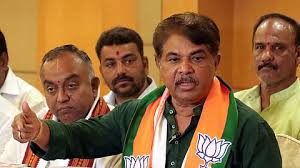
The Congress wasted no time in joining hands with TVK. TUMAKURU: Leader of Opposition R Ashoka has said that the true colour of the Congress has been revealed after it joined hands with Vijay’s TVK in Tamil Nadu, ditching its long-time ally, the DMK. “Now any party that wants to have an alliance with the Congress needs to rethink,” Ashoka said. The Congress has entered into an alliance with TVK, breaking its pre-poll alliance with the DMK. Speaking to reporters on Wednesday, Ashoka said, “The DMK lost the election. The Congress wasted no time in joining hands with TVK. The Congress has no ideology. Congress has broken the trust of DMK… that is why people do not trust the Congress.” Those in INDIA bloc and others who wish to join hands with the Congress now need to rethink, he said. “The Congress has backstabbed the DMK. After the betrayal, the DMK is now left alone,” the BJP leader said, adding that the Congress has now grabbed the “winning horse’s tail”. Courtesy : TNIE Note: This news is originally published on https:/thenewindianexpress.com/bha and is used purely for non-profit/non-commercial purposes, especially human rights
Orissa HC seeks Utkal University’s response on Ombudsman appointment PIL
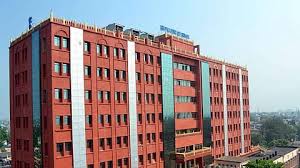
The petitioner highlighted the university’s alleged non-compliance with statutory requirements. CUTTACK: The Orissa High Court has sought response from the registrar of Utkal University on a PIL seeking appointment of an Ombudsman at the institution, as mandated under the UGC regulations on student grievance redressal. The petition was filed by advocate and Bhubaneswar-based human rights activist Prabir Kumar Das. The matter came up for hearing on Wednesday. Appearing in person, Das presented his submissions, highlighting the university’s alleged non-compliance with statutory requirements. The two-judge bench comprising Chief Justice Harish Tandon and Justice MS Raman issued notice to the registrar of Utkal University, seeking a response within two weeks in this connection. As per the petition, the UGC (Redressal of Grievances of Students) Regulations, 2021, mandates the constitution of a Students Grievances Redressal Committee (SGRC) under Regulation 5 to address student complaints, and appointment of Ombudsman under Regulation 6 to hear appeals against SGRC decisions. The petition pointed out that though the UGC in a letter dated April 12, 2021 had directed universities to appoint an Ombudsman within 30 days of notification, Utkal University had allegedly failed to comply. Courtesy : TNIE Note: This news is originally published on https:/thenewindianexpress.com/bha and is used purely for non-profit/non-commercial purposes, especially human rights
Allahabad HC defers hearing on plea seeking probe into Rahul Gandhi’s alleged disproportionate assets

Division bench of Justices Rajesh Singh Chauhan and Zafeer Ahmad passed the order on a BJP worker’s plea, directing documents be sealed. LUCKNOW: In order to avoid an open court hearing while exercising utmost caution with documents attached to the case file, the Lucknow Bench of the Allahabad High Court on Wednesday deferred the hearing on a plea seeking a probe into the alleged disproportionate assets (DA) of Congress MP and Leader of Opposition in the Lok Sabha, Rahul Gandhi, till May 12. The division bench, comprising Justice Rajesh Singh Chauhan and Justice Zafeer Ahmad, passed the order on a writ petition filed by Karnataka BJP worker S. Vignesh Shishir, while directing that the documents related to the case be kept in a sealed envelope. The petitioner moved the Lucknow Bench of the Allahabad High Court on April 25, 2026, and the bench took up the case for its first hearing on May 6, 2026. Interestingly, both judges heard the matter in their chamber. After Wednesday’s hearing, they issued directions to seal the entire copy of the writ petition before them, and it was ordered to be kept in the custody of the Senior Registrar of the High Court. The judges further directed the Senior Registrar to place the case file before the bench on May 12 at 2:15 pm for a further hearing in chambers. “The seal shall be opened by the Bench Secretary of this Court on the next date of listing,” the judges ordered. Significantly, prior to the commencement of the hearing, the petitioner moved an application urging the bench to direct the authorities concerned to preserve the records of the present writ petition in safe custody. The petitioner has levelled serious allegations against the Congress leader, claiming that he has allegedly amassed substantial wealth from unknown sources. The petitioner has made the Government of India, CBI, ED, CBDT, Uttar Pradesh Police and the Director of the Serious Fraud Investigation Office, New Delhi, parties to the petition, and has sought directions from the court for an inquiry into the matter. The hearing was deferred after counsel for the central and state agencies sought time to obtain written instructions. After the first hearing, the bench recorded in its order that the petitioner had argued at length, following which counsel for the opposite parties requested a short adjournment to obtain written instructions from their respective governments and agencies. Agreeing to this request, the bench posted the matter for the next hearing on May 12. Namita Bajpai Courtesy : TNIE Note: This news is originally published on https:/thenewindianexpress.com/bha and is used purely for non-profit/non-commercial purposes, especially human rights
In the last five years, Tamil Nadu saw a 67% jump in atrocities against Dalits: NCDHR

While anti-incumbency, governance concerns, and political strategy have been considered reasons for the DMK’s defeat, the continued violence against Dalits and the state’s response to caste atrocities also deserve serious attention. The 2026 Tamil Nadu Assembly election results have triggered intense discussions on the reasons for the DMK’s defeat and the TVK’s rapid rise. While anti-incumbency, governance concerns, and political strategy have all been debated, the continued violence against Dalits and growing dissatisfaction over the state’s response to caste atrocities also deserve serious attention. The DMK has long projected Tamil Nadu as a model of social justice governance. However, data from the National Crime Records Bureau (NCRB) and the National Campaign on Dalit Human Rights (NCDHR) presents a troubling reality. An in-depth perusal of the data reveals a 67% increase in atrocities against Dalits and Adivasis. The contradiction between the language of social justice and the lived realities of caste violence raises difficult questions about how Tamil Nadu’s political parties understand and implement social justice. What the data shows An NCDHR report titled Five Years of Caste-Based Atrocity: An Analysis of Crime Against Scheduled Castes and Scheduled Tribes 2019-2023 points to an increase in atrocity cases in Tamil Nadu and at an all-India level. Tamil Nadu recorded a 67.9% increase — the highest in the country — followed by Madhya Pradesh (55.3%) and Odisha (42.9%). NCRB’s Crime in India 2023 further highlights alarming trends. Murders of Dalits increased by 40.4% (from 52 cases in 2019 to 73 in 2023). Grievous hurt cases rose by 240% (from 5 to 17). Criminal intimidation surged by 584.8% (from 46 to 315) These statistical figures reflect how caste continues to operate as a system of control and violence when Dalits assert their rights in the state. Violence against Dalit women and girls Gender-based caste crime against Dalit women and girls has also increased. Overall rape cases increased from 97 in 2019 to 132 in 2023 — a 36.1% jump. 2022 saw the highest cases (166). The prevalence of rape cases is higher among Dalit girls than adult women. Rape of Dalit women decreased by 14%, but the rape of Dalit girls escalated by 73.2%. In 2019, 56 rape cases were recorded. That increased to 97 in 2023. Rapes are not isolated incidents targeting individuals, especially when it is against Dalit women and girls. Often, rape is weaponised as a tool of caste oppression. ‘Assault on women and minor girls with an ‘intent to outrage her modesty’ has increased from 19 cases in 2019 to 74 in 2023 — a 289.5% increase. Judicial failures, state apathy The justice system’s response remains deeply inadequate. In 2023, the conviction rate in atrocity cases against Dalits was at just 12.2%, while the acquittal rate was a staggering 87.8%. Meanwhile, the pendency rate of atrocity cases is at 87.7%. A significant reason is the inadequate number of exclusive special courts that are supposed to conduct speedy trials. Tamil Nadu has only 20 exclusive special courts, according to the State Annual Report (2024) Data. According to section 16 of the Scheduled Castes/Scheduled Tribes Prevention of Atrocities (PoA) Act, the state-level vigilance and monitoring committee has to meet twice a year. These statutorily mandated meetings have not been properly conducted in Tamil Nadu since 2021. Only one meeting was conducted in 2021, 2022 and 2023. The committee did not meet even once in 2024. Notably, the chief minister is the chairperson of this committee. This is not an administrative lapse but is reflective of the state’s priorities its casteist attitude to Dalits and Adivasis In criminal law, including atrocity cases, the state prosecutes the accused. Therefore, the high rate of acquittals reflects not the failure of victims, but the failure of the state and its mechanism. The provisions of the Scheduled Castes/Scheduled Tribes Prevention of Atrocities (PoA) Act require the state to effectively oversee the case from the investigative stage to the final prosecution. The state is also required to ensure compensation, rehabilitation and protection for victims. Further, the state must protect and provide travel and maintenance funds for both victims and witnesses during the trial. In reality, there are gaps at every stage. The very process becomes exhausting and punishing for victims. Custodial violence The Prison Statistics India (PSI) reports reveal that Dalits are disproportionately subject to custodial violence under the cover of preventive detention laws. In 2021, SC persons accounted for 657 detainees, constituting 37% of the total detainees in the state. Strikingly, Tamil Nadu alone accounted for 84.5% of all SC detainees in India. By 2023, the share of SC detainees in the state further increased to 42.2%, despite SCs comprising only around 20% of the population in the state as per the 2011 census. The electoral defeat of the DMK reflects, among several factors, growing dissatisfaction over the gap between the rhetoric of social justice and the continued vulnerability of Dalit communities to caste violence and discrimination. At the same time, the TVK’s rapid rise within just two years of its formation reflects the strong celebrity-driven appeal and cinematic influence that continue to shape Tamil Nadu politics, particularly among younger voters seeking an alternative to the traditional Dravidian parties. However, political change driven by charisma, celebrity culture, and anti-incumbency sentiment alone cannot guarantee structural justice for marginalised communities. Concerns regarding TVK’s silence and response to recent critical issues, including the “honour” killing of Dalit techie Kavin Selvaganesh, intensified public scrutiny over how seriously caste-based violence will be addressed. The crucial question remains whether TVK will move beyond political symbolism and ensure prompt prevention of atrocities, effective investigation, accountability, victim protection, and stronger implementation of the SC/ST (Prevention of Atrocities) Act. Written by:Deepesh Chithra Edited by:Bharathy Singaravel Author bio: Deepesh Chithra is the Research & Advocacy Officer at the National Campaign on Dalit Human Rights (NCDHR) in New Delhi. Courtesy : TNM Note: This news is originally published on https:/thenewsminute.com/bha and is used purely for non-profit/non-commercial purposes, especially human rights