
CJP becomes the world’s largest digital party with over 20 million followers; founder’s Dalit identity sparks outrage from right-wing groups; casteist slurs hurled at him
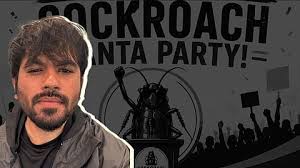
As soon as CJP founder Abhijeet Dipke revealed his “Dalit” identity on social media, right-wing and casteist trolls unleashed a barrage of vile abuses and memes against the young leader, who leads 20 million young people. New Delhi: India’s digital and political history has rarely seen such a seismic storm. Born out of a controversial remark by the Chief Justice of the Supreme Court, the “Cockroach Janata Party” (CJP) is no longer just a social media trend. Leaving the world’s largest political party BJP far behind, CJP’s Instagram following has surpassed an incredible 20.6 million (20.6 million). But amid this historic and unprecedented digital revolution, a deeply disturbing and bitter truth about Indian society has been completely exposed. As soon as CJP founder Abhijeet Dipke, who is pursuing a Master’s in Public Relations from the prestigious Boston University in the US, revealed his “Dalit” identity on social media, the right-wing and a certain upper-caste ecosystem erupted. Those who had been enjoying the party’s sharp satire against the establishment until yesterday, in a flash, began demeaning Abhijeet and hurling casteist slurs at him. The entire controversy began on the social media platform X when an account called “Shut Up Counsel” questioned the CJP’s Bahujan agenda. The user asked, “Given the party’s continued support from numerous Brahminist and casteist accounts, do CJP and its founder support social justice, reservation, and Dalit rights?” Abhijeet Dipke’s forthright response to this direct question created a storm on the internet. Abhijeet wrote just one line, “I am a Dalit myself. I hope this answers all your questions.” This candid response from Abhijeet spread like wildfire within hours, garnering over 2 million views. But this single truth exposed the casteists on social media. As soon as his Dalit identity was revealed, a well-orchestrated hate campaign began against Abhijeet. Accounts steeped in the arrogance of upper-caste superiority immediately launched a flood of memes and abusive comments against him. One user used the blue symbols of Babasaheb Ambedkar and a picture of Harpic (toilet cleaner) to make a vulgar and offensive mockery of Dalit identity. Another account with nearly 20,000 followers shared an offensive photo of a man urinating and wrote, “Bhimta spotted, party rejected.” Mumbai-based writer Anuradha Tiwari also jumped into this hate mob. Taking aim at Abhijeet, he wrote, “So this self-proclaimed Gen Z leader is against merit. Anyone who supports a zero-cutoff is anti-development.” Other users also targeted Abhijeet, making a flurry of cheap and caste-based comments like, “The D (Dalit) card is here!” and “Will cockroaches get reservation now?” This entire incident has proven that when a Bahujan or Dalit youth confronts the system and leads over 20 million young people, a large section of society forgets their abilities and begins to judge them solely by their caste. This is the same Cockroach Janata Party, which was born out of massive outrage against the Chief Justice of India calling unemployed youth “cockroaches” and “parasites.” The strength of this movement today can be gauged from the fact that in just a few days, 20.6 million young people have joined this party on Instagram. CJP is no longer just a humor or meme page, but has become a unique amalgamation of Gen-Z and Bahujan consciousness, a phenomenon that even the establishment has feared. This is why the party’s account on X in India has already been suspended following a legal notice from the government. But despite digital censorship and the now-emerging caste hatred, the growing wave of the Cockroach Janata Party shows no signs of stopping. This digital mob of over 20 million young people has now become a reality of Indian politics, one that cannot be suppressed by either the casteist slurs of the right-wing or the digital bans of the establishment. Rajan Chaudhary Courtesy: Hindi News
UP: Dalit student raped during treatment, Deputy Chief Minister Pathak orders hospital seal
Lucknow, A Dalit student has accused a doctor at a private hospital in Lucknow, the capital of Uttar Pradesh, of raping her after administering an anaesthetic during treatment, police said. They said the accused doctor has been detained and the police have begun an investigation. Taking cognizance of the incident, Deputy Chief Minister Brajesh Pathak, in charge of the Health Department, has ordered the hospital to be sealed and the medical license of the accused doctor, Vijay Giri, to be immediately suspended. Police said the student was admitted to a private hospital in the BKT area on May 18 due to health issues. She alleged that during treatment, the doctor took her to the operation theatre and sent the female staff and the student’s father out. Police quoted the student as saying that the doctor then administered an anaesthetic, causing her to become unconscious. According to the police, upon regaining consciousness, the student realized she had been raped, prompting her family to file a police complaint. Deputy Commissioner of Police (North) Twinkle Jain stated that the victim has been sent for a medical examination, and further action will be taken based on the report. She added that the police have registered a case under relevant sections and have inspected the hospital premises and are questioning staff. Officials say that all aspects of the case are being investigated thoroughly, and strict legal action will be taken if anyone is found guilty. Taking a tough stance on the incident, Deputy Chief Minister and Health Minister Brajesh Pathak has ordered the sealing of Tejas Hospital located at Bakshi Ka Talab and the immediate suspension of the medical license of the accused doctor, Vijay Giri. He posted on “X” that in the case of the rape of a 12th-grade student at Tejas Hospital located at Bakshi Ka Talab (Indorabag), Lucknow, instructions have been given to seal the hospital and immediately suspend the medical license of the hospital operator, accused Dr. Vijay Giri. He said that the accused doctor will never be able to perform any medical duties in the future. The Deputy Chief Minister said, “The Uttar Pradesh government stands with the victim and her family. I assure you that the accused doctor will be punished severely.” Zafar Anand Rajkumar This story was auto-fed from Bhasha news agency. Courtesy : Hindi News
Karnataka Cabinet Withdraws 52 Cases Against Kannada Activists, Farmers and Dalit Groups

The Karnataka Cabinet on Thursday approved the withdrawal of 52 criminal cases registered across the state against pro-Kannada activists, farmers’ organisations, Dalit groups and other protesters , Law and Parliamentary Affairs Minister H K Patil announced after the Cabinet meeting. According to official sources, the withdrawn cases include nearly ten cases against Kannada activist Vatal Nagaraj, many of them linked to protests, demonstrations and Kannada language-related agitations . The Cabinet also cleared the withdrawal of seven cases connected to the 2022 communal violence at Ladle Mushtaq Dargah in Kalaburagi district. Sources said several of the cases involved charges related to unlawful assembly, road blockades, protest actions and clashes during demonstrations organised by pro-Kannada outfits, farmers’ unions and Dalit activists. Apart from the legal decisions, the Cabinet approved multiple infrastructure and welfare projects. These include Rs 90 crore for new machinery in 32 Government Tool Room and Training Centres (GTTCs), and Rs 100 crore for a new 200-bed super-speciality hospital building at Karwar Institute of Medical Sciences. The Cabinet also sanctioned Rs 15 crore for a weir across the Kabini River near Srikanteshwara Temple in Mysuru district and approved the purchase of oil spill response equipment worth Rs 13 crore for Karwar Port. In the education sector, the government approved a Rs 15 crore residential coaching programme for 500 meritorious backward-class students from government schools preparing for NEET, JEE and CET examinations . Laaheerie P Courtesy : TMV Note: This news is originally published on https:/themorningvoice.com/bha and is used purely for non-profit/non-commercial purposes, especially human rights
Tamil Nadu Gets ‘Rainbow Ministry’ as Vijay Adds Dalit, Minority Representatives to Cabinet

Tamil Nadu Chief Minister C Joseph Vijay on Friday completed his Cabinet expansion by inducting two more MLAs, marking a further consolidation of what is being described as a coalition-based “rainbow ministry” in the state. The new inductees include Vanni Arasu of Viduthalai Chiruthaigal Katchi (VCK) and A M Shahjahan of the Indian Union Muslim League (IUML). Governor Rajendra Vishwanath Arlekar administered the oath of office and secrecy at a simple ceremony held at Raj Bhavan, in the presence of the Chief Minister and senior officials. The induction has triggered political friction, with the DMK , a former ally in the opposition alliance, objecting to the inclusion. Senior DMK leader A Raja made remarks on social media, later deleted, which were widely interpreted as criticism of the VCK and IUML joining the Vijay-led Cabinet. His comments, including a “bent coconut tree” metaphor, sparked a war of words between parties. VCK and TVK leaders strongly condemned the remarks, with Public Works Minister Aadhav Arjuna demanding an apology from the DMK leadership. Amid escalating tensions, DMK president M K Stalin intervened, urging restraint and asking party cadres to avoid harsh language. The Cabinet expansion is being viewed as a major political shift, with increased representation from Dalit and minority communities. The new ministry reportedly includes eight Dalit ministers , two Brahmin ministers , and multiple representatives from minority communities, making it one of the most diverse Cabinets in the state’s recent history. VCK leader Vanni Arasu described his induction as a “dream come true,” calling it a step towards coalition governance, while IUML leader Shahjahan called it a historic moment for his party. The Cabinet strength now stands at 35 ministers, including the Chief Minister , the constitutional maximum. Laaheerie P Courtesy : TMV Note: This news is originally published on https:/themorningvoice.com/bha and is used purely for non-profit/non-commercial purposes, especially human rights
Indian legislation borrows UK’s gatekeeping to limit what being Trans+ looks like
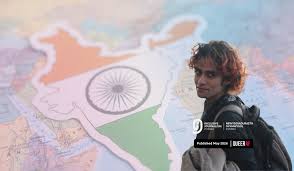
This article is from our (award-winning) free weekly newsletter that helps you understand the LGBTQIA+ news and support queer creatives to change the media. Join 10,000+ curious queer readers every Saturday morning. When India passed the 2026 Transgender Persons (Protection of Rights) Amendment Bill, nationwide protests erupted against the changes that will devastate the fundamental rights of transgender people in the country. As India is home to almost 1.5 billion people, this bill changes the rights of 1 in 5 Trans+ people in the world. Protesters have demanded that the amendment be revoked, accusing the legislators of acting with “undue and unjustifiable haste” in passing the bill and calling for consultations with transgender and gender diverse communities. The bill is an amendment to Transgender Persons (Protection of Rights Act) 2019. One of the most crucial and devastating changes is to narrow the definition of who a transgender person is. The Act now requires a medical transition to take place in order for someone to receive legal gender recognition. Historically integrated Trans+ groups such as hijra and kinner, as well as intersex persons, will still be legally recognised, but anyone who self-identifies as a trans man, trans woman, or non-binary person is no longer included in the category of a legally recognised transgender person, unless they go through a medicalised process. As a trans person, it is obvious to me that the right to self-identify without approval from a doctor is a crucial aspect of what it means to be Trans+ and, for most of us, this self-identification occurs before medical intervention (if we choose to pursue that). Social transitioning is not enough for many, and those Trans+ people who need more are often stuck on long wait lists with no other way to further their transition. And yet, even as we wait for treatment on someone else’s timeline, that first moment of defiance and expression is our power. Self-identification is about our autonomy. This power of self-identification is a scarf in the wind, a moment of unauthorised, nonmedicalised determination away from the proscription of gender. When the scarf blows, anyone can see it: it offers that freedom to the world. In her writing, Indian academic ‘VQueer’ Aditya Sahai said “this is the difference between the amendment and its critique, state and the people — one sees trans as population that needs to be controlled, an identity, the other understands it as possibility. The fight is not for the rights of some people who identify as trans but for trans to be a possibility.” When transgender becomes a category in legislation, that power shifts away from the Trans+ community and to the lawmakers who write the definitive, singular definition for all of us. As often happens, this was done without our consultation, consent, or representation. Part of the reason I left India was to transition in the relative safety and peace of the UK. As I began the medical process here, I was advised by my friends to contort my story to increase my likelihood of fitting the antiquated profile the UK system requires in order for me to get a ‘diagnosis’ of gender dysphoria, which is what opens up support for gender affirming care. My friend sent me a template of their ‘trans story’ that I could use. Toy cars, gym clothes, wrestling with brothers. Another friend told me he was sick of lying about himself and committed to telling the truth to doctors. I didn’t quite know which option made sense to me. Throughout my journey through this medicalised process, I paused at many moments to consider what would get me healthcare and what felt true to who I am. I delicately rode the balance of truth and exaggeration. On reflection, the real and more substantive reason I returned to the UK to transition was to be within my established trans community. Not for our broken medical system, whose historical bias and decades of malpractice have been thoroughly reported on. The medicalised route being introduced in India like the UK’s is designed to control and limit what being Trans+ looks like. The fear of giving us rights, autonomy, and self-definition comes from the patriarchal system that knows that if Trans+ people can challenge the gender binary, anyone can. In other words, this bill reflects that their fear of us is stronger than their fear for us. Aliyy Azad Malik (A Writer & Artist) Courtesy : QueerAF Note: This news is originally published on https:/queeraf.com/bha and is used purely for non-profit/non-commercial purposes, especially human rights
Britain rolls out landmark transgender rules for single sex toilets, NHS wards and women-only spaces

From public toilets and hospital wards to gyms, schools and women-only refuges, Britain is preparing for one of the biggest changes to its equality guidance in years after the government formally unveiled new transgender access rules. The updated guidance outlines when transgender people can legally be excluded from certain single-sex spaces under UK law, a move that is already triggering intense national debate over privacy, safety, inclusion and equality rights. The new code follows a landmark ruling by the Supreme Court of the United Kingdom in 2025, which stated that under the Equality Act 2010, the legal definition of “sex” refers to biological sex rather than gender identity. The judgment effectively means a transgender woman is legally considered male under equality law, while a transgender man is legally considered female for the purposes of single-sex protections. The guidance was prepared by the Equality and Human Rights Commission (EHRC), Britain’s independent equality watchdog, and formally presented to Parliament by the UK Government Equalities Office under Women and Equalities Minister Bridget Phillipson. Parliament now has a 40-day scrutiny period before the code becomes fully enforceable across public bodies, workplaces and service providers throughout England, Scotland and Wales. The updated rules replace earlier guidance dating back to 2011 and are expected to influence policies across the National Health Service (NHS), schools, universities, gyms, sports organisations, employers and local councils nationwide. UK’s single-sex spaces rules The new code states that organisations can lawfully exclude transgender individuals from certain single-sex services if doing so is considered a “proportionate means” of protecting privacy, dignity, safety or fairness. The guidance applies to places and services including: Public toilets Changing rooms Domestic abuse refuges Hospital wards Sports competitions Schools and colleges Gyms and leisure centres Under the updated framework: Trans women may be excluded from women-only spaces. Trans men may be excluded from men-only spaces. Organisations are encouraged to consider gender-neutral or third-space alternatives where possible. The EHRC also stressed that transgender people still remain protected under the Equality Act through the protected characteristic of gender reassignment. However, the guidance says organisations must balance those protections with the rights of women and other service users. The code repeatedly emphasises “case-by-case” assessments rather than blanket bans. One significant point is that the guidance warns organisations against creating “double exclusion” situations where transgender people are unable to access either male or female facilities. Workplaces could see major changes Some of the most immediate impacts are expected in healthcare, workplaces and sports. The draft guidance states hospitals can legally place patients in wards based on biological sex rather than gender identity. NHS policies may now require revision following the publication of the updated code. In sports, the code says participation in sex-separated competitions should generally be based on biological sex. For workplaces, employers may need to reconsider toilet and changing-room arrangements. Legal experts have noted that many organisations are still trying to understand how to apply the ruling practically without creating discrimination risks. The guidance also acknowledges practical complications. For example, it says it would usually be unrealistic to routinely ask people for proof of biological sex before using ordinary public facilities like toilets. The code further notes that excluding trans men from certain healthcare services such as gynaecology or obstetrics could itself become disproportionate or discriminatory. Debate erupts over trans rights law The publication of the guidance has triggered intense debate across politics, legal circles, LGBTQ+ organisations and women’s rights groups. Supporters argue the new rules finally provide legal clarity after years of confusion around the Equality Act. Many campaigners for women-only spaces welcomed the code as a necessary step following the Supreme Court decision. Critics, however, warn the guidance could marginalise transgender people and create fear around accessing public facilities. Some LGBTQ+ activists and advocacy groups say the practical impact could lead to exclusion and humiliation for trans individuals. Legal challenges have already surrounded earlier versions of the EHRC’s interim guidance. While one High Court challenge failed earlier this year, debate over how the law should be interpreted remains far from settled. International human rights experts have also urged Britain to ensure that both women’s rights and transgender rights are protected equally under future policy implementation. Courtesy : TOI Note: This news is originally published on https:/timesofindia.com/bha and is used purely for non-profit/non-commercial purposes, especially human rights
Ratan Kelkar appointed as Kerala chief minister’s secretary
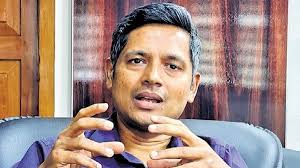
The 2003 batch Kerala cadre official, a native of Maharashtra, has earlier held different key positions in the state government. THIRUVANANTHAPURAM: In a major development, senior IAS officer Ratan U Kelkar has been appointed as the chief minister’s secretary. Notably, he’s being appointed to the crucial post while serving as the chief electoral officer, Kerala. The 2003 batch Kerala cadre official, a native of Maharashtra, has earlier held different key positions in the state government. The government order appointing him as secretary to CM V D Satheean will be issued on Saturday. Sreekumar T, a retired additional secretary, has been appointed special private secretary of the CM. The team also includes Siji G S as press secretary and Roy Mathews as media secretary. Thilakan K P K and Mohanachandran M S have been named additional private secretaries, while Padmakumar M, Abimon P A, Manojkumar P N, Jafarkhan S, Jayachandran A and Prakash O T will serve as assistant secretaries. Courtesy : TNIE Note: This news is originally published on https:/thenewindianexpress.com/bha and is used purely for non-profit/non-commercial purposes, especially human rights
Karnataka Congress MLAs set 15-day deadline for party top brass on Cabinet reshuffle decision
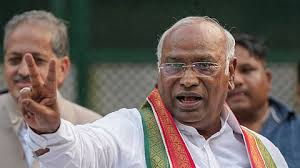
Sagar MLA Gopalakrishna Belur said that if no decision is taken in 15 days, the MLAs will take “aggressive steps”. SHIVAMOGGA: Congress MLA Gopalakrishna Belur on Friday said a group of 30-35 legislators is planning to visit Delhi by May 28 or 29 to press for decisions related to Cabinet expansion and reshuffle in Karnataka. He also said that if no decision is taken in 15 days, the MLAs will take “aggressive steps”. Gopalakrishna represents Sagar in the Assembly. Speaking to reporters, Gopalakrishna said the visit was initially scheduled after the selection of the Kerala Chief Minister and that the legislators would hold a meeting within the next few days before heading to the national capital. “We have taken a firm stand this time. Nearly three years have passed, but no concrete action has been taken on the issue,” he said. Referring to discussions around cabinet expansion, Gopalakrishna said Chief Minister Siddaramaiah had recently indicated that around 15 legislators could be accommodated, but the group was demanding opportunities for more than 20 MLAs. “Many leaders have already enjoyed positions of power for three years. Opportunities should now be given to others if the Congress has to become stronger in Karnataka,” the MLA said. Gopalakrishna said around 25 legislators had travelled to Delhi earlier and that the number was now expected to rise to over 35. When asked about a possible Cabinet reshuffle, he said party legislators were strongly seeking one. “We are not asking only for newcomers to be inducted. We are asking for changes in the existing structure as well,” he said. On speculation over a possible change in the CM, Gopalakrishna said such decisions rest with the party’s national leadership. “The chief minister issue is not in our hands. We are demanding what we believe is our right,” he said. He also indicated that legislators seeking Cabinet positions expected clarity within the next 15 days and hinted at further steps if their demands were not addressed. “If we are not given an opportunity, we will discuss our future course of action and take a decision,” he said. Krishna Byre Gowda, 4 other MLAs in Delhi Amid speculation over a possible change in leadership in Karnataka, Revenue Minister Krishna Byre Gowda and four other MLAs visited New Delhi on Friday. They are expected to meet the Congress high command leaders, including AICC General Secretary (Organisation) KC Venugopal. Speculation is rife as to whether Gowda will meet Leader of Opposition in Lok Sabha Rahul Gandhi before the latter embarks on a 10-day foreign trip from May 24. Shivajinagar MLA Rizwan Arshad, Shiggaon MLA Yasir Ahmed Khan Pathan, Hangal MLA Srinivas Mane, and Kalaburagi North MLA Kaneez Fatima have accompanied Gowda. After May 26, Chief Whip in the Assembly Ashok Pattan is likely to coordinate a group of MLAs for a Delhi visit to insist on the cabinet reshuffle. In a similar exercise in the recent past, Pattan had led 25 MLAs to the top brass. Courtesy : TNIE Note: This news is originally published on https:/thenewindianexpress.com/bha and is used purely for non-profit/non-commercial purposes, especially human rights
CM VD Satheesan to meet top Congress leaders in Delhi on May 23
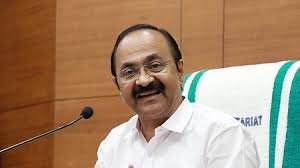
“Efforts are on to get an appointment with the prime minister. However, there’s no confirmation yet,” an official with the Chief Minister’s Office said. THIRUVANANTHAPURAM: In his first visit to the national capital after assuming office, Chief Minister V D Satheesan is set to meet senior Congress leader Sonia Gandhi on Saturday. Though there are reports that Satheesan will also meet Prime Minister Narendra Modi, sources said there is no confirmation on the same. “Efforts are on to get an appointment with the prime minister. However, there’s no confirmation yet,” an official with the Chief Minister’s Office said. Satheesan, who left the state capital on Friday night, is scheduled to stay at the Kerala House. He will meet Congress president Mallikarjun Kharge, Leader of the Opposition in the Lok Sabha Rahul Gandhi, and Wayanad MP Priyanka Gandhi as well. However, no official programme has been charted for the Kerala chief minister in Delhi during this visit. He is expected to return to Kochi later in the day. Though Satheesan planned to meet the Congress’ central leadership soon after taking oath as the chief minister, the prolonged discussions on cabinet formation and portfolio allocation delayed his visit to Delhi. In his meeting with the top party leaders, the chief minister is expected to discuss about the future plans for the state. Courtesy : TNIE Note: This news is originally published on https:/thenewindianexpress.com/bha and is used purely for non-profit/non-commercial purposes, especially human rights
Vijay expands TN cabinet with 23 ministers; Congress joins state government after 60

Tamil Nadu Chief Minister C Joseph Vijay has executed a massive Cabinet expansion and portfolio reshuffle, inducting 23 new ministers. In a politically historic move, the Congress party makes a comeback to the TN Cabinet after nearly six decades. The expansion also signals a futuristic administrative reset with the creation of a dedicated Artificial Intelligence (AI) ministry under R Kumar. Watch the video for a complete breakdown of the major shifts, including N Marie Wilson taking over Finance from senior leader K. A. Sengottaiyan, new portfolios retained by CM Vijay, and updates on alliance partners like IUML and VCK joining the government. Courtesy : TNIE Note: This news is originally published on https:/thenewindianexpress.com/bha and is used purely for non-profit/non-commercial purposes, especially human rights