
Allahabad HC seeks State’s response on plea of Journalist held for inciting Noida workers’ protest

It was alleged that journalist Verma had an important role to play in the violence, arson and spread of disorder during the Noida workers’ protest. LUCKNOW: The Allahabad High Court asked the Uttar Pradesh government to file its reply on a petition concerning journalist Satyam Verma, who was arrested last month on allegations of instigating workers to carry out violence during the Noida labour protests. A division bench, comprising Justice Salil Kumar Rai and Justice Devendra Singh, after hearing Senior Advocate SFA Naqvi, along with Advocates Shashwat Anand and Ankur Azad, appearing for Verma, on the illegality of his arrest and continued custody, issued notice to the State authorities and granted time to file a Counter Affidavit on the habeas corpus writ petition. Verma was separately booked under the National Security Act (NSA) on May 13. The petition filed on behalf of Verma by his wife challenges his arrest, detention and remand. The petition alleges serious procedural irregularities in the arrest and custodial transfer process and has accordingly sought his release along with preservation of electronic and documentary evidence relating to the detention. Verma was arrested in Lucknow on April 17. It was alleged that Verma had an important role to play in the violence, arson and spread of disorder during the workers’ protest, as he attempted to disrupt public order by provoking people in various areas. It may be recalled that the workers of the textile sector were protesting for a hike in their wages and improved working conditions across Noida since April 10. On April 13, the protestors turned violent, indulging in vandalism and arson. They set vehicles afire, resorted to trespassing and stone pelting at a few places, following which police resorted to lathi-charge and detained hundreds of workers and seven activists involved in the protest. The Court further directed that the petitioner would be at liberty to file a Rejoinder Affidavit thereafter and posted the matter for the next hearing on July 13. Earlier, on May 20, a division bench of Justice Siddharth and Justice Vinai Kumar Kumar Dwivedi recused from hearing the present Habeas Corpus plea. Namita Bajpai Courtesy : TNIE Note: This news is originally published on https:/thenewindianexpress.com/bha and is used purely for non-profit/non-commercial purposes, especially human rights
Power politics peaks in Karnataka, Dalits want Dy CM post for Muniyappa; Lingayat seer pitches for Eshwar Khandre
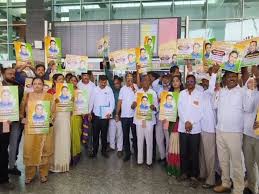
BENGALURU: Leaders from the Dalit community staged a protest at the Kempegowda International Airport on Saturday, urging the Congress party to appoint former minister K H Muniyappa as Deputy Chief Minister. Leaders of the Madara Mahasabha and various Dalit organizations held posters and urged the Congress leadership to grant the DCM post to Muniyappa. The protesters had gathered to submit a memorandum to AICC Karnataka in-charge Randeep Singh Surjewala, who was arriving in the state. The demonstration at Terminal 1 of the airport drew significant attention for several hours. The protesters expressed anger that the Madiga community has never been given key positions such as Chief Minister, Deputy Chief Minister, or KPCC President, and insisted that the community should be represented with a DCM post this time. They warned that denying the DCM position could politically hurt the Congress party and said the community would teach the party a lesson if it was ignored. The protests come even as top brass of the Congress including General Secretaries KC Venugopal and Randeep Surjewala arrived at the Shangri La Hotel in the city. The leaders are expected to hold a meeting prior to the Legislature party meet later this evening. Speaking on the Karnataka Congress Legislature Party (CLP) meeting, Muniyappa said, “Some are proposing, some are seconding. This is the procedure, and we cannot say anything beyond that. But the process will be completed by this evening”. The pressure on the Congress leadership for top posts also came from the Lingayat community. Guru Basava Pattadevaru and his supporters demanded the Deputy CM Chair for senior leader Ishwar Khandre. Guru Basava said, “If Eshwar Khandre is not given the post of DCM, then the Lingayat community will teach the Congress party a lesson in the next assembly elections,” the Swamiji added. The Congress Parliamentary Party (CPP) meeting is scheduled at the Vidhana Soudha later in the day. It is expected that DK Shivakumar will be chosen as the CM while at least two Deputy CMs are likely to be named. Courtesy : Public TV English Note: This news is originally published on https:/publictvenglish.com/bha and is used purely for non-profit/non-commercial purposes, especially human rights
Seven Dalits injured in attacks by gang in Tenkasi, Tirunelveli districts
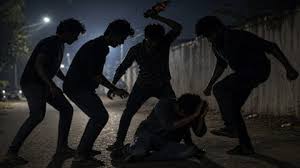
A nine-member masked gang came to Nettur village in Tenkasi district on two-wheelers and attacked the people indiscriminately with sickles. CHENNAI: Seven Dalits were injured after being allegedly attacked by masked men in Tenkasi and Tirunelveli districts, police said on Saturday. A nine-member masked gang came to Nettur village in Tenkasi district on two-wheelers and attacked the people indiscriminately with sickles. One person was injured in a similar attack in Tirunelveli district. The assailants fled the spot immediately after the assaults. A total of seven people were injured and admitted to the government hospital. A case has been registered, and investigation is on, police said. Expressing shock over the attack on Dalits, PMK leader Anbumani Ramadoss on Saturday alleged that the Tamil Nadu government has “failed to prevent” such violence. “These incidents have left the southern districts in a prolonged state of fear”, he said adding “such an incident must not be allowed to recur.” He demanded that the district administrations take immediate steps to restore normalcy in the affected villages. Courtesy : DT Next Note: This news is originally published on https:/dtnext.com/bha and is used purely for non-profit/non-commercial purposes, especially human rights
‘Playing a transgender was no less than a roller coaster ride’

Actor & talent coordinator Palash Dutta opens up about his experience playing a transgender character and more Actor Randeep Hooda is currently riding high on the success of Season 2 of Inspector Avinash, where he plays police officer Avinash Mishra in the crime thriller based on the real-life exploits of Uttar Pradesh’s ‘super-cop’ Avinash Mishra, an encounter specialist in the 1990s. Actor and talent coordinator Palash Dutta was part of the series, playing a transgender character, and opened up about his experience. “Playing a transgender character, Angoori, was no less than a roller coaster ride of emotions. I was playing the right-hand aide to Devi, played by the versatile and gifted actor Abhimanyu Singh, and just observing him transform into the character of a mafia transgender queen was a delight and a learning experience. We both struck a great chord during the shoot and gelled very well. There were also a couple of real transgenders on the sets who helped us get the nuances and performances right,” Palash said. “A very interesting thing happened on the sets… Since I was looking very pretty and beautiful as a transgender in the makeup and look, there were many actors and men on the outdoor shoot in Udaipur wooing me, flirting with me and trying to grab my attention!” Palash Dutta also revealed. Palash started his journey as a model and actor in 1995. Having worked in many TV commercials like Coca-Cola with Aamir Khan and Pepsi with Amitabh Bachchan, he has also been a talent coordinator. Courtesy : Metro India Note: This news is originally published on https:/metroindia.com/bha and is used purely for non-profit/non-commercial purposes, especially human rights
Punjab civic polls: Transgender influencer Komal Mahant scripts historic victory in Samana

Mahant secured the victory by a margin of 505 votes, emerging as one of the most talked-about winners in the civic polls In a result that has generated considerable buzz in Patiala’s Samana, transgender candidate Komal Mahant transformed her social media popularity into electoral success by winning the Municipal Council election from Ward No. 18 on a Shiromani Akali Dal (SAD) ticket. Mahant secured the victory by a margin of 505 votes, emerging as one of the most talked-about winners in the civic polls. Her campaign stood out for blending digital outreach with traditional grassroots politics, helping her connect with both young voters and residents at the neighbourhood level. Known for her strong presence on social media, Mahant and her team used Instagram, where she has over 64,000 followers, to amplify campaign messages focused on youth welfare, anti-drug awareness and civic development. However, supporters say it was her extensive door-to-door interaction with residents that ultimately converted online support into votes. Celebrations erupted in Ward 18 as the result was declared. Amid chants by supporters, an emotional Mahant thanked voters for placing their faith in her. “Namaskar and Sat Sri Akal to all the people of Samana. I pray for the happiness of every family. The love and support of the people of Ward 18 have brought me to this position. I will work honestly to live up to their expectations,” she said. Mahant’s election campaign revolved around a promise of visible change in the ward. She pledged to spend Rs 6 lakh annually from her personal resources on social welfare activities, launch campaigns against drug abuse among youth and improve damaged streets and open drains that residents have long complained about. Political observers described her victory as more than just an electoral upset. They said it reflected a growing willingness among voters to look beyond conventional political identities and support candidates who maintain direct engagement with the public and focus on local issues. Article_Author Kulwinder Sandhu Courtesy : The Tribune Note: This news is originally published on https:/thetribune.com/bha and is used purely for non-profit/non-commercial purposes, especially human rights
Ensure not a single person loses vote during SIR: Telangana CM to Congress workers

CM Revanth said it was encouraging that party leaders were creating awareness on the SIR and had understood the difficulties it could create for common people, the poor and Congress workers. HYDERABAD: Expressing concern over the possibility of Dalits, minorities and women losing their votes due to the Special Intensive Revision (SIR), Chief Minister A Revanth Reddy called upon party workers to ensure that not a single eligible voter was removed from the electoral rolls. Addressing a joint meeting of the Pradesh Congress Committee Political Affairs Committee and PCC Advisory Committee at Gandhi Bhavan on Friday, he asked the Mahila Congress to organise cluster-wise meetings on the SIR and create awareness among voters. He said it was encouraging that party leaders were creating awareness on the SIR and had understood the difficulties it could create for common people, the poor and Congress workers. He said the SIR could become a major issue for Lambadas, tribals and migrant workers. Stating that people in some Assembly segments might have migrated elsewhere for employment, Revanth asked Congress activists to remain vigilant and ensure that those who had moved temporarily for work were not removed from the electoral rolls. He directed party workers to create awareness regarding solutions to problems arising out of the SIR process. He recalled that with the support of booth-level enrollers, the Congress had completed 45 lakh digital memberships in 90 days in the past. Cong to appoint in-charges to keep track of SIR process Those who registered the highest number of memberships were felicitated by Rahul Gandhi, Revanth said, while adding that the same enrollers who had played a key role in earlier Congress membership drives should now be utilised during the SIR process. For the digital membership drive, one in-charge was appointed in every constituency and continuous monitoring was carried out. Similar in-charges should now be appointed for all 119 Assembly constituencies and 17 Lok Sabha segments to keep track of the SIR process, he said. Assembly in-charges must remain in their constituencies until the SIR process was completed, Revanth said, adding that if the in-charges functioned effectively, not even a single vote would be deleted. CM to meet party workers once every 10 days Revanth also said that in-charge ministers should dedicate one full day every 10 days for party activities and interact with workers at the grassroots level. He said he too would meet grassroots-level party workers once every 10 days and dedicate three days every month to party activities. He said ministers, MLAs, MPs, MLCs and chairpersons of various corporations must participate in party programmes and that no exemptions would be given to anyone. He also advised party leaders to take into consideration suggestions made by former PCC presidents. Revanth said that almost all nominated posts had been filled and that the party now had thousands of sarpanches, municipal chairpersons and councillors. All these leaders must move forward in coordination, he added. The meeting decided to convene Assembly-wise meetings on the SIR in the 15 Assembly constituencies under Hyderabad city limits. AICC in-charge Meenakshi Natarajan and others were present at the meeting. Briefing reporters later, Transport Minister Ponnam Prabhakar recalled that after the SIR process, a large number of voters were allegedly removed in West Bengal, Assam and other states. He said then West Bengal chief minister Mamata Banerjee had approached the court claiming that around 93 lakh votes had been removed in the state. Prabhakar said party workers who had actively participated in the membership drive would now be deployed across nearly 34,000 polling stations in the state to monitor the SIR process. Courtesy : TNIE Note: This news is originally published on https:/thenewindianexpress.com/bha and is used purely for non-profit/non-commercial purposes, especially human rights
‘NEET, CBSE, SSC. And today CUET’: Rahul Gandhi says ‘not a single exam conducted with honesty’

NEW DELHI: Leader of Opposition in Lok Sabha and Congress MP Rahul Gandhi on Saturday launched a fresh attack on the Centre after reports emerged that the CUET-UG 2026 examination was cancelled and delayed at several centres across the country due to technical glitches. Targeting Prime Minister Narendra Modi, Rahul alleged that the government had failed to conduct major national examinations fairly and efficiently, citing controversies surrounding NEET, CBSE, SSC and now CUET. In a post on X, he wrote: “NEET. CBSE. SSC. And today CUET. Four exams. One crore children. Not a single one conducted with honesty.” “Claims of ‘world guru’, but can’t conduct even one exam in the country – Modi ji has completely ruined the entire education system. The generation whose future you are destroying – that same generation will hold you accountable,” he added. Rahul’s remarks came after the National Testing Agency (NTA) acknowledged that a technical glitch at the end of its technology partner, Tata Consultancy Services (TCS) delayed the commencement of CUET-UG 2026 at several examination centres on Saturday. According to the NTA, the issue was later resolved and candidates were provided full compensatory time to ensure that no student was disadvantaged. However, reports from multiple cities suggested that thousands of students were left waiting for hours before examinations could begin. Several opposition leaders joined Rahul Gandhi in criticising the government over the CUET disruption. Former Delhi chief minister and AAP national convenor Arvind Kejriwal said the government was more focused on ‘theatrics’ than addressing systemic failures in examinations. Referring to the Centre’s decision to use Air Force aircraft for transporting NEET question papers, Kejriwal questioned whether such measures would actually prevent leaks. “Air Force ships will be used to prevent paper leaks in NEET. Will this stop paper leaks? How is our government talking like uneducated people?” he wrote on X. AAP leader Atishi also targeted the Centre, claiming that the latest disruption reflected a pattern of administrative failures. “First NEET, then CBSE, now CUET. Today CUET has been delayed due to a ‘technical issue’. Lakhs of students were to take the exam in all parts of India today and after waiting for hours, such notices have been put up outside all centres. Remarkable incompetence,” she said. AAP leader Saurabh Bharadwaj raised concerns about the possibility of a security breach, questioning whether students receiving question papers at different times could compromise the fairness of the examination process. AAP spokesperson Anurag Dhanda also criticised the government, alleging that lakhs of students had been made to report to examination centres early in the morning only to face long delays due to technical problems. The NTA has expressed regret for the inconvenience caused and said revised schedules were issued for affected sessions. It also launched helpline support for students and parents. The latest controversy adds to a series of examination-related disputes that have put the government’s testing and recruitment mechanisms under scrutiny. The NEET-UG examination was rocked by allegations of a paper leak and irregularities, triggering nationwide protests by students and parents and leading to court intervention. The issue sparked a political storm, with opposition parties accusing the Centre of failing to safeguard the integrity of one of the country’s most important entrance examinations. Meanwhile, concerns were also raised over alleged irregularities in CBSE examinations, including complaints related to OMR sheet handling and evaluation procedures. The Staff Selection Commission (SSC) has also faced criticism in recent months over delays and administrative issues affecting recruitment examinations. Introduced in 2022, the Common University Entrance Test (CUET-UG) serves as a standardised national-level entrance examination for admission to undergraduate programmes across central, state and participating universities. The examination was designed to provide a common platform for admissions and is one of the largest entrance tests conducted in the country. Courtesy : TOI Note: This news is originally published on https:/timesofindia.com/bha and is used purely for non-profit/non-commercial purposes, especially human rights
A young man entered a woman’s house in Haldi: Villagers beat him for molestation; police filed a case.
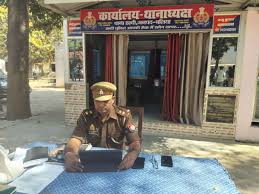
In a village under the Haldi police station area, a young man allegedly entered a woman’s house on Friday morning and molested her. When the woman raised an alarm, villagers gathered and apprehended the accused. The incident occurred around 2 a.m. when a young man from the village entered the woman’s house. When the woman protested and raised an alarm, nearby neighbors arrived at the scene. The villagers caught the accused and beat him. However, he managed to escape. The victim filed a written complaint with the police. Based on the complaint, the police have registered a case against the accused under relevant sections. Haldi police station chief Raju Kumar Rai stated that a case of molestation has been registered. Police are searching for the accused, Abhilash Gupta. Sunil Kumar Dwivedi | Belhari, Ballia Courtesy: Hindi News
FIR against Ajay Rai, Congress sparks statewide protest: In Prayagraj, the party accuses the government of Dalit oppression and corruption.
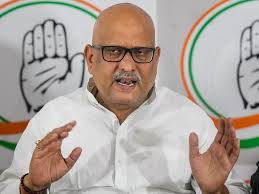
Following the filing of a case against Congress state president Ajay Rai, the party has intensified its statewide protests. Following the instructions of the party high command, Congress leaders in all divisions held press conferences targeting the BJP government. In a similar vein, Congress leader Mohammad Farhan attacked the state government at a press conference in Prayagraj. During the press conference, Mohammad Farhan alleged that the state is experiencing a politics of injustice and oppression, not good governance. He said that those who speak out for Dalits, women, and vulnerable sections are being tried to be suppressed by filing cases against them. Farhan stressed that Congress workers will not fear jail time and will continue their struggle against Dalit oppression, corruption, and injustice. The Congress leader claimed that millions of incidents of Dalit oppression have been reported in the state over the past nine years, as confirmed by National Crime Records Bureau (NCRB) data. He also alleged that corruption has increased in government departments and crimes against women and Dalit daughters are on the rise. Mohammad Farhan recounted an incident in Mahoba where a Dalit girl was allegedly assaulted. He said that when Congress state president Ajay Rai visited the victim’s family, a case was filed against him. Farhan alleged that the government is attempting to suppress the voice of the opposition. He stated that corruption has become widespread in various state government departments. Congress will now launch a campaign to expose the government’s alleged corruption to the public. During the press conference, Congress workers also registered their protest against the government’s policies. Sachin Prajapati | Prayagraj Courtesy: Hindi News
Rethinking the ‘Absolute Bar’ on Scheduled Caste Status in India
By tying caste recognition to religion, the law risks excluding those who continue to face the same discrimination it seeks to remedy. When India’s Supreme Court reiterated that the exclusion of Dalit converts from Scheduled Caste (SC) status is “absolute and admits no exception,” it did more than settle a doctrinal question. It revived a foundational constitutional dilemma: can the law deny protection against caste-based discrimination simply because an individual has changed religion? More critically, does caste itself disappear upon conversion, or does the law merely choose not to see it? This tension between constitutional text and social reality lies at the heart of the debate on SC status for converts to Islam and Christianity. The legal position rests on Clause 3 of the Constitution (Scheduled Castes) Order, 1950. Originally limited to Hindus, and later extended to Sikhs and Buddhists, the Order continues to exclude Muslims and Christians. The Supreme Court has consistently read this provision strictly: SC status is a matter of legal recognition, not lived identity. A Dalit who converts to Christianity or Islam immediately loses access to reservations, scholarships, and protections under the SC/ST (Prevention of Atrocities) Act, 1989. The court has clarified that this bar is categorical – possessing an SC certificate is irrelevant if the individual no longer professes a qualifying religion. This formal clarity sits uneasily with empirical reality. NCRB data shows that tens of thousands of atrocities against Scheduled Castes are registered each year, with pendency rates exceeding 85 percent. Caste-based violence remains a structural feature of Indian society. Sociological studies further demonstrate that caste does not vanish upon conversion. Millions of Dalit Christians and Dalit Muslims continue to face social segregation, occupational immobility, and endogamy mirroring caste hierarchies within Hindu society. Yet they remain largely invisible in state policy. The result is a paradox: the law recognizes caste within certain religions but denies its existence when it crosses religious boundaries. The constitutional validity of Clause 3 has been pending before the Supreme Court since 2004. Meanwhile, multiple institutional exercises have pointed toward the need for reconsideration. The Ranganath Mishra Commission (2007) recommended making SC status religion-neutral, finding no empirical basis for exclusion. The Sachar Committee and subsequent studies reinforced this conclusion, documenting persistent discrimination among converts. In 2022, the Union government constituted a Commission of Inquiry under former Chief Justice K G Balakrishnan to examine whether SC status should be extended to Dalit converts. However, the commission has not submitted its report. Its deadline has been extended to April 2026, prolonging uncertainty for millions. What is striking is not just policy delay but judicial silence. The Supreme Court’s reaffirmation of the “absolute bar” does not engage with the pending constitutional challenge, the Balakrishnan Commission, or the Mishra Commission’s findings. Nor does it revisit Soosai v. Union of India (1985), where the Court acknowledged that resolving this issue requires contemporary socio-economic evidence. Instead, in C Selvarani (2024), the court characterized claims to SC status after conversion as a “fraud on the Constitution.” Together, these developments suggest not just doctrinal continuity but a narrowing of legal space at a time when evidence points toward reconsideration. The constitutional difficulty is clear. Articles 14, 15, and 16 permit affirmative action to remedy historical disadvantage. But if caste-based disadvantage persists irrespective of religion, excluding Dalit converts risks making the classification under-inclusive. The question is not whether affirmative action can differentiate, but whether it can do so while ignoring social reality. A religion-based exclusion begins to resemble constitutional evasion rather than reasonable classification. There is also a quieter constitutional cost. Article 25 guarantees the freedom to profess, practise, and propagate religion. Yet when conversion leads to the loss of legal protections and socio-economic safeguards, that freedom becomes conditional. The law does not prohibit conversion, but it does penalizes it. The price of changing religion is the forfeiture of constitutional benefits, even if the underlying disadvantage remains unchanged. The Supreme Court’s position has been consistent, if cautious. In Soosai v. Union of India (1985), it upheld the exclusion of Christian converts due to insufficient evidence of continued backwardness. In S Anbalagan v. B Devarajan (1984), it acknowledged that caste may persist after conversion but stopped short of extending benefits. In C M Arumugam v. S Rajgopal (1976), it recognised that caste identity can revive upon reconversion, implicitly admitting that caste is not erased by religious change. In State of Kerala v. Chandramohanan (2004), it reaffirmed that SC status is governed strictly by the Presidential Order under Article 341. Even in K P Manu v. Chairman, Scrutiny Committee (2015), while allowing restoration of caste status after reconversion, the Court maintained the rigid framework linking SC recognition to specified religions. These decisions reveal a consistent judicial pattern: acknowledgment that caste may endure beyond religion, combined with reluctance to extend constitutional protection accordingly. The recent reaffirmation of the “absolute bar” reflects fidelity to statutory text but also institutional hesitation to engage with evolving social evidence. The consequences are tangible. Dalit converts are excluded from protections under the SC/ST (Prevention of Atrocities) Act, 1989. In E V Chinnaiah v. State of Andhra Pradesh (2005), the court emphasized the rigidity of SC classification under Article 341. In Chandramohanan (2004), it reiterated that statutory protections cannot extend beyond those recognised under the 1950 Order. This creates a legal paradox: caste-based violence may persist, but victims are denied protection because the law no longer recognizes their caste identity. International human rights law offers a different approach. Instruments such as the ICCPR and CERD emphasize equality and prohibit discrimination based on descent, interpreted to include caste. These frameworks prioritize lived disadvantage rather than formal religious identity. In the United States, affirmative action is anchored in race and historical disadvantage, not religion. South Africa’s jurisprudence similarly prioritizes substantive equality. India’s religion-linked approach to caste recognition thus stands out as an exception. The persistence of caste across religions presents a challenge that the current legal framework struggles to address. Delinking SC status from religion, as recommended by the