
Dalit student suicide: Kerala HC denies anticipatory bail to Kannur Dental College professor Dr. MK Ram
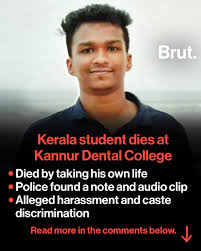
Dr MK Ram stands accused of verbally harassing a dalit student, Nithin Raj, who later died by suicide. The Kerala High Court on Friday dismissed an anticipatory bail plea filed by Kannur Dental College professor, Dr. M Kodanda Ram, who is accused of verbally harassing a Dalit student, Nithin Raj, who died by suicide in April [Dr. M Kodanda Ram v State of Kerala & ors]. Nithin Raj, a dental college student in Kerala, died by suicide on April 10 after jumping from a building near the college. Before his demise, Raj is alleged to have faced caste-based harassment from the faculty at the dental college. Dr. Ram, the head of the department at the dental college, is the prime accused in the case. The police booked Dr. Ram and two other staff members for abetment of suicide and for offences under the Scheduled Castes and the Scheduled Tribes (Prevention of Atrocities) Act, 1989 (SC/ST Act), based on a complaint by the student’s father. Dr. Ram and another accused faculty member Dr. Sangeetha Nambiar, had earlier approached a sessions court seeking anticipatory bail. While the sessions court granted the relief to Dr. Nambiar on April 25, it denied anticipatory bail to Dr Ram. This prompted him to approach the High Court for anticipatory bail. The State opposed the plea. The State’s Public Prosecutor told the Court that the statements of two students indicated that Dr Ram’s conduct with students was improper and that he even instigated other teachers to harass the deceased student. During hearings, the Court had made observations regarding recurring allegations of harassment in medical colleges and suggested that the state should consider constituting a committee to study such complaints and recommend remedial measures. Meanwhile, Dr Ram’s counsel denied the allegations of caste-based harassment. The counsel relied on CCTV footage showing Raj in the college principal’s room before his death and documents indicating loan recovery harassment faced by the student. After considering the rival submissions, the Court has dismissed his plea today. Dr. Ram’s plea was filed through advocates S Rajeev, V Vinay, MS Aneer, Anilkumar CR, Sarath KP, Dipa V, KS Kiran Krishnan, Akash Cherian Thomas, Azad Sunil, TP Aravind, Maheswar Padickal, Akshara S and Nivedita Rajeev. Praisy Thomas Courtesy : Bar And Bench Note: This news is originally published on https:/barandbench.com/bha and is used purely for non-profit/non-commercial purposes, especially human rights
Chennai Police Files Charge-sheet against 6 Cops in Custodial Death of Dalit Youth

The CB-CID has filed a charge sheet against six police officials in connection with the alleged custodial death of a 26-year-old The case pertains to the death of Delison, a resident of Krishnarajapuram in Manamadurai, who was detained on March 5 in connection with an attempted murder case. He succumbed to severe injuries on March 8 while undergoing treatment at the Chennai: The CB-CID has filed a charge sheet against six police officials in connection with the alleged custodial death of a 26- year-old Dalit youth, Akash Delison, in Sivaganga district earlier this year, police said on Friday. The police personnel named in the charge sheet are Inspector of Police Dileepan, Sub-Inspector Gugan, Head Constables Palani (Madhagupatty Police Station) and Deivendran (Sivagangai Town PS), and Grade 1 Constables Kaleeswaran (Manamadurai PS) and Mahendran (Thiruppuvanam PS) The case pertains to the death of Delison, a resident of Krishnarajapuram in Manamadurai, who was detained on March 5 in connection with an attempted murder case. He succumbed to severe injuries on March 8 while undergoing treatment at the Government Rajaji Hospital in Madurai. While the local police initially claimed that the youth sustained a severe leg fracture after jumping from a bridge while attempting to escape, his family alleged that he was subjected to brutal torture. According to his relatives and a dying declaration reportedly given to a judicial magistrate, officers severely beat his legs with an iron rod during interrogation. Forensic experts also later flagged significant discrepancies in the initial medical reports, noting massive internal tissue damage inconsistent with a simple fall. The youth’s death triggered massive outrage and a prolonged protest by his family, who refused to accept his body for over 100 days while demanding the arrest of the erring personnel. The standoff ended only recently after the Madurai Bench of the Madras High Court intervened, leading to a state-conducted cremation under heavy police security. Following the widespread uproar, the investigation was transferred to the CB-CID, which suspended the involved officials and has now formally filed the charge sheet Courtesy : Deccan Chronicle Note: This news is originally published on https:/deccanchronicle.com/bha and is used purely for non-profit/non-commercial purposes, especially human rights
‘Dalit’ is a term of unity for the oppressed: Social Justice Minister Vanni Arasu
Intervening, Public Works Minister Aadhav Arjuna said the MLA had used the term several times and requested members to avoid it. CHENNAI: There was a brief debate in the state Assembly on Friday over the appropriate term to refer to Scheduled Caste communities. The issue arose during the discussion on the motion thanking the governor’s address, when AIADMK MLA V Sampathkumar from Harur used the term “suppressed people” while referring to the Scheduled Castes. Intervening, Public Works Minister Aadhav Arjuna said the MLA had used the term several times and requested members to avoid it. He said SC communities should instead be referred to as ‘Scheduled Caste people’ or ‘Adi Dravidar people’. He added that MLAs need not use words that could be seen as lowering the dignity of a community. Social Justice Minister Vanni Arasu joined the discussion and offered a different view. He said the term ‘Dalit’ had been widely promoted by the Viduthalai Chiruthaigal Katchi as part of its struggle against caste discrimination. According to him, the word had become a symbol of unity for oppressed communities across India and represented more than just a label. Vanni Arasu said the term had helped bring together people facing caste-based discrimination and had gained socio-political significance over the years. Referring to debates involving Dr B R Ambedkar and Mahatma Gandhi on how marginalised communities should be addressed, he said names and identities carried political and social meaning. At the same time, the minister said there was nothing wrong in using the term ‘Adi Dravidar’, as it was also officially recognised and linked to the name of the government department dealing with the welfare of these communities. The discussion ended without any formal decision, but highlighted differing views on the terminology used to refer to SC communities. Courtesy : TNIE Note: This news is originally published on https:/thenewindianexpress.com/bha and is used purely for non-profit/non-commercial purposes, especially human rights
Two get eight life terms each for attempt to murder four Dalits in Coimbatore
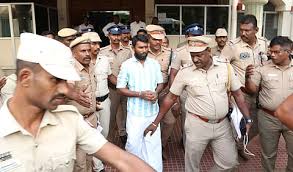
Police said, a private poultry farm at Kullichettipalayam had employed six Dalit families and four OBC families, and they were provided quarters near the farm. COIMBATORE: The Special Court in Coimbatore for the exclusive trial of cases under the SC/ST (PoA) Act awarded eight life terms each to two accused who had tried to murder poultry farm workers in a village near Kinathukkadavu in 2017 after hurling caste slurs at them. Police said, a private poultry farm at Kullichettipalayam had employed six Dalit families and four OBC families, and they were provided quarters near the farm. On November 3, 2017, OBC members played movie songs that had references to their caste. The Dalits too started playing songs about their community, fuelling tension. Subsequently, four Dalits were assaulted by OBC members, and they were admitted to hospitals. The injured were identified as K Karuppu, M Kalimuthu, his brother M Sadayandi and R Sundarraj, all from Dindigul. Police arrested P Senthilkumar (34) and V Chinnadurai (43), both from Thoothukudi, in connection with the case. Senthilkumar and Chinnadurai were consuming alcohol near the quarters when Dalits played the song. Irked, the duo assaulted them with a sickle and an iron rod, police said. On Friday, the court awarded eight life terms and imposed a fine of `16,000 on each accused. Courtesy : TNIE Note: This news is originally published on https:/thenewindianexpress.com/bha and is used purely for non-profit/non-commercial purposes, especially human rights
Villagers block roads in Yadgir over denial of access to Dalit families

Yadgir: Villagers in Guranur village of Gurmitkal taluk have blocked all roads leading to the village in support of Dalit families, alleging that two upper-caste households have denied them access to their farmlands for the past two years. The protest follows what villagers describe as a prolonged dispute over access routes. They alleged that an alternative pathway was blocked a week ago and that the families concerned refused to reopen the roads despite repeated requests. “You can complain to whoever you want, but we will not open the road,” the families allegedly told villagers, according to those leading the protest. Muttanna Hiremani, a Dalit activist in the village, claimed that an open meeting convened at the village temple to resolve the issue also failed, with the two families refusing to agree to reopening the road. Dalit families said they had submitted representations to authorities, but no action was taken to restore access, prompting villagers to join them and launch the road blockade from Thursday. The protest has also disrupted the daily routine of schoolchildren, who are now forced to cross agricultural fields to reach their schools due to the road closures. Courtesy : TOI Note: This news is originally published on https:/timesofindia.com/bha and is used purely for non-profit/non-commercial purposes, especially human rights
Disabled Dalit family gets land after 17 years: Administration in Ballarpur grants possession of 3 bighas, demand for 2 more

A disabled Dalit family in Ballarpur village, Bhogaon tehsil in Mainpuri, has been granted partial possession of their leased land after 17 years. This action was taken under Operation Mission Samadhan, a program being run by the District Magistrate. The family is now demanding possession of the remaining 2 bighas of land. Geeta Balmiki, a resident of Ballarpur, filed a complaint with the District Magistrate about 20 days ago. She explained that her disabled father, Balakram, had received a lease for 5 bighas of agricultural land about 17 years ago. Since receiving the lease, village strongmen Ratan Singh, Ram Singh, and their family members had illegally occupied the land. According to Geeta, her disabled parents filed numerous complaints at the Tehsil Day and Police Station Day, but the Lekhpal, Kanungo, and police ignored these complaints and filed false settlement reports. Geeta took up the fight herself after her parents became unable to move. Upon learning of the “Mission Samadhan” campaign, she met with the District Magistrate along with her disabled parents and pleaded for the return of their land by removing the illegal encroachment. Following the complaint, a team of Lekhpal-Kanungo arrived at the scene with police force. After measurement, the family was given possession of 3 bighas of agricultural land. The land was marked with lime and millet was sown. Geeta stated that she would soon meet with the District Magistrate and demand the removal of the illegal encroachment from the remaining 2 bighas of land. SDM Neeraj Dwivedi stated that the victim would be given possession of the remaining 2 bighas of land within three days. He also stated that an investigation would be conducted into why the Lekhpal-Kanungo had acted in the past. The SDM issued a stern warning to the illegal encroachers not to re-occupy the land. Anupam Awasthi | Bhogaon, Mainpuri Courtesy: Hindi News
Congress raises fresh concerns over Great Nicobar project, seeks public disclosure of studies
Congress leader Jairam Ramesh has shot off a letter to Environment Minister Bhupender Yadav, flagging concerns over the lack of transparency in the Great Nicobar Island project. Congress leader Jairam Ramesh has shot off a letter to Environment Minister Bhupender Yadav, flagging concerns over the lack of transparency in the Great Nicobar Island project. He asserted that the environmental impact assessments of different aspects of the venture are “demonstrably inadequate.” Ramesh’s latest letter comes against the backdrop of a series of exchanges with Yadav over the Great Nicobar Island project in the past few years. “I am sorry to say yet again that the environmental impact assessments of different aspects of the Great Nicobar Island Project are demonstrably inadequate and fall woefully short of guidelines set by the Ministry of Environment, Forests & Climate Change itself,” the former environment minister said in his letter to Yadav. Ramesh pointed out that these had been detailed in his earlier letters to which Yadav had “no worthwhile answer”. “Your position is that conditions made part of the environmental clearance mandate continuous monitoring. In this connection, may I submit the following for your consideration. Six-monthly compliance reports are to be made public. But after March 2024 no such compliance report has been made available. Minutes of the project monitoring committee meetings are being uploaded several months after they have been held,” Ramesh said. Ramesh said the environmental clearance for the project, granted on November 11, 2022, required several conservation and mitigation plans to be submitted within 15 days. However, these plans have not been made public The plans were to be prepared by institutions including the Wildlife Institute of India (WII), the Salim Ali Centre for Ornithology and Natural History (SACON), the Zoological Survey of India (ZSI), the Botanical Survey of India (BSI), the National Institute of Oceanography (NIO), the Indian Institute of Forest Management (IIFM) and the Andaman and Nicobar Forest Department (ANFD), he said. According to Ramesh, some of these institutions were later asked to revise their monitoring and mitigation proposals after incorporating suggestions from the Expert Appraisal Committee. “These plans too are not publicly available,” he said. Ramesh further argued that it was “strange, to say the least” that some of these plans may have been submitted only after being appraised by the committee concerned, raising questions about their adequacy and reliability He also pointed out that the updated Environment Management Plan, which was to be based on existing and additional studies, remains unavailable in the public domain. “There are at least, as far as I have been able to make out, 12 such studies by different institutions. Several studies are still pending, which proves that the environmental clearance was granted prematurely and hastily. Some mitigation measures, such as the large-scale relocation of coral colonies, are clearly unrealistic and almost impossible to implement,” Ramesh said. The Congress leader noted that he had earlier sought the public release of the report of the High-Powered Committee (HPC) constituted by the National Green Tribunal, along with the field survey conducted by the National Centre for Sustainable Coastal Management, on which the committee’s conclusions regarding the Coastal Regulation Zone status of the proposed transshipment port were based. “Everything I am asking to be made public in no way hampers the fulfilment of the so-called strategic objectives that are now being cited as the rationale for the Great Nicobar Island Project. Serious questions over its environmental impact assessment and legitimate concerns about its grave ecological consequences remain unanswered and unaddressed by your sadly evasive replies,” Ramesh said. “I am simply unable to understand the extraordinary level of non-transparency being adopted to conceal reports, studies and plans,” he added. The Congress on Wednesday criticised the project, describing the proposed transshipment port at Galathea Bay as a recipe for ecological disaster that would result in the large-scale destruction of coral colonies. Ramesh has also written to Defence Minister Rajnath Singh, urging him to reconsider the decision to reject the full expansion of the INS Baaz runway. In his correspondence with Yadav, he has repeatedly highlighted what he described as the “demonstrably dubious” nature of the project’s environmental impact assessment. The Centre plans to develop an international container transshipment port, a civilian-cum-naval airport, a township and a power plant under the Great Nicobar Island project. Congress leader Rahul Gandhi has alleged that the government’s claim that the project is primarily about national defence and a transshipment port is a “lie”, arguing instead that it is intended to benefit a single businessman through the development of hotels and casinos on ecologically sensitive land. Earlier this month, Rahul released a video of over 16 minutes based on his visit to the Andaman and Nicobar Islands in late April and urged people to sign a petition calling on the government to “choose green over greed”. Courtesy : TNIE Note: This news is originally published on https:/thenewindianexpress.com/bha and is used purely for non-profit/non-commercial purposes, especially human rights
Chhatron ki Goonj: Rahul Gandhi launches campaign to amplify issues related to nation’s education system
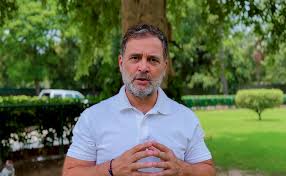
In a post on X, Gandhi posted a link to the campaign where students can share ideas and sign a petition. Congress leader Rahul Gandhi on Thursday launched a campaign for nation’s education reform, such as paper leaks, high fees, and urged students to join the same. He said that it is a platform for students to make demands directly to the government. In a post on X, Gandhi posted a link to the campaign where students can share ideas and sign a petition. “If you’ve suffered because of paper leaks, exam issues, or high fees, if this education system has shattered your dreams, if your family has invested a lifetime of savings in your education, then ‘Chhatron Ki Goonj’ is your voice,” the leader of opposition in the Lok Sabha said in the post. Gandhi said that this initiative goes beyond just a campaign; it is a platform for students to raise issues such as the need for affordable education, fair examinations, and dignified employment opportunities. “Join the movement: Click the link below. Fill in your name and share your ideas. Sign the petition — that’s it,” Gandhi said, urging the youth to sign up for this movement. “More the signatures, louder the goonj!” he added. Gandhi also released a video message and said his programme in Kota on Wednesday received a very good response. “For this, I would like to thank the students of India. Millions of youth, the future of India and the students of India watched our presentation in Kota, a critique of the education system you are facing, the walls you are facing. “What are the biggest issues? Number one, the education system is not designed around you. It is not designed around your imagination. Number two, it does not enable you to do what you want to do in life. lt buckets you into becoming an engineer, into becoming a doctor, into becoming a lawyer,” Gandhi said. “An education system should free your imagination. And the third most important and the most disheartening fact, the cost of our education system. 22 lakh families spend as much money to get their children through NEET as the government of India gives for its entire education budget,” he claimed. Gandhi said five exams cost these families the same amount of money as the Budget of five massive ministries in the Indian government, he said, adding that this is a “shame”. “This is something that all of us should change. This is not a political issue, this is a national issue. We want you to tell us about your imagination,” he said. In his post along with the video, Gandhi said, “Yesterday, together, we made history in Kota. For the first time, the country has realized that massive extortion is taking place in the name of education.” “We must turn the flame kindled in Kota into a blazing torch, and there is a definite role for you in this journey. Send in your suggestions and sign the petition,” he said. His appeal for participation in the campaign followed a day after he interacted with students at a convention in Kota, Rajasthan. During this interaction, he described India’s education system as a “rejection system” rather than a selection system, claiming it places an excessive financial burden and causes significant stress to students and middle-class families. While addressing the gathering in Kota, known for its coaching centres, Gandhi remarked that the current education structure is “extremely stressful and unfair”. “This is not good for the country. I want all of us to work together to ensure that no student in this country ever feels what this girl felt,” he had said at the ‘Chhatron ki Goonj’ rally in Kota, where he interacted with students on various issues like paper leaks and unemployment. Courtesy : TNIE Note: This news is originally published on https:/thenewindianexpress.com/bha and is used purely for non-profit/non-commercial purposes, especially human rights
Ladki Hai Ek, Naam Rajni Hai: Dalit, Daughter Of Pushcart Puller And Labourer Set To Join Bihar Police
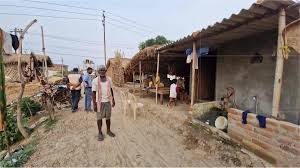
Rajni Kumari will be the first woman from Paswan Tola of Bhajaur village to join the police force. Jamui: For Rajni Kumari, life has been a journey of perseverance amid extreme poverty, deprivation, debt and manual labour. Finally, her courage has paid off, and she is now a constable in Bihar Police. Behind her success is the story of the immense sacrifice of her parents. Daughter of a father who is a pushcart puller and a mother who works as a labourer, Rajni has emerged as the pride of the Paswan community. As soon as the news of her selection reached Bhajaur village, located around 3 km from Jamui district headquarters, a festive atmosphere spread among the Paswan community. There are around 10 families living in the small hamlet of Paswan Tola, whose primary source of livelihood is manual labour. Till now, no girl of this hamlet had ever made it to the Bihar Police. Rajni grew up in a small, two-room mud house near a pond, with a roof of straw and sacks. “It’s a matter of great joy that my granddaughter’s future is secured. She worked hard and became successful. I have five sons, all of whom work as labourers. None of their families have been able to educate their children. Nor have their children achieved anything yet. However, one of my granddaughters has succeeded in clearing the Bihar Police exam, bringing glory to the entire family,” said her grandmother Shyampari Devi. The family’s financial situation was so bad that making ends meet was often a challenge. But they always had big dreams. Despite the struggles, Rajni never wavered from her goals and her resolve grew stronger. Her father, Dashrath Paswan explained, “It wasn’t possible to run the family and pay for the children’s education solely through labour wages. I took a loan and bought a handcart so that my daughter could study.” Leaving home at four in the morning, accepting whatever work came his way and working late into the night became his daily routine. He never considered any task to be small but kept working with the sole goal of educating his daughter. “We were determined to educate our daughter, no matter what difficulties we faced. Today, our hard work has paid off. Rajni is the first daughter of the entire Paswan community here to become a Bihar Police official,” Dashrath said. Rajni’s mother Sunita Devi had tears in her eyes as she recalled the family’s struggles. “At times, the situation became so difficult that it was difficult to imagine what the future held. But the family never gave up. Uncles, aunts and other relatives also helped when needed,” she said. She said that the extended family were always there to support financially and morally whenever needed. This family unity became the foundation of Rajni’s success. Rajni recalled that her parents never sent their children to work but worked to educate them. “My parents told us that they would educate us even if they had to work hard day and night,” she said. She received her primary education in Buxar and then did her matriculation and intermediate from Jamui High School. She is currently a third-year undergraduate student. Along with the studies, she prepared for the Bihar Police recruitment exam. Her goal was to get a government job. Her elder brother broke the news of her selection. “I’ll never forget that moment. The whole family was filled with joy. It felt as if my parents’ long-cherished dream had come true,” Rajni narrated. Courtesy : ETV Bharat Note: This news is originally published on https:/etvbharat.com/bha and is used purely for non-profit/non-commercial purposes, especially human rights
Madhya Pradesh: What Does It Mean To Live In Localities With Caste Indicative Names?
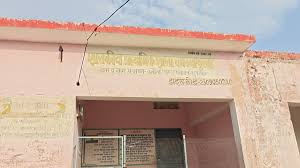
Chhatarpur: The scourge of casteism continues to be rampant in certain parts of Bundelkhand, despite the Constitution guaranteeing equality to every citizen of the country. Chhatarpur district still has hamlets and neighbourhoods with caste indicative names. Members of the Dalit community living in these areas have not been able to integrate into the mainstream of the society and have reportedly endured social discrimination and mental anguish for generations. They feel humiliated and ashamed when their village is referred to by its caste indicative name, Chamaruwa Purva is one such hamlet in Bagota village that continues to retain its caste indicative name. Residents claim families of prospective brides turn away upon hearing the area’s name, and even the rickshaw and auto drivers refuse to drop passengers here. There are many such areas and settlements in Chhatarpur whose caste-based names are mentioned in government records. Some of them are Kacchiyana Purva, Dhimran Purva, Ghusyana Mohalla and Koryana Mohalla. The residents claim that these caste-based names have caused Dalits to bear social stigma for generations. They say future generations will continue to suffer, until the names of such places are changed. Chamruwa Purva is inhabited solely by Dalits who were reportedly resettled 2 km away from the main village before Independence. The Dalits living in this hamlet are troubled by its name. One of the public representatives (Janpad Sadasya) Dalpat Ahirwar, who lives in Chamaruwa Purva, explained, “We still face social stigma. Whenever our children go for employment or to an educational institution, people look down upon us after hearing the name of our hamlet.” He added that the residents of the hamlet are unable to find a house on rent elsewhere or a job once they mention their address. “When we go to enroll our children in school, we’re asked about the area we live in. We feel embarrassed to reveal the name. We face difficulties because the area’s name is caste-indicative.” He claimed that several applications have been submitted to the local administration to change the name of the hamlet, but there has been no positive response. Meanwhile, Advocate Devendra Anuragi of Chhatarpur disclosed, “Not only is Chamaruwa Purva caste indicative, but even the Koryana Government School in Toriya Mohalla is referred to by the same name in government records. Dalits have been suffering the consequences of this for centuries. Upon hearing the name, people associate their identity with caste.” Another resident of Chamaruwa Purva, Bhubani Bai Ahirwar, disclosed, “When we return from shopping in the city, rickshaw pullers and auto drivers refuse to drop us home. Hearing the hamlet’s name, no one comes this way. Even the family of a prospective bride doesn’t come to the area to arrange a match.” Chief Executive Officer (CEO) of Chhatarpur District Panchayat, Namah Shivay Arajaria, said that to change the caste indicative names of hamlets or areas, the Gram Panchayat has to pass a resolution and get it forwarded by the Gram Sabha. “If the file comes to me from the Panchayat, we can propose a name change,” he said. A resident of Chamaruwa Purva, Sunil Kumar, candidly admitted, “The name of the hamlet is like an abuse. When one goes to get a child admitted to a school and the address is asked, it feels insulting.” Meanwhile, Anuragi pointed out that while the country and society have changed with time, Chhatarpur continues to have neighbourhoods, hamlets, and schools that are known by caste indicative names that remind the people of the old social order. “Now, these need to be changed for social harmony,” he underlined. Courtesy : ETV Bharat Note: This news is originally published on https:/etvbharat.com/bha and is used purely for non-profit/non-commercial purposes, especially human rights