
Dalit family’s home demolished without notice in India

Latest demolition in Hindu nationalist state fuels concerns over use of bulldozers against marginalized communities without due process NEW DELHI, India (MNTV) — A Dalit woman in northern India has accused authorities of demolishing her family’s home without prior notice or an opportunity to challenge the action, adding to growing concerns over the use of bulldozers by governments led by Prime Minister Narendra Modi’s Hindu nationalist Bharatiya Janata Party (BJP). Mala Devi, a resident of Chhidi village in Uttar Pradesh’s Prayagraj district, said revenue officials, police personnel and a bulldozer team arrived at her home and demolished the structure, leaving her family homeless despite their long-standing residence on the land. According to the family, the house had stood on the site for generations and no eviction notice or hearing was provided before the demolition. Mala Devi described the action as illegal and unconstitutional, arguing that authorities ignored basic principles of due process before destroying the family’s home. The demolition was reportedly carried out after a complaint from the village head, although the family maintains it was never given an opportunity to present ownership records or challenge the allegations before the structure was razed. Mala Devi said she had already approached local authorities through a public grievance mechanism seeking protection but claimed no effective action was taken before the demolition occurred. The family is now demanding an independent investigation, compensation and rehabilitation. Bulldozer demolitions have become a defining feature of governance in several BJP-ruled states, where authorities frequently justify the actions as measures against illegal construction or crime. Human rights organizations and legal experts, however, have repeatedly argued that such demolitions often bypass judicial procedures and disproportionately affect Muslims, Dalits and other marginalized communities. Courtesy : MNTV Note: This news is originally published on https:/muslimnetworktv.com/bha and is used purely for non-profit/non-commercial purposes, especially human rights
Rahul Gandhi’s Kota student interaction to be screened across Nagpur from June 27

Nagpur: Congress will launch a city-wide awareness campaign on education issues in Nagpur from June 27. As part of the campaign, video of party MP Rahul Gandhi’s interaction with students in Kota will be screened outside schools, colleges and coaching institutes across the city. The campaign, titled Chhatro Ki Gunj, is being organised by the Congress, National Students’ Union of India (NSUI) and Youth Congress. Party office bearers said mobile LED screens will be deployed across all six Assembly constituencies in Nagpur to screen the 45-minute interaction, with five to six programmes planned in each constituency. Addressing a press conference on Monday, NSUI’s Kunal Chaudhary said the initiative was aimed at highlighting concerns over the education system, particularly in the wake of controversies surrounding national-level entrance examinations such as NEET. Chaudhary claimed that over 22 lakh students had applied for NEET this year and questioned how examination irregularities continued to surface despite the large revenues generated through application fees. “When crores of rupees are collected through examinations such as NEET, JEE and UPSC, students and parents naturally expect a transparent and credible system. Any lapse directly affects the future of lakhs of aspirants,” he said. According to Congress functionaries, the campaign seeks to take Rahul Gandhi’s message on education reforms to students and parents. The screenings will be held near educational institutions and coaching centres to maximise outreach among aspirants preparing for competitive examinations. Nagpur City Congress president Prafull Gudadhe, while talking to TOI, described the initiative as a public awareness exercise rather than a political event. Responding to questions on the timing of the campaign, he said the objective was to inform citizens about issues affecting the education sector and encourage discussion among students and parents. Gudadhe also raised concerns over the growing commercialisation of competitive examination coaching, claiming that the coaching industry associated with examinations such as NEET and JEE has grown into a multi-crore business. “The purpose of this campaign is to present the ground reality before students and parents,” he said. Congress netas Sandesh Singalkar, Atul Londhe, Vishal Muttemwar, corporator Atul Kotecha, Kunal Raut and others were present at the press conference. Courtesy : TOI Note: This news is originally published on https:/timesofindia.com/bha and is used purely for non-profit/non-commercial purposes, especially human rights
Punjab CM Announces Rs 4,500 Financial Support To Dalit Women, Rs 3,000 For Other Categories
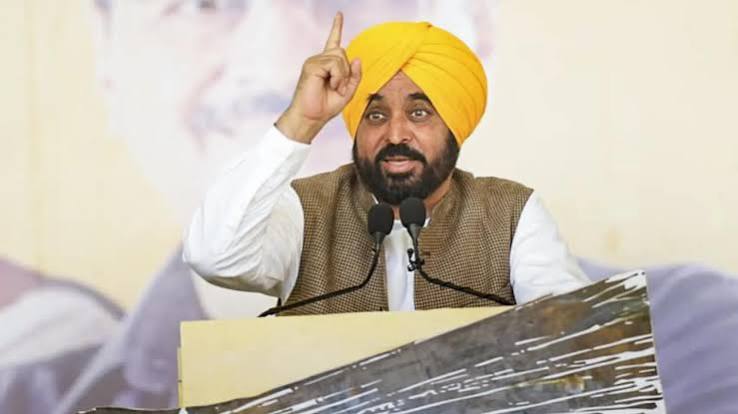
Punjab Chief Minister Bhagwant Singh Mann announced the launch of the Maavan Dheeyan Satkar Yojna, aimed at empowering women economically. Marking a historic step towards women’s economic empowerment, Punjab Chief Minister Bhagwant Singh Mann announced that the countdown for the Maavan Dheeyan Satkar Yojna has begun, with the first installment of three months’ Satkar Rashi set to be credited directly into the bank accounts of eligible women on July 1. Under the scheme, Dalit mothers and sisters will receive ₹4,500, while women from all other categories will get ₹3,000. During a Lok Milni programme after inaugurating various development works in Village Chanarthal Kalan of Fatehgarh Sahib constituency, CM Bhagwant Mann said the initiative reflects the AAP Government’s commitment to ensuring dignity, financial security, and social empowerment for women, adding that the assistance will continue uninterrupted as long as the AAP Government remains in Punjab. Addressing the Lok Milni in Fatehgarh Sahib, Mann stated, “After nine days, on July 1, women beneficiaries above the age of 18 years will receive notifications on their mobile phones informing them about the financial assistance being credited to their accounts. Women belonging to the general category will receive ₹1,000 per month while Scheduled Caste women will receive ₹1,500 per month.” “The money will be transferred directly into their bank accounts without any middlemen. Women who are already receiving social security pensions will also be eligible under the scheme. Nearly 97% women in Punjab are expected to benefit from this initiative and the Punjab Government has made a budgetary provision of ₹9,300 crore for it.” The Chief Minister stated, “This financial assistance may not make women rich, but it will certainly give them dignity, self-respect and confidence. Women deserve the highest respect because they are the source of life itself. The blessings of mothers and sisters help overcome every challenge in the world. Strengthening women’s financial autonomy is essential for improving household welfare, promoting gender equity and enhancing women’s participation in social and economic decision-making. When women become financially empowered, families prosper and society moves forward.” Speaking on another issue, CM Mann said, “The Punjab Government will not allow any genuine vote to be deleted during the ongoing SIR exercise by the Election Commission of India. I want to caution the people that the BJP may try to misuse the SIR process to delete valid votes, as has happened in other poll-bound states. However, we are fully vigilant and will not allow the nefarious designs of the saffron party to succeed. Every genuine voter in Punjab will be protected.” The Chief Minister said, “My predecessors never met the common people. They used to come out of their luxurious homes only after checking the temperature. On the other hand, I remain available to the people round the clock. Public service is not an occasional activity for me, it is my responsibility.” Taking a swipe at previous governments, the Chief Minister said, “These leaders built huge palaces by amassing enormous wealth through misuse of their official positions. The walls of those palatial residences were high and their gates remained closed to ordinary people. They remained inaccessible to the masses and ultimately the people showed them the door. When leaders stop listening to people, people eventually stop listening to those leaders.” “The people of Punjab have repeatedly rejected those who looted them turn by turn. These leaders fooled the people for a very long time, but Punjabis are now wise enough not to be swayed by their misleading propaganda. These arrogant politicians always took the people of Punjab for granted and ultimately paid the political price for it. Today, they are baffled because people are not responding to them. Their entire agenda revolves around the welfare of their own families rather than the welfare of the people,” said CM Mann. Continuing his attack on previous rulers, the Chief Minister said, “These leaders studied in convent schools in the hills and remained completely disconnected from ground realities. They were unaware about the money, properties and even the buses they owned. During their regimes, they exploited people by illegally seeking shares in successful ventures across the state. Such practices pushed Punjab backwards. These leaders ruined the state and their hands were drenched with the blood of Punjab’s youth.” Highlighting the progress achieved by the present government, CM Bhagwant Singh Mann said, “It is a matter of immense pride and satisfaction that Punjab’s development has been put back on track. The Punjab Government is accelerating the pace of development with every passing day. We have filled a gap of nearly seventy years and are making concerted efforts to build a Rangla Punjab.” “The AAP Government is perhaps the first government in the country that is implementing the People’s Manifesto in its true spirit. Every genuine demand raised by the people is being translated into action. We do not make promises merely for elections. We fulfil them once entrusted with responsibility,” he added. Taking on the Akali Dal leadership, Mann said, “Sukhbir Singh Badal is not aware of the ground realities of Punjab because throughout his life he has lived in a secure environment surrounded by luxuries and opulence. He wants to attain political power in Punjab, but he is not even aware of the basic topography of the state.” “Leaving everything aside, the former Deputy Chief Minister cannot even differentiate between the basic crops grown in Punjab. He has very little understanding of the issues concerning ordinary people. Someone who does not understand Punjab cannot provide leadership to Punjab,” said Punjab Chief Minister. The Chief Minister further said, “The sins committed by these leaders are unpardonable. The people of Punjab can never forgive them for their long saga of misdeeds. Those memories remain fresh in the minds of the people even today.” “These are opportunist leaders who change their colours and their stance like a chameleon according to their convenience and political interests. They patronised gangsters in Punjab and infused drugs into the veins of the youth by shielding drug smugglers.
Dalit woman assaulted in Faridpur, accused of casteist remarks: Case filed against three named accused under serious sections
A case of assault, indecency, and casteist remarks against a Dalit woman has come to light in Chathiya Phase village, under the Fatehganj East police station area of Bareilly. Based on the victim’s complaint, police have registered a case against three named accused under serious sections of the Indian Penal Code (IPC) and the SC/ST Act and have initiated an investigation. According to information, Pinky, wife of Sudhir Kumar, a resident of Chathiya Phase village, was having foundation work done near her house on June 22nd. It is alleged that neighbors Kallu Singh, Satyabhan Singh alias Chhote Lala, and Omveer arrived and began abusing her. When the woman protested, the accused allegedly attacked her with a sharp weapon, injuring her head. In her complaint, the victim, Pinky, alleged that the accused insulted her with casteist remarks, tore her clothes, and threatened to kill her. After the incident, the woman immediately went to the police station and filed a complaint. The police have registered a case under sections 352, 115(2), 118(1), 74, 76, and 351(3) of the IPC, as well as sections 3(1)(d), 3(1)(dh), and 3(2)(va) of the SC/ST Act. Station in-charge Rajkumar Singh stated that a case has been registered. The case will be investigated by the Circle Officer (CO), Faridpur. He assured that further legal action will be taken based on the facts revealed in the investigation. Uttam Shankhdhar | Bhagwanpur Kundan (Faridpur), Bareilly Courtesy: Hindi News
Dalit youth’s hand broken in Barhalganj: Family threatened with death following complaint, accused booked under SC/ST Act

A Dalit youth was subjected to caste-related abuse, assault, and death threats in the Barhalganj police station area. Based on the victim’s complaint, police have registered a case against the accused under the SC/ST Act and other sections and have begun an investigation. In fact, Suraj Harijan, son of Murali Harijan, a resident of Bagaha village, stated in his complaint to the police that he was returning home from his farm at around 8 pm on June 21st. It is alleged that Prem Yadav, son of Rajkumar, a resident of Netwar Patti, stopped him at the village’s Distolia intersection and began abusing him. During the attack, the accused used caste-related slurs and insulted him. When he resisted the abuse, the accused attacked him with sticks and rods. He suffered serious injuries and a broken left arm. Hearing the commotion, people nearby rushed to the scene, and he was able to save his life. Suraj Harijan alleges that while leaving, the accused threatened to kill his entire family if he filed a complaint at the police station. The incident was immediately reported to the Patna outpost police. Based on the complaint, the police have registered a case against the accused under sections 117(2), 115(2), 126(2), 352, 351(3), 3(2)(va) of the IPC and sections 3(1)(d) and 3(1)(g) of the Scheduled Castes and Scheduled Tribes (Prevention of Atrocities) Act. Police say the matter is under investigation. Rajiv Jaiswal | Barhalganj (Gorakhpur) Courtesy: Hindi News
Soren, Rahul Gandhi now leaders of only 50 MLAs, not 56: JMM’s message to Left, RJD after cross-voting in RS polls
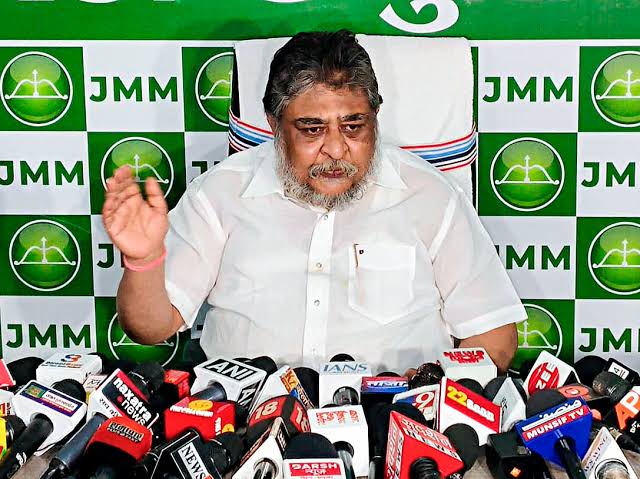
RANCHI: After the cross-voting, allegedly by RJD and CPI (ML) MLAs led to the INDIA alliance losing a crucial seat in the recently concluded Rajya Sabha elections, the Jharkhand Mukti Morcha (JMM) on Tuesday lashed out at its allies, saying Chief Minister Hemant Soren and Congress leader Rahul Gandhi are not their leaders anymore. Coming down heavily on the Left and the RJD, JMM General Secretary Supriyo Bhattacharya said both Soren and Rahul Gandhi are the leaders of the 50 MPs who voted for the alliance candidate. In the recent RS elections in Jharkhand, BJP-backed independent candidate Parimal Nathwani retained his seat despite the JMM-led INDIA alliance having 56 MLAs in the 81-member Assembly. The BJP-led NDA has 24 MLAs, four short of the minimum of 28 first-preference votes required to get a berth in the Upper House. Meanwhile, three votes, two from BJP and one Congress were declared invalid. According to JMM, out of the total 81 MLAs, 50 voted for the Congress and JMM candidates in the elections. Of these, JMM candidate Baidyanath Ram secured a seat by winning 30 votes, while Congress candidate Pranav Jha received only 20 votes, losing to the BJP-backed candidate. “Therefore, Hemant Soren and Rahul Gandhi are the leaders of these 50 MLAs,” said Bhattacharya, adding that Prime Minister Narendra Modi, Home Minister Amit Shah, and BJP National President Nitin Nabin are the leaders of the remaining 28 MLAs whose votes went to the BJP-backed candidate. Speaking to the media, the JMM General Secretary also noted that following his victory, BJP-backed candidate Nathwani had expressed his gratitude by specifically naming the three MLAs from the INDIA alliance who voted for him. JMM General Secretary also indicated –without explicitly naming them– that the ruling alliance MLAs who voted for Parimal Nathwani have been identified. He also talked about reviewing the Rajya Sabha election results very soon. Meanwhile, both the RJD and the CPI(ML) strongly rejected the allegations, stressing that their legislators sticked to the alliance plan and voted in favour of the Congress candidate. “As for speculations over Jharkhand Rajya Sabha voting, we can tell with full responsibility that our two MLAs voted for the Congress candidate as planned,” CPI (ML) General Secretary Dipankar Bhattacharya said in a post on X. RJD MLA and Minister Sanjay Prasad Yadav also rejected the charge, saying, “RJD is not treacherous like the Congress and maintains a distinct identity.” He asserted that all four RJD MLAs voted for the Congress candidate. RJD General Secretary Bhola Yadav echoed the criticism, saying that the Congress should introspect before blaming others. Story by Mukesh Ranjan Courtesy : MSN Note: This news is originally published on https:/msn.com/bha and is used purely for non-profit/non-commercial purposes, especially human rights
‘Stop appeasing good friend Trump’: Congress says India should not sign trade pact against its interests
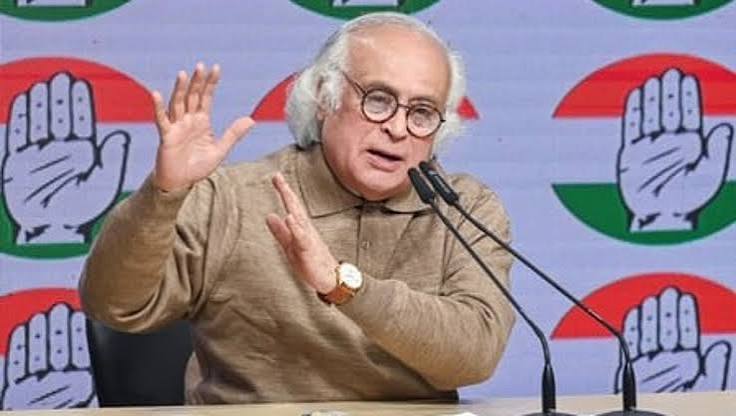
Congress leader Jairam Ramesh said PM Modi must stop appeasing his good friend President Trump, who has claimed that he halted Operation Sindoor over a 100 times. With trade talks in focus during US Trade Representative Jamieson Greer’s India visit, the Congress on Tuesday said Prime Minister Narendra Modi must stop appeasing his “good friend” President Donald Trump. The Congress also said there is absolutely no need for India to be “bamboozled” into signing any trade pact, which at present is heavily against its interests. Congress general secretary Jairam Ramesh said the Modi government must seek inspiration from Malaysia which has rebuffed its own trade deal with America following the US Supreme Court’s verdict. “The US Trade Representative Jamieson Greer is in New Delhi today and tomorrow. On the request of PM Modi, while he was under pressure from Rahul Gandhi’s expose in Parliament of his cowardice in front of China, an India-US Joint statement on trade was issued on February 6, 2026,” Ramesh said on X. “The US promised to reduce tariffs on Indian exports from 25% to 18%. India promised to eliminate its tariffs or reduce them deeply on US agricultural commodities and industrial products and purchase up to USD 500 billion from the US over five years,” he said. Ramesh pointed out that on February 20, 2026, the Supreme Court of the US ruled that President Trump’s reciprocal tariff strategy was illegal. The very tariff concession that the US had offered India in the February 6, 2026, joint statement effectively disappeared overnight, he said. “Within hours of the US Supreme Court ruling the US imposed a temporary 10% tariff on all its trading partners including India. The legal basis for this expires on July 24, 2026. There is considerable uncertainty on what will happen thereafter,” Ramesh said. However, India along with about 60 other countries is under investigation by the US for unfair trade practices that supposedly violate US laws, he said, adding that final outcomes from this investigation are expected in the coming weeks. The US is clearly using this investigation as a threat to get India to formally sign the agreement as announced on February 6, 2026, he said. “Such an agreement is not a deal but a steal by the US. Indian farmers in different states that include J&K, Himachal Pradesh, Bihar, Madhya Pradesh, Rajasthan and Maharashtra will be very adversely impacted. The US makes very little firm commitments whereas India commits to at least trebling its present levels of annual imports from the US,” Ramesh said. Despite having trade agreements with Japan and the EU, the US has threatened increased tariffs on them, he said. Even if a deal is signed, what and where is the guarantee that tariffs will not be unilaterally imposed or threatened to be imposed thereafter, Ramesh asked. “There is absolutely no need for India to be bamboozled into signing any trade agreement which as it stands now is heavily against India’s interests,” Ramesh said. “PM Modi must stop appeasing his good friend President Trump, who has claimed that he halted Operation Sindoor over a 100 times and is yet to be challenged by Mr Modi on that claim,” the Congress leader said. Greer is visiting India to take forward the discussions on the interim trade deal agreed to by Prime Minister Modi and President Trump in February. Trump and Modi met on the sidelines of the G-7 meeting in France last week where the US president said that India and the US were very close to finalising the trade agreement. Courtesy : TNIE Note: This news is originally published on https:/thenewindianexpress.com/bha and is used purely for non-profit/non-commercial purposes, especially human rights
Parliament passes Transgender Persons Amendment Bill, 2026 with Rajya Sabha approving it today
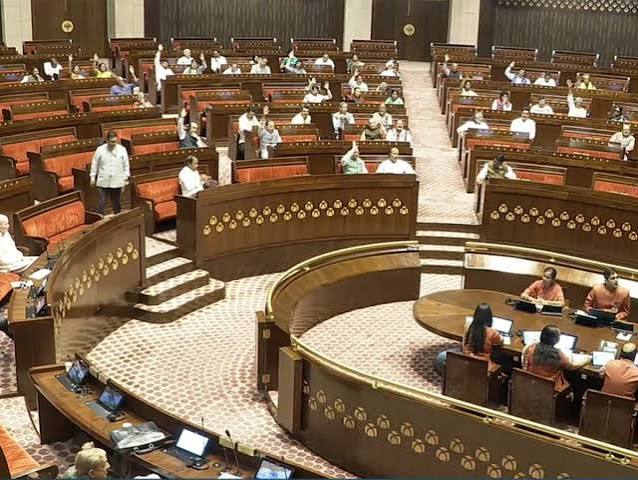
Parliament has passed the Transgender Persons (Protection of Rights) Amendment Bill, 2026, with the Rajya Sabha approving it today. The bill was passed by the Lok Sabha yesterday by a voice vote amid an Opposition-led walkout. The bill seeks to redefine the category of transgender, removes the provision of self-perceived gender identity and excludes several socio-cultural identities as well as transmasculine individuals from its ambit. It also further defines transgender persons within a biological framework, based on intersex variations and differences in sexual development. Replying to the discussion on the Bill in the Rajya Sabha, Social Justice and Empowerment Minister Dr Virendra Kumar said the government is compassionate towards the well-being of the transgender community. He said the Bill has provisions to empower the transgenders and give them dignity. The Minister said that the NDA government has taken several initiatives to bring transgender people to the mainstream and stop discrimination against them. Starting the discussion in the Upper House, Congress MP Renuka Chowdhury said this bill dilutes the privacy of an individual provided under the Constitution. Opposing the Bill, Ms Chowdhury said self-identification cannot be taken away through bureaucratic certification. Criticizing the government, she said that the proposed bill undermines the fundamental rights and dignity of transgender persons. Calling such a move wrong and illegal, she argued that forcing transgender persons to provide their identity through official certificates is against the spirit of equality and dignity guaranteed by the constitution. She also questioned the government’s approach for not properly consulting with the transgender community before bringing the Bill. She also referred to the Supreme Court’s landmark NALSA judgement of 2014, which recognized the right of transgender persons to self-identify their gender. Ms Chowdhury said the proposed Bill violates the principles laid down in that judgement and fails to respect an already established legal framework. DMK MP Tiruchi Shiva also opposed the Bill, saying that even if the Bill is passed in Parliament with a majority, it will be struck down by the Supreme Court. He further added that the Bill violates Articles 14, 15, 19 and 21 of the Constitution and it deprives the community of the right to freedom, dignity and self-determination. Supporting the Bill, BJP MP Medha Vishram Kulkarni said, ” This Bill ensures justice, dignity, protection from criminalisation and legal safeguards for transgender persons. She also thanked Prime Minister Narendra Modi for bringing this bill with certain amendments in order to ensure that the benefits reach the deserving people in a proper manner. She said there is a need for a law that brings justice to real transgender individuals and punishes fake ones. Mrs Kulkarni said the benefits should be extended to those who are transgender by birth. She said that the amendment to extend punishment will bring down the rate of crime and forced identities. TMC’s Saket Gokhale said that 31% of Transgender people in India have attempted suicide because of the discrimination that they are facing. He alleged that now the government is going to start discriminating against them as though social discrimination were not enough. He called it unacceptable. Mr Gokhale expressed concern that gender is going to be decided by the Chief Medical Officer and a District Magistrate, and the bill does not prescribe any qualifications for the Chief Medical Officer. Sanjay Singh of AAP said the Bill is a big let-down for the transgender community. He accused the government of not doing anything for the community. RJD’s Manoj Kr Jha said that prejudices against transgender people should stop, and they should be able to live with dignity. He added that self-determination of gender should not be taken away. CPI(M)’s John Brittas said it is a black-letter day and the Bill is taking India a century back. He pleaded with the government to either withdraw the Bill or refer it to a Select Committee. Jaya Bachchan of the Samajwadi Party also questioned the government over the legislation. She sought to know what the urgency was in bringing the Bill, without examining it with the depth and care that it deserved. Courtesy : News On Air Note: This news is originally published on https:/newsonair.com/bha and is used purely for non-profit/non-commercial purposes, especially human rights
How Karnataka can set a model for rest of India by protecting transgender rights

Karnataka has not enacted any state-specific rules under the 2019 Act. The 2026 amendment, however, gives the DKS government the perfect opportunity to do so. The Transgender Persons (Protection of Rights) Act, 2026, notified in March, marked a significant regression from the rights framework built through the Transgender Persons (Protection of Rights) Act, 2019, and affirmed by the Supreme Court in NALSA v Union of India. It narrowed the definition of ‘transgender person’ to four socio-cultural groups, intersexed persons, and persons ‘compelled’ to present as transgender. It omits the right to self-perceived gender identity, and makes a medical recommendation mandatory for transgender identity cards. Finally, it inserts a new set of criminal offences based on harmful stereotypes about the transgender community by criminalising causing hurt by mutilation, emasculation, castration, amputation, or any surgical, chemical, or hormonal procedure with the intent to compel such person to ‘present a transgender identity’. Against the backdrop, what can the Karnataka state government do? The 2019 Act empowers state governments to make rules to operationalise the Act. Such rules must remain within the bounds of the parent Act. However, they do carry wide latitude to prescribe procedures, fill any silences, and protect rights on the ground. Currently, Karnataka has not enacted any state-specific rules under the 2019 Act. The 2026 amendment gives the Karnataka government the perfect opportunity to do so. First, the 2026 amendment restricts the definition of the term ‘transgender’ to four socio-cultural groups: hijras, jogta, aravanis and kinners. While jogta is a socio-cultural group in Northern Karnataka, it does not represent all transgender groups in the state. Further, these four terms do not have fixed or stable meanings. As the 2019 Act is a welfare law, it must be interpreted broadly, and, thus, it can be argued that the definition seeks to capture transgender groups by their indigenous names. Consequently, the Karnataka government can, through a government order, clarify which socio-cultural groups prevalent in the state fall within the scope of the definition. For this, it must consult diverse transgender groups. Further, it can also issue a Karnataka State Transgender Card, a la Tamil Nadu, and link all welfare benefits to it. Second, the 2026 amendment makes it mandatory for the district magistrate to account for the recommendations of a medical authority before issuing a certificate of identity to a transgender person. The Karnataka government cannot override this, but it can limit the role of the medical authority by mandating that the authority will not carry out a physical examination. Instead, self-declaration, and a Third, while the 2026 amendment omits the right to self-perceived gender identity, it is still a fundamental right. Karnataka must continue to recognise and uphold it. Fourth, unlike the 2019 Act, medical institutions where transgender persons undergo gender affirming procedures are now mandated to share such information with the district magistrate. This raises concerns about privacy, since personal data is being shared without the person’s consent. Karnataka must put in place rules for the manner in which this data will be processed, aligned with the Supreme Court’s judgment, which recognised the fundamental right to privacy. Only data which is necessary for verification of an applicant’s identity and change of gender marker must be processed, and such data must be stored in a secure manner. The data must be stored in a secure manner. The data must be shared only with authorities who play a role in issuing the identity card. Finally, the issuing authority must destroy the data once its purpose has been served. Fifth, the 2026 amendment has a chilling effect on the provision of legitimate gender affirming healthcare, as healthcare professionals fear prosecution. This, despite the refusal and discontinuation of healthcare to transgender persons, constitutes discrimination. The Karnataka government must issue a clarification that the provision of legitimate gender-affirming is not an offence and must be continued. Finally, the newly-inserted offences enable natal families to file criminal complaints against those extending support to transgender persons, claiming they are carrying out conversions. Karnataka must issue guidelines to the police to ensure that they carry out a preliminary inquiry when such a complaint is filed. If such an inquiry reveals that the individual is an adult and has voluntarily sought assistance or gender affirming care, such a statement must be recorded, no FIR must be registered, and the matter must be closed. Namrata Mukherjee Palomi Chaturvedi Disclaimer: The views expressed above are the author’s own. They do not necessarily reflect the views of DH. Namrata Mukherjee is Specialist, Governance & Rights, Vidhi, and Palomi Chaturvedi is Research Fellow, Vidhi Centre for Legal Policy Courtesy : DH Note: This news is originally published on https:/deccanherald.com/bha and is used purely for non-profit/non-commercial purposes, especially human rights
Andhra Pradesh: Suspended Inspector, embroiled in murder case, now faces charges of abetting Dalit youth’s suicide; YSRCP demands CBI investigation

Chief Inspector Nagaraju, embroiled in a custodial death case, is now accused of abetting Dalit youth Kranti Kumar’s suicide; YSRCP demands CBI investigation in the matter. The troubles of suspended Circle Inspector Nagaraju, embroiled in the alleged custodial murder of Gade Sai Krishna in Andhra Pradesh, have worsened. He now faces serious charges of abetting the suicide of a Dalit man. Following this new development, the YSR Congress Party (YSRCP) has strongly demanded a Central Bureau of Investigation (CBI) investigation into the entire matter. A video of Perugogu Kranti Kumar, a resident of Vijayawada, recently went viral on social media. In the video, he accuses Circle Inspector Nagaraju of harassment and threatens to take his own life. On Saturday, June 20th, two days after the video surfaced, YSRCP leaders met with the deceased’s family and demanded a CBI investigation into his death. Kranti Kumar was the son of Perugogu Venkateswara Rao, president of the Andhra Madiga Reservation Porata Samithi (MRPS). On May 21st, 42-year-old Kranti had recorded a video expressing his intention to commit suicide. He clearly stated that he could no longer tolerate the alleged harassment by Circle Inspector Nagaraju of the Krishna Lanka police station. This harrowing video began spreading rapidly on June 18th, after Inspector Nagaraju was suspended in connection with the disappearance of another man named Gade Sai Krishna. In the viral video, Kranti Kumar can be clearly seen consuming purple-colored grains (poison). Just before consuming the poison, Kranti says in the video that CI Nagaraju is solely responsible for his death. He emotionally stated that his only fault was being born into the Madiga community. Kranthi alleged that he has been targeted and severely beaten for the past three months, and that he no longer wants to live. Another murder and missing person case has been filed against suspended CI Nagaraju based on a complaint by Gade Sai Krishna’s mother, Gade Vijaya Lakshmi. Sai Krishna had been missing for over a month before the complaint was filed. Police now suspect he has been murdered. The case has been registered under sections 127(4) and 127(6) (wrongful confinement), 103(1) (murder), and 238 (destruction of evidence) of the Indian Penal Code (IPC). Vijaya Lakshmi has made serious allegations that her son was tortured and beaten to death in police custody. She has demanded that the state government conduct a judicial inquiry into the entire incident and take strict action against all those responsible. On June 17, Andhra Pradesh Chief Minister N. Chandrababu Naidu took a strong stance, citing the seriousness of the matter. He ordered a high-level investigation by a senior Indian Police Service (IPS) officer. Following this order, Circle Inspector Nagaraju was suspended with immediate effect. Rajan Chaudhary Courtesy: Hindi News