
Pala signals another political change as Congress and KC(M) get closer
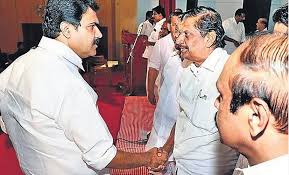
Previously, the council had maintained that a KC(M) representative could not be part of the HMC due to the party’s lack of representation in the State Legislative Assembly. KOTTAYAM: Amid looming uncertainty in the UDF in Pala over the transfer of vice-chairperson post from an independent member to the Congress, another significant political shift is taking shape in the municipality. According to sources, a tacit understanding is developing between the Congress and the Kerala Congress(M), a constituent of the LDF, to counter the political pressure from the independent collective led by Pulikkakandam family in the municipal council. Dropping clear signals of such a political move, the UDF-led municipal council has decided to induct a KC(M) member in the newly reconstituted Hospital Management Committee (HMC) of the K M Mani Memorial General Hospital in Pala. Previously, the council had maintained that a KC(M) representative could not be part of the HMC due to the party’s lack of representation in the State Legislative Assembly. Although KC(M) district president Lopez Mathew had twice submitted requests to include their nominee in the HMC nearly four months ago, the council delayed the decision until now. With an apparent understanding reached between the UDF and KC(M) regarding this matter, the council is expected to endorse the induction of Baiju Kollamparambil as KC(M) representative after the next council meeting. Baiju will be included in the category of non-statutory or nominated members of recognised political parties. Although both Congress and KC(M) sources said it is mandatory to include a representative of a regional party in the HMC, the UDF has yet to provide a clear rationale for the four-month delay in addressing this issue. Apart from Baiju, as ward councillor, KC(M) member Biji Jojo is already in the committee. In addition to these two members, the KC(M) also sought one more membership in the HMC in the category of three nominated social workers. These three positions must be filled through a unanimous decision by the council, meaning that the UDF will require the support of the KC (M) members to proceed effectively. The UDF leadership as well as independent collective members are most likely to accept KC (M)’s demand since independent councillor Binu desperately aims to join the HMC under this category. Hospital link UDF-led municipal council has decided to induct a KC (M) member in the newly reconstituted Hospital Management Committee of the K M Mani Memorial General Hospital in Pala Courtesy : TNIE Note: This news is originally published on https:/thenewindianexpress.com/bha and is used purely for non-profit/non-commercial purposes, especially human rights
UP Elections 2027: Avinash Pandey removed, Congress prepares to balance Dalit-OBC equations by handing over the reins to Rajendra Pal Gautam

Ahead of the 2027 UP Assembly Elections, the Congress has made a major organizational reshuffle. Focusing on the Dalit and OBC vote bank, it is preparing to strengthen its hold within the “INDIA” alliance. Uttar Pradesh: Just before the Assembly elections, the Congress has begun laying out its strategic and organizational foundation in the state. The party’s entire focus is now on building a strong Dalit and OBC social alliance. The Congress is confident that this formula will not only regain lost ground in the state but also significantly strengthen its negotiating power within the opposition “INDIA” alliance. In a major move, the All India Congress Committee (AICC) on Friday removed Avinash Pandey from the post of General Secretary in-charge of Uttar Pradesh. In his place, Rajendra Pal Gautam, National President of the Scheduled Castes Department and a prominent Dalit leader, has been given this important responsibility. Just a day before this announcement, Gautam was in Lucknow, where he, along with Anil Jaihind, in-charge of the AICC’s OBC wing, celebrated Chhatrapati Shahuji Maharaj’s birth anniversary as ‘Reservation Day.’ According to senior Congress sources, Rajendra Pal Gautam’s appointment is not being seen as a simple organizational change. The party is aiming to send a major political message to Dalit voters ahead of the upcoming assembly elections. Congress also wants to establish that its ally, the Samajwadi Party (SP), is not the only option for Dalits in their fight for rights, but that the party is also a strong platform for them. According to reports from within the party, this organizational reshuffle in Uttar Pradesh will not be limited to the change of in-charges. Ahead of the elections, major changes have already been scripted for the state’s co-in-charges (secretaries) and state leadership. There is talk that the next president of the Uttar Pradesh Congress Committee (UPPCC) could be appointed to a prominent OBC leader, ensuring the party’s Dalit-OBC social engineering strategy is fully implemented. A senior Congress leader explained this strategy, stating that the party fought the 2024 Lok Sabha elections strongly on issues of social justice and protection of the Constitution, yielding positive results. If the Congress wants to carry this discourse into the 2027 assembly elections, it must demonstrate this social commitment within its organizational structure. Currently, the Uttar Pradesh Congress is headed by Ajay Rai, a prominent Bhumihar leader from eastern Uttar Pradesh. He was appointed state president in August 2023, replacing Dalit leader Brijlal Khabri. Rai had contested the previous two Lok Sabha elections against Prime Minister Narendra Modi from the Varanasi constituency, which was crucial for the party’s electoral strategy at the time. In the 2024 elections, he also succeeded in significantly reducing PM Modi’s victory margin. However, Congress strategists believe that the political demands of Lok Sabha and Assembly elections are completely different. The perception within the party has grown increasingly strong that the campaign to protect the Constitution and reservations in the last Lok Sabha elections led a significant portion of Dalit voters to the “India” alliance. Retaining this vote bank in the upcoming electoral battle is crucial for the party’s future. While Samajwadi Party leaders are publicly downplaying this Congress assessment, Congress leaders argue that this support from Dalits and backward classes will put them in a strong position during seat-sharing negotiations for the upcoming Assembly elections. It’s clear that Congress’s entire restructuring plan has been designed with the 2027 election battle in mind. Rajan Chaudhary Courtesy: Hindi News
Three workers cleaning a septic tank in Delhi died tragically after inhaling toxic gas; three others, including the factory owner, have been arrested.

Three workers died from toxic gas while cleaning a septic tank in Mundka, Delhi; police arrested the factory owner and contractor, raising serious questions about administrative negligence. New Delhi: A tragic and disturbing incident occurred on Friday in the Mundka Industrial Area of the national capital, Delhi. Three workers who had entered a septic tank at a printing press factory lost their lives while cleaning it. Police took swift action and arrested three people, including the factory owner and contractor. Initial police investigations revealed that the three workers entered the tank one after the other and died after inhaling the suffocating and toxic gases present within. According to an official, at 12:03 pm, the police, Delhi Fire Service, and Delhi Disaster Management Authority (DDMA) received an emergency call about people trapped inside the factory in Mundka. The deceased have been identified as 38-year-old Arun, 32-year-old Sandeep, and 42-year-old Chand. All three were residents of the Indira Lake area of Sultanpuri. Following the rescue operation, police pulled out the bodies from the tank and sent them to Sanjay Gandhi Memorial Hospital for post-mortem to confirm the exact cause of death. Outer Delhi Deputy Commissioner of Police (DCP) Vikram Singh, giving details of the case, said that factory owner Suraj Marwah had hired a contractor named Neeraj, a resident of Nangloi, to clean the septic tank. Police have arrested Suraj Marwah, contractor Neeraj, and factory employee Jayant. A case has been registered against them under sections 106 (causing death by negligence) and 3(5) (common intention) of the Indian Penal Code (IPC). They have also been charged under Section 9 of the Prohibition of Employment as Manual Scavengers and their Rehabilitation Act, 2013, and the stringent provisions of Section 3(1)(j) of the SC/ST (Prevention of Atrocities) Act, 1989. Senior government officials say a detailed report will be prepared to ascertain the exact sequence of events and the cause of death. Officials also clarified that the Delhi State Industrial and Infrastructure Development Corporation (DSIIDC) is primarily responsible for cleaning septic tanks in the city’s industrial areas. Following this heartbreaking incident, Bezwada Wilson, national convener of the Safai Karmachari Andolan, met with the families of the victims. He expressed concern that there are approximately 30,000 sanitation workers in Delhi, of whom 10,000 work solely as septic and sewer tank cleaners. He clarified that no worker should be asked to enter the tank, even with safety equipment, and that the work should be done entirely through mechanized methods. Meanwhile, Sucheta Dey, Vice President of the All India Central Council of Trade Unions (AICCTU), claimed that even government departments are sometimes seen employing manual scavengers without any safety gear. The incident has also drawn political backlash. Delhi Congress President Devendra Yadav has termed the incident as a result of gross administrative negligence. He has demanded a thorough investigation into the matter and adequate compensation for the destitute families of the deceased. This is not the first case of deaths during sewer cleaning in the capital. Similar deaths were reported last year in Ashok Vihar, New Friends Colony, and Narela. According to official data shared by the National Commission for Safai Karamcharis (NCSK) in the Lok Sabha in March this year, 62 deaths have occurred in Delhi since 2017 due to hazardous sewer and septic tank cleaning. The Commission’s data also shows that Delhi was one of the first cities to ban the practice, yet among 22 states and two union territories, Delhi recorded the highest number of complaints related to manual scavenging in 2025, at 140. Rajan Chaudhary Courtesy: Hindi News
‘Ban the RSS’: Dalit organizations enraged by BJP leaders’ comments on Priyank Kharge, sparking violent protests in Karnataka

Dalit organizations, enraged by BJP leaders’ comments on Priyank Kharge, staged a violent protest in Kalaburagi, demanding a ban on the RSS and the removal of Mohan Bhagwat’s security. Karnataka: Kalaburagi witnessed massive protests on Thursday. The Dalit Sanghatanegala Samanvaya Samiti (DSS) and several other Dalit organizations staged a strong protest outside the Deputy Commissioner’s office. The protest was directed at recent comments made by Bharatiya Janata Party (BJP) leaders against state minister Priyank Kharge. Priyanka Kharge had raised some questions about the status and functioning of the Rashtriya Swayamsevak Sangh (RSS). The protesters say that BJP leaders should have responded rationally to the issues raised by Kharge. Instead, they launched personal attacks on the minister and are threatening him. The protesters categorically stated that the statements made against Kharge by BJP MP Ramesh Jigajinagi and former ministers K.S. Eshwarappa and C.T. Ravi were highly objectionable. They believed these leaders’ statements were completely insulting and intimidating. Dalit organizations have appealed to the state government to take this entire incident seriously. They stated that democratic values and freedom of expression must be protected at all costs. Recently, Kharge wrote a letter to RSS chief Mohan Bhagwat, seeking clarification regarding the organization’s registration and its stated objectives. The protesters defended this move, stating that these questions were being asked in the interest of public accountability and transparency, and not to target any particular individual. These organizations have called on the state government and the Congress party to extend their full support to Priyank Kharge. They reiterated their demand for a thorough investigation into the functioning of the RSS, stating that there is a severe lack of transparency in its structure. They also demanded that the organization be registered under a proper regulatory framework. Protesters formed a human chain outside the Deputy Commissioner’s office in Kalaburagi to register their protest. They raised slogans, expressing solidarity with Kharge and demanding the registration of the RSS. Participants held placards bearing strong messages, including “Ban the RSS,” “The RSS must be registered,” “Withdraw RSS chief Mohan Bhagwat’s Z-plus security,” and “We stand with Priyank Kharge.” Following the protest, the organizations submitted a memorandum addressed to Chief Minister D.K. Shivakumar through the Deputy Commissioner. The memorandum urged the state government to examine the legal status of the RSS and take appropriate steps to uphold constitutional values and social harmony. The entire protest was led by social activists Devendra Sinnur, Mallappa Hosamani, Renuka Singhe, Dinesh Doddamani, and several other members of various organizations. Rajan Chaudhary Courtesy: Hindi News
Dalit activists raise hostel shortage issue

Mangaluru: Dalit activists on Saturday expressed concern over the shortage of hostels for SC/ST students, saying the lack of accommodation has been causing hardship to students from remote areas who come to the city to pursue higher education. At the monthly SC/ST grievances redressal meeting held at the city police commissioner’s office, Dalit activist SP Anand urged the authorities to complete the hostel admission process before schools and colleges reopen. In response to the issue, an official from the social welfare department said a proposal had been submitted to the govt seeking sanction for two separate hostels for boys and girls. Anand said that govt guidelines permit the department to operate hostels in rented buildings when there is a shortage of accommodation and urged the authorities to invoke the provision until permanent facilities are created. The meeting also discussed a range of traffic, civic and law-and-order issues. DCP (Law and Order) Mithun H.N. chaired the meeting. Courtesy : TOI Note: This news is originally published on https:/timesofindia.com/bha and is used purely for non-profit/non-commercial purposes, especially human rights
Father-son duo held for torching Dalit family’s house in Pilibhit

Pilibhit: A father-son duo was arrested for allegedly setting the house of a Dalit family on fire in Piparia Mandan village under Barkhera police station limits early on Saturday. Pilibhit SP Sukirti Madhav told TOI that the accused suspected the family of abducting a 20-year-old woman from their household. The woman went missing under mysterious circumstances on Thursday evening, and police registered a missing person report the next day. Complainant Nanhe Lal (35) said he had gone to Etah district on June 26 to drop off a group of labourers when the incident took place. He alleged that Akash Pandey and his father, Bhannu Pandey, reached his house, hurled casteist slurs at his family, and set the thatched front portion of the house on fire. His wife and children escaped unhurt, but the grain and firewood stored in the house were allegedly reduced to ashes, while the main door of the pucca structure was damaged. “As locals gathered at the spot to help, the accused fled after threatening to kill the entire family,” Lal alleged. He added that the duo had accused him of abducting Bhannu Pandey’s daughter-in-law. SHO Satyandra Kumar said that a case was registered against both the accused under relevant sections of the BNS and the SC/ST Act. They were arrested and sent to jail. Additional police personnel have been deployed in the village to prevent any untoward incident. Courtesy : TOI Note: This news is originally published on https:/timesofindia.com/bha and is used purely for non-profit/non-commercial purposes, especially human rights
LoP alleges manual scavenging in Dalit Dy CM Parameshwara’s home dist
Bengaluru: Leader of the Opposition in the Karnataka Assembly R Ashoka on Saturday alleged that Dalits continued to face “grave injustices” under the Congress government, citing an example of “manual scavenging” in Deputy Chief Minister G Parameshwara’s home district of Tumakuru. The BJP leader alleged that there was diversion of welfare funds meant for Scheduled Castes and Scheduled Tribes and rising atrocities against them. Ashoka posted an undated video on his ‘X’ handle on Saturday where people in bare-minimum clothes were seen lifting and loading filth in a tractor on the Karnataka Electricity Board Engineers’ Association’s building premises. According to him, Dalits were still being forced into manual scavenging even in the home district of Parameshwara, a Dalit himself, and the government has failed to safeguard their rights. “In the very home district of Parameshwara, where slogans were once raised demanding a ‘Dalit Chief Minister’, the downtrodden communities are still being forced into the pitiable condition of manually carrying human excreta. Under the government led by Chief Minister D K Shivakumar, the rights of Dalits have absolutely no value,” he said. Alleging that four workers were made to manually clean a septic tank at the premises of the KEB Engineers’ Association, Ashoka claimed that the authorities had failed to act despite a similar incident involving a child labourer at the Koratagere bus stand. “Even after a child labourer was recently made to perform similar work at the Koratagere bus stand, neither the district administration nor the government has woken up to the issue,” he said. Ashoka further alleged that the Congress government had misused Rs 53,059.45 crore from the SCSP-TSP funds over the last three years for guarantee schemes. He also accused it of “reducing allocations” to corporations meant for Scheduled Castes and Scheduled Tribes. He also alleged a rise in atrocities against SCs and STs, with 2,277 cases recorded in 2025, and referred to the reported discovery of maggots in food served at the Jai Bhim Hostel in Chikkaballapur as another example of the government’s failure. Accusing the ruling party of “betraying the interests of marginalised communities”, Ashoka said, “The Congress, which loudly claims to stand for the welfare of Scheduled Castes and Scheduled Tribes, is in reality taking steps that undermine their interests.” He further charged that “the party has earned the ignominy of turning the state into a ‘model state’ for atrocities against Dalits,” and said Home Minister Priyank Kharge, who is also a Dalit, “has lost the moral authority to invoke the Constitution and the name of Babasaheb Ambedkar”. Courtesy : THI Note: This news is originally published on https:/thehansindia.com/bha and is used purely for non-profit/non-commercial purposes, especially human rights
Clavicular’s controversial Paris visit takes stunning turn after viral kiss with Polish transgender model Adelaide Pali

Clavicular, whose real name is Braden Eric Peters, has built a huge following online by promoting “looksmaxxing,” a trend that focuses on improving physical appearance through extreme methods. The 20-year-old Kick streamer and TikTok creator is known for giving controversial advice, including facial bonesmashing and heavy steroid use. But during a recent livestream in Paris, the attention shifted away from his online image after several uncomfortable public interactions left him facing criticism instead of praise. According to The Times and the New York Post, his trip quickly became a talking point across social media and French media. Clavicular’s Paris livestream shows French women unmoved by his online fame During his livestream, Clavicular approached several women at cafés, restaurants and on the streets while trying to start conversations. In one widely shared clip, he introduced himself and hinted that people could search his name online. A woman simply asked if he was famous before politely ending the conversation by saying, “Have a good time in Paris. I hope you enjoy it.” That moment reflected much of his visit. Most of the people he approached either showed little interest or walked away. At one point, he admitted on stream, “I am dropping game, but it is not hitting.” French media also picked up the story. Instead of focusing on his online popularity, many reports praised the women for politely rejecting his advances. According to The Times, many locals simply did not know who he was, while others were not interested in engaging with him. Clavicular later admits he needs better conversation skills after Paris backlash As the criticism grew, Clavicular reacted with frustration. He called French people “impolite s***bags” in a post on X and described the situation as much bigger than he expected. Videos from the trip also showed people throwing drinks and water at him while he walked through the city. Later, however, his tone changed. He admitted that approaching women has never been his strength and wrote on X, “I say all the time my game with women is god awful, but at least I have the nerve to practice approaching.” He also added, “I need to become more interesting so I can carry convos better.” The Paris trip ended up exposing the gap between Clavicular’s online confidence and his real-life interactions. While he remains one of the biggest names in the looksmaxxing community, the livestream sparked fresh debate about influencer culture, internet fame and whether a large online following always translates into real-world recognition. Courtesy : TOI Note: This news is originally published on https:/timesofindia.com/bha and is used purely for non-profit/non-commercial purposes, especially human rights
‘Wishing him strength and courage’: Tharoor congratulates Rahul on 2 years as LoP, days after praising PM Modi
NEW DELHI: After Congress MP Rahul Gandhi completed two years as leader of the opposition (LoP) in the Lok Sabha, senior party MP Shashi Tharoor on Saturday wished him “strength and courage” in his “fight for the future of India.” “All the best to Shri @RahulGandhi ji as he completes two years as Leader of the Opposition. Wishing him continued strength and courage as he fights for the future of India,” the Thiruvananthapuram MP posted on X. Tharoor’s remarks came days after he praised Prime Minister Narendra Modi for conveying India’s concerns to US President Donald Trump over the safety of civilian sailors in the Strait of Hormuz, a comment that drew criticism from the Congress. A day later, he said Jammu and Kashmir was making “encouraging progress towards normalcy”—the Union territory lost its statehood in August 2019 after the Modi government revoked Article 370 of the Constitution. Since then, the opposition, including the Congress, has been demanding restoration of statehood for Jammu and Kashmir. Last year as well, Tharoor had drawn attention for a series of remarks praising PM Modi on various issues, sparking unease within the Congress. On Thursday, Rahul Gandhi completed two years as LoP, a post that had remained vacant since 2014 due to the BJP’s parliamentary majority with the NDA — the coalition it leads —providing additional numbers, leaving the Congress and the broader opposition short of the numbers required to stake a claim to the position. “Today marks two years since I became the Leader of the Opposition in the Lok Sabha. Every single day of these two years has been dedicated to one task—to carry the voice of every Indian to the corridors of power,” the Raebareli MP wrote in a post a day later. Under parliamentary rules, a party must secure at least one-tenth of the total strength of the House (55 out of 543) to claim the Leader of Opposition position. The Congress crossed this threshold in the 2024 Lok Sabha elections by winning 99 seats, up from 44 in 2014 and 52 in 2019. The BJP, meanwhile, fell to 240 seats, short of the 272-seat majority mark, and formed the government with the support of its allies in the NDA. Courtesy : TOI Note: This news is originally published on https:/timesofindia.com/bha and is used purely for non-profit/non-commercial purposes, especially human rights
The Importance of Being DK Shivakumar in Rahul Calculus

Shivakumar is yet to acquire national status, but definitely has national recall. He has emerged as a serious national trouble-shooter for his party. No thanks to Rahul, who detests mass leaders who will not kowtow to him It seems the Congress has a credible national face at last. A trouble shooter who has negotiated the complexities of Opposition politics, which it badly needs, especially after it couldn’t get its Rajya Sabha nominee in Jharkhand through. Last week, a masterclass in the difference between rhetoric and reality happened in Karnataka: the Congress won all five Legislative Council seats it contested—plus an additional seat by persuading cross voting by the BJP. It was the kind of outcome old Congress managers once considered routine, but which the Rahul Congress has no idea, or interest, on how to achieve. The architect of the win is DK Shivakumar; probably the reason Uddhav Thackeray—whose party rapidly imploded after six MPs crossed over to the Shinde-BJP camp—invited him to Mumbai to confabulate. Whether DKS, with all his political management skill, can pull off a miracle in Maharashtra to save an INDIA ally is questionable. It was left to him to soothe MK Stalin, whom Rahul treated churlishly in public during the Tamil Nadu elections and dumped unceremoniously. Shivakumar is yet to acquire national status, but definitely has national recall. He has emerged as a serious national trouble shooter for his party. No thanks to Rahul, who detests mass leaders who will not kowtow to him. Yet, political kinetics keeps pulling DKS’s name into the national conversation. But for today’s Congress, such interlocutors and enforcers are suspect. The party historically marginalises leaders of the DKS type. In the 1970s, Devaraj Urs built the most sophisticated social coalition the Congress had ever achieved in Karnataka by forging OBCs, Dalits, and minorities into an unprecedented electoral force. Discarded by Indira Gandhi, he died politically diminished. Sharad Pawar built Congress into a dominant force in Maharashtra, cultivating the cooperative sector and managing the competing interests of the Maratha peasantry, Mumbai’s working class, and Pune’s commercial communities. Expelled in 1999, he formed the NCP, and sank the Congress’s political future. Sachin Pilot resuscitated the Rajasthan Congress from its post-2013 coma, delivered in 2018, and was then subjected to deliberate humiliation, denied the chief ministership, and was pushed to the point of open rebellion in 2020 after he was denied the chief ministership like DKS initially was. The party has neither earned nor acknowledged such a restraint and loyalty. While Sachin has faded from the national radar, for now, DKS occupies the alternative position. In a party where giant leaders like Ahmed Patel, Ghulam Nabi Azad, Kamal Nath, and Pranab Mukherjee could forge inter-party consensuses, apart from Bhupesh Baghel and Mukul Wasnik, now, the Rahul coterie comprises Kaushal Vidyarthee, Alankar Sawai, KB Byju, Praveen Chakravarty et al. Chakravarty who? Exactly. Kharge, in spite of all the respect he commands, cannot influence a single voter in UP. Rahul’s pernicious puppeteer KC Venugopal wouldn’t know the name of a single party worker in Bihar. CWC members like geriatric AK Antony, Anand Sharma, Deepa Dasmunsi, Channi, etc. can’t get 10 voters between them in Madhya Pradesh. Himanta Sarma humiliated Gaurav Gogoi. To call Jairam Ramesh a mass leader is like calling a Tiffin box a buffet—all are has-beens or will-never-beens. The Congress’s last bastion is the South. It has three Congress CMs, and is an alliance partner in Tamil Nadu. Hence, the national choice is limited. DKS speaks Hindi without the self-consciousness that afflicts many southern politicians, and English without the affectation of someone mimicking cosmopolitanism. He is a Vokkaliga from the dominant Karnataka community, but he has consistently reached beyond community arithmetic to keep his party afloat. In UP, Bihar, Madhya Pradesh, Rajasthan, and Haryana, the BJP has built a ruthless victory machine over decades of patient work. The Opposition’s only effective response will be to build a counter-machine with equal patience and seriousness. That requires someone who understands the construction of party infrastructure at the district and booth level, financial savvy seduction, soothing of local egos, and the management of factional disputes before they become the internal wars that cost the party winnable seats. The only Congress alternative to the BJP is DK Shivakumar; and it knows this, too. With such powerful adversaries like Modi and the RSS, it won’t be smooth sailing for him. The distinction between what Rahul and Karnataka’s DK Shivakumar offers is not what is better or worse. DKS commands a rare combination which cannot be earned with genetic entitlement: charisma and calculation. He understands not just how elections are won, but also how they are fought. In politics, ideological, cadre-driven machines defeat movements. The man who can build the Congress such a machine is waiting. Will his own party, and Rahul Gandhi, allow him to do that? Ravi Shankar Courtesy : TNIE Note: This news is originally published on https:/thenewindianexpress.com/bha and is used purely for non-profit/non-commercial purposes, especially human rights