
Madhya Pradesh: No bridge, no ambulance! Woman gives birth on a cot in the middle of a raging river, video goes viral

In Chhindwara, Madhya Pradesh, an ambulance was unable to reach due to a lack of roads and bridges. After this, villagers safely delivered a baby on a cot in the middle of a raging river. A video of the system’s negligence went viral. Madhya Pradesh: A shocking and system-shattering incident has come to light in Chhindwara district. A pregnant woman was forced to give birth on a cot in the middle of a raging river due to the lack of an ambulance. Heavy rains cut off this area from the main road, and the villagers’ long-standing demand for a bridge has remained unheeded. City and Local Guide This horrific incident occurred in the Lohari Mohalla of Hathoda Hiri village in the Amarwara block. During the monsoon, the river, which overflows with rainwater, completely cuts off approximately 20 families living there. A video of the incident surfaced on Sunday, showing villagers carrying a pregnant woman on a cot across a swollen river. The video exposed the daily hardships faced by residents of the area. According to family members, Shankar Vishwakarma’s 35-year-old wife, Savita Vishwakarma, suddenly experienced severe labor pains on Wednesday evening. Alarmed relatives immediately called the 108 ambulance service. However, due to the river’s overflowing waters and the lack of a proper road, the ambulance was unable to reach their neighborhood. With no other way to help, the family and villagers were forced to place the woman on a cot and set out on foot to cross the river. While wading through the rapidly flowing water, Savita’s pain intensified, and she gave birth to the baby on the cot. The villagers managed to reach the other side of the river with the mother and child, where they waited for an ambulance. But when no help arrived despite waiting for a long time, they gave up and resorted to a motorcycle. They were taken on the same motorcycle to Amarwada Civil Hospital, where doctors gave the reassuring news that both mother and newborn were completely healthy. Geographical Context The woman’s brother-in-law, Gopal Vishwakarma, expressed his anguish, explaining that their village is completely cut off every year during the monsoon. He said that his sister-in-law was in severe pain, and despite calling an ambulance, it could not reach them due to the river, forcing her to resort to a cot and deliver on the way. Gopal leveled serious allegations against the administration, saying that the villagers have repeatedly appealed for a concrete bridge and road, but no one has listened. The same situation arises every year during the rainy season, and even schoolchildren have to risk their lives crossing the river daily. The villagers have filed written complaints with the District Panchayat, SDM, and public representatives, but no concrete action has been taken to date. Regarding this entire incident, health officials at Amarwada Civil Hospital say they have no clear understanding of why the ambulance failed to arrive on time. A health official explained that the 108 ambulance service is operated directly from the Bhopal control room, but the good news is that both mother and child have reached the hospital and are safe. This incident has once again exposed the ground reality of health services in remote areas of Madhya Pradesh. Even though the scope of emergency ambulance services has expanded in the state, poor roads and lack of infrastructure still pose a major obstacle to timely medical assistance in many villages. Following this incident, angry villagers have once again intensified their demand for a bridge and an all-weather paved road. Rajan Chaudhary Courtesy: Hindi News
The compulsion of labor: Why are the lives of tribal girls being ruined in Tamil Nadu, 1,500 kilometers away from a small village in Odisha?

The Tamil Nadu gas leak incident: A heartbreaking story of poverty, desperate migration, and the tragic deaths of 12 daughters from a small tribal village in Odisha. New Delhi: The tragic deaths at a seafood processing unit in Tiruvallur, Tamil Nadu, have exposed the pain of a highly vulnerable tribal community in Odisha’s Keonjhar district. This tragedy reflects the desperate migration that has devastated these villages of their youth, especially women. 56-year-old Bisuni Juang is illiterate. But sitting outside his mud hut, he carefully examines a pile of government documents. He tries to understand how his 16-year-old daughter, Jamini, died in Tamil Nadu, nearly 1,500 kilometers away. Since the gas leak at a factory in Tiruvallur district on June 21st, 15 people have lost their lives. Of these, 12 deceased were from Odisha’s Keonjhar district, all women. Two of the deceased, including Bisuni’s daughter, Jamini, were residents of Rangamatia village. Geographical Context Of the 68 people hospitalized, 65 are women. The five who are in critical condition and battling for life on ventilators all hail from Rangamatia. Rangamatia is a small tribal village with a population of just over 200. At least 10 women and 8 men from this village were working in the same seafood unit. This gas leak has made this small village the victim of one of the biggest incidents ever. Maps Bisuni says that some block officials came to his house and handed over Jamini’s body, simply stating that she died due to ‘gas’. The distraught father says he doesn’t know what this means; his daughter was only 16 years old and still had a full life ahead of her. Jamini, who studied until Grade 5, was the third of Bisuni’s four daughters. Her two elder sisters, aged 21 and 19, are married, while the youngest is just 14. Jamini left for Tamil Nadu about seven months ago, becoming the first member of the family to leave Keonjhar. Usually, they only visit their married daughters’ homes in nearby villages. The family has had no contact with Jamini since her departure. Until last year, the village didn’t even have mobile network; now, it has BSNL service, but Bisuni doesn’t have the money to buy a phone. The Juang community is part of a Particularly Vulnerable Tribal Group (PVTG), and Bisuni has long struggled with extreme poverty. Her only assets include two goats and a mud house divided into two parts. Due to the lack of their own cultivable land, the tribal people of the village clear parts of the forest to grow crops and depend entirely on forest produce. Tourist Attractions According to the 2011 census, Rangamatia had 38 households and a total population of 158. Located in hilly terrain and poorly maintained roads, this village lacks drinking water or electricity. A small spring in the nearby forest is the only source of water for quenching thirst. The village has only one Anganwadi (Anganwadi) and a primary-level school. Girls like Jamini typically don’t study beyond grade 5. The nearest high school is 10 kilometers away, and reaching it is nearly impossible due to lack of money and transportation. While government records state a motorable road 1 km away, it is located on the other side of a hill. The nearest hospital is located 40 km away in the town of Harichandanpur. Unable to even reach nearby markets for employment, young people like Jamini are forced to migrate to support their families. Bisuni doesn’t even know the wages her daughter was promised there. Girls and women who go out to work are mostly unmarried. It’s usually the men of the household who go out to work after marriage. The Odisha government initially announced a compensation of ₹4 lakh for the families of the deceased, which was later increased to ₹10 lakh. However, Bisuni claims that they have so far received only ₹3,000 from the Panchayat for the funeral. Native Gumani Juang, the second victim of Rangamatia, was 15 years old according to her Aadhaar card, but her parents claim she is 19. She had gone to Tamil Nadu in November last year with a group of laborers, including her 20-year-old elder brother, Parsu. Parsu was employed at a unit in Andhra Pradesh. Gumani’s 53-year-old father, Bira Juang, was against sending her so far. But Gumani was not ready for marriage and, lured by the promise of a better life and money, insisted on going. Bira says that he last spoke to his daughter on the phone just a few hours before the gas leak. She happily told him that she had saved some money and would return home soon. Upon receiving news of the gas leak and Gumani’s critical condition, the family hired a car and set out. They had just reached Bhubaneswar when Parsu called to inform them that it was difficult to reach Gumani’s place of work. Disappointed, they returned, and later their worst fears were proven true. Bira, who owns a two-room house built under the Rural Housing Scheme and a few goats, no longer wants to let his son Parsu go out to work. He says he cannot afford to lose his last remaining child. Natural Disasters Bira Juang also makes serious allegations against an organized network that lures tribal youth like his daughter. He names Shrikant Juang from his own village, who posed as a supervisor of a unit in Tamil Nadu and convinced them to go there. Keonjhar District Labor Officer Akash Bisoi has informed that the accused, Shrikant, is currently absconding and strict legal action will be taken against him. The Keonjhar District Labor Office does not have official figures on the number of tribal laborers migrating from these interior areas, but hundreds are unofficially acknowledged to be working outside. Following the deaths in Tamil Nadu, the Odisha Labor Department ensured the return of 58 migrant laborers, most of whom were from Keonjhar district. Keonjhar District Collector Vishal Singh said the administration is conducting a thorough investigation to determine whether
Why did tribal women in Udaipur wait for 4 hours for internet access? Brinda Karat writes to Union Minister Shivraj Singh Chouhan about the shutdown of MNREGA!
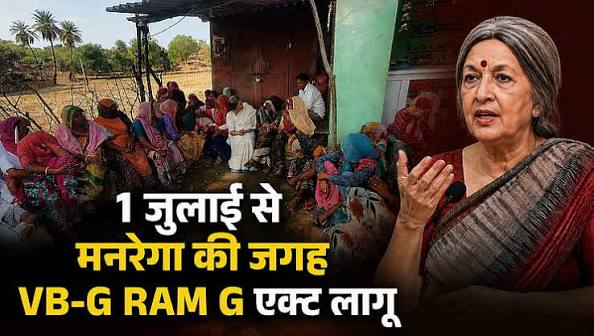
The ‘Vikasit Bharat – Rozgar and Ajeevika Mission (Rural) Act, 2025,’ or VB-GRAMG Act, will come into effect on July 1. New Delhi/Udaipur—Senior Communist Party of India (Marxist) leader and former Rajya Sabha member Brinda Karat has written a letter to Union Rural Development Minister Shivraj Singh Chouhan, raising serious objections to the rules of the Vikasit Bharat – Rozgar and Ajeevika Mission (Rural) Act (VB-GRAMG Act). This letter, written a day before the new law comes into effect, cites genuine problems faced by rural laborers and demands the immediate withdrawal of the rules and the reinstatement of MNREGA. Karat begins her letter by referring to Barapala, a tribal village in Rajasthan’s Udaipur district, where she had interacted with laborers at a MNREGA worksite the previous day. He reported that during the summer season, many female workers waited for about four hours from 6:30 am to 10 am for the online attendance site to open, but could not work that day due to a lack of internet connection. This situation was reported to be common. Indigenous He reported that after the end of MNREGA in December last year, these workers received only 18 days of work from January to June, despite assurances to Parliament that work would continue until the new law was implemented. In particular, at least 12 elderly women complained that the biometric facial recognition technology was unable to recognize their eyes, resulting in them being excluded from work. Karat said that the end of MNREGA has been devastating for the poor in the village. During the summer season, many female workers waited for about four hours from 6:30 am to 10 am for the online attendance site to open, but could not work that day due to a lack of internet connection. This situation is common in the tribal areas of Rajasthan. In light of these very real problems, Karat told the Union Minister that his ministry published eight rules of the VB-Gramji Act on May 22nd without consulting rural and MNREGA workers’ organizations and unions. Had they been consulted, the real problems could have been addressed, but the new rules are more flawed than the law itself and completely ignore the voices of workers. Internet and Telecom In the letter, Karat first raises the constitutional question of whether these rules violate Article 258 of the Constitution, which deals with the “conferring or imposing of duties” on states. According to him, the VB-Gramji Act not only imposes financial burdens on state governments but also imposes responsibilities without their consent. While Article 258(3) requires the central government to reimburse states for additional expenditure, the new rules deprive states of any role in decision-making, a direct attack on the federal structure. Kerala provided an average of 66 days of work a year, which is much higher than the national average, but will receive fewer funds due to its low population. Similarly, Tamil Nadu, which has the highest number of active MNREGA workers despite having a high GSDP, will also receive fewer funds. Karat also criticized the allocation criteria (Rule 396E). He said that the law already relies on fund allocation rather than demand-based work, but the rules determine allocation based on the recommendations of the 16th Finance Commission, which assigns a 42.5 percent weighting to per capita Gross State Domestic Product (GSDP) and 17.5 percent to population. He said these criteria have nothing to do with rural laborers seeking work. Politics Citing an example, he pointed out that Kerala provided an average of 66 days of work a year, which is much higher than the national average, but will receive fewer funds due to its low population. Similarly, Tamil Nadu, which has the highest number of active MNREGA workers despite having a high GSDP, will also receive fewer funds. Karat called this discriminatory and demanded an immediate reconsideration. Furthermore, Karat viewed the “additional expenditure” (Rule 403E) clause as an insult to state governments. He stated that state governments wish to spend their own funds on work expansion and innovation, but the rules bind them to central financial oversight. He sharply questioned whether the right to work would be held hostage to the efficiency or inefficiency of state governments as dictated by the central government. Regarding wage payment and worker identification (Rules 397E and 402E), Karat stated that the rules are completely silent on crucial issues such as the actual determination of wage rates, the timeframe for wage increases, or linking them to price indexes. He stated that the excessive emphasis on online registration and attendance is far removed from rural reality. Even with good internet access, registration can take 1-3 hours. Will this time be included in wages? He questioned why workers should be punished for the dishonesty of officials. Karat said that this approach to the use of technology is based on elitist thinking, while the experience of millions of MNREGA workers shows that this thinking is wrong. He warned that arbitrary and high productivity standards can make it impossible for workers to even earn minimum wages. Therefore, the rules should include a provision for time-use surveys. This is especially important for women workers, as most of the workers in these workplaces are women. Executive Branch Karat also described the formation of the National Level Steering Committee (NLSC) (Rule 397E) as a bureaucratic trap. He said that this committee has minimal representation from states (only five members) and no place for workers or other stakeholders. While more than 50 percent of workers are women, 18 percent are Scheduled Tribes, and 17 percent are Scheduled Castes, their ministries have been excluded from this committee. States are bearing 40 percent of the cost, but with only five members, they have been treated unfairly, as if the center is saying, “Share the cost, but the decisions will be ours.” The Central Council has no binding power, and no independent authority has been created for social audits, which are essential for transparency and corruption control. Finally, Karat said that these
Dalits’ share of budget spent on other schemes: Maharashtra government under fire for allocating ₹2.8 crore to the Warkari Mahamandal!
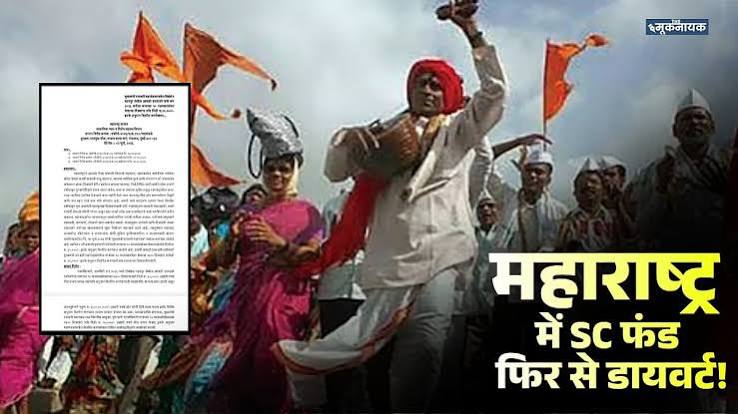
VBA strongly objects: Dalits’ budget worth crores diverted to other schemes, scholarships and welfare schemes still pending Mumbai – The Vanchit Bahujan Aghadi (VBA) has strongly protested the Maharashtra government’s decision to approve financial assistance of ₹2.80 crore from the Social Justice and Special Assistance Department’s budget for the Ashadhi Ekadashi festival through the Chief Minister’s Warkari Mahamandal. The party alleges that the budget earmarked for the welfare of the Scheduled Caste community is being continuously diverted to other schemes, adversely affecting the rights and development of the Dalit community. Through a Government Order issued on July 2nd, the Maharashtra Government has granted administrative and financial approval of a total of ₹2.8 crore (280 lakh rupees) to the Chief Minister’s Warkari Mahamandal to provide assistance of ₹20,000 per Dindi to 1,400 Dindis accompanying 10 palanquins of Maan during the Ashadhi Ekadashi Wari in Pandharpur. According to the Government Order, this amount will be provided from the “Chief Minister’s Warkari Mahamandal’s Assistance Grant (2235D963)” under the Budget Head 2235 – Social Security and Welfare of the Social Justice and Special Assistance Department. The order also states that this amount will be distributed through the Chief Minister’s Warkari Mahamandal, with the Divisional Commissioner, Pune, designated as the Controlling Officer and the Tehsildar (General Administration), Office of the Divisional Commissioner, Pune, as the Drawing and Disbursing Officer. Discrimination and Identity Relationships Criticizing the order, Vanchit Bahujan Aghadi’s State General Secretary, Rajendra Patode, alleged that the Social Justice Department’s budget, especially funds earmarked for the Scheduled Castes, is being continuously used for schemes that are not directly related to the social, educational, and economic empowerment of the Dalit community. He stated that previously, similar funds were used for the Kisan Samman Yojana, the Chief Minister’s Majhi Ladki Bahin Yojana, and the Chief Minister’s Tirtha Darshan Yojana, and now, in the same vein, Rs. 2.80 crore has been allocated to the Chief Minister’s Warkari Mahamandal. Patode stated that if the government wishes to implement these schemes, separate provisions should be made for them from the general budget. He alleged that shifting the budget earmarked for the Scheduled Caste community to other items violates constitutional rights. According to him, numerous schemes related to scholarships, education, economic development, and social justice for Dalit students are still pending, while crores of rupees are being spent for other purposes. Diverting the budget allocated for the Scheduled Caste community to other items violates the rights granted by the Constitution. Previously, funds from the Social Justice Department were similarly used for the Kisan Samman Yojana, the Chief Minister’s Majhi Ladki Bahin Yojana, and the Chief Minister’s Tirtha Darshan Yojana. – Rajendra Patode, State General Secretary, Vanchit Bahujan Aghadi The Vanchit Bahujan Aghadi also stated that due to the lack of a separate and effective legal framework for the Scheduled Caste Sub-Plan, governments are arbitrarily using this budget. The party alleges that this is why the actual benefits of the funds allocated for the Scheduled Caste community are not reaching the targeted groups. Patode described this as a “financial emergency”-like attack on the rights of the Dalit community and called for a widespread public movement on this issue. However, the Maharashtra government’s administrative decision states that the purpose of this assistance is to provide ₹20,000 per Dindi to the 1,400 Dindis accompanying the 10 palanquins of Maan participating in the Ashadhi Ekadashi Wari in Pandharpur. The preamble states that the Warkari tradition is an important cultural heritage linked to Maharashtra’s social harmony, saint tradition, and public awareness, and given the growing numbers, this assistance is considered necessary for management and facilities. According to the government, the Chief Minister’s Warkari Mahamandal was established to carry out welfare programs for the Warkari community and kirtankars, and as in the past two years, it has been decided to provide grants to the Dindis this year as well. Currently, this decision has sparked political debate over the use of the Social Justice Department’s budget. The Vanchit Bahujan Aghadi (VBA) has demanded that the budget allocated for the Scheduled Caste community be used only for schemes related to the social, educational, and economic development of that community, and that legal safeguards be ensured to prevent the diversion of such funds to other schemes. Geetha Sunil Pillai Courtesy: Hindi News
One month in, CM Shivakumar’s government faces cabinet expansion test

Congress will be counting on the new government’s performance for the 2028 polls, but how those left out respond will also be crucial. Earlier this week, Chief Minister DK Shivakumar’s government completed one month in office. Although it is a short period to judge a government’s performance, the change of guard seems to have brought fresh energy to the administration, which looked jaded, especially in the last few months of Siddaramaiah’s tenure. After recovering from the initial shock of the portfolio allocation, with two senior ministers sulking, the CM has managed to keep the spotlight on his government rather than on the political uncertainty in his party. Unlike his predecessor, the CM has avoided open confrontation with the Union government, and has so far refrained from joining his party leaders in the state in aggressively criticising the Rashtriya Swayamsevak Sangh (RSS). However, it is just the beginning, and the Congress government has a long way to go. Maintaining the same tempo and cohesiveness in the government is a Herculean task, especially after the expansion of the cabinet. The government presently functions with just 13 ministers out of a 34-member-capacity cabinet. Of these, only two are new faces, and the rest were part of the previous cabinet. If the Congress leadership decides to give a majority of the remaining berths to new faces, the seniors hoping to return to the cabinet would be aggrieved. However, if most seniors are accommodated again, it would leave new aspirants disappointed. Either way, it’s a tricky situation. Congress will be counting on the new government’s performance for the 2028 polls, but how those left out respond will also be crucial. It would be interesting to see how the party strikes a balance between the loyalists of Shivakumar, Siddaramaiah, and AICC president Mallikarjun Kharge in the cabinet expansion. On the administrative front, key portfolios like agriculture and education do not have full-time ministers, with the portfolios vested with the CM. Several districts in the state are staring at a drought-like situation, and water levels in the reservoirs are low. The government has asked farmers to temporarily avoid cultivating crops relying on dam water. While the CM holds multiple meetings in the state capital, the ministers are hardly seen in action on the ground. If they fail to make amends, the government risks being branded as Bengaluru-centric. That apart, some of the decisions, like the tightening of guarantee schemes and the ambitious plan to develop Bidadi township on the outskirts of Bengaluru, need to be handled deftly. The Bidadi township issue should not be seen merely as a Congress against JDS/BJP issue, but concerns of all farmers must be taken into account, while also keeping in mind plans to develop townships to decongest Bengaluru. However, the state capital’s development cannot come at the cost of farmers, who depend solely on agricultural land for their livelihood. As for the flagship guarantee schemes, it is never a bad idea to fine-tune them. The exercise to weed out ineligible beneficiaries has started. The state government must be prudent with spending and ensure that the schemes benefit the most needy. At the same time, this should not merely become a cost-cutting exercise that amounts to the Congress government going back on its 2023 election promise. The departments handling the revision exercise should be sensitive not just to the letter, but also to the spirit of the government’s direction. Meanwhile, the CM has also announced the formation of guarantee committees with five members in each of the 7,000 panchayats and 4,000 wards. This will be in addition to the existing guarantee committees at state, district and taluk levels. The committees are tasked with the effective implementation of the schemes. On one hand, the government is tightening the schemes to avoid unnecessary expenditure, but at the same time, it is adding thousands of members to guarantee committees. What will their role be in each panchayat or ward when the benefits are directly reaching citizens, and officials are mandated to ensure that? It may be a good move to strengthen the party cadre at the grassroots, but at whose cost? Also, the CM’s announcement of forming 10,000 ‘Bharat Jodo’ youth associations in each panchayat and ward with a grant of Rs 10 lakh has faced flak from the BJP, which terms it as an attempt to put taxpayers’ money into Congress workers’ pockets. Although the government claims that guidelines would be issued for the formation of associations without political interference, it is anybody’s guess as to what extent they will actually be non-political. In the last 30 days in office, the new CM has given ample indication that he is a man in a hurry, unwilling to let go of any opportunity to put his stamp on the administration and consolidate his position within the party. Ramu Patil Courtesy : TNIE Note: This news is originally published on https:/thenewindianexpress.com/bha and is used purely for non-profit/non-commercial purposes, especially human rights
Why Congress Backed Vijay After the Election | Q&A with TNIE | Kaveree Bamzai | Praveen Chakravarty

Did the Congress miss an opportunity by not aligning with Vijay before the Tamil Nadu Assembly elections? In this exclusive interview, Rajya Sabha MP Praveen Chakravarty opens up about the data that predicted Vijay’s rise, why Congress eventually decided to support him, and what the party learnt from the Tamil Nadu verdict. He also discusses: Why young voters rejected traditional politics Congress’ internal debates on the Vijay alliance Rahul Gandhi’s role after the election The changing aspirations of Gen Z voters Lessons for the Congress ahead of the 2029 General Election The future of Tamil Nadu politics Watch the full conversation for an in-depth analysis of one of the biggest political shifts in Tamil Nadu. Subscribe to The New Indian Express for more exclusive interviews and political analysis. Courtesy : TNIE Note: This news is originally published on https:/thenewindianexpress.com/bha and is used purely for non-profit/non-commercial purposes, especially human rights
NHRC issues second advisory focused on ten key areas to ensure welfare of transgenders

The National Human Rights Commission (NHRC) has issued a second advisory to Secretaries of 11 Ministries, the Office of the Registrar General and Census Commissioner and the Chief Secretaries of all the states and union territories to ensure the welfare of transgender persons. The Commission noted that encouraging responses have been received from all concerned authorities to its earlier advisory of September 2023 and the constructive engagement reflecting a shared commitment to this cause. Based on NHRC’s continued engagements, including field interactions, stakeholder consultations and reviews of implementation, the Commission has identified a range of persistent and emerging challenges affecting transgender persons. NHRC said that the advisory focuses on ten key areas for action to ensure the welfare of transgender persons. These include integrating gender diversity in national data systems, reviewing laws to ensure gender inclusivity, building an inclusive legal framework, right to property, right to education, healthcare and inclusivity at the workplace. Courtesy : NOA Note: This news is originally published on https:/newsonair.com/bha and is used purely for non-profit/non-commercial purposes, especially human rights
AMMA crisis deepens as Revathy, Padmapriya quit, cite ‘patriarchy and power politics’
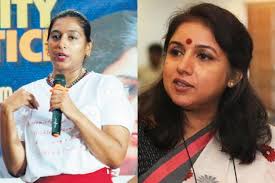
WCC members resign from the Malayalam actors’ body, saying their demand for safer workplaces and accountability has gone unheard. KOCHI: The crisis within the Association of Malayalam Movie Artists (AMMA) deepened on Monday with actors Revathy and Padmapriya resigning from their primary membership in the organisation, saying it had increasingly become shaped by “patriarchy and power politics”. In a joint statement released on social media, the two actors said that for nearly a decade, their demand had remained unchanged – safer workplaces, dignity, accountability and equal treatment for every member. “The price of asking, for us, has been silence and distance. From colleagues, from friends, from spaces that once felt like home. Still, we stayed. For hope has a remarkable ability to survive disappointment,” they said. The duo further stated that resignations following the release of the Hema Committee report were “not an act of principle” but “an escape from accountability”. Revathy and Padmapriya are members of the Women in Cinema Collective (WCC), formed in 2017 to push for structural reforms in the Malayalam film industry after the 2017 actor assault case. “AMMA was meant to stand as a collective voice for all actors. But it has become increasingly shaped by patriarchy and power politics, weakening its founding ideals. Walking away for us now is not defeat. It is self-respect,” the statement said, adding that they would continue to work towards a more equitable film industry outside the organisation. Their resignations come at a time when AMMA is facing one of the biggest crises in its history. The executive committee headed by president Shwetha Menon resigned following the association’s annual general body meeting on June 21, where members voted to remove the committee over alleged irregularities and appointed an ad hoc committee headed by actor and MLA Ramesh Pisharody to oversee the organisation until fresh elections. However, Menon later asserted that she continued to be AMMA president and described the ad hoc committee as “illegitimate”. The standoff intensified after Pisharody stepped down from the ad hoc committee last week. The turmoil has been compounded by fresh allegations from actors, including Ansiba Hassan and Maala Parvathi, who accused Menon and her supporters of communal polarisation.Meanwhile, industry stalwarts Mammootty and Mohanlal have largely remained silent, refraining from publicly taking sides as the crisis continues to escalate. Courtesy : TNIE Note: This news is originally published on https:/thenewindianexpress.com/bha and is used purely for non-profit/non-commercial purposes, especially human rights
No pay parity for medical interns despite reminders to oversight commission

This is despite Health Ministry twice writing to the NMC to “examine” the issue of pay parity, a burning issue with medical students of both public and private colleges. NEW DELHI: The National Medical Commission (NMC) appears to be dilly-dallying on the issue of pay parity for all undergraduate medical interns, whether they are studying in government or private colleges, according to an RTI. This is despite the Union Health Ministry twice writing to the NMC, which regulates medical education in the country, to “examine” the issue of pay parity, a burning issue with medical students and raised multiple times by various medical associations. In February, the NMC accepted that there is no stipend parity and that an amendment is needed in accordance with the statutory process. However, in an RTI response, dated June 30, the NMC said, “As and when the regulations are revised or amended, the inputs will be sought from stakeholders.” The response was to RTI activist Dr KV Babu’s query on what communication has been shared from the Under-Graduate Medical Education Board (UGMEB), an autonomous board under the NMC, which regulates undergraduate medical education, to the Medical Education Policy Section (MEP) under the Union Health Ministry or by the NMC to the board. What is interesting is that the UGMEB, in its RTI reply, also said that its response to the Health Ministry’s letter to examine the issue was for “information for the input sought by the Ministry of Health and Family Welfare.” Speaking with this paper, Kerala-based Dr Babu said: “The issue of stipend parity for interns is pending with the government and the NMC for more than four years. The government clearly wrote to NMC in December last year to consider an amendment to regulations to bring stipend parity.” “Though UGMEB replied in February 2026 about the need for an amendment, NMC is yet to start the process, as per the RTI response. Hope the NMC will amend the regulations soon to bring stipend parity,” said Dr Babu, who has been pursuing the twin issue of non-payment of stipends to interns and pay parity. The Health Ministry had asked the NMC to examine amending the key provision of the Compulsory Rotating Medical Internship Regulations, 2021 (CRMI Regulations 2021), which states that “all interns shall be paid a stipend as fixed by the appropriate authority applicable to the institution/University or State.” This provision contrasts with the Post-Graduate Medical Education Regulation-2023, which makes no distinction between interns working in government or private medical colleges. The issue of the stipend is before the Supreme Court. The apex court had slammed the NMC, saying that it is “dragging its feet without any serious concern” on non-payment of stipend to interns and had urged it to “wake up from its slumber and take appropriate steps” in its October 28 order last year. Kavita Bajeli-Datt Courtesy : TNIE Note: This news is originally published on https:/thenewindianexpress.com/bha and is used purely for non-profit/non-commercial purposes, especially human rights
‘MSMEs being strangled’: Rahul Gandhi alleges transport rules hurting small bus, truck body-builders
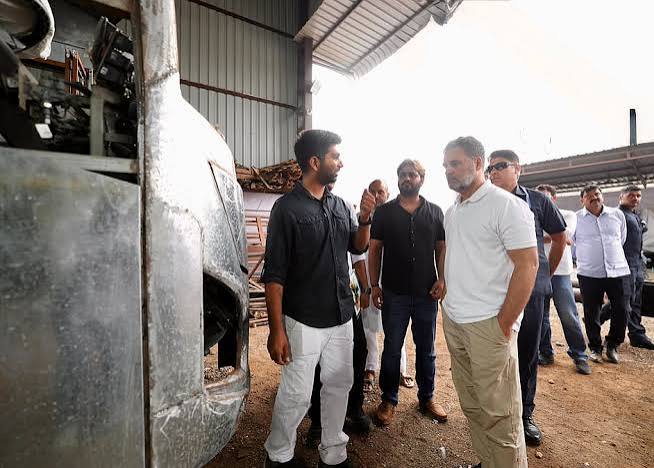
“Make in India” and “Vocal for Local” are merely slogans, and the Modi government’s policies cater only to big industrialists, he further alleged. Congress leader Rahul Gandhi on Monday accused the Centre of framing transport regulations that are crippling small bus and truck body-building workshops, alleging that micro, small and medium enterprises (MSMEs) are being “deliberately strangled” instead of being supported. The Leader of the Opposition in the Lok Sabha shared a video on social media of his recent visit to a bus and truck body-building workshop in Jaipur, where he interacted with artisans and manufacturers and heard their concerns. “Sheets of iron… welding sparks… the sound of hammers… amidst all this, artisans forge India’s future through their hard work and skill. In the local bus and truck body-building workshops of Jaipur, one witnesses an India that creates both employment and the nation’s momentum with its own hands,” Gandhi said in his post in Hindi along with the video. “Yet, regrettably, regulations framed within the Ministry of Transport in Delhi are stifling these small-scale industries across the country. The blame for bus fires caused by technical faults is being laid at the door of these artisans who merely construct the vehicle bodies,” the former Congress president said. MSMEs that ought to be supported are instead being “deliberately strangled”, Gandhi alleged. “Make in India” and “Vocal for Local” are merely slogans, and the Modi government’s policies cater only to big industrialists, he further alleged. If these factories shut down, it won’t just halt business as skills will be lost, jobs will vanish, and the burden of inflation on the common people will rise, Gandhi said. As always, it is the hardworking and skilled Indians who will keep paying the price, he added. The video shows Gandhi interacting with local truck and bus body builders, who outlined the challenges they face under the current regulatory framework. Gandhi assured them that he would raise the issue. The visit follows a meeting on March 18 in which Rahul Gandhi and Congress general secretary Priyanka Gandhi Vadra, along with a delegation of small truck and bus body builders from Rajasthan, met Union Road Transport Minister Nitin Gadkari to press for relief. Ahead of that meeting, the delegation had claimed that the government’s new standards and high licensing costs could force many small manufacturers to shut down, putting the livelihoods of millions of families at risk. Following the meeting, Priyanka Gandhi had told reporters, “The truck and bus body builders faced the problem that they have to incur significant expenses to obtain licenses, and the process is also extremely time-consuming. Gadkari has assured us that he will resolve their issues expeditiously.” However, in the video released on Monday, several truck and bus body builders told Rahul Gandhi that their grievances remained unresolved and alleged that the government was “favouring big companies”. Courtesy : TNIE Note: This news is originally published on https:/thenewindianexpress.com/bha and is used purely for non-profit/non-commercial purposes, especially human rights