
Denied dignity: How the Indian State enables caste system through manual scavenging
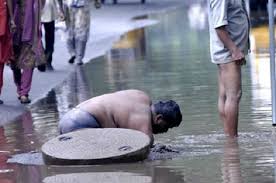
India’s persistent failure to eliminate manual scavenging, despite constitutional guarantees, progressive laws, and technological alternatives, stems not from a legal vacuum but from entrenched behavioural and sociological norms. Across the world, May 1 is set aside to honour the dignity of labour and the long struggle for workers’ rights. In India, this reverence is starkly at odds with the everyday reality faced by its poor and vulnerable working class. Despite being the world’s fifth largest economy, India continues to bury hundreds of its most marginalised citizens, mostly Dalits, in its sewers, septic tanks, and graveyards. The Indian State claims to have abolished manual scavenging, but the reality stinks of apathy, casteism, and systemic failure. The death toll of denial Since 2018, more than 400 workers have died while cleaning sewers and septic tanks in India, according to the Ministry of Social Justice and Empowerment’s admission in Parliament. This figure is widely seen as underreported. Civil society groups like the Safai Karmachari Andolan (SKA) estimate the actual number to be far higher. These deaths aren’t accidents, but caste murders. The victims are overwhelmingly Dalits, forced by social and economic discrimination to enter India’s filthiest spaces, often without safety gear. Take the case of Joy, a 42-year-old sanitation worker in Kerala’s capital, Thiruvananthapuram, who died in July last year while cleaning a clogged canal. His story is not unique. Similar deaths have occurred in Hyderabad, Delhi, Kolkata, Mumbai—cosmopolitan cities where manual scavenging is explicitly illegal, yet continues in plain sight. The contrast between legal prohibition and lived reality is stark. India outlawed manual scavenging over three decades ago, first with the Employment of Manual Scavengers and Construction of Dry Latrines (Prohibition) Act, 1993. The law was expanded in 2013 through the Prohibition of Employment as Manual Scavengers and their Rehabilitation Act, which went further to mandate rehabilitation, alternative employment, and the complete mechanisation of hazardous sanitation work. And yet, the State has largely failed to implement these provisions. The Supreme Court’s 2014 judgement reinforced the ban, ordered compensation of Rs 10 lakh to the families of deceased workers, and even applied this rule retrospectively. Yet compliance remains abysmal. Many states have failed to complete the most basic requirement — identifying the people still forced into this occupation. As a result, their deaths are often unrecorded, uncompensated, and unacknowledged. The court also directed governments to mechanise sanitation, but this remains a broken promise in most places. Machines are either unavailable, dysfunctional, or locked away behind bureaucratic red tape. In many municipalities, mechanisation exists only on official procurement sheets, not on ground. In Delhi, manual cleaning persists under the label of ‘voluntary’ labour performed by contract workers. What emerges is a story of institutional abandonment. At every level – from policy design to municipal governance – the system tolerates this caste-based exploitation. The deaths are not merely technical failures, but moral indictments. Each time a worker enters a sewer without protection, it represents a chain of failures — the failure to mechanise, rehabilitate, record, compensate, and above all, the failure to care. To end manual scavenging, India does not need more laws. It needs political will, administrative integrity, and a rupture with the caste logic that continues to justify this violence. Bone scavenging: A new horror If cleaning human excreta was not already a grotesque affront to human dignity, India now confronts an even more disturbing case in its caste ordeal — bone scavenging. A joint study report by the World Sanitation Workers’ Alliance, the South Asian Sanitation Labour Network (SASLN), and the Safai Karmachari Ekta Manch uncovers this harrowing practice in parts of West Bengal, Odisha, and Rajasthan, where marginalised Dalit communities – many already trapped in manual scavenging – are now collecting human bones from graveyards and cremation sites to earn their bread. This is not macabre curiosity or criminality; it is economic desperation forged by caste dynamics. In districts like Birbhum, Siliguri, and Cooch Behar, at least 178 individuals, mostly Dalits, are engaged in this invisible trade. The bones are sold to unregulated networks supplying calcium-processing units and cosmetic industries. The returns are shockingly low, often just Rs 200 per transaction, underlining the dual economic and social exploitation that defines their existence. This practice is more than illegal; it is profoundly inhumane. It reveals how caste and class conspire to extract value from the oppressed, not only in life but even after death. Historically relegated to ‘impure’ labour such as burial, leatherwork, and waste collection, Dalit communities are once again reduced to their perceived utility. Their suffering is attached even to death, and is monetised. To see bone scavenging as merely an outcome of poverty is to miss the point. This is the machinery of caste capitalism, where certain bodies are made economically viable through morally invisible, caste-coded labour. As anthropologist Veena Das argues, disposability becomes normalised in postcolonial governance. Here, it is institutionalised. The dead are harvested because the living are abandoned. Philosopher Achille Mbembe’s concept of necropolitics – the power to decide whose life matters and whose death is meaningful – finds terrifying resonance here. In India, Dalit death is doubly invisible — their lives are undervalued, and their deaths unacknowledged. The “economy of bones” turns the remains of the oppressed into industrial raw material, commodifying them beyond death and outside the gaze of the State and society. Even more damning is the ritual and moral collapse this exposes. Across cultures, the dead are honoured. The bodies are sacred, and their resting places inviolable. But in India, the poor, especially Dalits and Adivasis, are denied even this final dignity. The graveyard, meant to be a place of peace, becomes another site of caste-determined labour. Dignity is not just denied in sewers and toilets, but also beneath tombstones and smouldering pyres. The State’s silence is deafening. There are no relief packages, no targeted rehabilitation, no serious crackdowns on this underground economy. Welfare legislation like the Prohibition of Employment as Manual Scavengers and Their Rehabilitation Act (2013) ends at the