
Alleged rape of Dalit girl in Nasirabad: Main accused arrested, case filed under serious sections including SC/ST Act

A case of rape of an 18-year-old Dalit girl has come to light in a village in the Nasirabad police station area of Rae Bareli. Based on the complaint filed by the victim, the police have registered a case under rape, SC/ST Act, and other serious sections. Police have arrested the main accused and are investigating the matter. According to the complaint filed by the victim’s aunt, on July 28th, at around 4 pm, village resident Prem Sagar Tiwari, son of Dayashankar Tiwari, allegedly lured the girl into his tubewell room. It is alleged that she was forcibly raped there. After the incident, the accused used casteist slurs and threatened to kill her if she mentioned the incident to anyone or complained to the police. The accused also claimed that his family had influential and political connections. The complaint also alleges that when some villagers arrived at the scene, those present allegedly abused the victims, made casteist remarks, and threatened to kill them. As the crowd of villagers grew, the accused fled the scene. Salon Circle Officer Yaduvendra Bahadur Pal stated that after the complaint came to light, a case was registered under serious sections including rape and the SC/ST Act. The main accused has been arrested and is being interrogated. The victim has been sent for a medical examination. He added that an impartial investigation is also being conducted into the role of the other accused named in the case. Strict legal action will be taken based on the facts that emerge from the investigation. According to the police, the investigation is being carried forward based on all evidence and the medical report. Rajiv Sinha | Chhatoh, Raebareli Courtesy: Hindi News
Silenced by caste, forged by resistance: Meet Urmila Pawar, the voice that forced India to confront its deepest shames

There is a kind of writing that does not simply tell a story. It breaks something open. It reaches into the parts of society that have been deliberately kept in shadow and holds a lamp up to them steadily, fearlessly, and without flinching. Urmila Pawar has been doing exactly that for over four decades. At the AutHer Awards 2026, the seventh edition of the prestigious joint initiative by JK Paper and The Times of India, Urmila Pawar received the Lifetime Achievement Award, a recognition that feels less like a culmination and more like a long-overdue acknowledgment of a voice that has always been essential, even when the world was not yet ready to hear it. She is 80 years old. And she has not stopped writing, fighting, or speaking. A childhood woven from poverty, caste, and quiet resistance Urmila Pawar was born in 1945 in Adgaon village of Ratnagiri district, Maharashtra, into the Mahar community, one of the communities that faced the most severe caste discrimination in Indian society. Her father’s insistence on educating his children led to Pawar eventually leaving the Konkan region for Mumbai to study. In a community where education for girls was not a given, this decision was quietly radical. She went on to earn a master’s degree in Marathi literature from the University of Mumbai, a woman from a Dalit family, in a system that had been designed to keep her out. When she was 12 years old, her family converted to Buddhism, inspired by Dr. B.R. Ambedkar. That conversion was not just religious. It was political. It was a declaration that they would no longer accept the identity that caste had forced upon them. And for Urmila Pawar, Buddhist philosophy would go on to shape every word she ever wrote. In 2003, Urmila Pawar published Aaydan in Marathi. The word “bamboo basketry” means things woven from bamboo, a direct reference to the work her mother did to survive. The English translation, titled The Weave of My Life: A Dalit Woman’s Memoirs, was published in 2009, translated by Maya Pandit. The autobiography covers many themes, including injustice, exploitation, hunger, poverty, and humiliation. But what makes it extraordinary is not the suffering it documents. It is the dignity and the clarity with which it is told. This memoir is not just a story but an account of a woman who believed that she had the power to create changes. The Weave of My Life questions the established norms and beliefs related to caste, class, and patriarchy. It explicitly challenges the deliberate neglect of histories related to caste oppression, struggles, and resistance. In this frank and intimate memoir, Pawar not only shares her tireless effort to surmount hideous personal tragedy but also conveys the excitement of an awakening consciousness during a time of profound political and social change. The book created a sensation. It was read, discussed, debated, and taught in universities. It was recognised as one of the most significant works of Dalit literature ever written by a woman. A life lived at the intersection of writing and activism Urmila Pawar’s contribution goes far beyond a single autobiography. She is the author of two acclaimed short story collections, Sahava Bot and Chauthi Bhint, and, with Meenakshi Moon, co-authored a book on the role of women in the Dalit movement. She is also a former actor of radical Marathi theatre and a playwright. For years she worked in the department of labour welfare for the government of Maharashtra. She was not writing from the comfortable distance of an academic or a literary professional. She was writing from within the lives she was documenting as a government officer, as a Dalit woman, and as someone who had lived the reality she put on the page. She is a prominent figure in the Dalit and feminist movements. Her writing is self-reflective and makes the reader ponder over these intimately felt oppressions. She also received the Matoshree Bhimabai Ambedkar Award in 2004 and was offered the Laxmibai Tilak Award, which she declined, a gesture that itself spoke to her unwillingness to accept recognition on terms she did not fully endorse. The Lifetime Achievement Award for Urmila Pawar is not simply recognition for a body of work. It is recognition for a body of resistance. She delicately navigated her readers through her long journey from the harsh landscape of the Konkan region to Mumbai, first as a Mahar and later as a woman as she challenged the conventions of both caste and gender to emerge as an activist and a strong literary voice. In a country where Dalit women’s stories have been systematically excluded from the literary mainstream, Urmila Pawar insisted on being heard. She wrote in Marathi, in the language of her community, about the lives that polite society preferred not to acknowledge. And she was right to insist. Because in order to begin to comprehend Dalit feminist writings, closely reading Pawar’s work is paramount to setting up a historical context for the Dalit feminist movement in Maharashtra. At 80, Urmila Pawar is not a relic of the past. She is a reminder that the most important stories are often the ones the world has worked hardest to suppress and that the writers who tell them anyway are the ones who matter most. Suggest a better headline for this and make it more engaging and impactful and deep and emotional. Courtesy : TOI Note: This news is originally published on https:/timesofindia.com/bha and is used purely for non-profit/non-commercial purposes, especially human rights
Dalit girl missing for a week: Missing case filed in Machhlishahr, police searching

A minor Dalit girl has been missing from Machhlishahr for the past week. Police have filed a missing person case and launched a search for her. The girl left home on July 19th and has not returned since. The girl’s father, who lives in a neighborhood in the city, stated that his 15-year-old daughter left home at around 10 a.m. on July 19th, saying she was going to the bus station. However, she did not return home until late evening. The girl’s family contacted her friends and relatives the next day to gather information, but found no trace of her. When no information was found despite repeated searches, the father filed a missing person report at the police station on Monday evening. In-charge Inspector Vineet Roy stated that a missing person report has been filed based on the father’s complaint. Police teams are actively searching for the girl. Abhishek Narayan Singh | Machhlishahr Jaunpur Courtesy: Hindi News
Two Bhopal police constables arrested for allegedly abducting and rap!ng minor Dalit girl

Two Madhya Pradesh Police constables have been arrested for the alleged abduction and rape of a minor Dalit girl in Bhopal. The incident reportedly occurred on July 22, and the survivor filed a complaint at Jahangirabad Police Station the following day, leading to the registration of an FIR and the prompt arrests of both accused. Bhopal Additional Commissioner of Police (Law and Order) Shailendra Singh Chauhan identified the accused as constables Santosh Sen and Jitendra Singh. According to police, the men, who are serving police personnel, called the minor girl and took her away in a car. An officer familiar with the case said the pair allegedly lured her by claiming they were taking her to a birthday celebration. They then drove her to a secluded location where Santosh Sen is accused of raping her. Afterward, the men left the girl at a city square. A medical examination of the survivor has been conducted. She is currently at home and her condition is stable. The case has been registered under the Protection of Children from Sexual Offences (POCSO) Act, the Scheduled Castes and the Scheduled Tribes (Prevention of Atrocities) Act, and relevant provisions of the Bharatiya Nyaya Sanhita, including Section 137(2). Further investigation is underway. Courtesy : MM Note: This news is originally published on https:/muslimmirror.com/bha and is used purely for non-profit/non-commercial purposes, especially human rights
55-year-old arrested for killing Dalit man in Palamu

Daltonganj: Police on Tuesday arrested Ramesh Singh alias Mora Singh, 55, an accused in the daylight murder of Prabhunath Rajwar, 50, a Dalit man, under Pipra police station limits. Rajwar was allegedly attacked with a sharp-edged iron weapon, locally known as a baluwa, while playing cards under a banyan tree at Madhubana village around 1.30 pm on Monday. He succumbed to his injuries on the way to Medinirai Medical College and Hospital, Daltonganj. Witnesses present at the spot identified Mora Singh as the assailant, police said. The accused allegedly fled immediately after the attack, abandoning the weapon near the crime scene. An FIR was lodged on Tuesday by the victim’s brother, Shyam Lal Rajwar. Pipra police registered a case under relevant sections of the Bharatiya Nyaya Sanhita pertaining to murder, along with provisions of the SC/ST (Prevention of Atrocities) Act. Chhatarpur SDPO Prashant Kumar said during the interrogation, Singh confessed to the crime and cited a longstanding personal grudge against the victim. Caption: SDPO Chhatarpur Prashant Kumar addresses a news conference after the arrest of murder accused Ramesh Singh alias Mora Singh in Palamu on Tuesday. Courtesy : TOI Note: This news is originally published on https:/timesofindia.com/bha and is used purely for non-profit/non-commercial purposes, especially human rights
Opinion: How important is it for a Dalit to lead the Jantar Mantar movement? Has GenZ changed the political agenda?

CJP Protest: The CJP movement against the NEET paper leak sparked a new debate in the country’s politics and society. Dalit youth Abhijeet Deepak led this movement, but he focused on issues like education, paper leaks, and unemployment rather than caste. Following the movement, the government accepted their key demands. Many see this as a sign of GenZ’s changing mindset, where opportunities, education, and employment are becoming more important to youth than caste. A movement that channeled the anger and frustration of young people in India has recently been in the headlines. The Cockroach Janata Party (CJP) launched a major movement and finally achieved the acceptance of its key demand. Most notably, this movement was led by a Dalit youth, Abhijeet Deepak. For the first time in India, a major mass movement was led by a Dalit, and that too, a movement that was not in favor of reservation. This clearly demonstrates that India’s younger generation is overcoming the curse of caste. This is a very positive development. Abhijeet Dipke, a resident of Chhatrapati Sambhajinagar in Maharashtra, comes from a Dalit family. His father became an engineer from a poor village farmer family. Abhijeet did not prioritize caste in his movement. He clearly stated that his focus was on the education system, paper leaks, and unemployment. Allegations of leaks in exams like NEET, student suicides, and a lack of jobs were the issues. He demanded the resignation of Education Minister Dharmendra Pradhan. In June 2026, he returned from the US and began a protest at Jantar Mantar in Delhi. Gradually, the movement spread to many cities across the country. Protests at Jantar Mantar and Dalit Abhijeet Dipke The protest at Jantar Mantar continued for approximately 36-37 days. The students remained steadfast even in the rain. Abhijeet himself was seen several times pleading with the police, asking for permission to erect a tarpaulin. On July 25, 2026, significant news broke. Talks were held between the government and the CJP. Dharmendra Pradhan resigned. An assurance was given to withdraw the cases filed against the protesters. The CJP called off the agitation. Abhijeet said, “This proves that if you don’t fear, you can win.” Dalit Movement and History To understand this success, it’s important to examine the history of the Dalit movement in Maharashtra. Maharashtra has always been a stronghold of the fight for social justice. In the nineteenth century, Jyotirao Phule laid the first strong foundation in this direction. Phule himself belonged to the Mali caste, but he spoke out against the oppression of the upper castes. He founded the Satyashodhak Samaj. Phule believed that education is the real weapon. Along with his wife, Savitribai Phule, he opened schools for girls and backward castes. This was a significant achievement at the time. Phule’s book “Gulamgiri” is still read today against the caste system. He clearly stated that the Brahminical system enslaved the Shudras and Atishudras. The Ambedkar Era After Phule After Phule came the era of Babasaheb Dr. Bhimrao Ambedkar. Ambedkar belonged to the Mahar community of Maharashtra. He not only criticized the caste system but also waged an organized struggle against it. The Mahad Satyagraha and the Kala Ram Temple Entry Movement—these are pages of history. Ambedkar showed the path of education, organization, and struggle. While drafting the Constitution, he provided for reservations so that Dalits and backward classes could find a place in the mainstream. In 1956, he embraced Buddhism along with millions of followers. Ambedkar’s message was: Be educated, stay organized, and fight. Maharashtra, the land of the Dalit movement The Dalit movement has always been strong in Maharashtra because of these two great men. Later, leaders like Kanshi Ram and Mayawati gave it political strength, but its roots remain in Maharashtra. Ambedkarite thinking still runs deep in Marathwada and Vidarbha. Abhijeet Deepak also emerged from this soil. He held Ambedkar’s book in his hand and spoke about the Constitution. He talks about cleaning up education, ending exam malpractices, and giving opportunities to youth. Has Genji changed his political agenda? This reflects Genji’s thinking. Today’s youth has grown up on social media. Opportunity, employment, and respect matter more to them than caste. The older generation associated caste with every issue. The new generation considers issues as issues. Abhijit’s movement has become a symbol of this sentiment. It is remarkable that a Dalit leader has been able to garner such widespread support for a non-caste issue. This is change. Some critics will argue that caste still exists. Abhijit faced casteist attacks when he identified himself as a Dalit. But the support was overwhelming. Millions of young people stood with him without questioning his caste. This is change. Author: Vivek Shukla Courtesy: Hindi News
BJP bets on Ravidas Temple for Pan-India Dalit outreach before 2027

Varanasi: Ahead of UP and Punjab polls in 2027, the BJP will launch its mega Dalit outreach programme from Sant Ravidas Temple in Varanasi on Wednesday by taking out a countrywide Kalash Yatra. For this, BJP workers will carry 131 urns from the birthplace of 15th-century poet-saint Sant Ravidas to different parts of the country. The mega event will be flagged off on Wednesday in the presence of the UP CM Yogi Adityanath and the party’s national president Nitin Nabin. The temple has remained the nucleus of the BJP’s Dalit outreach since 2008, with Prime Minister Narendra Modi visiting it three times since 2016. Led by BJP SC Morcha national president Lal Singh Arya and state general secretary (organisation) Dharampal Singh, party workers gathered near the Ravidas Temple on Tuesday and filled 131 urns with soil from the saint’s birthplace. After worshipping the kalash, the party also organised a religious procession carrying the urns. On Wednesday, Yogi, Nabin and state president Pankaj Chaudhary will flag off the “Shri Guru Ravidas Maharaj Samrasta Sankalp Abhiyan” with the same 131 urns to mark the 650th Prakash Parv of Sant Ravidas. The campaign will be formally inaugurated on Guru Purnima on Wednesday and, following a series of programmes, will conclude on Maghi Purnima on Feb 20, 2027. Maghi Purnima is celebrated as Ravidas Jayanti. The political significance of the temple increased when then chief minister Mayawati tried to develop a grand park at Sant Ravidas’ birthplace in Seer Gowardhanpur in 1997, although the bid was foiled by the Yadav-dominated local population. The BSP supremo attended the Ravidas Jayanti celebrations as chief minister in 2008 and gifted a golden palanquin to the temple. She also ensured the creation of Ravidas Park and a ghat in the saint’s name along the Ganga. Following Mayawati’s visits, politicians from almost all political parties began visiting the Ravidas temple as part of their Dalit outreach efforts. Prime Minister Narendra Modi attended the Ravidas Jayanti celebrations in 2016 and 2019 and also visited the temple in 2023. After participating in the Ravidas Jayanti celebrations in 2018, CM Yogi visited the temple several times to monitor the ambitious project for the development of the saint’s birthplace. Apart from them, Congress MPs Rahul Gandhi and Priyanka Gandhi, former Delhi chief minister and AAP chief Arvind Kejriwal, and former Punjab chief minister Charanjit Singh Channi have also visited the temple in recent years. The satsang ground of the Ravidas temple at Seer Gowardhanpur, which witnessed the foiling of Mayawati’s dream project by SP functionaries in 1997, later hosted the rally of the then SP-BSP grand alliance for the 2019 Lok Sabha elections, addressed by Akhilesh Yadav and Mayawati on May 6, 2019. Courtesy : TOI Note: This news is originally published on https:/timesofindia.com/bha and is used purely for non-profit/non-commercial purposes, especially human rights
CM’s ‘Gen Z’ push sparks buzz over young faces in Telangana Cabinet
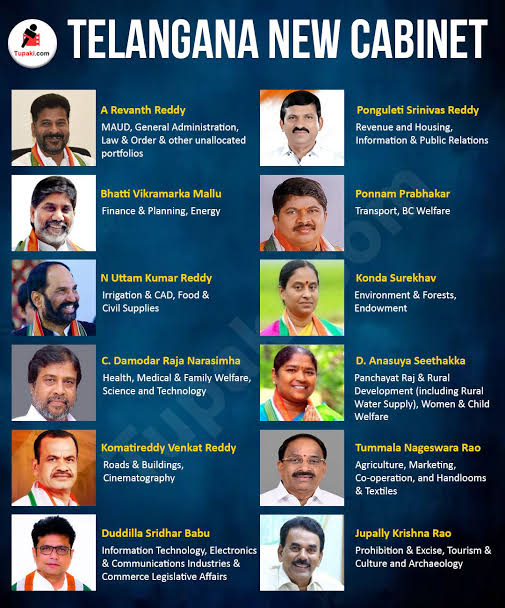
Some believe Revanth is keen to give greater representation to young legislators, while others think move is aimed at enhancing Cong appeal HYDERABAD: Chief Minister A Revanth Reddy’s recent remarks on “Gen Z” have set off speculation within the Congress over the possible induction of younger MLAs into the state Cabinet during the impending expansion or reshuffle. Party leaders said the discussion has gained momentum, with many believing that Revanth is keen to give greater representation to younger legislators. The move is also being seen as an effort to strengthen the Congress’ appeal among young voters, not only in Telangana but across the country. According to senior party leaders, if the proposal goes ahead, one or two young MLAs could find a place in the Cabinet. They say the move would reflect Revanth’s political style while helping the party connect better with younger voters. Sources said Revanth is likely to take up the proposal with the Congress high command, arguing that projecting younger ministers could work in the party’s favour ahead of the next electoral cycle. The speculation has also led to some nervousness among sitting ministers, as any Cabinet expansion or reshuffle could change the existing political equations. According to party sources, the Cabinet expansion or reshuffle is expected in August. They said discussions on the Karnataka Cabinet expansion are almost complete at the All India Congress Committee (AICC) level, after which the focus is likely to shift to Telangana. Young aspirants Following the chief minister’s remarks that Gen Z leaders should become ministers, the names of some of the Assembly’s youngest MLAs, including Mamidala Yashaswini Reddy, Mynampally Rohith Rao and Chittem Parnika Reddy, have begun doing the rounds in Congress circles. Party sources said there is a fair chance that one or two young legislators could be accommodated in the Cabinet. At the same time, there is also talk that up to three senior ministers could be dropped and given organisational responsibilities, either in the state unit of the party or at the national level. Congress leaders expect Revanth to discuss the issue with Leader of the Opposition in the Lok Sabha Rahul Gandhi, who has consistently encouraged greater participation by young people in politics. They believe the induction of younger ministers could send a message beyond Telangana and help the party strike a chord with young voters across the country. Leaders familiar with the chief minister’s political thinking also believe he is likely to give more tickets to younger candidates in the next Assembly elections, particularly if the proposed delimitation exercise increases the number of Assembly constituencies. They say this would fit in with Revanth’s long-term political strategy in both Telangana and the Congress. Party leaders also point out that several first-time legislators are relatively young. They mention MPs Chamala Kiran Reddy, Kadiyam Kavya, K Raghuveer Reddy, Gaddam Vamshi Krishna and Anil Kumar Yadav, along with MLC Balmoor Venkat, as part of the younger leadership, even if they do not fall within the Gen Z age group. Senior Congress leaders also expect the party to field a larger number of candidates in the 40-45 age bracket at the next Assembly elections, especially if the number of constituencies increases from the present 119 to 182 following delimitation. Ireddy Srinivas Reddy Courtesy : TNIE Note: This news is originally published on https:/thenewindianexpress.com/bha and is used purely for non-profit/non-commercial purposes, especially human rights
Rahul Gandhi’s statement, “A person who defends rapists has been appointed Education Minister,” sparked uproar in the Lok Sabha.
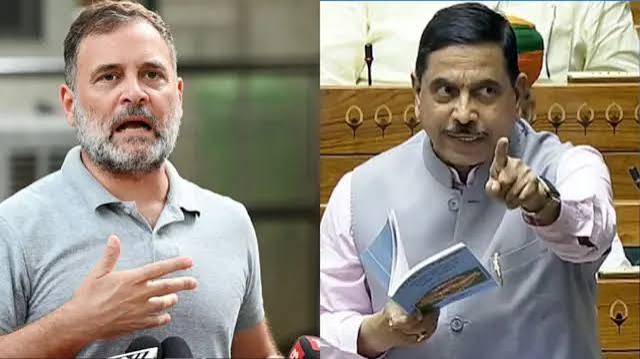
The ruling party strongly objected to Priyanka Gandhi’s statement in the Lok Sabha, calling it baseless and offensive against the Education Minister. Several ministers, including Kiren Rijiju, demanded an apology and action, while Priyanka Gandhi stated that she would verify her allegations through appropriate channels. New Delhi: Congress leader Rahul Gandhi alleged that after youth protests demanding reforms in the education system, PM Modi appointed a person who “defends rapists” as the country’s Education Minister. Rahul Gandhi targeted Education Minister Prahlad Joshi in the Lok Sabha following remarks made by party General Secretary Priyanka Gandhi Vadra. Priyanka had made some comments about Joshi in the Lok Sabha, citing a newspaper report about the accused in the Bilkis Bano case being granted bail, which were expunged from the House proceedings. Following this, Leader of the Opposition Rahul Gandhi said in Parliament, “After protests by young people demanding reforms to the education system in the country, the BJP has appointed a person who defends rapists as the country’s Education Minister. There can be nothing more shameful than someone who advocates for the protection of rapists becoming the country’s Education Minister.” Taking aim at Prime Minister Narendra Modi, he said, “The Prime Minister’s move is strange. He has so many people in his cabinet; he could have appointed anyone as Education Minister, but he chose someone who defends rapists.” Later, Rahul Gandhi posted on X, “No one can be more despicable than someone who defends rapists. Prahlad Joshi is an insult to our education system and every student. Now, the institutions where millions of young women study will be under his supervision.” He emphasized that the women of India will never accept Prime Minister Modi’s new Education Minister. Uproar over Priyanka’s statement When Priyanka Gandhi mentioned this issue in the Lok Sabha, ruling party members objected, calling it a baseless and offensive remark against the Education Minister. The House witnessed a brief uproar over the issue. Parliamentary Affairs Minister Kiren Rijiju objected, stating that the comments made regarding the new Education Minister were character assassination and that it was inappropriate to make such allegations without verification. Demand for an apology from Priyanka Gandhi He said that if Priyanka Gandhi cannot verify her allegations, she should apologize to the House. Lok Sabha Speaker Om Birla said that such statements should not be made in the House without facts. Meanwhile, Union Education Minister Prahlad Joshi said that Priyanka Gandhi Vadra cannot get away with making such allegations. He demanded that the Congress MP apologize to the House and action be taken against her. Priyanka Gandhi said that she would verify her statement in the House through appropriate channels. Edited by: Ashok Upadhyay About the Author Ashok Upadhyay is a Senior Digital Content Producer at Navbharat Times Online. He has 12 years of field reporting and desk work experience. He began his journalism career with Navbharat Times Hindi newspaper in 2014. He has extensive experience reporting on the political and crime beats. He also worked on the central desk at Amar Ujala Dehradun and has done ground reporting for several elections. He has been working on the news desk at NBT Digital for the last six years. Courtesy: Hindi News
Congress, BJP spar over Pralhad Joshi’s pick as education minister

NEW DELHI: Congress and BJP sparred over the choice of Union minister Pralhad Joshi being given the charge of the education ministry, with leader of the opposition Rahul Gandhi accusing him of defending rapists and BJP’s chief spokesperson Anil Baluni hitting back by accusing Rahul of distorting facts for an individual’s character assassination. Rahul alleged that Joshi had, in a TV interview a few years ago, justified the release of those convicted of the gang rape of Bilkis Bano during the 2002 Gujarat riots, and dubbed the Union minister a “filthy man”. The charge, made after Lok Sabha Speaker Om Birla had expunged remarks by Rahul’s sister, Wayanad MP and Congress general secretary Priyanka Gandhi Vadra, drew a fierce response from Baluni, “This is unfortunate, deplorable and unacceptable.” Accusing Rahul of making “misleading and factually incorrect” statements about Joshi’s TV interview, the Pauri Garhwal MP said, “Joshi never tried to defend anybody. He was commenting on the process of remission and made no comment on the merits of the case.” Speaking to reporters outside Parliament, Rahul said, “After all these young people protesting about the education system and so many girls protesting and being beaten and thrashed, BJP has given the charge of the ministry to a man who is a defender of rapists. There can be no filthier man than somebody who says rapists need protection. That is the education minister of India today.” He added, “It is strange. It’s a strange reaction from the Prime Minister. There are so many people in his cabinet. He could have chosen any one of them. But he chooses a person who protects rapists. It’s quite amazing.” Coming down hard on the Gandhi siblings, Baluni, head of BJP media cell, said the two should try to get their facts right and understand them. “They twist facts to suit what is convenient for them. They always make baseless charges to mislead people,” he said. Courtesy : TOI Note: This news is originally published on https:/timesofindia.com/bha and is used purely for non-profit/non-commercial purposes, especially human rights