
Dalit groom ‘pulled off chariot over DJ music’ in Mathura
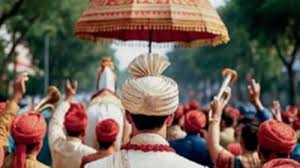
AGRA: A Dalit groom was allegedly dragged off his cha-riot and several wedding gu-ests were assaulted after a group of upper caste men at-tacked a wedding procession with DJ in Bhureka village of Mathura district, police said. The accused, allegedly enraged by the choice of mu-sic played by the DJ, and a ‘rath’, also issued death thre-ats to the groom and other guests if the procession con-tinued. DSP (Mant) Gunjan Singh, said an FIR has been filed and an investigation was underway. She, however, denied that the groom was forcibly pulled off. In his complaint to the po lice, the bride’s uncle, Puran Singh, named Krishna, Manish Kumar and Ankur all residents of Navali in Mathura as the main accused. He said, “Around 12.30pm on Wednesday, the three, along with 20-25 unidentified men, stopped the procession, hurled casteist slurs, and assaulted our family members with sticks. They asked us how we could dare to take out a wedding procession with a DJ and a rath in front of us. They pulled the groom off the buggy, stopped the DJ and told us they’d kill us if the procession wasn’t stop-ped. I called number 112 and police came to ensure proces-sion continued peacefully The wedding ceremony was later held at the banquet hall under police protection.” However, the mob allegedly returned on Thursday morning at around 8am on motorcycles, armed with sticks, pistols, and knives. They stormed the house and assaulted several members of the groom’s family. Singh said, “They abused them with casteist slurs and beat them up. They tore the wo men’s clothes and vandali-sed household items, inclu-ding cots and a motorcycle.” Another police officer said, “A case has been registered at Naujheel police station under several provisions, including BNS Section 191-2 (rioting) and the SC/ST Act. Other applicable sections include BNS 76 (as-sault or use of criminal force on a woman with the intent to disrobe or compel her to be naked) and 333 (house trespass after preparation for causing harm, assault, or wrongful restraint).” Similar caste-based at-tacks were reported in the district. In March, three men were charged for assaulting a Dalit groom and threate-ning to kill him if he didn’t dismount his horse. They allegedly hurled casteist slurs and smashed portraits of Dr BR Ambedkar and Gautam Buddha displayed in the pro-cession. According to the complaint, the groom and the baraatis were forced to walk while the band followed in silence. On April 16, another Dalit groom was allegedly pulled off his mare and thrashed by upper-caste men for playing loud music near their ho-mes. Armed with sticks and sharp weapons, the attack-ers injured several guests, including women and children. The baraatis switched off the music and lights and rushed to the venue in fear Courtesy : TOI Note: This news is originally published on https://timesofindia.com/ and is for use by the non-military/non-commercial community, especially those in the human rights sector.
NHRC Urges States to Implement Supreme Court’s Directives to End Manual Scavenging
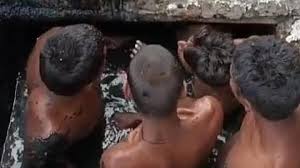
Authorities have been directed to submit action taken reports within eight weeks to demonstrate compliance with the Supreme Court’s directives. New Delhi- The National Human Rights Commission (NHRC), India, has called for the immediate implementation of 14 directives issued by the Supreme Court in its 2023 judgment (Dr. Balram Singh v/s Union of India, 2023 INSC 950) to eradicate the caste-based and inhuman practice of manual scavenging and hazardous sewer cleaning. In a letter to Chief Secretaries and Administrators of all States and Union Territories, the NHRC emphasized that the continued practice violates fundamental human rights, including the right to life with dignity and equality before the law. Despite constitutional safeguards, legal protections, and a Supreme Court ban on manual scavenging in six major cities—Delhi, Mumbai, Chennai, Kolkata, Bengaluru, and Hyderabad—announced on January 29, 2025, the NHRC noted that manual cleaning of hazardous waste persists in parts of the country. To address this, the NHRC has recommended immediate measures, including widespread dissemination of the prohibition and judicial directives among stakeholders such as local authorities, contractors, and the public. It also called for sensitisation programmes for government officials, sanitation workers, and communities to highlight the legal, social, and human rights dimensions of manual scavenging. The NHRC further stressed the need for robust monitoring systems to ensure real-time compliance and deterrence, alongside regular follow-ups and review mechanisms to track progress, identify gaps, and ensure accountability at all levels. Authorities have been directed to submit action taken reports within eight weeks to demonstrate compliance with the Supreme Court’s directives. Coutrtesy : Geetha Sunil Pillai. The Mooknayak Note: This news is originally published on https://themooknayak.com/ and is for use by the non-military/non-commercial community, especially those in the human rights sector.
Bihar Dalit Youth’s Online Complaint Spurs NCSK to Take Suo-Moto Action on Patna Manual Scavenging Case, Directs DM for Inquiry
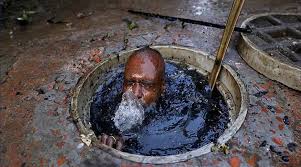
The complainant alleges that individuals, likely from the Scheduled Caste community, were coerced into manually cleaning sewage and manholes without safety gear or mechanized support. New Delhi- The National Commission for Safai Karamcharis (NCSK) has taken suo-moto cognizance of a serious complaint regarding an incident of forced manual scavenging in Patna, Bihar, highlighting ongoing violations of the Prohibition of Employment as Manual Scavengers and Their Rehabilitation Act, 2013, and the Scheduled Castes and Scheduled Tribes (Prevention of Atrocities) Act, 1989. The complaint, lodged by Shubham Kumar on May 10, via the NCSK online portal (Complaint No. 102574), pertains to an incident that occurred on April 28, at Chandmari Road, Kankarbagh, Mithapur. The complainant alleges that individuals, likely from the Scheduled Caste community, were coerced into manually cleaning sewage and manholes without safety gear or mechanized support. This act is in direct violation of the 2013 Act, which prohibits manual scavenging and mandates mechanized cleaning of sewers and septic tanks, as well as Articles 17 (abolition of untouchability) and 21 (protection of life and personal liberty) of the Constitution of India. Most municipalities in India lack modern equipment for cleaning sewage systems, forcing workers to enter underground sewer lines through manholes. (Representational Image) The complainant has demanded several reliefs, including: Immediate inquiry into the violation of the 2013 Act and caste-based discrimination under Article 17. Lodging of First Information Reports (FIRs) under the 2013 Act, the SC/ST Atrocities Act, and relevant sections of the Indian Penal Code (IPC) for endangering human life. Identification of the victims’ names, social categories, and employment status. Compensation of ₹10,00,000 to each victim, as mandated by a 2014 Supreme Court judgment in Safai Karamchari Andolan v. Union of India. Prosecution of responsible officers from the Patna Municipal Corporation (PMC) and supervisory authorities for failing to prevent the incident. A justifiable written reason if FIRs are not lodged. The complaint is supported by four timestamped, geo-tagged photographs showing individuals handling human waste and opening manholes without protective equipment. The complaint is supported by four timestamped, geo-tagged photographs showing individuals handling human waste and opening manholes without protective equipment. The complaint is supported by four timestamped, geo-tagged photographs showing individuals handling human waste and opening manholes without protective equipment, underscoring the hazardous and dehumanizing nature of the work. The complainant has warned that failure to act will lead to legal action, including filing a contempt petition against the NCSK, the State of Bihar, and the PMC, as well as approaching the Patna High Court under Articles 226 and 215 of the Constitution. The NCSK has initiated an investigation into the matter, invoking its mandate under the Rules of Procedure of the National Commission for Safai Karamcharis, 2019, and Section 31 of the 2013 Act, which empowers the Commission to monitor the Act’s implementation and inquire into complaints of non-compliance. In a letter dated 19 May 2025 (DO No. 11059/50/7/13/20-RAD), addressed to Dr. Chandrashekhar Singh, District Magistrate of Patna, the NCSK has directed an immediate inquiry into the incident. The Commission has requested a detailed Action Taken Report (ATR) within 15 days, to be submitted in a prescribed format, including details of compensation provided to the victims as per the Manual Scavengers Rehabilitation Rules, 2013, and the SC/ST (Prevention of Atrocities) Rules, 2016. A copy of the letter has also been sent to the Chief Secretary of Bihar for further action. Courtesy : Geetha Sunil Pillai, The Mooknayak Note: This news is originally published on https://themooknayak.com/ and is for use by the non-military/non-commercial community, especially those in the human rights sector.
Gobarha: When Dalit Wages Were Literally Scooped from Cattle Dung!
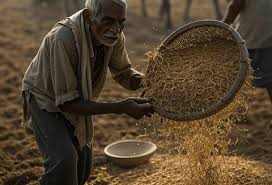
Gobarha—a practice that symbolizes the dehumanization of the “untouchables” and the cruelty of the Hindu social order, as documented by Dr. B.R. Ambedkar in his writings. It is a harsh truth that shakes the conscience and exposes the depths of oppression endured by Dalits for centuries. New Delhi – Imagine a poor laborer who has toiled all day under the scorching sun—breaking his back in the fields, harvesting crops, driving oxen to separate grain from chaff. His spine aches, his palms are blistered, yet a faint hope lingers in his eyes that perhaps today, he will receive fair compensation for his hard work. Exhausted, he approaches his employer to claim his wages, dreaming that his children might finally eat a full meal. But what does the landlord give him? Not money, not clean grain—but a sack of Gobarha: grain that has been sifted from cattle dung, the very same grain that passed through the stomachs of oxen, now dumped into the laborer’s sack so he can grind it into flour and bake bread for his family. This is the story of gobarha—a practice that symbolizes the dehumanization of the “untouchables” and the cruelty of the Hindu social order, as documented by Dr. B.R. Ambedkar in his writings. It is a harsh truth that shakes the conscience and exposes the depths of oppression endured by Dalits for centuries. In Dr. Bhimrao Ramji Ambedkar: Writings and Speeches, Vol. 5, Chapter 4, the brutal realities faced by the “untouchables” in India’s caste-ridden society are poignantly described, with gobarha emerging as a stark symbol of their subjugation. The gobarha practice highlights the systematic oppression of Dalits under Hindu social hierarchy. It exemplifies how caste humiliation was institutionalized, keeping them economically, socially, and culturally marginalized—perpetually treated as outsiders in the so-called “village republic.” The Divided Village Ambedkar described Indian villages as deeply segregated societies, split into two distinct groups: Touchables (Savarnas): Upper-caste Hindus who lived inside the village, wielding economic and social power. Untouchables (Dalits): A marginalized minority forced to live in segregated settlements outside the village, treated as “hereditary bonded laborers.” The Touchables enforced a rigid code that controlled every aspect of Dalit life, criminalizing basic dignities such as: Owning property (land or livestock). Building houses with tiled roofs. Wearing clean clothes, shoes, or gold jewelry. Giving their children respectable names or speaking refined language. Violating these rules invited punishments ranging from social ostracization to violence, ensuring Dalits remained oppressed. Gobarha: The Ultimate Humiliation In parts of Uttar Pradesh, Dalit laborers were paid in gobarha—literally, “dung grain.” During harvest season (March-April), oxen trampled crops to separate grain from chaff, inevitably consuming some of it. The next day, the partially digested grain would be extracted from their dung, sieved, and given to Dalit workers as wages. These laborers had no choice but to grind this filthy grain into flour and consume it. Ambedkarite scholars argue that gobarha was not merely a form of payment but a deliberate act of degradation. It denied Dalits the dignity of fair wages and clean food, forcing them to survive on cattle waste. Ambedkar’s documentation of this practice underscores the brutality of caste, where Dalit labor was so undervalued that even their sustenance was an insult. In an agrarian society, land ownership was key to economic stability—yet Dalits were systematically denied it: Financial Barriers: Most lacked the means to buy land. Social Resistance: Upper castes violently opposed any attempt by Dalits to acquire land, viewing it as a threat to their dominance. Legal Obstacles: In regions like Punjab, laws such as the Land Alienation Act explicitly barred Dalits from purchasing land. As a result, Dalits were trapped as landless laborers, dependent on Savarna landowners. With no bargaining power, they were forced to accept meager wages—often in humiliating forms like gobarha—or face starvation and violence. The Right to Beg: A Parallel System of Survival When agricultural work was unavailable (outside harvest season), Dalits relied on precarious livelihoods: Selling grass and firewood (gathered from forests, often requiring bribes to guards). Institutionalized Begging: Many villages enforced a system where Dalit families were “assigned” to specific upper-caste households, from whom they were expected to beg for food. This was not charity but a structured practice akin to medieval serfdom. Like gobarha, begging reinforced dependence and dehumanization, binding Dalits to a cycle of survival at the mercy of the upper castes. The Village Republic: An Empire of Exploitation Ambedkar called Indian villages a “den of caste oppression”—far from the romanticized “village republics” of nationalist imagination. They were “republics of the Touchables, by the Touchables, and for the Touchables,” where Dalits were stripped of rights and reduced to servitude. The caste system’s “iron law of karma” permanently branded Dalits as inferior, regardless of merit. A poor, uneducated Savarna would always rank above even the most accomplished Dalit. Gobarha embodied this unchangeable hierarchy—where even survival came with a reminder of their “untouchable” status. Courtesy : Geetha Sunil Pillai, The Mooknayak Note: This news is originally published on https://themooknayak.com/ and is for use by the non-military/non-commercial community, especially those in the human rights sector.
Rahul Gandhi’s unannounced visit to DUSU office leaves officials, ABVP fuming
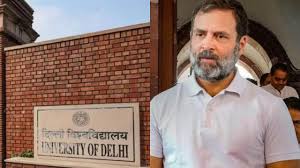
NEW DELHI: Congress functionary Rahul Gandhi on Thursday made an unscheduled visit to the Delhi University Students’ Union (DUSU) office and interacted with students, drawing sharp objections from university officials and protests from ABVP-backed student representatives. “Today, Rahul Gandhi came to University of Delhi without any information to the authorities. He stayed in the DUSU office for almost one hour,” the university’s proctor Rajni Abbi Rajni Abbi said in a statement.”During this time, the DUSU was cordoned by security cover. Rahul Gandhi has done this for the second time.” The DUSU secretary was not allowed to enter her office and was not let in by NSUI students,” Abbi said in a statement, warning of strict action against those involved. DUSU president Ronak Khatri, affiliated with the Congress-backed NSUI, defended the visit, stating that as the elected head of the student union, he does not need permission to host private guests. He called the university’s reaction politically motivated and an overreach that undermines student autonomy. — ronak_khatrii (@ronak_khatrii) Meanwhile, the RSS-linked ABVP, which holds several DUSU posts, also slammed the visit. DUSU Secretary Mitravinda Karanwal claimed she was blocked from entering her office due to “VVIP protocol” and accused Gandhi of sidelining other elected representatives. — ABVPVoice (@ABVPVoice) The ABVP described the event as a staged photo-op, likening Gandhi’s visit to “a rejected actor crashing a student play,” and questioned the Congress party’s commitment to youth engagement and democratic values. This visit follows a similar episode in Bihar’s Darbhanga, where Gandhi met students without official clearance, leading to two FIRs. Courtesy : TOI Note: This news is originally published on https://timesofindia.com/ and is for use by the non-military/non-commercial community, especially those in the human rights sector.
Sonia, Rahul Gandhi denied knowing about AJL-YI transactions: ED
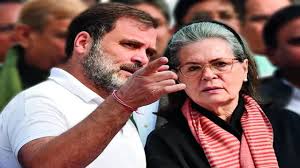
NEW DELHI: During her questioning over three days in July 2022 in the National Herald money laundering case, former Congress president Sonia Gandhi had told Enforcement Directorate (ED) that she was not aware of who took the decision in Congress to assign the Rs 90 crore loan of Associated Journals Ltd (AJL) to Young Indian, a not-for profit company in which she and her son Rahul Gandhi held 76% stake. “Motilal Vora, the then treasurer of Congress, would have been aware of this as he was empowered to deal with administrative and financial matters,” Sonia had told the investigators, the ED said in its chargesheet filed against her on April 9. Rahul took an identical stand, refusing to acknowledge the controversial transactions that have become the prime money laundering charges slapped by the agency against the two. Young Indian took over AJL’s loan liability towards Congress for a mere Rs 50 lakh, and in the process took over the company that owned assets across India estimated at over Rs 2,000 crore, according to ED. Both Sonia and Rahul were directors in Young Indian when these transactions happened, the agency said while accusing them of being involved in the conspiracy to siphon off assets of AJL that actually belonged to the Congress party. Based on details of Rahul’s interrogation by ED investigators, TOI had in June 16, 2022 exclusively reported that the Congress functionary had blamed the AJL-YI transactions to the late Motilal Vora. The agency was sceptical of the identical statements of mother and son as Sonia was then Congress president and Rahul was a general secretary in the party, besides being the majority shareholders in Young Indian and directors of the company. Vora was the party’s treasurer for decades. Significantly, ED noted in its chargesheet that at the time it was transferred to Young Indian for Rs 50 lakh, AJL had an annual rental income of Rs 75 lakh. AJL’s annual income shot up significantly after it was owned by the Gandhi family: from Rs 75 lakh to Rs 15 crore per annum by 2021-22. AJL, publisher of Congress mouthpiece National Herald and Quami Awaz, folded operations in 2008 after providing VRS to its remaining staff. However, it continued to make revenue by renting out its premises in Delhi, Mumbai, Lucknow and other cities. Later, after taking over the company, the promoters/directors of Young Indian further developed these properties and raised the annual rental income to Rs 15 crore. While Sonia told ED that “she was not aware why a new entity Young Indian was incorporated for assignment of the alleged loan of Rs 90 crore so as to do away with the non-recoverable loan of AJL when the same could have been achieved simply by writing off the loan”, Rahul had said he was not aware where the Rs 50 lakh came from in Young Indian to settle the AJL loan (with Congress). Both Sonia and Rahul refused to produce documentary evidence to support their claim that late Vora was authorised to take the decision of assigning AJL’s loan to YI and in return, transferring the entire company and its properties to the new entity privately owned by them. Courtesy : TOI Note: This news is originally published on https://timesofindia.com/ and is for use by the non-military/non-commercial community, especially those in the human rights sector.
‘ED is weapon of BJP, Modi & Amit Shah’, says Shiv Sena (UBT) MP Sanjay Raut
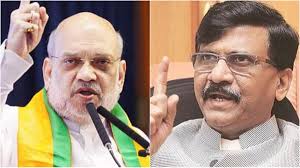
NEW DELHI: Shiv Sena (UBT) leader Sanjay Raut on Friday stated that he had been a victim of the raids conducted by the Enforcement Directorate (ED), accusing the probe agency of being a “weapon” of the BJP and Prime Minister Narendra Modi. During a press conference, Raut commented on the Supreme Court’s criticism of ED regarding the TASMAC raids in Tamil Nadu. “What is new here? I am a victim too (of ED). I have been through that, there are several others like me…ED is a weapon of BJP, of PM Modi, of HM Amit Shah. As long as there is ED, there is Modi-Shah and BJP…” Raut said.Regarding Rahul Gandhi’s inquiry to External Affairs Minister S Jaishankar, Raut defended the question, stating that Indian citizens harbour distrust towards Pakistan. “What is wrong with the question Rahul Gandhi has asked? Every citizen of the country has this question in their mind. It is not just the BJP’s supporters who have this question. The 1.4 billion people of the country will always believe this: that you cannot trust Pakistan. That is the first point. The second point is, what benefit do we have from Trump? Trump has only harmed us. Our ongoing efforts were focused on fighting terrorism; it was not about grabbing land like Israel,” Raut said. He emphasised that Rahul Gandhi’s question reflected public sentiment. “To eliminate terrorism, we started a fight with Pakistan, but Trump stopped it. Trump caused harm to us. If Rahul Gandhi has asked this question, then it is the question in the minds of the people. The third question he asked is also true. Our blood boils; our veins carry the blood of patriotism. When the sindoor of 26 women was wiped out, our blood boils,” he continued. Raut criticised the government’s stance and India’s response to Pakistan. “I have seen that Pakistan’s Prime Minister has said that they have taken revenge for the defeat of 1971. This is the kind of language they are using. What kind of revenge have you taken? What courage does it take to use such language? In 1971, when Pakistan had to accept defeat during Indira Gandhi’s time, their language was not like this. In 1965, under the leadership of Lal Bahadur Shastri, we made Pakistan bite the dust, yet their language was not like this then. But during Prime Minister Modi’s tenure, Sharif is saying that they have taken revenge for 1971. The government should be ashamed,” Raut said. Courtesy : TOI Note: This news is originally published on https://timesofindia.com/ and is for use by the non-military/non-commercial community, especially those in the human rights sector.
The Wall of Caste— A Study Exposing Discrimination Against Dalits in South Asian Healthcare Highlights Why India’s Caste Census is Crucial!
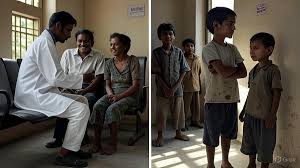
The study emphasizes that caste-based discrimination is not just a social issue but a public health crisis. Despite Nepal’s 1962 ban on caste discrimination and India’s affirmative action policies, implementation gaps and entrenched cultural attitudes sustain inequalities. New Delhi- As India prepares for its much-anticipated caste census, it would be relevant to discuss a groundbreaking study that exposes the deep-seated discrimination faced by Dalit communities in accessing healthcare across South Asia. Published on May 24, 2021, in the Asia Pacific Journal of Public Health, this research by Raksha Thapa, Edwin van Teijlingen, Pramod Raj Regmi, and Vanessa Heaslip analyzes nine studies to reveal how caste-based inequities, compounded by poverty and cultural barriers, systematically deny Dalits, historically labeled as “untouchables”—their right to healthcare. A large number of Dalits in rural areas in India are deprived from or are refused access to health services due to their social status. Typical discriminatory behaviors include refusing to enter Dalits’ houses or allowing them into your house, share food and water, seating places, transport, and generally refusing to touch. Health discrimination is likely to be seen mainly in areas where care is provided, which can be health centers or a patient’s own home. The findings highlight a harsh reality: despite legal efforts to dismantle caste hierarchies, discriminatory practices persist, severely impacting Dalit health and well-being. This study strengthens the case for India’s caste census, which could be a vital step toward understanding and addressing these inequalities. The Burden of Caste: Dalits Excluded from Healthcare The caste system, a 3,000-year-old social structure rooted in Hindu tradition, continues to fuel social, economic, and health disparities in South Asia. Despite being outlawed in India and Nepal, caste-based discrimination remains entrenched, particularly in healthcare. This study, which reviewed research conducted between 2000 and 2019 in India (seven studies) and Nepal (two studies), identifies four key themes: social stigma, poverty, cultural beliefs, and access to healthcare. These themes highlight the complex barriers Dalits, especially women, face, which undermine their health and dignity. Key Findings of the Study Socioeconomic Disparities and Poor Health Outcomes: The study found that low socioeconomic status and limited land ownership are directly linked to poor health outcomes for Dalits. With restricted access to education and well-paying jobs, Dalits often have low household incomes. Social discrimination and poverty confine them to low-status jobs, denying them equal opportunities in the labor market. In Bihar, India’s poorest state, local public medical services, often the only services affordable for Dalits, only addressed basic health needs. Despite developments in the Indian health structure including availability of subcenters, public health centers, and community health centers, poorer communities still experience a shortage of health institutions and skilled health workers. Double Discrimination Against Dalit Women: Dalit women face a dual burden due to their low caste status and the lower status of women in Hindu society. They endure increased risks of domestic violence, severe illnesses, and limited access to treatment beyond local facilities. For instance, Dalit women use antenatal care (ANC) services far less than higher-caste women, leading to worse maternal and child health outcomes. While wealthier Dalit households show slightly better ANC usage, the combination of low caste and poverty consistently results in poorer health outcomes. Cultural and Social Barriers: Cultural beliefs deepen health inequities. Many communities view Dalits as incapable of understanding health information, leading healthcare providers to withhold critical guidance. In some areas, illnesses are attributed to supernatural causes like spirit possession, causing Dalits to rely on traditional healers rather than modern medicine, further limiting their access to proper care. Discrimination in Healthcare Access: All nine studies confirm that caste directly impacts healthcare access. In Uttar Pradesh, only 19% of Dalits with chronic illnesses receive treatment due to high costs, long travel distances, and untrained providers. In Nepal, weak healthcare infrastructure disproportionately affects Dalits, who struggle with paperwork and accessing free services. Dalit healthcare workers, such as auxiliary nurse midwives, also face disrespect from colleagues and patients, undermining their ability to provide care. This study strengthens the case for India’s caste census, which could be a vital step toward understanding and addressing inequalities. Poverty and Stigma: The Dalit Dilemma Poverty is a major barrier to healthcare for Dalits. Most live below the poverty line, relying on low-paying jobs like manual labor or basket weaving. They often lack awareness of free healthcare services or government schemes, and unlicensed practitioners frequently exploit them with exorbitant fees. Taking loans to cover medical costs is common, trapping families in a cycle of debt. Social stigma further compounds their struggles—healthcare providers often refuse to touch Dalit patients, and mental health issues are misattributed to supernatural causes, limiting access to modern treatment. Dalit Women: The Most Vulnerable Dalit women are the hardest hit by this discrimination. Their low caste and gender expose them to higher risks of malnutrition, anemia, and maternal mortality. The study notes that nearly 70% of Dalit women are illiterate, limiting their health literacy and ability to navigate healthcare systems. Economic dependence on men, restricted mobility, and domestic violence further hinder their access to care. Dalit women usually do not visit hospital for treatment due to the travel distance to the hospital and they cannot afford travel expenses or high treatment fees. The study emphasizes that caste-based discrimination is not just a social issue but a public health crisis. Despite Nepal’s 1962 ban on caste discrimination and India’s affirmative action policies, implementation gaps and entrenched cultural attitudes sustain inequalities. The authors argue that improving healthcare requires addressing sociocultural factors like stigma and gender inequality. Programs like self-help groups (SHGs) and ANC have helped, but they fall short without broader societal change. The study calls for caste to be included in global policy discussions, such as the Sustainable Development Goals (SDGs), to achieve targets like poverty reduction, good health, quality education, gender equality, and reduced inequality. Courtesy : Geetha Sunil Pillai, The Mooknayak Note: This news is originally published on https://themooknayak.com/ and is for use by the non-military/non-commercial community, especially those in the human
Casteism from Punjab to Kerala: Four Incidents from the 1930s That Reveal — For Hindus, Inhumanity Was Acceptable, but an Untouchable’s Touch Was Not
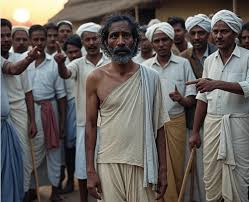
The caste system, rooted in notions of purity and pollution, created a social order where Untouchables were deemed subhuman, their touch considered a contaminant more dangerous than death itself. New Delhi- The 1930s were a tumultuous period in India, marked by the struggle against British rule, the rise of the independence movement, and the deep-rooted caste system that shaped societal norms. The practice of untouchability, grounded in centuries-old notions of “purity” and “impurity,” relegated millions to a subhuman existence. Four chilling incidents from this era, documented in publications such as Young India, Prakash, and Bombay Samachar, expose the cruel reality of a society where caste purity was valued above compassion, ethics, and humanity. Untouchables, often referred to as Harijans or Dalits, faced exclusion from temples, wells, schools, and public spaces. They were forced to live in segregated colonies, barred from touching items used by caste Hindus, and subjected to violence for minor transgressions of caste norms. Reformers like Mahatma Gandhi advocated for the upliftment of Harijans, but their efforts often met resistance from orthodox Hindus who clung to traditional hierarchies. Dr. Ambedkar, himself an Untouchable, was a fierce critic of this system, arguing that untouchability was not just a social evil but a moral and political failure. ‘Chapter 5 in the ‘Dr. Babasaheb Ambedkar: Writings and Speeches Volume No. 5’ published by Dr Ambedkar Foundation, Ministry of Social Justice and Empowerment includes some moving incidents narrated by Baba Sahab, that shows that Hindu would prefer to be inhuman rather than touch an Untouchable. How unclean and unfit for association an Untouchable is to a Hindu be evident from these incidents. Untouchables, often referred to as Harijans or Dalits, faced exclusion from temples, wells, schools, and public spaces. They were forced to live in segregated colonies, barred from touching items used by caste Hindus, and subjected to violence for minor transgressions of caste norms. A Mother and Child Lost to Caste Prejudice (Kathiawar, Gujarat 1929) In a heart-wrenching account published in Young India (a publication by Mahatma Gandhi) on December 12, 1929, an Untouchable school teacher from a village in Kathiawar shared his tragic story. On December 5, his wife gave birth to a child, but by December 7, she fell gravely ill, suffering from diarrhea, chest inflammation, and breathing difficulties. Desperate to save her, the teacher approached a local Hindu doctor, who refused to visit the Harijan colony or examine the child, citing caste impurity. After persistent pleas and intervention from local notables like the Nagarseth and Garasia Darbar, who assured the doctor a fee of two rupees, he agreed to examine the patient—but only outside the Harijan colony. The teacher carried his ailing wife and newborn out of their home for the examination. The doctor, maintaining his distance, passed a thermometer through a Muslim intermediary to avoid direct contact. At 8 p.m., under the light of a lamp, the doctor diagnosed pneumonia and sent medicine. Despite receiving his fee, he refused further visits. The teacher, left with no options, applied linseed from the market to his wife, but she passed away at 2 p.m. that day. He wrote, “The lamp of my life has died out.” This incident reveals how an educated doctor, bound by professional ethics, prioritized caste prejudice over saving lives, leading to the preventable deaths of a mother and her child. Untouchables, often referred to as Harijans or Dalits, faced exclusion from temples, wells, schools, and public spaces. They were forced to live in segregated colonies, barred from touching items used by caste Hindus, and subjected to violence for minor transgressions of caste norms. Punished for Saving a Calf (Jagwal, Punjab 1932) An incident reported in Prakash on August 23, 1932, from Jagwal village in Jafarwal tehsil highlights the perverse priorities of a caste-ridden society. On August 6, a calf fell into a well. Rammahashaya, a Dom (an Untouchable caste in UP and Bihar), who was nearby, jumped into the well without hesitation and held the calf until others arrived to help rescue it. Instead of gratitude, the Hindus of the village accused him of defiling their well and turned on him. The villagers’ outrage over the well’s supposed pollution nearly cost Rammahashaya his life. Fortunately, a barrister arrived at the scene, rebuked the mob, and saved him from further harm. This incident raises a haunting question: was saving the calf more important than preserving the well’s “purity”? For the Hindus of Jagwal, an Untouchable’s touch, even in an act of heroism, was a greater offense than the calf’s potential death. A Child’s Rescuer Attacked (Kaladi, Kerala 1936) A similar tale of ingratitude and violence unfolded in Kaladi, a village in Calicut, as reported in Bombay Samachar on December 19, 1936. When a young woman’s child fell into a well, none of the villagers dared to intervene. A passing stranger courageously jumped into the well and rescued the child. When he revealed he was an Untouchable, the villagers’ relief turned to rage. Instead of thanking him, they abused and assaulted him for “polluting” the well. This incident, much like the one in Jagwal, underscores the deep-seated prejudice against Untouchables. A hero who saved a child’s life was punished simply because his touch was deemed unacceptable by caste Hindus. Untouchables, often referred to as Harijans or Dalits, faced exclusion from temples, wells, schools, and public spaces. They were forced to live in segregated colonies, barred from touching items used by caste Hindus, and subjected to violence for minor transgressions of caste norms. Defiling a Pyre with Rice (Lucknow, UP 1937) A shocking incident reported in Adi Hindu of Lucknow in July 1937 reveals the brutal extent of caste prejudice. During the cremation of a high-caste employee of the Madras Holmes Company, friends and relatives gathered to perform the ritual of throwing rice on the pyre. Among them was an Adi-Dravida, an Untouchable from Madras, who joined in the act out of respect. However, this simple gesture was deemed a defilement of the pyre by the high-caste
After Trans athlete’s victory, crowd cheers second-place girl as ‘Real Champion’

At a recent high school track meet in California, 16-year-old Reese Hogan finished second in the girls’ triple jump, and set a new personal and school record. The first-place spot went to AB Hernandez, a transgender athlete from Jurupa Valley. While Hernandez was awarded the top position, many in the crowd applauded Hogan as the “real champion.” After the podium ceremony, Hogan briefly stood on the first-place platform for a photo, smiling proudly. Her quiet protest sparked strong reactions online, especially from people who believe girls’ sports should be limited to athletes assigned female at birth. What’s the Protect Girls’ Sports movement The Protect Girls’ Sports movement is an effort aimed at safeguarding fair competition and equal opportunities for female athletes in school and professional sports. It focuses on ensuring that girls’ sports teams remain reserved for athletes who were assigned female at birth, based on biological differences that impact performance. Advocates argue that this protection is necessary to maintain a level playing field, prevent unfair advantages, and preserve the integrity of women’s sports. The movement also highlights the importance of supporting girls’ participation in athletics, promoting their physical and mental well-being, and celebrating their achievements in a space designed specifically for them. Support grows online After the event, Hogan received praise on social media, including from former NCAA swimmer and activist Riley Gaines. Gaines, who is known for speaking out on transgender athletes in women’s sports, posted, “Congrats to Reese Hogan, the REAL champ!” She and others shared the video of Hogan stepping onto the top podium once Hernandez had walked away, calling it a bold but respectful move. — Riley_Gaines_ (@Riley_Gaines_) Tensions rise over the protest This isn’t Hogan’s first quiet protest. Just days earlier, she and several other girls wore “Protect Girls Sports” shirts at a track prelim event. Officials told them to remove the shirts immediately before competing. According to the athletes, the request felt forceful and unfair, especially since other students wearing non-school shirts were not treated the same way. The girls complied to avoid being disqualified. Event officials respond The California Interscholastic Federation (CIF) later confirmed that the shirt removal incident happened. They said all athletes must wear school-issued uniforms during competitions. However, witnesses claimed that only the girls wearing the “Protect Girls Sports” shirts were asked to remove them, raising questions about equal treatment and free expression. Despite the controversy, Hernandez now qualifies for the CIF Masters Meet. Meanwhile, the debate about fairness in girls’ sports continues to grow across the country. For many, Reese Hogan’s quiet stand has made her more than just an athlete — she’s become a symbol in a much larger conversation. The incident at the CIF Southern Section Finals, where Reese Hogan, a 16-year-old high school athlete, posed on the first-place podium after finishing second to a transgender athlete, has ignited a broader conversation about fairness in women’s sports. Hogan’s symbolic gesture, though controversial, underscores a growing concern among female athletes regarding the inclusion of transgender women in women’s competitions. While it’s essential to support and respect transgender athletes, it’s equally important to ensure that the integrity and fairness of women’s sports are maintained. Courtesy : TOI Note: This news is originally published on https://timesofindia.com/ and is for use by the non-military/non-commercial community, especially those in the human rights sector.