
MP Khandwa gangrape-murder case: Limits of brutality crossed with tribal woman, questions raised on women’s safety system in the state
The Congress delegation met the family members of the deceased. The delegation included Shobha Ojha, Vijayalakshmi Sadho and MLA Jhuma Solanki. They demanded a compensation of Rs 25 lakh from the government and a government job for a family member. Bhopal. The incident of gangrape and murder of a tribal woman in Khalwa police station area of Khandwa district of Madhya Pradesh has shaken the entire state. This incident, which shames humanity, not only raises questions on law and order, but also exposes the government’s insensitivity towards the safety of the tribal society. The deceased woman was 45 years old and she was the victim of brutality by two youths of her own village – Sunil and Hari. The brutality was done by catching her on the way while returning from the field On Friday night, after a wedding ceremony in the village, the woman had gone to drop her relatives to the field. The farm was just half a kilometer away, but she did not return home overnight. The next morning, when the family went out to search for her, a woman told them that the victim was in the shed behind her house. On reaching there, she was found unconscious. On regaining consciousness, she told her son and daughter-in-law, “Something wrong has happened to me, now I will not survive… Sunil and Hari did it forcefully.” She died shortly after. Statement given before death, intestines and uterus were out According to the son and daughter-in-law of the deceased, the condition of the woman was very critical. There was excessive bleeding from the private part and the uterus was out. The postmortem report also confirmed that the intestines were out, the uterus was torn and the body was soaked in blood. According to the doctors, a hand or some object was inserted in the private part, which damaged the internal organs and caused death due to excessive bleeding. Police sent the accused to jail The police had taken both the accused into custody on Saturday itself and on Sunday night they were taken to the crime scene to confirm the crime scene. Both the accused were produced in the court on Monday and taken on two-day police remand. Khandwa SP Manoj Kumar Rai said that the clothes of the accused and the deceased and other evidence found from the crime scene have been sent for FSL investigation. It has also been said that this case will be registered in the category of marked crime and taken to the fast track court. According to Congress leaders, the victim could not even get first aid. The government ambulance did not come, and the family had to take the body to the district hospital in a private vehicle. This incident exposes the poor health system of the state. Congress team met the victim’s family The Congress delegation met the family of the deceased. The team included Shobha Ojha, Vijayalakshmi Sadho and MLA Jhuma Solanki. They demanded a compensation of Rs 25 lakh from the government and a government job for one member of the family. Shobha Ojha alleged that “the administration is trying to convert the rape case into murder. Looking at the condition of the crime scene, it is doubtful how the incident could have happened there.” Vikrant Bhuria targeted the government National President of Adivasi Congress and MLA Dr. Vikrant Bhuria said in a press conference in Delhi, “MP is becoming the rape and liquor capital. A 45-year-old tribal woman was gang-raped and her uterus and intestines were removed with an iron rod. This is not just murder, but a blot on the face of civilization.” Bhuria further said that “Prime Minister Modi should ensure before coming to Bhopal Mahila Sammelan on May 31 that how will the sisters be protected in Madhya Pradesh?” Courtesy : Ankit Pachauri, Hindi News
Andhra Pradesh: 3-year-old Dalit innocent raped, angry villagers demolish accused’s house

Three-year-old Dalit girl raped and murdered in Kadapa, villagers furious, accused arrested. Kadapa, Andhra Pradesh – A man named D. Rahmatullah has been arrested for allegedly raping and murdering a three-year-old Dalit girl in YSR Kadapa district. The horrific incident took place during a relative’s wedding in Kambaldinne village, where the girl was attending with her parents. According to police reports, Rahmatullah lured the girl to a secluded spot behind the Kalyan Mandapam, where he allegedly raped and strangulated her to death. Angry villagers caught hold of Rahmatullah and handed him over to the police. This did not calm the anger of the villagers, so on May 24, villagers demolished his house in his native village Moragudi, declaring that he had no right to live in the community. The incident triggered a massive protest outside the Jammalamadugu Government Hospital, where villagers demanded hanging for the accused. Kadapa District Collector Dr Sridhar Cherukuri and Superintendent of Police EG Ashok Kumar met the victim’s family to express condolences and assured all possible help. The administration announced financial assistance of Rs 5 lakh, a residential plot and a government job for the family. Additional Superintendent of Police Prakash Babu confirmed the arrest and said the case was registered under the Scheduled Castes/Tribes (Prevention of Atrocities) Act and the Protection of Children from Sexual Offences (POCSO) Act. Investigation is underway. Courtesy : Rajan Chaudhary, Hindi News
Devdasi daughter denied passport for not having father’s name — what happened next will break your heart
When denied a passport for not having father’s name, a Dalit woman recounts her painful journey within a broken system that punishes those born outside patriarchal norms. When denied a passport for not having father’s name, a Dalit woman recounts her painful journey within a broken system that punishes those born outside patriarchal norms. How many times do I have to prove my existence? How many forms do I have to fill out to explain why I don’t have a father’s name? Why does this system punish us even while pretending to give us a future, when we were born outside the rules of patriarchy? Since 2023, I have been humiliated while trying to get a passport, and in the process I have been caught in a trap of a question that haunts me daily: If the state does not acknowledge my existence, then who am I? In that one moment, I was mocked for not having a father’s name, and something broke inside me. I left that office defeated not just by the rejection of my passport application, but also crushed by the burden of being completely invisible. For the first time in my life, I felt erased. I cried uncontrollably on my way back—not for a piece of paper, but for the dignity that was taken away from me in that moment. I am not alone. This is not just my individual battle—it is a reflection of the larger systemic failures that continue to oppress marginalized communities. A system that continues to erase people like me—Dalit women and their children—whose existence is inconvenient to the social order. When I was selected for a PhD abroad, it was more than an academic achievement—it was a victory against a system that had long tried to silence people like me. I was ready to leave. But then the passport office stopped me. I was rejected not for lack of ability or merit, but because my mother, who was once a Devadasi, raised me alone. The Devadasi system, which is rooted in caste-based oppression, has devastated thousands of women in Karnataka. My mother, like thousands of others, was dedicated to the temple as a child—an act that stripped her of her autonomy. She was pushed into a life of servitude, denied the right to marry, and forced to serve the gods through religious rituals. Yet, she raised me with dignity, strength, and rebellion—working as a laborer to send me to school. I saw her resist silently, not breaking under the same burden that crushed so many others. The term Devadasi refers to an age-old practice where young girls were ‘married off’ to temples and forced to serve the deity. Though it was meant to honor the gods, over time the practice became exploitative. Devadasis faced poverty, sexual abuse, and social exclusion. Despite laws prohibiting the practice, more than 70,000 devadasis still survive in India today, according to a 2015 NHRC report. Research by Janshakti and NLSIU shows that more than 60% of their children drop out of school due to stigma, poverty, and bureaucratic neglect. In April 2023, I applied for a passport in Delhi, thinking I had my documents in order. I carried everything I thought the system wanted—Aadhaar, voter ID, education certificates, and a government-issued certificate proving my mother’s devadasi status. I had been in Delhi for over a year, working in youth programs and leading research in public education. My passport application should have been a normal process. But what ensued was a nightmare. The officer flipped through my file without much interest, until he reached the column for “father’s name.” She stared at him, then looked at me with disdain. “Everyone has a father,” she sneered. “Don’t talk like an illiterate.” People around me laughed. I stood silent, holding the proof of my existence and my mother’s struggle. The sting of their laughter was something I had never imagined. I explained that I was raised by my mother alone. I mentioned the Maharashtra High Court ruling that allows the mother’s name alone to be used in official documents. But no one paid attention. The officer rejected my application. “You can try, but it may be rejected in police verification,” she said. The verification officer, who initially seemed sympathetic, later reported a discrepancy—again, pointing to the blank column for father’s name. I appealed, sent emails, made rounds of offices. No one responded. Hours of waiting, pleading, and explaining were met with humiliation. To the system, I was not a human being—I was a problem. The burden of caste and patriarchy turned me into an administrative inconvenience. Though the officer eventually processed my application, he warned: “At your own risk.” And he was right. It was rejected at police verification. For the next two years, I physically and emotionally chased a document that was supposed to confirm my existence. I went to the Delhi PSK again and again, hoping someone would look beyond the blank column for father’s name and see a human being—one with credentials, purpose, and dreams. I filed appeals, wrote emails, made rounds of offices. Silence. After almost a year, I gave up and withdrew the application. Still, I was not ready to give up. In March 2025, I applied again in Bengaluru under the tatkal category. The last date to submit my scholarship documents was near, and without a passport, I would have lost my chance. This time, I was denied admission at the token counter itself. The officer—whose sole job was to issue tokens—had sealed my fate even before I reached the verification desk. When I said I didn’t have a father’s name, people around me laughed. Without any sympathy, the officer looked me in the eyes and said, “You should know your father’s name. Don’t talk like an illiterate.” My blood froze. The same laughter. The same shame. The same dismissal. After pleading with the token officer without success, I gave up and sat in a corner and talked to my sister—both of
‘Not Found Suitable’ is now the new Manuvaad: Rahul Gandhi’s sharp question in DU – Why is Dalit, tribal, OBC history missing in books?
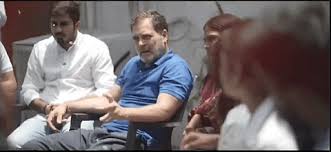
Leader of Opposition in Lok Sabha Rahul Gandhi, in a discussion with Delhi University Students Union (DUSU), launched a scathing attack on the anti-reservation policies of the Central Government, terming the “Not Found Suitable” (NFS) category as “new Manuvaad”. He alleged that through this category, deserving candidates of SC, ST and OBC are being deliberately disqualified and kept away from education and leadership. New Delhi: Leader of Opposition in Lok Sabha Rahul Gandhi on Tuesday met students of Delhi University Students Union (DUSU) and launched a scathing attack on the “anti-reservation” policies in central universities and IITs. He particularly questioned the misuse of the “Not Found Suitable” (NFS) category, through which deserving candidates of SC, ST and OBC are allegedly being disqualified. Rahul Gandhi shared a video on Twitter and wrote, “‘Not Found Suitable’ is the new Manuvaad now. Eligible candidates from SC/ST/OBC are being deliberately declared ‘not fit’ – so that they stay away from education and leadership.” He said that Babasaheb Ambedkar had described education as the biggest weapon of equality, but the Modi government is engaged in weakening this weapon. He gave the example of Delhi University and said that more than 60% of the reserved posts of professor and more than 30% of associate professor have been kept vacant on the pretext of NFS. “This is no exception. IITs, central universities, the same conspiracy is going on everywhere. NFS is an attack on the Constitution. NFS is a betrayal of social justice,” Rahul said. Addressing DUSU students, Rahul also questioned the Indian education system. He said, “I too have come out of the Indian education system. Have you ever read Dalit, Adivasi or Bahujan history in our books? Why is there only 10% of our history? Why is 90% of history missing?” He asked, “Why is it not written that for 3000 years Dalits were treated like dirt, they were not given any place, they were not respected?” He further said that why is it not written in the books that people called Shudras and Ati Shudras were deprived of the right to property for thousands of years? Gandhi further said that if any 5 percent community or people living in the country are not getting facilities, then I can understand but why 90 percent people are not getting it, I cannot understand this. Students told him that recently DU removed a lesson on Kancha Ilaya. Rahul told the students that this is not just a fight for education and jobs, but a fight for rights, respect and share. He told that food communities do not have a share in corporate India, in Telangana we saw who all the contracts go to – not a single Dalit, tribal or backward is getting it. He called for a reply with the power of the Constitution against the anti-reservation policies of BJP/RSS. “We will all together respond to this conspiracy,” he asserted. Rahul Gandhi’s visit and his sharp questions are being seen as an attempt to start a new debate on issues of education and social justice. Courtesy : Geetha Sunil Pillai, Hindi News
West Bengal: Dalit families entered Shiva temple after 300 years, now the game of boycott and threats started in the village!
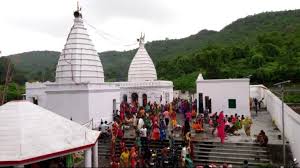
Dalit families entered Gideshwar Shiva temple after 300 years, but social boycott started. West Bengal – March 13, 2025 became a historic day for 130 Dalit families of Gidagram village in East Burdwan district. For the first time, after a wait of 300 years, they were able to enter the Gideshwar Shiva temple in their own village. The occasion took place under heavy police security, but the event was like a symbolic break on centuries-old caste discrimination. However, this moment of happiness could not last long. According to a report by Frontline The Hindu, after the temple entry, the Dalit families faced social and economic boycott by an influential section of the village. A visit to the village two months later found that while there was a grudging acceptance on the surface, deep tensions still simmered within — shattering the image Bengal has of itself as an ‘ajaati’ society. Victory, but at a heavy cost The Gideshwar temple is located just a few hundred metres from Das Pada, where Dalit (mostly Das sub-caste) families live. In Gidagram, which has around 2,000 families, only these 130 Dalit families were denied entry into the temple — a discrimination that had been going on for generations. After several meetings, administration intervention and local consensus, finally on March 13, five Dalits entered the temple under heavy police protection and worshipped the deity. But surprisingly, this was followed by a strong backlash. The Dalit families were socially boycotted for almost a month. The influential sections of the village also called for an economic boycott against them. “Our joy of entering the temple was taken away by the boycott. Though the situation is improving a little now and people are accepting us, the heartache remains,” said a resident. The suppressed pang The Das community says they never faced discrimination in other social matters — they attended weddings, invited guests, and had good relations with other communities. But when it came to the temple, they were treated as untouchables. “Now that we have been able to enter the temple, we have a new sense of self-respect. It is as if our fortunes have turned,” said Sukanto Das. “Earlier, our boys and girls lacked courage, but after this fight, they have a new courage,” said Dinabandhu Das, a senior member of the community. He admits, however, that relations soured after the demand for temple entry was raised, and the entry under police protection worsened it. Dalit families are keeping their cool Though Dalit families try to publicly pretend that things are back to normal, the anguish inside often spills over. “Initially, the upper caste women stopped going to the temple, but now they have returned, laughing and talking to our daughters as if nothing had happened,” says Dyuti Ram Das, whose two daughters were among the first Dalit women to enter the temple. But Mithu Das admits many women still shy away from visiting the temple. “We want these problems to end and we all live together in peace like before,” she said. Precautions to avoid escalation To avoid escalation of tensions in the village, the Dalit community has made its own rules — even though they have full authority, they make sure only two women enter the temple at a time. “We know what people think of us, so we don’t crowd too much. People are already angry, this will only add fuel to the fire,” said one woman. They also refused to be photographed in front of the temple. However, sometimes hushed threats are heard. A local resident said, “Many times we hear, ‘You have been able to enter now because of the government, we will see when the government changes.’” Tradition versus equality clash Not every voice in the village is in favour of the Dalits. Some men sitting near the temple openly expressed their displeasure. A local quipped, “What is the use of saying anything now, they entered with the help of the police. What will happen to our 400-year-old tradition?” This year, the biggest festival of the temple, which is celebrated every April, was not celebrated for the first time. Many villagers believe that the Das community traditionally worked with animal skins, so they were denied entry into the temple. “This is not the case of all SCs or OBCs, only Das,” said a villager with the surname Pramanik (barber caste), but refrained from giving his opinion. Questions on Bengal’s ‘Ajati’ image This incident highlights the caste reality in Bengal. “People from outside think there is no casteism in Bengal because all the information is centred around Kolkata. But the reality in the villages is different,” says noted sociologist Surjit C. Mukhopadhyay. Mukhopadhyay said Bengal’s reform movement — Raja Rammohan Roy, Vidyasagar, and later the Left movement — is relatively new, while caste structures are centuries old. “The Gidagram incident reflects the socio-political reality of Bengal,” he said. Inspired other villages According to senior CPI(M) leader Tamal Majhi, the fight of the Das community of Gidagram inspired other villages as well. “After this, the Dalit community in Ketugram and Devagram also got the right to enter the temple. In some places without a fight, in some places by court order,” Majhi said. It was a long and humiliating journey for the people of Das Pada, but they finally got the basic dignity they deserved. Their struggle may have alienated a section of the village, but they are confident that one day those who oppose them will also understand the error of their thinking. An elderly man confidently said, “We know, one day they will understand that it was not to end tradition, but to restore justice.” Courtesy : Hindi News
When Babasaheb asked Maisaheb: “In what form did you accept me—as a scholar or as a handsome man?”
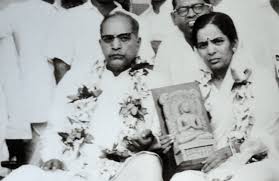
May 29 is Dr Savita Ambedkar’s death anniversary. In a letter to Savita, Babasaheb explained that marriage should not be based on superficial qualities like beauty, greatness or scholarship, but on deep emotional attachment. Mumbai – May 29 is the 22nd death anniversary of Dr Savita Ambedkar, who passed away in 2003 at the age of 94. Savita, known as Maisaheb, was not only Dr Bhimrao Ambedkar’s second wife, but also his companion, whom Babasaheb credited for extending his life by 8-10 years in the preface of his book The Buddha and His Dhamma. Their marriage in 1948 became a topic of discussion at that time, as Savita, whose original name was Sharda Kabir, belonged to a Saraswat Brahmin family, while Babasaheb belonged to the Mahar caste. Savita was 39 at the time and Babasaheb was 57, an age difference of 18 years. Yet, their relationship was based on love, respect and intellectual partnership that transcended social barriers. Independent researcher and practicing dentist Dr. S.P.V.A. Sairam in his article An Unexplored Side of Dr. Ambedkar: His Quiet Relationship with Cinema, Theatre, and Music, published in The Culture Cafe on 14 April 2025, highlights Babasaheb’s lesser-known fondness for cinema, theatre and music. The article mentions the films Babasaheb watched – one of them is the 1937 Marathi film Kunku, released in Hindi as Duniya Na Maane. According to Dr. Sairam’s article, Babasaheb’s inclination towards cinema is a lesser-known aspect of his personality. He watched films like Uncle Tom’s Cabin in 1927 with his first wife Ramabai and also enjoyed Kunku. He was a Marathi film director. He was also associated with prominent theatre personalities like P.K. Atre and Master Krishnarao Fulambrikar. Basis of marriage In his article, Dr. Sairam has highlighted Babasaheb’s inclination towards cinema, theatre and music. He particularly mentioned a letter written to Savita, in which Babasaheb expressed deep thoughts on the basis of their marriage. In the letter, he wrote: If words have any meaning and there is any basis for marriage, then what is the meaning of saying ‘I accept you’ in your letter? In what form did you accept me? As a great person, as a scholar, or as a charming man? What is the source of your inspiration? As a poet has said, ‘Love based on beauty ends with the fading of beauty.’ The same is true for love based on greatness or scholarship. These things start weakening after some time. They cannot be the basis of marriage. Marriage can only be based on love, which can only be described as an intense desire to be with each other. Are you inspired by this feeling? Anything other than this is neither sufficient nor acceptable. I do not know if you have seen the film Kunku or read Hall Caine’s novel The Woman Thou Gavest Me. In both, marriage was only a formality. How sad and tragic they were. The reason for this was that they lacked the desire to be with each other.” This letter reflects Baba Saheb’s thinking that the basis of marriage should not be based on superficial qualities like beauty, greatness or scholarship, but on deep emotional attachment. By referring to Kunku and The Woman Thou Gavest Me, he emphasized that without love, marriage remains only an empty formality. Kunku (1937): An attack on social stereotypes Kunku (Duniya Na Maane in Hindi), a Marathi film directed by V. Shantaram, is the story of a young woman Neera who is forcibly married to an elderly widower. In the absence of love and understanding, this marriage leads to misery and social pressure for Neera. The film strongly criticises the conservative practices of the time, such as child marriage and ill-matched marriages. Baba Saheb mentioned this film in his letter to Savita because it reinforces his belief that marriage without love is tragic. According to Dr. Sairam, Baba Saheb saw Kunku in the context of his relationship with Savita, raising the question of whether their relationship was based on true love and the desire to be with each other. The Woman Thou Gavest Me (1913): The Tragedy of a Loveless Marriage Hall Caine’s novel The Woman Thou Gavest Me is the story of Mary O’Neil, who is married to a wealthy but morally weak man for social and economic reasons. The marriage lacks emotional connection, which leads Mary to seek love elsewhere, but she faces social condemnation and personal misery. The novel takes a dig at the social structures of the time and the formality of marriage. Baba Saheb mentioned this novel because it reinforces his belief that marriage without love and mutual attachment leads to tragedy. Relationship between Baba Saheb and Savita Dr. Savita Ambedkar, born on 27 January 1909 in a Saraswat Brahmin family in Dorle village of Ratnagiri district, was a skilled physician. She earned her MBBS degree from Grant Medical College, Mumbai in 1937 and worked as the chief medical officer at a hospital in Gujarat. She met Babasaheb in 1947 when he came to Mumbai for treatment of serious ailments like diabetes, hypertension and joint pain. Savita not only took care of him medically but also shared a deep emotional and intellectual bond with him in the last years of his life. They were married in a civil ceremony on 15 April 1948 in Delhi. Savita was accepted as “Mai” (mother) by Babasaheb’s followers, and she played this role with full dedication. In her autobiography Babasaheb: My Life with Dr. Ambedkar, Savita outlined memorable moments spent with Babasaheb, including her assistance in the framing of the Indian Constitution, drafting of the Hindu Code Bill, and writings like The Buddha and His Dhamma. On 14 October 1956, when Babasaheb embraced Buddhism along with lakhs of followers at Deekshabhoomi in Nagpur, Savita was with him and she too embraced Buddhism. After Babasaheb’s demise, on 6 December 1956, Savita was wrongly targeted by some followers. She was accused of being responsible for Babasaheb’s death and a controversy was raised over her Brahmin
Kerala: Dalit woman was made to sit in police station for 20 hours, given toilet water to drink, theft allegation turned out to be false – now delay in recording statement!
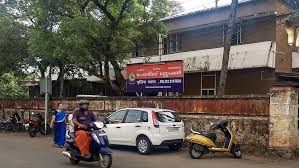
The voice of domestic help Bindu R, who was a victim of illegal detention and caste harassment at Perurkada police station, is now echoing across Kerala, the Chief Minister called the case unacceptable. Thiruvananthapuram: The process of recording the statement of Dalit woman Bindu R, who was a victim of illegal detention and mental harassment at Perurkada police station, is getting delayed. The reason for this is that the State Human Rights Commission (SHRC) has directed that the presence of a woman lawyer appointed by the District Legal Services Authority (DLSA) will be mandatory while recording the statement. After this direction, Crime Branch DYSP K.A. Vidyadharan has written a letter to the Secretary of Thiruvananthapuram DLSA demanding the appointment of a woman lawyer as soon as possible. The investigation of the case has been assigned to the Crime Branch DySP of Pathanamthitta as the SHRC had made it clear that since the case involved policemen serving in Thiruvananthapuram district, the investigation should be assigned to an officer from outside the district. According to sources, the SHRC has given directions to ensure that all legal procedures are followed and the rights and dignity of the victim are protected. Once Bindu’s statement is recorded, the investigating officer will begin examining documents from the Peroorkada police station. This will include examining the sentry report and other certified copies to find out if more policemen were involved in the case. These documents are expected to reveal the extent to which the police station staff abused their powers and intimidated Bindu. Bindu, who worked as a domestic help, was illegally detained and mentally tortured for about 20 hours on April 23 by her employer Omana Davis on false charges of theft. Following the incident, SI S.G. Prasad and ASI Prasanna Kumar of the Peroorkada police station have been suspended for their actions. Prasanna, who was handling the station’s General Diary (GD), is accused of aiding the illegal detention, making casteist remarks, and even making Bindu drink toilet water when she demanded drinking water. Prasad was suspended based on a report by the Assistant Commissioner of Special Branch. Though an FIR was lodged against Bindu, she was later released after the complainant admitted that the jewellery was found at home. Bindu approached the Chief Minister’s Office over the matter, but there, Chief Minister’s political secretary P. Sasi allegedly ignored her complaint. However, when the matter led to public outrage, Chief Minister Pinarayi Vijayan strongly condemned it, calling it “unacceptable”. This was the whole case Bindu, who is a domestic worker and hails from Chullimanoor, was accused by her employer of stealing a gold chain on April 23. Based on this complaint, the Perurkada police called her and called her to the police station. On reaching the police station, the victim repeatedly said that she was innocent, but the police did not listen to her. According to Bindu, a woman police officer took her to a room, made her remove her clothes and searched her. Then the police took her to her house and searched it too. During this time, she was not allowed to talk to the family, nor was she given food and water. Bindu told the media, “When I asked for water, a policeman said – ‘Go to the toilet and drink from there’.” Detained overnight, threatened to implicate daughters Bindu said that she was kept in the police station all night and the interrogation continued till the next morning. An FIR was registered and the police threatened her that if she did not admit to the theft, her minor daughters would also be implicated in the case. Later, when the house owner and her daughter visited the police station again, they said they had been ‘forgiven’. Some time later, the stolen gold chain was found in the house, and the complainant herself admitted that the allegation was false. Complaint ignored in CMO When Bindu, with the help of a lawyer, submitted a written complaint to the Chief Minister’s political secretary P. Sasi, she claims that Sasi neither read the complaint nor gave any assurance. “He said that such things happen and advised me to approach the court,” Bindu had said. However, later the CMO clarified that the police were directed to take action after receiving the complaint. But according to Bindu, she had also urged the CMO to register a case against the woman who had falsely accused her, which was rejected. Courtesy : Rajan Chaudhary, Hindi News
‘Dalits being deliberately disqualified’: Rahul Gandhi alleges ‘anti-reservation’ moves by IITs, Central Universities
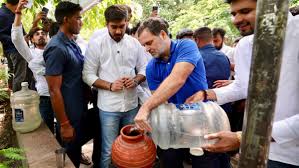
‘Dalits being deliberately disqualified’: Rahul Gandhi alleges ‘anti-reservation’ moves by IITs, Central Universities’Dalits being deliberately disqualified’: Rahul Gandhi alleges ‘anti-reservation’ moves by IITs, Central Universities NEW DELHI: Leader of opposition in Lok Sabha Rahul Gandhi interacted with the DUSU students and discussed the “anti-reservation” moves by the Central Universities and IITs that was resulting into disqualification of qualified SC,ST and OBC candidates. Sharing a video on X on Tuesday, Rahul questioned the use of “Not Found Suitable” category to disqualify applicants. “Not Found Suitable is the new Manuism now. Qualified SC/ST/OBC candidates are being deliberately ‘disqualified’ – to keep them away from education and leadership. Babasaheb had said: Education is the biggest weapon for equality. But the Modi government is busy blunting that weapon. In Delhi University, more than 60% of the reserved posts of professors and more than 30% of the reserved posts of associate professors have been kept vacant by calling them NFS,” he said. “This is no exception – IITs, Central Universities, the same conspiracy is going on everywhere. NFS is an attack on the Constitution. NFS is a betrayal of social justice. This is not just a fight for education and employment – it is a fight for rights, respect and participation. I spoke to DUSU students – now together we will respond to every anti-reservation move of BJP/RSS with the power of the Constitution,” he added. — RahulGandhi (@RahulGandhi) Meanwhile, PM Modi on Sunday hailed the decision to conduct caste census and said that it was a means to include those left behind in the development process. He stressed that his government focuses not on caste-based politics, but on empowering the marginalised. Last month, the Centre announced that the upcoming population census will include caste data — marking the first time caste details will be recorded since independence. Courtesy : TOI Note: This news is originally published on https://timesofindia.com/ and is for use by the non-military/non-commercial community, especially those in the human rights sector.
After Trans athlete’s victory, crowd cheers second-place girl as ‘Real Champion’

At a recent high school track meet in California, 16-year-old Reese Hogan finished second in the girls’ triple jump, and set a new personal and school record. The first-place spot went to AB Hernandez, a transgender athlete from Jurupa Valley. While Hernandez was awarded the top position, many in the crowd applauded Hogan as the “real champion.” After the podium ceremony, Hogan briefly stood on the first-place platform for a photo, smiling proudly. Her quiet protest sparked strong reactions online, especially from people who believe girls’ sports should be limited to athletes assigned female at birth. What’s the Protect Girls’ Sports movement The Protect Girls’ Sports movement is an effort aimed at safeguarding fair competition and equal opportunities for female athletes in school and professional sports. It focuses on ensuring that girls’ sports teams remain reserved for athletes who were assigned female at birth, based on biological differences that impact performance. Advocates argue that this protection is necessary to maintain a level playing field, prevent unfair advantages, and preserve the integrity of women’s sports. The movement also highlights the importance of supporting girls’ participation in athletics, promoting their physical and mental well-being, and celebrating their achievements in a space designed specifically for them. Support grows online After the event, Hogan received praise on social media, including from former NCAA swimmer and activist Riley Gaines. Gaines, who is known for speaking out on transgender athletes in women’s sports, posted, “Congrats to Reese Hogan, the REAL champ!” She and others shared the video of Hogan stepping onto the top podium once Hernandez had walked away, calling it a bold but respectful move. — Riley_Gaines_ (@Riley_Gaines_) Tensions rise over the protest This isn’t Hogan’s first quiet protest. Just days earlier, she and several other girls wore “Protect Girls Sports” shirts at a track prelim event. Officials told them to remove the shirts immediately before competing. According to the athletes, the request felt forceful and unfair, especially since other students wearing non-school shirts were not treated the same way. The girls complied to avoid being disqualified. Event officials respond The California Interscholastic Federation (CIF) later confirmed that the shirt removal incident happened. They said all athletes must wear school-issued uniforms during competitions. However, witnesses claimed that only the girls wearing the “Protect Girls Sports” shirts were asked to remove them, raising questions about equal treatment and free expression. Despite the controversy, Hernandez now qualifies for the CIF Masters Meet. Meanwhile, the debate about fairness in girls’ sports continues to grow across the country. For many, Reese Hogan’s quiet stand has made her more than just an athlete — she’s become a symbol in a much larger conversation. The incident at the CIF Southern Section Finals, where Reese Hogan, a 16-year-old high school athlete, posed on the first-place podium after finishing second to a transgender athlete, has ignited a broader conversation about fairness in women’s sports. Hogan’s symbolic gesture, though controversial, underscores a growing concern among female athletes regarding the inclusion of transgender women in women’s competitions. While it’s essential to support and respect transgender athletes, it’s equally important to ensure that the integrity and fairness of women’s sports are maintained. Courtesy : TOI Note: This news is originally published on https://timesofindia.com/ and is for use by the non-military/non-commercial community, especially those in the human rights sector.
‘Laid foundation of independent India’: Rahul Gandhi, Kharge pay tribute to Jawaharlal Nehru on his death anniversary
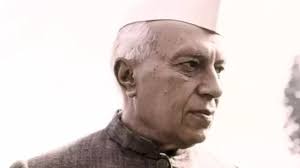
Remembering Pandit Jawaharlal Nehru on his 61st death anniversary, his great-grandson and leader of opposition in Lok Rahul Gandhi on Tuesday credited the country’s first prime minister with laying a “strong foundation for independent India.” “A humble tribute to Pandit Jawaharlal Nehru ji on his death anniversary. With the dream of a strong and inclusive India, Nehru ji laid a strong foundation for independent India with his visionary leadership. His contribution in the establishment of social justice, modernity, education, constitution and democracy is invaluable,” Gandhi wrote on X. — RahulGandhi (@RahulGandhi) “The legacy of Hind’s (India) Jawahar and his ideals will always guide us,” Congress’ Raebareli MP added. Congress president Mallikarjun Kharge said modern India “cannot be imagined without the contribution” of Nehru. — ANI (@ANI) “Humble tributes to Pandit Jawaharlal Nehru ji, the creator of modern India, the fearless guardian of democracy, the one who took India from zero to the peak, the one who made India develop in scientific, economic, industrial and various fields, the one who constantly gave the message of ‘unity in diversity’ to the country, our source of inspiration,” Kharge posted on his X handle. — kharge (@kharge) Nehru, who went to jail several times during the freedom movement, was the prime minister from August 1947 until his death in May 1964. At over 16 years, his term is the longest for any prime minister. Courtesy : TOI Note: This news is originally published on https://timesofindia.com/ and is for use by the non-military/non-commercial community, especially those in the human rights sector.