
Rahul set to address EBC meet in Nalanda on June 6
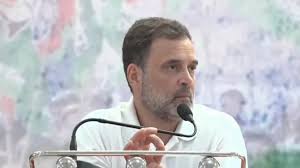
Patna: Leader of opposition in Lok Sabha and Congress MP Rahul Gandhi will visit Bihar for the fifth time this year on June 6 to address an extremely backward class (EBC) conference at Rajgir in Nalanda, the home district of CM Nitish Kumar. His visit comes just a week after PM Narendra Modi’s two-day tour of Bihar, during which he inaugurated and laid foundation stones for projects worth over Rs 48,500 crore on May 29 and May 30. Congress state media cell chairman Rajesh Rathorre said on Saturday that the detailed itinerary of Rahul had not yet reached the party headquarters, though he is expected to arrive in Patna on way to Rajgir. Rahul’s visit is part of the Congress’s intensified campaign for the Bihar assembly elections due in Oct-Nov. Senior party leaders, including Congress president Mallikarjun Kharge, have made regular visits to the state since Jan. The Congress is seeking to regain support among Dalits, EBCs, and Muslims, its traditional voter base. Rahul’s Nalanda rally is being seen as an attempt to challenge Nitish in his own stronghold. However, dismissing the impact of the visit, JD(U) leader and minister Ashok Choudhary said, “Congress will not benefit from his frequent visits to Bihar.” Rahul earlier visited the state on Jan 18, Feb 4, April 7 and May 15. During his last visit, he addressed students at Ambedkar Hostel in Darbhanga, defying administrative orders. Two FIRs were lodged against him for the violation. Courtesy : TOI Note: This news is originally published on https://timesofindia.com/ and is for use by the non-military/non-commercial community, especially those in the human rights sector.
Uttam demands transparency on ‘Rafale losses’
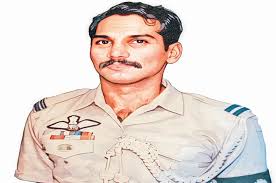
Hyderabad: Irrigation and civil supplies minister N Uttam Kumar Reddy on Saturday demanded full transparency from the Centre regarding the losses suffered during Operation Sindoor and the conflict between India and Pakistan, particularly the reported downing of Rafale fighter jets. Addressing a media conference at AICC headquarters in New Delhi, Uttam, a former IAF fighter pilot himself, said: “When Rahul Gandhi first raised questions on Rafales being shot down, he was accused of being anti-national. But today, General Anil Chauhan, the Chief of Defence Staff (CDS), has confirmed that Rafale aircraft were brought down.” He also cited Air Marshal Bharti, Director General Air Operations, who in the DGMO briefing had said: “Losses are normal in combat. The objectives of the mission have been achieved and all pilots have come home.” Uttam emphasised that while the pilots returned safely, “the aircraft have not returned to their bases,” highlighting the need for transparency. He criticised the BJP govt for initially denying these losses and launching a campaign against Rahul Gandhi. “Now that the CDS himself has spoken, the govt should stop the denials. We are proud of our armed forces, but transparency strengthens trust and helps us learn from every operation. How did the US President announce the ceasefire before the DGMOs of India and Pakistan? The govt of India has never clearly explained how this happened.” He stressed the need for a serious reassessment of India’s defence technology, pointing out that most of the firing during the four-day operation happened from within each country’s international borders. “Yet, we lost fighter aircraft. This requires a thorough review of our technological capabilities,” he said. The BJP-led govt at the centre should act urgently on the concerns raised by the air force chief about delays in fighter aircraft supply, talent shortages, and the gap between sanctioned and operational squadrons in the armed forces. India’s operational fighter squadrons were below the sanctioned strength of 42 squadrons. All three armed forces are short of manpower by over 10 percent. Given the live threats on both our borders (China and Pakistan), we should be going beyond the sanctioned strength. Hindustan Aeronautics Limited (HAL) did not deliver the Tejas Mark-1A fighter jets on time as said by the Air Chief. This can prove to be a serious problem. The entire country and the govt of India must wake up to the reality to strengthen our armed forces considerably,” Uttam said. Quoting the Air Chief Marshal directly, Uttam said: “India has fallen behind China in defence technology and production although our training standards remain superior. This is of serious concern and urgent necessary corrective steps should be taken. The best minds are not joining the service in sufficient numbers, especially in operational and R&D wings. The govt should attract top talent.” Uttam reaffirmed his pride in the Indian armed forces while urging the govt to ensure they are equipped, supported, and respected with honesty and transparency. The govt must acknowledge what happened, learn lessons, and be accountable. “We salute the Indian Air Force for their decisive victory, but we must be prepared for the challenges ahead,” he said. Courtesy : TOI Note: This news is originally published on https://timesofindia.com/ and is for use by the non-military/non-commercial community, especially those in the human rights sector.
Plea to cancel Rahul Gandhi’s bail bond rejected
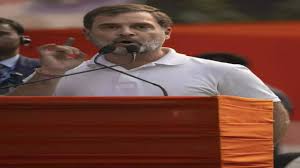
Pune: The court of special magistrate Amol Shinde rejected the plea of Satyaki Savarkar, great-grandnephew of Hindu ideologue Veer Damodar Savarkar, to cancel the bail bond of Leader of Opposition (LoP) in Lok Sabha Rahul Gandhi. The court in its order of May 28 observed that Gandhi was granted permanent exemption from appearing before the court after he was released on bail, and enough grounds were not cited to cancel his bail bond. The court rejected Satyaki’s plea because the grounds mentioned by him to cancel Gandhi’s bail bond were not justified. The court relied on the Orissa High Court order in the case of Chinmaya Sahu vs State of Orissa, which stated that bail granted under the provisions of Section 436 of the Code of Criminal Procedure (CrPC) could be cancelled by invoking Section 439 (2) of the CrPC. The court order stated that if Satyaki wanted to pray for cancelling the bail bond of Gandhi, he could file a plea under Section 439 (2) of the CrPC. Gandhi’s lawyer, Milind Pawar, submitted that the court did not impose any conditions on his client at the time of granting him bail, so there was no question of cancelling his bail bond. The lawyer said his client was facing a charge of criminal defamation under Section 500 of the Indian Penal Code, which was a bailable offence. Satyaki filed the criminal defamation case over alleged objectionable remarks made by the Congress leader against Savarkar in a March 2023 speech in London. Courtesy : TOI Note: This news is originally published on https://timesofindia.com/ and is for use by the non-military/non-commercial community, especially those in the human rights sector.
Evaluation of Telangana’s Dalita Bandhu implementation sought
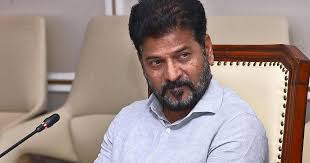
A civil society organization Forum for Good Governance conducted a comprehensive evaluation of the Dalita Bandhu programme in Vasalamarri village. Under Dalit Bandhu scheme each SC family will get Rs 10 lakh, without a bank linkage. Hyderabad: An evaluation of the Dalita Bandhu scheme, introduced by the previous BRS government for the upliftment of Scheduled Caste families, has revealed significant implementation issues. The scheme was first launched in Vasalamarri Village on a saturation mode basis in August 2021. A civil society organization Forum for Good Governance conducted a comprehensive evaluation of the Dalita Bandhu programme in Vasalamarri village. Under Dalit Bandhu scheme each SC family will get Rs 10 lakh, without a bank linkage. Their survey uncovered several findings that despite there being only 52 Dalit families in the village, 75 units were established under the scheme. Multiple units were allocated to some families, and a total of Rs 6.5 crores was deposited into beneficiary accounts. However, the evaluation found that several units were never properly established, and even the fully operational units failed to generate the expected income levels. The absence of adequate training programmes and regular field visits left beneficiaries unable to effectively manage their allocated schemes. Within six months of the scheme’s implementation, many beneficiaries were forced to sell transport vehicles and tractors at throwaway prices, said Forum For Good Governance, president, M Padmanabha Reddy. He wrote a letter to chief minister, A Revanth Reddy seeking evaluation of the scheme and also money spent on it. So far, Rs 3,884 crores has been spent on the Dalita Bandhu scheme, an amount that Forum for Good Governance believed requires thorough evaluation and accountability measures. The organization has called for action against those responsible for what they describe as the squandering of public funds for electoral gains. When introducing the scheme, then Chief Minister K Chandrashekar Rao had hailed Dalita Bandhu as a revolutionary initiative by his government, the first of its kind in the country for Dalit upliftment. Dalita Bandhu was introduced in Telangana to intensify the level of financial assistance to SC households in a phased manner for establishment of income generating assets without bank loan component. The scheme is planned to be implemented in 118 Assembly constituencies. The activities suggested are, Agriculture, Transport sector, Manufacturing and Industry, Retail and shops, services and supplies, out of the above the beneficiary is given an option to choose the activity of his choice. Each beneficiary is given financial assistance Rs 10 lakhs, out of it 9.9 lakhs is released into his bank account and 0.1 lakh credited to the common “Raksha Fund”. An amount of Rs.17,700 crores was earmarked for Dalita Bandhu programme during financial year 2022-23 and proposed to spend Rs. 1.7 lakh crores in next five years to cover all the Dalit families. “From the beginning the scheme ran into problems. In selection of beneficiaries MLAs and their followers involved and selected their party people. In some cases, Rs. 2 to 3 lakhs were collected by party workers to include the beneficiary name in selected list. Coming to selection of activities, instructions were clear that beneficiaries should be given training and conduct field visit before grounding the scheme but that was not done. In view of serious irregularities and wastage of public money we represented for evaluation of the programme but no action was taken on our representation. The scheme was introduced mostly for political benefit at the cost of Tax payer’s money. As large amount of Tax Payer’s money was squandered for electoral gain, action has to be initiated against persons responsible,” said Padmanaha Reddy in the letter written to Revanth Reddy. Courtesy : DH Note: This news is originally published on https:/deccanherald.com/ and is for use by the non-military/non-commercial community, especially those in the human rights sector.
Suraj Milind Yengde’s new book covers Dalit history of 15 countries

New Delhi, (language) Author Suraj Milind Yengde in his new book presents a comparative exploration of caste and race from ancient times to the present, based on 10 years of historical, ethnographic and archival research in 15 countries. Published by Penguin Random House India, ‘Caste: A Global Story’ explores the experience of Dalits across different continents and traces the powerful relationships from the indentured labourers of the nineteenth-century Caribbean region to the migrant workers of the Middle East today. The book highlights the role of colonialism, religion and nationalism in maintaining caste hierarchies across the world and explores lessons that can be learned from anti-caste movements in India and elsewhere. In the preface of the book, Nobel laureate Amartya Sen has said, “‘Caste: A Global Story’ is a remarkable contribution to understanding and confronting the challenges of harsh inequalities prevailing across the world. We should be grateful to Suraj Milind Yengde for this distinguished work.” The book is priced at Rs 899 and will hit the market on June 30. Language: Shubham Naresh This news has been taken by ‘auto-feed’ from ‘Bhasha’ news agency. ThePrint is not responsible for its content. Courtesy: The Print, Hindi News
Behind Apna Dal (S) naming a Dalit UP chief, a bid to cut into BSP’s voter base
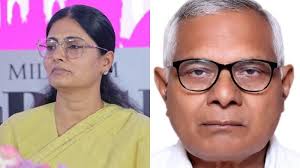
After Raj Kumar Pal, an OBC leader, resigned earlier this month, Anupriya Patel’s party has now picked old loyalist Jatav R.P. Gautam as the state president. Lucknow: Union Minister Anupriya Patel’s Apna Dal (Sonelal) appointed Jatav R.P. Gautam as the president of its Uttar Pradesh unit Thursday, in a move which is being viewed as the party’s attempt to woo the Dalit community. Earlier this month, the former state president, Raj Kumar Pal, had resigned from the position after accusing Anupriya and her husband Ashish Patel—a minister in Uttar Pradesh cabinet—of neglecting him and mistreating party workers. Gautam, an old loyalist and the party’s co-operative wing chief, has now taken up the responsibility. The 60-year-old hails from the Sitapur district, and has also been a Dalit rights activist and social worker for the past two decades. The position of state president was previously held by an OBC leader (Pal), but now the party has picked a Jatav (segment of Dalit community) leader for the role for the first time in a bid to increase its outreach, according to party functionaries. “This is the first time we have appointed a Jatav state chief, in line with our social engineering plan. We are hoping for positive results,” Ashish Patel told ThePrint. A senior functionary said, on the condition of anonymity, that the party wants to step out of the image of an OBC party. “This move comes at a time when the support base of BSP (Bahujan Samaj Party), which is considered the first choice of Jatavs, has been shrinking for the last few years. Jatavs are looking for an alternative. So, our leadership has decided to focus on increasing its base. The population of Jatavs is above 12 percent in the state, which is significant in creating an impact in electoral politics,” the leader told ThePrint. Now, as the party focuses on the preparation for the upcoming local body elections this year and the 2027 assembly elections, Gautam has been given this big responsibility, he added. However, Apna Dal (S) is not the only party eyeing BSP’s core vote bank. The Samajwadi Party’s “Pichda, Dalit, Alpasankhyak (backward-Dalit-minority)” plank got a big boost in April this year, following the induction of former minister and BSP founding member Daddu Prasad, along with a few other local BSP leaders. Before this, SP had inducted several BSP leaders last year, too. Additionally, SP’s district units had also held a week-long “Swambhiman Samman Samaroh” to mark the birth anniversary of B.R. Ambedkar this year. The aim was to reach out to prominent members of the Dalit community at grassroot level and felicitate them. Similarly, Nagina MP Chandrashekhar Azad-led Azad Samaj Party (Kanshi Ram) is also planning to expand their base, having completed the process of appointing local units in all 75 districts of the state. UP-based political analyst Shilp Shikha Singh explained that BSP’s “downfall” has opened up space for other parties in terms of the Dalit voter base. “Every party has realised after Lok Sabha results in UP that there is scope to gain this ‘loyal’ vote bank of the BSP, as the old party is not able to perform well in polls. The grand celebration announcements on Ambedkar Jayanti last month have also given a hint that every party is eyeing Dalit votes. As of now, it seems like a smart move by a BJP ally (Apna Dal).” Prashant Srivastava (Edited by Mannat Chugh) Courtesy : The Print Note: This news is originally published on https:/theprint.com/ and is for use by the non-military/non-commercial community, especially those in the human rights sector.
Congress disrespecting Indian armed forces: Kishan Reddy
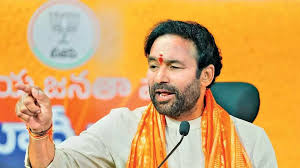
Hyderabad: Union minister and Telangana BJP chief G Kishan Reddy on Friday accused the Congress of disrespecting the Indian armed forces. Speaking at a media briefing, Kishan Reddy said Operation Sindoor was launched in response to the public’s demand for a strong counter to terrorism. He criticised Congress leaders Rahul Gandhi and Revanth Reddy for making statements that, he claimed, undermined the Indian armed forces and insulted national security. He alleged that Rahul Gandhi “virtually alerted Pakistan about Operation Sindoor” and demanded an explanation, accusing him of speaking in Pakistan’s favour rather than standing with India’s interests. Kishan Reddy also slammed Revanth Reddy for suggesting that Prime Minister Modi called off military action under pressure from then US President Donald Trump and for claiming that the BJP lacked the courage to reclaim Pakistan-occupied Kashmir (PoK). “Such statements only serve to demoralise our armed forces,” he said. Emphasising that Operation Sindoor was carried out with national support and transparency, Reddy said the army acted in retaliation to the Pahalgam terror attack in Jammu and Kashmir. He stated that the operation destroyed nine terrorist camps across Pakistan and PoK, eliminating over 100 terrorists. Courtesy : TOI Note: This news is originally published on https://timesofindia.com/ and is for use by the non-military/non-commercial community, especially those in the human rights sector.
‘No country backed India’: Congress says BJP’s ‘foreign policy failed’ post-Operation Sindoor
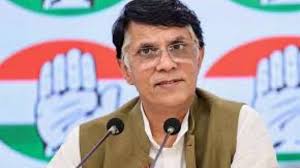
‘No country backed India’: Congress says BJP’s ‘foreign policy failed’ post-Operation Sindoor’No country backed India’: Congress says BJP’s ‘foreign policy failed’ post-Operation Sindoor NEW DELHI: The Congress on Friday launched a scathing attack on the BJP-led central government over its handling of foreign affairs in the wake of Operation Sindoor, accusing it of diplomatic failure and a compromised stance on national security. Congress leader Pawan Khera said, “The result of our failed foreign policy was seen post-Pahalgam, during Operation Sindoor. No country called Pakistan a terrorist state; this is the result of your failed foreign policy. Then you launched Operation Sindoor and no country gave a statement in your favour. Now, after Operation Sindoor, Kuwait has lifted visa restrictions on Pakistan. Iran, UAE, and Gulf countries are signing MoUs with Pakistan, and the most shocking thing is that yesterday, Russia signed an MoU with Pakistan to revive its very old steel mill, under which Pakistan will get $2.6 billion from Russia… This is the result of your failed foreign policy…” — ANI (@ANI) Meanwhile, Congress MP Shashi Tharoor, part of an all-party delegation to Colombia, expressed disappointment over the Colombian government’s condolences for those killed in Pakistan after India’s May 7 counterstrike, saying, “There can be no equivalence between those who attack and those who defend.” He said India acted in self-defence following the April 22 Pahalgam terror attack. “We were only exercising our right of self-defence,” he added. Tharoor also highlighted Pakistan’s support for terrorists and showed images of uniformed Pakistani officials attending terrorist funerals. “That is the extent of complicity…,” he said, stressing India’s resolve through Operation Sindoor targeting terror bases in Pakistan and PoK. The opposition’s criticism comes amid a series of political confrontations following Prime Minister Narendra Modi’s public address in Gujarat, where he said Operation Sindoor was documented on camera to ensure “no one at home asks for proof.” PM Modi declared, “Until now, what we used to call a proxy war, after the scenes witnessed post-May 6, we can no longer make the mistake of calling it a proxy war.” He added that the terrorists targeted in the strikes were given military honours in Pakistan, indicating direct state involvement. Responding to the Prime Minister’s remarks, Congress questioned why top terrorists like Hafiz Saeed and Masood Azhar were not neutralised. “To date, we have not received an answer to that – What happened to the terrorists of Poonch, Ganderbal, Gulmarg and Pahalgam?… How did Hafiz Saeed and Masood Azhar escape?” asked Khera, further alleging that “this government has outsourced the entire politics, political discourse, foreign policy to trolls.” Earlier, Rahul Gandhi also accused the Centre of tipping off Pakistan before the strikes. Sharing an old video of external affairs minister S Jaishankar, Gandhi wrote on May 17, “Informing Pakistan at the start of our attack was a crime. EAM has publicly admitted that GOI did it.” He followed up on May 27 with another post asking, “How many Indian aircraft did we lose because Pakistan knew?” The ministry of external affairs (MEA) denied Gandhi’s claims, calling them a “misrepresentation of facts.” The ministry clarified that Pakistan was warned “in the early phase after Operation Sindoor’s commencement,” not before the operation began. The controversy was further fuelled by US President Donald Trump’s comments, referenced by Congress, that he had mediated ceasefire talks between India and Pakistan. Khera described this as “a very dangerous comment,” and said, “sindoor ka sauda hota raha aur pradhan mantri chup rahe,” implying secret negotiations during the operation. Courtesy : TOI Note: This news is originally published on https://timesofindia.com/ and is for use by the non-military/non-commercial community, especially those in the human rights sector.
Supreme Court: UP nixing land allotment to Kamla Nehru Trust justified
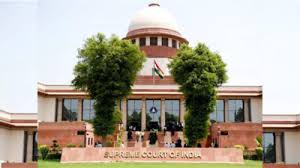
NEW DELHI: Supreme Court on Friday affirmed the Uttar Pradesh State Industrial Development Corporation’s decision to cancel allotment of 125 acres of land in Sultanpur to Kamla Nehru Memorial Trust (KNMT), named after Congress politician Rahul Gandhi’s great grandmother, saying a huge tract of industrial land was allotted without evaluating benefits to the public. Dismissing KNMT’s appeal, a bench of Justices Surya Kant and N Kotiswar Singh said that though the land was allotted in 2003, the trust failed to make timely payment of the cost of the land and kept seeking “unwarranted concessions, including waiver of interest and rescheduling of dues”. It also cancelled the subsequent allotment of the same land to Jagdishpur Paper Mills. Terming KNMT a chronic defaulter, the bench said, “UPSIDC’s action in treating KNMT as a defaulter was, therefore, both justified and necessary to preserve the integrity of the allotment process. Allowing such deliberate defaults to persist unchecked would undermine the entire framework of land allocation and set a detrimental precedent.” Writing the judgment, Justice Kant faulted UPSIDC for not following the public trust doctrine in allotment of lands. “While we have upheld the cancellation due to KNMT’s default, the circumstances reveal systemic concerns in the original allocation process. UPSIDC allotted the land to KNMT within merely two months of application (in 2003), raising questions about the thoroughness of the evaluation. Furthermore, during the pendency of this dispute, UPSIDC demonstrated remarkable alacrity in considering alternative allotments to Jagdishpur Paper Mills Ltd,” it said. Justice Kant said the public trust doctrine required that allocations must be preceded by a thorough assessment of public benefits, beneficiary credentials, and safeguards ensuring continued compliance with stated purposes. None of it was enforced while allotting the land to KNMT or the paper mill, the bench said and cancelled the allotment to the paper mill. SC said, “UPSIDC ought to have considered verifiable evidence of economic benefits, employment generation potential, environmental sustainability, and alignment with regional development objectives to demonstrate that the decision serves the collective benefit.” “The failure to adopt transparent mechanisms not only deprived the public exchequer of potential revenue, as evidenced by the substantial appreciation in the value of such a large tract of land, but also created a system where privileged access supersedes equal opportunity. This betrays the fiduciary relationship between the State and its citizens,” it said. SC directed the UP government and UPSIDC to ensure that all future land allotments must be made in a transparent, non-discriminatory and fair manner, and fetched maximum revenue while achieving the larger public interests – industrial development, environmental sustainability and regional economic objectives. Courtesy : TOI Note: This news is originally published on https://timesofindia.com/ and is for use by the non-military/non-commercial community, especially those in the human rights sector.
Telangana CM Revanth Reddy says ‘PoK would be ours if Rahul Gandhi were PM’, compares Narendra Modi to demonetised Rs 1,000 note
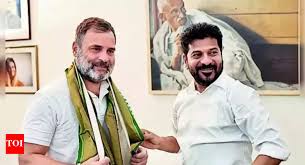
HYDERABAD: Telangana chief minister A Revanth Reddy on Thursday said India would have reclaimed Pakistan-Occupied Kashmir (PoK) had Rahul Gandhi been Prime Minister. “Modi is like a demonetised Rs 1,000 note. If Rahul Gandhi were Prime Minister, we would have reclaimed PoK by now,” Reddy said. He was speaking at the Jai Hind rally in Hyderabad, organised to honour the armed forces’ role in Operation Sindoor. He added that Rahul Gandhi’s leadership would have mirrored that of Indira Gandhi during the 1971 war. “Indira Gandhi declared war on China and issued a stern warning to the US. That’s the kind of leadership India needs today,” Revanth said. Revanth Reddy further criticised the BJP-led NDA government for announcing a ceasefire with Pakistan “within four days” of the military strike. “Why the haste? The country was left in the dark until US President Donald Trump revealed it on social media,” he said. He questioned why no all-party meeting was held before the decision and accused the Centre of lacking strategy, courage and transparency. “When Rahul Gandhi and Mallikarjun Kharge attended the all-party meeting, they extended full support to the Centre and clearly stated that India must reclaim PoK,” he said. Courtesy : TOI Note: This news is originally published on https://timesofindia.com/ and is for use by the non-military/non-commercial community, especially those in the human rights sector.