
Dalit daughters of government school did wonders – 12 girls from Mirzapur became NEET toppers, know how!

Dalit and backward class girl students of Sarvodaya Vidyalaya Marihan achieved historic success in the medical entrance examination on the strength of free education and coaching. Mirzapur, Uttar Pradesh: 12 Dalit and backward class girl students of a government residential school located in the remote Marihan area of Mirzapur district have created a new history in the direction of education in the region by passing the NEET-UG 2024 examination. The success of these girl students has been described as a “milestone” by many sections of the society. According to officials, a total of 25 girl students from Sarvodaya Vidyalaya, Marihan had appeared for the NEET-UG examination, the results of which were declared on June 14. Out of these, 12 girl students achieved success. The successful students include Shweta Pal, Kumari Pooja Ranjan, Princy, Malti, Komal Kumari, Lakshmi, Anuradha, Komal, Lakshmi, Sabhya Prajapati, Deepti Gupta and Pooja Sonkar. All of them come from Scheduled Caste (SC), Scheduled Tribe (ST) and Other Backward Class (OBC). Result of hard work and school’s support Successful student Shweta Pal said, “Our teachers and wardens always motivated us to focus on studies. Our chemistry teacher Arvind Sir and biology teacher Sudhir Sir were always available for guidance. The school also had the facility of indoor and outdoor games for mental refreshment.” Shweta’s father Hira Lal also praised the school and said, “The arrangements of the school and hostel were very good. The teachers were very supportive and encouraging.” Ramesh Ranjan, father of another student Pooja Ranjan, said that his daughter passed the exam in the very first attempt. He said, “Pooja earlier studied in Sarvodaya Vidyalaya in Sonbhadra, but came to Marihan for Class 11 and 12. She scored 81% marks in the UP Board. She used to study 16 to 18 hours a day — 6 hours in school, 5 hours in coaching and 6-7 hours in self-study.” Officials and leaders congratulated The success of these students has caught the attention of senior officials and leaders of the state. Uttar Pradesh Social Welfare Minister Asim Arun congratulated these students. Describing it as a “great success”, he said, “After a few years, these daughters will become doctors and save people’s lives. We will ensure that there is no hindrance in their scholarship.” Mirzapur District Magistrate Priyanka Niranjan said, “This is a historic achievement for the region. Sarvodaya Vidyalaya of Marihan has emerged as a role model for government schools. It is a residential school where girl students have been staying and studying for two years or more. They were given coaching for NEET and JEE along with regular education. Accommodation, food and studies — everything was free.” District Social Welfare Officer Trinetra Singh said, “Sarvodaya Vidyalaya of Marihan has been developed as a centre of excellence. The deputy director and I personally monitored the preparation and facilities of these girl students. They were provided books, coaching, food, sports and all other necessary resources.” Success through public-private partnership Director of Social Welfare Department Kumar Prashant said that the centre of excellence initiative at Sarvodaya Vidyalaya of Marihan is being run in collaboration with Ex-Navodaya Foundation, Varanasi and Tata AIG. Under this, 39 girl students were given free coaching for NEET and JEE, out of which 26 registered for NEET, 25 took the exam and 12 were successful. At present, the Social Welfare Department runs about 100 Sarvodaya Vidyalaya residential complexes in Uttar Pradesh, which provide free quality education and coaching for competitive examinations to students from economically weaker and disadvantaged communities from class 6 to 12. These institutions are opening new doors of bright future for the children of these communities. Courtesy: Rajan Chaudhary, Hindi News
Dalits still treated as slaves by Sanatana Dharma: Rapper Vedan
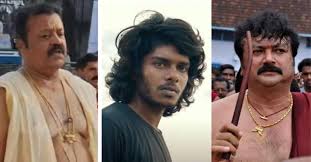
THIRUVANANTHAPURAM: Rapper Vedan said he faces challenges walking the path paved by Ayyankali and Ambedkar, but vowed to continue moving forward with courage. He was speaking at the 84th death anniversary event of social reformer Ayyankali, organised by the KPMS district committee at Olympia Hall, Chandrasekharan Nair Stadium in Thiruvananthapuram. Vedan also offered a floral tribute at the Venganur Ayyankali Smrithi Mandapam on Wednesday morning. While speaking at the event, Vedan pointed out that the casteist society of Kerala celebrates Ambedkar and Ayyankali as leaders of a particular community and that must change. He said the community is yet to grow into an organised group capable of questioning political parties, and added that there is a need to resist the politics of Sanatana Dharma that divides people, especially marginalised communities. He added that Dalits are still treated as slaves by Sanatana Dharma and that a time should come when events like this are celebrated by a diverse audience in a larger venue. “We are becoming divided ourselves. The lack of fraternity encouraged by extreme Sanatana Dharma has crept into us too. What I witnessed here today is proof of that. Next time when such an event is organised, I hope to see it held in a bigger venue with participation from a broader audience,” he said. Vedan also said he would rather call Ayyankali a Mahaveeran (great warrior) than a mahatma (a revered person). “It is unfortunate that we are remembering someone as great as Ayyankali from such a small room. He should be celebrated in a way that the world recognises him. A time will come when the mainstream accepts him,” he said. The event was inaugurated by KPMS General Secretary Alangode Surendran. Vedan was honoured at the event. When presented with the Ayyankali’s ‘Thalappavu’ (head gear), he respectfully declined to wear it, saying he did not feel worthy. He performed two songs at the event, one based on a poem by Poykayil Appachan, and another, his own rap number titled ‘Kondal’. Courtesy : MSN Note: This news is originally published on https:/msn.com/ and is for use by the non-military/non-commercial community, especially those in the human rights sector.
Chhatarpur: Cruelty of goons with Dalit, first they tore the skin of husband and wife with slippers, when they complained they broke their hands
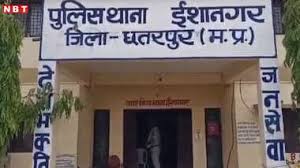
Cruelty With Dalit: A shocking case of cruelty with a Dalit woman has come to light in Chhatarpur district. First the skin of Dalit husband and wife was torn by beating them with sticks and slippers. When the victim complained to the police, the goons broke their hands. Police registered a case under these sections. Chhatarpur: Once again a case of cruelty with a Dalit has come to light in Chhatarpur district of Madhya Pradesh. Some goons brutally tortured a Dalit family under Ishanagar police station area. First the husband and wife were beaten with slippers. After the incident, when the victim husband and wife reached the police station and filed a complaint in the matter. After that the goons once again beat them. Not only this, they broke the woman’s hand. The woman’s husband has also been injured in the incident of cruelty committed by the goons. Both of them reached the SP office in an injured state and appealed to the police for help. Due to this, Ishanagar police has registered a case against the bullies under various sections of SC ST Act including assault. Bullies refused to plow the field Bhagirath Prajapati, who lives in Pahad village of Ishanagar police station area, was going to plow the field of Moolchand Prajapati with his tractor. Then the bully Devendra alias Deepu Yadav, who lives in the same village, came in front. He threatened that you will not go to plow the field of Moolchand Prajapati. Bhagirath says that he got scared and then returned to his home. Victim beaten with slippers and sticks The victim told that after some time the bully came to my house with some people. After coming here, he beat me and my wife with slippers. After this, both of us husband and wife went to Isha Nagar police station and gave a complaint application and requested the police to take action in the matter. Hand broken as soon as complaint was made Bhagirath Prajapati’s wife Shyambai Prajapati said that the bullies beat us with slippers on June 8. The injury marks of this beating are still present on our body. We reached Isanagar police station on June 9 to register an FIR. There we gave a complaint application. After giving the complaint application, the bullies got angry. They entered the house and once again beat us with slippers and sticks. After this my hand got broken and many stitches were also put on the fingers of the hands. Threatened to kill if he came to the village The victim husband and wife are scared. He told that the bullies living in the village are threatening to kill him. They are also saying that if he returns to the village, they will kill both of you. At the same time, the police has taken the case into investigation by registering SC ST section and BNS SC ST Act against Dabbu alias Devendra Yadav and his brother Bablu Yadav. Both the husband and wife are scared since the incident. Both say that although the police have registered an FIR in the case, the accused are still roaming freely and threatening to kill them. In the same case, Additional SP IPS Vidita Dagar says that we are investigating the matter. Further action will be taken in this as soon as possible. Edited by: Sanjay Chaturvedi•Reported by: Jai Prakash About the author Sanjay Chaturvedi I work for Madhya Pradesh-Chhattisgarh in Navbharat Times Digital. I have joined Navbharat Times from Asianet News Network in journalism. After starting work from Indore city, now Bhopal is my workplace. Courtesy : Hindi News
Intra-Dalit Fighting in Bihar Takes Toll on NDA’s Politics
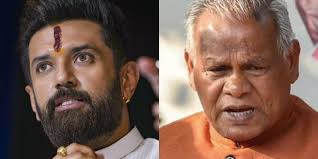
The supremos of the LJP and the HAM are baying for each other’s blood when Rahul Gandhi has visited the state to woo Dalits and EBCs. The strategy of the Bharatiya Janata Party (BJP) and its alliance partner, the Janata Dal (United) JD(U), to pitch one Dalit caste against the other for sheer political ends has started making an ugly impact in several states, especially Bihar, where it has acquired a violent form too. Strangely in this poll-bound state, two Union ministers belonging to this section of society, one leading the Lok Janshakti Party (LJP) (Chirag Paswan) and the other patronising the Hindustani Awam Morcha (HAM) (Jitan Ram Manjhi), are locked in a grim battle to finish each other off. In neighbouring Uttar Pradesh, the BJP’s bid to woo non-Jatav votes has caused a deep rift within the Scheduled Caste community that makes up 21.3% of the state’s population. As the Jatavs, the largest Scheduled Caste group, are still inclined towards Mayawati’s Bahujan Samaj Party (BSP), the BJP has left no stone unturned in attracting other, smaller Dalit castes. Chirag’s ambition In Bihar, the latest round of bitter squabbling within two Dalit parties started on June 8, when Paswan held a rally in Arrah, a town about 70 kilometres west of Patna. His party, for all practical purposes, projected him as the future chief minister of Bihar. This was bound to alarm Nitish Kumar’s JD(U), as after the 2020 assembly election, the party accused Chirag of damaging its poll prospects in many seats. The LJP contested that election independently and many of its candidates were BJP rebels who could not get a ticket from that party. They included senior Rashtriya Swayamsevak Sangh functionary Rajendra Singh and former legislators Rameshwar Chaurasia and Usha Vidyarthi. As Paswan himself is interested in contesting the assembly election from the Shahabad region of western Bihar – in which Arrah is located – it is quite natural for the JD(U) to feel uneasy. It was Bikramganj in this very region where Prime Minister Narendra Modi addressed a public rally on May 30. As the JD(U) has struggled to come up with a new leader as Nitish ails, Paswan is gradually projecting himself as a likely successor within the National Democratic Alliance (NDA) in Bihar. The BJP has no mass leader of its own. Herein lies the crux of the matter. Former chief minister Manjhi was quick to respond to Paswan’s muscle-flexing. He said that he too had organised several big public meetings in the state and that it is those (read Paswan) who have a narrow support base who feel the need to speak loudly. Not only that, the HAM supremo charged Paswan with manipulating his rallies to make it look like they had bigger turnouts than they actually did. He also said that this is a pressure tactic adopted by the LJP ahead of seat-sharing talks within the NDA. Independent political observers are of the view that Manjhi was in fact speaking on behalf of a JD(U) that is facing an existential crisis. It needs to be mentioned that after the death of Chirag’s father and Union food minister Ram Vilas Paswan on October 8, 2020 – that is, just three weeks before the assembly election that year – Manjhi had written a letter to Prime Minister Modi seeking a judicial probe into his death. An infuriated Chirag had then hit back by stating that Manjhi should be ashamed of himself. If he was so concerned about his father, he should have come to the hospital to inquire about health, which he did not, said Chirag. Genesis of the tussle But what is of great concern is that the battle between the two Dalit outfits is not only confined to seat-sharing arrangements within the NDA. Now, it has acquired a serious violent turn. For example, on September 18 last year, 34 Dalit houses were torched in the outskirts of Nawada town in Bihar. Incidentally, the alleged perpetrators of the crime were Paswans led by one local strongman named Nandu Paswan. The victims were mostly Musahars (Manjhi’s castemen) and some Ravidas. So, the attackers and those who had suffered were all Dalits. Land grab was said to be the main motive behind this unusual type of clash. Thus, in some parts of the rural hinterland, it can no more be said that only upper castes and backward castes are responsible for atrocities on Dalits; relatively well off Dalits have also targeted poor Dalits. The genesis of this intra-Dalit quarrel can be traced back to the early years of Nitish’s government. A few months after coming to power in November 2005, the new chief minister constituted the Mahadalit Commission. In those early days when the media was busy praising him sky-high, no journalist questioned this decision. However, the LJP and the Rashtriya Janata Dal (RJD), who were both constituents of the ruling United Progressive Alliance at the Union government level, strongly disapproved of this move of dividing Dalits and weakening their common cause. Initially, 18 of the 22 SCs of Bihar were categorised as Mahadalits – that is, the poorest among SCs. Only the Dussadhs (Paswans), Ravidas (known as Jatavs in north India), Dhobis (washermen) and Pasis (toddy sellers) were kept out of the list of Mahadalit castes, who were selected for special preferential treatment. This caused widespread resentment within SCs. After much hue and cry the Nitish government included three other castes – the Pasis, Dhobis and Ravidas – in the Mahadalit list. The Dussadhs remained the only exception. As if that was not enough, Nitish picked up Manjhi, a relatively little-known figure then, to become chief minister after the JD(U)’s debacle in the May 2014 Lok Sabha election. The chief minister took moral responsibility for this poor showing in which his party could win only two out of 40 seats. The JD(U) had then contested the election in alliance with the Communist Party of India and not the BJP, as Nitish was dead against
Minor Dalit girl blackmailed, raped in Akola

Akola: Some minority youths allegedly raped a minor Dalit girl by threatening to make her obscene photos viral. On the basis of a complaint, a case has been registered at Khadan police station. The accused have been booked on charges of kidnapping and rape etc. According to police, some minors may be involved in this incident. According to social worker Sunny Janjal, mother of the victim complained to him about some minority youths blackmailing her minor daughter and exploiting her sexually. Janjal took the woman to the police station and a complaint was registered. Courtesy : TOI Note: This news is originally published on https:/timesofindia.com/ and is for use by the non-military/non-commercial community, especially those in the human rights sector.
‘May he be blessed with long life’: PM Modi extends birthday wishes to Rahul Gandhi; Stalin says ‘brother-in-ideals’
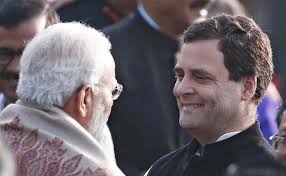
NEW DELHI: Prime Minister Narendra Modi on Thursday extended birthday greetings to Leader of Opposition Rahul Gandhi. “Birthday greetings to the Leader of the Opposition in the Lok Sabha, Shri Rahul Gandhi,” PM Modi said in a post on X. — narendramodi (@narendramodi) “May he be blessed with a long and healthy life,” Prime Minister Modi added. Defence minister Rajnath Singh also extended his wishes to Rahul Gandhi. “Greetings to the Leader of Opposition in Lok Sabha Shri Rahul Gandhi on his birthday. May he be blessed with good health and a long life,” he said in a post on X. Meanwhile, Tamil Nadu chief minister MK Stalin, while wishing Rahul Gandhi, referred to him as a “brother-in-ideals”. “Warm birthday wishes to my brother-in-ideals, Rahul Gandhi— bound not by blood, but by thought, vision, and purpose.” Courtesy : TOI Note: This news is originally published on https:/timesofindia.com/ and is for use by the non-military/non-commercial community, especially those in the human rights sector.
Rahul Gandhi turns 55… A look at the political challenges from his entry into politics
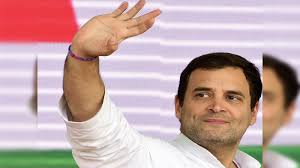
Congress leader Rahul Gandhi has turned 55, whose political journey started from Amethi in 2004. He raised the issues of social justice through ‘Bharat Jodo Yatra’ and ‘Bharat Jodo Nyay Yatra’ and tried to strengthen the party. New Delhi: Congress leader Rahul Gandhi turns 55 today. Rahul is currently the leading face of the country’s oldest political party, the Indian National Congress. Born on 19 June 1970 as a descendant of the Nehru-Gandhi family, Rahul Gandhi started his political journey with the Indian National Congress (Congress) in 2004. His journey has been full of ups and downs. In this, he has tried to strengthen the party and raise public issues. Political journey started from Amethi in 2004 Rahul Gandhi’s political career began in 2004, when he contested and won the Lok Sabha elections from Amethi in Uttar Pradesh. The seat had been a family stronghold for his father Rajiv Gandhi and mother Sonia Gandhi. In his early innings, he focused on youth and rural development. He was appointed as the general secretary of the Congress in 2007 and as the party’s vice-president in 2013. In 2017, he took over as the party president, which was the peak of his political ambition. His ‘Bharat Jodo Yatra’ (2022-23) and ‘Bharat Jodo Nyay Yatra’ (2024) highlighted the issues of unity and social justice in the country. Focused on Youth Congress Rahul Gandhi’s biggest achievement has been his people-centric initiatives. The ‘Bharat Jodo Yatra’ covered a distance of about 4,000 kilometers across the country and spread the message of love against hate. The journey helped strengthen the Congress organizationally. This also affected the party’s performance in the 2024 Lok Sabha elections. He brought about reforms in the Youth Congress and the National Student Union (NSUI) and significantly increased the membership of these organizations. His firmness on issues such as the withdrawal of agricultural laws (2021) and reduction in GST rates played a role in strengthening the opposition. Apart from this, he brought issues like unemployment, farmers’ problems and social justice to the national debate. Lost MP seat due to conviction in defamation case However, Rahul Gandhi’s journey was not untouched by challenges. Congress’s defeat in the 2014 and 2019 Lok Sabha elections raised questions about his leadership ability. The defeat at the hands of Smriti Irani from Amethi in 2019 was seen as his personal defeat. In the 2019 Lok Sabha elections, the Congress party was reduced to just 52 seats. After this, he resigned from the post of president, taking moral responsibility. His ‘Pappu’-like image and allegations of dynasty politics affected his popularity. Media and BJP criticism constantly targeted him. There was a lot of controversy especially on his statement like ‘Chowkidar Chor Hai’. In 2023, his biggest political challenge was his two-year sentence in a defamation case and disqualification from the Lok Sabha. However, the Supreme Court put a stay on it. Despite all this, his educational background (studied at Harvard and Cambridge) and efforts to connect with the public gave him a chance to stand up again. The challenge of getting Congress back its lost ground Rahul Gandhi is again in an active role in the 2024 Lok Sabha elections. He is trying to revive the Congress. He is a prominent face of the opposition alliance ‘INDIA’ block. Although critics consider him an indecisive, indecisive and weak leader, for his supporters he is the hope to protect democracy. Rahul has tried to improve his image and connect with the public amid criticism. The challenges before Rahul Gandhi have been testing his leadership ability and image. Now it remains to be seen how strongly he emerges in Indian politics going forward. Will he be able to get Congress back its lost political ground. In future, their strategy and the role of the opposition will decide the direction of the country’s politics. Edited by: Anil Kumar About the author Anil Kumar Anil has been active in the media industry for more than a decade. His journey started with reporting from Dainik Jagran Chandigarh in 2009 and has reached NavbharatTimes.com via Dainik Bhaskar, Rajasthan Patrika, Amar Ujala, Jansatta.com. He is originally from Bihar but has studied in Delhi. Courtesy: Hindi News
Congress’s new plan to attract youth, will start on Rahul Gandhi’s birthday
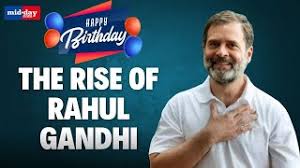
The youth wing of Congress is organizing a huge job fair in Delhi on June 19, which aims to provide employment opportunities to the youth. More than 100 companies will participate in this fair organized on Rahul Gandhi’s birthday. New Delhi: Congress has been constantly cornering the Modi government on the issue of unemployment. It questions the government about the promise of two crore jobs every year. In such a situation, the youth wing of Congress, Youth Congress, has planned to organize a big job fair at Talkatora Stadium in the capital Delhi today on June 19. Youth Congress has planned to organize this event on the occasion of the birthday of its leader and Leader of Opposition in Lok Sabha, Rahul Gandhi. More than 100 companies will participate This information was shared by Youth Congress National President Uday Bhanu Chib, where he told that more than 100 companies from all over the country will participate in this fair and will bring opportunities for the youth. On the other hand, Delhi Youth Congress President Akshay Lakra said that this will be the biggest job fair in Delhi-NCR. According to sources, Congress has started preparations to attract youth not only in Delhi but across the country through organizing employment fairs. On Thursday, all the big leaders of Congress will gather on the occasion of Maharojgar Mela. Many young faces like Sachin Pilot, Imran Pratapgarhi to Kanhaiya Kumar will gather. It is said that Congress will not limit this event to this. It is planning to organize such fairs in ten states where elections are likely in the coming days. The event will be organized first in Bihar Among these, the first will be organized in Bihar. After that, elections are to be held in Kerala, West Bengal, Assam and Tamil Nadu and Puducherry next year. While elections are to be held in Goa, UP, Punjab, Uttarakhand, Himachal Pradesh and Manipur in the year 2027. In fact, Congress is not only constantly talking about employment, but Rahul Gandhi is also going to different parts and meeting the youth and students and talking about their problems. Also, Congress is talking about providing employment to the youth in its election manifesto. In such a situation, Congress will also try to attract the youth through employment fairs in these states. Youth will get offer letter However, regarding the fair to be held in Delhi on Thursday, Udaybhan Chib said that earlier a similar employment fair was organized in Rajasthan, in which a large number of youth got opportunities. Through this fair, the youth of Delhi will get a chance to interview directly with the companies. At the same time, many youth can also get offer letter on the same day. While Yagyavalkya Srikant Jichkar, associated with Youth Congress, said that companies from many sectors like IT, manufacturing, pharma, retail and banking are coming to this employment fair. There will be companies for every educational qualification, whether 12th pass or PhD. At present, more than 10 thousand online registrations have been done and the number of offline registrations is also close to 8 thousand. ‘Always raised the voice of the unemployed’ While Chib said that this job fair is not limited to just jobs, but blood donation camps, health camps and seminars on caste census are also being organized in it. He said that Rahul Gandhi has always raised the voice of unemployed youth and the issue of caste census is also in discussion today due to his hard work. Congress said that the purpose of the event is not only to provide employment to the youth, but also to spread awareness in the society and strengthen the sense of service. Reported by: Manjari Chaturvedi•Edited by: Anil Kumar Courtesy : Hindi News
Bihar Commission Suggests Age Relaxation And Welfare Measures For Upper Caste Poor In Govt Jobs | Details
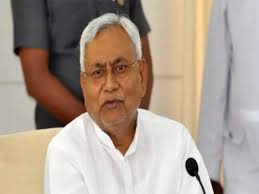
The newly formed commission for the development of upper castes in Bihar held its first meeting, advocating for age relaxation in government jobs for economically weaker sections among the upper castes. The commission also discussed the need for hostels and coaching facilities at the district level for students from economically weaker sections. Sub-committees have been formed to explore these issues further and examine the caste-based census report to determine how age relaxation can be implemented. In its first official meeting, the Bihar State Commission for the Development of Upper Castes recommended that economically weaker candidates from upper castes should be granted age relaxation in government job recruitment, similar to the provisions available for other backward classes. The meeting was chaired by commission member Dr Mahachandra Prasad Singh and attended by Vice President Rajiv Ranjan Prasad and other members. A three-member sub-committee led by member Rajkumar Singh has been formed to review the caste-based census data and suggest possible measures for extending age relaxation to the upper caste poor. Additionally, two other sub-committees have been set up: one under the chairmanship of Jai Krishna Jha to assess the feasibility of constructing hostels at the district level for economically backward students, and another under Dayanand Rai to explore the need for government-supported coaching facilities for job aspirants from the same category. The commission acknowledged that economically weaker individuals from upper castes often face limited opportunities and emphasised the need to extend facilities currently provided under economic reservation to this segment as well. Courtesy : Kamakshi Bishnoi, The Daily Jagran Note: This news is originally published on https:/thedailyjagran.com/ and is for use by the non military/non-commercial community, especially those in the human rights sector.
Naidu govt approves 10-hr workdays, night shifts for women in bid to attract more industry, investment
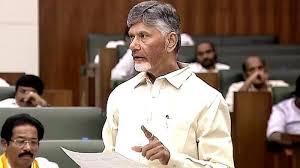
The amendment bills are expected to be introduced in the next assembly session. Hyderabad: The Chandrababu Naidu government, under the slogan ‘Speed of Doing Business’, has decided to extend minimum working hours for private employees, while also allowing women to work in night shifts, in a major labour reform move. The extended work hour rules will also apply to shops and establishments in Andhra Pradesh, meaning the IT sector too. In a bid “to reduce procedural compliance burden on industrial establishments” and thereby attract new industries, investments into the state, the Naidu cabinet has approved amendments to labour laws to extend daily working hours to 10 from present 9. According to Section 54 of the Factories Act, 1948, no adult worker “is required or allowed to work in a factory for more than nine hours in any day”. The Naidu government has also proposed to increase the interval for rest to 6 hours from the current 5. Going for further amendments in the same law, the Naidu government has decided to let women work night shifts. Section 66 (1) (b) of the Factories Act states that “no woman shall be required or allowed to work in any factory except between the hours of 6 pm and 7 pm.” “But now, women may work during night time with safeguards like consent, transport, security etc., facilities and under CCTV surveillance in well-lit areas,” Information and Public Relations Minister Kolusu Parthasarathy told reporters after the cabinet meeting last Wednesday at Amaravati. “The facilitation would allow women’s higher work participation in the organised sector, major industries, and corporate areas. It empowers women economically and promotes gender inclusion in industrial growth,” he added. The total number of overtime work hours in a quarter—currently restricted to 75—can now go up to 144. “Through these amendments, we are adopting global best practices. If the labour laws, regulations are convenient for workers and investors, businesses will come here naturally,” said Kolusu, adding that the relaxations are being brought under the government’s push for ease of doing business in AP. The cabinet thus approved proposals from the Labour, Factory Boilers & Insurance Medical Services Department to amend certain provisions of sections 54, 55, 56, 59, 64, 65, 66 of the Factories Act through the Andhra Pradesh Factories Act Amendment Bill, 2025, and certain provisions of sections 9, 10, 16, 17, 73 of the AP Shops and Establishments Act, 1988, through the AP Shops and Establishments Amendment Bill, 2025. The amendment bills are expected to be introduced in the next assembly session. However, industrialists are divided on the proposed changes. “In manufacturing sectors, you cannot expect an employee to operate for long hours as the hard work tires them by 6-7 hours, bringing down efficiency thereafter. A worker losing focus is not good, posing dangers of industrial mishap or productivity losses,” Lakshmi Prasad Mekala, MD, Sujay Biotech, told ThePrint. “Of course, the easing will be beneficial to other sectors like marketing, sales, small businesses, and those under the Shops and Establishments Act,” Mekala, past chairman of the Confederation of Indian Industry Andhra Pradesh, added. Courtesy : Prasad Nichenametla, The Print Note: This news is originally published on https:/theprint.com/ and is for use by the non military/non-commercial community, especially those in the human rights sector.