
Meerut Dalit family under ‘house arrest’: Family alleges police pressure in kidnapping case
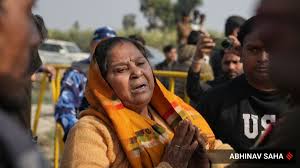
Paras Som and Sunil Som, both belonging to the Rajput community, had allegedly hacked to death 50-year-old Sunita Devi and kidnapped her 20-year-old daughter on January 8 The family members of the Dalit girl who was kidnapped after the murder of her mother at Kapsad village in Meerut district early this month have claimed that they were under house arrest and the police were pressuring them not to pursue the case against the accused. Paras Som and Sunil Som, both belonging to the Rajput community, had allegedly hacked to death 50-year-old Sunita Devi and kidnapped her 20-year-old daughter on January 8. The police arrested Sunil from Meerut and Paras from Haridwar and recovered the girl. Sunita’s husband Satyendra Kumar told reporters near his house on Saturday that the police had put them under house arrest. “We are not allowed even to meet our lawyers. Our family members who had come here to see us were not allowed to enter the house. We suspect that they are also recording our phone calls.” He claimed some cops warned them against pursuing the case against Paras. Piyush Srivastava Courtesy : The Telegraph Note: This news is originally published on https:/thetelegraph.com/bha and is used purely for non-profit/non-commercial purposes, especially human rights
Non-dalits attack, damage dalit youth’s house in Dharmapuri
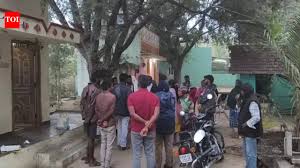
Dharmapuri: The communal disharmony between the residents of two neighbouring villages in Thalanatham panchayat in Kadathur union flared up on Friday night with a gang of Vanniyars from Guruparalli village attacking a house of Arundhathiyars in Nadur village, damaging the property and then locking up the inmates inside the house. According to the Kadathur police, Nadur village is home to more than 50 families belonging to Arundhathiyar community. “On Friday, Jaisimman, 25, and Santosh, 23, of Nadur village, headed to Guruparalli village to have food on a two-wheeler. Their vehicle broke down in Ayyampatti area, which is dominated by the people belonging to Vanniyar community. A few Vanniyar youths, who were passing by the area, asked them to leave the place immediately,” a police officer said. Youths belonging to the two communities subsequently entered into a verbal spat, which ended in physical assault. “More Vanniyar youths gathered in the area and attacked Jaisimman and Santhosh and used casteist slurs against the duo.” The two youths returned to their houses at 10pm after retrieving the two-wheeler and went to sleep without informing their parents about the fight, the officer said. “Later at night, more than 10 people belonging to the Vanniyar community gathered at the house of Jayasimhan, shouted obscene words and attacked the house with sticks and iron rods, breaking the windows and doors. They locked the main door from outside, and threatened to kill the family if they came out of the house,” the officer said. By the time neighbours arrived at the house, the gang fled the scene with Jayasimhan’s two-wheeler, the officer said. When alerted, the Kadathur police rescued the people trapped inside the house by breaking open the door. On Saturday, police arrested five residents of Ayyampatti area – Santosh, 25, Sakthi, 24, Chandaru, 25, Dhileepan, 24, and Surya, 25 – in connection with the incident. They were booked under the Scheduled Castes and the Scheduled Tribes (Prevention of Atrocities) Act and lodged in the Salem Central Jail under judicial custody. The Kadathur police also have registered a case against Jaisimman, Santosh and a few others for teasing women and harassing Vanniyar youths. Courtesy : TOI Note: This news is originally published on https:/timesofindia.com/bha and is used purely for non-profit/non-commercial purposes, especially human rights
PM Modi isn’t renaming Adampur Airport after Sant Ravidas without reason; it’s a major move in Dalit politics, here’s how.
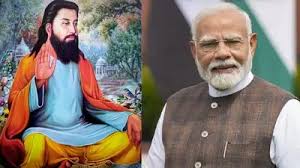
Prime Minister Narendra Modi is arriving in Punjab on Sunday on the occasion of the 649th birth anniversary of Sant Guru Ravidas. PM Modi will arrive at Adampur Airport at approximately 3:45 PM, where he will unveil the airport’s new name, ‘Shri Guru Ravidas Ji Airport, Adampur’. He will also inaugurate the terminal building at Halwara Airport in Ludhiana, Punjab. Adampur Airport’s name is changing Chandigarh: Prime Minister Narendra Modi is arriving in Punjab on Sunday. He will rename the Adampur airport after Sant Ravidas, who is revered especially among Dalits. He will also visit Dera Sachkhand Ballan, the headquarters of the Ravidassia community. This visit is part of his continued efforts to reach out to his followers, who are present in large numbers not only in Punjab but also in several other states. PM Modi’s decision to rename this airport as Shri Guru Ravidas Ji Airport comes on the occasion of the saint’s 649th birth anniversary, a demand that had been pending for a long time. By associating himself with this occasion and scheduling a visit to the Dera, PM Modi will send a strong message to the Dalit community. Focus on Sant Ravidas from Varanasi to Sagar The PM is emphasizing that he wants to nurture the community that is important for the BJP not only in terms of politics but also in terms of a broader cultural agenda. He has launched projects over the past few years for the development of the birthplace of the Bhakti movement poet-saint Ravidas. Born in Varanasi, he has also launched projects for building a memorial for him in Sagar, Madhya Pradesh, and has paid tributes at Ravidas temples. Meeting with Niranjan Das During his visit, Modi will participate in a public event and interact with the Dera’s spiritual head, Niranjan Das. Niranjan Das was also awarded the Padma Shri on the eve of this Republic Day. Punjab has the highest number of Dalits This Dera is located in Jalandhar, which is part of the Doaba region, where the Scheduled Caste population is higher than in the rest of the state. Dalits constitute approximately 32% of the population in Punjab, which is higher than in any other state, while in the Doaba region, this figure is around 42%. BJP’s focus on Punjab through Dalits Dalits in Punjab are divided into several sub-groups, with the Ravidasia community, which comprises 10-12% of the population, being a major sub-group, and Ravidas is a revered figure among the Scheduled Castes. Reaching out to members of marginalized castes has been a crucial part of the BJP’s Hindu unity agenda. This has helped the party’s growth. The Punjab Assembly elections are scheduled for early next year. Following the rapid rise of the Aam Aadmi Party (AAP) and the rift in relations between the BJP and the Akali Dal, four parties, including the Congress, are in the political race in the state. Curated by: Shashi Pandey Mishra About the Author Shashi Pandey Mishra is a Senior Journalist at Navbharat Times Online. She writes on politics, crime, health, and human interest stories. She also enjoys writing on issues related to women and children. She also writes ground reports and interesting stories. She has 18 years of experience in journalism. Courtesy: Hindi News
Dalit Man Attacked in Sultanpur: Three Men Beat Him in Front of His Children, Complaint Filed with SP
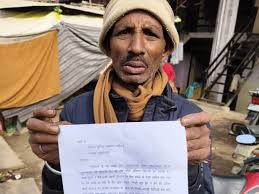
A Dalit man was attacked in Upadhyapur village under the Jaisinghpur police station area of Sultanpur district. In the incident, which took place around 7 am on Saturday, the victim, Ram Sundar, was beaten by three men from the village at his doorstep in front of his children. The victim has filed a complaint with the Superintendent of Police (SP) and demanded action. In his complaint, Ram Sundar stated that on the day of the incident, he was warming himself by a bonfire at his doorstep with his children. Three men from the village then arrived at his door. He alleges that they verbally abused him without any provocation. The attackers then grabbed Ram Sundar by the collar, threw him to the ground, and beat him with kicks and punches. Ram Sundar’s cries for help attracted nearby villagers. Following the intervention of the villagers, the attackers left, threatening to kill Ram Sundar. His daughter-in-law and neighbors intervened, saving his life. The victim also stated that this is not the first time these men have attacked him. The attackers had previously assaulted Ram Sundar twice. The lack of action by the police despite his previous complaints had emboldened the attackers. Ram Sundar had tried to file a complaint at the police station earlier, but he was turned away. Following the current incident, Ram Sundar has submitted a written complaint to the Superintendent of Police of Sultanpur. He has requested that his report be registered, that a medical examination of his injuries be conducted, and that strict action be taken against the attackers. No concrete action has been taken in the case so far. The Sultanpur Superintendent of Police has assured the victim that the matter will be investigated seriously and appropriate action will be taken. Surauli (Jaisinghpur), Sultanpur Courtesy: Hindi News
Dalit leader killed in Kurnool, stirs statewide protests
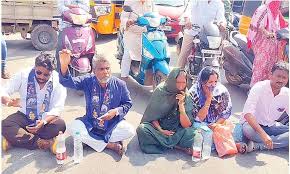
Kurnool: A wave of anger and tension swept through Kurnool district following the brutal killing of a Dalit leader Ramesh, Andhra Pradesh State working president of Madiga Reservation Porata Samiti (MRPS). The incident took place on Friday evening, near Bonthiralla Road in Bondumadugula village of Pattikonda constituency, when Ramesh was allegedly attacked while on his routine evening walk. The assailants reportedly rammed a tractor into him from behind and assaulted him with iron rods, leaving him critically injured. Local residents who noticed the incident alerted his family members, who immediately shifted him to the Kurnool Government General Hospital for advanced medical care. Despite intensive treatment, Ramesh succumbed to his injuries on Saturday morning. News of his death spread rapidly, triggering protests and condemnations not only across Kurnool district but also at the state level, with Dalit organisations terming the attack a premeditated and barbaric act. In protest against the killing, SC and ST Dalit leaders staged a late-night demonstration at the Kurnool District Collectorate around 9.00 pm on Friday. Leaders belonging to various Dalit organisations and political parties demanded the immediate arrest and remand of all those involved in the crime and called for stringent punishment to the accused. They alleged serious lapses in maintaining law and order and warned that failure to deliver justice would lead to intensified agitation. In protest against the killing, Dalit organisations staged a dharna in front of the Kurnool Collectorate on Saturday. The protesters demanded the immediate arrest of the accused and stringent punishment for those responsible for the crime. They also urged the state government to ensure justice for the victim’s family and to take concrete steps to prevent such violent incidents in the future. The police have registered a case and launched an investigation, while security has been tightened in sensitive areas to prevent further unrest. The incident has once again raised concerns over the safety of Dalit leaders in Andhra Pradesh and has put the district administration under severe pressure to act swiftly. Courtesy : THI Note: This news is originally published on https:/thehansindia.com/bha and is used purely for non-profit/non-commercial purposes, especially human rights
Denied access to funeral ground, Dalits light pyre on Bihar road
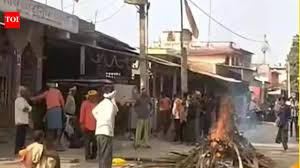
PATNA: Dalit villagers in Bihar’s Vaishali lit the pyre of a 91-year-old woman in the middle of a public road after allegedly being prevented from accessing the local cremation ground, sparking tensions and an inquiry. According to villagers and police, the funeral procession of Jhapsi Devi, a resident of Sondho-Vashudeo village in Goraul area, was on its way to the cremation ground on Thursday when some “influential” villagers allegedly stopped them. Enraged, the villagers carried the body to the middle of the road and cremated it there in full public view amid chants of Vedic rituals. Jhapsi died late Wednesday. The woman’s son, Sanjeet Manjhi, said the family was left with no option. “Jab ham logon ko nahin jane diya, toh gaon ke log bole ki yahi (road) par phoonk do (When we were not allowed to go the cremation site, villagers said we should hold the cremation here on the road itself,” Sanjeet said. Mewalal Manjhi, 67, another villager who was part of the procession, voiced deep despair. “We are poor, with no house and no land. Now, we are not even being allowed to cremate the bodies of our dead,” Mewalal asked. Courtesy : TOI Note: This news is originally published on https:/timesofindia.com/bha and is used purely for non-profit/non-commercial purposes, especially human rights
Periods will no longer stop girls from studying! A historic Supreme Court decision that you need to understand
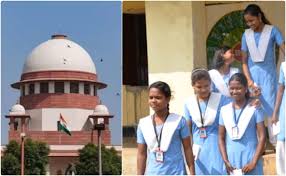
The Supreme Court acknowledged that the lack of menstrual hygiene management (MHM) prevents girls from attending school, thereby violating their dignity, privacy, bodily autonomy, and reproductive health. This situation is a clear violation of Article 14 (Right to Equality), Article 15(3) (Special provisions for women and children), Article 21 (Right to life and personal liberty), and Article 21A (Right to education). New Delhi – In a very important and far-reaching decision on January 30, the Supreme Court declared menstrual health an integral part of the right to life under Article 21 and the right to education under Article 21A of the Indian Constitution. A bench of Justices J.B. Pardiwala and R. Mahadevan delivered a detailed 126-page judgment in the case of Dr. Jaya Thakur vs. Union of India, in which the Court clearly stated that the absence of girls from school or dropping out entirely due to menstruation is unconstitutional. The Court said, “A period ends a sentence – not a girl’s education.” In the judgment, the Court acknowledged that the lack of menstrual hygiene management (MHM) prevents girls from attending school, thereby violating their dignity, privacy, bodily autonomy, and reproductive health. This situation is a clear violation of Article 14 (Right to Equality), Article 15(3) (Special provisions for women and children), Article 21 (Right to life and personal liberty), and Article 21A (Right to education). The Court stated that the right to live a life of dignity is only possible when girls can attend school during menstruation without shame, fear, or discomfort. The Court also analyzed Sections 3 and 19 of the RTE Act (2009) and clarified that “free education” means not only school fees but also includes all expenses and facilities related to menstrual hygiene management. If girls do not have access to sanitary napkins or if there are no separate, clean toilets in schools, it is a violation of the RTE Act. The court stated that “barrier-free access” in schools means not only access to the building but also the removal of all obstacles that prevent a child from attending school regularly. Under Section 3 of the RTE Act, free education includes not only school fees but also expenses related to menstrual hygiene management. The lack of separate toilets in schools is a violation of “barrier-free access.” Menstruation is no longer just a “women’s issue”; it is a collective responsibility. Under this judgment, the Supreme Court has issued strict instructions to all states and Union Territories to mandatorily provide the following facilities within three months: Every school (government or private) must have separate, fully functional toilets for boys and girls, with running water, soap, and privacy. Toilets must also be accessible for children with disabilities. Oxo-biodegradable sanitary napkins (meeting ASTM D-6954 standards) will be provided free of charge in every school, ideally through vending machines. If installing a machine is not immediately possible, these napkins will be kept at a designated place or with a designated person in the school. An “MHM Corner” will be established in every school, where spare undergarments, spare uniforms, disposable bags, and other necessary materials will be kept to deal with any emergencies during menstruation. Arrangements for the safe and environmentally friendly disposal of sanitary napkins must be made in every school, in accordance with the Solid Waste Management Rules. The court placed great emphasis on awareness and education. NCERT and SCERT have been directed to include menstruation, puberty, and problems like PCOS/PCOD in the curriculum to eliminate the shame and myths associated with it among girls. Training on sensitivity and support regarding menstrual health will be mandatory for all teachers (both male and female). The court specifically stated that it is also essential to educate boys that menstruation is a normal biological process, so that they can show empathy and respect towards their female classmates. For monitoring, the District Education Officer (DEO) has been ordered to inspect schools annually and collect anonymous feedback (surveys) from female students. The NCPCR and SCPCR have been entrusted with the responsibility of monitoring the implementation of this decision across the country. Non-compliance could lead to action, including the cancellation of the school’s recognition under Section 18 of the RTE Act. The court concluded with an emotional appeal, stating that this decision is not just a legal document, but for every girl who has been forced to drop out of school due to menstruation. The court said, “The fault is not yours. The change has now begun.” This case is still “part-heard.” Compliance reports have been sought from all states and union territories after three months. The Supreme Court has directed that this decision be communicated to all High Courts, state governments, and the Ministries of Education, Health, Jal Shakti, and Women and Child Development. Geetha Sunil Pillai Courtesy: Hindi News
Coimbatore: Cow dung smeared in office after Dalit manager’s transfer, bus driver suspended
Coimbatore: A deeply shameful incident of caste discrimination has come to light from Coimbatore district of Tamil Nadu. Here, a bus driver from the Mettupalayam branch-1 had the floor of his branch manager’s office cleaned with cow dung after the manager’s transfer. The reason behind this despicable act is said to be the manager’s Scheduled Caste (SC) background. According to a report by the New Indian Express, after the incident came to light, senior officials of the Tamil Nadu State Transport Corporation (TNSTC) took swift action and suspended the accused driver, S. Sashiraj. Sashiraj is also the secretary of the transport corporation’s ‘LPF’ union. What is the whole matter? The incident took place on January 23. The then branch manager of the Mettupalayam branch, D. Prakashkumar, who belongs to the Scheduled Caste, was recently transferred to Ukkadam. It is alleged that immediately after his departure, Sashiraj had the office floor smeared with cow dung through a cleaner. According to eyewitnesses, the driver made derogatory remarks, saying that “the dirt (referring to the manager) has been cleaned from the branch.” Surprisingly, all this happened in front of Prakashkumar, who is deeply shocked and has not returned to work since then. Serious allegations of bullying and discrimination Sources in the transport corporation have made several serious revelations about Sashiraj’s working methods. While holding the post of Traffic Controller, Sashiraj allegedly assigned long and difficult routes to Scheduled Caste employees, while allocating shorter and more comfortable routes to people from his own community. It is alleged that he extorted money from employees for granting leave and preferred duties. Due to his political influence, he also disregarded the orders of the branch managers. In the last one and a half years, six branch managers have been transferred because of his actions. Reason for the conflict The current manager, D. Prakashkumar, had refused to comply with Shashi Raj’s arbitrary demands and had also issued him a memo for engaging in caste-based discrimination. Angered by this, Shashi Raj allegedly exerted pressure on higher officials, resulting in Prakashkumar’s transfer without any valid reason. The accused’s defense On the other hand, the suspended driver, Shashi Raj, has completely denied all these allegations. He claims that the accusations against him are politically motivated and false. Shashi Raj argued that he was merely maintaining the cleanliness of the office and that the room was cleaned that day as part of routine maintenance because it was dirty. TNSTC’s Coimbatore regional officials have confirmed that an internal inquiry into the matter has been initiated. The driver will remain suspended until the inquiry report is submitted. This incident has once again brought the deeply entrenched casteist mentality within government departments to the forefront of public debate. Rajan Chaudhary Courtesy: Hindi News
OHRC recommends state govt to ensure 1% transgender reservation in recruitment exams
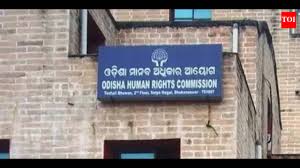
Bhubaneswar: Odisha Human Rights Commission (OHRC) has recommended the state govt to ensure 1% reservation for transgender candidates in different recruitment exams. The commission passed the order on Jan 22 after hearing a petition filed by a transgender from Cuttack. The petitioner alleged discrimination and violation of fundamental rights due to non-inclusion of the third gender/transgender category in the application form for the upcoming Odisha Civil Services (OCS) Exam conducted by the Odisha Public Service Commission (OPSC). The petitioner contended that omission of the ‘third gender/transgender’ in the online form prevented applicants like the complainant, from applying and participating in the exam on an equal footing, thereby constituting discriminatory treatment and infringing upon their rights to equality and non-discrimination. The commission, without calling for any report from govt authorities, was prima facie satisfied of the violation of human rights and disposed of the case at the stage of admission. Human rights activist Biswapriya Kanungo, quoting the OHRC order, said the Constitution guarantees equality and non-discrimination under Article 14, ensuring equal protection of laws, while Article 15 prohibits discrimination on grounds of sex, which was interpreted to include gender identity. Article 16 mandates equality of opportunity in public employment, and any exclusion based on gender identity is arbitrary and violative thereof. The commission recommended the general administration and social security departments to consider inclusion of ‘third gender/transgender’ as an option in the applications forms of govt recruitment exams and to make at least 1% reservation for them, and to direct all recruiting boards and authorities, including OPSC, to do the same. As the present complaint relates to the OCS exam, for which applications are already invited, OHRC urged the state govt consider the same at the earliest by making a request to OPSC to allow a ‘third gender/transgender’ option and extend the application deadline for at least 15 days for such candidates. The order stated that govt should ensure the recommendation is carried out by all departments and its corporations. OHRC asked govt to submit a compliance report within 60 days. Courtesy : TOI Note: This news is originally published on https:/timesofindia.com/bha and is used purely for non-profit/non-commercial purposes, especially human rights
Talks with Rahul smooth: Kanimozhi
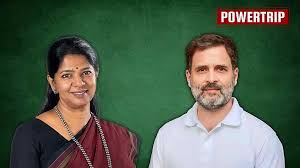
Chennai: DMK deputy general secretary Kanimozhi Karunanidhi on Friday said her recent meeting with Congress leader Rahul Gandhi was “smooth” and dismissed speculations about a possible rift between the long-time allies. She said chief minister M K Stalin will make announcements regarding seat negotiations. In a related development, TNCC chief K Selvaperunthagai told TOI that seat-sharing talks with DMK are anticipated next week. Kanimozhi’s meeting with Rahul Gandhi took place in New Delhi in the wake of senior Congress functionaries going public with their demand for power sharing. “As far as I know, there is no conflict. The discussions were cordial,” the DMK leader told reporters in Tirunelveli. Kanimozhi said there was a possibility of new parties joining DMK-led alliance and Stalin would decide on them. The DMK is likely to allocate two more seats to Congress, in addition to 25 offered in the 2021 assembly election. DMK sources told TOI that discussions at Rahul’s Delhi residence that lasted around 45 minutes, “resolved” the issue of power sharing, and Congress leadership “understood that it was not possible” in Tamil Nadu. Leaders of both parties, however, did not wish to be quoted on the specifics of the talks on power-sharing. A senior DMK leader, who was privy to the meeting, said Congress high command held high respect for DMK and its leadership, and the long-standing alliance between the parties. “Both parties are ideologically aligned, and we do not wish to break ties,” the DMK leader said. Moreover, the Congress understands the significance of DMK’s strength as an ally and the support it will offer to Congress in the 2029 Lok Sabha elections, said another senior DMK leader. Rahul is believed to have expressed interest in commencing talks between the seat negotiation committees of both parties soon. During his interactions with senior TNCC functionaries in New Delhi recently, Rahul Gandhi sought their views on alliance with TVK. Many expressed a preference for continuing alliance with DMK with a decent number of seats. A senior leader bluntly told the leadership that severing ties with DMK would be suicidal for the party. In Tiruvarur, Selvaperunthagai described Kanimozhi’s meeting with Rahul Gandhi as “honest and dignified,” unlike AIADMK general secretary Edappadi K Palaniswami’s visit to Delhi. “We have not exerted pressure on our ally, DMK, nor will we. We will ask for whatever we want and get it,” he said. Congress general secretary (organisation) K C Venugopal is scheduled to flag off a padayatra by TNCC workers against VB-G RAM G in Chennai on Feb 5. Courtesy : TOI Note: This news is originally published on https:/timesofindia.com/bha and is used purely for non-profit/non-commercial purposes, especially human rights