
Mad scramble for Dalit candidates in Kerala: Congress may pay price for neglect

Kodikunnil, first elected to the Lok Sabha in 1989, remains an MP, while Sudhakaran has held sway since his Wandoor debut in 1982. KOCHI: As Kerala races towards the assembly election next May, the Congress is in a desperate eleventh-hour search for Dalit and tribal candidates. The scramble has laid bare a bitter truth: The party has failed to groom and promote leaders from the scheduled castes and scheduled tribes, leaving itself exposed in 16 reserved constituencies (14 SC and two ST). The shift from the past could not have been starker. Until the mid-1980s, the Congress was never short of stalwarts from backward communities. The likes of Vella Eacharan Iyyani, M P Thami, K K Balakrishnan, K Raghavan Master, Damodaran Kalassery, P K Velayudhan, K K Madhavan, T K C Vaduthala, Kittappa Narayana Swamy and Dr M A Kuttappan gave the party both legislative heft and grassroots presence. These leaders emerged not just as candidates, but as mass figures who commanded respect. But as factionalism deepened in the late 1980s and ‘90s, Dalit and tribal representation shrank. “The main reason for the failure of Congress to promote SC/ST leaders was the endless feud between the ‘A’ and ‘I’ groups. It choked the rise of new leaders and created a vacuum that remains unfilled even today,” said political analyst Dijo Kappen. That vacuum is now haunting the party. For decades, the leadership has relied on a handful of “safe” names — most notably Kodikunnil Suresh and Pandalam Sudhakaran. Kodikunnil, first elected to the Lok Sabha in 1989, remains an MP, while Sudhakaran has held sway since his Wandoor debut in 1982. Both men have effectively blocked the entry of younger leaders, according to critics. “Congress is finding no names beyond Kodikunnil and Sudhakaran. With issues clouding Remya Haridas as well, the party has only itself to blame,” remarked Ramesh Mathew, a former journalist and long-time Congress watcher. Indeed, the bench is worryingly thin. The party has no ready replacements for the 16 reserved constituencies. Meanwhile, the CPM and the BJP are making visible efforts to cultivate Dalit and tribal candidates, intensifying the Congress’ anxiety. A senior Congress source admitted the crisis, but insisted change was coming. “The AICC wants new names from fishermen, SC and ST communities, not the tired old set such as Kodikunnil and [T N] Prathapan. We have identified promising new faces, and there will be a visible generational shift in 2026,” the leader told TNIE. Sources said Sajithamol, the widow of M G Kannan, who was vice-president of the Pathanamthitta District Congress Committee (DCC) and district panchayat member, who passed away in May this year. at the age of 42, will be among the Congress picks from the backward community for the assembly election. The stakes are high. In the 140-member House, the 16 reserved seats can prove decisive. Losing ground on this front could cripple Congress’ chances of returning to power. Leaders like P R Sona from Kottayam — educated, with a doctorate, and active in community work — represent the kind of profile the party should have nurtured years ago. Instead, the neglect of grassroots Dalit leadership has left Congress scouring the state at the last minute for candidates with credibility, said sources. The irony is stark. A party that once produced giants like K K Balakrishnan — who held multiple ministerial portfolios, including harijan welfare and transport — and Kuttappan, a staunch Ambedkarite who fought his way into the assembly despite factional sabotage, is today struggling to find even a handful of recognisable Dalit leaders. As the countdown to the polls begins, Congress is discovering that decades of ignoring and sidelining its Dalit and tribal leaders cannot be wished away in a frantic candidate search. The past is catching up fast — and the party may pay a heavy price. Rajesh Abraham Courtesy : TNIE Note: This news is originally published on https:/thenewindianexpress.com/bha and is used purely for non-profit/non-commercial purposes, especially human rights
Dalit teen allegedly attacked, stripped for meeting girl in Chennai

Police said Saravanan also made casteist slurs during the attack. The boy is currently undergoing treatment at Kilpauk Medical College (KMC) The Secretariat Colony police in Chennai on Friday, September 12, arrested two men under the Scheduled Castes and Scheduled Tribes (Prevention of Atrocities) Act for allegedly assaulting, stripping, and verbally abusing a 17-year-old Dalit teen who had gone to meet a girl at her relatives’ residence. The arrested men have been identified as Saravanan, reportedly a former Bharatiya Janata Party (BJP) functionary, and his brother Logesh. Police said the incident took place after the girl’s relatives confined the boy in a room and then called Saravanan for intervention. The boy, who belongs to the Scheduled Caste (SC) Hindu Adi Dravidar community, and the girl, who is from the Most Backward Class (MBC) Vanniyar community, had been friends for years. Though they later joined different schools, they continued to stay in touch through social media. When the boy went to visit her, Saravanan and Logesh allegedly stripped and assaulted him. Police said Saravanan also made casteist slurs during the attack. The boy is currently undergoing treatment at Kilpauk Medical College (KMC) Hospital. The police have registered a case against the accused, under the SC/ST (Prevention of Atrocities) Act and Sections 296(b) (obscene act or singing), 115(2) (voluntarily causing hurt), 109(1) (attempt to murder) and 351(3) (criminal intimidation) of Bharatiya Nyaya Sanhita (BNS). Written by:TNM Staff Courtesy : TNM Note: This news is originally published on https:/thenewsminute.com/bha and is used purely for non-profit/non-commercial purposes, especially human rights
Charlie Kirk shooter Tyler Robinson lived with a transgender partner, claims report

The roommate who revealed texts with Tyler Robinson that helped law enforcement conclude that Tyler was indeed the shooter of Charlie Kirk is a transgender person, reports claimed, making a major revelation. The authorities have not revealed the transgender person’s identity, but the person is part of the investigation. The partner is in the process of transitioning from a male to female, Fox News reported. It is interesting that Tyler fired his shot targeting Charlie Kirk when Kirk was asked a question about transgender mass shooters. “Do you know how many transgender Americans have been mass shooters over the last 10 years?” Charlie Kirk was asked. “Too many,” Kirk said. “Do you know how many mass shooters there have been in America over the last 10 years?” Kirk was asked in a follow-up question. “Counting or not counting gang violence?” Kirk asked seeking clarification on the question, when the bullet hit his neck and he collapsed. He was taken to a hospital where he underwent surgery. He did not survive the injury. — BrookeSingman (@BrookeSingman) ‘This is now officially trans violence’ — bennyjohnson (@bennyjohnson) The revelation that Tyler has a trans partner gave a new turn to the assassination as MAGA commentators claimed this to be trans violence. MAGA commentators said more is to come out soon about the assassination and Charlie Kirk was absolutely right that there were too many trans shooters in America now. The revelations gives a probable motive to the investigators, though as of now they are seeing it as a political killing, as Tyler told pals and family members that he did not like Charlie Kirk much as he was hateful. Tyler did not like that Charlir Kirk was coming to the Utah Wave University for this event. Utah Guv Spencer Cox claimed that Tyler was deeply indoctrinated with left ideologies — though the Robinson family is Trump supporters. Are there too many transgender shooters in America? What was Charlie Kirk’s view on transgender people? According to fact-checking website PolitiFact, Charlie Kirk was wrong when he said there were too many trans shooters in the US and data showed trans people conduct a very small percentage of mass shootings. Charlie Kirk had a very strong feeling against transgender people and called them “an abomination”. In one speech, he described trans people as a “throbbing middle finger to God.” He also opposed gender-transforming surgeries and said doctors who perform those are like Nazis committing atrocities. “One issue I think that is so against our senses, so against the natural law and dare I say a throbbing middle finger to God, is the transgender thing happening in America right now,” he said during a speech posted in 2023 by Right Wing Watch. Courtesy : TOI Note: This news is originally published on https:/timesofindia.com/bha and is used purely for non-profit/non-commercial purposes, especially human rights
Charlie Kirk assassination: FBI says shooter Tyler Robinson’s transgender partner ‘had no idea’; fully cooperating in investigation

The partner of Tyler Robinson, the 22-year-old accused of assassinating US President Donald Trump ally Charlie Kirk, is cooperating fully with investigators and had no knowledge of the alleged plan, senior FBI officials told Fox News Digital. Robinson, who lived in St George, Utah, shared an apartment with the individual, described by officials as a male transitioning to female. The FBI confirmed the two were in a romantic relationship. One FBI official said the partner has been “extremely cooperative,” stressing that the person “had no idea” Robinson was planning to target Kirk. The partner has not been accused of any wrongdoing, according to Fox News. — nicksortor (@nicksortor) Apartment searched, digital evidence seized Investigators revealed they obtained text messages and communications between Robinson and the partner, which helped them identify Robinson as the suspect. Agents also seized computers and other evidence from the couple’s apartment, which has been sent to FBI headquarters in Quantico for analysis. While the Bureau declined to say whether Robinson’s partner could face charges, a spokesperson emphasised the scale of the probe. “The FBI is investigating a record number of tips. Every connection, every group, every link will be investigated, and anyone involved in this matter, anywhere in the world they might be, will be brought to justice,” the spokesperson told Fox News. The apartment is located in the same southern Utah community where Robinson’s parents live, about four hours from Utah Valley University in Orem. It was on the university’s campus that Kirk, 31, was fatally shot on Wednesday while addressing a crowd. Authorities believe Robinson fired a single round from the roof of a building roughly 200 yards away. Courtesy : TOI Note: This news is originally published on https:/timesofindia.com/bha and is used purely for non-profit/non-commercial purposes, especially human rights
Varansi News: Will Rahul Gandhi explode hydrogen bomb in Varanasi, on the same day Modi will donate his mother’s pind in Gaya ji
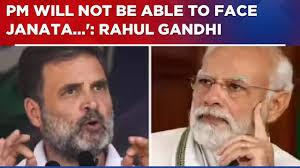
Rahul Gandhi News: Modi is going to donate his mother’s pind in Gaya ji, Bihar. On the same day Rahul Gandhi is coming to explode hydrogen bomb in Prime Minister Modi’s parliamentary constituency Varanasi. There is a lot of discussion about this. Abhishek Kumar Jha, Varanasi: Rahul Gandhi’s statement on hydrogen bomb is being discussed a lot. In a media byte, opposition leader Rahul Gandhi had targeted the entire election process and talked about hydrogen bomb. With the data of a Lok Sabha constituency of Karnataka, Rahul Gandhi had said that if there was no theft in the elections, the government would not have been formed. Meanwhile, amid the sound of Bihar elections, PM Narendra Modi will donate his mother’s pind in Gaya ji According to the information received by NBT Online on the same day, Rahul Gandhi will explode hydrogen bomb in PM’s parliamentary constituency. 17 September is when PM Modi will donate his mother’s pind. At the same time, Rahul Gandhi will be raising questions about Modi’s election process in his parliamentary constituency. Screening of 1600 houses, more than 500 names on one house NBT Online has received information that Rahul Gandhi will hold a press conference with a list of more than 1600 houses. In this press conference, Rahul Gandhi will be accompanied by Ajay Rai, the state president of Congress and the candidate of the Grand Alliance in the Lok Sabha. In the press conference, Rahul Gandhi will release a list of about 1600 houses, where the number of voters will be unusually high. This will also include such houses or residential addresses, where there will be more than 500 voters. Not only this, the addresses of PM Modi’s old parliamentary office are also included. NBT Online has received information that Rahul Gandhi will reach Varanasi late in the evening of the 16th for this press conference. PM will be offering Pind Daan to Maa Heera Ben in Gaya Ji However, there is no official information yet as to what time PM Modi will reach Gaya Ji and offer Pind Daan to Maa Heera Ben, but on the same day, opposition leader Rahul Gandhi can start a campaign to damage PM Modi’s Bihar election campaign. According to the information, PM Modi is going to Gaya ji for the Pind Daan of his mother Hira Ben. After this news, AI generated videos have also been circulated as a taunt from the social media handles of opposition parties, especially Congress. Politics has started on the Pind Daan program of a son for his mother. Edited by: Vivek Mishra About the author Vivek Mishra is a senior digital content producer at Navbharat Times. His focus remains on the news of Uttar Pradesh and Uttarakhand. Apart from this, he keeps writing opinion and political analysis. Birthplace is Barabanki and work place has been many cities of three states. Started career in print media in 2013. Has worked on sports for one and a half years in Madhya Pradesh Jansandesh. Has worked in hyper local in Patrika, Hindustan, Amar Ujala. Apart from this, he has worked for one and a half years in Dainik Jagran Noida in Delhi, and one year in Noida-Ghaziabad. Has been working with Navbharat Times since December 2020. Courtesy : Hindi News
BRS secretly aligning with BJP, says TPCC chief
Hyderabad: Telangana Congress president and MLC B Mahesh Kumar Goud on Saturday accused BRS working president KT Rama Rao of attacking Rahul Gandhi merely to appease BJP leaders in Delhi, aiming to shield his party’s top brass from a CBI probe in the Kaleshwaram lift irrigation project case. “KTR doesn’t have the stature to question Rahul Gandhi. How can he involve AICC leaders in the turncoat MLAs issue when the Speaker decides the matter? BRS’s secret deal with the BJP is clear after they refused to support the INDIA bloc’s vice-presidential candidate, Justice B Sudershan Reddy, indirectly backing the NDA candidate,” Mahesh Goud alleged. He recalled that K Kavitha, daughter of former CM K Chandrasekhar Rao, had accused KTR and T Harish Rao of planning to merge BRS with BJP, blaming them for corruption in the Kaleshwaram project. “KTR should clarify these allegations. His meetings with PM Modi in the past cannot be used to question Congress MLAs meeting CM Revanth for development. Telangana’s people now see BRS’s psychological merger with the BJP,” he said. He further accused BJP Union ministers, G Kishan Reddy and Bandi Sanjay, of staying silent after demanding a CBI probe, suspecting them of shielding the KCR family. “The CBI hasn’t even begun the investigation. Is a formal BRS-BJP merger in the works?” he questioned. On notices issued to party leader Kota Neelima, he alleged the Election Commission acted under BJP pressure and promised legal action to support her. Courtesy : TOI Note: This news is originally published on https:/timesofindia.com/bha and is used purely for non-profit/non-commercial purposes, especially human rights
‘Good he is going’: Rahul Gandhi welcomes PM Modi’s upcoming Manipur visit; brings focus back on ‘vote chori’
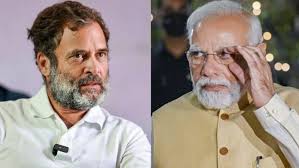
NEW DELHI: Congress leader Rahul Gandhi on Friday welcomed Prime Minister Narendra Modi’s upcoming visit to Manipur. However, he added that the larger concern in the country was “vote chori” which still needs to be addressed. Speaking to reporters, Gandhi said: “The issue in Manipur has been ongoing for a long time. It is good that he is going there now. But the main issue in the country is that of ‘Vote Chori’.” The leader of opposition alleged that the election mandates in Haryana and Maharashtra had been “stolen,” adding that people across the country were calling the prime minister a “vote chor.” — ANI (@ANI) Prime Minister Modi is scheduled to visit both Mizoram and Manipur on September 13. This will be his first trip to Manipur since ethnic clashes broke out between the Kuki and Meitei communities in May 2023. The violence, which has claimed more than 260 lives, displaced thousands of families, and destroyed homes and businesses. It led to the imposition of President’s Rule in the state in February this year following the resignation of chief minister N Biren Singh. According to officials, PM Modi will inaugurate and launch development projects worth Rs 8,500 crore during the visit. His itinerary includes programmes in Churachandpur and Imphal, symbolic centres of the Kuki-Zo and Meitei communities. He is expected to meet displaced families and announce rehabilitation packages. Analysts say the dual engagement is being seen as an attempt to strike a balance between the two communities and signal neutrality in the ongoing humanitarian and political crisis. The prime minister is also scheduled to address a gathering at Kangla Fort in Imphal. His visit comes amid continuing uncertainty in the state, where thousands of displaced families are still struggling to rebuild their lives. The Mizoram Chief Minister’s Office confirmed on X the Prime Minister’s visit. It said the state was “fully prepared to receive the Hon’ble Prime Minister” and that the people were “eagerly looking forward” to it. Courtesy : TOI Note: This news is originally published on https:/timesofindia.com/bha and is used purely for non-profit/non-commercial purposes, especially human rights
‘Rising From the Dust’: Luminous short stories about Dalit lives on both sides of the Bengal border

The anthology contains 12 stories curated and translated by Aruna Chakravarti. Aruna Chakravarti’s exceptional skills as both a translator and a writer of meticulously researched historical fiction are widely acknowledged and evidenced by her much-acclaimed oeuvre so far. This time, however, she has mobilised her art of translation to cast some light on the plight of the Dalits of Bengal, more specifically, of Dalit women, who confront a three-pronged dilemma: the stigma of their caste, gender-based injustice, and ubiquitous poverty. The result is Rising From the Dust: Dalit Stories from Bengal. Many Bengals For this anthology Chakravarti has translated 12 stories spread across a century, including works by both contemporary Dalit writers and those written about the community by non-Dalit writers who wrote sensitively about the condition of Dalit women. Apart from the sheer enjoyment of reading these stories, which I shall deal with later, I must mention here that for me, this book, at many levels, is an eye-opener and offers multiple layers of pleasure, like a matryoshka doll, encasing within itself a variety of linked worlds of personal and literary associations and significance. I come to it not just as a reader but as an expatriate Bangladeshi-Italian, and an anglophone writer and translator myself. There is also my background of being born in undivided Pakistan, and growing up in both East and West Pakistan, which enables me to relate to the stories where Bangladesh or East Bengal is mentioned. Also, to read in this anthology the works of some of the contemporary writers of Bengali Dalit literature, like Manoranjan Byapari, Manohar Mouli Biswas or Nakul Malik, all new to me and all born in East Pakistan, gives me a special insight into, at least, the geographic if not the economic or social circumstances of their remembered world. This is true also of the great Mahasweta Devi, many of whose stories about Adivasis I helped translate into Italian, and had the pleasure of meeting her during a film festival in Rome, in 2010, where the cinematic version of one of her stories was being screened as Gangor by the Italian director Italo Spinelli. Each story in this collection has a powerful impact, representing as it does a specific professional group of Dalits. The diversity here is tremendous: there are fisherfolk and boatmen, farmers and snake-charmers, doms and sweepers, tanners and drum-makers, basket-weavers, and rickshaw pullers. Even dung-cake-makers. Here, Mothos and Duleys, Bedeys and Vaishnavs, and poor Muslim farmers all exist side by side. Women at the centre There are strong female protagonists: Sarama in Manoranjan Byapari’s “The Fortress,” who makes her body her last battlefield. (“She is a pot brimming over with poison.”). In Chintay in Bimalendu Haldar’s “Salt,” we see the spirit of resistance among fisherwomen united against exploitation. (“Men…scorn us as weak and helpless. Let’s show them that we…can do everything they can. We are four women together.”) In Mahasweta Devi’s “Nalini’s Story,” we witness heartwarming female solidarity as Nalini’s friend, Mukundo’s mother, constantly stands up for Nalini against her greedy family. “You’re here to grab the old woman’s house and sell it … But it won’t be that easy. We’re with her.”) In Manohar Mouli Biswas’s “Shonkhomala,” the eponymous character, a rare, educated woman of the dom community, inspires her husband to help them escape their constraining circumstances. “Let us cast off the surname that brings us only shame and dishonour.” In Shankini, the beautiful and fiery leader of the band of bedeys, snake charmers in Prafulla Kumar Roy’s “Snake Maiden,” presents a version of the career-driven woman’s dilemma confronting domestic bliss versus ambition. (It wasn’t as though she herself was not lured by the prospect of putting down roots. “But I love my life as a bedeyni even more. The danger and excitement of sailing over tumultuous waters…We have been nomads for generations.”) Shefali, the wife in Nakul Mallik’s “Illegal Immigrant”, runs all the way from the slums of Bongaon to the Petrapole border office looking for her immigrant husband, and, when stopped from crossing the border, she rages at the officer. (“What passport? … I’m going to my husband. How dare you try to stop me?”) Larani in Anil Ghorai’s “Insect Festival” questions societal and religious rules. (“All these decrees are given out by evil men…in the name of the gods.”) And the pathetic old recluse Shora is seen as a fiendish creature in Tarasankar Bandyopadhyay’s psychologically complex story “The Witch,” about the battle of self-worth against public perception. (“There was no doubt in her mind now. What people said was right. She possessed a demoniac power…a power that destroyed everyone she loved.”) And even when the protagonists are frail or passive, their stories by dint of their narrative power, have the strength to move readers to tears, as in Saratchandra Chattopadhyay’s “Abhagi’s Heaven” where a dignified cremation with full funeral rites is craved by the lowborn protagonist as her most dazzling goal; or Mahasweta Devi’s “The True-Life story of Ulli-Bulli’s Mother” where a skilful use of dual points of view effectively reveals the mind of an unhinged old woman living in her past, searching for her lost twin daughters; orTarasankar Bandyopadhyay’s “Raikamal”, where a young Vaishnavi Kamal quietly struggles to embody the purity of spiritual love while suppressing her physical instincts. As to the faith of the other characters, whether the gods actually hear their fervent prayers or not, we see the wives of fishermen near the Sunderbans go to shrines of Bonbibi, the lady guardian spirit of the forest venerated by both Hindus and Muslims;,while the snake charmers bow to both Allah and Bishohari, another name for Manasha, the snake goddess. Some characters give offerings at Ma Sheetala’s temple, others at Kalighat. Translation and details Within a single volume one journeys through diverse settings and locations: refugee camps and slums, forests, fields of wild reeds, bulrushes, tussock grass, teeming bazars, urban alleys, streets and train stations, salt fens and muddy banks of rivers, bamboo groves, fish warehouses, paddy fields, dusty stretches
Dalit boy stripped and beaten up ‘for visiting friend’s home’ in TN

The 17-year-old boy and the girl had been friends since studying together in Choolaimedu. CHENNAI: The Secretariat Colony police on Friday arrested two men under the SC/ST (Prevention of Atrocities) Act for allegedly stripping, beating and abusing a Class 12 boy who visited a Class 10 girl at her house. The accused were identified as Saravanan, said to be a former BJP functionary, and his brother Logesh. Police said the girl’s mother has also lodged a complaint under the Pocso Act, alleging the boy abused her daughter, though no case has yet been registered. The 17-year-old boy and the girl had been friends since studying together in Choolaimedu. Though later in different schools, they remained in touch via social media. On Friday, when the boy visited her at Secretariat Colony, the girl’s relatives confined him in a room before calling Saravanan. He and Logesh allegedly assaulted the boy before releasing him. Courtesy : TNIE Note: This news is originally published on https:/thenewindianexpress.com/bha and is used purely for non-profit/non-commercial purposes, especially human rights
Traffic police orders beggars, transgenders off intersections
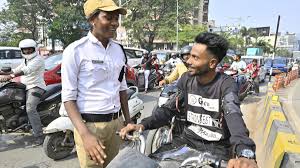
New Delhi: Delhi Traffic Police have directed all personnel to ensure there are no disruptions in the smooth flow of traffic due to the presence of beggars, transgender persons, vagabonds or hawkers at intersections. Sources said the move comes in response to increasing observations that gatherings of such individuals at busy traffic points significantly impede vehicular movement and contribute to congestion. Police sources said field staff have been instructed to take stringent measures and ensure these groups aren’t allowed to loiter, gather or carry out any activity that may hinder traffic flow or cause inconvenience to commuters. Additionally, personnel have been asked to meticulously document the locations where such gatherings frequently occur. This information then needs to be compiled and forwarded to the area’s social welfare nodal officer and Delhi govt’s social welfare department. To ensure effective implementation of the directives, deputy commissioners of police and officers in charge of traffic ranges have been tasked with monitoring compliance. A senior police officer said the objective is to maintain smooth traffic flow, enhance public safety, and uphold law and order across the city’s busy road networks. He said there have been instances when beggars and hawkers suddenly appear at traffic signals and do not move even when the light turns green, causing traffic to stop and raising the risk of accidents. He added police have received numerous complaints from the public about this issue. Police said on June 28, five Bangladeshi nationals engaged in begging were found presenting themselves as transgender persons in northwest Delhi. Police said they admitted to adopting these disguises and undergoing minor surgeries and hormonal treatments to alter their sex to evade detection. Courtesy : TOI Note: This news is originally published on https:/timesofindia.com/bha and is used purely for non-profit/non-commercial purposes, especially human rights